

The short answer: most dog vaccines fall into two groups: core shots almost every dog should have, and lifestyle vaccines that depend on where your dog lives, travels and plays.
- Core: rabies, distemper, parvovirus and adenovirus
- Lifestyle: leptospirosis, Bordetella, canine influenza and Lyme
- Boosters: core every three years, rabies every one or three years
- What boarding, daycare and groomers usually require
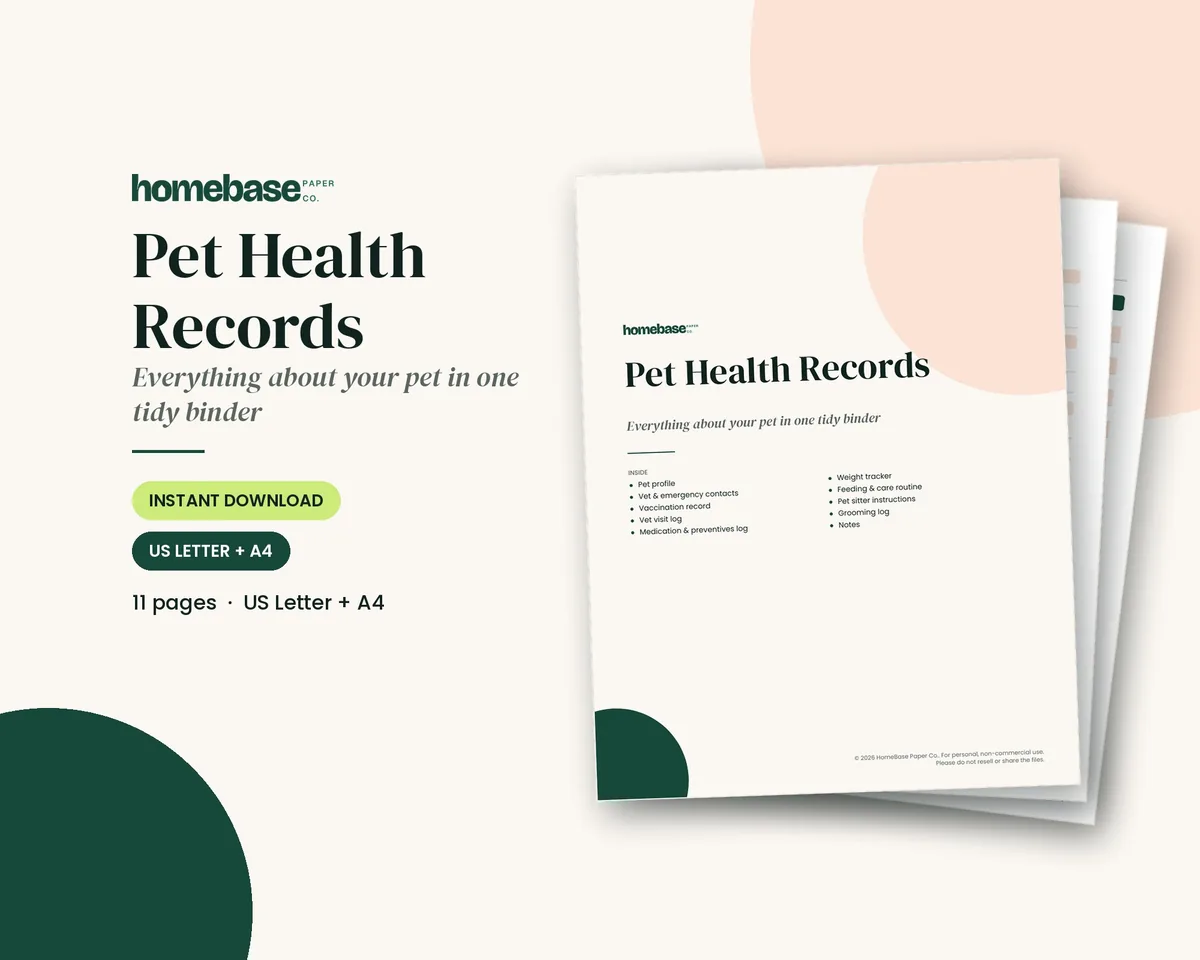
- Next step: Plan it with the Pet Health Records ($5.49).
Most dog vaccines fall into two groups: core shots that almost every dog should have, and lifestyle (non-core) vaccines that depend on where your dog lives, travels and plays. This guide explains each one, how often adult dogs need boosters, what boarding and daycare usually ask for, and how to keep a simple record so you're never hunting for proof at check-in.
This is general information to help you talk with your vet, not veterinary advice. Your veterinarian will tailor the schedule to your dog's age, health, lifestyle and local laws.

Core dog vaccines every dog needs
Core vaccines protect against diseases that are common, serious and, in the case of rabies, a public health risk.
- Rabies. Rabies is almost always fatal once symptoms appear and can spread to people. Vaccinating pets is a key part of preventing rabies, and most states and localities require it by law.
- Canine distemper. A virus that affects the lungs, gut and nervous system.
- Canine parvovirus. A tough, highly contagious virus that causes severe vomiting and diarrhea, especially in puppies. Cornell's Riney Canine Health Center notes that parvovirus can survive in the environment for a long time, which is why vaccination matters even for dogs that rarely leave home.
- Canine adenovirus. Protects against infectious canine hepatitis. It's usually part of the combination shot.
Distemper, adenovirus and parvovirus are usually given together, often with parainfluenza, in a combination vaccine you'll see written as DAPP or DHPP on the invoice.
Lifestyle (non-core) dog vaccines
| Vaccine | Protects against | Often recommended for |
|---|---|---|
| Leptospirosis | Bacteria spread through urine of infected animals and contaminated water or soil | Dogs that hike, swim, drink from puddles or live around wildlife |
| Bordetella | A main cause of kennel cough | Dogs that board, go to daycare, groomers or training classes |
| Canine influenza | Dog flu (H3N2, H3N8) | Social dogs in areas with outbreaks |
| Lyme disease | Tick-borne bacteria | Dogs in areas where ticks are common |
Leptospirosis is worth knowing about because it can also infect people. The CDC explains that leptospirosis spreads through contact with water or soil contaminated by the urine of infected animals.
Adult dog vaccine schedule at a glance
- Puppy series. Starts around 6 to 8 weeks with boosters every 3 to 4 weeks until about 16 weeks or older. See our puppy vaccine schedule for each visit.
- First rabies shot. Usually between 12 and 16 weeks, depending on local law.
- One-year boosters. About a year after the puppy series, dogs get boosters of the core vaccines and rabies.
- Core boosters every three years. After the one-year boosters, many vets give the combination shot every three years.
- Rabies every one or three years. This depends on the vaccine used and your state or local rules.
- Lifestyle vaccines on their own schedule. Leptospirosis and Bordetella are often given yearly, and sometimes more often for dogs at higher risk.
Veterinary schools publish guidelines that vets use to set these intervals. The UC Davis School of Veterinary Medicine's vaccination guidelines for dogs and cats are one example. Your own vet may adjust timing for older dogs, dogs with health conditions or dogs with a history of reactions.
What boarding, daycare and groomers usually require
Most facilities ask for proof of rabies and the distemper-parvo combination. Many also require Bordetella, and some ask for canine influenza. A few want vaccines given at least several days before the visit. Ask for the list when you book, and bring a printed copy of your dog's record. If you're bringing home a new dog, put the vaccine record in the same folder as the adoption papers and microchip number.
Before and after a vaccine visit
- Bring the record. Your vet can see what's due and avoid double-dosing.
- Mention past reactions. Swelling, hives or vomiting after an earlier shot changes the plan.
- Expect mild soreness. A tired dog or a tender spot for a day is common.
- Watch for warning signs. Facial swelling, hives, repeated vomiting or trouble breathing need a vet right away.
- Write down the next due date. Add it to your calendar the same day.
Budgeting for dog vaccines
Vaccines are a predictable cost, which makes them easy to plan for. Prices vary a lot by region and by type of clinic: a full exam at a private practice costs more than a walk-in vaccine clinic, and lifestyle shots add to the bill. Many shelters, humane societies and city animal services run reduced-cost rabies clinics a few times a year. A simple approach is to ask your vet for an itemized estimate of next year's visit, divide it by twelve and set that amount aside each month. If you use a budget categories list, give pets their own line for food, vaccines, preventives and grooming so the annual visit never comes as a surprise. Pets also get sick unexpectedly, so a small emergency cushion on top of the routine costs is worth building over time.
Keep a dog vaccine record you can find in seconds
Groomers, kennels, trainers, dog parks, new vets and even some apartment complexes may ask for proof of vaccination. A single place for every certificate saves a lot of stress. Our dog vaccination record book guide compares paper and digital options, and if you have a cat too, see the kitten vaccine schedule.
A simple home for your pet's health records
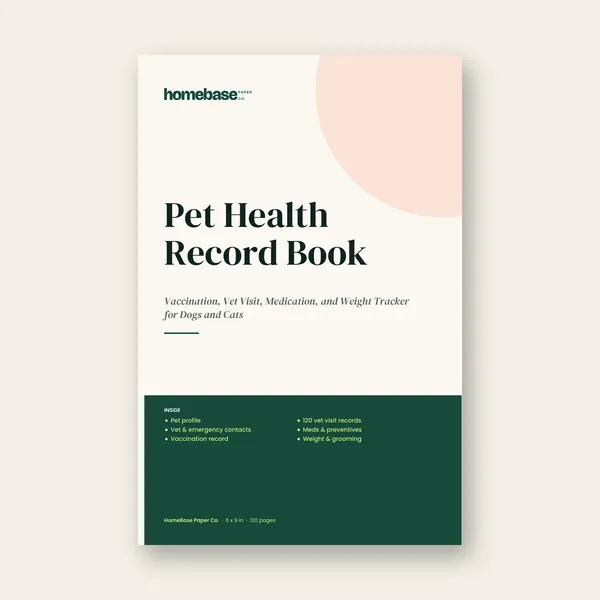
The Pet Health Records ($5.49) printable gives each pet a profile page plus logs for vaccines, vet visits, medications, weight and a pet sitter sheet. Prefer a bound book for the glovebox or kennel bag? The Pet Health Record Book (Paperback) ($9.99) has the same logs in a durable notebook. Both are part of keeping household paperwork in one place, alongside the Home Management Bundle ($16.99).
Keeping records for a cat as well? Our cat years to human years chart shows when a cat reaches the senior stage (over 10) and needs more frequent checkups.
If someone else will care for your dog, write it all down with a pet sitter instructions template.
Make it easier
Tools for this

Printables
Pet Health Records
Vaccines, vet visits, meds, weight and sitter notes - ready when you need them.
Paperback planners
Pet Health Record Book (Paperback)
Vaccination, Vet Visit, Medication, and Weight Tracker for Dogs and Cats
 Save 48%
Bundles
Home Management Bundle
Household binder, maintenance log, moving planner, cleaning schedule, home inventory and password log.
Frequently asked questions
What are the core dog vaccines? Core dog vaccines are the ones veterinarians recommend for nearly every dog, whatever its lifestyle: rabies, canine distemper, canine parvovirus and canine adenovirus, which protects against infectious hepatitis. The last three are usually given together in one combination shot often written as DAPP or DHPP, sometimes with parainfluenza added.
Which dog vaccines are absolutely necessary? Rabies is required by law in most U.S. states and localities, and the combination shot for distemper, parvovirus and adenovirus is considered essential because these diseases are serious and widespread. Other dog vaccines depend on risk, so your veterinarian will recommend them based on where you live, travel and how your dog spends its time.
What are non-core or lifestyle dog vaccines? Non-core dog vaccines protect against diseases that only some dogs are likely to meet. They include leptospirosis, Bordetella for kennel cough, canine influenza and Lyme disease. Dogs that board, go to daycare or grooming, hike, swim in lakes or live where ticks are common are more likely to need them.
How often do adult dogs need vaccines? After the puppy series and the one-year booster, many core dog vaccines are given every three years, while some vaccines such as leptospirosis and Bordetella are usually given every year or more often. Rabies boosters are every one or three years depending on the vaccine and your local law. Your vet will set the exact schedule.
When do puppies get their first vaccines? Puppies usually start their vaccine series at six to eight weeks old and get a booster every three to four weeks until they are about sixteen weeks or older. The first rabies shot is typically given between twelve and sixteen weeks, depending on local law. Our puppy vaccine schedule guide walks through each visit.
Are dog vaccines required for boarding or daycare? Most boarding kennels, daycares, groomers and training classes ask for proof of rabies and the distemper-parvo combination, and many also require Bordetella, sometimes given at least a few days before the stay. Ask the facility for its list ahead of time and bring a copy of your dog's vaccine record so check-in goes smoothly.
Do indoor dogs need vaccines? Yes, indoor dogs need vaccines. Even dogs that rarely go outside need core vaccines, because rabies is often required by law and diseases like parvovirus can be carried into the home on shoes. Indoor dogs may need fewer lifestyle vaccines. Talk with your veterinarian about your dog's actual exposure to decide which non-core shots make sense.
Are there side effects from dog vaccines? Yes, mild side effects such as soreness at the injection site, tiredness or a slight fever for a day or so are fairly common. Serious reactions are uncommon but can include facial swelling, hives, vomiting or trouble breathing, which need a vet right away. Tell your vet about any past reactions before the next visit.
How much do dog vaccines cost? Dog vaccines cost less at a low-cost vaccine clinic, where you usually pay per shot, than at a full veterinary visit with an exam, and the price for a year of vaccines depends on your region and the type of clinic. A full visit with an exam costs more, and lifestyle vaccines add to the total. Many shelters and local animal services offer reduced-cost rabies clinics. Ask for an itemized estimate and plan the cost into your pet budget each year.
How should I keep track of my dog's vaccines? Keep track of your dog's vaccines by keeping the certificate or summary from every vet visit in one place and writing down the vaccine, date given, next due date and clinic. A pet health record book or printable log, such as the Pet Health Records printable or the Pet Health Record Book (Paperback), makes it easy to show proof to groomers, kennels or a new vet. Add each next due date to your family calendar as a reminder.
What happens if my dog misses a booster? If a booster is overdue, call your veterinarian. Depending on how late it is and the vaccine, your dog may simply get the booster now or may need to restart part of the series. Until it is up to date, your dog may not be accepted by kennels or daycares, and an overdue rabies vaccine can matter legally.
More from HomeBase
You may also like
 Starter pick
Printables
Kids Chore Chart
Weekly chore chart, morning and evening routines, chore ideas by age, a sticker reward chart and an allowance tracker.

Printables
Family Recipe Binder
Section dividers, four recipe page layouts with room for the family story, 4x6 and 3x5 cards and a conversion chart - print it or type into the fillable version.

Printables
Newborn Baby Tracker
A 24-hour daily log plus feeding, diaper, sleep, growth and pediatrician-visit pages - easy to bring to checkups.

Printables
Caregiver Organizer
One place for contacts, appointments, the medication list from the doctor, and daily notes.
 Club
Monthly club
Meal Plan Club
Families who want dinner planned and a grocery list ready every week.
Free printable
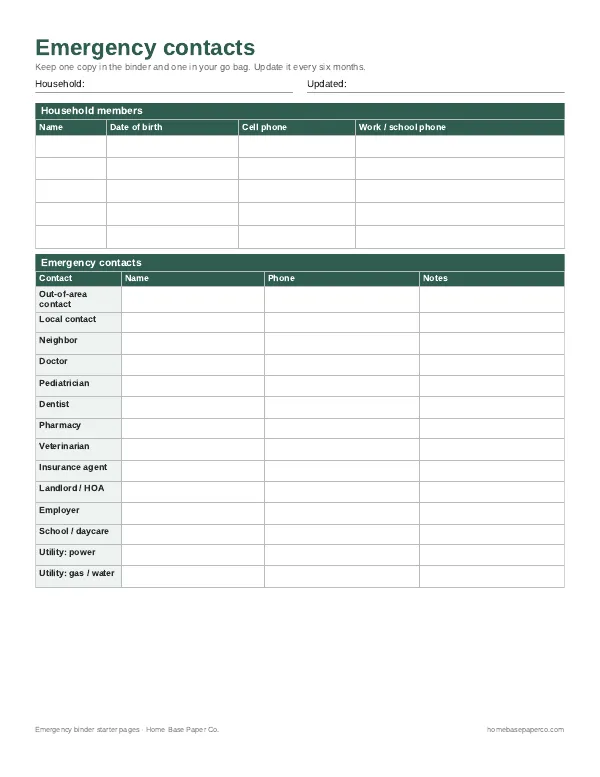
Have the important stuff in one place: get the free emergency binder pages
Printable starter pages for household members, emergency contacts, medical notes and where key documents live. You'll also get our weekly HomeBase email with simple ways to keep family records and important papers in order.
Sources
- CDC: Preventing rabies cdc.gov
- Cornell Riney Canine Health Center: Parvovirus vet.cornell.edu
- CDC: About leptospirosis cdc.gov
- UC Davis Veterinary Medicine: Vaccination guidelines for dogs and cats healthtopics.vetmed.ucdavis.edu