

The short answer: a typical puppy vaccine schedule starts the combination core shot at 6 to 8 weeks, repeats it at 10 to 12 and 14 to 16 weeks, adds rabies by local law and boosts at about 1 year. Your vet sets the exact plan.
- Core vaccines: distemper, adenovirus, parvovirus and parainfluenza, plus rabies
- Lifestyle vaccines: leptospirosis, Bordetella, canine influenza and Lyme
- Keep your puppy safe before the series is done
- Keep a vaccine record from day one
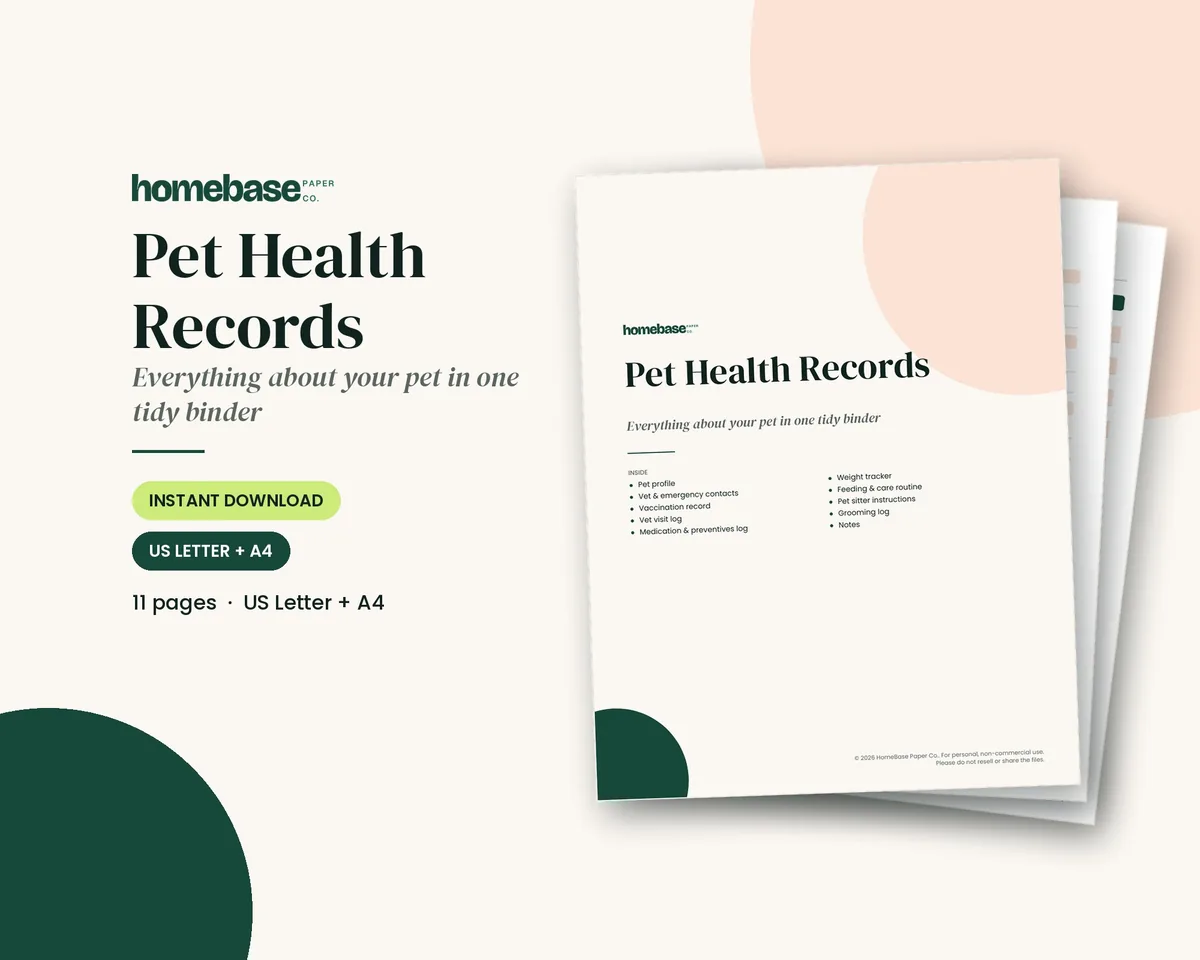
- Next step: Plan it with the Pet Health Records ($5.49).
A puppy vaccine schedule protects your new dog during the weeks when they are most at risk from serious diseases like parvovirus and distemper. This guide shows a typical schedule by age, what each vaccine does, which extras your vet may suggest and how to keep the record straight. Your own vet will set the exact plan for your puppy.
Our Pet Health Records printable has pages for vaccines, vet visits, medications and weight, so every shot date is in one place.
Typical puppy vaccine schedule by age
Adding a cat to the family too? Our kitten vaccine schedule covers FVRCP, rabies and FeLV week by week.
| Age | Core vaccines | Possible lifestyle vaccines |
|---|---|---|
| 6 to 8 weeks | Combination core shot (DHPP or DAPP), first dose | — |
| 10 to 12 weeks | Combination core shot, second dose | Leptospirosis, Bordetella, canine influenza, Lyme |
| 14 to 16 weeks | Combination core shot, third dose; rabies (age set by local law) | Second doses of any lifestyle vaccines started |
| 16 weeks or older | Final core dose if your vet advises | — |
| About 1 year | Core booster and rabies booster | Lifestyle boosters |
| Adult | Core every 3 years; rabies every 1 or 3 years | Often yearly |
This mirrors common guidance, such as the UC Davis veterinary school's vaccination guidelines for dogs and cats. Puppies adopted later simply start the series when they arrive. Their vet spaces the doses from that first visit. If your breeder or shelter paperwork lists ages in weeks, a weeks to months converter helps you match them to the calendar: 16 weeks, the usual end of the puppy series, is about 3.7 months.
What the core vaccines protect against
Distemper is a virus that affects the lungs, gut and nervous system. It spreads through the air and is often fatal.
Adenovirus (hepatitis) can damage the liver. The combination shot uses a form that also protects against a respiratory version.
Parvovirus causes severe vomiting and diarrhea and is very hard on young puppies. Cornell's Riney Canine Health Center explains that parvovirus can survive in the environment for months, which is why unvaccinated puppies shouldn't walk where many dogs go.
Parainfluenza is a respiratory virus that is often part of the same shot.
Rabies is deadly and can spread to people. The CDC's rabies prevention page lists vaccinating pets as a key step. Most states and cities require it for dogs.
Why the shots are spaced weeks apart
Puppies get antibodies from their mother. Those antibodies protect them at first, but they also block vaccines from working. Nobody can tell exactly when they fade, and it differs from puppy to puppy.
Giving a dose every two to four weeks until about 16 weeks covers that gap. At least one dose lands after the mother's protection drops off. That's why stopping the series early can leave a puppy unprotected even if they had two shots.
Lifestyle vaccines: ask about your puppy's routine
Your vet will ask where you live and what your puppy will do. Common extras include:
For adult boosters and how often each shot repeats, see our full guide to dog vaccines.
- Leptospirosis, for dogs around standing water, wildlife or farms
- Bordetella (kennel cough), for boarding, daycare, grooming and classes
- Canine influenza, in areas with outbreaks or for social dogs
- Lyme disease, in areas with deer ticks
Many boarding kennels and daycares require Bordetella and sometimes canine influenza. Check before you book.
Keeping your puppy safe before the series is done
Early socialization matters too. UC Davis's puppy socialization guide notes that the first few months are when puppies learn to be comfortable with new people, sounds and places. You can balance both:
- Invite vaccinated, healthy dogs you know to your home.
- Carry your puppy to see new places without putting them on the ground.
- Join a puppy class that checks vaccine records and cleans floors.
- Skip dog parks and pet store floors until your vet clears it.
- Wipe paws after walks in shared areas.
Questions to ask at the first vet visit
- Which vaccines does my puppy need, and on what dates?
- Which lifestyle vaccines fit our area and plans?
- When is the rabies shot due under local law?
- When should we start flea, tick and heartworm prevention?
- When is it safe to go to classes, parks and daycare?
- What side effects should I watch for after each shot?
What to bring to each vaccine visit
Bring any paperwork from the breeder, shelter or rescue, even if it is a handwritten card. It shows which doses your puppy already had and when, so your vet can plan the next one without repeating or skipping a shot. Bring a stool sample if the clinic asks, a list of questions, a few small treats and a leash or carrier. For more on this topic, see our pet care guides.
Tell the vet about anything new since the last visit, such as coughing, loose stools, low energy or a change in appetite. Your vet may delay a vaccine if your puppy is sick that day.
After the shot: what is normal
Most puppies are a bit sleepy or sore for a day. Let them rest, offer water and keep play gentle. Watch for swelling of the face, hives, repeated vomiting, collapse or trouble breathing in the first few hours. Those signs need a call to your vet or an emergency clinic right away.
Write the date and vaccine on your record before you leave the parking lot, while it is fresh. Ask the front desk to email a copy of the certificate too, so you have a backup you can show a groomer or kennel.
Plan for the cost
The first year is the most expensive one for vaccines. Exams, several rounds of shots, deworming and prevention add up quickly. Ask whether your clinic offers a puppy package. Shelters and community clinics often run lower-cost vaccine days too.
Keep a vaccine record from day one
Your puppy's vaccine history follows them for life. Groomers, trainers, kennels, daycares and new vets will all ask for it. Write down the date, vaccine, lot number if given, clinic and next due date after every visit.

The Pet Health Records printable ($5.49) has a pet profile, vet and emergency contacts, a vaccination record, a vet visit log, medication and preventives, a weight tracker, a feeding routine, pet sitter instructions and a grooming log. It's also part of the Family Life Admin Bundle ($15.99).
For more, see our dog vaccination record book and gifts for dog owners.
Make it easier
Tools for this
Printables
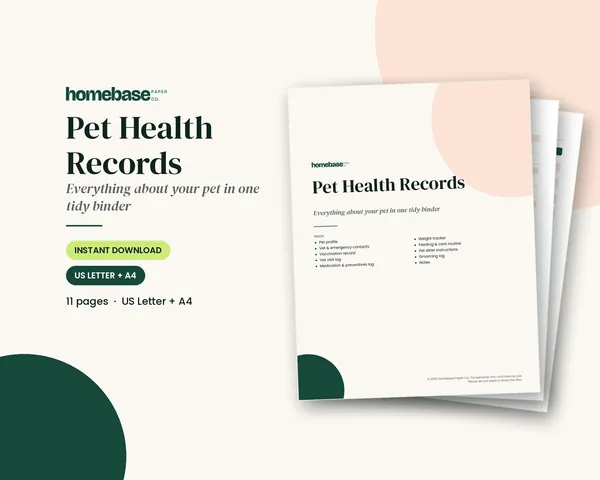
Pet Health Records
Vaccines, vet visits, meds, weight and sitter notes - ready when you need them.
 Save 33%
Bundles
Family Life Admin Bundle
Baby logs, chore charts, pet records, meal plans and family recipes in one tidy set.
Frequently asked questions
What is a typical puppy vaccine schedule? A typical puppy vaccine schedule starts the combination core vaccine (often called DHPP or DAPP) at 6 to 8 weeks, repeats it every 2 to 4 weeks until about 16 weeks or older, and adds rabies at around 12 to 16 weeks depending on state law. A booster follows about a year later. Your vet will set the exact timing for your puppy.
What are core vaccines for puppies? Core vaccines are recommended for every dog no matter where they live. For puppies, that usually means distemper, adenovirus (hepatitis), parvovirus and rabies. Parainfluenza is often included in the same combination shot. These diseases are serious or can spread to people, which is why they are considered core.
Why do puppies need so many shots? Puppies get some protection from their mother's milk, but those antibodies fade at different times in different puppies and can block a vaccine from working. Repeating the shot every few weeks until about 16 weeks makes sure at least one dose works after that protection wears off.
When can my puppy go outside or meet other dogs? Your puppy can explore your own yard and meet healthy, vaccinated dogs you know before the series is finished. Avoid dog parks, pet store floors and other places unknown dogs visit until your vet says the core series is complete, because parvovirus lingers in the environment. Puppy classes that require vaccine records are usually a good option.
What are lifestyle or non-core vaccines? These are vaccines your vet may recommend based on where you live and what your dog does. Common ones include leptospirosis, Bordetella (kennel cough), canine influenza and Lyme disease. Dogs that board, go to daycare, hike or swim in lakes are more likely to need them. Ask your vet which fit your puppy.
When does a puppy get the rabies vaccine? Most puppies get their first rabies vaccine at around 12 to 16 weeks of age, and the exact age is often set by state or local law. A booster follows about a year later, then every one or three years depending on the vaccine and local rules. Keep the rabies certificate with your pet's records.
How much do puppy shots cost? Puppy shots often cost from about one hundred to several hundred dollars for a full first-year series with exams. Costs vary a lot by region and clinic. Low-cost vaccine clinics and animal shelters often charge less. Ask whether your clinic offers a puppy package that bundles exams and the core series.
What happens if my puppy misses a vaccine? If your puppy misses a vaccine, call your vet. A short delay usually means simply giving the next dose as soon as possible. A long gap may mean restarting part of the series. Until the series is complete, keep your puppy away from places where unknown dogs go, since parvovirus can survive on the ground for months.
Are there side effects from puppy vaccines? Yes, mild side effects from puppy vaccines are common and pass quickly: a sore spot where the shot was given, sleepiness or a slight fever for a day. Rare reactions include facial swelling, hives, vomiting or trouble breathing. Call your vet or an emergency clinic right away if you see any of those.
How do I keep track of my puppy's vaccines? Keep track of your puppy's vaccines by keeping every certificate your vet gives you in one folder and writing the date, vaccine name and next due date on a simple record page. Boarding kennels, groomers, daycares and trainers will ask for proof. A pet health record such as our Pet Health Records printable also helps if you move or change vets.
What vaccines does an adult dog need? After the puppy series and the one-year booster, most adult dogs get core vaccines every three years and rabies every one or three years depending on the vaccine and local law. Lifestyle vaccines like leptospirosis or Bordetella are often given yearly. Your vet will adjust based on your dog's health and risk.
More from HomeBase
You may also like
 Starter pick
Printables
Kids Chore Chart
Weekly chore chart, morning and evening routines, chore ideas by age, a sticker reward chart and an allowance tracker.

Printables
Family Recipe Binder
Section dividers, four recipe page layouts with room for the family story, 4x6 and 3x5 cards and a conversion chart - print it or type into the fillable version.

Printables
Newborn Baby Tracker
A 24-hour daily log plus feeding, diaper, sleep, growth and pediatrician-visit pages - easy to bring to checkups.
Printables
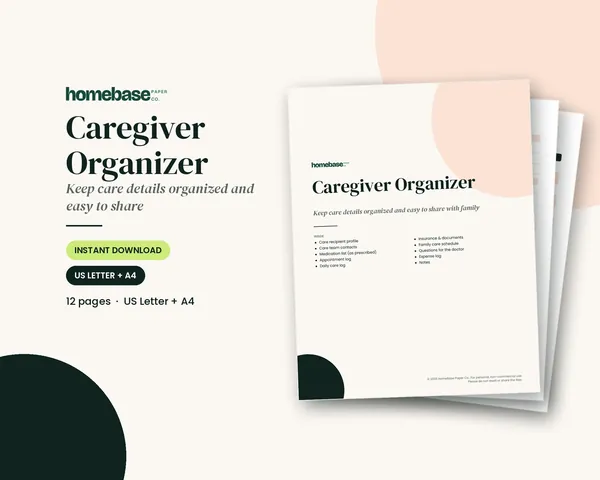
Caregiver Organizer
One place for contacts, appointments, the medication list from the doctor, and daily notes.
 Club
Monthly club
Meal Plan Club
Families who want dinner planned and a grocery list ready every week.
Free printable
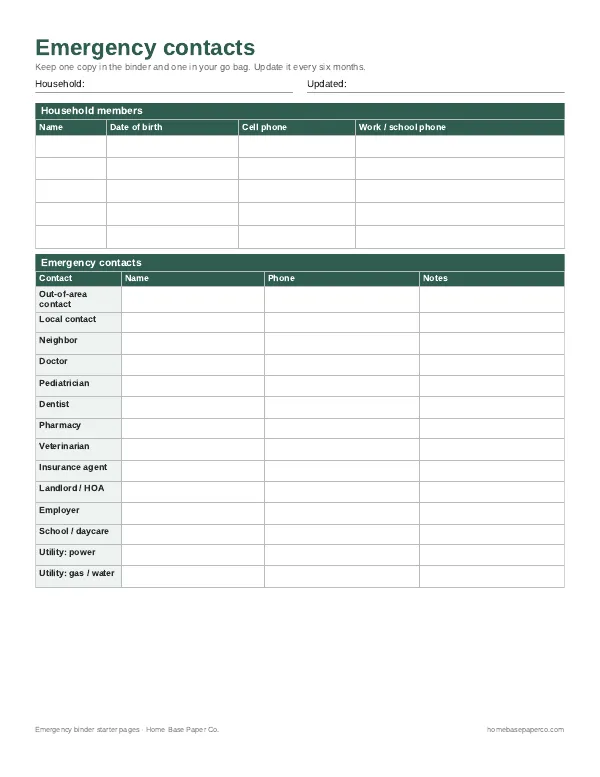
Have the important stuff in one place: get the free emergency binder pages
Printable starter pages for household members, emergency contacts, medical notes and where key documents live. You'll also get our weekly HomeBase email with simple ways to keep family records and important papers in order.
Sources
- UC Davis Veterinary Medicine: Vaccination guidelines for dogs and cats healthtopics.vetmed.ucdavis.edu
- Cornell Riney Canine Health Center: Canine parvovirus vet.cornell.edu
- CDC: Rabies prevention cdc.gov
- Puppy socialization guide healthtopics.vetmed.ucdavis.edu