

The short answer: a trip planner is one place where you keep your dates, bookings, budget, packing list and day-by-day plans. The simplest version is a one-page overview plus a daily plan, a budget table and a packing list. You can build it on paper, in a spreadsheet or in a notes app.
- Sections to include: trip overview, travel documents, bookings, daily plan, budget, packing list and a day-of contact sheet
- Plan early: routine U.S. passport processing takes 4 to 6 weeks (expedited 2 to 3 weeks), and a REAL ID or passport is required to fly domestically
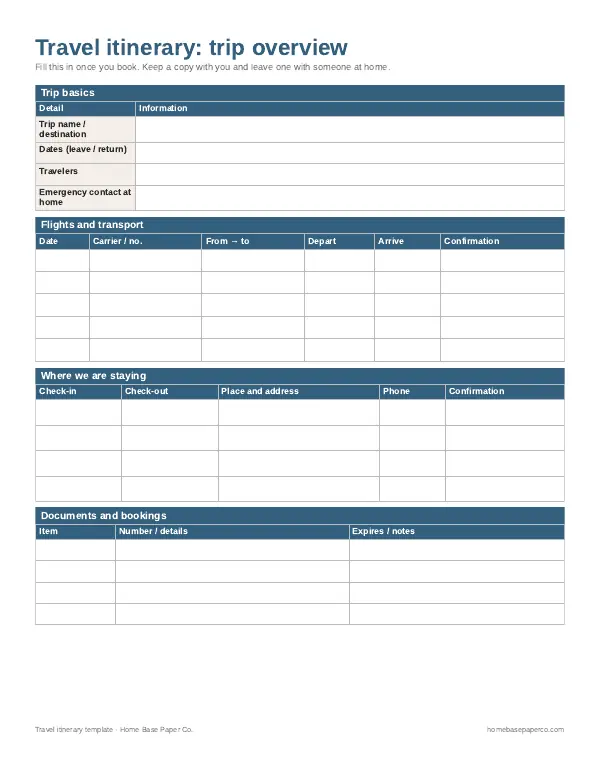
- Free templates: get the free travel itinerary template and the free packing list (we email them to you)
- Save for it: the Sinking Funds Tracker is $4.99, and the Printable Budget Planner is $5.99
Our picks for trip planner
Spreadsheets
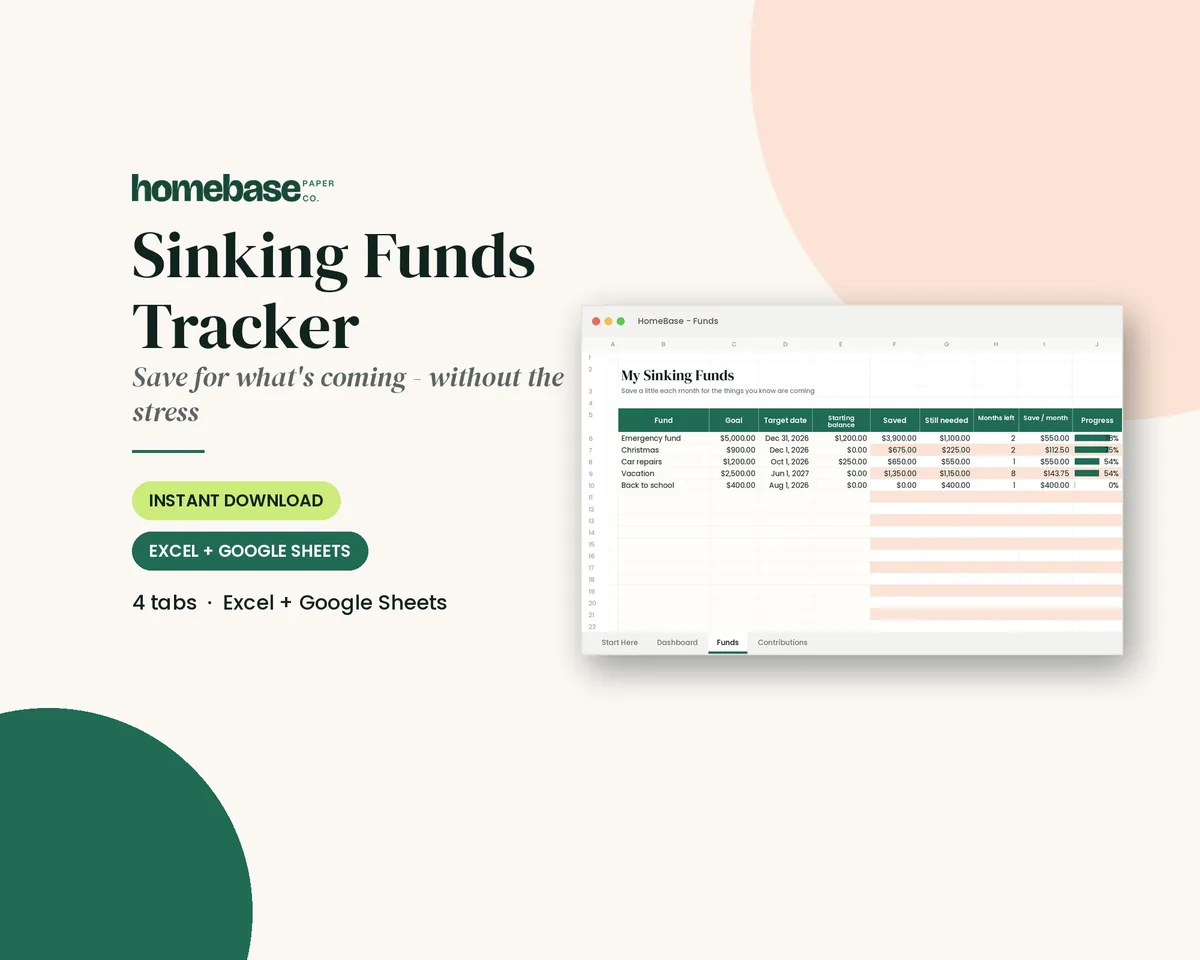
Sinking Funds Tracker
It does the math: how much to set aside each month to hit every goal on time.
Printables
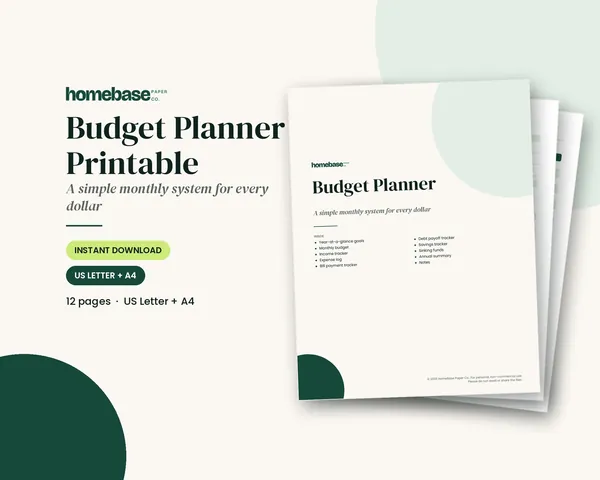
Budget Planner Printable
Twelve undated pages you can print every month: budget, bills, spending, savings and debt.
Printables
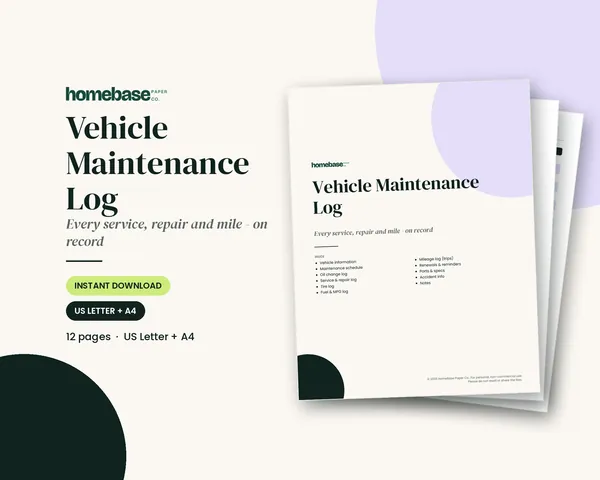
Vehicle Maintenance Log
Oil changes, repairs, tires, fuel and MPG, trip mileage and renewal dates - so resale and warranty records are easy.
 Save 57%
Bundles
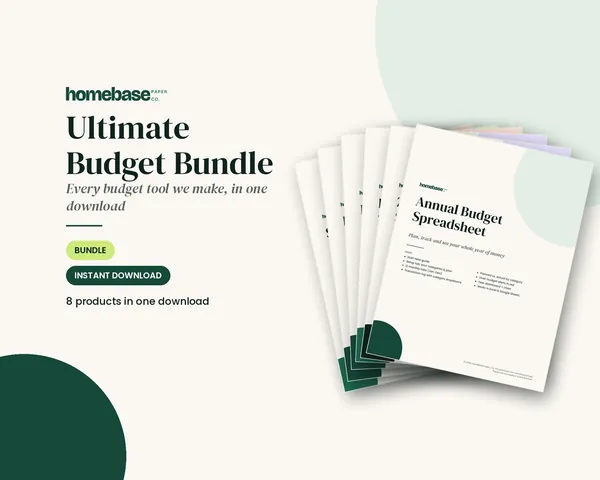
Ultimate Budget Bundle
All 6 spreadsheets + both printable planners - for less than half the price of buying them separately.
Checked November 9, 2026. Below: what to put in a trip planner, a day-by-day layout, a budget table you can fill in, document rules to check before you book, and a pre-trip checklist.
What goes in a trip planner
| Section | What to record | Why it matters |
|---|---|---|
| Trip overview | Destination, dates, who is going, trip budget, main goal | Keeps every decision tied to the plan |
| Travel documents | Passport or REAL ID status, visas, insurance, emergency contacts | Avoids last-minute surprises |
| Bookings | Flights, lodging, car rental, tickets: confirmation numbers, times, addresses, cancellation deadlines | One place to find everything |
| Daily plan | Morning, afternoon and evening, plus transport and reservations | Prevents over-scheduling |
| Budget | Planned vs. actual cost for each category | Shows if you're on track |
| Packing list | Clothing, toiletries, chargers, documents, medications | Cuts forgotten items |
| Contacts and notes | Hotel phone, local emergency numbers, allergies, addresses | Useful when your phone is dead |
Need a ready-made layout? Our free travel itinerary template covers the day-by-day plan, and the packing list page lists what to bring. For trips that include flights, compare TSA PreCheck vs. Global Entry before deciding whether either enrollment fits your travel plans.
Day-by-day trip planner layout
Copy this layout into a notebook, spreadsheet or document, one block per day:
| Plan | Booked? | Cost | Notes | |
|---|---|---|---|---|
| Morning | Yes / No | $ | ||
| Afternoon | Yes / No | $ | ||
| Evening | Yes / No | $ | ||
| Getting around | Yes / No | $ | ||
| Meals | Yes / No | $ |
Planning tip: schedule no more than 2 or 3 things a day, and leave one open block. Travel days and rest breaks take longer than they look.
Trip budget planner
Start with the total you can afford, then divide it. Example: if your trip budget is $2,000 for 7 days, that is $285.71 per day for everything. Fill in your own numbers:
| Category | Planned | Actual | Difference |
|---|---|---|---|
| Transportation (flights, gas, tolls, parking) | $ | $ | $ |
| Lodging | $ | $ | $ |
| Food and drink | $ | $ | $ |
| Activities and tickets | $ | $ | $ |
| Local transport (rideshare, transit, rental) | $ | $ | $ |
| Shopping and souvenirs | $ | $ | $ |
| Travel insurance and fees | $ | $ | $ |
| Buffer for surprises | $ | $ | $ |
| Total | $ | $ | $ |
Money-saving tip: pay the big bookings first, flights and lodging, then divide what's left across food and activities. Add a buffer line so a surprise doesn't land on a credit card.
For help building the money side, see our vacation budget guide and budget travel tips. To save for a trip, open a sinking fund: set a goal, divide it by the months until you leave, and move that amount each payday. The Sinking Funds Tracker ($4.99) tracks several funds at once, and the Printable Budget Planner ($5.99) puts the trip fund next to your regular bills.
Documents and ID: check these first
- Domestic flights: TSA has required a REAL ID-compliant license or another acceptable ID, such as a U.S. passport, since May 7, 2025.
- International travel: you need a valid passport. The State Department says routine passport processing takes 4 to 6 weeks and expedited takes 2 to 3 weeks, not counting mailing time, so check current times before you book.
- Destination rules: some countries require a minimum passport validity or a visa. Check the destination country's entry rules on the State Department's travel pages.
- Insurance: record your health, travel and rental car insurance contacts.
- Copies: keep a photo of your passport and booking confirmations in your phone and a printed copy in a separate bag.
Pre-trip planning timeline
| When | What to do |
|---|---|
| 3 to 6 months out | Set the budget, pick dates, check passports and IDs, start a sinking fund |
| 2 to 3 months out | Book flights and lodging, note cancellation deadlines in the planner |
| 1 month out | Book activities and restaurants with limited seating, arrange pet or house care |
| 1 to 2 weeks out | Confirm every booking, check the forecast, start the packing list |
| 2 to 3 days out | Download tickets and maps, pack, charge devices, notify your bank if needed |
| Day of | Documents, chargers and confirmations in one bag |
Trip planner formats: paper, spreadsheet or app
| Format | Best for | Watch out for |
|---|---|---|
| Paper planner or printable | Travelers who like checking things off and don't want to rely on battery or signal | Easy to lose, so photograph the pages |
| Spreadsheet | Budgets, group trips and sharing | Needs a phone or laptop |
| Notes or travel apps | Storing confirmations and maps | Offline access, so download what you need |
Many people use a mix: a printable for the plan and checklist, a spreadsheet for the budget, and the phone for tickets and maps.
Trip planner for a group or family
- Pick one person to hold the master plan and share a copy with everyone.
- Split the budget per person and decide how shared costs are paid.
- Note who is responsible for each booking and each reservation.
- Put allergies, medications and emergency contacts on one page.
- Use a shared packing list so you don't pack five hair dryers.
Road trip planner extras
- Total miles and driving time per day, with breaks every two hours or so
- Fuel and toll budget, using your car's miles per gallon
- Overnight stops booked in advance for busy seasons
- A vehicle maintenance log ($3.99) check of oil, tires and service before you leave
Trip planner checklist
- Trip goal, dates, travelers and total budget written down
- Passports and REAL IDs checked
- Flights and lodging booked, with cancellation dates noted
- Daily plan with no more than 2 to 3 activities
- Budget table filled in with planned amounts
- Packing list started and shared
- Confirmation numbers and contacts in one place
Sinking Funds Tracker
It does the math: how much to set aside each month to hit every goal on time.
$4.99 · Instant download. Print at home or fill it in on screen. Or browse the full Budget & Money collection.
Frequently asked questions
What is a trip planner? A trip planner is a single document, printable or digital, where you keep your travel dates, bookings, daily plans, budget, packing list and contacts. A good trip planner has an overview page, a daily plan, a budget table and a checklist, so you can find everything in one place.
What should a trip planner include? A trip planner should include a trip overview, travel documents, flight and lodging confirmations, a day-by-day plan, a budget with planned and actual costs, a packing list and emergency contacts. For group trips, add who is responsible for each booking and how shared costs are split.
How do I plan a trip step by step? Set your budget and dates first, check passports and IDs, then book the biggest costs, flights and lodging. Add activities and reservations, fill in a day-by-day plan with no more than two or three items a day, and finish with a packing list and a day-of checklist.
How far in advance should I plan a trip? Start planning three to six months out for international trips and one to three months out for domestic trips, and sooner for holidays or popular destinations. Passport processing alone can take four to six weeks, so check your documents first.
How much should I budget for a trip? Start with the total you can afford, divide it by the number of days, and split it across transportation, lodging, food, activities and a buffer. For example, a $2,000 budget for seven days is about $285.71 per day for everything. Track planned versus actual costs to stay on target.
Do I need a REAL ID to fly in the US? Since May 7, 2025, TSA has required a REAL ID-compliant license or another acceptable form of ID, such as a U.S. passport, to fly domestically. Check your license for the star marking or bring a passport.
How long does it take to get a passport? According to the U.S. Department of State, routine passport processing takes four to six weeks and expedited processing takes two to three weeks, not including mailing time. Processing times change, so check the State Department's current times before you book.
Is a paper or digital trip planner better? Neither is better for everyone. Paper is simple, works without a signal and is satisfying to check off, while spreadsheets and apps are better for budgets, sharing and storing confirmations. Many travelers combine a printable plan with digital tickets and maps.
How do I save money for a trip? Set a trip goal, divide it by the number of months until you leave, and move that amount into a separate savings fund each payday. Automating the transfer helps, and tracking the fund in a sinking funds spreadsheet shows your progress.
Can I use a trip planner for a road trip? Yes, add driving distance and time per day, breaks, fuel and toll costs, overnight stops and a vehicle check before you leave. A maintenance log helps you confirm oil, tires and service are up to date.
Free printable
Keep every trip detail on paper
Trip overview, day-by-day plan, budget and packing list. You'll also get our weekly HomeBase email with simple planning and home organization tips.
Sources
- TSA: REAL ID tsa.gov
- U.S. Department of State: Passport processing times travel.state.gov