The short answer: respite care is short-term care for someone who needs help, such as an aging parent, so the family member who usually looks after them can take a break.
- Can last a few hours or several weeks
- Where: at home, at an adult day center or in a residential facility
- Who pays: Medicare, Medicaid and the VA
- Find it: call the Eldercare Locator
- Next step: Plan it with the Caregiver Organizer ($6.99).
Respite care is short-term care for someone who needs help, such as an aging parent, so the family member who usually looks after them can take a break. The National Institute on Aging explains in What Is Respite Care? that respite can last a few hours or several weeks, and can happen at home, at an adult day center or in a residential facility. This guide covers the types of respite care, respite care for elderly parents, who pays, how to find it and what to hand the person who steps in.
What respite care is and what it is not
Respite care is a planned break for the caregiver. The person receiving care keeps getting the help they need, from someone else, for a while. It is not a permanent move, and it is not only for emergencies.
People use respite to go to work, sleep, see their own doctor, travel for a family event or simply rest. NIA notes that caregiving can be stressful and that regular breaks help caregivers keep going. Respite can be informal, like a neighbor sitting with your dad for an afternoon, or formal, through a paid agency or facility.
Types of respite care
| Type | Where it happens | Good for |
|---|---|---|
| In-home respite | Your loved one's home | People who do best in familiar surroundings. |
| Adult day services | An adult day center, usually on weekdays | Regular daytime breaks while you work. |
| Residential or facility respite | Assisted living, a nursing home or a hospital | Overnight or week-long breaks, travel or surgery recovery. |
| Informal respite | Family, friends, faith groups or volunteers | Short breaks at little or no cost. |
| Emergency respite | Any of the above, arranged quickly | When the caregiver is suddenly ill or called away. |
Many families mix types, such as two days a week at an adult day center plus a week-long facility stay once a year.
Respite care for elderly parents
Respite care for elderly parents is the most common kind. It is especially useful when a parent lives with dementia, needs help with bathing or medication, or should not be left alone for long.
Signs that it is time to plan a break include:
- You have not had a full day off in weeks.
- You are short on sleep, missing your own appointments or getting sick more often.
- You feel resentful, tearful or short-tempered more than usual.
- Your parent's needs have grown faster than the help around you.
Start small. A few hours with a new aide or a trial day at an adult day center lets your parent get used to the new person and place. Visit facilities in advance and ask whether they accept short stays, how far ahead you must book and what records they need.
Who pays for respite care?
| Payer | What it may cover |
|---|---|
| Family, friends and volunteers | Often free. |
| Medicare | Only with hospice: inpatient respite for up to 5 days in a row in an approved facility, and you may pay 5% of the approved amount. |
| Medicaid | Many states help through home and community-based services, with rules that differ by state. |
| VA | Home respite and nursing home respite for eligible veterans, sometimes with a copay. |
| Long-term care insurance | Some policies include respite, so read the benefits section. |
| Private health insurance | Usually does not cover respite. |
| State Lifespan Respite programs | Grants and vouchers in some states. |
Paid providers usually charge by the hour for in-home help and by the day for adult day services or facility stays. Ask each provider for written rates, minimum hours and cancellation rules before you book.
The federal Lifespan Respite Care Program, run by the Administration for Community Living, funds state respite systems for caregivers of people of any age. It was created in 2006 and reauthorized in 2020. Grantees in 39 states and Washington, D.C. have received funding since 2009, and some states use it for voucher programs that let families choose their own respite provider.
How to find respite care
- Call the Eldercare Locator at 800-677-1116 to reach your local Area Agency on Aging.
- Search the ARCH National Respite Locator for programs by state.
- Ask the medical team. Doctors, hospital social workers and hospice teams know local options.
- Check disease-specific groups, such as Alzheimer's, Parkinson's or stroke organizations, which may run respite programs.
- For veterans, ask the VA social worker about home and nursing home respite.
- Ask your faith community or neighbors for informal help, even for a few hours.
Respite care for someone with dementia
Dementia changes how respite should be planned. Change can be unsettling, so introduce a new aide or day program gradually. Start with a short visit while you are still there, then leave for an hour, then build up to a full day.
Tell the provider about the times of day that are hardest, such as late afternoon, and what usually helps. A favorite song, a short walk or a familiar snack can matter more than any schedule. Ask whether the program has a secure entrance and staff trained in memory care. If wandering is a risk, give them a recent photo and a description of what your loved one usually wears.
Some adult day centers and facilities run programs only for people with memory loss. These often have smaller groups and quieter rooms, which many families find easier at first.
Building respite into your calendar
Respite works best when it is regular, not just a rescue after you are worn out. A simple pattern many caregivers use:
| How often | What kind of break | Example |
|---|---|---|
| Every week | A few hours | A friend visits Tuesday afternoons while you run errands. |
| Every month | A full day | Adult day center so you can see your own doctor. |
| A few times a year | A weekend | A sibling stays over or a facility hosts a short stay. |
| Once a year | A week | Planned facility respite while you travel. |
Book the longer stays early. Facilities with short-stay beds often fill around holidays and summer. Put the dates in a shared family calendar so siblings can see when they are needed.
Questions to ask a respite provider
| Question | Why it matters |
|---|---|
| Are staff trained in dementia or the condition your loved one has? | Training shapes how they handle confusion and behavior. |
| What happens in a medical emergency? | You need to know who they call and where they go. |
| Who gives medications, and how are they recorded? | Errors are a common worry in short stays. |
| What does a typical day look like? | Activities and meals should suit your loved one. |
| What paperwork do you need before the first day? | Some facilities ask for a recent doctor's note or test results. |
Respite for caregivers of children and younger adults
Respite care is not only for older adults. Parents of children with disabilities or serious illness, and families caring for an adult with a brain injury or developmental disability, need breaks too. The Lifespan Respite program covers caregivers of people of any age. Many state respite coalitions, children's hospitals and disability groups also keep lists of trained sitters and camps. Ask about staff training for the specific condition, and whether the program can handle medical equipment such as feeding tubes or seizure plans.
Paying for respite: a quick plan
- List every benefit your loved one may have: Medicaid, VA, long-term care insurance or hospice.
- Ask your Area Agency on Aging about state respite grants or vouchers.
- Ask family members to give time if they cannot give money, such as one weekend a quarter.
- Get written rates from two or three providers before you book.
- Track what you spend, since some care costs may count toward medical expense deductions.
Preparing for the first respite visit
The handoff is what makes respite feel safe. Write down everything you carry in your head: medications with doses and times, allergies, doctors and emergency contacts, the daily routine, food preferences, mobility and toileting help, and what calms or upsets your loved one. Include copies of insurance cards and any medical power of attorney.
Pack familiar items for a facility stay, such as a favorite blanket, photos and labeled clothing. Tell the provider how to reach you, then try to actually rest.
Keep the handoff in one place
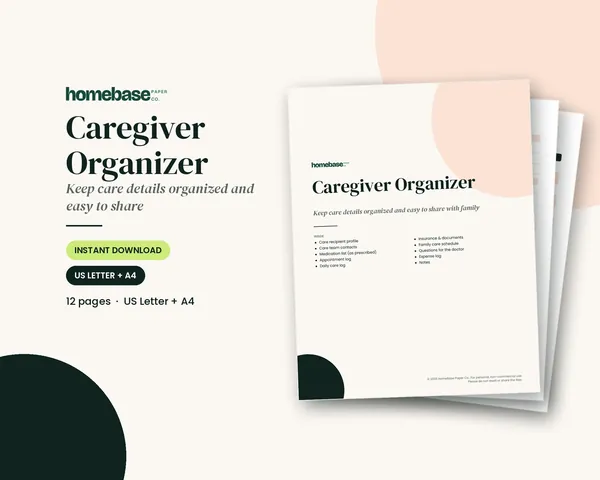
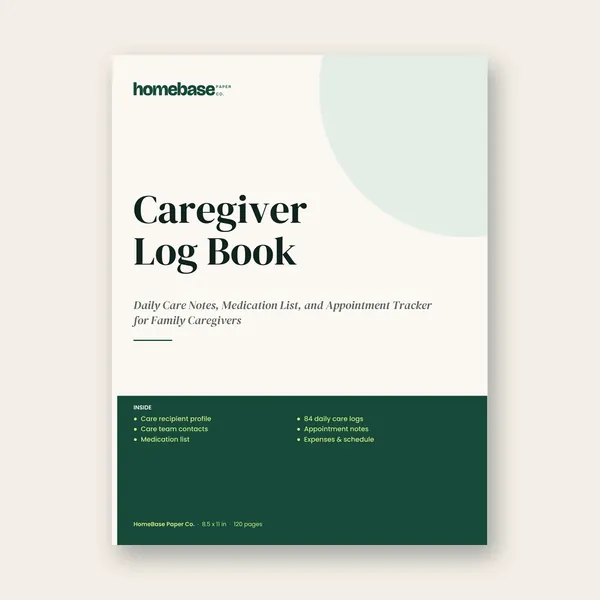
The Caregiver Organizer ($6.99, printable PDF) is built for exactly this handoff. It has a Care recipient profile, Care Team Contacts, Medication List, Appointment Log, Daily Care Log, Insurance & documents, a Family Care Schedule, Questions for the Doctor and a Care Expense Log. Print a copy for the respite provider and keep the original for yourself. If you prefer paper, the Caregiver Log Book (Paperback) is a bound version.
You may also find our caregiver daily log template and the medical power of attorney guide useful.
Make it easier
Tools for this
Printables
Caregiver Organizer
One place for contacts, appointments, the medication list from the doctor, and daily notes.
Paperback planners
Caregiver Log Book (Paperback)
Daily Care Notes, Medication List, and Appointment Tracker for Family Caregivers
Frequently asked questions
What is respite care? Respite care is short-term care for a person who needs help, such as an older adult, so their usual family caregiver can take a break. The National Institute on Aging says it can last a few hours or several weeks and can happen at home, at an adult day center or in a residential facility such as a nursing home.
Does Medicare pay for respite care? Only under hospice: Medicare pays for respite care when the person is enrolled in the Medicare hospice benefit, for up to 5 days in a row in a Medicare-approved facility such as a hospital or nursing home. Medicare.gov notes you may pay 5% of the Medicare-approved amount for that inpatient respite care. Outside hospice, Medicare does not cover respite.
How much does respite care cost? Respite care can cost nothing when family, friends or volunteers help, while paid in-home aides and adult day centers usually charge by the hour or by the day, and overnight stays in a facility charge a daily rate. Prices depend on your area and the level of care. Ask your Area Agency on Aging about free or reduced-cost programs.
How long can respite care last? Respite care can last from a few hours to several weeks, according to the National Institute on Aging. A few hours a week at an adult day center is common, as are overnight or week-long stays in a facility while a caregiver travels, recovers from surgery or simply rests. Under Medicare hospice, inpatient respite is limited to 5 days at a time.
What is respite care for the elderly? Respite care for the elderly gives an older adult safe, supervised care for a short time so the family member who usually looks after them can rest, work or travel. It can be an in-home aide, an adult day program, or a short stay in assisted living or a nursing home. It is common for people living with dementia.
Does Medicaid cover respite care? Yes, in many states Medicaid can help pay for respite care, often through home and community-based services programs, but eligibility and the amount of care differ by state. The National Institute on Aging suggests checking with your state Medicaid office. Most private health insurance does not cover respite, though some long-term care insurance policies do.
Does the VA offer respite care? Yes, the VA offers respite care for eligible veterans: home respite, where a caregiver comes to the home, and nursing home respite in a VA Community Living Center or a community nursing home. A copay may apply depending on the veteran's VA status. Ask the veteran's VA social worker to arrange it.
How do I find respite care near me? To find respite care near you, call the Eldercare Locator at 800-677-1116 or search its website, contact your local Area Agency on Aging, or use the ARCH National Respite Locator. The National Institute on Aging also suggests asking your loved one's doctor, a hospital social worker, faith groups and disease-specific organizations.
What is the Lifespan Respite Care Program? The Lifespan Respite Care Program is a federal program run by the Administration for Community Living that funds state respite systems for family caregivers of people of any age. It was created in 2006, and grantees in 39 states and Washington, D.C. have received funding since 2009. Some states use the money for vouchers that families spend on respite care.
Should I feel guilty about using respite care? No, using respite care is a normal part of caregiving, not a failure. Caregivers who take regular breaks are better able to keep going, and the person you care for gets a change of routine and new company. Start with short visits so everyone can adjust, and leave clear notes so the respite caregiver can follow your routine.
What should I give a respite care provider? Give a respite care provider a written handoff: medications with doses and times, doctors and emergency contacts, daily routine, diet, mobility and toileting needs, and anything that calms or upsets your loved one. The Caregiver Organizer ($6.99) puts a care recipient profile, Care Team Contacts and a Medication List in one printable you can hand over.
More from HomeBase
You may also like
 Starter pick
Printables
Kids Chore Chart
Weekly chore chart, morning and evening routines, chore ideas by age, a sticker reward chart and an allowance tracker.

Printables
Family Recipe Binder
Section dividers, four recipe page layouts with room for the family story, 4x6 and 3x5 cards and a conversion chart - print it or type into the fillable version.

Printables
Newborn Baby Tracker
A 24-hour daily log plus feeding, diaper, sleep, growth and pediatrician-visit pages - easy to bring to checkups.
 Save 33%
Bundles
Family Life Admin Bundle
Baby logs, chore charts, pet records, meal plans and family recipes in one tidy set.
 Club
Monthly club
Meal Plan Club
Families who want dinner planned and a grocery list ready every week.
Free printable
Have the important stuff in one place: get the free emergency binder pages
Printable starter pages for household members, emergency contacts, medical notes and where key documents live. You'll also get our weekly HomeBase email with simple ways to keep family records and important papers in order.