

The short answer: to convert cat years to human years, count a cat's first year as about 15 human years, its second as about 9 more, and each year after as about 4.
- 1 year: about 15 human years
- 2 years: about 24
- The old seven-to-one rule is not accurate
- Life stages: kitten, young adult, mature adult and senior
- Next step: Plan it with the Pet Health Records ($5.49).
To convert cat years to human years, count a cat's first year as about 15 human years, its second as about 9 more, and each year after as about 4. Cornell's Feline Health Center explains in its guide to senior cats that the old seven-to-one rule is not accurate, and puts a one-year-old cat at about 16 and a two-year-old at 21, adding about four years each year after that. Below is a full age chart, the life stages vets use, and what care each stage needs. Every cat is an individual, so treat the numbers as estimates.

Cat years to human years chart
The first column uses the conversion found on most veterinary age charts (15 at one year, 24 at two, then 4 per year). The second uses Cornell's figures (16, 21, then about 4 per year). The life stage comes from the 2021 AAHA/AAFP Feline Life Stage Guidelines.
| Cat's age | Human years (vet chart) | Human years (Cornell) | Life stage |
|---|---|---|---|
| 6 months | 10 | - | Kitten |
| 1 year | 15 | 16 | Young adult |
| 2 years | 24 | 21 | Young adult |
| 3 years | 28 | 25 | Young adult |
| 4 years | 32 | 29 | Young adult |
| 5 years | 36 | 33 | Young adult |
| 6 years | 40 | 37 | Young adult |
| 7 years | 44 | 41 | Mature adult |
| 8 years | 48 | 45 | Mature adult |
| 9 years | 52 | 49 | Mature adult |
| 10 years | 56 | 53 | Mature adult |
| 11 years | 60 | 57 | Senior |
| 12 years | 64 | 61 | Senior |
| 13 years | 68 | 65 | Senior |
| 14 years | 72 | 69 | Senior |
| 15 years | 76 | 73 | Senior |
| 16 years | 80 | 77 | Senior |
| 17 years | 84 | 81 | Senior |
| 18 years | 88 | 85 | Senior |
| 19 years | 92 | 89 | Senior |
| 20 years | 96 | 93 | Senior |
Cat age chart for kittens, by month
Kittens grow up fast, so the first year is easier to read in months. This is the commonly used veterinary age chart for the first two years:
| Cat's age | About this in human years | What is going on |
|---|---|---|
| 1 month | 1 | Nursing, starting to explore. |
| 2 to 3 months | 2 to 4 | Weaning and the kitten vaccine series. |
| 4 months | 6 to 8 | Fast growth and lots of play. |
| 6 months | 10 | Core vaccines are repeated around now. |
| 7 months | 12 | Close to adult size for many cats. |
| 12 months | 15 | Grown, but still a young adult. |
| 18 months | 21 | Settling into adult habits. |
| 2 years | 24 | Fully adult. |
The 2021 AAHA/AAFP guidelines note that kittens can be weaned onto kitten food from 3 to 5 weeks, and that a growing kitten needs far more calories per pound than it will at 10 months.
How old is my cat in human years? Look it up by birth year
If you know the year your cat was born, find it below. Ages are counted for 2026, so if your cat's birthday has not come yet this year, use the row for one year younger.
| Born in | Age in 2026 | Human years (vet chart) | Human years (Cornell) |
|---|---|---|---|
| 2025 | 1 | 15 | 16 |
| 2024 | 2 | 24 | 21 |
| 2022 | 4 | 32 | 29 |
| 2020 | 6 | 40 | 37 |
| 2018 | 8 | 48 | 45 |
| 2016 | 10 | 56 | 53 |
| 2014 | 12 | 64 | 61 |
| 2012 | 14 | 72 | 69 |
| 2010 | 16 | 80 | 77 |
| 2008 | 18 | 88 | 85 |
| 2006 | 20 | 96 | 93 |
For a cat adopted as an adult, use the age your shelter or vet estimated at adoption and add the years since.
Using a cat years calculator
A cat years calculator does the same arithmetic as the chart, so you can do it in your head:
- Start with 15 for the first year.
- Add 9 for the second year (24 total), or 6 if you use Cornell's figure of 21.
- Add 4 for every year after that.
Example: a 9-year-old cat is 24 + (7 x 4) = 52 on the vet chart, or 21 + (7 x 4) = 49 on Cornell's. No calculator accounts for breed, weight or illness, so treat any result as a rough guide to life stage rather than an exact age.
How the formula works
Cats grow up fast. A kitten goes from newborn to fully grown in about a year, which is roughly the same development as a person reaching the mid-teens. By two, a cat is a young adult in its early twenties. After that, aging slows to about four human years per cat year.
To work it out yourself:
- If your cat is 1, call it about 15.
- If your cat is 2, call it about 24.
- For older cats, take the age, subtract 2, multiply by 4 and add 24.
Example: a 9-year-old cat is (9 − 2) × 4 + 24 = 52 in human years.
Cat life stages and what each needs
The AAHA/AAFP guidelines group a cat's life into four age-based stages plus an end-of-life stage that can happen at any age. They note the cutoffs are guides, not hard rules, and that individual cats vary a lot.
| Stage | Cat age | Human age (about) | Care focus |
|---|---|---|---|
| Kitten | Birth to 1 year | Up to 15 | Vaccines, parasite control, spay or neuter, socializing |
| Young adult | 1 to 6 years | 15 to 40 | Healthy weight, dental care, yearly checkups |
| Mature adult | 7 to 10 years | 44 to 56 | Watch weight, early screening for kidney disease |
| Senior | Over 10 years | 60 and up | More frequent checkups, blood and urine tests, comfort |
Cornell notes that many cats start to show physical changes of aging between 7 and 10, and most do by 12. The guidelines highlight obesity prevention in young adults and closer watching for kidney disease in mature and senior cats.
Signs your cat is getting older
- sleeping more and playing less;
- weight loss or weight gain without a diet change;
- drinking more water or using the litter box more;
- stiffness jumping up to favorite spots;
- changes in grooming, coat or appetite;
- confusion, crying at night or changes in personality.
Cornell points out that age itself is not a disease. Many conditions in older cats cannot be cured but can be controlled when they are caught early. Bring any of these changes up with your vet rather than putting them down to "just old age."
Keeping records as your cat ages
The changes that matter in an older cat are often slow: a few ounces of weight a month, a little more water each week. They are easy to miss without notes. Writing down weight, vaccines, medications and each vet visit gives you and your vet a clear picture.
The Pet Health Records ($5.49, printable PDF) has a Pet profile, Vet & emergency contacts, Vaccination Record, Vet Visit Log, Medication & Preventives, Weight Tracker, Feeding & care routine and Pet sitter instructions page. Print a set for each cat. If you prefer a bound book that lasts for years, the Pet Health Record Book (Paperback) is a 6 x 9 inch, 120-page version small enough to take to the vet. It isn't on Amazon yet; its page has a Notify me button for one email when it can be ordered.
Weight and body condition at every age
Vets track weight, body condition score and muscle condition at every visit, because the trend matters more than any single number. The 2021 guidelines use a 9-point body condition scale: 6 or 7 out of 9 counts as overweight and 8 or more as obese. Middle-aged cats tend to gain weight, while being underweight is a common problem in senior cats.
Play helps at every age. In one study cited by the guidelines, three 10- to 15-minute play sessions a day led to a loss of about 1% of body weight in a month, without cutting food.
| Life stage | Visit schedule | Weight focus |
|---|---|---|
| Kitten | Several visits for the vaccine series | Steady growth. |
| Young and mature adult | At least once a year | Watch for gain, especially after neutering. |
| Senior (over 10) | At least every 6 months | Watch for loss and muscle wasting. |
Writing your cat's weight down at each visit, or weighing them at home every month, makes a slow change easy to spot.
How cat years compare with dog years
Dogs and cats both age fast in their first two years. After that, cats age at a fairly steady pace, while dogs age at different speeds depending on size, with large breeds aging faster. That is why a single cat chart works for most cats, while dog charts are usually split by weight.
Making the most of every stage
- Kittens: keep up with the vaccine series; see our kitten vaccine schedule.
- Young adults: weigh your cat every month or two and keep treats small.
- Mature adults: ask about baseline blood work so later tests have a comparison.
- Seniors: add ramps or steps, keep litter boxes easy to reach and book checkups more often.
For dogs in the family, see our dog vaccines guide and the dog vaccination record page.
Make it easier
Tools for this

Printables
Pet Health Records
Vaccines, vet visits, meds, weight and sitter notes - ready when you need them.

Paperback planners
Pet Health Record Book (Paperback)
Vaccination, Vet Visit, Medication, and Weight Tracker for Dogs and Cats
Frequently asked questions
How do you convert cat years to human years? To convert cat years to human years, count the first year as about 15 human years, the second year as about 9 more (24 total), and every year after that as about 4 human years. So a 5-year-old cat is about 36 and a 10-year-old cat about 56. Cornell gives a slightly lower version: 16 at age one, 21 at two, then 4 per year.
Is one cat year equal to seven human years? No, one cat year is not equal to seven human years. Cornell's Feline Health Center says the seven-year rule is not accurate: cats age very fast in their first two years and then slow down to about four human years per cat year. A one-year-old cat is closer to a 15- or 16-year-old person.
How old is a 10 year old cat in human years? A 10-year-old cat is about 53 to 56 in human years. Cornell puts it at 53, and the widely used veterinary chart puts it at 56. At 10 a cat is moving from the mature adult stage into the senior stage, so it is a good time to talk with your vet about senior checkups.
How old is a 15 year old cat in human years? A 15-year-old cat is about 73 to 76 in human years. Cornell estimates 73, and the common veterinary chart gives 76. That makes a 15-year-old cat a true senior who benefits from vet visits at least every six months and close watching of weight, appetite and litter box habits.
At what age is a cat considered a senior? A cat is considered a senior at over 10 years old under the 2021 AAHA/AAFP Feline Life Stage Guidelines. The guidelines define kitten (birth to 1 year), young adult (1 to 6 years), mature adult (7 to 10 years) and senior (over 10 years). Cornell notes many cats start showing age-related changes between 7 and 10.
How long do cats live? Many indoor cats live into their mid-teens, and plenty reach 18 or 20 with good care. Lifespan depends on genetics, weight, diet, indoor or outdoor life and how early problems like kidney disease are caught. Regular checkups and a written health record help your vet spot changes early.
How old is a 1 year old cat in human years? A 1-year-old cat is about 15 to 16 in human years. That is why a year-old cat is fully grown and can reproduce but still acts like a teenager. Cornell compares a one-year-old cat to a 16-year-old person, and the common veterinary chart uses 15.
How can I tell how old my cat is? Your vet can estimate a cat's age from its teeth, eyes, coat, muscle tone and joints when you do not know its birth date. Kittens are easiest to age from their teeth. In adult cats, tartar, cloudy lenses and graying fur give rough clues. Write the estimate and the date in your cat's records so future vets have a starting point.
How often should a senior cat see the vet? A senior cat should usually see the vet at least once a year and often every six months, with blood and urine tests to catch kidney, thyroid and other problems early. The AAHA/AAFP guidelines recommend increasing screening as cats get older. Ask your vet what schedule fits your cat.
What is the best way to keep track of my cat's health as it ages? The best way is to keep one record with vaccines, vet visits, medications and weight, and update it after every appointment. The Pet Health Records ($5.49 printable) has a Pet profile, Vaccination Record, Vet Visit Log, Medication & Preventives page and Weight Tracker, which makes slow changes in older cats much easier to see.
Do indoor cats age differently than outdoor cats? Indoor cats do not age on a different calendar, but they often live longer because they avoid cars, fights, predators and many infections. Their biggest risks are weight gain and boredom, so play and portion control matter. Use the same cat years to human years chart for both, and adjust care to the life stage.
How old is my cat in human years? To find how old your cat is in human years, count 15 for the first year, 24 by the second birthday and 4 more for every year after. A 5-year-old cat is about 36, an 8-year-old about 48 and a 12-year-old about 64. Cornell's figures run about 3 years lower after age 2.
What does a cat age chart show? A cat age chart shows each age in cat years next to its rough human equivalent and life stage. It usually starts at 1 year (about 15) and 2 years (about 24), then adds 4 human years per cat year. Ours also includes kitten ages in months and a lookup by birth year.
How accurate is a cat years calculator? A cat years calculator is accurate only as a rough guide, usually within a few human years. It uses the same simple formula as the age chart and cannot account for breed, weight, illness or indoor life. Use it to understand your cat's life stage, and ask your vet about health needs at each age.
How old is a 6 month old kitten in human years? A 6-month-old kitten is about 10 in human years on the common veterinary age chart. By 12 months the kitten reaches about 15, which is why a year-old cat looks grown but still plays like a teenager. Core kitten vaccines are often repeated around 6 months, so it is a good time for a vet visit.
How old is a 20 year old cat in human years? A 20-year-old cat is about 93 to 96 in human years. Cornell's figures put it at 93, and the common vet chart at 96. Cats that reach 20 usually need visits at least every 6 months, a soft bed, easy litter box access and close attention to weight and appetite.
More from HomeBase
You may also like
 Starter pick
Printables
Kids Chore Chart
Weekly chore chart, morning and evening routines, chore ideas by age, a sticker reward chart and an allowance tracker.

Printables
Family Recipe Binder
Section dividers, four recipe page layouts with room for the family story, 4x6 and 3x5 cards and a conversion chart - print it or type into the fillable version.

Printables
Newborn Baby Tracker
A 24-hour daily log plus feeding, diaper, sleep, growth and pediatrician-visit pages - easy to bring to checkups.
Printables
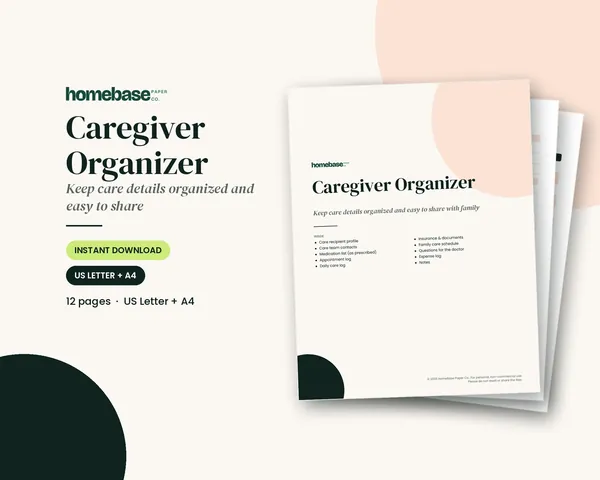
Caregiver Organizer
One place for contacts, appointments, the medication list from the doctor, and daily notes.
 Club
Monthly club
Meal Plan Club
Families who want dinner planned and a grocery list ready every week.
Free printable
Have the important stuff in one place: get the free emergency binder pages
Printable starter pages for household members, emergency contacts, medical notes and where key documents live. You'll also get our weekly HomeBase email with simple ways to keep family records and important papers in order.

Sources
- The Special Needs of the Senior Cat (Cornell Feline Health Center) vet.cornell.edu
- 2021 AAHA/AAFP Feline Life Stage Guidelines (PubMed Central) pmc.ncbi.nlm.nih.gov