

The short answer: probate is the court-supervised process of settling someone's estate after they die.
- The court confirms the will and appoints someone to handle the estate
- Debts and taxes are paid, then what's left goes to the heirs
- Whole process: several months to over a year
- Avoid it with beneficiaries, payable-on-death names and transfer-on-death deeds
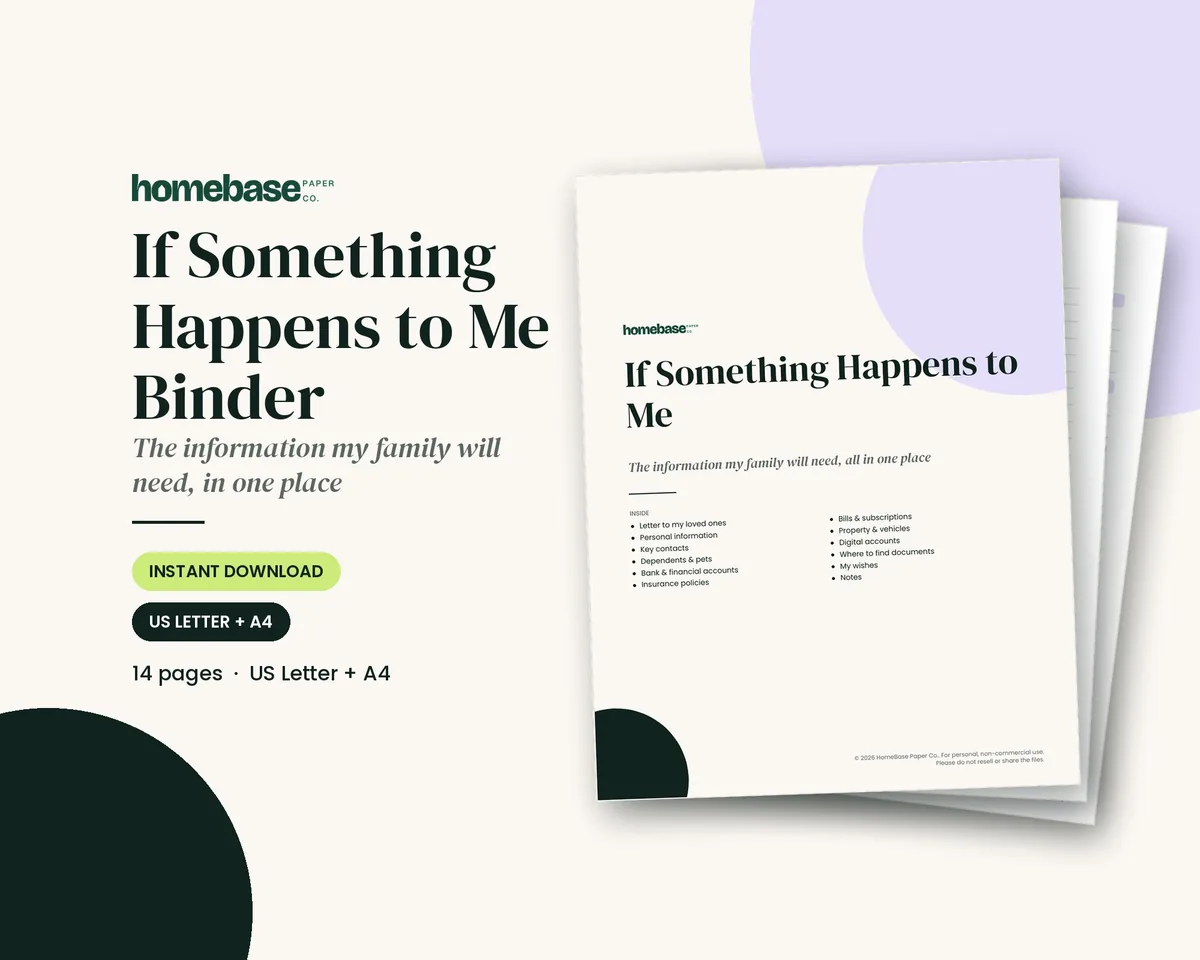
- Next step: Plan it with the If Something Happens to Me Binder ($11.99).
What is probate? Probate is the court-supervised process of settling someone's estate after they die. The court confirms the will, appoints a person to handle the estate, makes sure debts and taxes are paid, and approves handing what is left to the heirs. Investopedia's guide to probate notes that it can be slow and costly, which is why many people plan to keep assets out of it. This guide is general information, not legal advice. Estate law differs by state, so check your state court's self-help pages or talk with a licensed estate planning attorney before you sign anything.
Why probate exists
Probate protects three groups. Heirs get a neutral process for dividing property. Creditors get a fair chance to be paid. And buyers of estate property, such as a house, get clear legal title. The court oversees the person in charge so they cannot simply keep or give away assets as they please.
How the probate process works
Details differ by state, but the California Courts probate self-help guide lays out a typical sequence:
- File a petition with the probate court in the county where the person lived, with the original will if there is one.
- Give notice to heirs and beneficiaries, and often publish a notice in a local newspaper.
- Court appoints a representative, called an executor if named in a will or an administrator if not, and issues letters giving them authority.
- Inventory and appraise the assets.
- Notify creditors and pay valid debts and expenses.
- File tax returns, including the final personal income tax return.
- Ask the court to approve the final accounting and distribution.
- Distribute the assets and close the estate.
How long does probate take?
| Stage | Typical length |
|---|---|
| Filing and appointment | A few weeks to a few months. |
| Creditor claim period | Set by state law, often several months. |
| Inventory, sales and taxes | Several months, longer with real estate. |
| Final accounting and distribution | One to a few months. |
| Whole process | Several months to over a year. |
Disputes over the will, hard-to-value assets, property in more than one state and slow tax filings all add time. Investopedia notes that federal estate taxes, for the few estates large enough to owe them, can come due within nine months of the date of death.
What probate costs
Probate costs come out of the estate, not the heirs' pockets directly. Typical expenses include:
| Cost | Notes |
|---|---|
| Court filing fees | Set by each court. |
| Newspaper notice | Required in many states. |
| Appraisals | For real estate and valuables. |
| Attorney fees | Hourly, flat or, in some states, a percentage set by law. |
| Executor fees | Allowed by state law; family members often waive them. |
| Bond | Some courts require insurance against mistakes, unless the will waives it. |
Investopedia notes that probate without a valid will is usually more costly than probate with one.
Which assets go through probate?
| Usually goes through probate | Usually skips probate |
|---|---|
| Property in the person's name alone. | Life insurance with a living beneficiary. |
| A house with no co-owner or transfer-on-death deed. | Retirement accounts with a named beneficiary. |
| Bank accounts with no payable-on-death name. | Payable-on-death and transfer-on-death accounts. |
| Personal belongings and vehicles in one name. | Joint property with right of survivorship. |
| Assets left to "my estate". | Assets held in a funded living trust. |
The size of the probate estate is often much smaller than the person's total wealth, because so much passes by beneficiary form.
Probate with no will
When someone dies without a will, they died intestate. The court still runs probate, but it names an administrator, usually a spouse or adult child, and divides the estate under the state's intestacy law. That law usually favors a spouse and children first, then parents, siblings and more distant relatives. It does not consider friends, unmarried partners or charities.
To see what a will would have covered, read what is a will.
Small estates and simplified probate
Most states offer a shortcut for smaller estates, such as a small estate affidavit or summary administration. California's self-help pages describe simpler options for estates under a set value. The dollar limit, waiting period and which assets count differ by state, so check your own state court's website before starting a full case.
How to avoid probate
- Name beneficiaries on retirement accounts, life insurance and annuities.
- Add payable-on-death names to bank accounts and transfer-on-death names to brokerage accounts.
- Use a transfer-on-death deed for real estate where your state allows it.
- Hold property jointly with right of survivorship, after thinking through the risks.
- Create and fund a living trust for assets that need management or privacy.
- Review designations after a marriage, divorce, birth or death.
Avoiding probate is not always necessary. For a simple estate in a state with streamlined rules, probate can be routine.
Does every estate need probate?
No. Many estates never open a probate case at all. If everything passed by beneficiary form, joint ownership or a trust, there may be nothing left in the person's name alone. If what is left is small, a small estate affidavit may be enough. Probate is mainly needed when significant property is titled only in the person's name, when real estate must be transferred, or when the family disagrees. A quick inventory of how each asset is titled tells you which path applies.
What heirs should expect
Heirs usually receive a notice that the case has been opened, and later an accounting of what came in and went out. Most states do not allow distribution until creditor deadlines pass and taxes are settled, so waiting a year or more is normal. An heir who has questions can ask the representative for updates, and can raise concerns with the court if accounts are not provided.
Who is involved in probate
| Person | Role |
|---|---|
| Probate judge or court clerk | Oversees the case and approves key steps. |
| Executor or administrator | Handles the estate day to day. |
| Beneficiaries and heirs | Receive notice and, at the end, property. |
| Creditors | May file claims for money owed. |
| Probate attorney | Optional in some states; prepares filings and advice. |
| Appraiser | Values real estate and valuables. |
When someone challenges the will
A will contest is a formal objection to the will in probate court. Common grounds include claims that the person lacked mental capacity, was pressured by someone close to them, or did not sign the will properly. Only people with a stake, such as heirs who would inherit without the will, can usually object, and there are strict deadlines.
A contest can add months or years and drain the estate through legal fees. A clear, properly signed will, updated after big life changes, makes a challenge less likely. Some people also explain unusual choices in a separate letter to their family.
Probate and real estate
A house is often the biggest asset in probate. The representative may need court approval to sell it, depending on the state and the powers granted. Meanwhile someone must keep paying the mortgage, insurance, taxes and utilities, and keep the home secure. If the person owned property in another state, a second "ancillary" probate case may be needed there, which adds time and cost. A living trust or a transfer-on-death deed, where allowed, can prevent this.
Questions to ask a probate attorney
- Does this estate qualify for a small-estate or simplified process?
- How are your fees charged, and what will the court charge?
- How long do estates like this take in this county?
- Is a bond required, and can it be waived?
- What should the family not do yet, such as selling property?
Taxes during probate
The person handling the estate must file the final federal income tax return for the year of death. The IRS page on filing a deceased person's final returns explains who signs and how to claim a refund. The estate may also need its own income tax return if it earns income while it is open.
Make it easier on your family
The hardest part of probate is often just finding everything. The If Something Happens to Me Binder ($11.99, printable PDF) has Key Contacts, Bank & Financial Accounts, Insurance Policies, Bills & Subscriptions, Property & Vehicles, Digital Accounts and Where to Find Documents. Fill it in now, note who your beneficiaries are on each account, and tell your executor where it lives.
Related guides: executor of estate, what is a trust and how to make a will.
Life insurance with named beneficiaries usually pays out directly rather than through probate, and our guide to term life insurance explains how to choose coverage and beneficiaries.
Make it easier
Tools for this
Printables
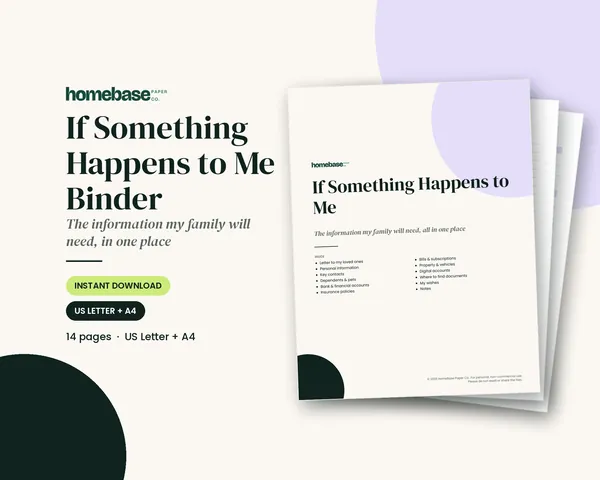
If Something Happens to Me Binder
Accounts, insurance, bills, contacts, documents and your wishes - so your family isn't left guessing.
Frequently asked questions
What is probate in simple terms? Probate is the court process that settles a person's estate after they die: proving the will is valid, appointing someone to manage the estate, paying debts and taxes, and giving what is left to the heirs. If there is no will, the court applies state law to decide who inherits and appoints an administrator.
How long does probate take? Probate commonly takes several months to more than a year. Simple estates in states with streamlined rules can close in a few months, while estates with real estate, disputes or tax issues take longer. Creditor claim periods set by state law, often several months, mean most estates cannot close right away.
How much does probate cost? Probate can cost several percent of the estate's value in some states once every fee is added up, and the total depends on your state, the size of the estate and whether you hire a lawyer. Costs include court filing fees, appraisal and publication costs, and attorney and executor fees, which some states set by statute as a percentage of the estate. Investopedia notes probate without a will is usually more costly.
What assets do not go through probate? Assets that usually skip probate include those with a named beneficiary, such as life insurance, retirement accounts and payable-on-death bank accounts; property owned jointly with right of survivorship; and assets held in a living trust. They pass directly to the named person or co-owner.
Is probate required if there is a will? Often yes: a will does not avoid probate, it guides it. The will tells the court who the executor should be and who gets what, but the court still usually supervises the process. Many states let small estates below a set value skip full probate with a simpler affidavit or summary procedure.
What happens in probate if there is no will? If there is no will, the person died intestate, and the probate court appoints an administrator, usually a close relative, and divides the estate under state intestacy law. That law typically favors a spouse and children, then parents and siblings. Probate without a will is usually slower and more costly.
How can I avoid probate? Common ways to avoid probate are naming beneficiaries on accounts and insurance, adding payable-on-death or transfer-on-death designations, owning property jointly with right of survivorship, and putting assets in a funded living trust. Some states also allow transfer-on-death deeds for real estate. Check that every designation is current.
What is a small estate affidavit? A small estate affidavit is a short sworn form that lets heirs collect property from an estate below a state-set value without a full probate case. California, for example, offers simplified procedures for smaller estates. The value limit, waiting period and which assets count differ by state, so check your state court's self-help site.
Do you have to pay taxes during probate? Yes, the estate's representative must file the person's final federal and state income tax returns, and the estate may owe its own income tax and, for very large estates, estate tax. The IRS explains that the final return is filed by the executor or administrator for the year of death.
Is probate public? Yes, probate is generally public. The will, the inventory of assets and court filings usually become part of the court record that anyone can look up. Families who want privacy often use a living trust, since assets held in a trust pass without a public probate case.
What should I gather before probate starts? Gather the original will, the death certificate, a list of assets and debts, recent account statements, deeds and titles, insurance policies and the person's last tax returns. A If Something Happens to Me Binder ($11.99) prepared ahead of time puts accounts, insurance, property and where documents are kept in one place for the family.
More from HomeBase
You may also like
 Starter pick
Printables
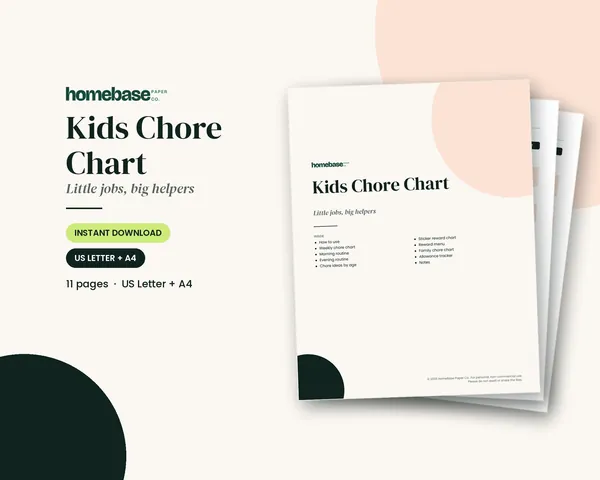
Kids Chore Chart
Weekly chore chart, morning and evening routines, chore ideas by age, a sticker reward chart and an allowance tracker.

Printables
Family Recipe Binder
Section dividers, four recipe page layouts with room for the family story, 4x6 and 3x5 cards and a conversion chart - print it or type into the fillable version.
Printables
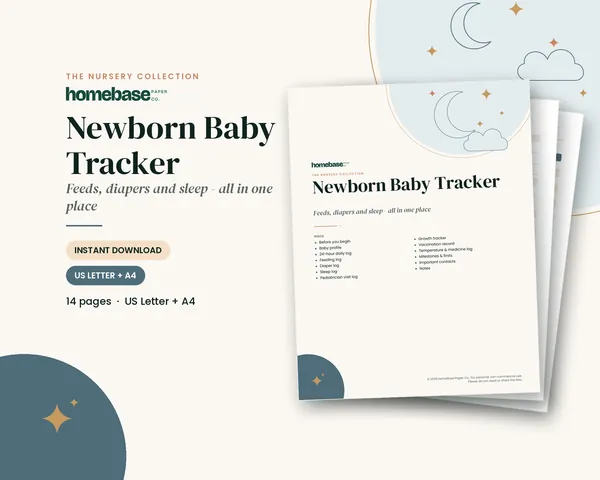
Newborn Baby Tracker
A 24-hour daily log plus feeding, diaper, sleep, growth and pediatrician-visit pages - easy to bring to checkups.
Printables
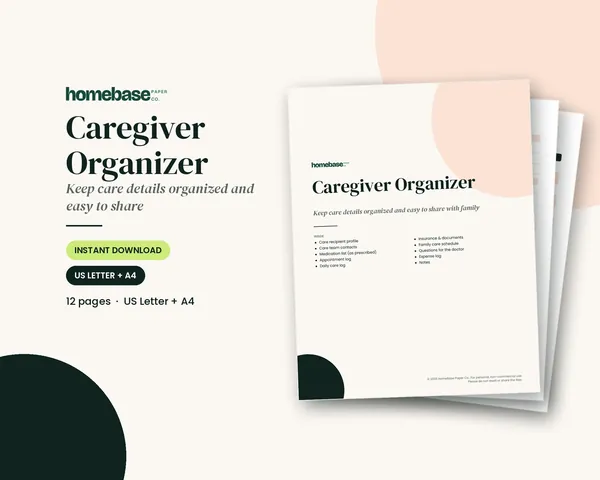
Caregiver Organizer
One place for contacts, appointments, the medication list from the doctor, and daily notes.
 Club
Monthly club
Meal Plan Club
Families who want dinner planned and a grocery list ready every week.
Free printable
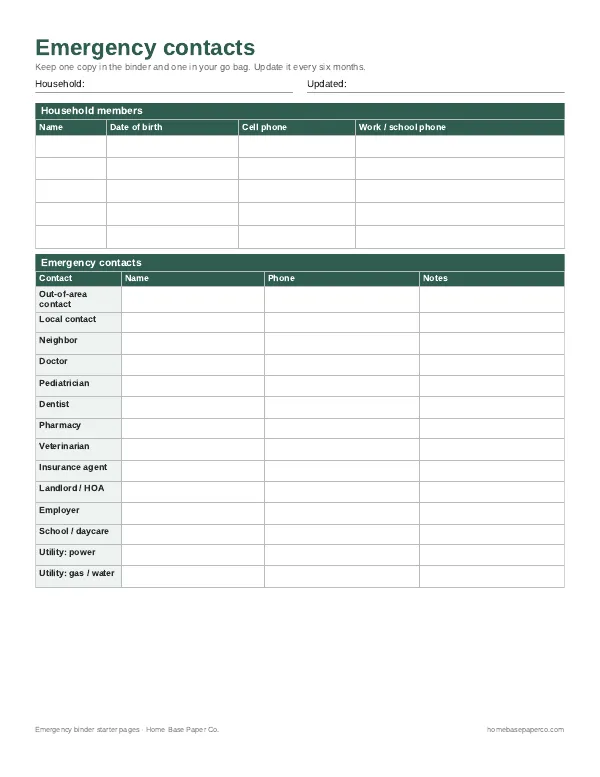
Have the important stuff in one place: get the free emergency binder pages
Printable starter pages for household members, emergency contacts, medical notes and where key documents live. You'll also get our weekly HomeBase email with simple ways to keep family records and important papers in order.
Sources
- Probate: Definition, Process and How to Avoid It (Investopedia) investopedia.com
- Probate (California Courts Self-Help Guide) selfhelp.courts.ca.gov
- File the Final Income Tax Returns of a Deceased Person (IRS) irs.gov