

The short answer: term life insurance is the simplest, most affordable way to protect people who depend on your income. You pay a fixed premium for a set number of years; if you die during the term, beneficiaries get a tax-free lump sum.
- Terms such as 10, 20 or 30 years
- Whole life often costs many times more for the same coverage
- Best for income protection while kids are young and debts are high
- How much you need and how to buy it, step by step, below
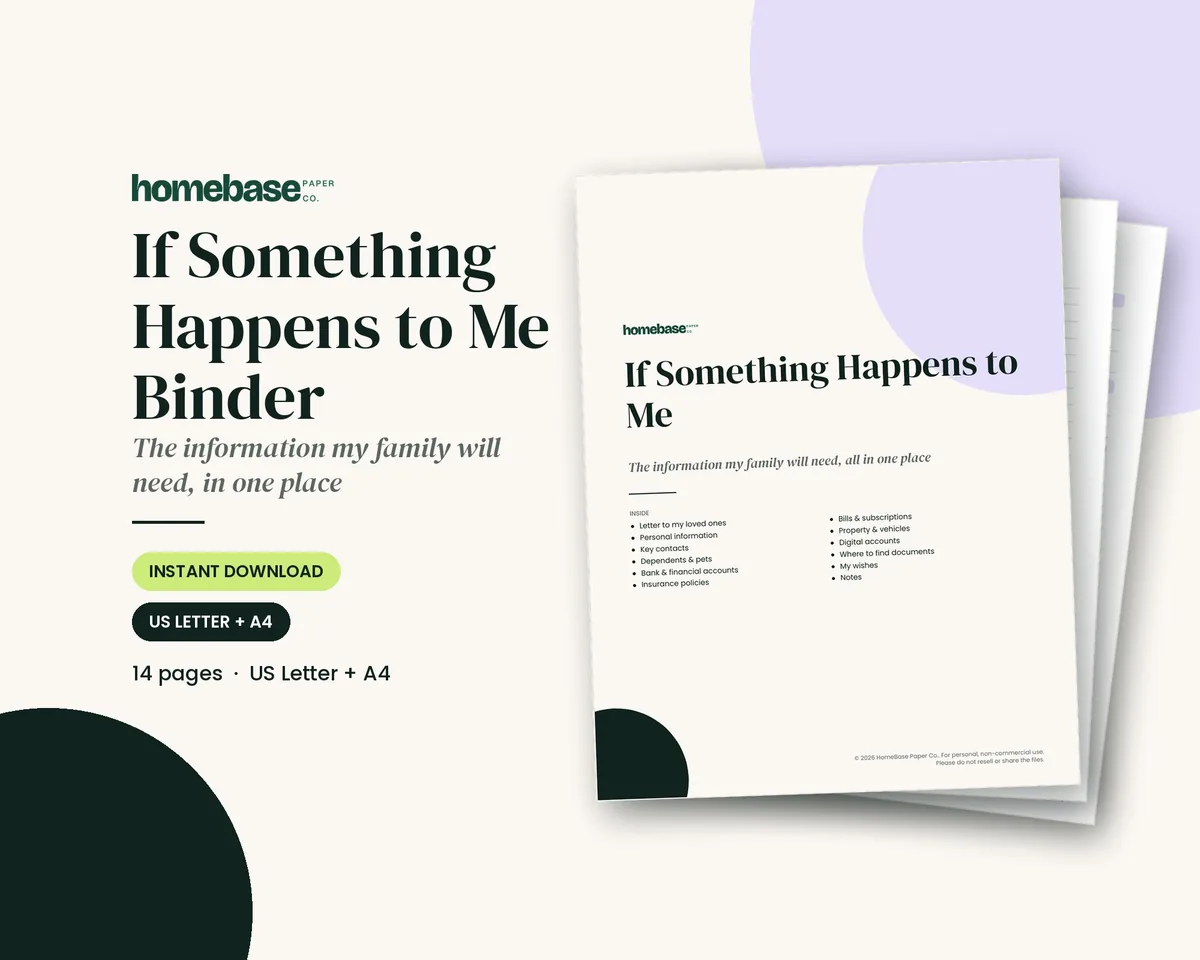
- Next step: Plan it with the If Something Happens to Me Binder ($11.99).
Term life insurance is the simplest and most affordable way to protect the people who depend on your income. You pay a fixed premium for a set number of years, and if you die during that term, your beneficiaries receive a tax-free lump sum they can use for the mortgage, groceries, child care or college. This guide explains how term life insurance works, how to pick the right term length and amount, how it compares with whole life, what affects the price and how to buy a policy step by step.
This page is general education, not insurance, legal or financial advice. Coverage rules vary by state and by policy, so always read your own policy documents. A policy only helps if your family can find it. The If Something Happens to Me Binder gives you a place to record policies, beneficiaries and key accounts, and the Family Peace of Mind Bundle adds the rest of your family's important information.
How term life insurance works
When you buy a term policy, you choose three things: the death benefit, the term length and your beneficiaries. Investopedia explains that the premium is usually locked in for the whole term, so a healthy 30-year-old who buys a 30-year policy pays the same price at 55 as on day one. If you die during the term, the insurer pays the death benefit to your beneficiaries. If you are still living when the term ends, the coverage expires.
That sounds like a waste to some people, but it is the same as car or home insurance: you pay for protection during the years you need it most, and you are glad when you never have to use it.
Term vs. whole life insurance
| Feature | Term life | Whole life |
|---|---|---|
| How long it lasts | A set term, such as 10, 20 or 30 years | Your whole life |
| Cost for the same coverage | Low | Often many times higher |
| Cash value | None | Builds slowly over time |
| Premiums | Level for the term | Level for life |
| Best for | Income protection while kids are young and debts are high | Specific lifelong or estate planning needs |
Investopedia's life insurance overview notes that permanent policies such as whole and universal life combine insurance with a cash value account, which is why they cost more. Many families follow the idea of buying term and investing the difference, putting the money saved into retirement accounts such as a Roth IRA.
How much term life insurance do you need?
A quick rule of thumb is 10 to 12 times your yearly income. A more accurate method is to add up what your family would need:
- Pay off the mortgage or cover several years of rent.
- Pay off other debts, such as car loans and credit cards.
- Replace your income for the years until your youngest child is grown.
- Add child care and future college costs.
- Add final expenses, often several thousand dollars or more.
- Subtract your savings, investments and any existing coverage, such as a group policy at work.
Stay-at-home parents need coverage too. Replacing child care, cooking, cleaning and driving could cost a family tens of thousands of dollars a year.
How to choose a term length
Match the term to your longest financial obligation. If your youngest child is 2 and your mortgage has 28 years left, a 30-year term may fit. If your kids are teenagers and the house is nearly paid off, a 10- or 15-year term may be enough. Some people stack policies, such as a large 20-year policy and a smaller 30-year policy, so coverage steps down as needs shrink.
What affects the price of term life insurance
- Your age; buying younger locks in a lower premium
- Your health, including height, weight, blood pressure and medical history
- Tobacco and nicotine use, which can multiply the price
- Family medical history
- The death benefit and term length you choose
- Risky hobbies or jobs, such as piloting small planes
- Whether the policy requires a medical exam
How to buy term life insurance, step by step
- Estimate how much coverage you need and pick a term length.
- Check any group life insurance through work, but do not rely on it alone, since it usually ends when you leave the job.
- Get quotes from several highly rated insurers or an independent agent. For more on this topic, see our insurance hub.
- Complete the application honestly; leaving out health details can put a claim at risk later.
- Take the medical exam if required, or apply for a no-exam policy if you qualify.
- Name primary and backup beneficiaries. For minor children, ask an estate attorney about naming a trust or custodian.
- Store the policy where your family can find it, and tell your beneficiaries it exists.
Term life insurance in your family plan
Life insurance is one piece of protecting your family. Pair it with disability insurance, which covers you if you live but cannot work, and with a will and guardianship plan. Our estate planning checklist lists the documents to prepare, and our financial planning guide shows where insurance fits among saving, investing and paying off debt.
The bottom line
Term life insurance gives your family a large, tax-free safety net for a modest, fixed premium. Figure out what your family would need, pick a term that covers your biggest obligations, compare quotes from strong insurers, and keep the policy details where your loved ones can find them.
Make it easier
Tools for this

Printables
If Something Happens to Me Binder
Accounts, insurance, bills, contacts, documents and your wishes - so your family isn't left guessing.
 Save 37%
Bundles
Family Peace of Mind Bundle
The If Something Happens to Me binder, Caregiver Organizer, Pet Health Records and Password Log together.
Frequently asked questions
What is term life insurance? Term life insurance is a policy that pays a set amount of money, called the death benefit, to the people you name if you die during a chosen period, such as 10, 20 or 30 years. If you outlive the term, coverage ends and there is no payout. Because it has no savings component, term life insurance is usually the most affordable way to get a large amount of coverage.
How much term life insurance do I need? A common starting point is 10 to 12 times your yearly income, but a better method is to add up what your family would need: paying off the mortgage and other debts, replacing your income for a number of years, child care and college costs, and final expenses. Then subtract savings and any existing coverage, such as a group policy through work.
Is term or whole life insurance better? For most families who simply want to protect their income while children are young and debts are high, term life insurance is the better fit, because it costs far less for the same coverage. Whole life insurance lasts your entire life and builds cash value, but premiums are much higher. It can make sense for specific estate planning or lifelong dependent needs.
What happens when a term life insurance policy ends? When the term ends, your coverage stops and you stop paying premiums. Many policies let you renew year by year at a much higher price, or convert to a permanent policy without a new medical exam before a certain age. If your children are grown and your debts are paid off, you may not need to replace the coverage at all.
Free printable
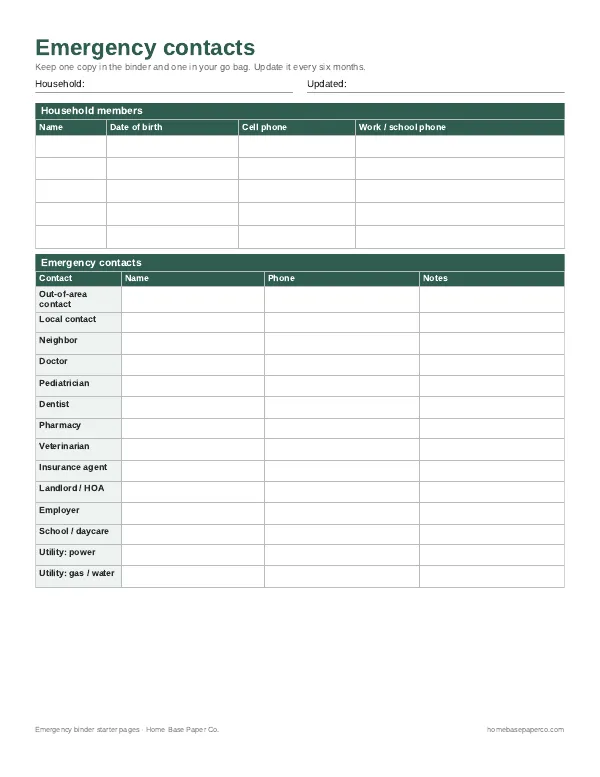
Have the important stuff in one place: get the free emergency binder pages
Printable starter pages for household members, emergency contacts, medical notes and where key documents live. You'll also get our weekly HomeBase email with simple ways to keep family records and important papers in order.
Sources
- Investopedia: Term life insurance investopedia.com
- Investopedia: Life insurance investopedia.com