

The short answer: Meal planning means deciding dinners for the week before you shop, then buying only what that plan needs. A weekly loop of calendar, inventory, five dinners, leftovers, one flexible night and one grocery list is enough.
- Core loop: check the week, shop the kitchen first, choose meals, write the list, shop once, light prep
- Aim for: 5 planned dinners + leftovers + 1 flexible night
- Safety: fridge leftovers 3 to 4 days; reheat to 165 F
- Next step: get the free recipe book (we email it to you), or plan on paper with the Meal Planner & Grocery List ($3.99)
Our picks for meal planning
 Starter pick
Printables
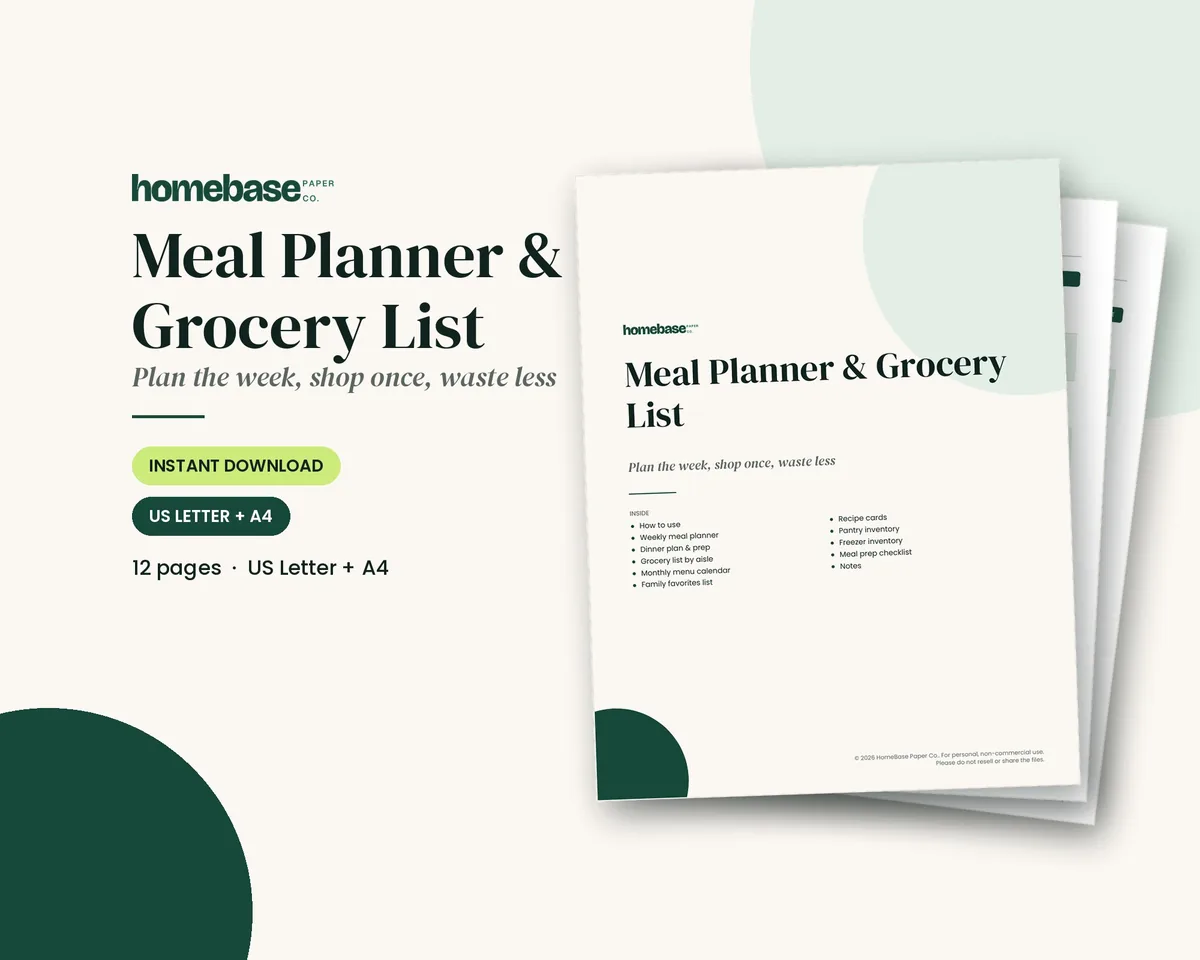
Meal Planner & Grocery List
Weekly meals, a grocery list sorted by aisle, and pantry and freezer inventories so you shop once and waste less.

Printables
Family Recipe Binder
Section dividers, four recipe page layouts with room for the family story, 4x6 and 3x5 cards and a conversion chart - print it or type into the fillable version.
 Save 33%
Bundles
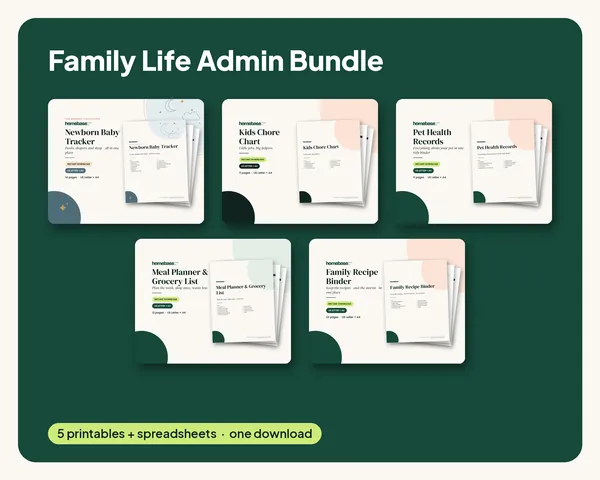
Family Life Admin Bundle
Baby logs, chore charts, pet records, meal plans and family recipes in one tidy set.
Prices checked November 6, 2026. Below: what meal planning is, why it works, a weekly system overview, a sample week, templates, mistakes and FAQs. For the full 7-step method see how to meal plan. For grocery math see meal planning on a budget.
What meal planning is (and is not)
Meal planning is a short weekly decision session. You match meals to the real calendar, use what you already own and leave the store with one focused list. It is not a rigid diet, a 40-recipe binder you never open or a promise that every night will look Pinterest-perfect.
- Meal planning: choose meals and build the list before you shop. Covered on this hub.
- How to meal plan: the step-by-step weekly method. See how to meal plan.
- Meal planning on a budget: sales, staples and cost control. See meal planning on a budget.
- Meal prep: chop, cook or portion ahead. See meal prep ideas and how to start meal prepping.
- Monthly meal planner: map about 30 dinners in one sitting. See monthly meal planner.
- Meal planning apps: software for menus and shared lists. See meal planning apps.
Tip: If "what's for dinner" still hits at 5 p.m., you do not need more recipes. You need a written plan and a list that leaves the house with you.
Why meal planning works
A plan works because it moves three expensive moments earlier: deciding, shopping and recovering from a bad night. You still cook. You just stop deciding and shopping in a rush every evening.
- Fewer store trips. One main shop from a list cuts "I forgot cilantro" runs.
- Less food waste. Meals use open packages first. Inventory before you buy more.
- Calmer evenings. Dinner is already chosen. Busy nights get easy meals.
- Better plate balance. Aim for protein, produce and grains across the week. Align with Dietary Guidelines for Americans food-group ideas.
- Budget control. List-first shopping helps. Benchmark costs with USDA Cost of Food reports.
USDA Food Plans publish monthly cost estimates for Thrifty through Liberal plans by age and household size. Use them as a reality check for your grocery target, not as a grade. For family-of-four grocery math, see grocery budget for a family of 4 and how to grocery shop on a budget.
Real example: As a Detroit-raised mom who now plans from Frisco, Texas, I treat dinner like any other appointment. Twenty quiet minutes with the calendar beats a stressed aisle walk with an empty cart and a hungry house waiting at home.
Weekly meal planning system overview
This is the hub view of the weekly loop. The detailed 7-step walkthrough lives on how to meal plan. Use that spoke when you want the method written out step by step.
- Calendar scan (5 min). Mark busy nights for easy or leftover meals.
- Kitchen inventory (5 to 10 min). Note fridge, freezer and pantry items that must be used.
- Choose dinners (10 to 15 min). Pick five dinners, leftovers and one flexible night.
- Grocery list (5 to 10 min). Build an aisle-sorted list from recipes minus what you own.
- Shop once. Stick to the list. One planned treat is fine.
- Light prep (15 to 30 min, optional). Wash produce. Thaw protein. Batch a grain or protein.
Theme nights that shrink decisions
Themes do not replace a plan. They shrink each night to a short menu of options.
| Night | Theme | Easy fills |
|---|---|---|
| Monday | Meatless or pantry. | Bean chili. Lentil soup. Quesadillas. |
| Tuesday | Tacos or bowls. | Turkey tacos. Burrito bowls. Fish tacos. |
| Wednesday | Pasta. | Spaghetti. Baked ziti. Pasta with vegetables. |
| Thursday | Sheet pan or slow cooker. | Chicken and vegetables. Pot roast. |
| Friday | Fun night. | Pizza. Breakfast for dinner. Sandwiches. |
| Saturday | Flexible. | Grill. Leftovers. Eat out if planned. |
| Sunday | Batch cook. | Roast chicken. Soup. Chili for the week. |
Fill themes from easy dinner ideas, cheap meal ideas, one-pot meals and high-protein meals. Families can also use how to meal plan for a family.
Sample week of meal planning
A sample is a pattern, not a rule. Swap in your keepers. Costs are not priced here on purpose; for dollar targets use the budget spoke.
| Day | Dinner | Why it fits |
|---|---|---|
| Mon | Black bean chili with tortillas. | Pantry-friendly. Leftovers freeze. |
| Tue | Turkey tacos. | Fast after work. Shared taco bar. |
| Wed | Spaghetti with meat or lentil sauce. | Uses pantry tomatoes. Double the sauce. |
| Thu | Sheet-pan chicken and vegetables. | One pan. Roast extras for lunches. |
| Fri | Homemade pizza or breakfast for dinner. | Flexible and fun. |
| Sat | Leftover chili or clean-out stir-fry. | Uses open produce. |
| Sun | Roast chicken with rice and salad. | Batch protein for early-week lunches. |
Lunch idea: leftover chili, chicken rice bowls or turkey taco leftovers. Breakfast idea: eggs, oatmeal or yogurt on repeat. You do not need seven unique breakfasts.
For freezer backup nights, keep a few freezer meals labeled and dated. For healthy prep trays, see healthy meal prep ideas.
Templates and printables for meal planning
Paper still wins when the fridge is the shared family dashboard. Digital wins when two adults shop from the same list. Many households use both: paper on the fridge, phone list at the store.
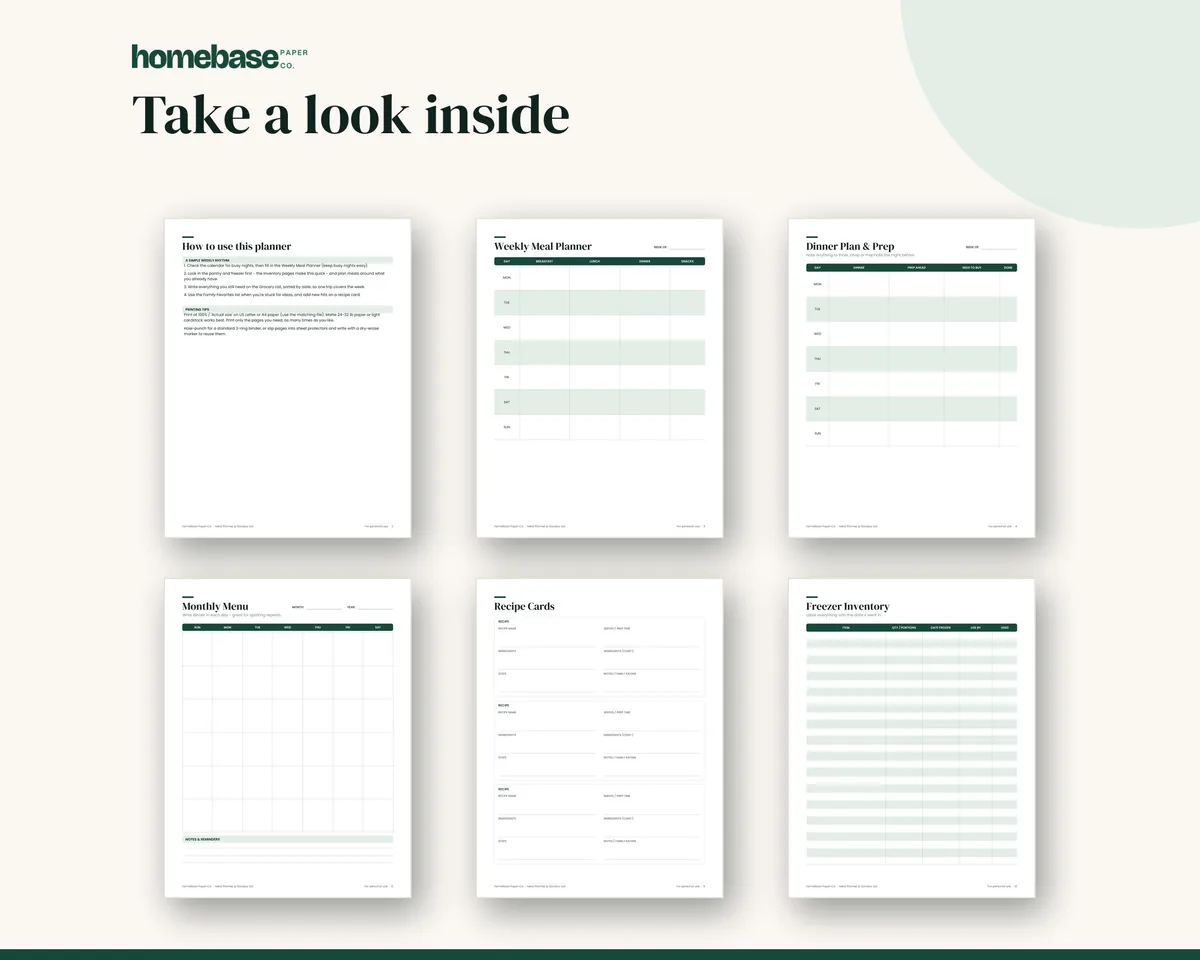
- Weekly meal planner. Breakfast, lunch and dinner by day. Included in the paid planner below.
- Grocery list by aisle. Produce, dairy, meat, pantry and frozen. See also grocery list template.
- Family favorites. Fifteen to twenty dinners everyone eats. Keep this list short.
- Pantry and freezer inventory. Track what you already own. See pantry inventory list.
- Recipe cards. Keepers you cook on repeat. Start with the free recipe book (we email it to you).
- Monthly menu. A 30-day view. See monthly meal planner.
- Meal Planner & Grocery List, $3.99
- Family Recipe Binder, $6.99
- Family Life Admin Bundle, $15.99 (
$23.95when bought separately) - Full Printables line
- Free recipe book (we email it to you)
If you prefer apps later, compare them on meal planning apps without abandoning the paper plan that already works.
Seasonal and sale-aware planning
Meal planning gets cheaper when the menu follows the season and the circular, not the other way around.
- Spring and summer: grilled proteins, salads, fresh corn, berries used early in the week.
- Fall and winter: soups, stews, roasted root vegetables, chili on repeat.
- Sale first: if chicken thighs are on sale, build two dinners around them. Roast one night. Make tacos or soup later.
- In-season produce: cheaper and lasts better when you plan to use it in the first half of the week.
Balance still matters. The Dietary Guidelines for Americans encourage a mix of vegetables, fruits, grains, proteins and dairy or fortified alternatives across the week. You do not need a perfect plate every night. You need a week that is mostly whole foods you will actually cook.
Leftovers and food safety inside a meal plan
A plan that ignores storage becomes food waste. Build leftovers nights two or three days after a big cook.
Per the FoodSafety.gov cold food storage chart:
| Food | Refrigerator | Freezer (best quality) |
|---|---|---|
| Cooked meat, poultry or fish leftovers. | 3 to 4 days. | 2 to 6 months. |
| Soups and stews. | 3 to 4 days. | 2 to 3 months. |
| Cooked leftovers (mixed dishes). | 3 to 4 days. | 2 to 3 months. |
Affiliate links: we may earn a small commission. As an Amazon Associate we earn from qualifying purchases. Details.
USDA FSIS leftovers guidance says to refrigerate within 2 hours (1 hour if above 90 F) and reheat leftovers to 165 F. Cool in shallow containers; KOMUEE glass meal prep containers with lids are one option if you keep the food in a shallow layer. Label freezer bags, such as Amazon Basics gallon freezer bags, with the meal name and date so the plan can actually use them.
Common meal planning mistakes
- Planning seven ambitious dinners. Plan five. Protect leftovers and one flexible night.
- Ignoring the calendar. Busy nights get sheet-pan, slow cooker or budgeted takeout.
- Shopping before inventory. Open the fridge and pantry first.
- Too many new recipes. Cap new dishes at one per week.
- No backup meal. Keep pasta, eggs, frozen vegetables or a labeled freezer meal.
- Skipping all prep. Even 15 minutes of chopping on shop day helps weeknights.
- Forcing one tool on everyone. Paper on the fridge plus a phone list is fine.
- Never reviewing favorites. Drop a meal after two clear rejections.
When the problem is money rather than the menu board, switch to meal planning on a budget. When the problem is cooking ahead, use meal prep ideas.
Breakfast, lunch and snacks without over-planning
Dinner carries most of the stress, so plan it first. Add breakfast and lunch only where the week actually breaks.
- Breakfast. Repeat two options all week. Eggs and toast. Oatmeal with fruit. Yogurt and granola.
- Lunch. Use dinner leftovers or a short cold list. Chili bowls. Chicken rice. Turkey wraps.
- Snacks. Stock them. Do not menu them. Fruit, cheese sticks, nuts, carrots, popcorn.
- Kids' lunches. Rotate three packable sets. Sandwich and fruit. Leftovers thermos. Snack plate.
If mornings are the chaos point, batch a breakfast base on Sunday (hard-boiled eggs, overnight oats mix or a breakfast burrito filling). If lunch packing is the pain point, portion leftovers into containers right after dinner. For more tray ideas see healthy meal prep ideas and high-protein meals.
Shopping from a meal plan
The list is the plan's second half. Without it, meal planning is just wishful thinking on the fridge.
- Write every ingredient from the week's dinners.
- Cross off what you already own after the kitchen inventory.
- Sort by store section (produce, meat, dairy, pantry, frozen, bakery) so you walk the store once.
- Add household restocks only if you are truly low (oil, coffee, dishwasher soap).
- Shop hungry-proof: eat first, bring the list, skip end-cap impulse trays unless they are on the plan.
A printable aisle list lives in the Meal Planner & Grocery List and a simpler blank lives on our grocery list template. For stretch strategies see how to grocery shop on a budget.
- One primary store. It matches your price memory and cuts drive time.
- Check sales before the menu is final. Chicken night follows the chicken sale.
- Buy meat in meal-size packs. Thaw exactly what Thursday needs.
- Use produce early in the week. Delicate greens should not wait until Saturday.
Pantry and freezer backbone for easier weeks
A short staple list makes weekly meal planning faster because half the dinners start from food you already trust.
- Pantry. Keep rice, pasta, beans, lentils, canned tomatoes, broth, tortillas and oats. They become chili, pasta, soups, tacos and bowls.
- Fridge. Keep eggs, milk, cheese, yogurt, lemons and salsa. They cover breakfasts and quick lunches.
- Freezer. Keep chicken, ground turkey, frozen vegetables, bread and one labeled freezer meal. They cover busy nights.
- Flavor. Keep onion, garlic, oil, salt, cumin, chili powder and soy sauce. They season almost every pot.
Inventory before you shop using a pantry inventory list. Frozen backups pair with freezer meals.
Two more sample weeks (solo and family)
Solo or couple week
| Day | Dinner |
|---|---|
| Mon | Lentil soup. Cook once. Eat twice. |
| Tue | Sheet-pan salmon or tofu and vegetables. |
| Wed | Soup leftovers and salad. |
| Thu | Stir-fry with frozen vegetables and rice. |
| Fri | Breakfast for dinner. |
| Sat | Flexible night or planned takeout. |
| Sun | Roast vegetables and grain bowls. |
Cook once on Monday and Sunday so weeknights stay short. Scale recipes down and freeze half when a package is too big.
Family week with picky eaters
| Day | Dinner | Flexibility move |
|---|---|---|
| Mon | Taco bar. | Same base. Toppings people choose. |
| Tue | Pasta with meat sauce. | Offer plain pasta if needed. |
| Wed | Sheet-pan chicken. | Familiar sides: rice and corn. |
| Thu | Leftover chicken quesadillas. | Fast rework night. |
| Fri | Pizza night. | Homemade or pickup. Still on the plan. |
| Sat | Grill or burgers. | Build-your-own toppings. |
| Sun | Chili. | Freeze a quart for a later Monday. |
Serve one meal. Offer a simple backup side you already have (bread, fruit, plain rice) instead of cooking a second dinner. For family-specific sequencing see how to meal plan for a family.
Meal planning vs no plan
- 5 p.m. decision. Without a plan you stare into the fridge. With meal planning, dinner is already chosen.
- Grocery trip. Without a plan you wander and overbuy. With a plan you shop list-first.
- Open produce. Without a plan it wilts. With a plan it is assigned early in the week.
- Busy weeknights. Without a plan you default to takeout. With a plan, easy meals sit on those days.
- Leftovers. Without a plan containers get forgotten. With a plan you schedule a leftover night.
- New recipes. Without a plan saves pile up. With a plan you cap new dishes at one per week.
You will still have off nights. The point of meal planning is a default path, not a perfect streak.
First-week starter checklist
- Pick an anchor day (Sunday afternoon or a quiet weeknight).
- Write 12 dinners your household already likes.
- Mark this week's busy nights on the calendar.
- Inventory fridge, freezer and pantry for 10 minutes.
- Choose 5 dinners + leftovers + 1 flexible night.
- Build an aisle-sorted grocery list.
- Shop once with the list.
- Optional: wash produce, thaw Thursday's protein, cook a pot of rice or chili.
- Put the plan on the fridge where everyone can see it.
- After the week, note which meals to keep or drop.
When you want the longer method card, open how to meal plan. When grocery totals are the main stress, open meal planning on a budget.
How this hub connects to the rest of our meal system
Use this page when you need the definition, benefits, weekly overview, sample week and templates. Then jump to the spoke that matches the job:
- Need the step-by-step method? Go to how to meal plan.
- Need grocery savings? Go to meal planning on a budget.
- Comparing apps? Go to meal planning apps.
- Want a 30-day calendar? Go to monthly meal planner.
- Ready to prep? Go to meal prep ideas and how to start meal prepping.
- Need dinner ideas? Go to easy dinner ideas and cheap meal ideas.
Browse more meal and home hubs from our topic hubs. Our story and why we build printables lives on our story.
Start this week's meal planning session
Block 30 minutes on your anchor day. Mark busy nights, list five dinners you already know, write the grocery list from those recipes and shop once. Keep the plan where everyone can see it.
- Plan on the Meal Planner & Grocery List ($3.99)
- File keepers in the Family Recipe Binder ($6.99)
- Or start with the free recipe book (we email it to you)
Need a starting point for the week? See what to cook this week for three ready-made five-dinner menus.
Plan the week's meals and shop once
Weekly meals, a grocery list sorted by aisle, and pantry and freezer inventories so you shop once and waste less.
$3.99 · Instant download. Print at home or fill it in on screen. Or browse the full Home & Organizing collection.
Frequently asked questions
What is meal planning? Meal planning means deciding what you will cook and eat for a set stretch of days before you shop, then writing a grocery list from those meals. It is a decision system, not a fancy diet.
Why does meal planning work? It works because you buy with a list, cook with a plan and waste less food. Fewer last-minute takeout runs and fewer forgotten ingredients add up across a month.
How is meal planning different from meal prep? Meal planning is deciding the menu and list. Meal prep is the cooking and chopping you do ahead. Many households plan first, then prep only what the week needs. See our meal prep ideas and how to start meal prepping guides for the prep side.
How long does weekly meal planning take? Most people need 20 to 40 minutes once a week once they have a short list of family favorites. The first two weeks take longer while you build that list.
How many dinners should I plan each week? Plan five solid dinners, leave one leftovers night and keep one flexible night. That covers seven days without forcing a from-scratch meal every evening.
Do I need an app for meal planning? No, you don't need an app for meal planning. Paper, a fridge whiteboard or a simple notes list all work. Apps help if you want shared lists or saved recipes. Compare options on our meal planning apps page if you want software later.
How long do leftovers last in a meal plan? Cooked leftovers keep 3 to 4 days in the refrigerator per FoodSafety.gov cold storage guidance. Freeze extras within that window, and reheat leftovers to 165 F per USDA FSIS.
What should beginners put on the first meal plan? Start with meals you already know how to cook. Add one new recipe at most. Put the busiest nights on sheet-pan, slow cooker or leftover meals.
Can meal planning help a grocery budget? Yes, meal planning can help a grocery budget. Planning from pantry stock and sales before you shop cuts impulse buys and duplicate staples. For the full budget system, use our meal planning on a budget guide.
Should I plan breakfast and lunch too? You don't have to plan breakfast and lunch too, so plan dinners first. Add breakfast and lunch only if mornings feel chaotic or lunch packing is the stress point. Repeating the same two breakfasts and three lunches is enough.
What is a good weekly meal planning routine? A good weekly meal planning routine starts with one anchor day. Check the calendar, inventory the kitchen, choose dinners, write the list, shop once and do light prep. Details of each step live on our how to meal plan guide.
Where can I get a printable meal planner? The Meal Planner & Grocery List ($3.99) from HomeBase Paper Co. is a printable weekly meal planner with an aisle-sorted grocery list, monthly menu and pantry pages.
Where should I keep recipes that stay on rotation? The Family Recipe Binder ($6.99) from HomeBase Paper Co. has printable recipe pages and cards so keepers stay in one place instead of scattered screenshots.
Is there a free printable to start meal planning? Yes, there is a free printable to start meal planning. Get the free recipe book at /get/recipe-book/ (we email it to you). For the full weekly planner plus grocery list, use the Meal Planner & Grocery List for $3.99.
What is in the Family Life Admin Bundle for meal planning? The Family Life Admin Bundle ($15.99, ~~$23.95~~) from HomeBase Paper Co. includes the Meal Planner & Grocery List and Family Recipe Binder plus newborn, chore and pet pages for the wider household.
Free printable
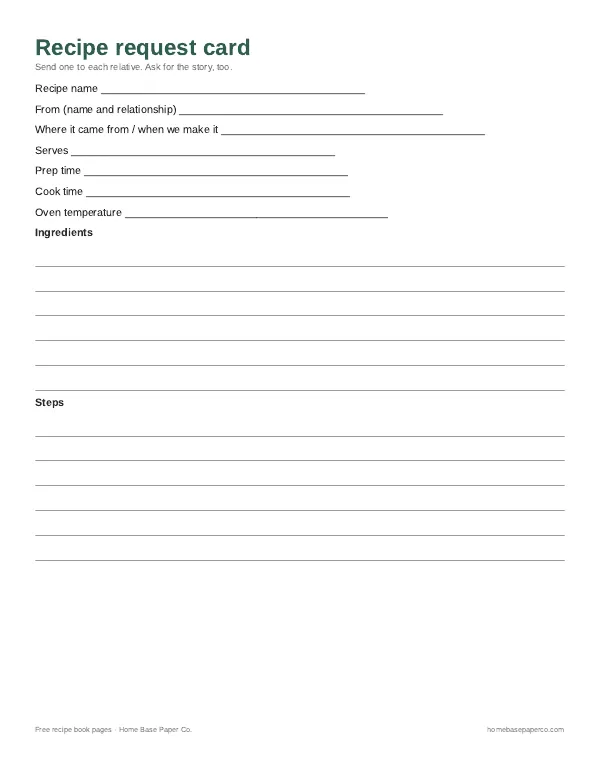
Save the family favorites: get the free recipe book pages
Printable recipe pages and a recipe request card to send to relatives, so the dishes everyone loves end up in one book. You'll also get our weekly HomeBase email with easy meal planning ideas and family recipe tips.
Sources
- FoodSafety.gov: Cold food storage chart foodsafety.gov
- USDA FSIS: Leftovers and food safety fsis.usda.gov
- USDA Food Plans: Cost of Food Reports fna.usda.gov
- Dietary Guidelines for Americans dietaryguidelines.gov