

The short answer: the best diy fruit fly trap takes two minutes: about an inch of apple cider vinegar in a small jar, one or two drops of dish soap, plastic wrap on top and a few holes.
- The soap makes them sink
- Place it next to the fruit bowl, beside the sink or near the trash
- 8 homemade traps and the best baits
- Why traps fail and how to keep fruit flies from coming back
- Next step: Plan it with the Meal Planner & Grocery List ($3.99).
Our picks for diy fruit fly trap
Printables
Cleaning Schedule
Daily, weekly, monthly and seasonal lists - plus a family chore chart.
 Starter pick
Printables
Meal Planner & Grocery List
Weekly meals, a grocery list sorted by aisle, and pantry and freezer inventories so you shop once and waste less.

Printables
Household Binder
Family info, emergency plan, calendars, meals, groceries, cleaning, bills and sitter notes.
The best DIY fruit fly trap takes two minutes: pour about an inch of apple cider vinegar into a small jar, add one or two drops of dish soap, cover it with plastic wrap and poke a few holes with a toothpick. Fruit flies follow the fermented smell in, and the soap makes them sink. Below are 8 homemade traps you can make from kitchen staples, the baits that work best, where to set them and what to do when a trap isn't catching anything.
Keep the fruit bowl small, and the flies have less to find. The Meal Planner & Grocery List ($3.99) helps you buy only the produce you'll use this week.
8 DIY fruit fly traps
| Trap | What you need | How to make it | Best for |
|---|---|---|---|
| 1. Vinegar and soap jar | Apple cider vinegar, dish soap, jar, plastic wrap | Add 1 inch of vinegar and 1 to 2 drops of soap. Cover with plastic wrap and poke 6 to 10 small holes. | The everyday go-to |
| 2. Open vinegar bowl | Apple cider vinegar, dish soap, small bowl | Same mix, no cover. The soap does the work. | Fast setup, many flies |
| 3. Paper cone jar | Jar, paper, tape, bait | Roll a funnel with a small opening, tape it, set it in the jar narrow end down over bait. | Reusable, no plastic wrap |
| 4. Overripe fruit trap | A chunk of banana or peach, jar, plastic wrap | Put the fruit in the jar, cover and poke holes. | When you're out of vinegar |
| 5. Leftover wine bottle | A bottle with an inch of red wine | Leave it open on the counter. The narrow neck traps the flies. | Using up the last glass |
| 6. Beer trap | A splash of beer, jar, dish soap | Pour 1 inch of beer, add a drop of soap, leave open or cover with holes. | Strong-smelling bait |
| 7. Yeast and sugar trap | 1 tsp sugar, 1/4 tsp yeast, 1/2 cup warm water, jar | Stir and cover with plastic wrap with holes. It ferments over a few hours. | No vinegar, wine or fruit on hand |
| 8. Rubber band cup | Cup, vinegar, soap, plastic wrap, rubber band | Hold the wrap tight with a rubber band so it doesn't slip; poke one or two holes with a pencil tip. | Sturdy trap for a busy counter |
Michigan State University Extension recommends both the paper cone and the vinegar and soap designs, and University of Maryland Extension describes the same plastic-wrap jar.
How to make the vinegar and soap trap, step by step
- Pick a small container. A jelly jar, a mug or a small glass works. Small traps keep the smell concentrated.
- Add the bait. Pour in about 1 inch of apple cider vinegar. Add a small piece of banana if you have one.
- Add soap. One or two drops of dish soap. Don't stir hard, or it will foam.
- Cover it. Stretch plastic wrap over the top and hold it with a rubber band.
- Poke holes. Use a toothpick to make 6 to 10 holes, each smaller than a pencil tip.
- Place it. Set it right where flies hover, like next to the fruit bowl or sink.
- Refresh it. Pour it out and remake it every 2 to 3 days.
The best baits, ranked
| Bait | How well it works | Notes |
|---|---|---|
| Apple cider vinegar plus a bit of fruit | Excellent | Smells like fermenting fruit, which is the strongest lure |
| Apple cider vinegar alone | Very good | Cheap and easy to keep on hand |
| Red wine or beer | Very good | Great way to use the last of a bottle |
| Overripe banana or peach | Good | Change it daily so it doesn't start breeding flies |
| Yeast and sugar water | Good | Takes a few hours to start smelling |
| White vinegar | Poor | Smells too sharp, not fruity |
Where to put a fruit fly trap
- Next to the fruit bowl or wherever bananas and tomatoes sit.
- Beside the sink, especially if flies hover over the drain.
- Near the trash can and recycling bin, where cans and bottles leave sticky residue.
- By houseplants, if you also see small flies there (those may be fungus gnats).
Use two or three small traps instead of one large one. Keep them away from food you're about to serve.
Why your fruit fly trap isn't working
| Problem | Fix |
|---|---|
| The flies land and leave | Add a drop of dish soap so they sink. |
| Nothing goes in | Use a stronger bait, like vinegar with fruit or a splash of wine. |
| Flies escape through the holes | Make the holes smaller, or use a paper cone with a tiny opening. |
| The trap is far from the flies | Move it to where they gather. |
| You catch flies, but more keep coming | Find the breeding spot. Traps only catch adults. |
According to University of Kentucky entomologists, fruit flies breed in fermenting material such as overripe produce, drains, garbage disposals, trash containers and mops. A trap can't keep up if a forgotten onion or a damp sponge is producing new flies every day. Our guide on how to get rid of fruit flies walks through finding the source and the one-hour cleanup.
DIY fly trap for house flies
House flies are bigger than fruit flies and aren't drawn to vinegar the same way. A bottle trap works better for them:
- Cut the top third off a clean 2-liter bottle.
- Pour 1 cup of sugar water or fruit juice into the bottom.
- Flip the top upside down into the base so it forms a funnel, and tape the edges.
- Set it outdoors, on a porch or near the garbage cans, not near the door you use.
How long to keep the traps out
University of Maryland Extension says the fruit fly life cycle takes 8 to 10 days, so flies you don't see yet may still be developing in a forgotten potato, a drain or a damp mop. Keep fresh traps out for at least one full life cycle, 8 to 10 days, while you clean the likely breeding spots, then check again. If you are still catching flies after that, there is a breeding source you haven't found yet.
| What you see | Likely pest | Where to look |
|---|---|---|
| Tiny flies, about 1/8 inch, hovering at the fruit bowl | Fruit flies | Overripe produce, recycling, sticky spills |
| Small flies rising from houseplant soil | Fungus gnats (a different pest) | Keep the soil from staying wet |
| Fuzzy, moth-like flies on walls near drains | Drain flies (a different pest) | Scrub the drain; see our guide to cleaning a shower drain |
The vinegar trap is aimed at fruit flies. If the flies are coming from a drain or plant soil, fix that source first, or the trap will not make a dent.
Keep fruit flies from coming back
- Buy produce in smaller amounts and eat the ripest first.
- Refrigerate ripe fruit once it's ready.
- Rinse cans and bottles before they go in the recycling.
- Take out the trash and wipe the can every week.
- Run hot water and clean the drain and disposal weekly.
- Swap sponges and dishcloths often and let mops dry.
Keep the kitchen on a routine

As the oldest of three, I learned that a little routine saves a lot of scrubbing later. Put the fruit fly jobs on a plan and they stop being an emergency.
- Cleaning Schedule ($4.49): daily, weekly, monthly and seasonal lists, so drains, trash cans and the recycling bin get done every week.
- Meal Planner & Grocery List ($3.99): plan meals around the produce you already have so less fruit goes soft on the counter.
- Household Binder ($6.99): keep the cleaning routine and family schedules in one place.
Browse all our Printables.
More kitchen cleaning help
Cleaning Schedule
Daily, weekly, monthly and seasonal lists - plus a family chore chart.
$4.49 · Instant download. Print at home or fill it in on screen. Or browse the full Home & Organizing collection.
Frequently asked questions
What is the best DIY fruit fly trap? The best DIY fruit fly trap is a small jar of apple cider vinegar with 1 or 2 drops of dish soap, covered in plastic wrap with a few toothpick holes. Flies follow the fermented smell in, and the soap breaks the surface tension so they sink instead of landing safely.
Why do you put dish soap in a fruit fly trap? Dish soap breaks the surface tension of the liquid in a fruit fly trap. Without it, fruit flies can stand on top of the vinegar, drink and fly away. One or two drops is enough; more can mask the smell of the bait.
How long does it take a homemade fruit fly trap to work? A homemade fruit fly trap usually starts catching flies within a few hours and catches the most in the first 1 to 2 days. Refresh the bait every 2 to 3 days, or daily for fruit bait, so it stays fresh and smelly.
Can I use white vinegar for a fruit fly trap? White vinegar works poorly in a fruit fly trap because it smells sharp, not fruity. Apple cider vinegar, red wine, beer or a piece of overripe fruit smell like fermenting fruit, which is what fruit flies are looking for.
Why isn't my fruit fly trap working? A fruit fly trap usually fails because the bait is weak, the holes are too big, or the trap sits far from where flies gather. The other common reason is a hidden breeding spot, like a forgotten potato or a dirty drain, that keeps making new flies faster than the trap catches them.
Where should I put a fruit fly trap? Put a fruit fly trap right where you see the most flies, usually near the fruit bowl, the sink, the trash can or the recycling bin. Use two or three small traps instead of one big one, and keep them away from open food you plan to eat.
Do fruit fly traps get rid of fruit flies for good? Fruit fly traps don't get rid of fruit flies for good, because they only catch adult flies. To get rid of fruit flies for good, you also need to remove where they breed: overripe produce, sticky spills, damp mops, recycling and drains. Then the trap mops up the adults that are left.
How do you make a fruit fly trap without vinegar? Make a fruit fly trap without vinegar by putting a chunk of overripe banana or a splash of red wine or beer in a jar, then covering it with plastic wrap and poking small holes. A teaspoon of sugar, a pinch of yeast and warm water also works, because the yeast ferments and releases a smell flies like.
Does a paper cone fruit fly trap work? Yes, a paper cone fruit fly trap works well. Roll paper into a funnel, set it narrow end down in a jar with a little bait, and tape the edges. Flies crawl down through the small opening and rarely find the way back out.
How do I make a DIY fly trap for house flies? Make a DIY fly trap for house flies by cutting the top off a 2-liter bottle, flipping it upside down into the base as a funnel, and adding sugar water or a little fruit juice. House flies are bigger than fruit flies, so this trap works best outdoors, on a porch or near the garbage cans.
Are homemade fruit fly traps safe around kids and pets? Most homemade fruit fly traps use kitchen ingredients like vinegar, fruit and dish soap, but they still shouldn't be left where small kids or pets can tip them over and drink them. Set them on the back of the counter or a high shelf, and pour them down the drain when you're done.
How do I stop fruit flies from coming back after trapping them? The easiest way to stop fruit flies from coming back is to buy produce in smaller amounts and clean the kitchen on a routine. The Meal Planner & Grocery List ($3.99) from HomeBase Paper Co. helps you buy only the fruit you'll eat this week, and the Cleaning Schedule ($4.49) puts drains, trash cans and the recycling bin on a weekly list.
How long should I keep a fruit fly trap out? Keep a fruit fly trap out for at least 8 to 10 days, one full fruit fly life cycle, while you also clean up breeding spots. University of Maryland Extension says the entire life cycle takes 8 to 10 days, so flies that were still developing can appear after the first batch is caught.
How do I know if I have fruit flies or drain flies? Fruit flies are about 1/8 inch long and hover around ripe fruit, while drain flies are fuzzy and moth-like and rest on walls near drains. If the flies keep appearing near a sink or shower, treat the drain as the source; a vinegar trap works best for flies at the fruit bowl.
Free printable
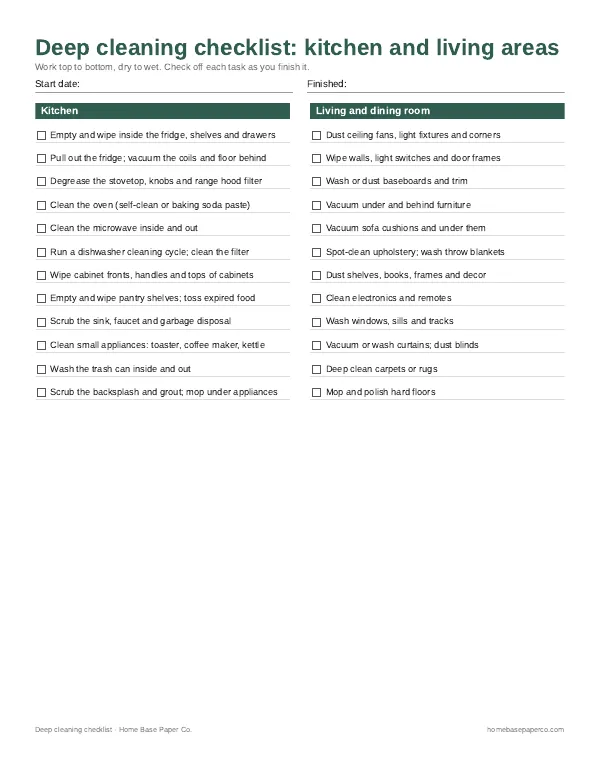
Clean the whole house in order: get the free deep cleaning checklist
A printable room-by-room deep cleaning checklist that tells you what to do first, so nothing gets cleaned twice. You'll also get our weekly HomeBase email with simple cleaning routines and chore ideas the whole family can help with.
Sources
- Michigan State University Extension: How to get rid of fruit flies in your home canr.msu.edu
- University of Maryland Extension: Fruit flies extension.umd.edu
- University of Kentucky Entomology: Fruit flies entomology.mgcafe.uky.edu