

The short answer: the best diet plans are the ones built on whole foods that you can actually shop for and cook every week. The federal Dietary Guidelines pattern, DASH, Mediterranean and vegetarian plans have the strongest public-health backing. Keto and intermittent fasting are stricter, so talk to your doctor before starting them.
- Compare 8 diet plans: what you eat, what you cut, the cost and how hard they are to stick to (table below)
- Key numbers: the 2025–2030 Dietary Guidelines set goals of 3 servings of vegetables, 2 of fruit, 3 of dairy and 2–4 of whole grains a day at 2,000 calories, with sodium under 2,300 mg
- Top move: turn whichever plan you pick into a 7-day menu and one grocery list before you start
- Next step: get the free calorie tracker (we email it to you), or plan the week with the Meal Planner & Grocery List ($3.99).
Our picks for diet plans
 Starter pick
Printables
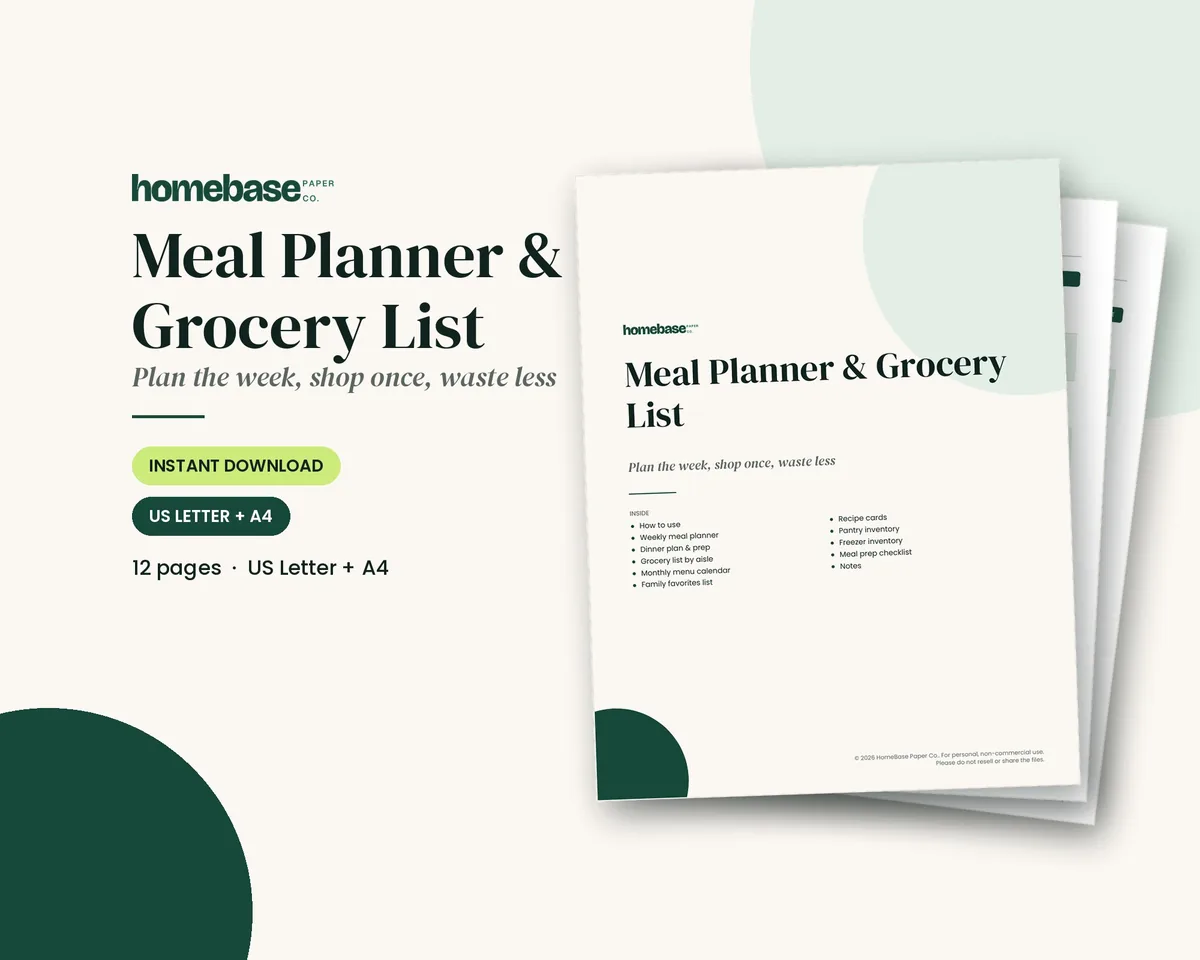
Meal Planner & Grocery List
Weekly meals, a grocery list sorted by aisle, and pantry and freezer inventories so you shop once and waste less.

Printables
Family Recipe Binder
Section dividers, four recipe page layouts with room for the family story, 4x6 and 3x5 cards and a conversion chart - print it or type into the fillable version.
 Save 33%
Bundles
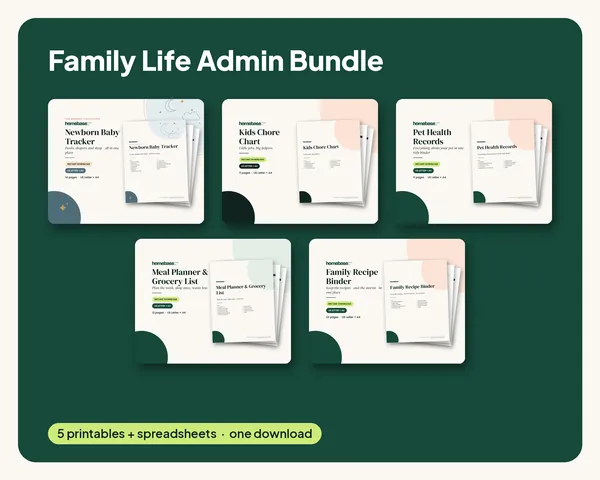
Family Life Admin Bundle
Baby logs, chore charts, pet records, meal plans and family recipes in one tidy set.
Guidance checked November 2026 against the Dietary Guidelines for Americans 2025–2030 and the NIH NHLBI DASH plan. This is general information, not medical advice. Below: a comparison table, what a day looks like on each plan, weekly grocery costs and how to choose.
Diet plans compared: 8 popular plans side by side
| Diet plan | What you eat | What you limit | Difficulty | Our full guide |
|---|---|---|---|---|
| Dietary Guidelines ("eat real food") | Protein at every meal, vegetables, fruit, dairy, healthy fats, whole grains | Highly processed foods, added sugars, refined carbs | Easy | Healthy meals |
| DASH | Vegetables, fruit, whole grains, low-fat dairy, fish, poultry, beans, nuts | Sodium, saturated fat, sweets, sugary drinks | Easy–moderate | This page |
| Mediterranean | Vegetables, beans, whole grains, fish, olive oil, nuts | Red meat, sweets, processed foods | Easy–moderate | Mediterranean diet meal plan |
| Vegetarian | Plants plus eggs and dairy | Meat, poultry, fish | Moderate | Vegetarian diet |
| Vegan | Only plant foods | All animal foods | Hard | Vegan recipes |
| High protein | Protein at every meal and snack | Usually refined carbs | Moderate | High protein meals |
| Low carb | Protein, non-starchy vegetables, healthy fats | Bread, pasta, rice, sugar | Moderate–hard | Low carb meals |
| Keto | Very low carb, high fat | Nearly all carbs, including most fruit | Hard | Keto diet plan |
Planning tip: "Easy" means the plan uses normal grocery store food and fits a family dinner table. Plans that cut whole food groups take more planning to cover nutrients.
The Dietary Guidelines pattern (the federal baseline)
The Dietary Guidelines for Americans, 2025–2030 are the government's baseline healthy diet plan. For a 2,000-calorie day they set these goals:
| Food group | Daily goal |
|---|---|
| Protein | 1.2–1.6 g per kg of body weight, from a mix of animal and plant foods |
| Dairy | 3 servings (full-fat is included, with no added sugar) |
| Vegetables | 3 servings |
| Fruit | 2 servings |
| Whole grains | 2–4 servings |
| Saturated fat | No more than 10% of calories |
| Sodium | Under 2,300 mg (ages 14 and up) |
| Added sugar | None recommended; no more than 10 g in any one meal |
What it looks like on a plate: eggs and fruit for breakfast, a chicken and vegetable grain bowl for lunch, salmon or beans with roasted vegetables for dinner, and yogurt or nuts as a snack. The guidelines also say to choose home-prepared meals and avoid highly processed packaged foods and sugary drinks.
DASH diet plan
DASH (Dietary Approaches to Stop Hypertension) is the NIH NHLBI's heart-healthy eating plan. It needs no special foods. These are the daily servings for 2,000 calories:
| Food group | DASH servings |
|---|---|
| Grains | 6–8 a day |
| Vegetables | 4–5 a day |
| Fruit | 4–5 a day |
| Low-fat or fat-free dairy | 2–3 a day |
| Meat, poultry and fish | 6 or fewer a day |
| Fats and oils | 2–3 a day |
| Nuts, seeds, beans and peas | 4–5 a week |
| Sweets | 5 or fewer a week |
| Sodium | 2,300 mg a day (NHLBI notes 1,500 mg lowers blood pressure even more) |
Swap tip: DASH is easy to follow from a normal grocery list. Buy more produce, beans and plain dairy, and fewer salty packaged foods.
Mediterranean, vegetarian and vegan diet plans
- Mediterranean: built around vegetables, beans, whole grains, fish and olive oil, with red meat and sweets as occasional foods. Our Mediterranean diet meal plan has a full week and a shopping list.
- Vegetarian: drops meat and fish but keeps eggs and dairy, which makes protein easier. Start with our vegetarian diet guide and vegetarian recipes.
- Vegan: drops all animal foods. The Dietary Guidelines advise vegetarians and vegans to monitor iron, vitamin B12, vitamin D, calcium and iodine, and to limit highly processed vegan foods. See plant-based protein sources and cheap vegan meals.
High protein, low carb and keto diet plans
- High protein: protein at every meal (eggs, chicken, fish, Greek yogurt, beans, tofu). It fits inside the Dietary Guidelines' protein goal. See high protein foods and high protein snacks.
- Low carb: cuts bread, pasta, rice and sugar but keeps vegetables. Our low carb meals list has easy dinners.
- Keto: a very low-carb, high-fat plan that is much stricter than low carb. Read our keto diet plan for a 7-day menu, and check with your doctor first, especially if you take medication or have diabetes or kidney disease. If you have diabetes, our diabetic meal plan follows the ADA Diabetes Plate instead.
Not a plan: if your goal is to gain weight rather than lose it, see how to gain weight.
What diet plans cost: weekly groceries
Most of these diet plans use ordinary grocery store food, so the cost depends on your protein and produce choices more than on the diet's name. As a benchmark, the USDA Thrifty Food Plan for a family of four came to $236.30 a week in September 2026.
| Plan | Cost compared with a typical grocery list | Where the money goes |
|---|---|---|
| Dietary Guidelines / DASH | About the same | More produce and dairy, fewer packaged snacks |
| Mediterranean | Same to slightly higher | Olive oil, fish and nuts; beans keep it down |
| Vegetarian / vegan | Often lower | Beans, lentils, tofu and eggs cost less than meat |
| High protein | Higher | Meat, fish, Greek yogurt and protein snacks |
| Low carb / keto | Higher | More meat, cheese, nuts and avocados in place of cheap grains |
Money-saving tip: whatever plan you pick, choose 5 dinners, cook double on 2 of them for lunches, and build one list. Our meal planning on a budget guide walks through it.
For specific ingredients that fit DASH, our 70 heart healthy foods are grouped by food type with a seven-day menu.
If your goal is weight loss, see our diet plan for weight loss, a 7-day plan at about 1,450 calories with a grocery list.
How to choose a diet plan you'll stick to
- Start with your goal. Heart health or blood pressure points to DASH. General healthy eating points to the Dietary Guidelines or Mediterranean. If you have a medical goal, ask your doctor or a registered dietitian.
- Keep the foods your household already eats. A plan the whole family can eat is easier to stick to than cooking two dinners.
- Make it a menu. Write 7 days of meals and one grocery list before day one. Our how to meal plan guide shows the steps.
- Read labels. The FDA's Nutrition Facts label guide shows how to check serving size, sodium and added sugars.
Want the full beginner path? See our vegan diet plan.
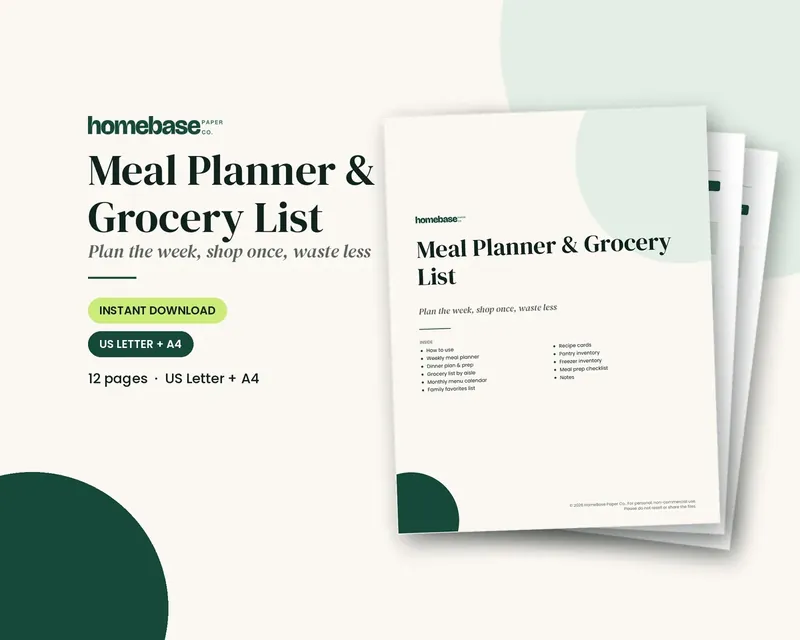
The Meal Planner & Grocery List ($3.99) turns any diet plan into a weekly menu and an aisle-sorted grocery list. Save the recipes that work in the Family Recipe Binder ($6.99), or get both in the Family Life Admin Bundle ($15.99, $23.95 bought separately). Browse all printables.
Meal Planner & Grocery List
Weekly meals, a grocery list sorted by aisle, and pantry and freezer inventories so you shop once and waste less.
$3.99 · Instant download. Print at home or fill it in on screen. Or browse the full Home & Organizing collection.
Frequently asked questions
What is the best diet plan? The best diet plan is one built on whole foods that you can shop for and cook every week. The federal Dietary Guidelines pattern, the DASH plan from NIH and the Mediterranean diet are the most widely recommended. If you have a health condition, ask your doctor or a registered dietitian which plan fits you.
What are the main types of diet plans? Popular diet plans include the Dietary Guidelines pattern, DASH, Mediterranean, vegetarian, vegan, high protein, low carb and keto. They differ mostly in which food groups they limit: DASH limits sodium, vegetarian plans drop meat, and low carb and keto plans cut bread, pasta, rice and sugar.
What does the DASH diet plan include? The NIH NHLBI DASH plan for 2,000 calories a day includes 6 to 8 servings of grains, 4 to 5 of vegetables, 4 to 5 of fruit, 2 to 3 of low-fat dairy, 6 or fewer of meat, poultry and fish, and 4 to 5 servings of nuts, seeds and beans a week, with sodium at 2,300 mg a day or lower.
What do the 2025–2030 Dietary Guidelines recommend? The Dietary Guidelines for Americans, 2025–2030 recommend protein at every meal, 3 servings of dairy, 3 of vegetables, 2 of fruit and 2 to 4 of whole grains a day at 2,000 calories. They advise limiting highly processed foods and added sugars, keeping saturated fat to 10% of calories or less and sodium under 2,300 mg a day.
Which diet plan is cheapest? Vegetarian and vegan plans are often the cheapest because beans, lentils, eggs and tofu cost less than meat. The Dietary Guidelines pattern and DASH cost about the same as a typical grocery list. High protein, low carb and keto plans usually cost more because they rely on meat, cheese and nuts.
Is keto a good diet plan for beginners? Keto is one of the hardest diet plans to follow because it cuts nearly all carbs, including most fruit. Talk with your doctor first, especially if you take medication or have diabetes or kidney disease. A low carb or high protein plan is an easier place to start.
How do I start a diet plan? Pick a plan that fits your goal and the foods your household already eats, then write a 7-day menu and one grocery list before you start. Cook double on two dinners for lunches, and check labels for serving size, sodium and added sugar.
Is the Mediterranean diet the same as a meal plan? The Mediterranean diet is an eating pattern built on vegetables, beans, whole grains, fish and olive oil. A meal plan turns that pattern into specific meals for each day. Our Mediterranean diet meal plan gives you a full week with a shopping list.
What printable helps me follow a diet plan? The HomeBase Meal Planner & Grocery List is $3.99 and turns any diet plan into a weekly menu and an aisle-sorted grocery list. The Family Recipe Binder is $6.99, and both come in the Family Life Admin Bundle for $15.99, compared with $23.95 bought separately.
Free printable
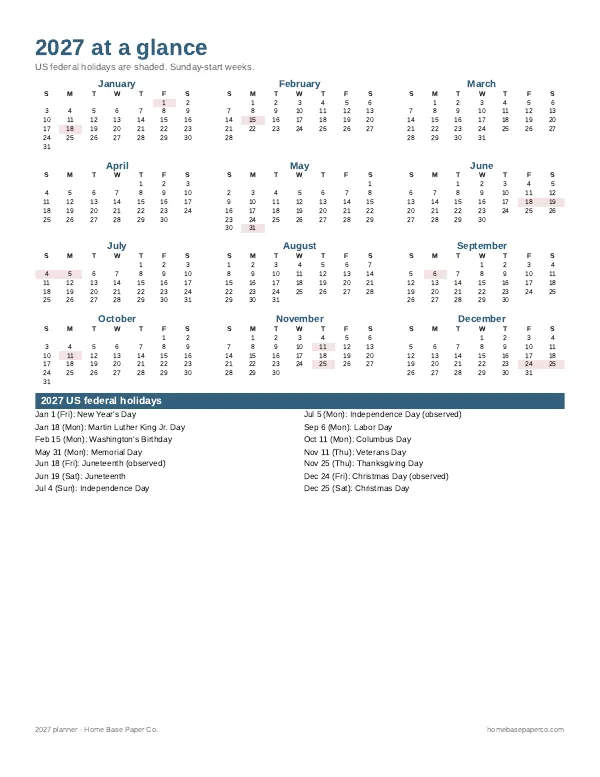
Get organized for the new year: get the free 2027 planner
A 16-page printable 2027 planner with a year-at-a-glance page and monthly calendars with US holidays marked. You'll also get our weekly HomeBase email with simple planning and home organization tips.
Sources
- Dietary Guidelines for Americans, 2025–2030 cdn.realfood.gov
- NIH NHLBI: DASH Eating Plan nhlbi.nih.gov
- USDA FNS: Cost of Food at Home monthly reports fns.usda.gov
- FDA: How to Understand and Use the Nutrition Facts Label fda.gov