

The short answer: a normal diet to lose weight is everyday food in slightly smaller amounts: protein at every meal, vegetables and fruit at most meals, whole grains, a little healthy fat, and water instead of sugary drinks. The 7-day plan below runs about 1,400 to 1,500 calories a day, with USDA totals.
- Key numbers: aim to lose about 1 to 2 pounds a week, per the CDC's steps for losing weight, and 5% to 10% of your starting weight in 6 months as a first goal · protein 1.2–1.6 g per kg of body weight · sodium under 2,300 mg a day
- Top moves: find your own calorie number, build each plate the same way, cook twice and eat leftovers, shop from one list, and log a normal week first
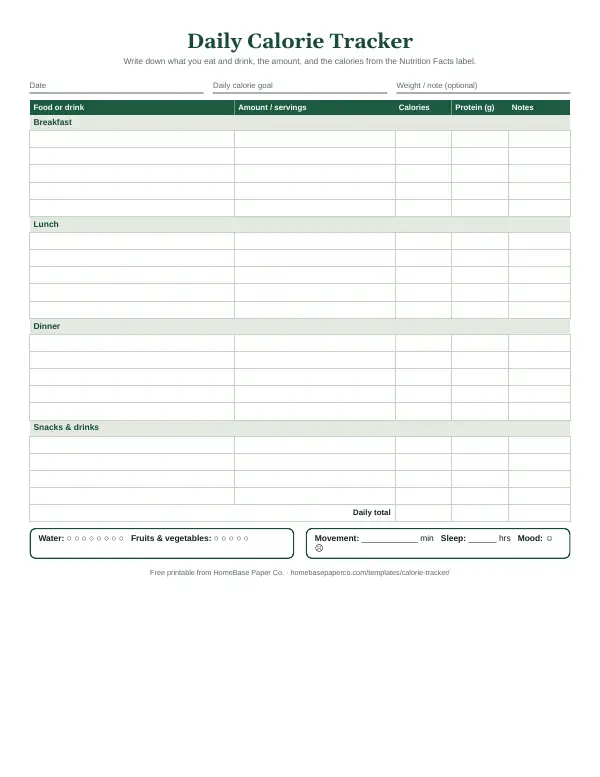
- Free and paid next step: get the free calorie tracker (we email it to you), or plan the week with the Meal Planner & Grocery List ($3.99).
Guidance and nutrition numbers checked November 13, 2026. This is general information, not medical advice: if you are pregnant or breastfeeding, under 18, take medicine, or have diabetes, kidney or heart disease, an eating disorder or another condition, follow your clinician's plan. Below: rules, calorie basics, the 7-day plan, groceries, swaps and budget tips.
What a normal diet to lose weight looks like: 8 rules
You do not need special foods, shakes or a named diet. Keep the meals you know and change the portions and the mix.
| # | Rule | What it looks like on the plate |
|---|---|---|
| 1 | Eat a calorie level that fits you | A number from a planner tool, not a celebrity diet. |
| 2 | Put protein at every meal | Eggs, Greek yogurt, chicken, fish, beans, lentils or tofu. |
| 3 | Fill up on vegetables and fruit | About half of lunch and dinner, fruit at breakfast and snacks. |
| 4 | Choose whole grains, in measured amounts | Oats, brown rice, quinoa, whole-wheat bread or pasta. |
| 5 | Measure the fats | 1 teaspoon of olive oil, a few nuts, a slice of avocado. |
| 6 | Drink water | Skip soda, fruit drinks and energy drinks. |
| 7 | Limit highly processed snacks | Chips, cookies and candy become occasional, not daily. |
| 8 | Track and adjust | Log food for a week, weigh in weekly, change one thing at a time. |
These match the Dietary Guidelines for Americans, 2025–2030: calorie needs depend on age, sex, height, weight and activity; protein comes at every meal; vegetables and fruit come through the day; and one meal should have no more than 10 grams of added sugars.
Calorie basics: how much to eat to lose weight
Weight loss comes from taking in fewer calories than you use, but there is no single right number for everyone.
- Get your own number. The NIH's free Body Weight Planner asks for your weight, height, age, sex, activity and goal date. It returns a daily calorie level to reach your goal and a second, higher level to keep it. It refuses any plan below 1,000 calories a day, because food group targets cannot be met below that.
- Set a realistic pace. The CDC says people who lose about 1 to 2 pounds a week are more likely to keep it off than people who lose faster.
- Start small. NIH guidance on choosing a safe weight-loss program suggests a first goal of 5% to 10% of your starting weight within 6 months. For a 200-pound adult, 5% is 10 pounds.
- Keep protein up. The Dietary Guidelines set protein at 1.2 to 1.6 grams per kilogram of body weight a day. For a 150-pound adult (about 68 kg), that is roughly 82 to 109 grams.
Our TDEE calculator estimates the calories you burn, the macro calculator splits a calorie target into protein, carbs and fat, and the BMI calculator gives a starting point to discuss with your clinician.
| Your situation | What to do with the 7-day plan below |
|---|---|
| Your planner number is about 1,400–1,500 | Use the portions as written. |
| Your number is higher | Add a fruit, a slice of bread, or a bigger grain or protein portion. |
| Your number is lower | Ask your clinician first; trim oils, nuts and grains before protein and vegetables. |
The plate method for weight loss
The plate method portions meals without counting every bite. Build lunch and dinner the same way:
- Protein first: about a quarter of the plate, roughly 3 to 4 ounces of chicken, fish or turkey, or 1/2 to 1 cup of beans, lentils or tofu.
- Vegetables next: about half the plate. Fresh, frozen or canned all count if they have little or no added sugar.
- A whole grain or starchy vegetable: about a quarter of the plate, such as 1/2 to 1 cup of brown rice, quinoa, whole-wheat pasta or sweet potato.
- A measured fat: 1 teaspoon of oil, a slice of avocado or a small handful of nuts.
- Water or another unsweetened drink.
For food-group basics and portions by calorie level, see our guide to a balanced diet. For filling picks with calories per serving, use our list of low calorie foods. For food-by-food nutrition, see our healthy foods list.
7-day diet plan for weight loss (about 1,400–1,500 calories)
Every day below lands between 1,421 and 1,512 calories, with 88 to 113 grams of protein and 26 to 48 grams of fiber. Each day stays under 1,500 mg of sodium before you add salt at the table. We calculated the totals from the gram weights shown, using USDA FoodData Central reference values. Brands vary, so check your Nutrition Facts labels.
| Day | Breakfast | Lunch | Dinner | Snacks | Calories | Protein (g) | Fiber (g) |
|---|---|---|---|---|---|---|---|
| 1 | Oatmeal with blueberries and peanut butter | Tuna salad with whole-wheat toast | Roast chicken, brown rice, broccoli | Apple; Greek yogurt with almonds. | 1,421 | 103 | 26 |
| 2 | 2 eggs, 2 slices whole-wheat toast, orange | Black bean and rice bowl with salsa and avocado | Baked salmon, sweet potato, green beans | Greek yogurt with strawberries and almonds. | 1,451 | 88 | 38 |
| 3 | Greek yogurt parfait with oats, blueberries and almonds | Lentil bowl with carrots and spinach, 2 slices toast | Whole-wheat pasta with turkey marinara and spinach | Carrots and hummus; apple. | 1,512 | 93 | 48 |
| 4 | Egg and spinach tacos with salsa | Chicken sandwich on whole-wheat bread; apple | Tofu stir-fry with mixed vegetables and brown rice | Air-popped popcorn; orange; a few almonds. | 1,447 | 93 | 35 |
| 5 | Overnight oats with milk, yogurt, banana and chia | Chickpea quinoa salad | Fish tacos with slaw, avocado and black beans | Cottage cheese with strawberries and walnuts. | 1,447 | 91 | 42 |
| 6 | 2 eggs, 2 slices whole-wheat toast, banana | Spinach salad with chicken, chickpeas, strawberries and almonds | Turkey and kidney bean chili over brown rice | Greek yogurt with blueberries and walnuts. | 1,480 | 113 | 29 |
| 7 | Oatmeal made with milk, banana and walnuts | Leftover turkey chili over rice | Sheet-pan chicken, sweet potato and broccoli | Apple with peanut butter. | 1,476 | 98 | 32 |
Exact portions, day by day
Each day lists breakfast, then lunch, dinner and snacks.
- Day 1: 1/2 cup dry oats (40 g), 1/2 cup blueberries (74 g), 2 Tbsp peanut butter (32 g). 3.5 oz light tuna in water (100 g) on 3 cups romaine with cucumber and tomato, 1 tsp olive oil, 1 slice whole-wheat bread. 4 oz roast chicken breast (113 g), 1 cup cooked brown rice (195 g), 1 cup broccoli (156 g), 1 tsp olive oil. 1 medium apple, 6 oz plain nonfat Greek yogurt (170 g), 1/2 oz almonds (14 g).
- Day 2: 2 hard-boiled eggs, 2 slices whole-wheat bread, 1 orange. 1/2 cup low-sodium black beans, 1/2 cup brown rice, 1/4 cup salsa, romaine, 1/3 avocado. 4 oz salmon, a medium sweet potato (200 g), 1 cup green beans, 1 tsp olive oil. 6 oz Greek yogurt, 1 cup strawberries (150 g), 1/2 oz almonds.
- Day 3: 6 oz Greek yogurt, 1/4 cup oats, 1/2 cup blueberries, 1/2 oz almonds. 1 cup cooked lentils, carrots, baby spinach, 1 tsp olive oil, 2 slices bread. 1 cup cooked whole-wheat pasta, 3 oz cooked 93% lean turkey, 1/2 cup marinara, 1/2 cup cooked spinach. 1 cup carrot sticks, 1/4 cup hummus, 1 apple.
- Day 4: 2 eggs scrambled with spinach in 2 corn tortillas, 2 Tbsp salsa. 3 oz chicken on 2 slices bread with lettuce and tomato, 1 apple. 5 oz firm tofu, 1 cup mixed vegetables, 3/4 cup brown rice, 1 tsp oil. 3 cups air-popped popcorn, 1 orange, 6 almonds.
- Day 5: 1/2 cup oats soaked in 1/2 cup 1% milk and 3 oz Greek yogurt, 1 banana, 1 Tbsp chia seeds. 3/4 cup chickpeas, 3/4 cup quinoa, cucumber, tomato and red pepper, 2 tsp olive oil. 4 oz cod in 2 corn tortillas with cabbage, salsa and a little avocado, 1/3 cup black beans. 1/2 cup 1% cottage cheese, strawberries, 1 Tbsp walnuts.
- Day 6: 2 hard-boiled eggs, 2 slices whole-wheat bread, 1 banana. 2 cups spinach, 3 oz chicken, 1/3 cup chickpeas, strawberries, 1/2 oz almonds, 1 tsp olive oil. Chili of 3 oz cooked turkey, 1/2 cup kidney beans, tomatoes, onion and pepper over 1/2 cup rice. 6 oz Greek yogurt, 1/2 cup blueberries, 1 Tbsp walnuts.
- Day 7: 1/2 cup oats cooked in 1 cup 1% milk, 1/2 banana, 2 Tbsp walnuts. Leftover chili. 4 oz chicken, a small sweet potato (150 g), 1 cup broccoli, 1 tsp olive oil. 1 apple with 1 Tbsp peanut butter.
Prep tip: on Sunday, cook brown rice and lentils, roast the chicken and boil the eggs. Double the Day 6 chili for Day 7's lunch. Our healthy meal prep ideas show the full routine. For variety, swap in recipes from low calorie meals, low calorie breakfast ideas, high protein meals, baked salmon or lentil recipes.
Grocery list for the 7-day plan (1 adult)
Double it for two. Copy it onto a grocery list template or the meal planner's grocery list.
- Produce: 4 apples, 3 bananas, 2 oranges, 1 lb strawberries, 1 pint blueberries (or a frozen bag), 1 avocado, 1 head romaine, 1 bag baby spinach, 1 cucumber, 4 tomatoes, 2 red bell peppers, 1 onion, 1 small bag carrots, a small cabbage or bagged slaw, 2 medium sweet potatoes, 1 head broccoli.
- Frozen: 1 bag mixed vegetables, 1 bag green beans, 1 bag chopped spinach.
- Protein: 1 dozen eggs, 1 to 1 1/2 lb chicken breast (you need about 14 oz cooked), 1 lb 93% lean ground turkey, 1 salmon fillet, 1 cod fillet, 1 can light tuna in water, 1 block firm tofu.
- Cans and dry goods: 1 can each low-sodium black beans, kidney beans and chickpeas, dry lentils, brown rice, quinoa, old-fashioned oats, whole-wheat pasta, whole-wheat bread, corn tortillas, marinara, salsa, popcorn kernels.
- Dairy: 32 oz plain nonfat Greek yogurt, 1 quart 1% milk, 1 small tub 1% cottage cheese.
- Fats, nuts and extras: olive oil, unsalted peanut butter, almonds, walnuts, chia seeds, hummus, lemons, garlic, chili powder, cumin, black pepper.
The Dietary Guidelines favor full-fat dairy with no added sugars; we used nonfat and 1% to fit the calorie level, and plain full-fat works if you adjust portions.
Swaps that cut calories without cutting meals
Small swaps add up across a week. Calories below are from USDA FoodData Central for the amounts shown.
| Instead of | Calories | Try | Calories | You save |
|---|---|---|---|---|
| 12 fl oz regular cola | 155 | Water or sparkling water. | 0 | 155 |
| 2 cups cooked pasta | 442 | 1 cup pasta + 1 cup broccoli. | 276 | 166 |
| 2 Tbsp ranch dressing | 129 | 1 tsp olive oil + vinegar or lemon. | 40 | 89 |
| 1 cup cooked white rice | 205 | 1/2 cup rice + 1/2 cup cauliflower. | 117 | 88 |
| 1 Tbsp olive oil, poured | 119 | 1 tsp olive oil, measured. | 40 | 79 |
| 6 oz low-fat fruit yogurt | 173 | 6 oz plain nonfat Greek yogurt. | 100 | 73 |
| 1 Tbsp mayonnaise | 95 | 1 Tbsp hummus. | 36 | 59 |
| 1 oz potato chips | 149 | 3 cups air-popped popcorn. | 93 | 56 |
| 1 cup orange juice | 112 | 1 medium orange. | 62 | 50 |
Snack tip: portion snacks ahead. See low calorie snacks and high protein snacks.
Dieting on a budget
A plan for weight loss does not need diet foods. The cheapest staples are often the most filling:
- Money-saving tip: build meals on dry and canned staples. Oats, brown rice, dry lentils, canned beans and canned tuna keep for months.
- Money-saving tip: buy frozen vegetables and fruit. The Dietary Guidelines count plain frozen and canned produce with little or no added sugar as good options, and nothing spoils.
- Money-saving tip: cook once, eat twice. The plan reuses rice, chicken and chili on purpose.
- Money-saving tip: track what you pay. A grocery price book shows which store is lowest on your staples.
For a full system, see meal planning on a budget, how to grocery shop on a budget, cheap meal ideas and our budget categories list.
Weight-loss red flags to skip
NIH guidance tells you to avoid programs that promise:
- Weight loss without diet or exercise.
- Weight loss while eating as much as you want of all your favorite foods.
- "Lose 30 pounds in 30 days."
- Weight loss from one specific part of your body.
Also skip tiny print and before-and-after photos that seem too good to be true. To keep weight off, the same NIH page lists an eating plan for your new weight, 150 to 300 minutes or more of activity a week, and weighing in at least weekly.
To compare named plans, see our diet plans guide or the Mediterranean diet meal plan. Need the opposite? Read how to gain weight.
Plan your weight-loss week
A plan works only once it is written down. Meals work the same way: plan the week once, then shop from it.
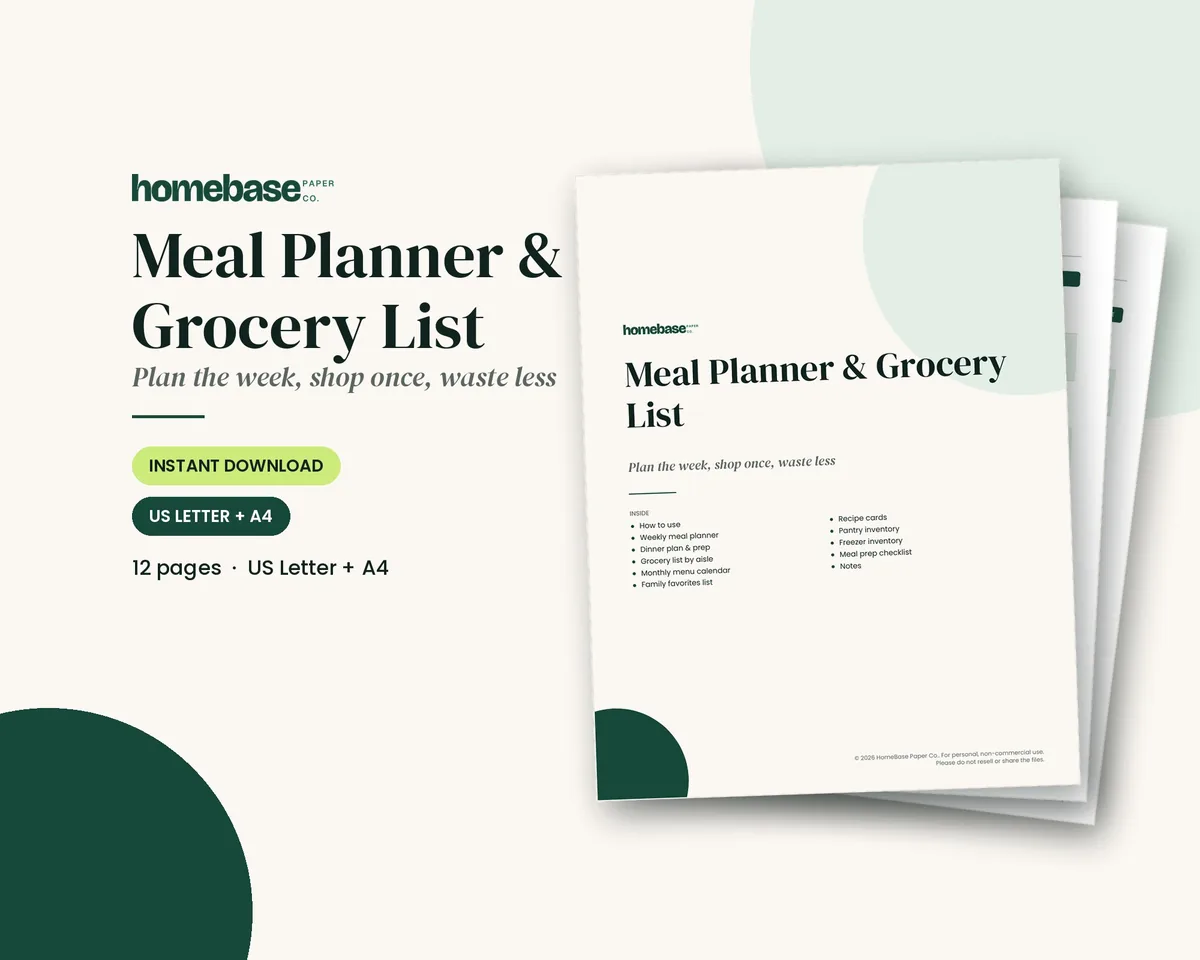
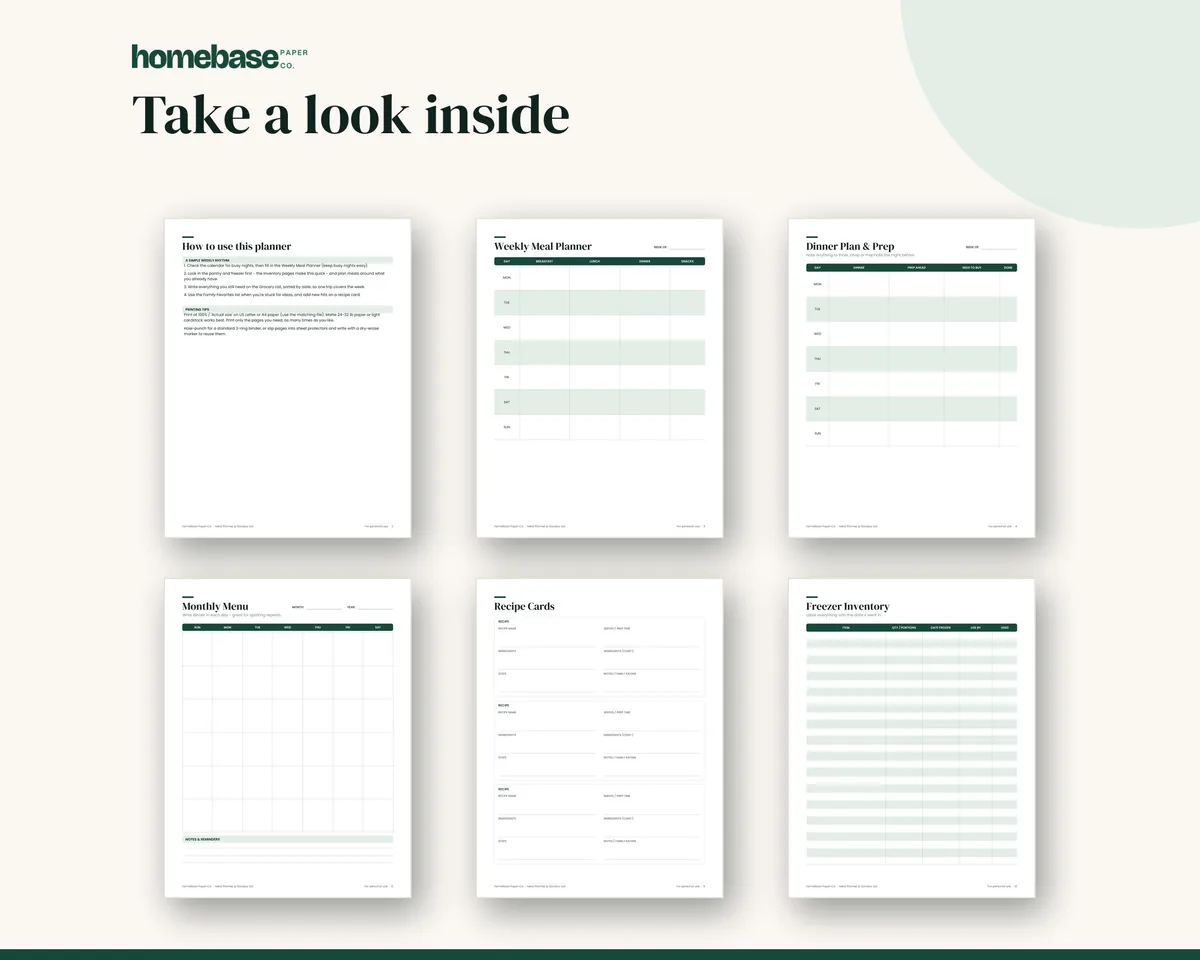
- Plan the week: the Meal Planner & Grocery List ($3.99) is a printable weekly meal planner with an aisle-sorted grocery list plus pantry and freezer inventories.
- Keep the recipes that work: the Family Recipe Binder ($6.99) has dividers, four recipe layouts, recipe cards and a conversion chart.
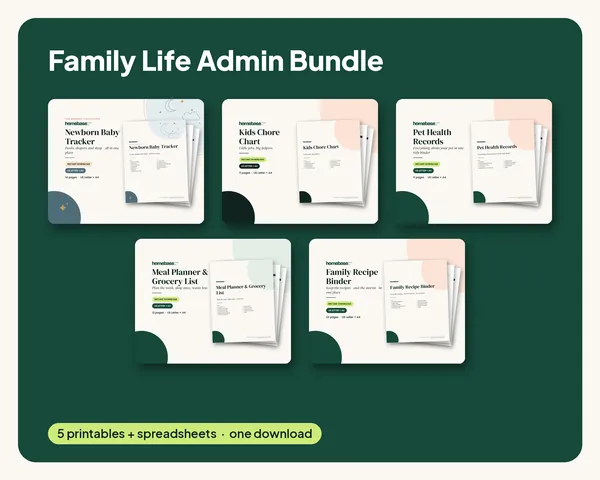
- Get both, plus more: the Family Life Admin Bundle is $15.99 (
$23.95when bought separately) and includes the meal planner and the recipe binder. - Start free: get the free calorie tracker (we email it to you). It logs meals, calories, protein, water, movement and sleep, with a weekly summary page.
Browse all Printables or Bundles. For everyday habits beyond the scale, read our healthy eating guide.
Make it easier
Tools for this
 Starter pick
Printables
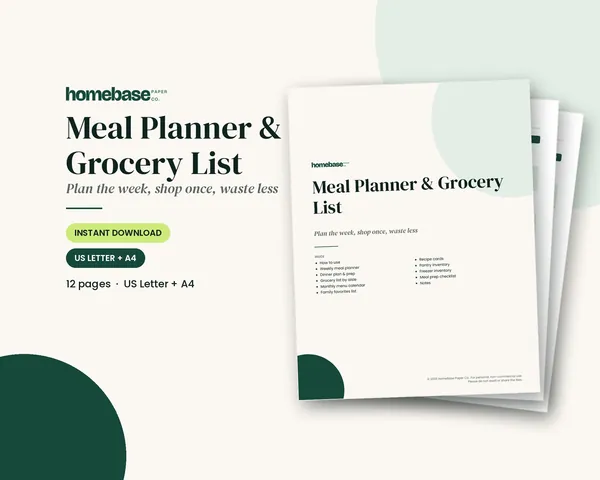
Meal Planner & Grocery List
Weekly meals, a grocery list sorted by aisle, and pantry and freezer inventories so you shop once and waste less.
Printables
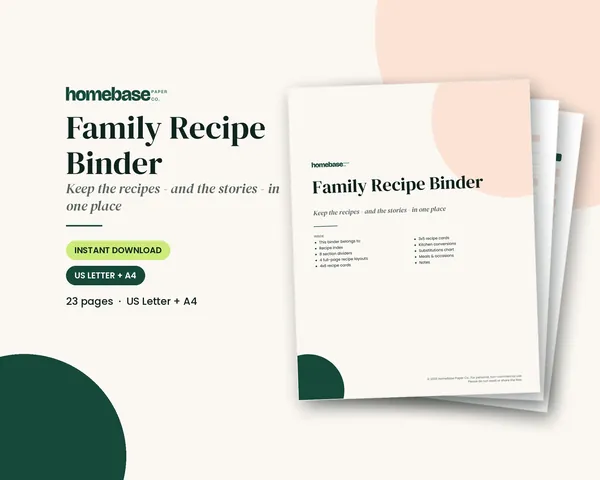
Family Recipe Binder
Section dividers, four recipe page layouts with room for the family story, 4x6 and 3x5 cards and a conversion chart - print it or type into the fillable version.
 Save 33%
Bundles
Family Life Admin Bundle
Baby logs, chore charts, pet records, meal plans and family recipes in one tidy set.
Frequently asked questions
What is a normal diet to lose weight? A normal diet to lose weight is regular food in slightly smaller amounts, not a special program. Eat protein at every meal, fill about half of lunch and dinner with vegetables, add a measured whole grain and a little healthy fat, drink water, and cut back on sugary drinks and highly processed snacks.
How many calories should I eat a day to lose weight? The right number depends on your weight, height, age, sex and activity, so there is no single answer. The NIH Body Weight Planner calculates a personal calorie level to reach your goal and a second level to maintain it, and it will not set any plan below 1,000 calories a day.
How fast should I lose weight? Aim for about 1 to 2 pounds a week. The CDC says people who lose weight at that gradual, steady pace are more likely to keep it off than people who lose weight faster. Expect some weeks to stall; look at the trend over a month.
What is a realistic weight-loss goal to start with? A realistic first goal is 5% to 10% of your starting weight within 6 months, per NIH guidance. For a 200-pound adult that is 10 to 20 pounds. The CDC notes that even a modest 5% loss can improve blood pressure, cholesterol and blood sugar levels.
What is the best diet plan for weight loss? The best diet plan for weight loss is one backed by science that you can stick with for the long term. NIH guidance says different reduced-calorie plans can work, so choose one that fits your health, culture, food preferences and budget. If you have a medical condition, ask your clinician to help choose.
What should I eat in a day to lose weight? A simple day is oatmeal with berries and peanut butter for breakfast, a tuna salad with whole-wheat toast for lunch, and roast chicken with brown rice and broccoli for dinner. Add an apple and Greek yogurt with almonds as snacks. That is Day 1 of our plan, at 1,421 calories by USDA values.
How much protein should I eat when trying to lose weight? The Dietary Guidelines for Americans, 2025–2030 set protein at 1.2 to 1.6 grams per kilogram of body weight a day. For a 150-pound adult, about 68 kilograms, that is roughly 82 to 109 grams. Our 7-day plan provides 88 to 113 grams a day. If you have kidney disease, ask your clinician about protein first.
Is 1,500 calories a day enough to lose weight? It depends on your size, sex, age and activity, so 1,500 calories is right for some adults and too low or too high for others. Run the NIH Body Weight Planner to see your own number, then scale the portions in our 7-day plan up or down to match it.
Can I lose weight without counting calories? Yes, many people lose weight by controlling portions with the plate method instead of counting. Fill half the plate with vegetables, a quarter with protein and a quarter with a whole grain. Tracking what you eat for a few days still helps, because the CDC suggests a food diary to spot easy changes.
What foods should I cut back on to lose weight? Cut back on sugary drinks, highly processed snacks such as chips, cookies and candy, and refined grains such as white bread and packaged breakfast foods. The 2025–2030 Dietary Guidelines say one meal should have no more than 10 grams of added sugars and sodium should stay under 2,300 mg a day.
Do I need to exercise to lose weight? Exercise is not strictly required, but activity still matters. NIH guidance says more activity may not have a big effect on the scale by itself, yet it has health benefits and may help you keep weight off. For maintenance it lists 150 to 300 minutes or more of activity a week.
How can I follow a weight-loss diet on a budget? Follow a weight-loss diet on a budget by building meals on oats, brown rice, dry lentils, canned beans, canned tuna, eggs and frozen vegetables. Cook once and eat twice, shop from one list, and track staple prices in a price book so you know which store is cheapest.
What planner helps me follow a weight-loss meal plan? The Meal Planner & Grocery List ($3.99) from HomeBase Paper Co. is a printable weekly meal planner with an aisle-sorted grocery list plus pantry and freezer inventories. Copy the 7-day plan onto the weekly page, then move the ingredients onto the grocery list before you shop.
Where can I keep my favorite low-calorie recipes? The Family Recipe Binder ($6.99) from HomeBase Paper Co. is a printable with section dividers, four recipe page layouts, 4x6 and 3x5 recipe cards and a conversion chart. Give your weight-loss dinners and breakfasts their own section so the meals that work are easy to repeat.
Is there a bundle with the meal planner and recipe binder? Yes, the Family Life Admin Bundle is $15.99, compared with $23.95 for its items bought separately. It includes the Meal Planner & Grocery List, the Family Recipe Binder, a kids chore chart, a newborn baby tracker and pet health records.
More from HomeBase
You may also like

Printables
Household Binder
Family info, emergency plan, calendars, meals, groceries, cleaning, bills and sitter notes.
Printables
Cleaning Schedule
Daily, weekly, monthly and seasonal lists - plus a family chore chart.
Printables
Home Maintenance Log
Monthly, seasonal and annual checklists plus a record of every appliance and repair.
Printables
Home Inventory
Printable pages and a spreadsheet that totals the value of every room.
 Club
Monthly club
Planner & Calendar Club
Anyone who wants a monthly calendar, bill calendar and meal plan ready to print.
Free printable
A simple daily food log you can fill in by hand
Meals, calories, protein, water, movement, sleep and mood on one page. You'll also get our weekly HomeBase email with easy meal planning ideas and family recipe tips.
Sources
- CDC: Steps for Losing Weight cdc.gov
- NIH NIDDK: Body Weight Planner niddk.nih.gov
- NIH NIDDK: Choosing a Safe & Successful Weight-loss Program niddk.nih.gov
- Dietary Guidelines for Americans, 2025–2030 (edition history) dietaryguidelines.gov