

The short answer: the best low calorie foods are high in water, fiber or protein: leafy greens, cucumber, zucchini, broccoli, berries, melon, eggs, white fish, shrimp, nonfat Greek yogurt, beans, oats and air-popped popcorn. All 78 below have USDA calories per serving, 65 are under 100 calories and 36 are 40 or less.
- Key numbers: 1 cup spinach 7 calories · 1 cup strawberries 46 · 3 oz canned tuna 73 · 1 large egg 78 · 1 container nonfat Greek yogurt 100 with 17 g protein · 3 cups air-popped popcorn 93
- Top moves: fill half the plate with vegetables, pick a lean protein, measure oil and dressing, and swap fruit for chips or cookies
- Free and paid next step: get the free calorie tracker (we email it to you) to log a week, then plan it with the Meal Planner & Grocery List ($3.99).
Calories checked November 12, 2026 in USDA FoodData Central (SR Legacy); prices are BLS October 2026 averages. This is general information, not medical advice. Below: the full list by food group, the most filling picks, a starter grocery list, a sample day and budget notes.
Low calorie foods list at a glance
| Food group | Foods on this list | Calorie range per serving | Lowest pick |
|---|---|---|---|
| Vegetables | 20 | 2–52 | Arugula, ½ cup: 2 |
| Fruits | 14 | 42–95 | Kiwi, 1 fruit: 42 |
| Lean proteins, beans and tofu | 15 | 17–148 | Egg white: 17 |
| Dairy and milk | 6 | 21–100 | Parmesan, 1 tbsp: 21 |
| Whole grains and starchy vegetables | 9 | 31–124 | Popcorn, 1 cup: 31 |
| Soups, sauces and snack extras | 9 | 3–36 | Mustard, 1 tsp: 3 |
| Drinks | 5 | 0–2 | Water and club soda: 0 |
What "low calorie" means: on a package label, the FDA allows "low calorie" only when a food has 40 calories or less per reference serving (for most foods), and "calorie free" when it has under 5, under 21 CFR 101.60. Main dishes and meals qualify at 120 calories or less per 100 grams. At home, the term is looser: foods that give a lot of food, protein or fiber for the calories. That's how this list works, so lean proteins at 100 to 150 calories are included because they keep you full.
78 low calorie foods by food group
Each number is the USDA SR Legacy value for that food at USDA's own serving weight, sorted lowest calorie first. Check labels on packaged foods.
Vegetables
Why they help: the CDC says the water and fiber in vegetables and fruits help you feel full and can reduce hunger, and that vegetables and fruits are lower in calories. Fresh, frozen and canned all count; the CDC says frozen and canned can be just as nutritious if there's no added salt, sugar or syrup.
| # | Food | Serving | Calories | Protein (g) | Fiber (g) | Tip |
|---|---|---|---|---|---|---|
| 1 | Arugula | ½ cup | 2 | 0.3 | 0.2 | Peppery; tops pizza, eggs and sandwiches. |
| 2 | Kale, raw | 1 cup | 7 | 0.6 | 0.9 | Massage with lemon so it is tender raw. |
| 3 | Spinach, raw | 1 cup | 7 | 0.9 | 0.7 | Wilts down to almost nothing in eggs, soup or pasta. |
| 4 | Cucumber, with peel | ½ cup slices | 8 | 0.3 | 0.3 | About 95% water by weight (USDA). |
| 5 | Romaine lettuce | 1 cup shredded | 8 | 0.6 | 1 | The base for big salads and lettuce wraps. |
| 6 | Celery | 1 cup chopped | 14 | 0.7 | 1.6 | Crunch for tuna salad and soup bases. |
| 7 | White mushrooms | 1 cup pieces | 15 | 2.2 | 0.7 | Stretch ground meat in tacos and sauce. |
| 8 | Radishes | 1 cup slices | 19 | 0.8 | 1.9 | Roast them to mellow the bite. |
| 9 | Zucchini | 1 cup chopped | 21 | 1.5 | 1.2 | Spiralize or slice into noodles. |
| 10 | Cabbage | 1 cup chopped | 22 | 1.1 | 2.2 | One of the cheapest, longest-keeping vegetables. |
| 11 | Asparagus | 1 cup | 27 | 2.9 | 2.8 | Roast on the same pan as fish. |
| 12 | Cauliflower | 1 cup chopped | 27 | 2.1 | 2.1 | Rice it or roast it. |
| 13 | Cherry tomatoes | 1 cup | 27 | 1.3 | 1.8 | Grab-and-go snack. |
| 14 | Broccoli, raw | 1 cup chopped | 31 | 2.6 | 2.4 | Raw with salsa or roasted. |
| 15 | Green beans | 1 cup | 31 | 1.8 | 2.7 | Plain frozen works too. |
| 16 | Brussels sprouts | 1 cup | 38 | 3 | 3.3 | Halve and roast until crisp. |
| 17 | Red bell pepper | 1 cup chopped | 39 | 1.5 | 3.1 | Sweet enough to snack on raw. |
| 18 | Spaghetti squash, cooked | 1 cup | 42 | 1 | 2.2 | A pasta stand-in under marinara. |
| 19 | Carrots | 1 cup chopped | 52 | 1.2 | 3.6 | Cheap, sweet, keeps for weeks. |
| 20 | Frozen broccoli, cooked | 1 cup | 52 | 5.7 | 5.5 | More protein and fiber per cup than raw because it packs down. |
Cook them into meals: vegetable soup recipe, cabbage soup, salad recipes and sheet pan dinners.
Fruits
Why they help: whole fruit brings fiber that juice leaves behind. The CDC says to choose whole fruit over juice because the fiber helps you feel full, and to skip fruit drinks with added sugar.
| # | Food | Serving | Calories | Protein (g) | Fiber (g) | Tip |
|---|---|---|---|---|---|---|
| 21 | Kiwi | 1 fruit | 42 | 0.8 | 2.1 | Halve and scoop with a spoon. |
| 22 | Strawberries | 1 cup whole | 46 | 1 | 2.9 | Frozen unsweetened is a budget swap. |
| 23 | Watermelon | 1 cup diced | 46 | 0.9 | 0.6 | About 91% water by weight (USDA). |
| 24 | Tangerine | 1 medium | 47 | 0.7 | 1.6 | Easy to pack. |
| 25 | Grapefruit | ½ fruit | 52 | 0.9 | 2 | Sweet-tart; broil with cinnamon. |
| 26 | Cantaloupe | 1 cup cubes | 54 | 1.3 | 1.4 | Pairs with cottage cheese. |
| 27 | Peach | 1 medium | 58 | 1.4 | 2.2 | Canned in juice counts too. |
| 28 | Blackberries | 1 cup | 62 | 2 | 7.6 | One of the highest-fiber fruits per cup. |
| 29 | Orange | 1 fruit | 62 | 1.2 | 3.1 | Whole fruit keeps the fiber juice loses. |
| 30 | Raspberries | 1 cup | 64 | 1.5 | 8 | 8 grams of fiber a cup. |
| 31 | Pineapple | 1 cup chunks | 82 | 0.9 | 2.3 | Grill or freeze. |
| 32 | Blueberries | 1 cup | 84 | 1.1 | 3.6 | 1 cup is on the CDC list of about-100-calorie snacks. |
| 33 | Banana | 1 small | 90 | 1.1 | 2.6 | Bananas averaged 66 cents a pound in October (BLS). |
| 34 | Apple | 1 medium | 95 | 0.5 | 4.4 | A medium apple is on the CDC list of about-100-calorie snacks. |
Lean proteins, beans and tofu
Why they help: protein makes a light meal last. Per 100 calories, shrimp gives about 24 grams of protein, canned light tuna about 23, cod and egg whites about 22 and 21, and roasted chicken breast about 19, by USDA values. For the full protein chart, see high protein foods.
| # | Food | Serving | Calories | Protein (g) | Fiber (g) | Tip |
|---|---|---|---|---|---|---|
| 35 | Egg white | 1 large | 17 | 3.6 | 0 | Mix 1 egg with 2 whites for a bigger scramble. |
| 36 | Tuna, light, canned in water | 3 oz drained | 73 | 16.5 | 0 | The lowest-calorie 3-oz protein on this list. |
| 37 | Hard-boiled egg | 1 large | 78 | 6.3 | 0 | Batch-cook a dozen for the week. |
| 38 | Shrimp, cooked | 3 oz | 84 | 20.4 | 0 | Frozen cooked shrimp thaws in minutes. |
| 39 | Cod, baked | 3 oz | 89 | 19.4 | 0 | Mild white fish for tacos. |
| 40 | Edamame, frozen, prepared | ½ cup | 94 | 9.2 | 4 | Protein and fiber in one. |
| 41 | Tilapia, baked | 1 fillet | 111 | 22.8 | 0 | Bake with lemon and pepper. |
| 42 | Black beans, cooked | ½ cup | 114 | 7.6 | 7.5 | Dried beans averaged $1.68 a pound in October (BLS). |
| 43 | Lentils, cooked | ½ cup | 115 | 8.9 | 7.8 | No soaking needed. |
| 44 | Canned pink salmon, drained | 3 oz | 117 | 19.6 | 0 | Salmon patties or salad. |
| 45 | Tofu, firm | ¼ block | 117 | 14 | 1.9 | Press, cube and bake. |
| 46 | Pork tenderloin, roasted | 3 oz | 122 | 22.2 | 0 | A lean cut; roast whole and slice. |
| 47 | Turkey breast, roasted | 3 oz | 125 | 25.6 | 0 | Roast a breast for sandwiches. |
| 48 | Chicken breast, roasted | ½ breast | 142 | 26.7 | 0 | The meal-prep standby. |
| 49 | 95% lean ground beef, broiled | 3 oz | 148 | 22.3 | 0 | Mix half with mushrooms or lentils. |
Dairy and milk
Why they help: nonfat Greek yogurt and 1% cottage cheese give about 17 grams of protein per 100 calories (USDA). Skim milk has 83 calories a cup and 8.3 grams of protein, versus 122 calories for 2% milk with about the same protein.
| # | Food | Serving | Calories | Protein (g) | Fiber (g) | Tip |
|---|---|---|---|---|---|---|
| 50 | Grated parmesan | 1 tbsp | 21 | 1.4 | 0 | Big flavor in a small amount. |
| 51 | Unsweetened almond milk | 1 cup | 39 | 1 | 0.5 | Lowest-calorie milk on the list; little protein. |
| 52 | Part-skim mozzarella | 1 oz | 72 | 6.9 | 0 | String cheese is about this size. |
| 53 | 1% cottage cheese | 4 oz (½ cup) | 81 | 14 | 0 | 14 grams of protein. |
| 54 | Skim (fat-free) milk | 1 cup | 83 | 8.3 | 0 | Same protein as 2% for fewer calories. |
| 55 | Plain nonfat Greek yogurt | 1 container | 100 | 17.3 | 0 | 17 grams of protein; top with berries. |
Whole grains and starchy vegetables
Why they help: you don't have to drop carbs to eat light. Plain oats, potatoes, sweet potatoes and popcorn are all under 125 calories a serving. The CDC notes fried potatoes are linked to weight gain, so bake, boil or air-fry instead.
| # | Food | Serving | Calories | Protein (g) | Fiber (g) | Tip |
|---|---|---|---|---|---|---|
| 56 | Air-popped popcorn | 1 cup | 31 | 1 | 1.2 | A whole grain; 3 cups is still under 100 calories. |
| 57 | Rye crispbread cracker | 1 cracker | 37 | 1.1 | 2.5 | 2.5 grams of fiber each. |
| 58 | Pumpkin, canned | ½ cup | 42 | 1.3 | 3.6 | Stir into oatmeal or chili. |
| 59 | Sweet potato, baked | 1 small | 54 | 1.2 | 2 | Bake a tray at once. |
| 60 | Potato, boiled in skin | ½ cup | 68 | 1.5 | 1.4 | Boiled or baked; the CDC links fried potatoes to weight gain. |
| 61 | Whole-wheat bread | 1 slice | 81 | 4 | 1.9 | Open-face sandwiches halve the bread. |
| 62 | Quinoa, cooked | ½ cup | 111 | 4.1 | 2.6 | Cook once, use all week. |
| 63 | Brown rice, cooked | ½ cup | 124 | 2.8 | 1.6 | Half-and-half with cauliflower rice. |
| 64 | Oatmeal, cooked with water | ¾ cup | 124 | 4.4 | 3 | Plain oats, not sweetened packets. |
Soups, sauces and snack extras
Why they help: flavor and volume for very few calories. Watch the sodium in broth, pickles and sauerkraut.
| # | Food | Serving | Calories | Protein (g) | Fiber (g) | Tip |
|---|---|---|---|---|---|---|
| 65 | Yellow mustard | 1 tsp | 3 | 0.2 | 0.2 | Flavor for almost nothing. |
| 66 | Dill pickle | 1 small spear | 4 | 0.2 | 0.3 | About 283 mg sodium per spear (USDA); check labels. |
| 67 | Wakame seaweed | 2 tbsp | 4 | 0.3 | 0.1 | For miso soup or salads. |
| 68 | Salsa | 2 tbsp | 10 | 0.5 | 0.7 | Top eggs, potatoes and chicken. |
| 69 | Vegetable broth | 1 cup | 11 | 0.5 | 0 | The base for big-bowl soups; about 654 mg sodium a cup (USDA). |
| 70 | Chicken broth | 1 cup | 15 | 1.6 | 0 | About 924 mg sodium a cup (USDA); pick low sodium. |
| 71 | Sugar-free gelatin, prepared | ½ cup | 23 | 1 | 0 | A sweet treat with almost no calories. |
| 72 | Sauerkraut, canned | 1 cup | 27 | 1.3 | 4.1 | A fermented food the CDC links to gut health; salty. |
| 73 | Hummus | 1 tbsp | 36 | 1.2 | 0.8 | 2 tbsp with 1 cup of carrots is a CDC 100-calorie snack. |
Drinks
Why they help: the CDC recommends avoiding sugar-sweetened drinks because of their added sugars. These have 0 to 2 calories before add-ins.
| # | Food | Serving | Calories | Protein (g) | Fiber (g) | Tip |
|---|---|---|---|---|---|---|
| 74 | Club soda | 12 fl oz | 0 | 0 | 0 | Add a splash of juice for flavor. |
| 75 | Water | 8 fl oz | 0 | 0 | 0 | Plain or with lemon. |
| 76 | Lemon juice | 1 wedge | 1 | 0 | 0 | Flavors water, fish and greens. |
| 77 | Black coffee | 8 fl oz | 2 | 0.3 | 0 | Creamer and sugar add the calories. |
| 78 | Black tea, brewed | 8 fl oz | 2 | 0 | 0 | Hot or iced, unsweetened. |
Most filling low calorie foods
"High volume" foods give you a big plate for few calories. Here's how much of each you'd eat to reach 100 calories, using USDA calories per 100 grams.
Most food for 100 calories
| Food | Calories per 100 g | Amount for 100 calories |
|---|---|---|
| Vegetable broth | 5 | About 9 cups |
| Spinach, raw | 23 | About 14½ cups |
| Romaine lettuce | 17 | About 12½ cups shredded |
| Cucumber | 15 | About 6½ cups sliced |
| Celery | 14 | About 7 cups chopped |
| White mushrooms | 22 | About 6½ cups pieces |
| Radishes | 16 | About 5½ cups sliced |
| Zucchini | 17 | About 4¾ cups chopped |
| Cabbage | 25 | About 4½ cups chopped |
| Cherry tomatoes | 18 | About 3¾ cups |
| Cauliflower | 25 | About 3¾ cups chopped |
| Spaghetti squash, cooked | 27 | About 2½ cups |
| Watermelon | 30 | About 2¼ cups diced |
| Strawberries | 32 | About 2¼ cups whole |
Volume tip: the CDC suggests replacing 1 cup of rice or pasta in a dish with 1 cup of vegetables such as broccoli, squash or peppers. The dish stays just as filling with fewer calories.
Most fiber for the calories
Fiber adds bulk. By USDA values, sauerkraut, raspberries, romaine, blackberries and kale each give about 12 to 15 grams of fiber per 100 calories. Asparagus, frozen broccoli, cabbage and radishes give about 10. Raspberries lead the fruit group at 8 grams a cup.
Quick filling combos
- Eggs plus vegetables: 2 hard-boiled eggs over 1 cup spinach and 1 cup sliced mushrooms: about 178 calories.
- Yogurt plus berries: nonfat Greek yogurt and 1 cup strawberries: 146 calories, 18 grams of protein.
- Tuna salad without the mayo: 3 oz tuna, 1 cup celery and mustard: about 90 calories.
- Soup first: a cup of broth with vegetables before dinner. The CDC suggests a broth-based vegetable soup instead of a cream-based one.
More ideas built from these foods: our low carb foods ranking, the high protein vegetables chart, heart healthy foods, a balanced diet guide, low calorie meals (40 meals and a 7-day plan) and low calorie snacks (75 snacks under 150 calories).
Low calorie foods starter grocery list
Copy it onto a grocery list template or the meal planner's aisle-sorted list. It covers the sample day plus a week of mix-and-match meals.
- Produce: spinach, romaine, cucumbers, celery, zucchini, mushrooms, cabbage, cherry tomatoes, bell peppers, carrots, sweet potatoes, potatoes, apples, bananas, oranges or tangerines, lemons, strawberries in season.
- Frozen: plain broccoli, green beans, cauliflower rice, unsweetened berries, edamame, shrimp, cod or tilapia fillets.
- Canned and dry goods: light tuna in water, pink salmon, dried black beans or lentils, canned pumpkin, no-salt-added tomatoes, low-sodium broth, popcorn kernels, sugar-free gelatin.
- Grains: old-fashioned oats, brown rice, quinoa, whole-wheat bread, rye crispbread.
- Protein: eggs, chicken breast, turkey breast, pork tenderloin, 95% lean ground beef, firm tofu.
- Dairy: nonfat plain Greek yogurt, 1% cottage cheese, skim milk or unsweetened almond milk, part-skim mozzarella, parmesan.
- Flavor for few calories: salsa, mustard, hot sauce, vinegar, garlic, black pepper, chili powder, cumin, Italian herbs, cinnamon, a small bottle of olive oil.
Sample day of low calorie foods (about 1,350 calories)
This is an example of how the foods fit together, not a calorie prescription. Calorie needs depend on age, sex, size and activity, so ask your doctor or a registered dietitian what's right for you. Totals use the USDA values in the tables, plus 1 tablespoon of olive oil (119 calories, USDA) for cooking dinner.
| Meal | What's on the plate | Calories | Protein (g) |
|---|---|---|---|
| Breakfast | ¾ cup oatmeal, 1 cup blueberries, 1 cup skim milk, 1 hard-boiled egg | 369 | 20 |
| Lunch | Big salad: 2 cups romaine, 1 cup cherry tomatoes, ½ cup cucumber, 3 oz tuna, ½ cup black beans, 2 tbsp salsa; 1 medium apple | 342 | 28 |
| Snack | Nonfat Greek yogurt with 1 cup strawberries | 146 | 18 |
| Dinner | ½ roasted chicken breast, 1 cup broccoli, 1 small baked sweet potato, 1 cup spinach, 1 tbsp olive oil | 374 | 34 |
| Evening snack | 3 cups air-popped popcorn with 1 tbsp parmesan | 114 | 5 |
| Total | 1,346 | 105 |
The day also has about 38 grams of fiber by USDA values. Swap tip: trade tuna for shrimp, chicken for tofu, or oatmeal for 2 eggs and toast; the tables above let you add up any swap. Want more days like this? Our healthy meals, healthy breakfast ideas, healthy lunch ideas and healthy dinner ideas build on the same foods, and healthy meal prep ideas shows how to cook them ahead.
Low calorie foods on a budget
Many of the cheapest foods in the store are also low in calories. These are the latest BLS U.S. city averages; your store will differ.
| Food | BLS average price | What it works out to |
|---|---|---|
| Bananas | $0.655 a pound (Oct 2026) | About 66 cents a pound |
| White potatoes | $0.990 a pound (Oct 2026) | Under $1 a pound |
| Dried beans | $1.680 a pound (Oct 2026) | Cook a pot for the week |
| Navel oranges | $1.723 a pound (Sept 2026, latest) | Whole fruit, not juice |
| Field-grown tomatoes | $2.084 a pound (Oct 2026) | Salads and salsa |
| Eggs, grade A large | $2.320 a dozen (Oct 2026) | About 19 cents an egg (78 calories) |
| Strawberries | $2.806 per 12 oz (Oct 2026) | About $1.19 a cup (46 calories) |
| Boneless chicken breast | $4.099 a pound (Oct 2026) | Raw weight |
Math: $2.320 ÷ 12 = $0.193 an egg. A 12-ounce pint is 340.2 grams and USDA's 1 cup of whole strawberries is 144 grams, so a pint is about 2.36 cups and $2.806 ÷ 2.36 = $1.19 a cup.
- Money-saving tip: buy frozen. Plain frozen vegetables, berries and fish don't spoil, and the CDC says they can be just as nutritious as fresh.
- Money-saving tip: cook dried beans and lentils. They're among the cheapest proteins, and half a cup cooked is about 115 calories with 7 to 8 grams of fiber.
- Money-saving tip: lean on cabbage, carrots and potatoes. They keep for weeks and stretch soups and stir-fries.
- Money-saving tip: track prices. A grocery price book shows which store has the best price on chicken, yogurt and berries.
For the full budget plan, see meal planning on a budget, how to grocery shop on a budget, cheap meal ideas and the average grocery cost per month. If groceries are one line in a tight budget, budgeting for beginners walks through setting a food number.
Foods that add calories fast
These aren't off-limits, but a little goes a long way. Values are from USDA FoodData Central.
- Oils: 1 tablespoon of olive oil is 119 calories. Measure instead of pouring.
- Nuts: 1 ounce of dry-roasted pistachios is 162 calories and 1 cup of whole almonds is 828. The CDC's about-100-calorie portions are 25 pistachios or 12 to 14 almonds.
- Hummus and cheese: 1 tablespoon of hummus is 36 calories and 1 ounce of grated parmesan is 119.
- Fried and breaded foods: breaded, fried shrimp is 206 calories per 3 ounces, versus 84 for plain cooked shrimp.
- Sweet drinks and juice: the CDC says fruit juice has little or no fiber, so it doesn't fill you up like whole fruit.
For the first meal of the day, see our low-calorie breakfasts built from filling foods.
Plan your low calorie week
A low calorie foods list only works once those foods are in your fridge. As the oldest of three, I was the one my family leaned on to keep everything coordinated, and food works the same way: write the week down once and the grocery list writes itself.
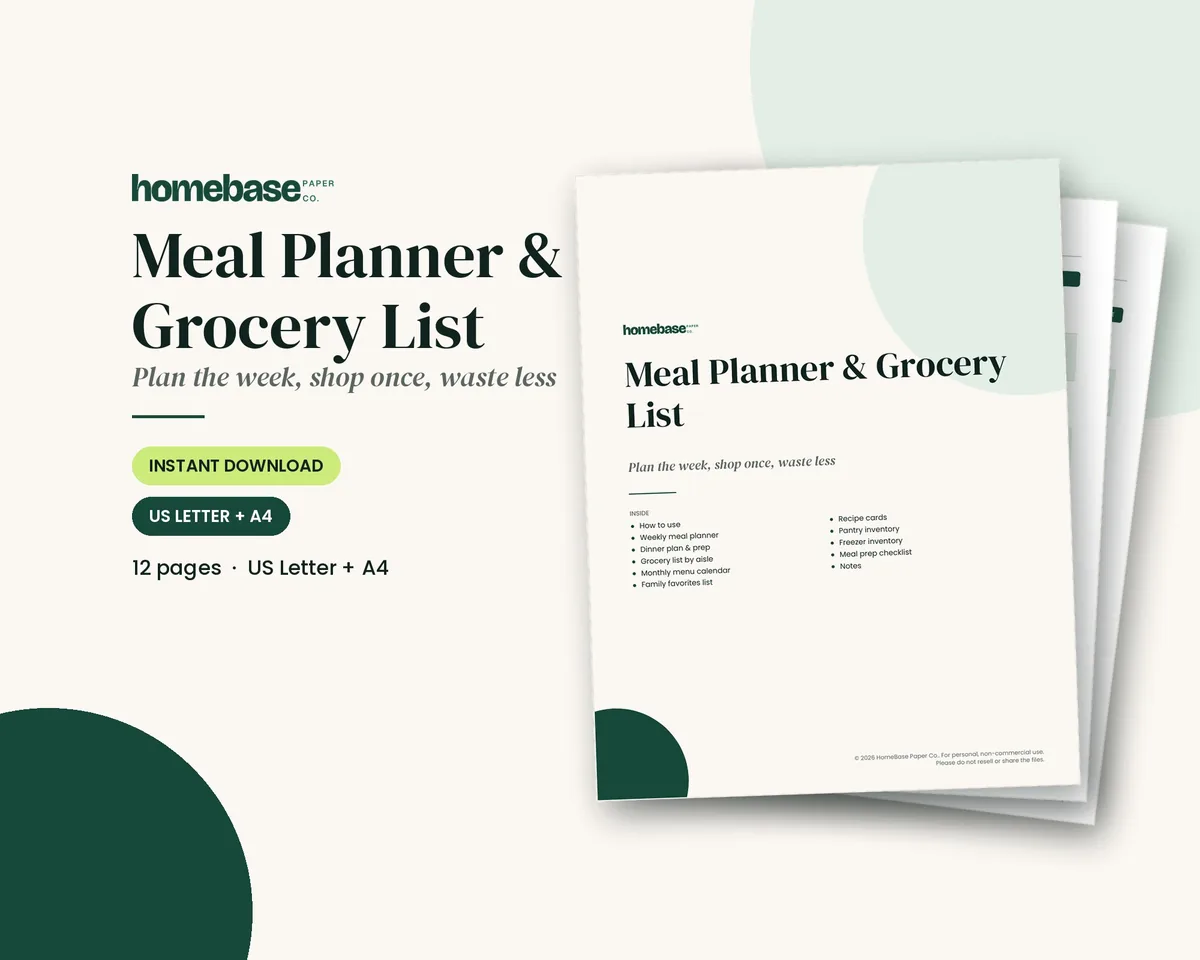
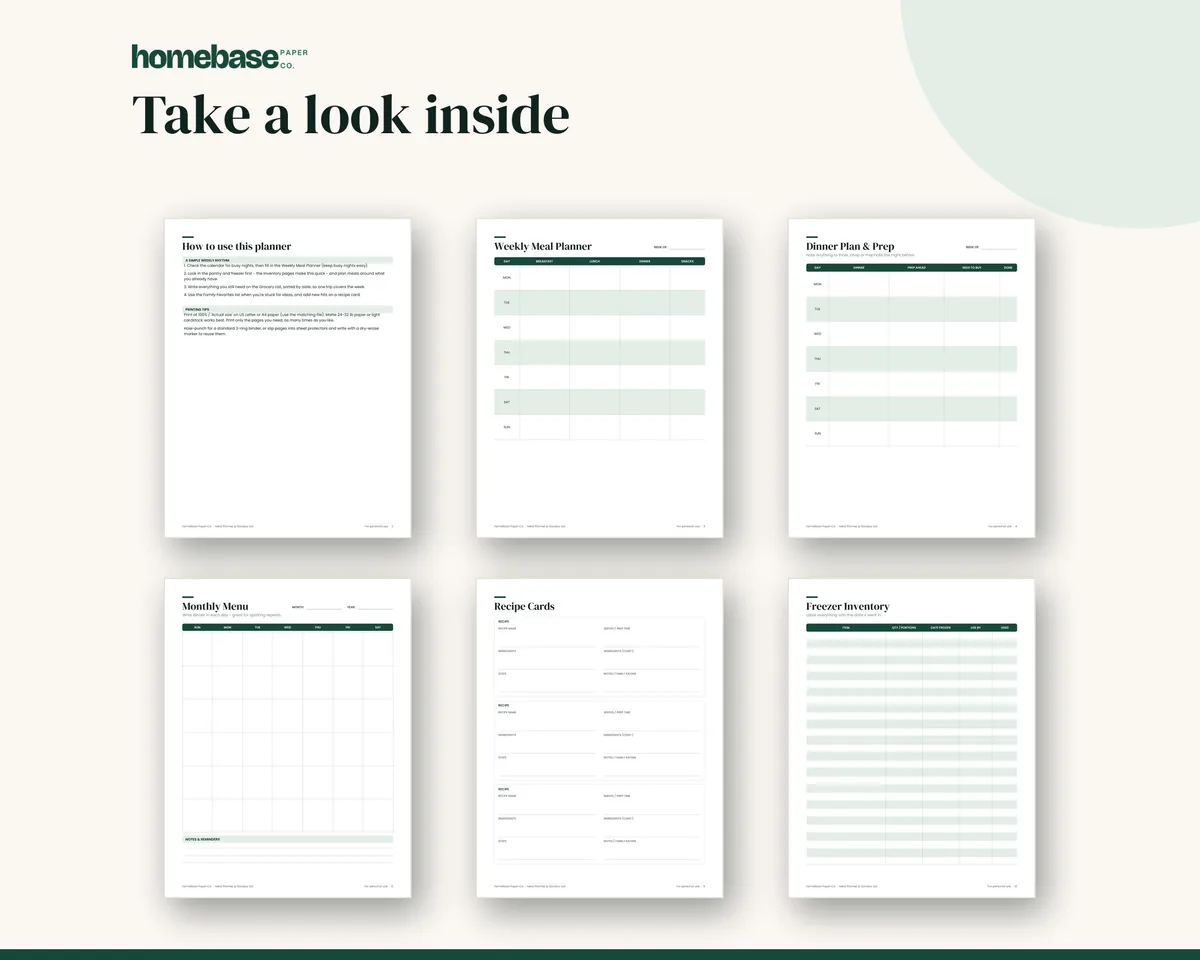
- Plan the week: the Meal Planner & Grocery List ($3.99) has a weekly meal planner, a monthly menu, a meal prep checklist, an aisle-sorted grocery list and pantry and freezer inventories.
- Save the recipes that work: the Family Recipe Binder ($6.99) gives your lighter favorites their own section.
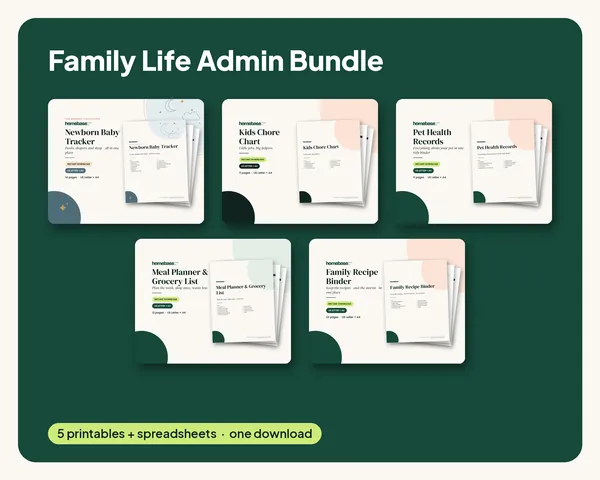
- Get both, plus more: the Family Life Admin Bundle is $15.99 (
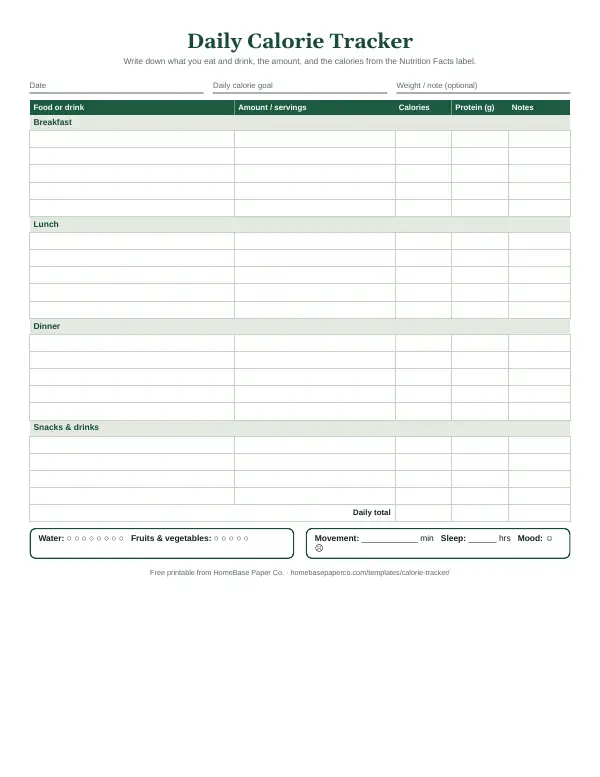
$23.95when bought separately) and includes the meal planner and recipe binder. - Start free: get the free calorie tracker (we email it to you), a one-page daily log for meals, calories, protein, water, movement, sleep and mood. Or see it first on the calorie tracker page.
Browse all of our Printables or the Bundles for more ways to keep the household on one page.
Make it easier
Tools for this
 Starter pick
Printables
Meal Planner & Grocery List
Weekly meals, a grocery list sorted by aisle, and pantry and freezer inventories so you shop once and waste less.

Printables
Family Recipe Binder
Section dividers, four recipe page layouts with room for the family story, 4x6 and 3x5 cards and a conversion chart - print it or type into the fillable version.
 Save 33%
Bundles
Family Life Admin Bundle
Baby logs, chore charts, pet records, meal plans and family recipes in one tidy set.
Frequently asked questions
What are low calorie foods? Low calorie foods give you a lot of food, fiber or protein for few calories. Most vegetables, many fruits, lean proteins such as fish, shrimp, egg whites and chicken breast, nonfat dairy, broth and plain drinks fit. On a package, the FDA lets a food say "low calorie" only if it has 40 calories or less per reference serving for most foods.
What foods have almost zero calories? Water, club soda, black coffee and plain brewed tea have 0 to 2 calories a cup, and mustard, pickles, wakame seaweed, arugula and lemon juice have under 5 calories a serving, by USDA FoodData Central values. The FDA allows a "calorie free" label only below 5 calories per serving. No food has truly negative calories.
What low calorie foods keep you full? The most filling low calorie foods are high in water, fiber or protein. Vegetables, berries, melon, broth-based soups, beans, lentils, eggs, fish, chicken breast, nonfat Greek yogurt and air-popped popcorn all fit. The CDC says the water and fiber in vegetables and fruits help you feel full and can reduce hunger.
What are high volume low calorie foods? High volume low calorie foods let you eat a big portion for very few calories. By USDA values, 100 calories buys about 14 cups of raw spinach, 12 cups of shredded romaine, 6 cups of sliced cucumber, 4 cups of chopped zucchini or cabbage, or 2 cups of watermelon or strawberries.
What is the lowest calorie vegetable? Leafy greens and watery vegetables are the lowest. In USDA FoodData Central, ½ cup of arugula has 2 calories, 1 cup of raw spinach or kale 7, 1 cup of shredded romaine 8 and ½ cup of sliced cucumber 8. Celery has 14 calories per 100 grams, the lowest of the vegetables on this list.
What is the lowest calorie fruit? Watermelon, strawberries and melon are among the lowest calorie fruits per cup. USDA lists 1 cup of diced watermelon or whole strawberries at 46 calories and 1 cup of cantaloupe at 54. A whole kiwi is 42 calories and a medium tangerine 47.
What are low calorie high protein foods? Seafood, egg whites, poultry breast, nonfat Greek yogurt and 1% cottage cheese give the most protein per calorie. By USDA values, shrimp has about 24 grams of protein per 100 calories, light tuna about 23 and egg whites about 21. Our high protein foods chart has the full list.
Are eggs a low calorie food? Yes, eggs are a low calorie food. A large hard-boiled egg is 78 calories with 6.3 grams of protein, and a large egg white is 17 calories with 3.6 grams, according to USDA FoodData Central. Cooking them in butter or oil adds calories.
Are bananas and potatoes low calorie? Bananas and potatoes are moderate, not high, in calories. A small banana is 90 calories and ½ cup of potato boiled in its skin is 68, by USDA values. The CDC links fried potatoes to weight gain, so boiling, baking or air-frying keeps them light.
Do low calorie foods help with weight loss? Low calorie foods can help because they let you eat a satisfying amount for fewer calories. The CDC says swapping vegetables and fruits for calorie-dense foods can cut the calories you eat while helping you feel full, but notes total calories still count. Ask your doctor or a registered dietitian for a plan that fits you.
How many calories should I eat a day? There's no single right number. Calorie needs depend on age, sex, size, activity and health, so a doctor or registered dietitian is the best guide. Our free TDEE and BMR calculators give a starting estimate, and the sample day on this page is about 1,350 calories as an example only.
Are low calorie foods cheap? Many are among the cheapest foods in the store. In October 2026 BLS averages, bananas were about 66 cents a pound, white potatoes 99 cents a pound, dried beans $1.68 a pound and eggs $2.32 a dozen, about 19 cents an egg. Frozen vegetables and fruit are budget picks too.
How do I plan meals with low calorie foods? The Meal Planner & Grocery List ($3.99) from HomeBase Paper Co. is a printable with a weekly meal planner, monthly menu, meal prep checklist, aisle-sorted grocery list and pantry and freezer inventories. Pick foods from this list for each meal, then copy them onto the grocery list so you shop once.
Is there a free calorie tracker? Yes, the HomeBase Paper Co. calorie tracker is free. It's a one-page daily log for meals, calories, protein, water, movement, sleep and mood, and we email it to you when you sign up on the calorie tracker page.
Is there a bundle with the meal planner and recipe binder? Yes, the Family Life Admin Bundle is $15.99, compared with $23.95 for its items bought separately. It includes the Meal Planner & Grocery List, the Family Recipe Binder ($6.99 alone), a kids chore chart, a newborn baby tracker and pet health records.
More from HomeBase
You may also like
 Thanksgiving Edition
Printables
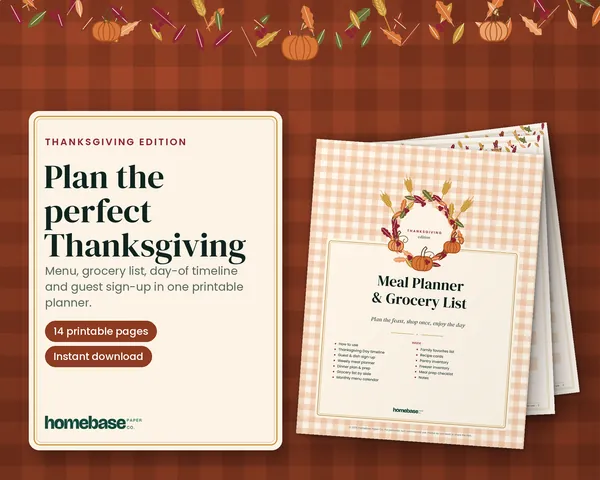
Meal Planner & Grocery List: Thanksgiving Edition
Plan the perfect Thanksgiving: our meal planner in a warm harvest design, with a Thanksgiving Day timeline, a guest & dish sign-up, an aisle-sorted grocery list and pantry and freezer trackers.

Printables
Budget Planner Printable
Twelve undated pages you can print every month: budget, bills, spending, savings and debt.

Printables
Household Binder
Family info, emergency plan, calendars, meals, groceries, cleaning, bills and sitter notes.
 Starter pick
Printables
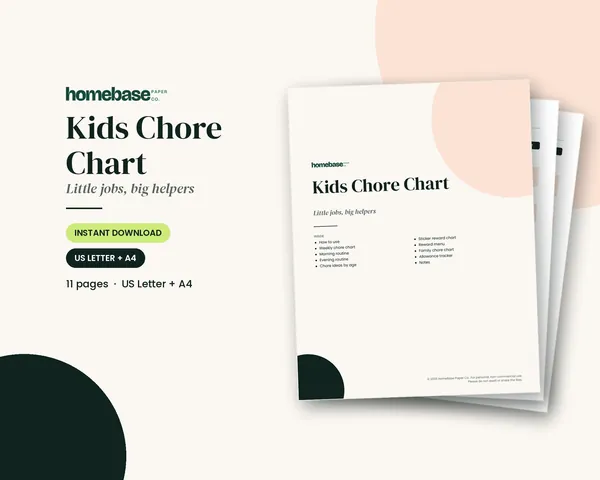
Kids Chore Chart
Weekly chore chart, morning and evening routines, chore ideas by age, a sticker reward chart and an allowance tracker.
 Club
Monthly club
Meal Plan Club
Families who want dinner planned and a grocery list ready every week.
Free printable
A simple daily food log you can fill in by hand
Meals, calories, protein, water, movement, sleep and mood on one page. You'll also get our weekly HomeBase email with easy meal planning ideas and family recipe tips.
Sources
- USDA FoodData Central (SR Legacy) fdc.nal.usda.gov
- CDC: Tips for Increasing Vegetables and Fruits in Your Diet cdc.gov
- ECFR: 21 CFR 101.60, Nutrient content claims for the calorie content of foods ecfr.gov
- U.S. Bureau of Labor Statistics: Average Price Data, eggs, grade A, large (APU0000708111) data.bls.gov
- $0.655 a pound data.bls.gov
- $0.990 a pound data.bls.gov
- $1.680 a pound data.bls.gov
- $1.723 a pound data.bls.gov
- $2.084 a pound data.bls.gov
- $2.806 per 12 oz data.bls.gov
- $4.099 a pound data.bls.gov