

The short answer: a diabetic meal plan is a simple weekly menu built on the American Diabetes Association's Diabetes Plate: half non-starchy vegetables, a quarter lean protein and a quarter quality carbs on a 9-inch plate, with water or a zero-calorie drink.
- Carb basics: the CDC counts about 15 grams of carbs as 1 carb serving and suggests eating about the same amount of carbs at each meal. Your personal carb target comes from your doctor or dietitian, not from a website
- This week: 7 days of simple breakfasts, lunches, dinners and snacks below, then an aisle-by-aisle grocery list and 7 swap dinners for week two
- Budget benchmark: USDA's thrifty food plan was $58.60 a week for a woman 20–50 and $73.60 for a man 20–50 (September 2026, in a 4-person household)
- Free and paid next step: get the free calorie tracker (we email it to you) to log meals for a week, or plan the whole week with the Meal Planner & Grocery List ($3.99)
Facts and USDA costs checked November 12, 2026, against the ADA, CDC, NIDDK and USDA. This is general information, not medical advice. Follow the meal plan your doctor or registered dietitian / diabetes care and education specialist gives you, especially if you take insulin or other diabetes medicine. Below: the plan at a glance, the plate method, carb counting basics, the full 7-day menu, a grocery list, budget tips and FAQs.
7-day diabetic meal plan at a glance
Every dinner follows the Diabetes Plate, and four lunches are planned leftovers. Recipe links are starting points; plate them the Diabetes Plate way.
| Day | Breakfast | Lunch | Dinner | Snack |
|---|---|---|---|---|
| Mon | Overnight oats with berries and walnuts | Turkey sandwich on whole wheat, baby carrots | Baked salmon, roasted broccoli, side salad, small scoop brown rice | String cheese + a tangerine |
| Tue | Scrambled eggs with spinach and peppers, 1 slice whole wheat toast | Leftover salmon over a big salad | Turkey chili with beans, green salad | Celery + peanut butter |
| Wed | Plain Greek yogurt, berries, a few nuts | Leftover turkey chili, cucumber salad | Chicken stir-fry loaded with vegetables, small scoop brown rice | Hard-boiled egg + baby carrots |
| Thu | Overnight oats (made Monday night) | Tuna salad lettuce wraps, an apple | Sheet-pan chicken thighs, green beans, sweet potato | Hummus + cucumber and pepper strips |
| Fri | Veggie egg muffins, small piece of fruit | Leftover sheet-pan chicken over greens | Lentil soup, big side salad | Plain Greek yogurt |
| Sat | Egg muffins (from Friday), 1 slice whole wheat toast | Leftover lentil soup, half a turkey sandwich | Thin-crust veggie pizza (1–2 slices), big side salad | Small handful of nuts |
| Sun | Veggie omelet, berries | Greek salad with chicken | Turkey meatballs in marinara, zucchini or spaghetti squash, garlic green beans | Apple + peanut butter |
Drinks all week: water, unsweetened tea or coffee, or sparkling water. Those are the ADA's suggested Diabetes Plate drinks.
How the Diabetes Plate works
The ADA's Diabetes Plate is the backbone of this plan. The ADA calls it the easiest way to build meals with a healthy balance of vegetables, protein and carbs "without any counting, calculating, weighing, or measuring." Start with a plate about 9 inches across. If your dinner plates are bigger, use a salad plate.
| Plate section | What goes there | Examples from the ADA |
|---|---|---|
| ½ plate: non-starchy vegetables | Lower in carbs, higher in fiber, vitamins and minerals | Broccoli, cauliflower, green beans, leafy greens, peppers, cabbage, zucchini, mushrooms, tomatoes, carrots, cucumber |
| ¼ plate: lean protein | Lower in fat and saturated fat | Chicken, turkey, eggs, fish like salmon or tuna, shrimp, lean beef and pork cuts, cottage cheese, tofu |
| ¼ plate: quality carbohydrates | Foods with the biggest effect on blood glucose | Brown rice, oats, quinoa, whole wheat bread or pasta, sweet potatoes, corn, peas, beans, lentils, fruit, milk and yogurt |
| Drink | No calories or carbs | Water, unsweetened tea or coffee, sparkling water, diet drinks |
Watch the crossovers: the ADA lists beans, lentils and hummus as plant proteins but notes that beans and legumes are also high in carbs. On chili and lentil soup nights, let the beans fill the carb quarter and skip the bread.
Combination dishes: soups, casseroles, sandwiches and pizza still work. The ADA suggests picking out the foods in the dish and building it with Diabetes Plate proportions. For pizza, that means a thin or vegetable-based crust, lots of vegetables, one or two slices and a side salad so half the meal is vegetables.
The NIDDK adds that if you are not taking insulin, you may not need to count carbs when you use the plate method.
Carb counting basics
Carbs matter because your body turns them into glucose, which raises blood sugar. The CDC's carb counting guide breaks carbs into three types:
- Sugars: natural sugar in fruit and milk, plus added sugar in soda and many packaged foods
- Starches: wheat, oats and other grains; starchy vegetables like corn and potatoes; dried beans, lentils and peas
- Fiber: the part of plant foods you don't digest. Sugars and starches raise blood sugar, but fiber doesn't
How carbs are measured
| Carb fact | What the CDC says |
|---|---|
| Unit | Carbs are measured in grams. Packaged foods list total carbs on the Nutrition Facts label |
| 1 carb serving | About 15 grams of carbs |
| Serving vs. portion | A small baked potato has about 30 grams, so it counts as 2 carb servings |
| Consistency | Try to eat about the same amount of carbs at each meal to keep blood sugar steady. This isn't necessary if you use an insulin pump or multiple daily injections and match mealtime insulin to your carbs |
| How many carbs a day? | There's no one-size-fits-all number. It depends on your age, weight, activity level and more |
The CDC's own sample day has about 1,800 calories and 200 grams of carbs. It's an example, not a target, which is why we don't print carb totals on our menu.
Who needs to count? The NIDDK says not everyone with diabetes needs to count carbs. If you take insulin, counting carbs helps you know how much to take. Your care team will tell you which method fits you.
Label tip: read the "Total Carbohydrate" line and the serving size. If you eat two servings, double the carbs. For whole foods without a label, USDA's FoodData Central database lists nutrient data.
Get your personal plan from your care team
No website can set your carb target, meal timing or medicine schedule. The CDC recommends asking your doctor for a referral to diabetes self-management education and support (DSMES), where a diabetes educator helps you build a meal plan that fits you. The NIDDK adds that a registered dietitian can provide medical nutrition therapy and suggests asking your insurer whether your benefits cover it.
Bring these questions to the appointment:
- How many grams of carbs should I aim for at each meal and snack?
- When should I eat, based on my medicines, work schedule and activity?
- Do I need to count carbs, or is the plate method enough for me?
Important safety note: the NIDDK warns that some diabetes medicines, such as sulfonylureas or insulin, can make your blood glucose drop too low if you skip or delay a meal or during exercise. If you take insulin or certain diabetes medicines, alcohol can also drop blood glucose too low, so the NIDDK says to eat when you drink and check your level afterward. Don't change your medicine or skip meals on your own.
Your 7-day diabetic meal plan, day by day
Each dinner is built on the plate, and the extras become the next day's lunch. Portions are up to you and your care team.
Monday and Tuesday
- Monday dinner: baked salmon on ¼ of the plate, roasted broccoli and a side salad on ½, and a small scoop of brown rice on ¼. Bake an extra fillet for Tuesday's lunch.
- Tuesday dinner: turkey chili with beans. The beans fill the carb quarter, so serve it with a big green salad instead of cornbread. Make a double batch.
Wednesday and Thursday
- Wednesday dinner: a chicken stir-fry that's mostly vegetables (broccoli, peppers, snap peas, cabbage) over a small scoop of brown rice.
- Thursday dinner: sheet-pan chicken thighs with green beans and sweet potato chunks. Keep the sweet potato to a quarter of the pan, and roast extra green beans and chicken for Friday's lunch.
Friday and Saturday
- Friday dinner: lentil soup with a big side salad. Lentils count as both protein and carbs.
- Saturday dinner: one or two slices of thin-crust veggie pizza with a big salad. That's the ADA's own example of a combination dish built the Diabetes Plate way.
Sunday
- Sunday dinner: turkey meatballs in marinara over zucchini noodles or spaghetti squash, with garlic green beans. Want pasta? Swap the squash for a small portion of whole wheat pasta as your carb quarter.
Breakfast rotation: overnight oats (Mon, Thu), eggs (Tue, Fri, Sat, Sun), Greek yogurt (Wed). The CDC points out that eating carbs with protein, fat or fiber slows how fast blood sugar rises, so every breakfast pairs a carb with protein.
Week 2: 7 swap dinners
Repeat the breakfasts and lunches, then rotate in these dinners. Plate each one the same way: half vegetables, a quarter protein, a quarter carbs.
| Swap dinner | Plate it like this |
|---|---|
| Air fryer salmon | Asparagus and a salad on half, a small baked potato on a quarter |
| Egg roll in a bowl | Lots of cabbage and carrots; add a small scoop of brown rice if you want a carb |
| White chicken chili | Beans are the carb quarter; serve with a big salad |
| Vegetable soup + grilled chicken | Soup and salad on half, chicken on a quarter, whole wheat roll on a quarter |
| Salmon patties | Roasted cauliflower and green beans, with corn or peas as the carb |
| Cabbage soup + turkey meatballs | Soup is mostly non-starchy vegetables; add a slice of whole wheat bread |
| Burrito bowl | Lettuce, peppers and salsa on half, chicken on a quarter, black beans or brown rice on a quarter |
Diabetic meal plan grocery list
This list covers the 7-day menu. Check your pantry first, then shop aisle by aisle in one trip.
| Aisle | What to buy |
|---|---|
| Produce | Broccoli, salad greens, spinach, bell peppers, cucumbers, baby carrots, celery, green beans, zucchini or spaghetti squash, cabbage or slaw mix, onions, garlic, tomatoes, 1–2 sweet potatoes, apples, tangerines, berries (or frozen) |
| Meat and seafood | Salmon fillets, ground turkey (chili and meatballs), boneless chicken breast or thighs |
| Dairy and eggs | Eggs, plain Greek yogurt, milk, string cheese, feta |
| Canned and dry goods | Old-fashioned oats, brown rice, dried or canned lentils, canned beans, canned tuna, no-sugar-added marinara, low-sodium broth, peanut butter, walnuts or almonds |
| Bakery | Whole wheat bread, thin pizza crust (or a frozen thin-crust veggie pizza) |
| Frozen | Frozen broccoli, green beans and stir-fry vegetables, frozen berries |
| Extras | Hummus, olive oil, spices, mustard, vinegar, unsweetened tea |
Label tip: the NIDDK suggests planning meals with fewer foods high in sodium, saturated fat and added sugar. In the canned aisle, compare broth, beans and marinara labels and pick the lower-sodium, no-added-sugar options. For a printable layout, use our grocery list template.
Diabetic meal plan on a budget
You don't need special "diabetic" foods. The NIDDK says there's no clear proof that specific foods, herbs, spices or supplements help manage diabetes, so spend on plain groceries instead.
What USDA says a healthy week of groceries costs
USDA prices four healthy food plans every month. These are the latest figures (September 2026), for each person in a 4-person household:
| Person | Thrifty plan, weekly | Low-cost plan, weekly | Moderate-cost plan, weekly |
|---|---|---|---|
| Woman, 20–50 | $58.60 | $63.80 | $77.60 |
| Man, 20–50 | $73.60 | $73.30 | $91.90 |
| Woman, 51–70 | $54.60 | $62.10 | $76.50 |
| Man, 51–70 | $64.90 | $69.10 | $86.50 |
Source: USDA Food Plans: Monthly Cost of Food Reports, checked November 12, 2026. USDA says to add 20% if you live alone and 10% for a 2-person household. That puts a woman 20–50 living alone at about $70.30 a week on the thrifty plan ($58.60 × 1.2). These are healthy-diet benchmarks, not diabetes-specific plans or the cost of our menu.
Where to save
- Frozen vegetables: non-starchy vegetables fill half of every plate, so buy frozen broccoli, green beans and stir-fry blends. They keep for weeks.
- Beans and lentils: they do double duty as protein and carbs. Dried lentils and canned beans are some of the cheapest proteins in the store.
- Cook once, eat twice: four lunches this week are leftovers, so you never pay for takeout at noon.
- Store brands: compare store-brand labels on plain oats, frozen vegetables and canned tuna.
- Track prices: a grocery price book shows you when a sale on salmon or chicken is real.
For the full system, see meal planning on a budget, how to grocery shop on a budget, meal prep on a budget and the average grocery cost per month by household size.
Snacks and eating out
Snacks: pair a carb with protein, like the CDC's own sample snack of string cheese and tangerines. Other ideas from this plan: hard-boiled eggs, hummus with vegetables, plain Greek yogurt, and celery or an apple with peanut butter. Our low carb snacks list has more. Ask your care team whether you need a snack between meals at all.
Eating out: the CDC's diabetes meal planning guide notes that restaurant entrées can be 3 or 4 servings. Ask for half to go when it arrives, then build the rest on your plate the Diabetes Plate way: vegetables first, a palm-sized protein and one carb. Choose water or unsweetened tea.
Portions without a scale: the CDC's "handy" guide says 3 ounces of meat or fish is about the palm of your hand (no fingers), and a cup or a medium fruit is about the size of your fist.
Plan your week and print your list
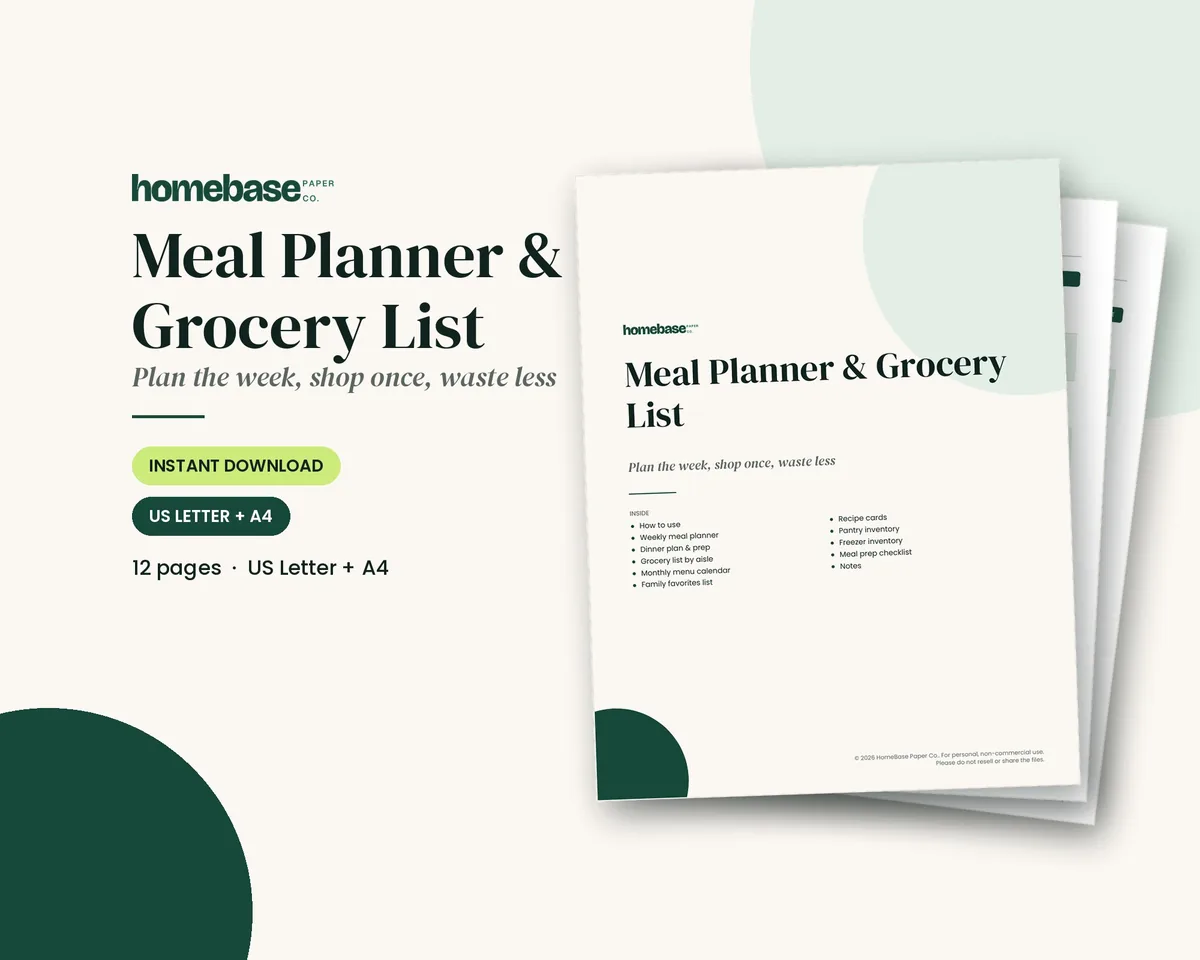
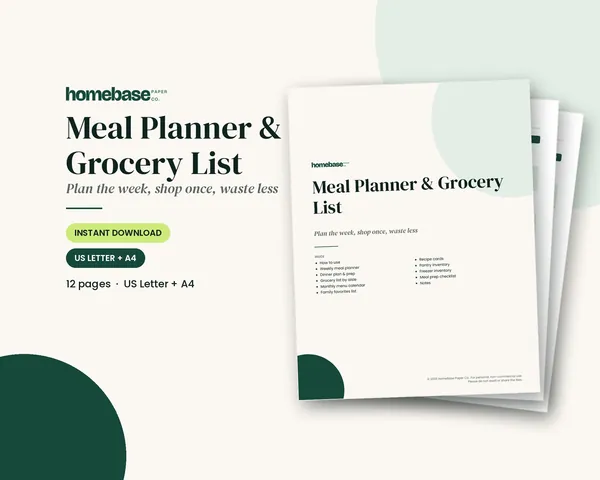
A diabetic meal plan works best on paper, where you can see the whole week and shop once. The Meal Planner & Grocery List ($3.99) is a 12-page PDF with a weekly meal planner, a grocery list sorted by store section, a monthly menu, recipe cards and pantry and freezer inventories. Write this 7-day menu on the weekly page, then copy the grocery list above into the aisle sections. It's part of our Printables line.
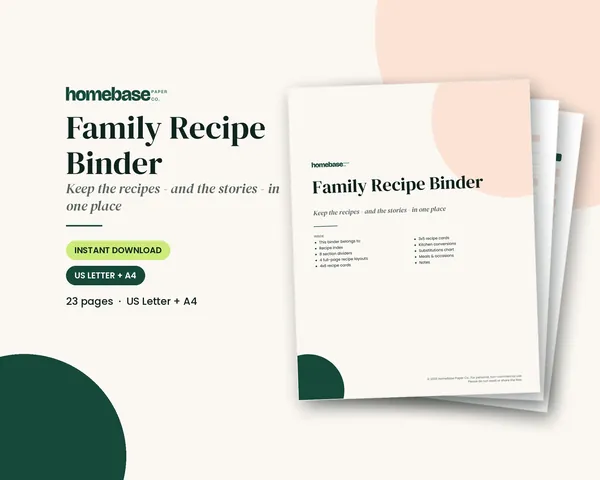
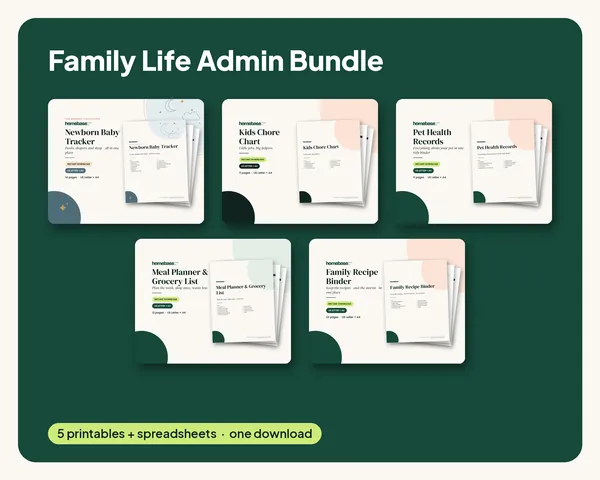
Keep the dinners that work for you in the Family Recipe Binder ($6.99). Want both? The Family Life Admin Bundle is $15.99 ($23.95 bought separately); see all Bundles.
Not ready to buy? Get the free calorie tracker (we email it to you). It puts meals, water, movement and sleep on one page so you can bring a week of notes to your next appointment.
More ways to plan: heart healthy foods, a balanced diet guide, low carb foods, how to meal plan, our monthly meal planner, healthy meals, low carb meals, the Mediterranean diet meal plan and our healthy recipes collection.
Make it easier
Tools for this
 Starter pick
Printables
Meal Planner & Grocery List
Weekly meals, a grocery list sorted by aisle, and pantry and freezer inventories so you shop once and waste less.
Printables
Family Recipe Binder
Section dividers, four recipe page layouts with room for the family story, 4x6 and 3x5 cards and a conversion chart - print it or type into the fillable version.
 Save 33%
Bundles
Family Life Admin Bundle
Baby logs, chore charts, pet records, meal plans and family recipes in one tidy set.
Frequently asked questions
What is a diabetic meal plan? A diabetic meal plan is your guide for when, what and how much to eat so you get good nutrition while keeping blood sugar in your target range. The ADA's Diabetes Plate is an easy place to start: half non-starchy vegetables, a quarter lean protein and a quarter quality carbs. Your doctor or dietitian tailors it to you.
What is the diabetes plate method? The Diabetes Plate is the ADA's no-counting way to portion a meal on a 9-inch plate. Fill half with non-starchy vegetables like broccoli or salad, a quarter with lean protein like chicken, fish or eggs, and a quarter with quality carbs like brown rice, beans, fruit or milk. Drink water or a zero-calorie drink.
How many carbs should a diabetic eat per meal? There is no one-size-fits-all number of carbs for people with diabetes. The CDC says the right amount depends on your age, weight, activity level and more, and suggests eating about the same amount at each meal. Ask your doctor, dietitian or a DSMES program for your personal target.
What is a carb serving for diabetes? One carb serving is about 15 grams of carbohydrates, according to the CDC. That isn't always the same as a normal serving of food. A small baked potato has about 30 grams of carbs, so it counts as 2 carb servings. Check the Total Carbohydrate line on Nutrition Facts labels.
Do I have to count carbs if I have diabetes? Not everyone with diabetes needs to count carbs. The NIDDK says counting carbs helps people who take insulin know how much to take, and that people who aren't on insulin may not need to count when they use the plate method. Your care team will tell you which method fits you.
What foods are best for a diabetic meal plan? Non-starchy vegetables, lean proteins, whole grains, beans, fruit and low-fat dairy are the core foods. The NIDDK suggests choosing foods with fiber, vitamins and healthy fats, and fewer foods high in saturated fat, sodium and added sugar. Water, unsweetened tea and coffee are the easiest drinks.
Can people with diabetes eat fruit? Yes, fruit fits in a diabetic meal plan as part of the carb quarter of your plate. The ADA lists fruit with quality carbohydrates, and the CDC notes that fruit juice raises blood sugar faster than whole fruit. Choose whole fruit and count it toward that meal's carbs.
Can I skip meals on a diabetic meal plan? Don't skip meals without asking your care team first. The NIDDK warns that some diabetes medicines, such as sulfonylureas or insulin, can make blood glucose drop too low if you skip or delay a meal. Ask your doctor about the best meal times for your medicines and schedule.
Who can help me make a diabetic meal plan? A registered dietitian or a diabetes care and education specialist can build a plan that fits you. The CDC suggests asking your doctor for a referral to diabetes self-management education and support (DSMES), and the NIDDK suggests asking your insurer whether medical nutrition therapy is covered.
How much does a diabetic meal plan cost per week? USDA's thrifty food plan, a healthy-diet benchmark, cost $58.60 a week for a woman 20–50 and $73.60 for a man 20–50 in September 2026, per person in a 4-person household. USDA says to add 20% if you live alone. Those figures aren't diabetes-specific, but plain foods like frozen vegetables, beans, eggs and oats keep the plate method affordable.
Do I need special diabetic foods? No, you don't need special diabetic foods or supplements. The NIDDK says there's no clear proof that specific foods, herbs, spices or supplements help manage diabetes. Regular groceries built into the Diabetes Plate work, and you should talk with your doctor before taking any supplement.
Is there a printable diabetic meal planner? The HomeBase Meal Planner & Grocery List is $3.99 and works as a printable diabetic meal planner. It's a 12-page PDF with a weekly meal planner, a grocery list sorted by store section, a monthly menu, recipe cards and pantry and freezer inventories, so you can write your plate-method week and shop once.
Is there a free printable to track meals? Yes, the HomeBase calorie tracker is free, and we email it to you when you request it at our get page. It puts meals, calories, protein, water, movement, sleep and mood on one page, so you can bring a week of notes to your doctor or dietitian.
Where can I keep diabetes-friendly recipes? The HomeBase Family Recipe Binder is $6.99 and keeps the dinners that work for you in one printable binder. The Family Life Admin Bundle includes it and the Meal Planner & Grocery List for $15.99, compared with $23.95 bought separately.
More from HomeBase
You may also like
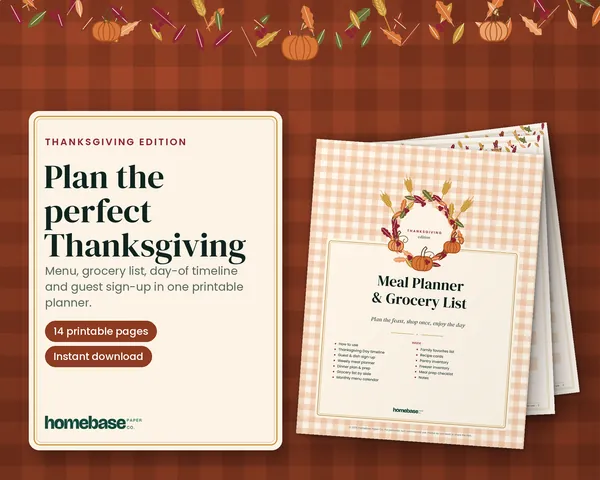 Thanksgiving Edition
Printables
Meal Planner & Grocery List: Thanksgiving Edition
Plan the perfect Thanksgiving: our meal planner in a warm harvest design, with a Thanksgiving Day timeline, a guest & dish sign-up, an aisle-sorted grocery list and pantry and freezer trackers.
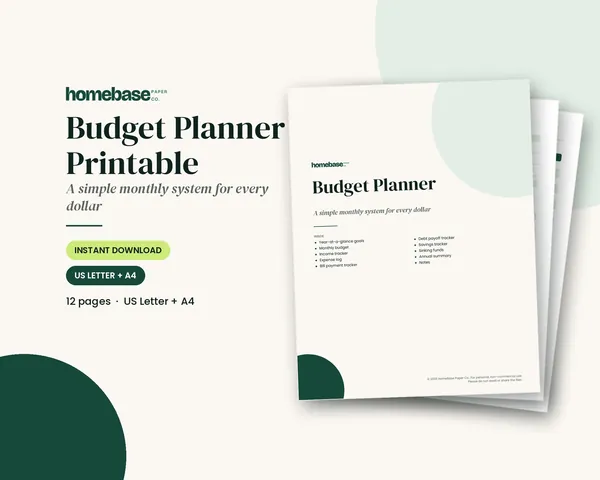
Printables
Budget Planner Printable
Twelve undated pages you can print every month: budget, bills, spending, savings and debt.
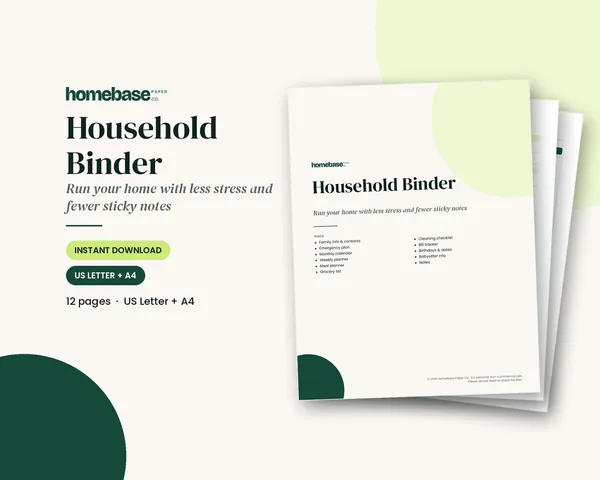
Printables
Household Binder
Family info, emergency plan, calendars, meals, groceries, cleaning, bills and sitter notes.
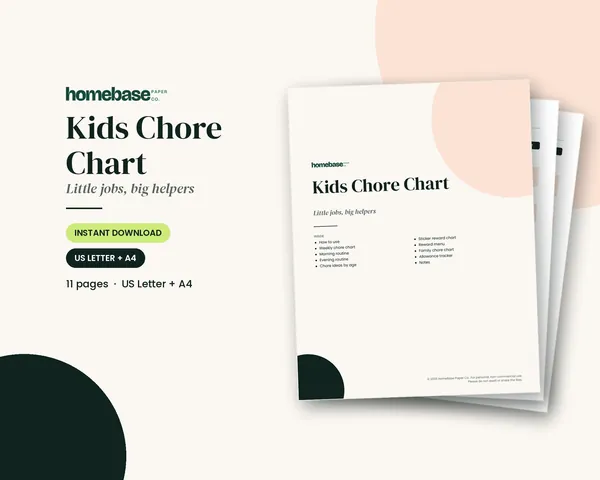 Starter pick
Printables
Kids Chore Chart
Weekly chore chart, morning and evening routines, chore ideas by age, a sticker reward chart and an allowance tracker.
 Club
Monthly club
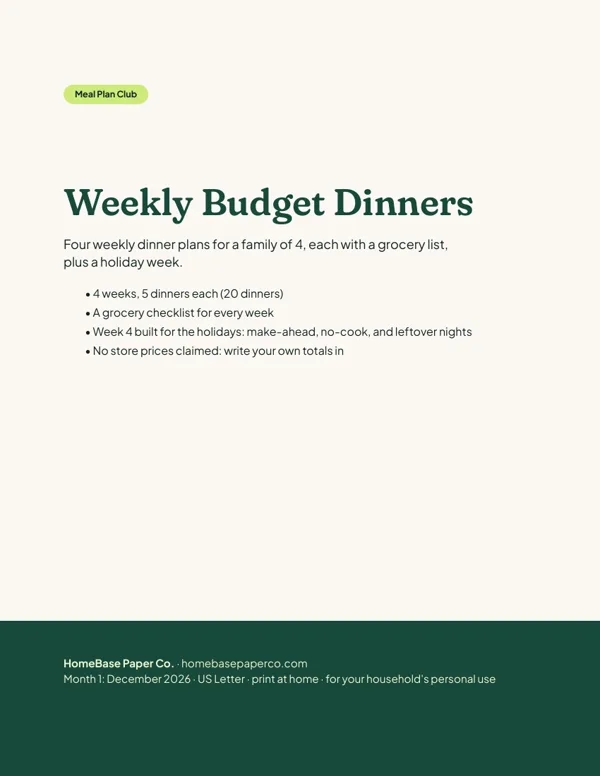
Meal Plan Club
Families who want dinner planned and a grocery list ready every week.
Free printable
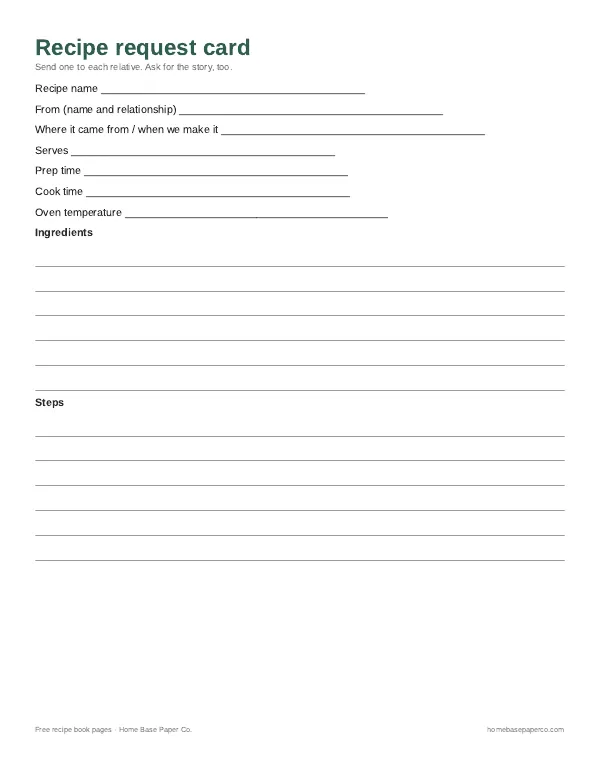
Save the family favorites: get the free recipe book pages
Printable recipe pages and a recipe request card to send to relatives, so the dishes everyone loves end up in one book. You'll also get our weekly HomeBase email with easy meal planning ideas and family recipe tips.
Sources
- What is the Diabetes Plate? (American Diabetes Association) diabetesfoodhub.org
- Carb Counting (Centers for Disease Control and Prevention) cdc.gov
- Diabetes Meal Planning (Centers for Disease Control and Prevention) cdc.gov
- Healthy Living with Diabetes (National Institute of Diabetes and Digestive and Kidney Diseases) niddk.nih.gov
- USDA Food Plans: Monthly Cost of Food Reports (U.S. Department of Agriculture) fns.usda.gov