

The short answer: the easiest way to eat more vegetables is to add one to food you already eat: spinach in eggs, carrots in sauce, frozen peas in rice. These 45 easy ways to eat vegetables are sorted by meal, so you can start at breakfast tomorrow.
- How much: most adults need 2 to 4 cups a day, and almost 90 percent of Americans fall short. One cup is 1 cup of raw or cooked vegetables or 2 cups of salad greens.
- Cheapest picks today: canned no-salt-added green beans $0.90 a pound, baby carrots $0.91, onions $0.95 and sweet potatoes $0.96 at Walmart.com. Frozen mixed vegetables are $1.29 a pound.
- Next step: get the free habit tracker (we email it to you) to check off one added vegetable a day, or plan the week with the Meal Planner & Grocery List ($3.99).
Prices checked November 13, 2026 at Walmart.com, plus the BLS October 2026 U.S. averages. Below: the 45 ways, how many cups you need by age and sex, a cheap-vegetable price table, picky-eater and no-time tips, and a 7-day starter plan. This is general information; if you have a health condition or a special diet, follow your doctor's or dietitian's plan.
45 easy ways to eat vegetables, by meal
The 2020–2025 Dietary Guidelines for Americans found that about 45 percent of the vegetables Americans eat are a separate side and about 40 percent are part of a mixed dish. So the fastest wins come from mixing vegetables into meals you already make, not from adding a side nobody touches.
Breakfast (1–8)
| # | Idea | How to do it |
|---|---|---|
| 1 | Spinach scrambled eggs | Wilt a handful of spinach in the pan before the eggs go in. See our scrambled eggs method. |
| 2 | Veggie omelet | Fill it with peppers, onions, mushrooms and tomato. Our omelette guide covers the fold. |
| 3 | Make-ahead egg muffins | Bake eggs with chopped broccoli and peppers in a muffin tin on Sunday. Try our egg muffins. |
| 4 | Green smoothie | Blend a cup of spinach with frozen fruit. The color changes, the taste barely does. More in healthy smoothie recipes. |
| 5 | Savory oats | Top plain oats with a fried egg, sautéed greens and salsa. |
| 6 | Breakfast tacos | Add black beans, peppers and onions to scrambled eggs in a tortilla. |
| 7 | Avocado and tomato toast | Sliced tomato on avocado toast counts toward your cups. |
| 8 | Hash brown skillet | Fry diced sweet potato or potato with onion and peppers. |
More morning ideas: healthy breakfast ideas.
Lunch (9–16)
| # | Idea | How to do it |
|---|---|---|
| 9 | Load the sandwich | Add lettuce, cucumber, tomato, shredded carrot and peppers to any sandwich. |
| 10 | Half-and-half bowl | Fill half the bowl with greens or slaw, half with rice or grains. |
| 11 | Soup with lunch | A cup of vegetable soup or minestrone beside a sandwich. |
| 12 | Veggie-packed tuna or chicken salad | Stir in diced celery, onion, pickles and shredded carrot. |
| 13 | Lettuce wraps | Use romaine or butter lettuce leaves instead of a tortilla for one wrap. |
| 14 | Hummus plate | Hummus with carrots, cucumber, peppers and snap peas. Make your own hummus from canned chickpeas. |
| 15 | Leftover roasted vegetables | Toss last night's tray into a wrap or grain bowl. |
| 16 | Salad that is a meal | Add beans, eggs or chicken so the salad fills you up. See our salad recipes. |
For the lunchbox: healthy lunch ideas and school lunches.
Dinner (17–25)
| # | Idea | How to do it |
|---|---|---|
| 17 | Sheet-pan dinner | Roast chicken or sausage on the same pan as broccoli and potatoes. See sheet pan dinners. |
| 18 | Roast a big tray | High heat browns Brussels sprouts and cauliflower. Times and temperatures are in how to roast vegetables. |
| 19 | Stir-fry | Use a 20 oz bag of frozen stir-fry vegetables. Our stir fry guide has the sauce. |
| 20 | Half-veg chili | Add an extra can of beans plus diced peppers and zucchini. Try vegetarian chili or our chili recipe. |
| 21 | Pasta with vegetables | Toss in frozen peas or broccoli for the last 3 minutes of boiling. Pasta primavera is the classic. |
| 22 | Taco night toppings | Set out lettuce, tomato, onion, peppers, corn and salsa. |
| 23 | Stuffed peppers | Fill pepper halves with rice, beans and ground meat. |
| 24 | Pizza topping rule | Add at least two vegetables to every pizza, homemade or frozen. |
| 25 | Cabbage in everything | Shredded cabbage goes into soups, slaws and stir-fries. Our cabbage soup uses a whole head. |
More dinners: healthy dinner ideas and vegetarian recipes.
Snacks (26–32)
| # | Idea | How to do it |
|---|---|---|
| 26 | Cut once, snack all week | Slice peppers, celery and cucumbers on Sunday and store them at eye level. |
| 27 | Baby carrots and dip | Pair with hummus, ranch or peanut butter. |
| 28 | Roasted chickpeas | Toss drained chickpeas with oil and spices and roast until crisp. |
| 29 | Edamame | Microwave frozen edamame in the pod and sprinkle with salt. |
| 30 | Salsa and chips | Fresh salsa or pico de gallo counts as vegetables. |
| 31 | Snap peas and cherry tomatoes | No prep beyond a rinse. |
| 32 | Cucumber "chips" | Thin slices with a pinch of salt and lime. |
More snack lists: healthy snacks and easy snacks for kids.
Sauces and hidden vegetables (33–39)
| # | Idea | How to do it |
|---|---|---|
| 33 | Grate carrots into sauce | Grated carrot and zucchini melt into pasta sauce. |
| 34 | Blend a veggie pasta sauce | Blend roasted peppers, onion and tomato until smooth. |
| 35 | Pumpkin or squash mac and cheese | Stir canned pumpkin or puréed butternut squash into the cheese sauce. |
| 36 | Cauliflower in mashed potatoes | Mash half potatoes, half cooked cauliflower. |
| 37 | Mushrooms in ground meat | Finely chop mushrooms and brown them with the beef for tacos or burgers. |
| 38 | Spinach in meatballs | Squeeze thawed frozen spinach dry and mix it into the meat. |
| 39 | Zucchini in baking | Shredded zucchini goes into muffins, pancakes and zucchini bread. |
Frozen and canned shortcuts (40–45)
The Dietary Guidelines count fresh, frozen, canned and dried vegetables, and 100% vegetable juice. The 2025–2030 Dietary Guidelines release from USDA says to eat vegetables and fruits throughout the day and to eat the right amount for your age, sex, size and activity level.
| # | Idea | How to do it |
|---|---|---|
| 40 | Steam-in-bag sides | A 12 oz steamable bag of broccoli cooks in the microwave in minutes. |
| 41 | Frozen spinach cubes | Drop a chunk into soups, eggs, pasta and smoothies. |
| 42 | Canned tomatoes | Use no-salt-added diced tomatoes in chili, soup and rice. |
| 43 | Canned green beans | Drain, rinse and sauté with garlic. |
| 44 | Frozen peppers and onions | Toss a handful into fajitas, eggs or quesadillas with no chopping. |
| 45 | Canned beans | Rinse and add to salads, soups and tacos. |
Sodium tip: University of Illinois Extension suggests low-sodium canned vegetables, or draining and rinsing canned vegetables to remove some sodium.
How many vegetables you need a day
These are MyPlate's general ranges by age and sex. They come from the Healthy U.S.-Style eating patterns in the 2020–2025 Dietary Guidelines. Your exact amount depends on your height, weight and activity level.
| Group | Age | Cups of vegetables a day |
|---|---|---|
| Toddlers | 12–23 months | ⅔ to 1 |
| Children | 2–3 | 1 to 1½ |
| Children | 4–8 | 1½ to 2½ |
| Girls | 9–13 | 1½ to 3 |
| Girls | 14–18 | 2½ to 3 |
| Boys | 9–13 | 2 to 3½ |
| Boys | 14–18 | 2½ to 4 |
| Women | 19–30 | 2½ to 3 |
| Women | 31–59 | 2 to 3 |
| Women | 60+ | 2 to 3 |
| Men | 19–30 | 3 to 4 |
| Men | 31–59 | 3 to 4 |
| Men | 60+ | 2½ to 3½ |
What counts as 1 cup: 1 cup of raw or cooked vegetables, 1 cup of vegetable juice, or 2 cups of leafy salad greens, per the Dietary Guidelines. Beans, peas and lentils can count as a vegetable or a protein, but count them in one group only.
Why it matters: the Dietary Guidelines report that almost 90 percent of the U.S. population does not meet the vegetable recommendation. For protein-rich options, see plant-based protein sources and our high protein foods chart.
Cheap vegetables: prices per pound
Store-brand frozen and canned vegetables, plus a few sturdy fresh ones, are the lowest-cost way to add cups. Prices are Walmart.com online prices checked November 13, 2026, and they vary by store and ZIP code. The last four rows are national averages from the Bureau of Labor Statistics for October 2026.
| Vegetable | Package | Price | Per pound |
|---|---|---|---|
| Canned cut green beans, no salt added (Great Value) | 14.5 oz | $0.82 | $0.90 |
| Baby-cut carrots | 2 lb | $1.82 (rollback, was $2.47) | $0.91 |
| Yellow onions | 3 lb | $2.86 | $0.95 |
| Sweet potatoes | 3 lb | $2.88 | $0.96 |
| Canned diced tomatoes, no salt added (Great Value) | 14.5 oz | $0.96 | $1.06 |
| Whole carrots | 2 lb | $2.26 | $1.13 |
| Frozen mixed vegetables (Great Value) | 32 oz | $2.58 | $1.29 |
| Frozen peas and carrots, steamable (Great Value) | 12 oz | $0.98 | $1.31 |
| Frozen broccoli florets, steamable (Great Value) | 12 oz | $1.16 | $1.55 |
| Frozen chopped spinach (Great Value) | 12 oz | $1.47 | $1.96 |
| White potatoes (BLS U.S. average) | per lb | — | $0.99 |
| Iceberg lettuce (BLS U.S. average) | per lb | — | $1.96 |
| Tomatoes, field grown (BLS U.S. average) | per lb | — | $2.08 |
| Romaine lettuce (BLS U.S. average) | per lb | — | $3.49 |
Canned weights include the liquid. Money-saving tip: frozen and canned vegetables keep for months, so less of your grocery budget ends up in the trash. Track your store's lowest prices in a grocery price book, and see how to grocery shop on a budget, meal planning on a budget and the grocery budget for a family of 4.
How to get picky eaters to eat vegetables
The Dietary Guidelines note that it can take up to 8 to 10 exposures for an infant to accept a new food, and that repeated exposure increases acceptance. Keep offering, without pressure.
- Serve one "safe" food: put a familiar vegetable next to a new one so there is always something they will eat.
- Offer tiny tastes: one green bean on the plate is a win. Try again next week.
- Let them choose: have kids pick a vegetable at the store or from the freezer.
- Change the texture: a kid who refuses steamed carrots may eat them roasted, shredded or raw with dip.
- Hide, then reveal: sauces and baking (ideas 33–39) help, but also serve vegetables in plain sight so kids learn to like them.
- Cook together: let kids wash, tear or stir the vegetables. Our easy recipes for kids are a good start.
How to eat more vegetables with little time
- Buy pre-cut or frozen: steamable bags, baby carrots, bagged salad and frozen peppers skip the chopping.
- Prep once: wash and cut vegetables right after shopping. The healthy meal prep ideas guide shows a one-hour Sunday routine.
- Double the vegetables, not the work: add a second bag of frozen vegetables to the same stir-fry or soup.
- Cook once, eat twice: a big tray of roasted vegetables becomes tomorrow's wraps and bowls.
- Keep a "backup bag": one bag of frozen mixed vegetables in the freezer means dinner always has a vegetable.
7-day add-a-vegetable starter plan
Add one vegetable a day and keep it. By day 7 you are adding vegetables at every meal and snack. Each day builds on the last, so keep doing the earlier days.
| Day | Add this | Where | Roughly |
|---|---|---|---|
| Mon | Spinach | A handful in morning eggs or a smoothie | ½ cup (1 cup raw greens) |
| Tue | Baby carrots | Lunch side with hummus or dip | ½ cup |
| Wed | Frozen mixed vegetables | Stirred into rice, pasta or soup at dinner | 1 cup |
| Thu | Canned tomatoes | In chili, pasta sauce or soup | ½ cup |
| Fri | Peppers and onions | Pizza or taco night toppings | ½ cup |
| Sat | Green beans | Sautéed side with garlic | 1 cup |
| Sun | Sweet potatoes | Roasted on a sheet pan, extras saved for Monday | 1 cup |
Starter shopping list: a 32 oz bag of frozen mixed vegetables ($2.58), a 12 oz box of frozen chopped spinach ($1.47), a 2 lb bag of baby carrots ($1.82), two cans of no-salt-added diced tomatoes ($1.92), a can of no-salt-added green beans ($0.82) and a 3 lb bag of onions ($2.86). That is $11.47 at the Walmart.com prices above, before tax, and most of it lasts beyond the first week. Add sweet potatoes ($2.88 for 3 lb) and peppers if your budget allows. Write it on a grocery list template so you buy only what the plan needs.
For a whole week of meals, follow how to meal plan or how to meal plan for a family.
Plan your vegetables for the week
A list of ways to eat vegetables only helps once the vegetables are on your shopping list. Like a lot of oldest daughters, I hold everyone's plans in my head, and writing the week down is how I put some of it down. Vegetables get easier the same way: once they are on the page, they end up in the cart.
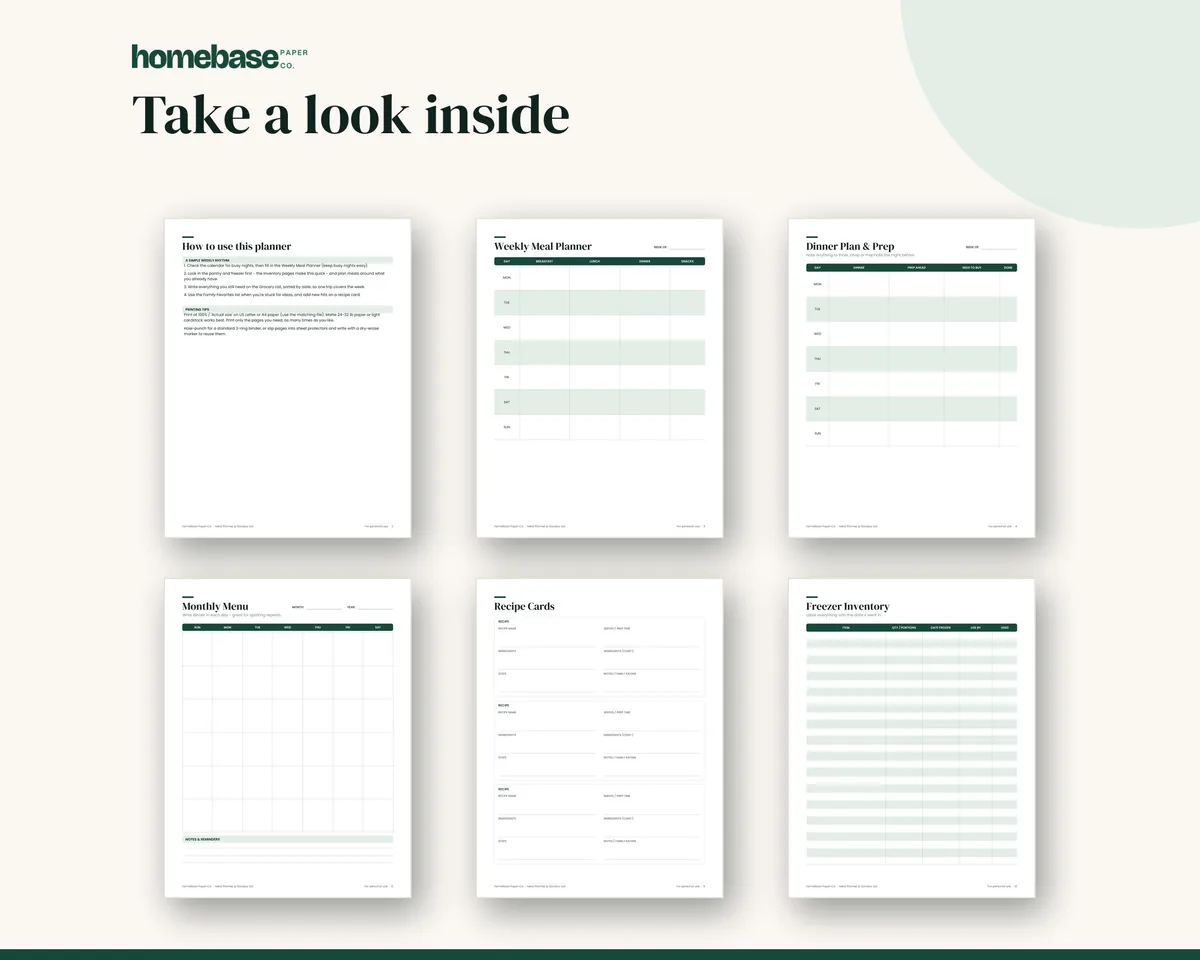
- Plan the week: the Meal Planner & Grocery List ($3.99) has a weekly meal planner, a monthly menu, a meal prep checklist, an aisle-sorted grocery list and pantry and freezer inventories. Write one added vegetable into each day.
- Save what works: the Family Recipe Binder ($6.99) keeps the veggie-packed versions your family actually eats.
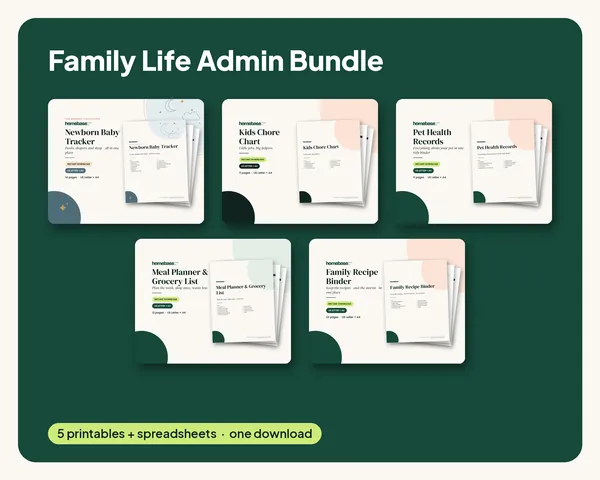
- Get both, plus more: the Family Life Admin Bundle is $15.99 (
$23.95when bought separately) and includes the meal planner and recipe binder. - Start free: get the free habit tracker (we email it to you) and shade a box each day you add a vegetable.
Browse all of our Printables or the Bundles.
Make it easier
Tools for this
 Starter pick
Printables
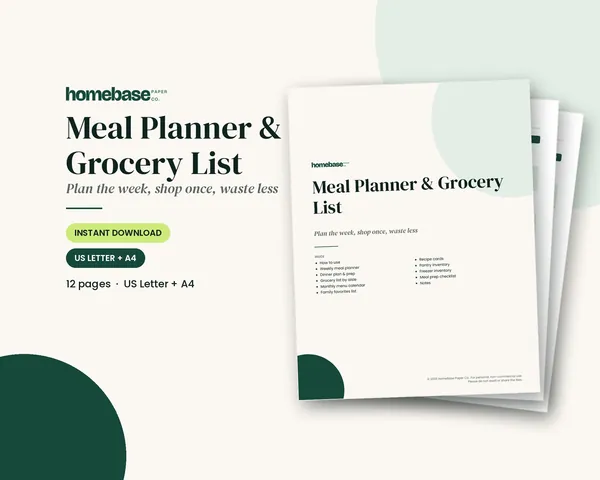
Meal Planner & Grocery List
Weekly meals, a grocery list sorted by aisle, and pantry and freezer inventories so you shop once and waste less.
Printables
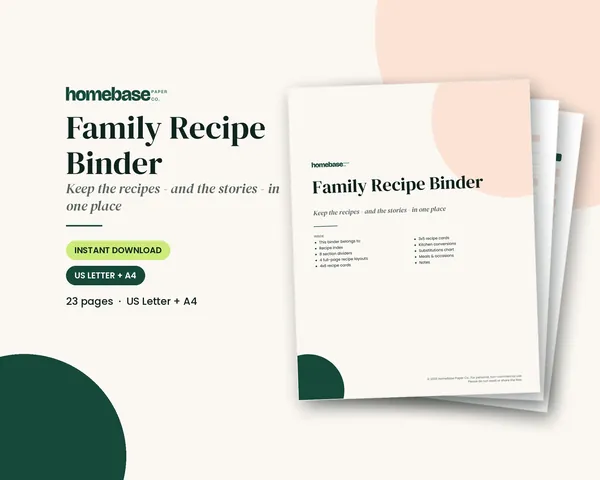
Family Recipe Binder
Section dividers, four recipe page layouts with room for the family story, 4x6 and 3x5 cards and a conversion chart - print it or type into the fillable version.
 Save 33%
Bundles
Family Life Admin Bundle
Baby logs, chore charts, pet records, meal plans and family recipes in one tidy set.
Frequently asked questions
What are some easy ways to eat vegetables? The easiest ways to eat vegetables are to add them to meals you already make. Put spinach in eggs or smoothies, grate carrots into pasta sauce, stir frozen peas into rice, load sandwiches with lettuce and tomato, and keep cut vegetables and dip at eye level for snacks. Frozen and canned vegetables count too, so you can skip most of the chopping.
How many cups of vegetables should I eat a day? Most adults need 2 to 4 cups of vegetables a day. MyPlate's general ranges, built from the 2020–2025 Dietary Guidelines, are 2½ to 3 cups for women 19 to 30, 2 to 3 cups for women 31 and older, 3 to 4 cups for men 19 to 59 and 2½ to 3½ cups for men 60 and older. Children need less: 1 to 1½ cups at ages 2 to 3 and 1½ to 2½ cups at ages 4 to 8.
What counts as a cup of vegetables? One cup of raw or cooked vegetables counts as 1 cup, and so does 1 cup of vegetable juice. Leafy salad greens are lighter, so it takes 2 cups of raw greens to count as 1 cup. Fresh, frozen, canned and dried vegetables all count toward your daily total.
Are frozen and canned vegetables as good as fresh? Frozen and canned vegetables count toward your daily vegetables just like fresh ones. The Dietary Guidelines include fresh, frozen, canned and dried forms, and the 2025–2030 edition says to eat vegetables and fruits throughout the day. Choose frozen vegetables without sauce and canned ones labeled low sodium or no salt added, or drain and rinse them.
How do I get a picky eater to eat vegetables? Keep offering vegetables without pressure, because repeated exposure helps. The Dietary Guidelines note it can take up to 8 to 10 exposures for an infant to accept a new food. Serve a familiar vegetable next to a new one, offer tiny tastes, let kids choose a vegetable at the store and try a new texture, such as roasted or raw with dip instead of steamed.
How can I hide vegetables in food? Hide vegetables in sauces, ground meat and baking. Grate carrots and zucchini into pasta sauce, blend roasted peppers into a smooth sauce, stir pumpkin or squash into mac and cheese, mash cauliflower into potatoes, and mix finely chopped mushrooms or thawed spinach into meatballs and taco meat. Serve some vegetables in plain sight too so kids learn to like them.
What are the cheapest vegetables to buy? The cheapest vegetables on November 13, 2026 were canned no-salt-added green beans at $0.90 a pound, baby carrots at $0.91, yellow onions at $0.95 and sweet potatoes at $0.96 at Walmart.com. The BLS October 2026 U.S. average for white potatoes was $0.99 a pound. Store-brand frozen mixed vegetables were $1.29 a pound.
How can I eat more vegetables when I have no time? Buy vegetables that are already prepped. Steamable frozen bags, baby carrots, bagged salad and frozen peppers and onions need no chopping. Cut fresh vegetables once right after shopping, add a second bag of frozen vegetables to stir-fries and soups, and roast a big tray so leftovers become the next day's lunch.
Do potatoes count as a vegetable? Yes, white potatoes count as a vegetable in the starchy vegetable subgroup, along with corn, green peas and plantains. Sweet potatoes are in the red and orange subgroup. Baked, boiled or roasted potatoes are a cheap way to add cups; just go easy on butter, cheese and frying.
Do beans count as vegetables? Beans, peas and lentils count as vegetables, and they can also count as a protein food. The Dietary Guidelines say to count them in one group only, not both. Canned black beans, chickpeas and lentils are an easy way to add them to salads, soups and tacos.
Should I talk to my doctor before changing how I eat? Talk to your doctor or a registered dietitian first if you have a health condition, follow a special diet or take medicine. This guide is general information, not medical advice. Your care team can tell you whether any vegetables, sodium levels or portion sizes need to change for you.
What planner helps me plan more vegetables? The Meal Planner & Grocery List ($3.99) from HomeBase Paper Co. is a printable with a weekly meal planner, a monthly menu, a meal prep checklist, an aisle-sorted grocery list and pantry and freezer inventories. Write one added vegetable into each day of the week, then copy what you need onto the grocery list.
Where can I keep the vegetable recipes my family likes? The Family Recipe Binder ($6.99) from HomeBase Paper Co. is a printable with section dividers, four recipe page layouts, 4x6 and 3x5 recipe cards and a conversion chart. Give your veggie-packed versions of family favorites their own section so they are easy to find.
Is there a bundle with the meal planner and recipe binder? Yes, the Family Life Admin Bundle is $15.99, compared with $23.95 for its items bought separately. It includes the Meal Planner & Grocery List, the Family Recipe Binder, a kids chore chart, a newborn baby tracker and pet health records.
More from HomeBase
You may also like
Printables
Household Binder
Family info, emergency plan, calendars, meals, groceries, cleaning, bills and sitter notes.
Printables
Cleaning Schedule
Daily, weekly, monthly and seasonal lists - plus a family chore chart.
Printables
Home Maintenance Log
Monthly, seasonal and annual checklists plus a record of every appliance and repair.
Printables
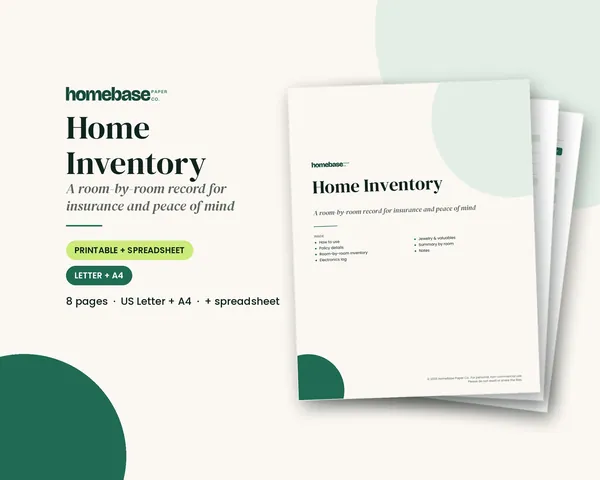
Home Inventory
Printable pages and a spreadsheet that totals the value of every room.
 Club
Monthly club
Planner & Calendar Club
Anyone who wants a monthly calendar, bill calendar and meal plan ready to print.
Free printable
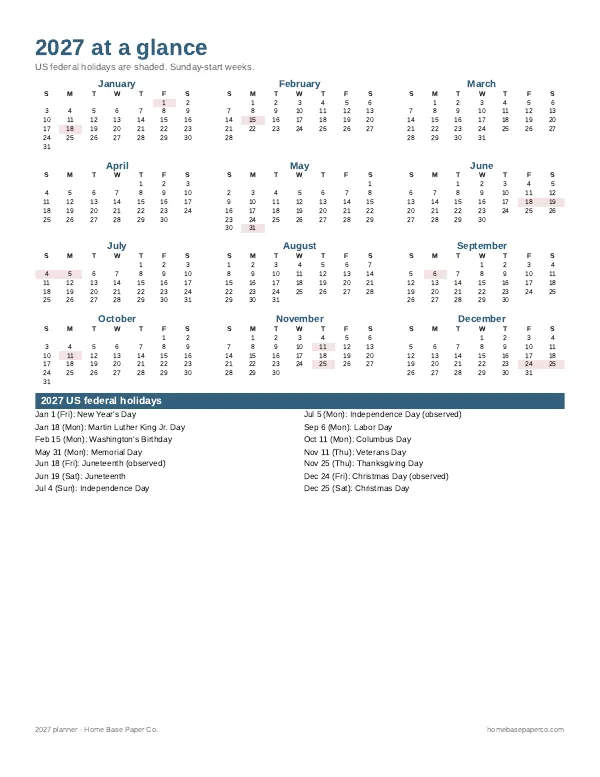
Get organized for the new year: get the free 2027 planner
A 16-page printable 2027 planner with a year-at-a-glance page and monthly calendars with US holidays marked. You'll also get our weekly HomeBase email with simple planning and home organization tips.
Sources
- Dietary Guidelines for Americans, 2020–2025 (USDA and HHS) dietaryguidelines.gov
- USDA: Dietary Guidelines for Americans, 2025–2030 release usda.gov
- U.S. Bureau of Labor Statistics: Average Retail Food and Energy Prices bls.gov
- University of Illinois Extension: Vegetables (Eat.Move.Save.) eat-move-save.extension.illinois.edu