
 The Holiday Collection

The short answer: holiday stress mostly comes from money, gifts and having too much to do. Get everything onto one page, give the season a spending limit, and cut, shrink or share the tasks that matter least.
- Money is the biggest cause: 58% of U.S. adults (APA, 2023)
- Gifts come second (40%): a written list with a dollar cap next to each name
- Too much to do (32%): a brain dump, then cut, shrink or share three tasks
- 15-minute stress audit below
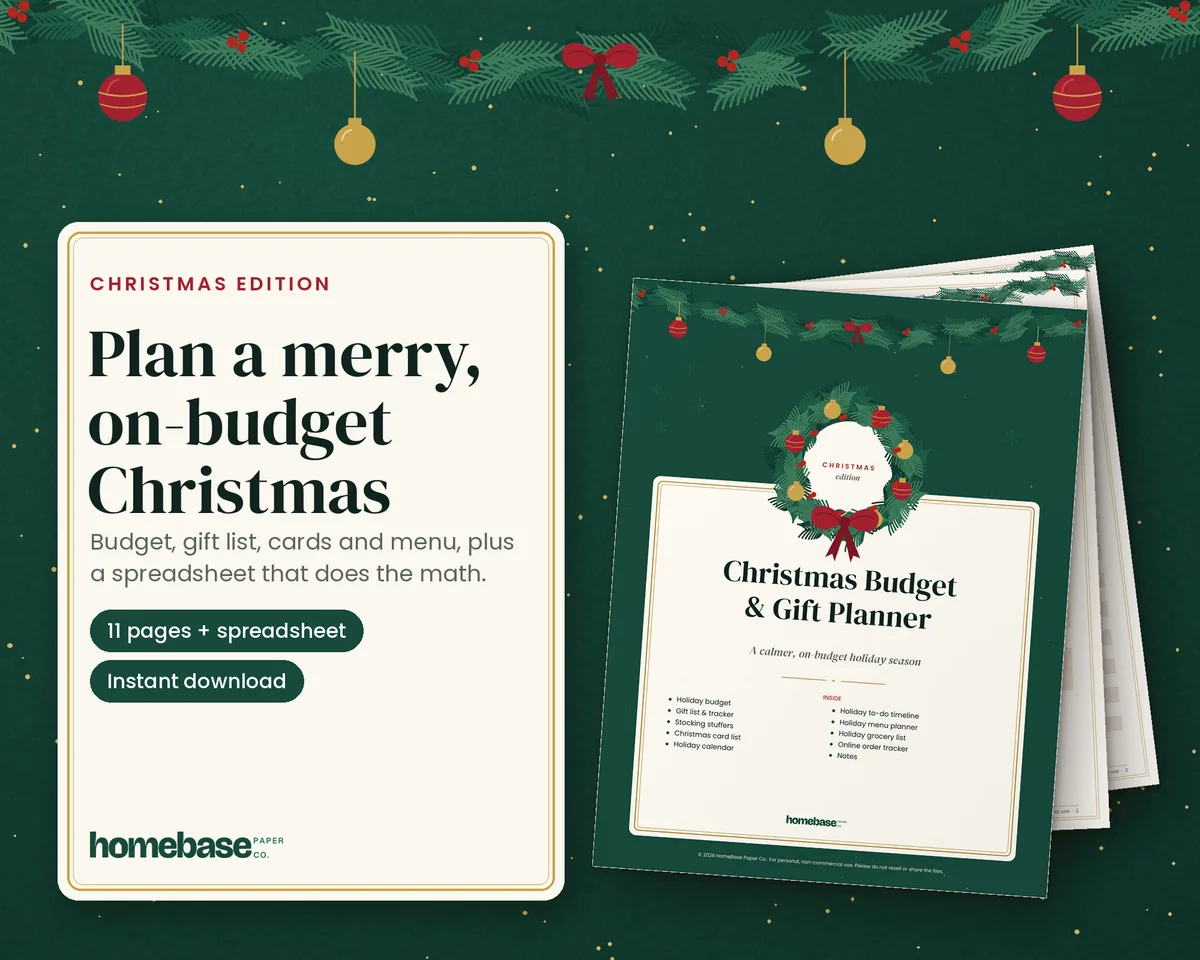
- Next step: Plan it with the Christmas Budget & Gift Planner ($4.99).
Holiday stress is the pressure that builds between November and January, and for most people it comes from three places: money, gifts and having too much to do. The fastest way to ease it is to get everything out of your head and onto one page, give the season a spending limit, and then cut, shrink or share the tasks that don't matter much to you. You can't plan away every hard feeling, but you can plan away most of the scramble.
This guide shows you where holiday stress really comes from, how to run a 15-minute stress audit, how to build a spending plan that keeps money worries in check, and what to say when family plans start to pile up.
The short version:
- Money is the biggest cause. Set one total for the season, then a limit for each person and each non-gift cost.
- Gifts come second. Shop from a written list, start early and say yes to name draws.
- Too much to do comes third. Write every task down, then cut, shrink or share at least three.
- Family and hosting stress ease when you decide your plans and limits before the conversations happen.
- Watch for more than stress. If it feels overwhelming or lasts for weeks, reach out for professional help.
What causes holiday stress?
You aren't imagining it. In a 2023 survey by the American Psychological Association, nearly nine in 10 U.S. adults (89%) said something causes them stress during the holiday season, and 41% said their stress goes up compared with the rest of the year. Money topped the list: 58% said spending too much or not having enough to spend was a source of stress.
Here are the top causes from that survey, along with the planning move that eases each one:
| Cause of holiday stress | Share of U.S. adults (APA, 2023) | The planning fix |
|---|---|---|
| Spending too much or not having enough money | 58% | One season total, a limit per person, a purchase log |
| Finding the right gifts | 40% | A written gift list with ideas and a dollar cap next to each name |
| Missing family or loved ones | 38% | A small, planned way to remember them, and permission to feel it |
| Having too much to do | 32% | A brain dump, then cut, shrink or share three tasks |
| Pressure to make the holidays special | 30% | Pick the three traditions that matter most and let the rest be simple |
| Family conflict | 22% | Decide your plans and limits early; prepare a few kind scripts |
| Traveling | 19% | Set the travel budget and dates by mid-November |
| Hosting gatherings | 19% | Menu and grocery list a week ahead; assign dishes |
Most of these are planning problems. You can't schedule away grief, but money, gifts, tasks, travel and hosting all get lighter with a plan you can see.
The 15-minute holiday stress audit
Do this once, ideally in early November. It turns a vague sense of dread into a list you can act on.
- Brain dump everything (5 minutes). Write every holiday task, event, gift, trip, meal and expense you can think of. Don't sort yet. Include the small things: cards, teacher thank-yous, the work party dish, wrapping, return trips.
- Mark each item (5 minutes). Next to every line, write one letter:
- K for keep: it matters to you or your family and you'd miss it.
- S for shrink: worth doing, but in a smaller or cheaper version.
- H for hand off: someone else can do it or share it.
- C for cut: you do it out of habit or guilt.
- Make three changes now (5 minutes). Pick at least one S, one H and one C, and act on them today. Send the text, change the plan, cancel the order.
A quick example of how the audit might look:
| Item | Mark | What changes |
|---|---|---|
| Baking six kinds of cookies | S | Bake the two favorites; skip the rest |
| Hosting Christmas dinner | K, H | Keep hosting; guests bring sides and dessert |
| Gifts for 14 adults | S | Suggest a name draw for the adults |
| Three holiday parties in one week | C | Go to two, send warm regrets for the third |
| Holiday cards | K | Write them over hot chocolate on one evening |
| Matching outfits for photos | C | Wear what you already own |
Usually the stress comes from five or six items, not fifty, and those few are fixable.
How to plan your holiday spending so money stops being a worry
The goal is simple: know your number, give every dollar a job, and see what's left after every purchase.
Step 1: Pick a season total you can actually pay
Start from what you have, not from what you spent last year. Add up what you've saved for the holidays plus what your November and December budgets can cover after bills. That's your ceiling. If you'd need a credit card balance you can't clear in January, the number is too high. Not sure where to land? Our Christmas budget by income guide and the free holiday budget calculator can help you pick one.
Step 2: Split the total into categories
Shipping, food, travel, cards, tips and party contributions add up quickly, so scan our list of hidden holiday expenses before you set categories.
Here's a sample split for an $800 season. It's an example, not a rule, so adjust every line to your own household:
| Category | Example share | Example amount |
|---|---|---|
| Gifts | 50% | $400 |
| Food and hosting | 20% | $160 |
| Travel | 10% | $80 |
| Cards, wrapping and shipping | 5% | $40 |
| Tips and thank-you gifts | 5% | $40 |
| Giving | 5% | $40 |
| Buffer for surprises | 5% | $40 |
| Total | 100% | $800 |
The buffer line is the stress-saver. When something unexpected comes up, you already have a place to pay for it.
Step 3: Give every person a limit
Gift stress shrinks when each name on your list has a dollar cap and one or two ideas next to it. You stop wandering the aisles hoping for inspiration, and you stop overbuying for one person to "make it even." The Christmas Budget & Gift Planner ($4.99) was built for exactly this: a holiday budget page, a gift list with a limit for each person, stocking stuffer and card pages, an online order tracker and a spreadsheet that does the math.
Step 4: Log every purchase the same day
Write down each purchase the day you make it, including small ones. When you can see "$62 left for gifts," you stop keeping a running total in your head.
Step 5: Decide how you'll pay
Paying with cash, debit or money already set aside keeps December from following you into spring. If you use a credit card for rewards or protection, pay it off in full when the bill comes. If you're thinking about splitting purchases into payments, read our guide to buy now, pay later at Christmas first, so a handful of small payments doesn't quietly stack up.
The APA's holiday stress tips put it plainly: if your holiday expense list is running longer than your monthly budget, scale back and remember that what matters most is the people, not the store-bought presents or elaborate food.
How to ease gift stress
Gifts were the second most common stressor in the APA survey. A few changes make a big difference:
- Start early. Shopping in November means you aren't paying for rush shipping or settling for whatever is left. Our guide on when to start Christmas shopping has a realistic timeline, and the holiday shipping deadlines guide shows the last safe dates to mail.
- Suggest a name draw for adults. One thoughtful gift beats eight rushed ones. A Secret Santa with a clear budget is the easiest version.
- Agree to skip gifts with some people. Many adults are relieved when someone else brings it up first. Here's how to tell family no gifts kindly.
How to manage holiday time stress
"Too much to do" was the fourth most common stressor. The fix is less about working faster and more about deciding what not to do.
- Put everything on one calendar. Parties, school or work events, travel days, shipping deadlines and cooking days. Conflicts show up on paper before they show up in your week.
- Block "nothing" days. Mark at least one evening a week in December with nothing planned. Treat it like an appointment.
- Batch similar tasks. Wrap everything in one or two sessions, write all your cards in one evening, and order online gifts in one sitting.
- Use a week-by-week plan. Our Christmas planning checklist spreads the work from early November to Christmas week, so nothing lands all at once.
- Lower the bar on purpose. Store-bought dessert, a simpler tree, fewer decorations. Pick the three traditions that make the season feel like yours and let the rest be easy. If simpler sounds good, our minimalist Christmas guide shows how.
How to reduce holiday hosting stress
Hosting stress usually comes from cooking too much, shopping too often and doing it all alone. Try this:
- Settle the guest count early. You can't plan food or a budget around a moving number.
- Plan the menu a week ahead and write the grocery list from it, so you buy once. The Meal Planner & Grocery List ($3.99) keeps the menu and the shopping list on the same page.
- Assign dishes, not "bring something." "Could you bring a green salad for eight?" is easier for everyone than an open request.
- Make ahead and freeze where you can. Our holiday freezer meal prep plan shows what holds up well.
- Clean in short sessions, not one marathon. Our guide on how to clean house before holiday guests breaks it into small, timed tasks.
For a full hosting budget, see how to host Christmas dinner on a budget, and if several households share the cost, how to split holiday costs has fair methods and a sample split.
How to handle family stress during the holidays
Family stress is harder to plan, but the same rule helps: decide before the moment arrives.
- Decide your plans first, then share them. Which gatherings will you attend, how long will you stay, and what will you spend? Agree with your partner or household first, then tell others early.
- Keep it short and kind. A clear sentence beats a long explanation.
- Plan an easy exit. Know when you'll leave, and remember that stepping outside for a few minutes is always fine.
- Plan something you enjoy together. The APA suggests activities that foster fun, like a family game or looking through old photos.
Scripts you can borrow:
| Situation | What you can say |
|---|---|
| Declining an invitation | "We'd love to see you, but we can't make that one this year. Could we get together in January instead?" |
| Suggesting a gift change | "Prices are up for everyone. Would you be open to a name draw for the adults this year?" |
| Setting a spending limit | "We're keeping gifts under $25 this year so we can enjoy the season without a January bill." |
| Asking for help hosting | "Could you bring a dessert for ten? It would help me so much." |
| Leaving a gathering | "This was lovely. We're heading out so we can rest up, but thank you for having us." |
When the holidays are hard
Not all holiday stress is about logistics. Missing loved ones was the third most common cause in the APA survey. It's okay if the season feels bittersweet. Some people cook a loved one's recipe or share a story at dinner; others need a quieter year.
SAMHSA suggests making a plan for the moments when you feel stressed, sad or lonely, such as calling a friend, taking a walk or watching a favorite movie, and keeping up sleep, balanced meals and movement. If stress feels overwhelming or lasts for weeks, please talk with a doctor or a licensed mental health professional. SAMHSA's National Helpline (1-800-662-4357) is free and confidential, and you can call or text 988 to reach the 988 Suicide & Crisis Lifeline.
Your calm-holiday timeline
You don't need to do everything at once. Here's a simple order that keeps the biggest stressors handled first:
| When | What to do |
|---|---|
| Early November | Stress audit, season total, category split, gift list with limits |
| Mid-November | Book travel, agree on name draws and no-gift deals, set hosting plans |
| Late November | Buy most gifts, log every purchase, plan Thanksgiving leftovers into the budget |
| Early December | Mail cards and packages, plan holiday menus, block your "nothing" evenings |
| Mid-December | Finish gifts, wrap in one or two sessions, shop groceries from your list |
| Christmas week | Cook make-ahead dishes, rest, enjoy what you planned |
| Early January | Total what you spent, note what worked, start saving for next year |
That last row matters more than it looks. Once you've totaled this year's real costs, divide by 12 and set that amount aside each month. Next year's holidays will already be paid for, and that's the biggest stress-saver of all. Our guide on how to save money for Christmas walks through it. If December did leave a balance, here's how to pay off holiday debt without losing the new year to it.
A note from Malaysia
I grew up in Detroit as the oldest of three, and I was always the one keeping everyone's plans coordinated. I know what it feels like to carry the whole season in your head. I love the holidays: the meals, the cards and the little traditions you repeat every year. What helped me most was learning that writing it all down is how you finally put some of it down. My faith teaches me that a budget is stewardship, not a cage, and a plan for the season is how you make room for the moments you'll want to remember. You don't need a perfect holiday. You need a plan you can see and a number you can live with.
Plan a calmer season on paper
If you'd like a ready-made system instead of starting from a blank page:
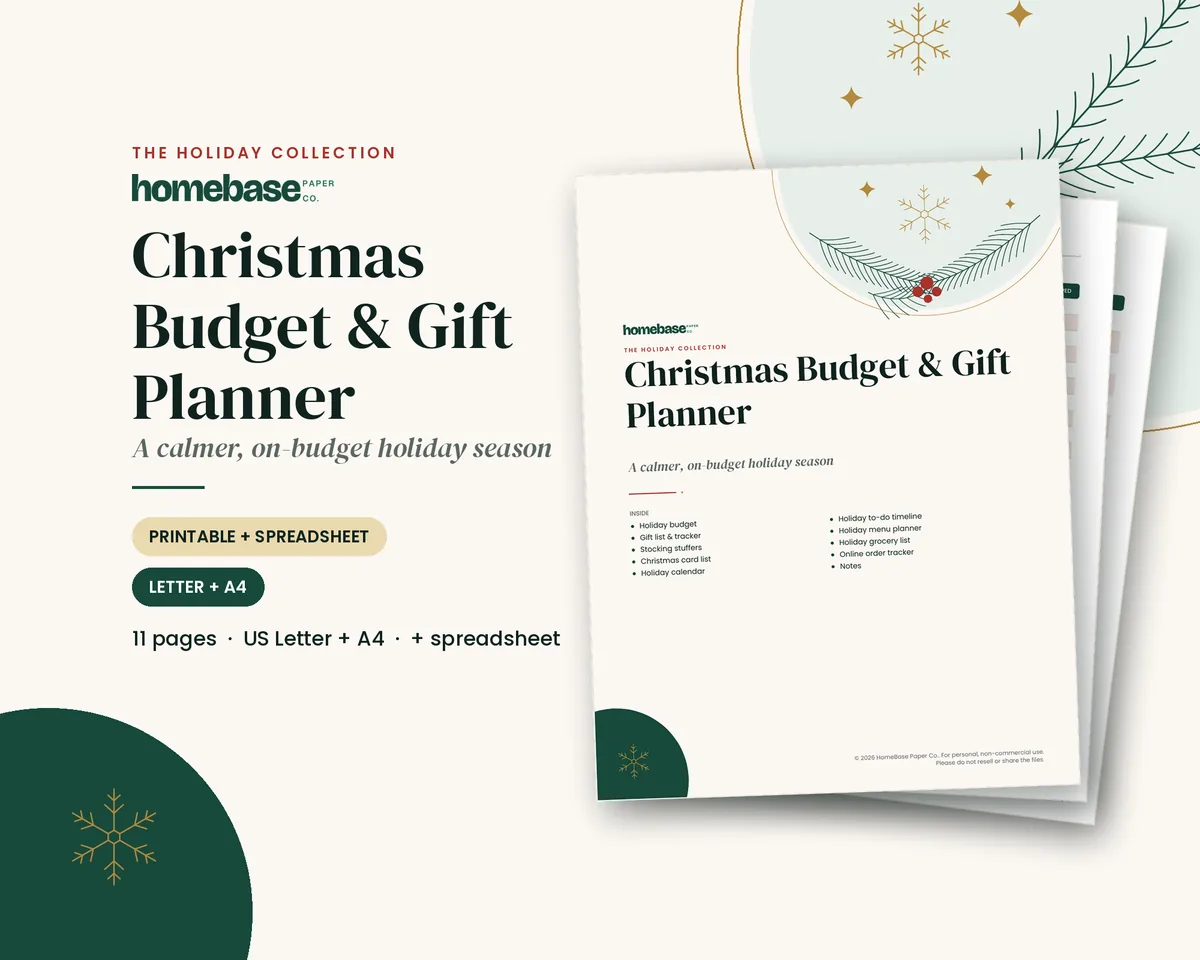
- The Christmas Budget & Gift Planner ($4.99) is an 11-page printable (US Letter and A4) with a holiday budget, a gift list with a limit for each person, stocking stuffer and card pages, a holiday calendar and to-do timeline, a menu, a grocery list, an online order tracker, and a spreadsheet that does the math.
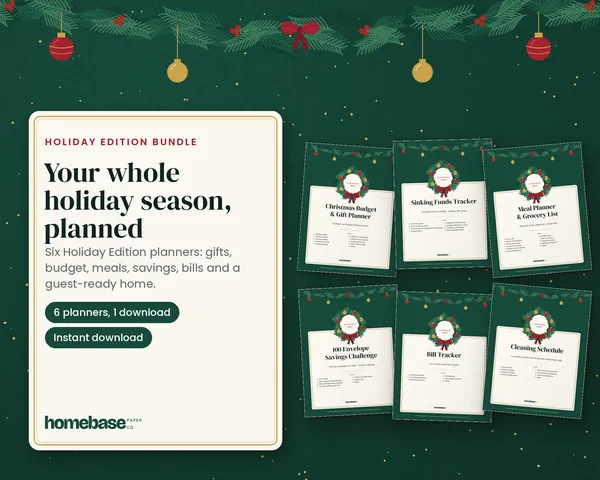
- The Holiday Season Bundle ($15.99, $25.94 if bought separately) adds the Sinking Funds Tracker, Meal Planner & Grocery List, 100 Envelope Savings Challenge, Bill Tracker Printable and Cleaning Schedule, so money, meals and cleaning all live in one plan.
- Browse everything for the season in our Holidays shop.
Want to start free? The Holiday Budget Starter Kit is 3 US Letter pages, emailed to you after you join our list.
If you're the one keeping track of everything this season, read our guide to the mental load, with examples, signs and a plan to share it.

The Holiday Collection
Give every person a limit and watch what's left
The Christmas Budget & Gift Planner adds up every list for you: a budget for each person, a log of each purchase and the amount left to spend, plus printable gift, card, menu and to-do pages.
- Spreadsheet for Excel and Google Sheets
- 11 printable pages, US Letter + A4
- Instant download, 14-day fix-or-refund promise
Planning the whole season? See the holiday sets from $7, with early prices through Cyber Monday
Make it easier
Tools for this
Printables
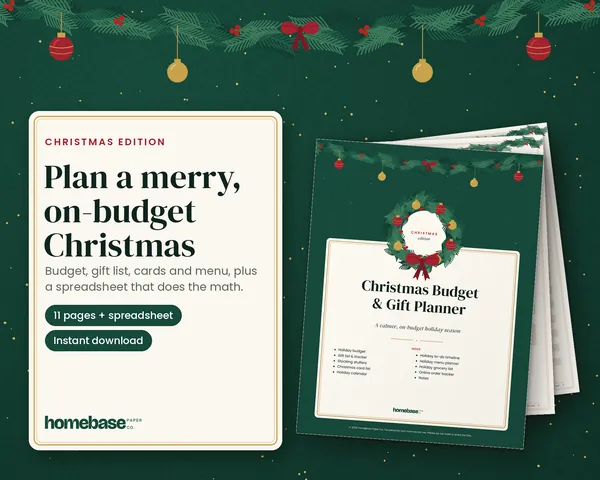
Christmas Budget & Gift Planner
Set a budget for every person, log each purchase, and watch what's left - plus printable gift, card, menu and to-do pages.
 Save 38%
Bundles
Holiday Season Bundle
Plan Christmas, save for it all year, and host without the January money hangover.
 Starter pick
Printables
Meal Planner & Grocery List
Weekly meals, a grocery list sorted by aisle, and pantry and freezer inventories so you shop once and waste less.
Frequently asked questions
What causes the most holiday stress? Money causes the most holiday stress for American adults. In the American Psychological Association's 2023 holiday survey, 58% said spending too much or not having enough money stressed them, followed by finding the right gifts (40%) and missing loved ones (38%). A written budget with a limit for each person, like the one in the Christmas Budget & Gift Planner, takes on the top two at once.
How do I reduce holiday stress quickly? To reduce holiday stress quickly, write everything down, then cut, shrink or share three items. Getting the whole season onto one page shows you what's actually on your plate. From there, drop one commitment, simplify one tradition and hand one task to someone else. Most people feel lighter within a day.
How do I stop overspending during the holidays? To stop overspending during the holidays, set one total for the season before you shop, then give every person and every non-gift cost its own limit. The Christmas Budget & Gift Planner ($4.99) has a budget page, a gift list with a limit for each person and a purchase log, so you can see what's left after every purchase.
Is it normal to feel stressed during the holidays? Yes, feeling stressed during the holidays is very common. The APA's 2023 survey found that nearly nine in 10 U.S. adults said something causes them stress during the season, and 41% said their stress goes up compared with the rest of the year. Common doesn't mean you have to accept all of it, though; planning removes a lot of it.
How much should I spend on Christmas to avoid stress? Spend only what you can pay in cash or pay off in full by January, because a bill that lingers into spring is a big source of stress. Start from what you've saved plus what your December budget can cover after bills, not from what you spent last year. Our Christmas budget by income guide and holiday budget calculator help you pick a number.
How can I make holiday hosting less stressful? Make hosting less stressful by planning the menu and grocery list a week ahead and asking guests to bring specific dishes. The Meal Planner & Grocery List ($3.99) puts the menu and the shopping list on the same page, so you buy once and don't make three extra store runs. Cook make-ahead dishes and keep the menu to what you already cook well.
How do I handle family stress at Christmas? Handle family stress at Christmas by deciding your plans and limits before the conversations happen, then sharing them early and kindly. Decide which invitations you'll accept, how long you'll stay and what you'll spend. Short, warm scripts help, and stepping outside for a few minutes at a gathering is always allowed.
How do I say no to holiday plans without guilt? Say no to holiday plans with a short, warm sentence and no long explanation. For example: "We'd love to see you, but we can't make that one this year. Could we get together in January instead?" Offering another time keeps the relationship close while protecting your calendar and budget.
What should I do if I can't afford Christmas this year? If you can't afford Christmas this year, pay for essentials first, then plan the holiday with what's left, even if that's very little. Tell family early that you're scaling back, switch to a name draw or a no-gift agreement, and lean on free traditions. Our Christmas on a tight budget ideas and the free Holiday Budget Starter Kit can help you start.
How do I keep holiday shopping from becoming stressful? Keep holiday shopping calm by shopping from a written list with a limit next to every name. The Christmas Budget & Gift Planner gives you a gift list, a stocking stuffer page and an online order tracker, so you know what's bought, what's shipped and what's left. Start early so shipping dates never force a rushed, pricey purchase.
When should I start planning to avoid holiday stress? Start planning in early November, or as soon as you can if you're reading this later. Six to eight weeks gives you time to set the budget, buy gifts without rush shipping and plan menus. If you're starting late, a 10-day version still works: budget first, then gifts, then food.
Does a holiday budget really reduce stress? Yes, a holiday budget reduces stress because it replaces worrying with a number you can check. When you know your total and see what's left after each purchase, you stop guessing. The APA suggests scaling back when your holiday expense list runs longer than your monthly budget, and a written budget is how you spot that early.
How do I avoid post-holiday financial stress in January? Avoid January money stress by paying with money you already have and logging every purchase in December. If you do carry a balance, list it, pick a payoff order and put the first payment on your calendar the first week of January. Our guide to paying off holiday debt walks through the steps.
When is holiday stress more than ordinary stress? Holiday stress is more than ordinary stress when it feels overwhelming, lasts for weeks or makes daily life hard. In that case, talk with a doctor or a licensed mental health professional. SAMHSA lists free, confidential help, including its National Helpline at 1-800-662-4357 and the 988 Suicide & Crisis Lifeline (call or text 988).
More from HomeBase
You may also like
 Thanksgiving Edition
Printables
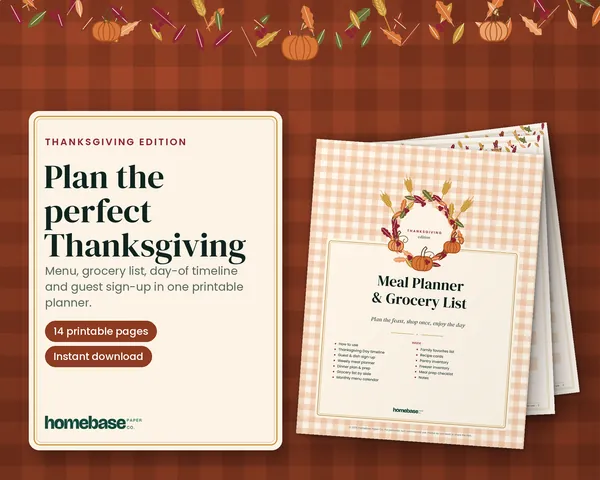
Meal Planner & Grocery List: Thanksgiving Edition
Plan the perfect Thanksgiving: our meal planner in a warm harvest design, with a Thanksgiving Day timeline, a guest & dish sign-up, an aisle-sorted grocery list and pantry and freezer trackers.
Spreadsheets
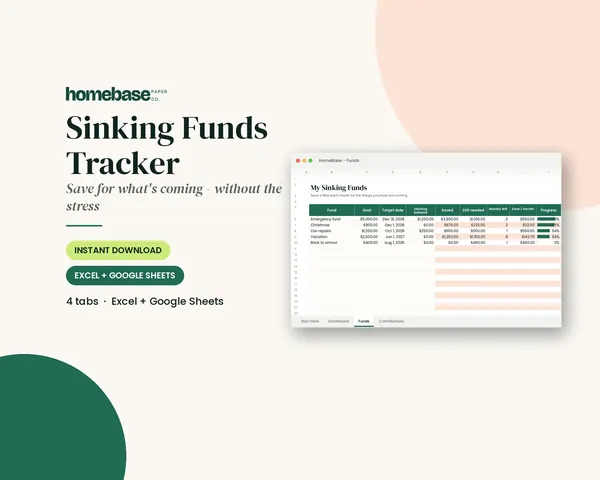
Sinking Funds Tracker
It does the math: how much to set aside each month to hit every goal on time.
 Starter pick
Printables
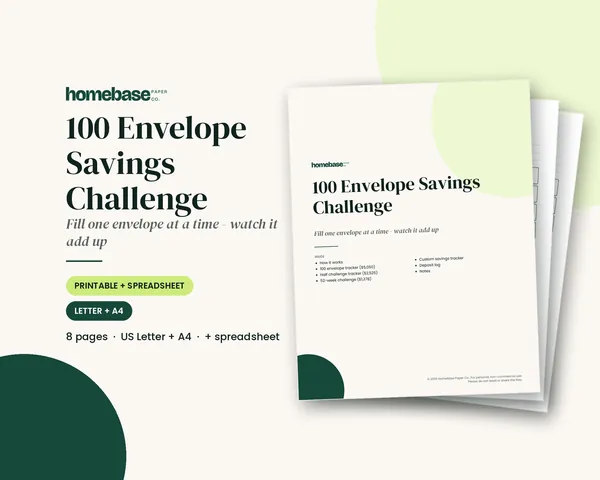
100 Envelope Savings Challenge
Classic, half and 52-week challenges to print, plus a spreadsheet that tracks every envelope and tells you how much to save each week.

Printables
Budget Planner Printable
Twelve undated pages you can print every month: budget, bills, spending, savings and debt.
 Club
Monthly club
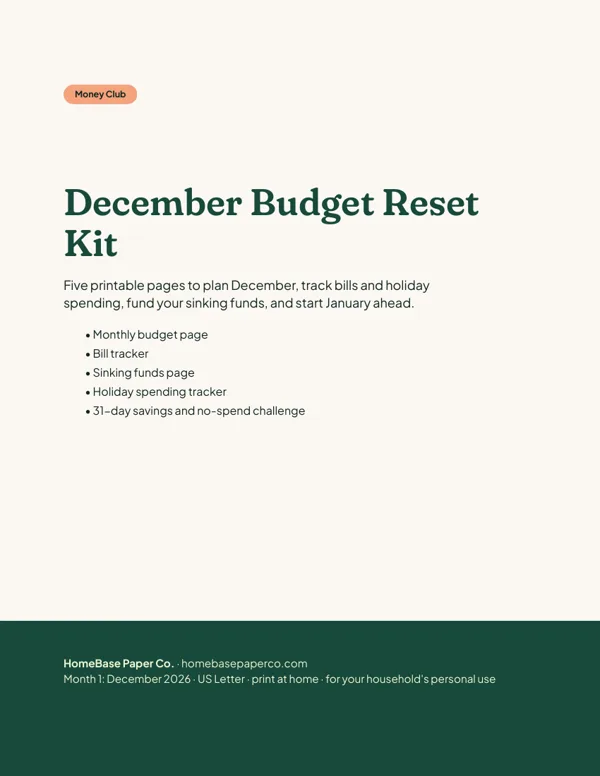
Money Club
Anyone who wants a clear plan for the month's bills, holiday spending and savings.
Free printable
Get the free Holiday Budget Starter Kit
A one-page holiday budget, a gift list with a spending limit for every person, and a 6-week countdown so December stays calm and paid for. You'll also get our weekly HomeBase email with simple holiday planning, budgeting and hosting tips.
