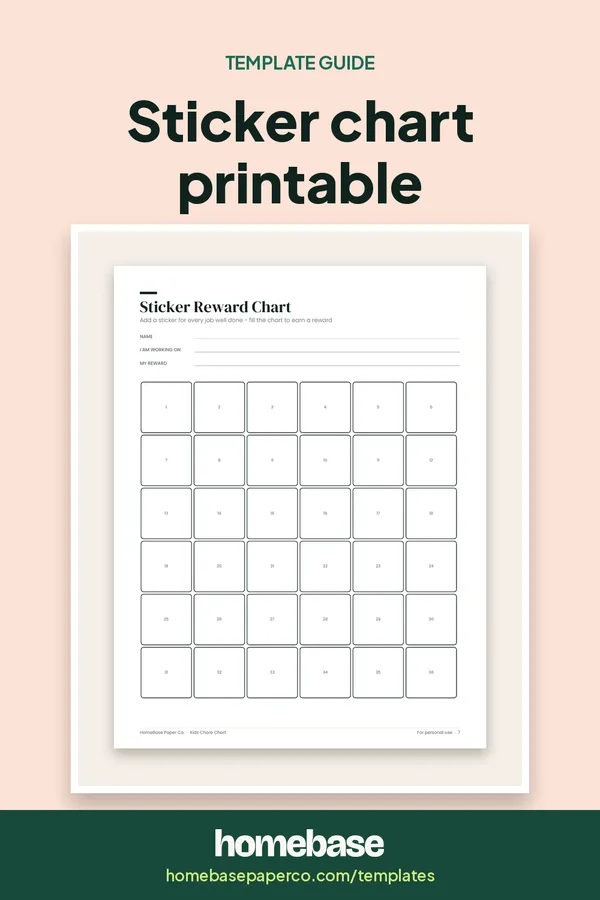
The short answer: A sticker chart printable gives a child one clear goal and a visible way to earn toward a reward: do the thing, get a sticker, fill the chart, get the prize. It's simple, but it works best with a few rules. Pick one specific behavior, start with a short chart, give the sticker right away and agree on the reward before you start.
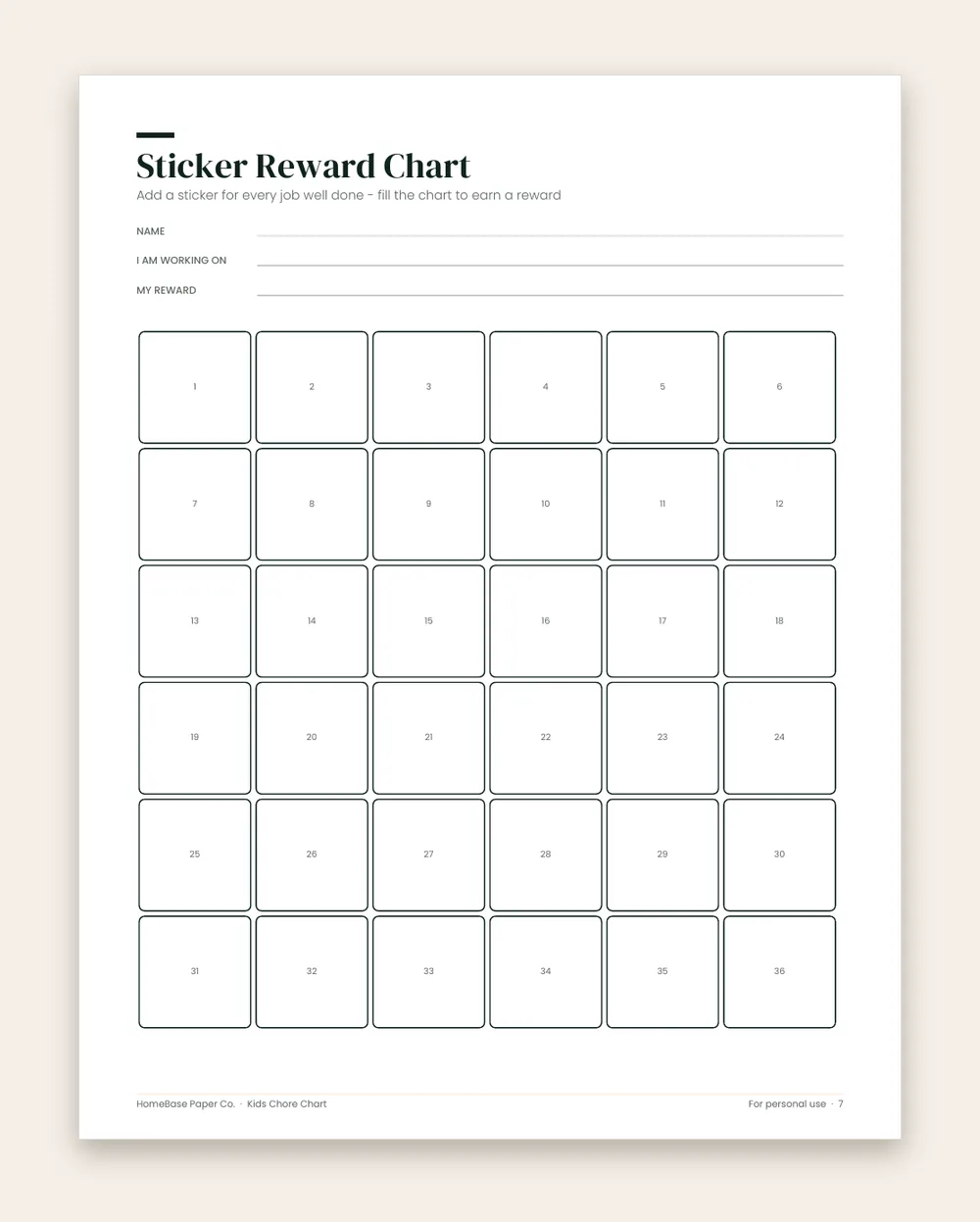
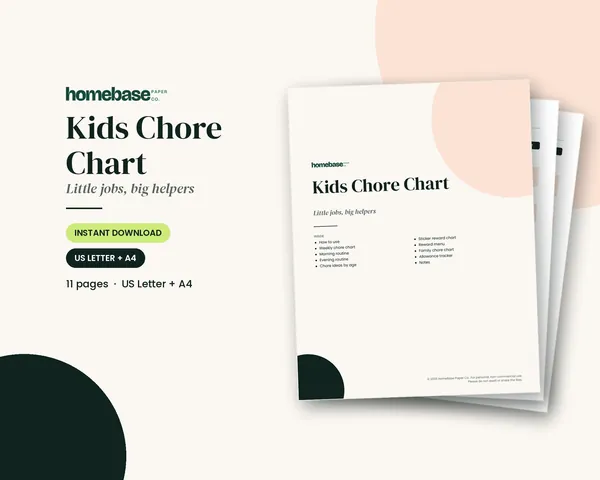
Below you'll find how to set one up, examples by age, reward ideas that don't cost much and the common reasons charts stop working. The Kids Chore Chart printable includes a Sticker Reward Chart with 36 numbered spots, plus a Reward Menu and chore pages if you want to grow the system later.
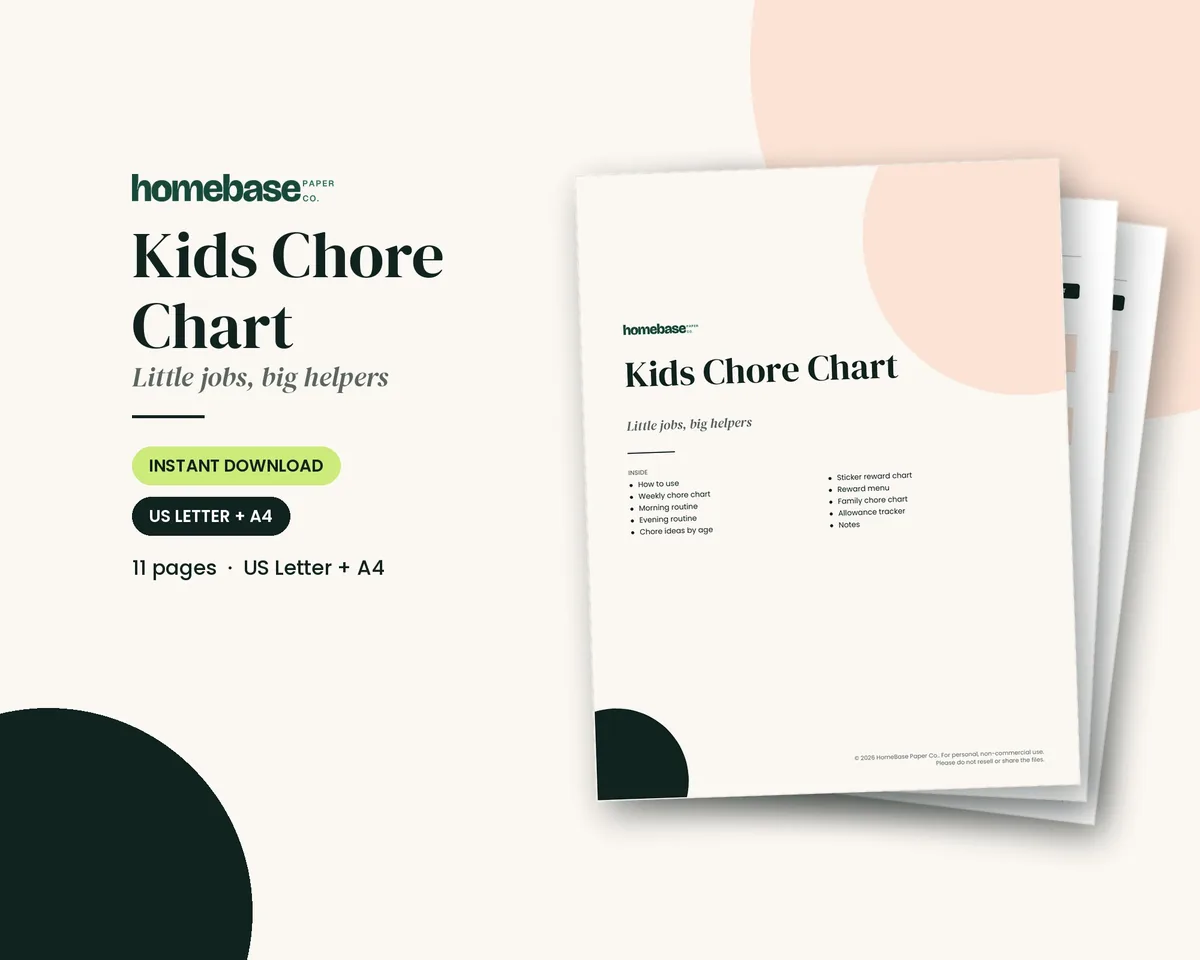
What's included in the Kids Chore Chart
- How to use these charts
- Weekly Chore Chart
- Morning Routine
- Evening Routine
- Chore Ideas by Age
- Sticker Reward Chart
- Reward Menu
- Family Chore Chart
- Allowance Tracker
- Notes
Printable PDF, $3.49. Instant download; nothing is shipped. See every page on the product page.
Who it's for
- Parents of toddlers and preschoolers working on one new habit, like potty training or staying in bed.
- Kids ages 4 to 8 learning chores, who love seeing stickers add up.
- Families building morning and bedtime routines that keep falling apart.
- Teachers, grandparents and caregivers who want the same simple system kids use at home.
How to use a sticker chart, step by step
- Pick one goal. Choose a single, specific behavior your child can actually do, such as "put pajamas on before story time." Vague goals like "be good" are hard for kids to win.
- Write it on the chart in their words. Fill in the name and the "I am working on" line together. Saying the goal out loud helps your child own it.
- Agree on the reward. Choose the reward before you start and write it on the chart. Small, quick rewards work best for young kids; a family movie night or a trip to the park beats a big toy.
- Decide how many stickers it takes. Start short. For a 3- or 4-year-old, 5 to 10 stickers is plenty for the first round. Older kids can work toward a full chart.
- Give the sticker right away. Add the sticker as soon as the behavior happens, with a few words of specific praise. The timing is what makes the connection.
- Hand over the reward when the chart is full. Keep your promise quickly. Then start a new chart, raise the goal a little or switch to a new habit.
- Fade the chart out. Once the habit sticks for a couple of weeks, praise replaces stickers. Move the chart to a new goal instead of keeping it forever.
What makes a sticker chart work
Sticker charts work because young kids care about things they can see and count. A few things make the difference between a chart that works and one that ends up in the recycling:
- One goal at a time. "Brush teeth without being asked" is winnable. "Behave all day" isn't.
- Quick wins first. The first reward should come within a few days.
- Immediate stickers. A sticker given right after the behavior connects the two. A sticker given the next morning doesn't.
- A reward your child chose. Kids work harder for something they picked.
- No take-backs. Stickers that can be lost turn the chart into a punishment.
Sticker chart examples by age
These are common starting goals. Every child is different, so use your judgment.
| Age | Example goals | Stickers to reward |
|---|---|---|
| 2 to 3 | Sit on the potty after meals, put toys in the bin | 5 |
| 4 to 5 | Get dressed by yourself, stay in bed after lights out | 7 to 10 |
| 6 to 8 | Finish the morning routine before the bus, feed the pet | 15 to 20 |
| 9 and up | Practice an instrument, finish homework before screens | A full chart, or switch to points or allowance |
For chore ideas matched to age, our printable includes a Chore Ideas by Age page, and our chore chart by age guide has more.
Reward ideas that don't cost much
The best rewards are often time and attention, not toys:
- Pick the family movie or the dinner menu (a weekly menu template makes "kid's choice night" easy to plan)
- 15 extra minutes of screen time or staying up 15 minutes later
- A trip to the park, library or a favorite playground
- Baking cookies together or a one-on-one breakfast date
- A small treat or a new box of stickers for the next chart
Write the rewards on a reward menu with the number of stickers each one takes, so your child can choose a goal and see how close they are.
When a sticker chart stops working
Charts usually stop working for one of three reasons: the goal is too hard, the reward is too far away or the habit is already learned. If your child loses interest, make the chart shorter or pick a new goal. If the habit has stuck for a couple of weeks, celebrate it and retire the chart. And when kids get older, a points system or an allowance tracker is often a better fit than stickers.
Looking for more printables for family life? Browse all of our templates.
Ready to use
A sticker chart with the reward menu and chore pages included
 Starter pick
Printables
Kids Chore Chart
Weekly chore chart, morning and evening routines, chore ideas by age, a sticker reward chart and an allowance tracker.
Frequently asked questions
What is a sticker chart? A sticker chart is a simple reward chart where a child earns a sticker each time they do a specific behavior. When the chart is full, or reaches an agreed number, they earn a reward. It works because kids can see their progress, and the reward is clear before they start.
At what age do sticker charts work best? Sticker charts tend to work best for kids from about 3 to 8. Toddlers can enjoy them with very short goals, like five stickers. Older kids often prefer points, a checklist or an allowance tracker, which is why our printable includes an Allowance Tracker page too.
How many stickers should it take to earn a reward? Start small so your child wins quickly, then make it longer. A young child might earn a reward after 5 to 10 stickers; a 6- or 7-year-old can usually work toward 20 or more. Our Sticker Reward Chart has 36 numbered spots, and you can circle the number that earns the reward.
What are good rewards for a sticker chart? Experiences and privileges work well: picking the family movie, 15 extra minutes of screen time, choosing dinner, staying up 15 minutes later or a trip to the park. Those are the examples on our Reward Menu page, and you can write your own. Keep rewards small and quick so a full chart feels exciting rather than expensive.
Should you ever take stickers away? Most parenting guides suggest not. Taking stickers away turns the chart into a punishment tool, and kids can lose interest fast. If a day goes badly, simply don't add a sticker, and start fresh the next day.
Can I use a sticker chart for potty training? Yes, it's one of the most common uses. Pick one clear step, such as sitting on the potty after meals, and give a sticker right away each time. Once that step is easy, move the goal to the next one. If you have concerns about your child's development, check with your pediatrician.
Can one chart cover several behaviors? It can, but one behavior per chart works better for young kids. If you want to track several jobs, use a weekly chore chart with checkboxes and keep the sticker chart for the one habit you're working on most.
How do I use sticker charts with siblings? Give each child their own chart and their own goal, matched to their age. Avoid comparing charts, and celebrate each child's reward separately. A family chore chart page can show shared jobs, while the sticker charts stay personal.
What should I do when my child loses interest? That usually means the goal is too hard, the reward is too far away or the habit is already learned. Shorten the chart, change the reward or switch to a new goal. Charts are meant to be temporary.
Is this sticker chart printable free? The Sticker Reward Chart comes in the Kids Chore Chart printable, which costs $3.49 and also includes a Weekly Chore Chart, morning and evening routines, Chore Ideas by Age, a Reward Menu, a Family Chore Chart and an Allowance Tracker. You can print it as many times as you need for your own family.
What size should I print a sticker chart? The printable comes in US Letter and A4. Standard small round stickers fit the circles on a full-size page. If you want it smaller for a bedroom door, most printers let you scale the page down in the print settings.
Free printable
Have the important stuff in one place: get the free emergency binder pages
Printable starter pages for household members, emergency contacts, medical notes and where key documents live. You'll also get our weekly HomeBase email with simple ways to keep family records and important papers in order.