The short answer: a year in review is a short, honest look back at the last 12 months: what happened, what you're proud of, what was hard and where your time and money went. It takes about 90 minutes.
- You need: a notebook, your calendar, your photos and your bank statements
- Make a month-by-month timeline and answer the reflection questions
- Name your keep, stop and start
- Pick two or three goals for next year
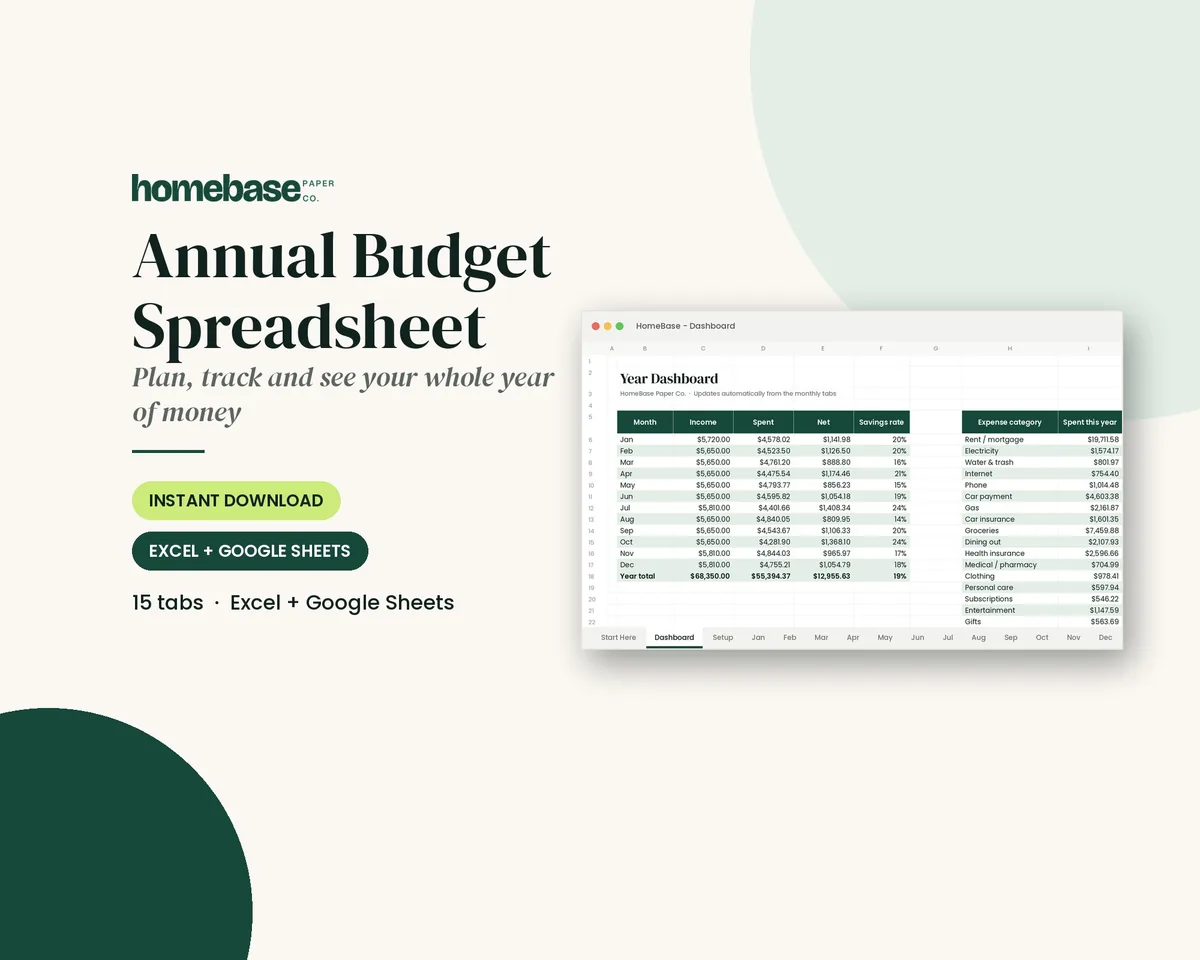
- Next step: Plan it with the Annual Budget Spreadsheet ($6.99).
A year in review is a short, honest look back at the last 12 months: what happened, what you're proud of, what was hard, where your time and money went, and what you want to carry into next year. You can do a personal year in review in about 90 minutes with a notebook, your calendar, your photos and your bank statements. Answer a handful of end of year reflection questions, pull five or six money numbers, then turn what you learned into two or three goals for the year ahead.
Below you'll find a step-by-step method, a year in review template, 40 reflection questions, a money recap and a way to do it as a family. If you'd like the money part done for you, the Annual Budget Spreadsheet ($6.99) puts all 12 months on one screen, so next December's review takes minutes instead of an evening.
What a year in review is (and what it isn't)
A personal year in review is a reflection exercise, not a report card. It's different from a few things it gets confused with:
| It's not... | Because... | What a year in review does instead |
|---|---|---|
| A work performance review | That's your manager rating your job | You look at your whole life, on your own terms |
| A list of resolutions | Resolutions look forward only | You look back first, so your goals come from real evidence |
| A financial checklist | A checklist is a list of tasks to finish | You notice patterns and decide what to change |
| A highlight reel | Social media recaps skip the hard parts | You include the hard months, because they teach the most |
The order matters. Start with "What actually happened this year?" and you'll see what worked, what drained you and what you never got around to. Then the goals almost write themselves.
For year-end money tasks like expiring benefits and tax forms, use our end of year financial checklist. This page is about reflection.
How to do a year in review in 6 steps
Set aside one quiet block of time, or split it into two shorter sittings. Here's the order that works well:
- Gather your memory joggers. Open your calendar, scroll your photos month by month, and pull up 12 months of bank and card statements. Together they show where your time went, what you enjoyed and what you valued.
- Make a month-by-month timeline. Write one or two lines for each month: big events, trips, changes, hard weeks. Don't judge anything yet. Just get it on paper.
- Answer the reflection questions. Pick 10 to 15 questions from the lists below. You don't need to answer all 40. Short answers count.
- Do your money recap. Fill in the money table further down. This is where most people find their biggest surprise.
- Name your keep, stop and start. List what you want to keep doing, what you want to stop, and what you want to start. Three of each is plenty.
- Pick two or three goals for next year. Turn your "start" list into goals with a first step and a date. The 12 week year method turns them into a simple Q1 plan.
| Step | Time | What you need |
|---|---|---|
| 1. Gather memory joggers | 10 minutes | Calendar, photos, statements |
| 2. Month-by-month timeline | 15 minutes | Notebook or the template below |
| 3. Reflection questions | 25 minutes | The question lists below |
| 4. Money recap | 20 minutes | Statements or your budget spreadsheet |
| 5. Keep, stop, start | 10 minutes | Your answers from steps 3 and 4 |
| 6. Two or three goals | 10 minutes | A planner page or goal tracker |
A simple year in review template
You don't need a fancy year in review journal. Copy these sections onto a few sheets of paper, a notes app or a blank page in your planner. Our free New Year's planner also includes a one-page "my year in review" sheet you can print.
| Section | What to write | Example (hypothetical) |
|---|---|---|
| The year in three words | Three words that sum it up | "Busy, brave, growing" |
| Month-by-month timeline | One or two lines per month | "March: started a new job" |
| Proudest moments | Three things, big or small | "Kept our grocery budget most months" |
| Hardest moments | What was hard and how you got through it | "A tight summer after the car repair" |
| People to thank | Names and what they did | "My sister, who watched the baby" |
| Money recap | Income, spending, saving and debt numbers | See the money table below |
| What I learned | Two or three lessons | "Small, repeatable steps beat big bursts" |
| Keep, stop, start | Three of each | "Start: a monthly money date" |
| Next year's goals | Two or three, each with a first step | "Save $1,000 starter emergency fund" |
| A word for next year | One word to come back to | "Steady" |
40 end of year reflection questions
Choose the questions that fit your year. Skip anything that doesn't.
Looking back on the year
- What were the three biggest things that happened this year?
- What surprised me most?
- Which month felt best, and why?
- Which month was hardest, and what got me through it?
- What did I spend the most time on?
- What did I say yes to that I wish I'd said no to?
- What did I keep putting off?
Proud moments and lessons
- What am I most proud of this year?
- What did I do this year that I couldn't have done last year?
- What's one hard thing I got through?
- What's the most important thing I learned?
- What habit helped me most?
- Where did I grow, even slowly?
People and gratitude
- Who made my year better?
- Who do I want to thank, and have I told them?
- Which relationships do I want to put more time into?
- Who did I help this year?
- What's a kind thing someone did for me that I still think about?
Home and family
- What made our home feel calm this year?
- Which routines actually stuck?
- Which traditions do we want to keep?
- What did we spend money on that brought our family the most joy?
- What part of running the house felt heaviest?
- What could we share or hand off next year?
Health and energy
- When did I feel most rested?
- What drained my energy most often?
- What helped me feel better on hard days?
- What's one small health habit I want to keep?
Money
- Did I spend this year's money on what matters most to me?
- Which purchase am I happiest about?
- Which purchase do I regret?
- Did I have money set aside when something unexpected came up?
- What money habit am I proud of?
- Which bill or subscription isn't worth it anymore?
Looking ahead
- What do I want more of next year?
- What do I want less of?
- What's one thing I want to learn?
- What would make next December feel different?
- What's one goal I'd be proud to reach by this time next year?
- If next year had one word, what would it be?
These work as new year reflection questions, too, so January is just as good a time to answer them.
Your money year in review
The money part isn't about guilt. It's about building next year's budget on real numbers instead of guesses. Pull these figures from your statements, pay stubs or budget:
| Money number | Where to find it | What it tells you |
|---|---|---|
| Total take-home pay | Pay stubs, deposits in your bank statements | What you actually had to work with |
| Total spending | 12 months of bank and card statements | Whether you lived within your income |
| Top 3 spending categories | Your statements, grouped by category | Where your money really goes |
| Amount saved | Savings account balances, January vs. December | Your real saving rate |
| Debt paid down | Loan and card balances, January vs. December | Progress you may not have noticed |
| Net worth change | Assets minus debts, start vs. end of year | The big-picture direction |
| Surprise expenses | Statements: repairs, medical, travel | What to plan for next year |
For the net worth line, our guide on how to calculate net worth walks through it step by step.
Next, compare what you planned with what happened. Here's a hypothetical example of what that comparison can look like:
| Category | Planned for the year | Actually spent | Difference | Next year's note |
|---|---|---|---|---|
| Groceries | $9,600 | $10,800 | $1,200 over | Raise to $900 a month |
| Eating out | $2,400 | $2,100 | $300 under | Keep the same |
| Holidays and gifts | $1,000 | $1,650 | $650 over | Start a holiday fund in January |
| Car repairs | $0 | $1,400 | $1,400 over | Add a car sinking fund |
| Subscriptions | $600 | $780 | $180 over | Cancel two unused ones |
In this example, the overspending isn't random. It comes from costs that happen every year but never got a line in the budget, like holidays and car repairs. Those are perfect jobs for sinking funds, where you set aside a little each month for a cost you know is coming.
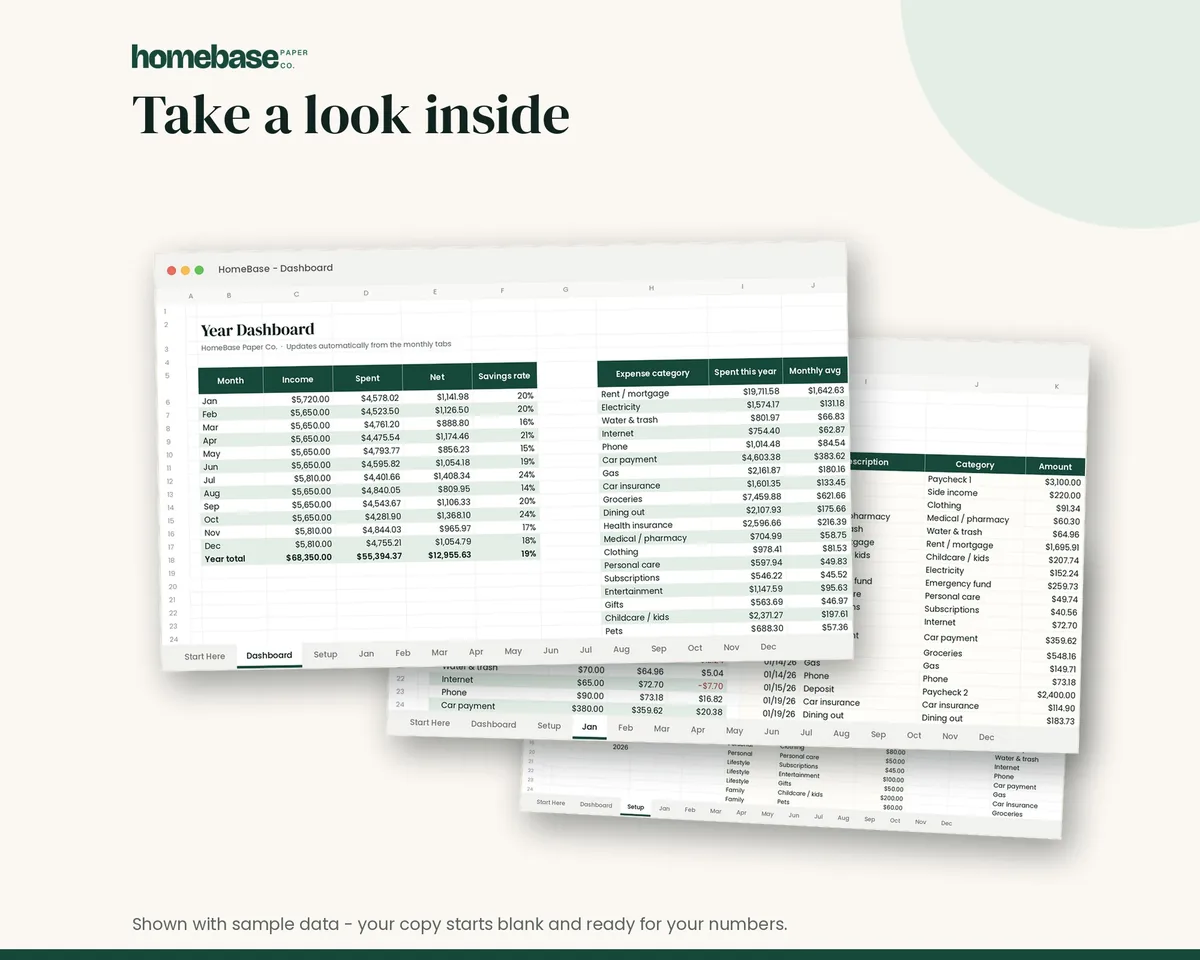
Pulling a year from statements takes a while, which is why I like keeping the whole year in one place. The Annual Budget Spreadsheet ($6.99) tracks every month side by side in Google Sheets or Excel, so the yearly totals are already there when December comes. You can see how it works in our annual budget template guide.
While you're looking at the year's money, it's also a good time to check your credit. According to the CFPB, you can get a free copy of your credit report from each of the three major credit bureaus once a week at AnnualCreditReport.com.
How to do a family year in review
A year in review makes a lovely family tradition. Keep it light, especially with kids:
| Who | Questions that work | Format |
|---|---|---|
| Young kids | "What was your favorite day?" "What made you laugh?" "What are you excited to learn?" | Drawings or one-word answers |
| Older kids and teens | "What are you proud of?" "What was hard?" "What do you want to try next year?" | Quick written answers or a voice memo |
| Partners | "What was our best month?" "What should we change about how we run the house?" "What do we want to save for?" | A money date with the numbers in front of you |
| Whole family | "What tradition do we keep?" "Who should we thank?" | Around the table after dinner |
A few ideas to make it feel special:
- Read last year's answers out loud before writing this year's. It's often the best part.
- Write thank-you notes to two or three people who made your year better.
- Keep it all in one envelope or folder labeled with the year. The answers also give you a head start on a family Christmas letter.
That last one is close to my heart. I love giving and receiving cards, and I keep them. An envelope of answers, drawings and notes becomes a keepsake that means more every year.
For the money talk, our family budget meeting guide keeps it calm and short.
Turn your year in review into next year's plan
Your review is only useful if some of it changes next year. Use your keep, stop and start lists like this:
| List | Ask yourself | Turns into |
|---|---|---|
| Keep | What worked that I want to protect? | A routine you put on the calendar |
| Stop | What cost too much time, money or energy? | A subscription to cancel, a "no" to practice |
| Start | What's missing that I want to add? | Two or three goals with first steps |
Then shape each "start" item into a goal you can check:
- Make it specific. "Save more" becomes "Save $1,000 for emergencies by June." Our SMART goals template helps with this.
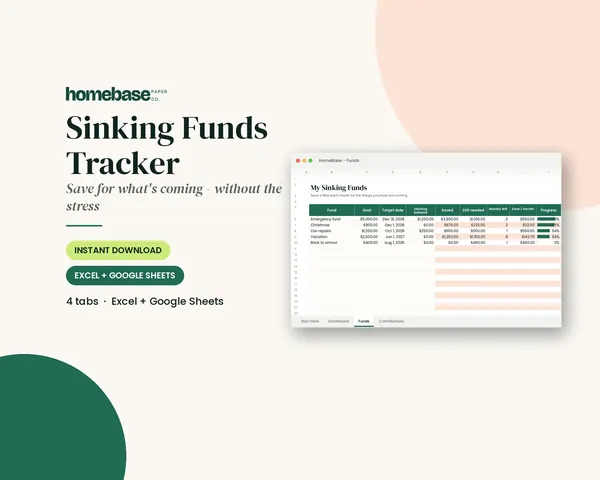
- Give money goals a monthly number. Divide the goal by the months you have. The Sinking Funds Tracker ($4.99) does that math for up to 20 goals at once.
- Build the budget around the goals. Our guide on how to make a budget for the new year shows how to use this year's real numbers.
- Pick a check-in day. The CFPB recommends that savers regularly monitor their progress and celebrate their successes. A short monthly check-in, plus a quick mid-year review in June, keeps goals from fading.
For more ideas by life area, see our list of new year's resolutions and our guide on how to set financial goals. If you want something visual to keep your goals in front of you, try making a vision board.
When to do your year in review
The most popular time is the quiet stretch between Christmas and New Year's Day, but any time works:
| When | Why it works |
|---|---|
| Dec. 26–31 | The year is complete, and many people have time off |
| New Year's Day | A calm, symbolic fresh start |
| First weekend of January | Your December statements have arrived, so the money numbers are final |
| Any month | A fresh start doesn't need a date on the calendar |
School took me the long way, and I've learned that life rarely starts neatly on January 1. A review in February counts just the same.
Common year in review mistakes
- Only listing what went wrong. Balance every hard moment with something you're proud of.
- Skipping the money. Feelings about money and the actual numbers often don't match. Look at both.
- Setting too many goals. Two or three goals you keep beat ten you drop by February.
- Not saving it. Keep your review where you'll find it next December. Comparing years is where the real insight shows up.
Make next year's review the easiest one yet
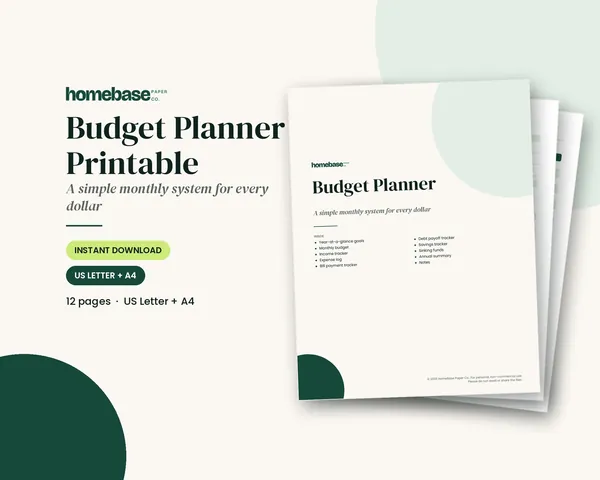
The hardest part of a year in review is digging up 12 months of numbers. Fix that for next year by tracking as you go. The Annual Budget Spreadsheet ($6.99) shows every month and the year's totals on one screen. If you prefer paper, the Budget Planner Printable ($5.99) gives you 12 undated monthly pages you can start any month. And if you want the whole system, the Ultimate Budget Bundle ($19.99 instead of $46.42 for the items bought separately, save 57%) includes the annual, zero-based, paycheck, debt payoff, bill tracker and sinking funds spreadsheets plus two printables. Browse all our budget spreadsheets, planners and printables or bundles.
To me, a budget is stewardship, not a cage. A year in review shows how well your plans served the people and dreams you care about, so you can make room for more of them next year.
Want to go deeper? Use our thought provoking questions to talk through the year together.
Make it easier
Tools for this
Spreadsheets
Annual Budget Spreadsheet
See exactly where your money goes every month - without complicated software.
Spreadsheets
Sinking Funds Tracker
It does the math: how much to set aside each month to hit every goal on time.
Printables
Budget Planner Printable
Twelve undated pages you can print every month: budget, bills, spending, savings and debt.
Frequently asked questions
What is a year in review? The Annual Budget Spreadsheet ($6.99) makes the money side of a year in review easy, because all 12 months and the yearly totals sit on one screen. A year in review is a personal look back at the last 12 months: what happened, what you're proud of, what was hard, where your time and money went, and what you want to change next year.
How do I do a personal year in review? The Annual Budget Spreadsheet ($6.99) covers the money step, so you can spend your time on the reflection itself. Gather your calendar, photos and statements, write a month-by-month timeline, answer 10 to 15 reflection questions, fill in a money recap, list what to keep, stop and start, then pick two or three goals with first steps.
What should be in a year in review template? The Budget Planner Printable ($5.99) pairs well with a year in review template, because its monthly pages give you the money numbers to fill in. A good template has the year in three words, a month-by-month timeline, proud moments, hard moments, people to thank, a money recap, lessons learned, a keep-stop-start list and two or three goals.
What are good end of year reflection questions? The Sinking Funds Tracker ($4.99) helps you act on your answers, because it turns money goals into a monthly amount. Good end of year reflection questions include: What am I most proud of? What was hardest, and what got me through it? Who made my year better? What drained my energy? What do I want more of next year?
How long does a year in review take? The Annual Budget Spreadsheet ($6.99) can cut the money recap from an evening to a few minutes, since your yearly totals are already calculated. Most people need about 90 minutes for a full year in review: 10 minutes to gather materials, 15 for a timeline, 25 for questions, 20 for money and 20 for goals.
When should I do my year in review? The Budget Planner Printable ($5.99) is undated, so you can start tracking whenever your review is done, even mid-January. Many people do a year in review between Christmas and New Year's Day. The first weekend of January also works well, because December statements have arrived and your money numbers are final.
What money numbers should I look at in a year in review? The Annual Budget Spreadsheet ($6.99) totals these numbers for you as the year goes. Look at total take-home pay, total spending, your top three spending categories, how much you saved, how much debt you paid down, the change in your net worth, and the surprise expenses you didn't plan for.
How do I do a year in review as a family? The Ultimate Budget Bundle ($19.99, save 57%) gives couples one set of tools for the money conversation that often comes out of a family review. Keep it light: ask young kids for their favorite day, ask teens what they're proud of, talk money with your partner, and save everyone's answers in a folder labeled with the year.
What's the difference between a year in review and new year's resolutions? The Sinking Funds Tracker ($4.99) bridges the two, turning what your review shows into monthly savings targets. A year in review looks back at what actually happened. Resolutions look forward. Doing the review first means your goals come from real evidence instead of last January's list.
How do I turn my year in review into goals? The Sinking Funds Tracker ($4.99) does the math for up to 20 savings goals, so each goal gets a monthly amount. Turn your "start" list into two or three specific goals, each with a first step, a date and a number. Then choose a monthly check-in day and a quick mid-year review in June.
Should I check my credit during my year-end review? The Annual Budget Spreadsheet ($6.99) tracks your spending, while your credit report shows how lenders see your accounts, so the two pair well. The CFPB says you can get a free credit report from each of the three major credit bureaus once a week at AnnualCreditReport.com, so year-end is an easy time to check.
Can I do a year in review in January or later? The Budget Planner Printable ($5.99) has 12 undated pages, so it works no matter when your fresh start happens. Yes, you can do a year in review any time. January works well because your statements are final, and a birthday or the start of a new season can be a meaningful time for a personal review, too.
Do I need a year in review journal? The Budget Planner Printable ($5.99) or a plain notebook is all you need, so there's no need to buy a special year in review journal. Copy the template sections onto a few pages, or print the free one-page year in review sheet in our New Year's planner. What matters most is saving it so you can compare next year.
More from HomeBase
You may also like
Spreadsheets
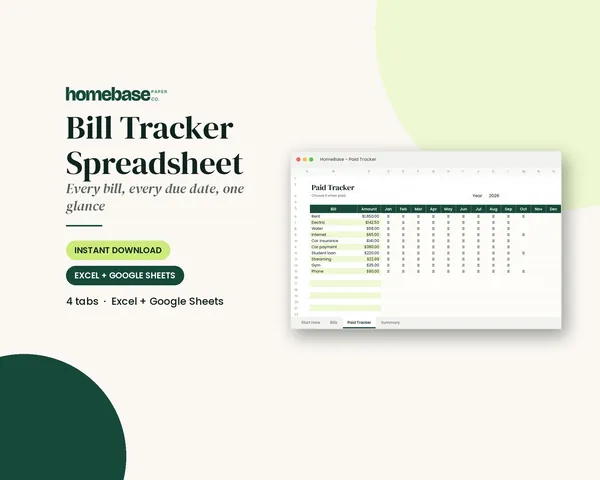
Bill Tracker Spreadsheet
Bills due in 3 days or less light up red, so nothing slips through.
Spreadsheets
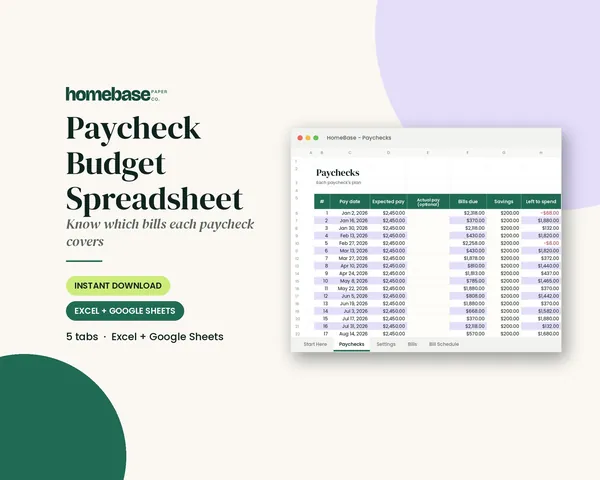
Paycheck Budget Spreadsheet
Enter your bills once. The sheet tells you which paycheck pays each one, all year.
Spreadsheets
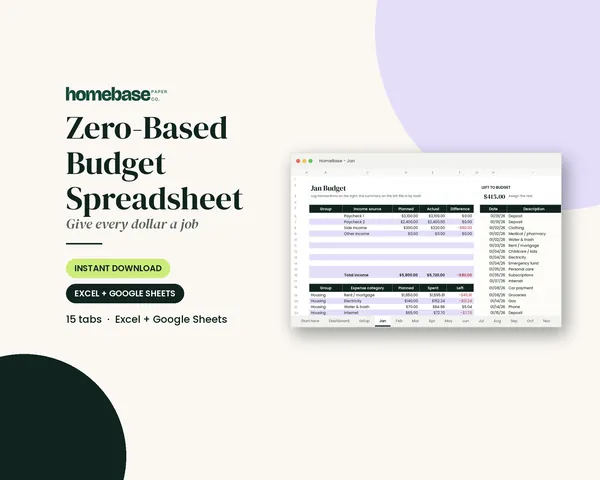
Zero-Based Budget Spreadsheet
The 'Left to budget' counter turns green when every dollar has a job.
Spreadsheets
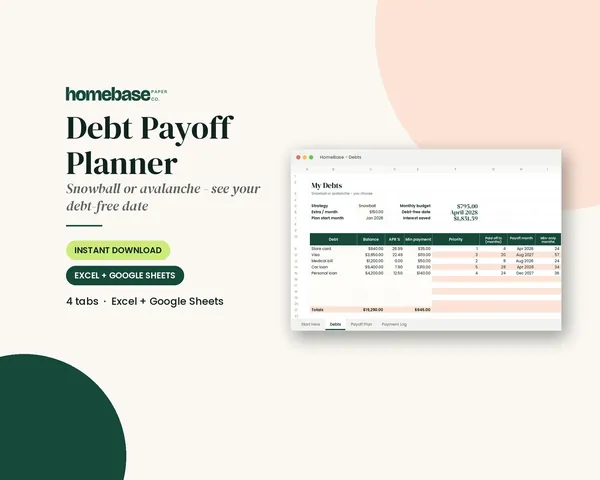
Debt Payoff Planner
Pick snowball or avalanche, add any extra payment, and get your debt-free month instantly.
 Club
Monthly club
Money Club
Anyone who wants a clear plan for the month's bills, holiday spending and savings.
Free printable
Get organized for the new year: get the free 2027 planner
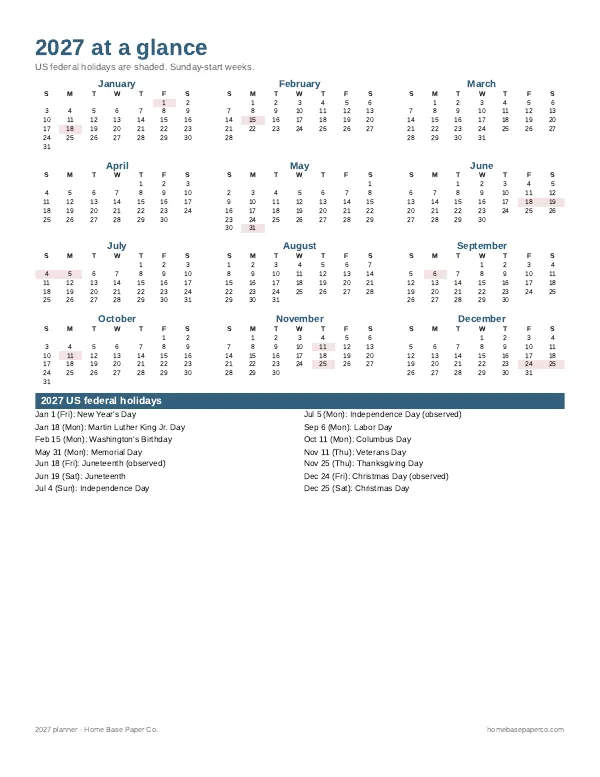
A 16-page printable 2027 planner with a year-at-a-glance page and monthly calendars with US holidays marked. You'll also get our weekly HomeBase email with simple planning and home organization tips.