The short answer: long term care insurance pays a set daily or monthly amount toward help with bathing, dressing and other daily tasks at home, in assisted living or in a nursing home, care that Medicare and regular health insurance don't cover. Someone turning 65 today has almost a 70% chance of needing it.
- Key numbers: women need care 3.7 years on average and men 2.2 years · benefits usually start when you need help with 2 of 6 daily activities, after a 30-, 60- or 90-day elimination period
- Who it fits: people with moderate savings and a home to protect. Small savings may lead to Medicaid, and very large savings can pay for care directly. Many people price policies in their 50s or early 60s, while they can pass underwriting.
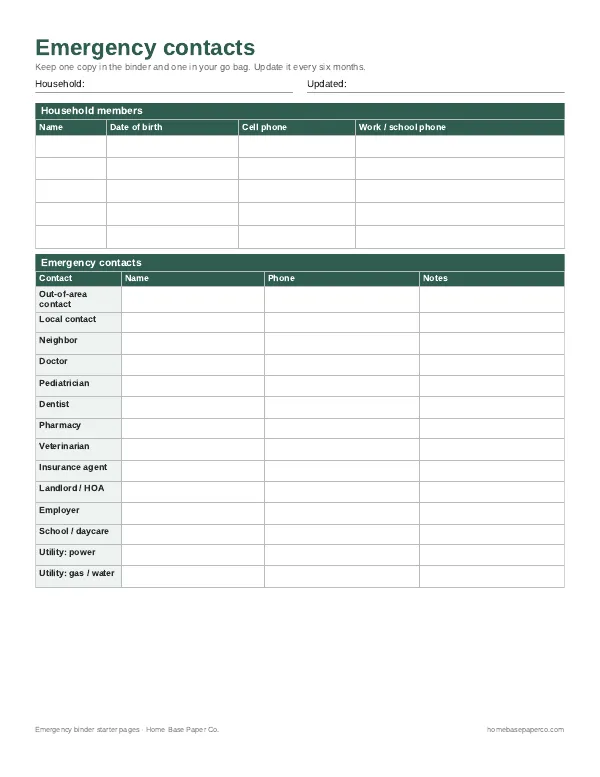
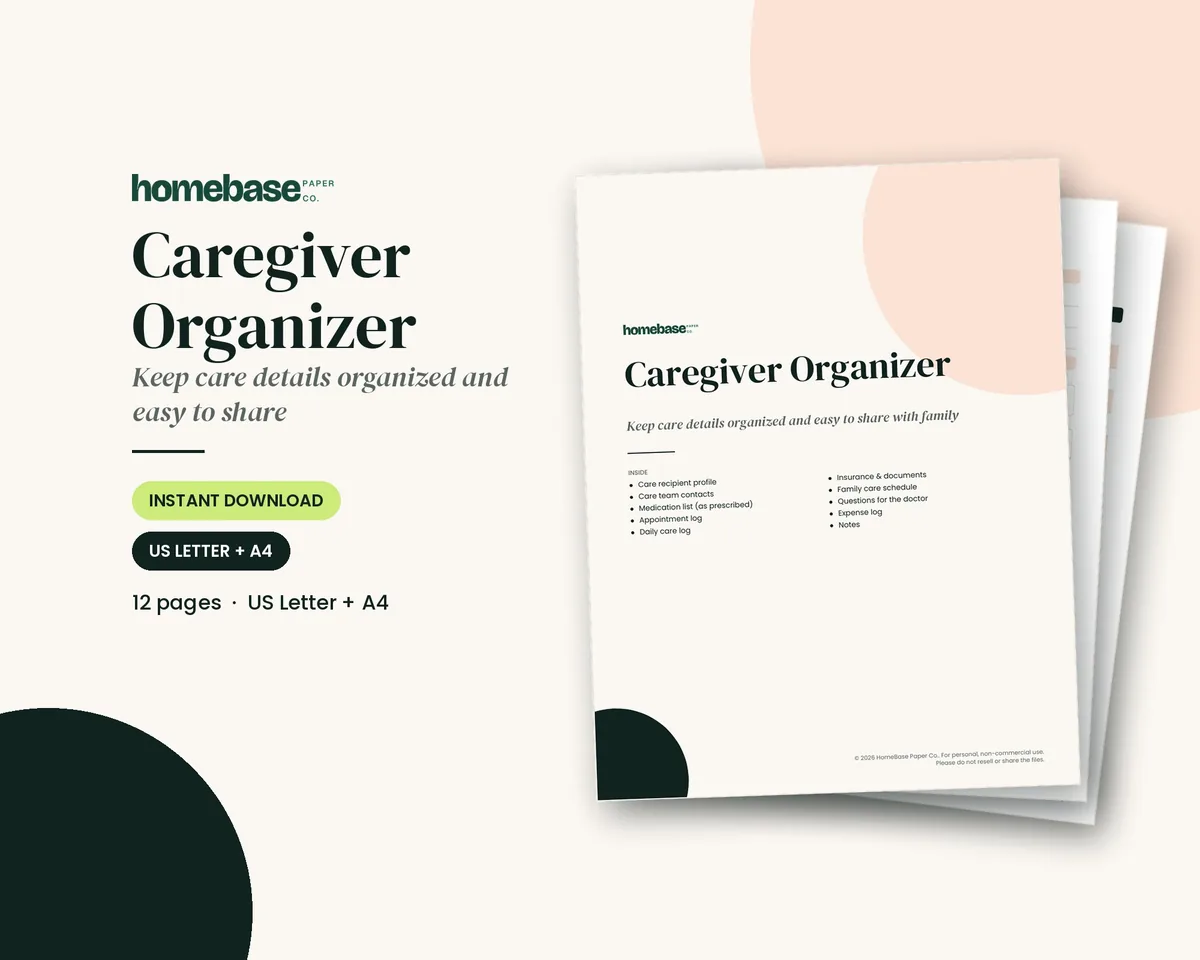
- Free and paid next step: get quotes from at least two companies with the same benefit design, then get the free emergency binder starter pages (we email it to you) or keep the policy in the Caregiver Organizer ($6.99).
Figures were checked November 3, 2026. The sections below cover what long term care insurance covers, how it pays, what it costs, who should buy it and how to shop.
What long term care insurance covers
Long-term care means help with daily living over months or years, not a hospital stay or a short rehab. The government's long-term care site lists the settings most comprehensive policies today let you use your daily benefit in, and the services they usually include at home.
| Setting or service | Usually covered by a comprehensive policy? | What it looks like |
|---|---|---|
| Care in your own home | Yes | An aide helps with bathing, dressing or getting around |
| Skilled nursing at home | Yes | A nurse visits for wound care, injections or monitoring |
| Therapy at home | Yes | Occupational, speech, physical or rehab therapy |
| Adult day services | Yes | Daytime care at a center while family works |
| Respite care | Yes | Short stays or visits that give a family caregiver a break |
| Assisted living | Yes | A residential facility with help on hand |
| Alzheimer's special care | Yes | Memory care units built for dementia |
| Nursing home | Yes | Full-time custodial and nursing care |
| Hospice care | Yes | Comfort care near the end of life |
| Homemaker help | Often, alongside personal care | Meal prep or light housekeeping |
That list follows the federal LongTermCare.gov overview of what comprehensive policies cover. Older or cheaper policies may cover only facility care or only home care, so check the wording of any policy you are offered.
Why Medicare won't pay for it
This is the part that surprises most families. Medicare.gov says plainly that Medicare doesn't pay for long-term care. That includes custodial help with activities of daily living like dressing, bathing and using the bathroom, and it is different from the short skilled nursing facility stays Medicare can cover after a hospital visit. Medigap and most regular health insurance don't pay for it either.
So the real choices for paying are:
- Your own savings and income. Many people pay at least part of their care this way.
- Medicaid. It can pay for long-term care if you meet your state's income and asset rules, which usually means spending down savings first.
- Long-term care insurance. A private policy you buy ahead of time.
- Life insurance with a care feature. Hybrid policies and accelerated death benefits, covered below.
- Family caregivers. Unpaid help from relatives, which has real costs of its own. Our guide to caregiver burnout covers that side honestly.
If you are still sorting out the bigger picture, our guides to what Medicare covers, disability insurance and term life insurance explain the policies that sit next to this one.
How likely you are to need care
The numbers are why this question is worth an evening of your time. According to the federal How Much Care Will You Need? page, someone turning 65 today has almost a 70% chance of needing some type of long-term care services in their remaining years. Women need care longer on average (3.7 years) than men (2.2 years). About one-third of people may never need it, while 20 percent will need it for longer than 5 years.
| Type of care after 65 | Average length | Share who will need it |
|---|---|---|
| Any long-term care services | 3 years | 69% |
| Unpaid care at home only | 1 year | 59% |
| Paid care at home | Less than 1 year | 42% |
| Any care at home | 2 years | 65% |
| Nursing facility | 1 year | 35% |
| Assisted living | Less than 1 year | 13% |
Read that last column twice. Most care happens at home, and a lot of it is unpaid family help. A policy that covers home care is usually more useful than one that only kicks in at a nursing home.
How long term care insurance works
Every policy is built from the same handful of pieces. Once you know them, quotes get much easier to compare.
| Policy term | What it means | What to look for |
|---|---|---|
| Daily or monthly benefit | The most the policy pays per day or month for care | Compare it with the real cost of care where you live |
| Benefit period | How long benefits last, often 2 to 5 years | Longer costs more; very few policies have no limit |
| Lifetime maximum | Daily benefit multiplied by the number of days covered | This is your total pool of money |
| Elimination period | Days you pay for care yourself before benefits start | Common choices are 30, 60 or 90 days |
| Benefit trigger | The test you must meet to get paid | Usually help with 2 of 6 daily activities, or a cognitive impairment |
| Inflation protection | Raises your benefit over time | Matters most if you buy in your 50s |
| Premium | What you pay, usually yearly or monthly | Ask how often the company has raised rates |
The benefit trigger and elimination period are where claims get decided. The government's page on receiving benefits explains that most policies pay when you need help with two or more of six activities of daily living or have a cognitive impairment, confirmed by a nurse or social worker assessment arranged by the company. The elimination period works like a deductible measured in days instead of dollars, and some policies only count days when you actually received paid care. That detail can stretch a 90-day wait much longer than you expect.
The six activities of daily living most policies use are bathing, dressing, eating, toileting, continence and transferring (getting in and out of a bed or chair).
What affects the cost
There is no single price for long term care insurance, and anyone quoting you one number without asking questions is guessing. Your premium depends on:
- Your age when you buy. Premiums are set by age at purchase, so the same policy costs more every year you wait.
- Your health. Most individual policies use medical underwriting. You can be offered a higher "non-standard" rate, a smaller policy or a denial.
- The daily benefit you pick. A bigger daily amount costs more.
- The benefit period. Two years costs less than five.
- The elimination period. A longer wait lowers the premium but raises what you pay out of pocket at the start.
- Inflation protection and other riders. These add cost but keep the benefit useful decades from now.
- Couple discounts or shared benefits. Some companies discount policies for spouses or let partners share a pool of benefits.
One more thing to plan around: insurers can raise premiums on a whole group of policyholders after you buy. Ask every company for its premium rate history before you sign, and build some room for increases into your budget.
Tax break on premiums
Premiums for a tax-qualified policy can count as medical expenses if you itemize. IRS Publication 502 caps how much you can include per person by age. For the 2025 tax year the limits are $480 at age 40 or under, $900 at 41 to 50, $1,800 at 51 to 60, $4,810 at 61 to 70 and $6,020 at 71 or over. A tax preparer can tell you if itemizing makes sense for your household.
Who should consider it and when to buy
Long term care insurance tends to fit people in the middle. If your savings are small, Medicaid may end up paying, and premiums could strain your monthly budget. If your savings are very large, you may be able to pay for care yourself. The people with the most to protect are usually those with a home, retirement savings and a spouse or family they don't want to drain.
| Your situation | Long-term care insurance is... | Also look at |
|---|---|---|
| Limited savings, tight budget | Often not the best fit | Your state's Medicaid rules, building an emergency fund |
| Moderate savings and a home | Worth getting quotes | Traditional and hybrid policies |
| A spouse who depends on your savings | Worth getting quotes | Shared-care policies for couples |
| Large savings you could spend on care | Optional | Setting aside a dedicated care fund |
| Already needing help with daily tasks | Usually not available | Medicaid, veterans benefits, family care plan |
Timing matters because health decides whether you can buy at all. The federal buying guide notes that people who already use long-term care, need help with daily activities, have dementia, a progressive neurological condition, a recent stroke or metastatic cancer often can't qualify. Many people start pricing policies in their 50s or early 60s, when they are more likely to still pass underwriting.
Alternatives to a traditional policy
If a standalone policy doesn't fit, you still have options worth comparing.
- Hybrid life and long-term care policies. These combine life insurance with a care benefit, so if you never need care, your heirs get a death benefit. They often cost more up front.
- Accelerated death benefit riders. Some life policies let you take part of the death benefit early if you need long-term care. Check if a policy you already own has one.
- Short-term care insurance. Smaller policies that cover a year or less, often with easier underwriting.
- A dedicated care fund. Some families build a separate savings bucket, the same way you would build sinking funds for other big costs.
- Medicaid planning. Rules vary by state and have look-back periods, so talk to an elder law attorney before moving assets.
- A family care plan. Decide who would help, how and with what money, before anyone needs it.
Starter version: a one-evening plan
If you only do one thing this month, do this:
- Write down who in your family would likely need care first and where they would want it.
- Look up what home care, assisted living and nursing homes cost in your area.
- List what you could pay from income and savings for one year of care.
- Check any life insurance you already own for a long-term care or accelerated benefit rider.
- Get quotes from at least two licensed agents or companies, using the same benefit amount and period.
That is enough to know if you need a policy, a hybrid, a savings plan or a family conversation.
How to shop for long term care insurance, step by step
- Decide how much coverage you need. Subtract what your income could pay from the local cost of care. That gap is your daily benefit target.
- Pick a benefit period. Use the federal averages above as a starting point and adjust for your family history.
- Choose an elimination period you can afford. Make sure you could pay 30, 60 or 90 days of care from savings.
- Ask about inflation protection. The younger you are, the more it matters.
- Compare the same policy design across companies. Otherwise you are comparing apples to oranges.
- Request each company's premium rate history. Past increases are the best clue to future ones.
- Read the benefit trigger and claim rules. Ask how days count toward the elimination period and if home care by family is covered.
- Check the company's financial strength. You need it to still be around in 20 or 30 years.
- Talk it through with a licensed agent or fee-only advisor. This guide is general information, not financial or insurance advice.
Keep the policy where your family can find it
A policy nobody can find does not help. Once you buy, make one folder or binder with the policy number, the company's claims phone number, your agent's contact, the benefit amount and how to start a claim. Tell the person most likely to help you where it is.
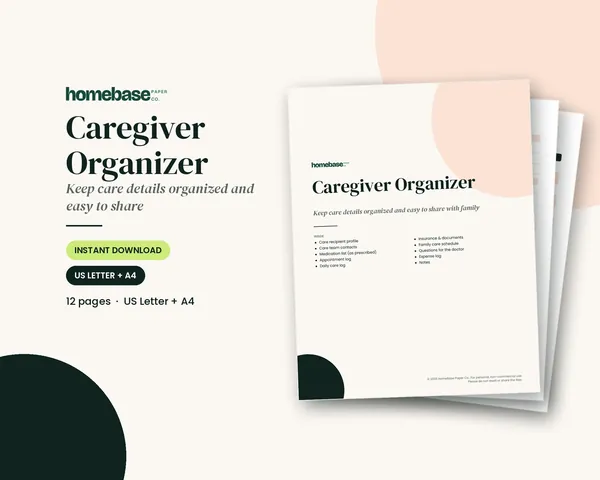
The Caregiver Organizer ($6.99) has an insurance and documents page, a care team contact list, a daily care log and a care expense log, which is the record many claims ask for. You can browse the rest of our Family & Life Admin printables too. For the whole family, the Family Peace of Mind Bundle is $17.99, down from $28.46 for the items bought separately, and includes the If Something Happens to Me Binder for wills, accounts and key contacts. See all of our Bundles. Our guide to organizing medical records walks through the rest of the paperwork, and respite care covers getting a caregiver a break.
Long term care insurance checklist
- Talk with family about where you would want care
- Look up local costs for home care, assisted living and nursing homes
- Check existing life insurance for a care rider
- Decide your daily benefit, benefit period and elimination period
- Get at least two quotes with the same design
- Ask each company for its premium rate history
- Read the benefit trigger and claim rules
- Ask a tax preparer about deducting qualified premiums
- File the policy and claim contacts where family can find them
- Review coverage every few years
Make it easier
Tools for this
Printables
Caregiver Organizer
One place for contacts, appointments, the medication list from the doctor, and daily notes.
 Save 37%
Bundles
Family Peace of Mind Bundle
The If Something Happens to Me binder, Caregiver Organizer, Pet Health Records and Password Log together.
Printables
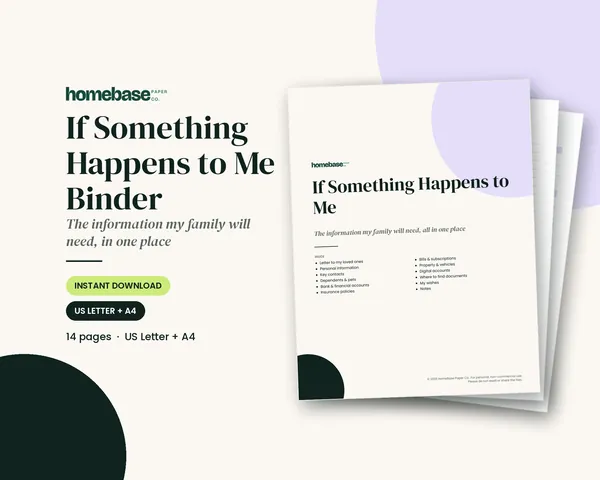
If Something Happens to Me Binder
Accounts, insurance, bills, contacts, documents and your wishes - so your family isn't left guessing.
Frequently asked questions
What is long term care insurance? Long term care insurance is a private policy that pays a set daily or monthly amount toward help with everyday tasks like bathing, dressing and eating when you can't do them alone. It can pay for care at home, in assisted living or in a nursing home, up to the limits you choose when you buy.
How does long term care insurance work? You pay premiums while you are healthy. When you later need help with two or more of six daily activities, or have a cognitive impairment, the company assesses you. After a waiting period called the elimination period, the policy pays toward your care up to its daily limit and lifetime maximum.
Does Medicare pay for long-term care? No, Medicare does not pay for long-term care when custodial help with daily activities is the only care you need. It can cover a short skilled nursing facility stay after a qualifying hospital visit, but not ongoing help with bathing, dressing or eating. Medigap doesn't cover it either.
How much does long term care insurance cost? Long term care insurance costs vary widely, so the only real answer comes from quotes. Your premium depends on your age when you buy, your health, the daily benefit, the benefit period, the elimination period and riders like inflation protection. Insurers can also raise rates later, so ask for each company's rate history.
Is long term care insurance worth it? Long term care insurance is often worth it for people with moderate savings, a home or a spouse to protect, who could pay the premiums comfortably for decades. It is usually less useful if your savings are small and Medicaid would likely pay, or if your savings are large enough to pay for care yourself.
What age should you buy long term care insurance? Many people start getting quotes in their 50s or early 60s. Premiums are based on your age when you buy, and most policies require medical underwriting, so waiting raises the price and the risk that a new health condition makes you ineligible. Buying too young means paying premiums for many extra years.
What is an elimination period? An elimination period is the number of days you pay for care yourself after you qualify, before the policy starts paying. It works like a deductible measured in days. Common choices are 30, 60 or 90 days, and some policies only count days when you actually received paid care.
What are the six activities of daily living? The six activities of daily living most long-term care policies use are bathing, dressing, eating, toileting, continence and transferring, which means getting in and out of a bed or chair. Most policies start paying when you need help with at least two of them or have a cognitive impairment such as dementia.
Can you be denied long term care insurance? Yes, you can be denied long term care insurance. Most individual policies use medical underwriting, and people who already need help with daily activities, use long-term care, or have dementia, a recent stroke or a progressive neurological condition often don't qualify. Standards vary, so another company may still accept you.
What is hybrid long term care insurance? Hybrid long term care insurance combines life insurance with a long-term care benefit. If you need care, you can use part of the policy to pay for it. If you never need care, your beneficiaries receive a death benefit. Hybrid policies usually cost more up front than a traditional policy.
Are long term care insurance premiums tax deductible? Premiums for a tax-qualified long term care insurance policy can count as medical expenses if you itemize, up to an age-based limit per person. For the 2025 tax year IRS Publication 502 sets the limit at $1,800 for ages 51 to 60 and $4,810 for ages 61 to 70.
How do I keep track of a long term care insurance policy? Keep the policy number, claims phone number, agent contact and benefit details in one place your family knows about. The Caregiver Organizer ($6.99) has printable pages for insurance and documents, care team contacts, a daily care log and a care expense log, which helps when a claim asks for care records.
What should I organize before a family member needs care? Gather insurance policies, medical contacts, medications, legal papers and account details before a crisis. The Family Peace of Mind Bundle is $17.99, down from $28.46 for the items bought separately, and includes the Caregiver Organizer, the If Something Happens to Me Binder, Pet Health Records and a Password & Accounts Log.
What goes in an If Something Happens to Me Binder? An If Something Happens to Me Binder holds the information your family would need in an emergency, including key contacts, accounts, insurance policies and where your legal documents are kept. Ours costs $11.99 as a printable, and it is a good home for your long term care insurance policy details too.
More from HomeBase
You may also like

Printables
Budget Planner Printable
Twelve undated pages you can print every month: budget, bills, spending, savings and debt.

Spreadsheets
Bill Tracker Spreadsheet
Bills due in 3 days or less light up red, so nothing slips through.

Spreadsheets
Sinking Funds Tracker
It does the math: how much to set aside each month to hit every goal on time.

Spreadsheets
Paycheck Budget Spreadsheet
Enter your bills once. The sheet tells you which paycheck pays each one, all year.
 Club
Monthly club
Money Club
Anyone who wants a clear plan for the month's bills, holiday spending and savings.
Free printable
Have the important stuff in one place: get the free emergency binder pages
Printable starter pages for household members, emergency contacts, medical notes and where key documents live. You'll also get our weekly HomeBase email with simple ways to keep family records and important papers in order.