

The short answer: financial literacy means knowing how to make smart everyday money decisions: how to budget, save, use credit, pay off debt, invest and protect what you have. You need a handful of core skills, not a finance degree.
- Earning: read one pay stub line by line
- Budgeting: track spending for one month
- Saving and borrowing: open a separate savings account and check your free credit report
- Checklist by topic and free resources below
- Next step: Plan it with the Ultimate Budget Bundle ($19.99).
Financial literacy means knowing how to make smart everyday money decisions: how to budget, save, use credit, pay off debt, invest and protect what you have. You don't need a finance degree. You need a handful of core skills and the habit of using them. This guide breaks financial literacy into simple topics, gives you a checklist for each one and points you to free resources.
This page is general education, not financial advice. A simple budget is the best first step. The Ultimate Budget Bundle includes budget, bill and savings trackers, and the Budget Planner Printable works if you prefer paper.
Why financial literacy matters
Money touches almost every big decision, from where you live to when you can retire. Knowing the basics helps you avoid expensive mistakes, like carrying high-interest debt or missing bills. It also makes it easier to handle a surprise expense.
The Federal Reserve's survey of household well-being tracks how American families handle money each year, including whether they could cover an unexpected expense. A small emergency fund is one of the first things financial literacy helps you build.
The federal government also takes it seriously. MyMoney.gov, run by the Financial Literacy and Education Commission, says its 2026 national strategy focuses on youth money skills, saving and investing, digital money skills and protecting people from money tricks.
The six core financial literacy skills
| Skill | What it means | First step |
|---|---|---|
| Earning | Understanding your paycheck, taxes and benefits | Read one pay stub line by line |
| Budgeting | Giving every dollar a job | Track spending for one month |
| Saving | Setting money aside for goals and emergencies | Open a separate savings account |
| Borrowing | Using credit and loans wisely | Check your free credit report |
| Investing | Growing money over time | Learn what a retirement account is |
| Protecting | Insurance, identity safety and avoiding money tricks | Turn on account alerts |
1. Budgeting basics
A budget is a plan for your money before you spend it. Popular methods include the 50/30/20 budget and the zero-based budget. Pick one, try it for three months and adjust. If you're brand new, start with our budgeting for beginners guide. For a plain-English budget meaning with examples, see our short guide.
2. Saving and emergency funds
Aim for a starter emergency fund first, then build toward three to six months of expenses. Automate a small transfer on payday so you don't have to remember. Our guide on how to build an emergency fund walks through the steps.
3. Credit and debt
Learn how interest works. A credit card with a 24% rate costs far more than a loan at 7%. Pay on time, keep balances low and check your credit report every year. If you already have debt, compare the debt snowball vs. avalanche methods.
4. Investing for the future
Investing lets your money grow through compound returns. Workplace retirement plans and IRAs are the most common starting points. Keep costs low and think in years, not weeks.
5. Protecting your money
Insurance, strong passwords and account alerts all protect you. Be careful with anyone who pressures you to pay fast with gift cards, wire transfers or crypto. Real companies and government agencies don't ask for that.
Teaching financial literacy to kids
Money habits start early. The CFPB's Money as You Grow program lists simple money lessons by age, from counting coins to comparing prices. Our guide to teaching kids about money has activities for every stage.
Financial literacy by life stage
The skills stay the same, but the focus shifts as life changes.
- Teens: learn to read a pay stub, open a first bank account and save part of every paycheck.
- Twenties: build a budget, start an emergency fund, use one credit card carefully and join a retirement plan early. Our budget for young adults guide is a good start.
- Thirties and forties: plan for a home, kids and bigger goals, and keep raising retirement savings. Couples can use our guide on how to budget as a couple.
- Fifties and up: catch up on retirement savings, review insurance and make an estate plan.
Common financial literacy myths
"I don't make enough to budget." A budget matters most when money is tight. It shows where every dollar goes.
"Investing is only for rich people." Many accounts have no minimum, and you can start with a few dollars.
"Checking my credit hurts my score." Checking your own credit report does not lower your score.
"I'll figure out money later." Small habits started early grow the most, thanks to compound interest.
Free places to learn more
- MyMoney.gov for federal money lessons and tools.
- The CFPB for tools on credit, debt and buying a home.
- Investor.gov for investing basics and calculators.
- Your bank or credit union, which often offers free classes.
- Local libraries, which often host free money workshops.
A simple financial literacy checklist
- Know your monthly take-home pay.
- Write a basic budget.
- Save at least one month of expenses.
- List every debt with its interest rate.
- Check your credit report.
- Enroll in your workplace retirement plan, at least up to any match.
- Review your insurance once a year.
- Set one money goal for the next 12 months.
Do one item a week, and in two months you will have covered the core of financial literacy. Then repeat the checklist once a year, ideally in January, so your plan keeps up with changes in your income, family and goals.
Make it easier
Tools for this
 Save 57%
Bundles
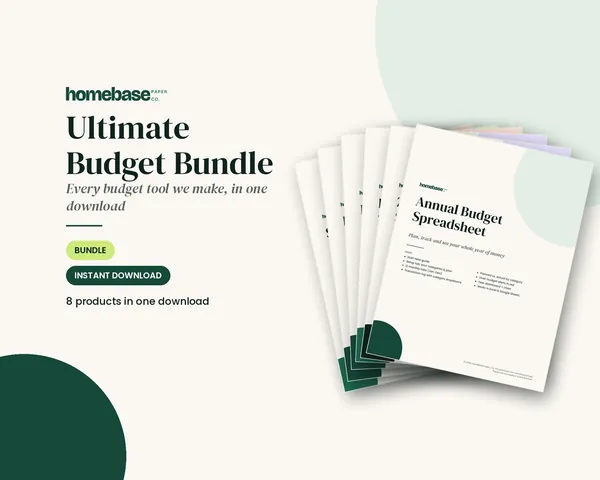
Ultimate Budget Bundle
All 6 spreadsheets + both printable planners - for less than half the price of buying them separately.
Printables
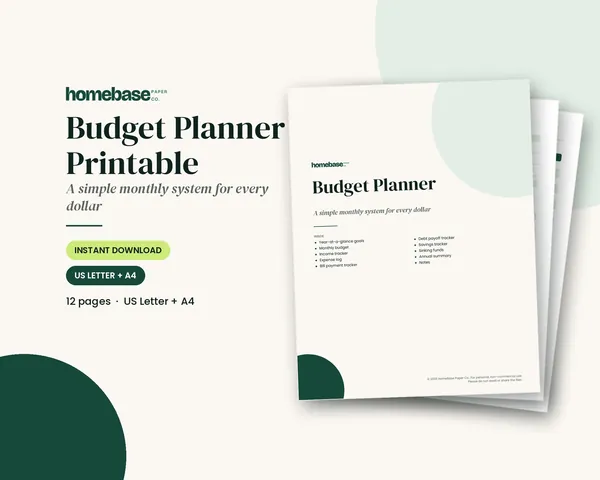
Budget Planner Printable
Twelve undated pages you can print every month: budget, bills, spending, savings and debt.
Frequently asked questions
What is financial literacy? Financial literacy is the knowledge and skills you need to make good everyday money decisions. It covers budgeting, saving, using credit wisely, paying down debt, investing for the future and protecting yourself from money tricks. It is less about knowing big financial terms and more about building habits, like spending less than you earn and planning for surprises.
Why is financial literacy important? Financial literacy helps you avoid costly mistakes, such as high-interest debt or missed bills, and makes it easier to reach goals like an emergency fund, a home or retirement. People who understand interest, budgets and credit tend to feel more in control of their money. Those skills also get passed down when parents teach their kids about money.
How can I improve my financial literacy? Start with one topic at a time. Make a simple monthly budget, read your credit report for free, learn how interest works on your debts and open a savings account for emergencies. Free government sites like MyMoney.gov and the CFPB offer short lessons. Adding one small habit each month builds financial literacy faster than trying to learn everything at once.
What are the main topics of financial literacy? The main financial literacy topics are earning income, budgeting and spending, saving, borrowing and credit, investing, and protecting your money and identity. Many courses add taxes, insurance and retirement planning. You do not need to master all of them at once, but understanding the basics of each one helps you make better decisions.
More from HomeBase
You may also like
Spreadsheets
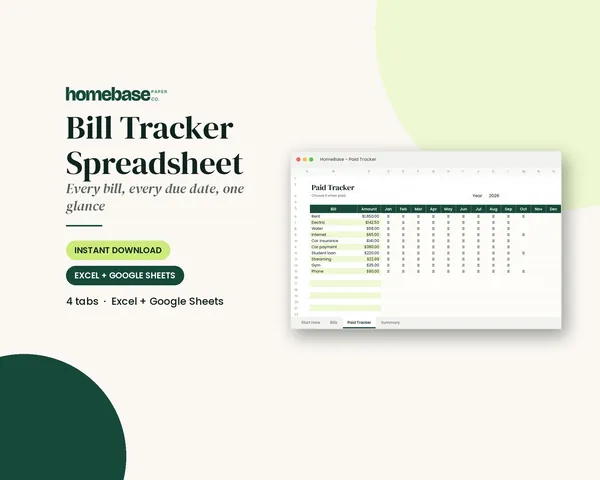
Bill Tracker Spreadsheet
Bills due in 3 days or less light up red, so nothing slips through.
Spreadsheets
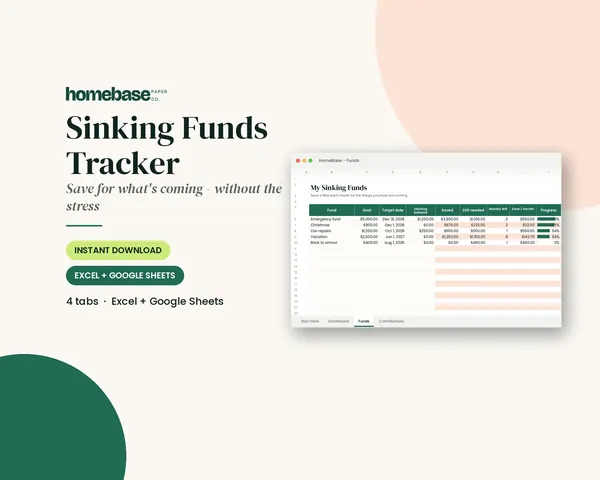
Sinking Funds Tracker
It does the math: how much to set aside each month to hit every goal on time.
Spreadsheets
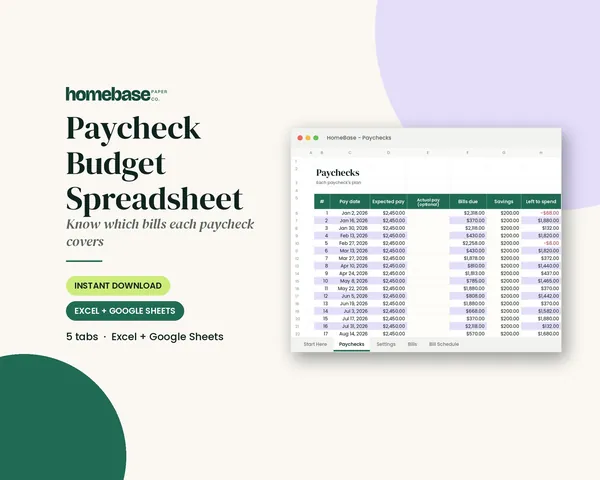
Paycheck Budget Spreadsheet
Enter your bills once. The sheet tells you which paycheck pays each one, all year.
Spreadsheets
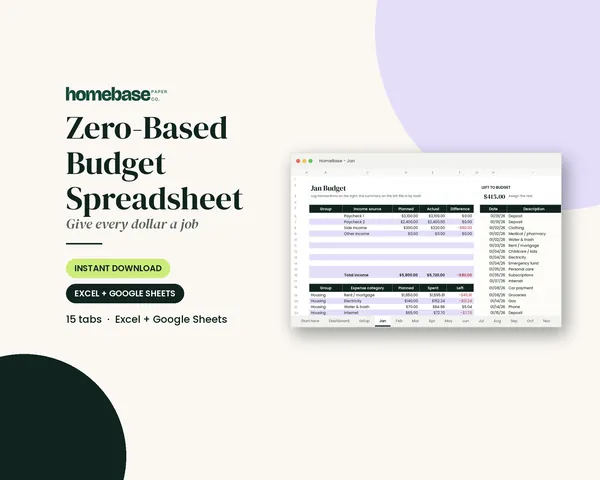
Zero-Based Budget Spreadsheet
The 'Left to budget' counter turns green when every dollar has a job.
 Club
Monthly club
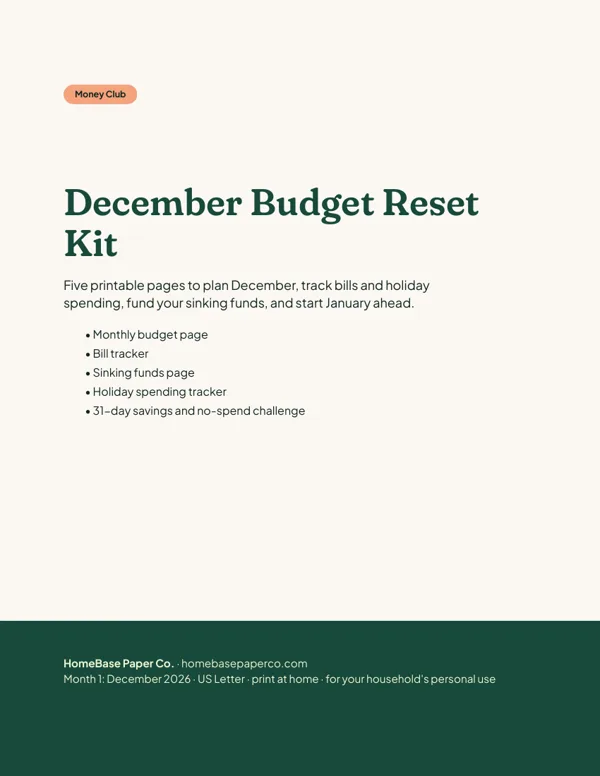
Money Club
Anyone who wants a clear plan for the month's bills, holiday spending and savings.
Free printable
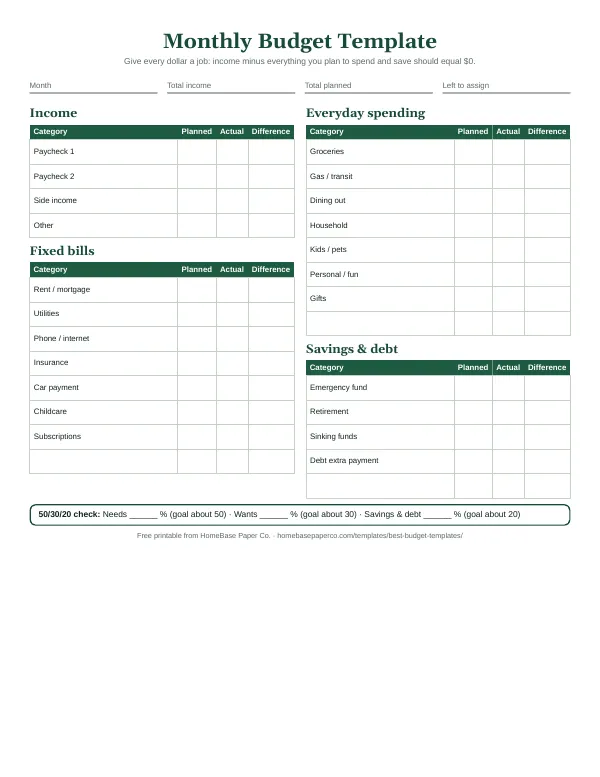
Give every dollar a job: get the free monthly budget template
A printable zero-based monthly budget: income, bills, everyday spending and savings on one page, with a planned vs. actual column. You'll also get our weekly HomeBase email with simple budgeting and bill-paying tips.
Sources
- MyMoney.gov: Financial Literacy and Education Commission mymoney.gov
- CFPB: Money as You Grow consumerfinance.gov
- Federal Reserve: Economic Well-Being of U.S. Households federalreserve.gov