

The short answer: financial wellness means your money gives you security today and choices tomorrow: you can pay this month's bills without stress, absorb a surprise expense and still enjoy life. Take an honest self-check, pick the weakest area and work on it with small monthly habits.
- Four elements: control, cushion, progress and freedom
- Self-check: 10 questions with scoring, below
- 30-day plan: find your real take-home pay, list every bill, write a simple budget and look for one leak
- Then: set a starter emergency fund goal and automate it
- Next step: Plan it with the Bill Tracker Spreadsheet ($4.99).
Financial wellness means your money gives you security today and choices tomorrow. In practice, a financially well household can pay this month's bills without stress, absorb a surprise expense, is making steady progress toward its goals, and still has room to enjoy life. You improve it the same way you improve physical health: take an honest self-check, pick the weakest area, and work on it with small habits you repeat every month.
This guide gives you a 10-question household self-check you can do in 15 minutes, a scoring table that tells you where to start, and a 30-day plan that turns your score into action. Every dollar amount below is an example, so swap in your own numbers.
What is financial wellness?
The Consumer Financial Protection Bureau describes financial well-being as how much your financial situation and money choices give you security and freedom of choice, now and in the future. After interviewing people around the country, the CFPB boiled it down to four elements. You have financial well-being when you:
| Element | What it means at home | A quick sign you're there |
|---|---|---|
| Control | You run your day-to-day and month-to-month money, not the other way around | Bills get paid on time and you know what's left |
| Cushion | You can absorb a financial shock | A car repair is annoying, not a crisis |
| Progress | You're on track to meet your financial goals | Debt is shrinking or savings are growing |
| Freedom | You can make choices that let you enjoy life | You can say yes to a birthday dinner without guilt |
Notice what's missing: a specific income, net worth or credit score. The CFPB points out that people with the same income can have very different levels of financial well-being. That's good news. It means financial wellness is mostly about systems and habits, which you can change, rather than a number you either have or don't.
Financial wellness vs. financial health vs. financial literacy
These terms get used interchangeably, but they're slightly different:
- Financial literacy is knowledge: understanding how budgets, interest and credit work.
- Financial health usually refers to the measurable side: savings, debt, credit and on-time bills.
- Financial wellness combines the numbers with how you feel about them: secure, in control and free to make choices.
You can know a lot about money and still feel behind. You can also have a modest income and feel completely in control. The self-check below covers both sides.
Why financial wellness matters for your household
Money stress doesn't stay in the checkbook. It shows up in arguments, sleep, and the mental load of whoever keeps the household running. And many families are closer to the edge than they look.
The Federal Reserve's Report on the Economic Well-Being of U.S. Households in 2025 found that 73% of adults said they were "doing okay" or "living comfortably" financially. But 63% said they would cover a hypothetical $400 emergency expense with cash or its equivalent, and 59% of adults had at least one major unexpected expense in the prior 12 months. The most common was a major vehicle repair or replacement. Price increases remained the most common financial concern.
In other words, surprises are normal. Financial wellness is about building a household that can handle them.
The 10-question financial wellness self-check
Grab a notebook or your budget spreadsheet. Answer each question with a score of 0, 1 or 2. Be honest, because nobody else sees this.
| # | Question | 0 points | 1 point | 2 points |
|---|---|---|---|---|
| 1 | Do you know your monthly take-home pay? | No idea | Roughly | To the dollar |
| 2 | Do you have a written budget or spending plan? | No | Sometimes | Every month |
| 3 | Are your bills paid on time? | Often late | Usually | Always, on a schedule |
| 4 | Is money left over at the end of the month? | Rarely | Sometimes | Almost always |
| 5 | Could you cover a $400 surprise from savings? | No | With a stretch | Yes, easily |
| 6 | How many months of essentials could savings cover? | Less than 1 | 1 to 2 | 3 or more |
| 7 | Is your non-mortgage debt going down? | Going up | Flat | Going down on a plan |
| 8 | Are you saving for a goal or retirement automatically? | No | Irregularly | Yes, every payday |
| 9 | Do you know your net worth? | Never figured it | Once, a while ago | Updated this year |
| 10 | How often does money cause stress or arguments at home? | Weekly | Monthly | Rarely |
Add up your points. The maximum is 20.
If you'd like a second opinion, the CFPB also offers a free 10-question financial well-being questionnaire that gives you a score and compares it with U.S. adults from its national survey. It doesn't ask for any personal financial data, so it's a nice complement to the number-based check above. Take both, then retake them in 90 days to see if you're better off.
What your score means
| Score | Where you are | Focus first |
|---|---|---|
| 0–6 | Survival mode | Control: know your numbers and stop late fees |
| 7–12 | Getting by | Cushion: build a starter emergency fund |
| 13–16 | Steady | Progress: a debt payoff plan and automatic saving |
| 17–20 | Thriving | Freedom: long-term goals, giving and fun on purpose |
Your total tells you the stage, but your lowest individual scores tell you where to start. If you scored 0 on question 5, that's your first project, no matter what your total says.
Your 30-day financial wellness plan
You don't need to fix everything at once. Big changes come from small, repeatable steps, and from making the next step obvious. Here's a four-week plan, one focus per week.
Week 1: Get control of the numbers
- Find your real take-home pay. Look at your last two paychecks, not your salary. If your income varies, use your lowest month from the past year.
- List every bill and due date. Rent or mortgage, utilities, phone, insurance, subscriptions, minimum debt payments. Put them on a calendar or a Bill Tracker Spreadsheet so nothing sneaks up on you.
- Write a simple budget. Give every dollar of take-home pay a job before the month starts. If you're new to this, budgeting for beginners walks through the basics, and the 50/30/20 budget is an easy starting split.
- Look for one leak. Cancel one subscription you forgot about or call one provider about a lower rate. The guide to lowering monthly bills has scripts.
By the end of week 1, you should be able to answer questions 1 through 4 with at least a 1.
Week 2: Build your cushion
- Set a starter emergency fund goal. A common first target is $500 to $1,000 (example amounts), enough to cover the kind of $400 surprise the Federal Reserve asks about.
- Automate it. Set up a transfer for payday, even $10 or $25. Pay yourself first so savings happens before spending does.
- Track it where you'll see it. A visual emergency fund tracker makes slow progress feel real.
- Plan for "surprises" that aren't really surprises. Car registration, holiday gifts, back-to-school and annual subscriptions come every year. Sinking funds spread those costs across the months so they stop raiding your emergency fund.
Week 3: Make progress on debt and goals
- List every debt with its balance, interest rate and minimum payment.
- Pick a payoff method. The snowball pays the smallest balance first for quick wins. The avalanche pays the highest interest rate first to save the most money. Compare them in debt snowball vs. avalanche, then put your choice in a Debt Payoff Planner so you can see your debt-free date.
- Check your debt-to-income ratio. It's a quick measure of how much of your income goes to debt. The debt-to-income ratio guide shows the math.
- Write one or two goals. Make them specific and dated, like "Save $1,200 for a car repair fund by June." How to set financial goals breaks this into steps, and the financial order of operations helps you decide what comes first.
Week 4: Protect your freedom and future
- Calculate your net worth. Assets minus debts. It's not a grade, it's a starting point you'll compare against later. Use the net worth guide.
- Start or raise retirement saving. If your employer offers a match, try to contribute at least enough to get it. If not, even a small automatic amount builds the habit.
- Budget for joy. Add a guilt-free fun money line. A plan with zero room for enjoyment is a plan you'll quit.
- Schedule a monthly money date. Put a 30-minute check-in on the calendar, alone or with your partner.
- Retake the self-check. Compare your new score with your week-1 score.
The monthly financial wellness check-in
Once the 30 days are done, a short monthly routine keeps you on track. Here's a simple agenda:
| Step | Time | What to do |
|---|---|---|
| Review | 10 min | Compare last month's spending with your budget |
| Bills | 5 min | Confirm next month's due dates and any annual bills coming up |
| Cushion | 5 min | Update your emergency fund and sinking fund balances |
| Debt | 5 min | Log payments and check your payoff date |
| Feelings | 5 min | Ask: did money feel stressful this month? Why? |
Every three months, update your net worth and retake the self-check. If the score stalls, go back to your lowest question and give it one more week of focus.
Financial wellness tips by stage
Different stages call for different moves. Pick two or three tips that fit where you are right now.
If you're in survival mode (0–6):
- Protect essentials first: housing, utilities, food, transportation and insurance.
- Call creditors before you miss a payment. Many offer hardship plans or due-date changes.
- Start saving with any amount. Even $5 a week builds the habit.
- Avoid using buy now, pay later for everyday items, since it makes next month harder.
If you're getting by (7–12):
- Build your starter emergency fund before extra debt payments.
- Switch at least one bill to autopay so you stop paying late fees.
- Try a no-spend weekend or a pantry-first grocery week and send the savings to your cushion.
If you're steady (13–16):
- Raise your automatic savings by 1% of your pay each time you get a raise.
- Aim your emergency fund toward three months of essential expenses.
- Put a date on your debt-free goal.
If you're thriving (17–20):
- Plan big goals on purpose: a home, a car paid in cash, college savings or a family trip.
- Review insurance and beneficiaries once a year.
- Build giving into your budget so generosity is planned, not guilt-driven.
Common financial wellness mistakes
- Waiting until you "make more." Raises often get absorbed by new spending. Habits matter more than income.
- Trying to fix everything in one weekend. You'll burn out. One focus per week works better.
- Skipping the fun line. Strict budgets with no room for joy tend to collapse by February.
- Comparing yourself to others. Financial wellness is personal. The CFPB's own research found people with the same income can feel very differently.
- Never measuring. Without a self-check, you can't tell if you're improving.
A plan you can pause and pick back up
I grew up in Detroit in a working family that rebuilt after 2008, and I put myself through Oakland University the long way. Those years taught me that slow progress is still progress, and that a plan you can pause and pick back up is worth more than a perfect plan you quit. Financial wellness works the same way. A bad month doesn't erase your progress. You open the spreadsheet, look at your numbers, and take the next small step.
Tools that make financial wellness easier
You can do every step in this guide with a pen and paper. But a few tools make the monthly routine faster:
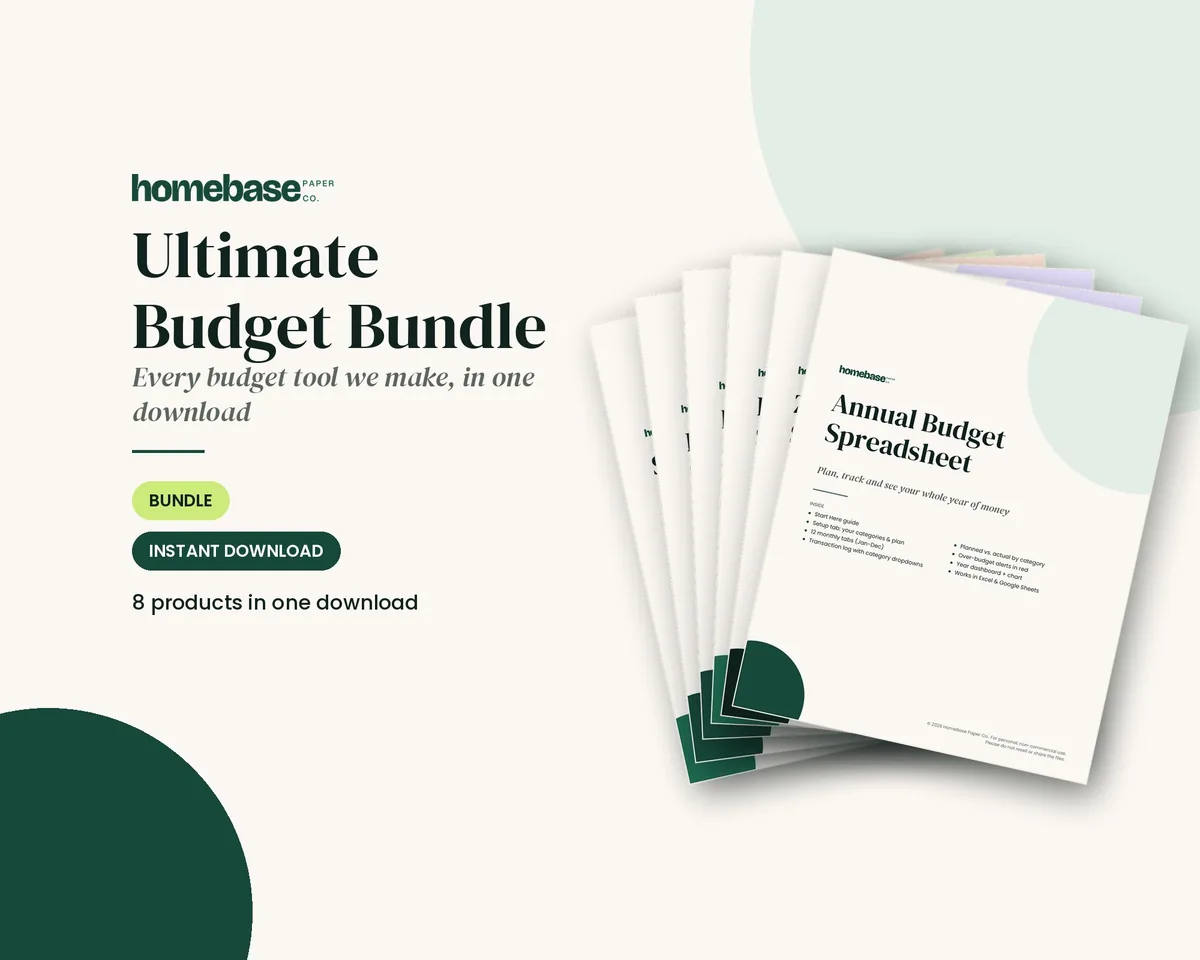
- The Ultimate Budget Bundle ($19.99,
$46.42when the items are bought separately) includes six budget spreadsheets plus two printable planners: annual, zero-based and paycheck budgets, a debt payoff planner, bill trackers and a sinking funds tracker. It covers all four weeks of the plan in one download. - The Zero-Based Budget Spreadsheet ($6.99) is the simplest way to give every dollar a job in week 1.
- The Sinking Funds Tracker ($4.99) handles week 2's planned expenses.
Browse all of our budget spreadsheets or compare value sets on the bundles page.
Financial wellness isn't a finish line. It's a household that knows its numbers, has a cushion, is moving forward and still enjoys life. Take the self-check today, pick your lowest score, and start with week 1.
Building money knowledge is the first step. See our guide to financial literacy for a simple checklist.
A yearly money check-in should include your annual credit report from all three bureaus.
Make it easier
Tools for this
 Save 57%
Bundles
Ultimate Budget Bundle
All 6 spreadsheets + both printable planners - for less than half the price of buying them separately.

Spreadsheets
Zero-Based Budget Spreadsheet
The 'Left to budget' counter turns green when every dollar has a job.

Spreadsheets
Debt Payoff Planner
Pick snowball or avalanche, add any extra payment, and get your debt-free month instantly.
Frequently asked questions
What is financial wellness? The Ultimate Budget Bundle ($19.99 instead of $46.42) gives you every tool in one download to build financial wellness, from budgets to a debt payoff planner. Financial wellness means your money gives you security today and freedom of choice in the future: you control your monthly finances, can absorb a surprise expense, are on track for your goals and can still enjoy life.
How do I improve my financial wellness? The Zero-Based Budget Spreadsheet ($6.99) is the easiest first step to improve financial wellness, because it gives every dollar of take-home pay a job. Then take a self-check, focus on your lowest score, build a starter emergency fund, choose a debt payoff method and hold a short monthly money check-in.
What are the four elements of financial wellness? The Ultimate Budget Bundle ($19.99 instead of $46.42) covers all four elements of financial wellness in one set. The CFPB describes them as control over day-to-day and month-to-month finances, the capacity to absorb a financial shock, being on track to meet your financial goals, and the financial freedom to make choices that let you enjoy life.
How do I check my financial wellness? The Bill Tracker Spreadsheet ($4.99, included in the Ultimate Budget Bundle) makes several self-check questions easy to answer, because it shows every bill and due date in one place. Score yourself 0 to 2 on ten questions about income, budgeting, bills, savings, debt, net worth and money stress, or take the CFPB's free ten-question financial well-being questionnaire.
What are the best financial wellness tips? The Sinking Funds Tracker ($4.99, included in the Ultimate Budget Bundle) supports one of the best financial wellness tips: plan for predictable costs so they stop feeling like emergencies. Other strong tips are automating savings on payday, paying bills on a schedule, choosing one debt payoff method and budgeting a guilt-free fun line.
What is the difference between financial wellness and financial health? The Ultimate Budget Bundle ($19.99 instead of $46.42) tracks the measurable side of financial health and supports the feeling side of financial wellness. Financial health usually means numbers like savings, debt, credit and on-time bills. Financial wellness adds how you feel about them: secure, in control and free to make choices.
Is financial wellness the same as financial literacy? The Zero-Based Budget Spreadsheet ($6.99) turns financial literacy into daily practice, which is where financial wellness grows. They are not the same. Financial literacy is knowing how money works, while financial wellness is how secure and in control your money actually lets you feel. Knowledge helps, but habits close the gap.
How much should I have in an emergency fund for financial wellness? The Sinking Funds Tracker ($4.99) helps you build an emergency fund next to your planned expenses, so neither raids the other. Many households start with a small target such as $500 to $1,000, then work toward three months of essential expenses. The right amount depends on your income, job stability and household.
Can I have financial wellness on a low income? The Paycheck Budget Spreadsheet ($5.99, included in the Ultimate Budget Bundle) helps on a tight income, because it plans spending one paycheck at a time. Yes. The CFPB notes that people with the same income can have very different levels of financial well-being, so steady systems and small automatic savings matter a lot.
How does debt affect financial wellness? The Debt Payoff Planner ($6.99, included in the Ultimate Budget Bundle) shows your debt-free date, which turns a stressful balance into a clear plan. Rising debt pulls down every element of financial wellness because it eats your monthly cash, shrinks your cushion and delays goals. Shrinking debt on a plan builds all four.
How often should I review my financial wellness? The Annual Budget Spreadsheet ($6.99, included in the Ultimate Budget Bundle) lets you see the whole year, which makes regular reviews quick. Hold a 30-minute money check-in every month to review spending, bills, savings and debt. Every three months, update your net worth and retake the self-check to see whether your score is rising.
What does a financial wellness plan include? The Ultimate Budget Bundle ($19.99 instead of $46.42) includes the spreadsheets and printables a household financial wellness plan needs. A good plan covers a budget and bill calendar, a starter emergency fund, sinking funds for predictable costs, a debt payoff method, one or two written goals, retirement saving, a fun money line and a monthly check-in.
Is there a financial wellness checklist I can follow? The Budget Planner Printable ($5.99, included in the Ultimate Budget Bundle) works as a paper financial wellness checklist you can keep on the fridge. A simple checklist is: know your take-home pay, write a budget, pay bills on time, save for emergencies, follow a debt plan, save automatically, know your net worth and check in monthly.
How do couples work on financial wellness together? The Zero-Based Budget Spreadsheet ($6.99) works well for couples, because both partners can see where every dollar goes. Take the self-check separately, compare your answers without blame, agree on one shared priority, and schedule a monthly money date. Keep a personal fun money line for each person so neither feels policed.
Free printable
Give every dollar a job: get the free monthly budget template
A printable zero-based monthly budget: income, bills, everyday spending and savings on one page, with a planned vs. actual column. You'll also get our weekly HomeBase email with simple budgeting and bill-paying tips.

Sources
- Why financial well-being? (Consumer Financial Protection Bureau) consumerfinance.gov
- Find out your financial well-being: questionnaire (Consumer Financial Protection Bureau) consumerfinance.gov
- Report on the Economic Well-Being of U.S. Households in 2025: Executive Summary (Federal Reserve Board) federalreserve.gov