
 The Holiday Collection

The short answer: Credit cards win on protection; debit cards win on staying out of debt. A credit card gives you stronger federal liability limits and the right to dispute charges for items that never arrive, which is why the FTC recommends paying by credit card when you shop online.
Our picks for credit card vs debit card
 Save 38%
Bundles
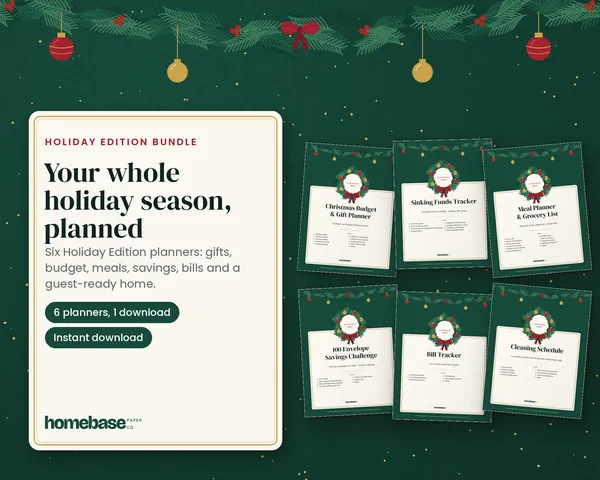
Holiday Season Bundle
Plan Christmas, save for it all year, and host without the January money hangover.

Spreadsheets
Bill Tracker Spreadsheet
Bills due in 3 days or less light up red, so nothing slips through.
A debit card spends only money you already have, so it can't create a holiday balance, but an unauthorized charge or an order gone wrong takes your own cash until it's sorted out. The best choice for holiday shopping is a credit card you pay off in full, or a debit card if a balance would follow you into January.
Here's how the two compare, and how to choose before the Black Friday crowds show up.
Credit card vs. debit card at a glance
| Credit card | Debit card | |
|---|---|---|
| Whose money | The card company's, until you pay the bill | Yours, taken from checking right away |
| Interest | Charged on any balance you carry | None |
| Lost or stolen card, reported before use | $0 | $0 |
| Lost or stolen card, used before you report | Up to $50 | $50 to unlimited, depending on how fast you report |
| Billing disputes (never arrived, wrong item, double charge) | Yes, federal dispute rights | Depends on your bank |
| Builds credit history | Yes, with on-time payments | No |
| Risk of overspending | Higher, since it doesn't feel like cash | Lower, since you see the balance drop |
| Overdraft risk | No | Yes, if you spend past your balance |
The liability figures come from the FTC's guide to lost or stolen credit, ATM and debit cards.
The protection difference, in plain numbers
This is the part most people don't know. With a credit card, the most you'll owe for unauthorized use is $50, and nothing at all if only your number was stolen. With a debit card, what you lose depends on the calendar:
| You report the lost or stolen debit card... | Your maximum loss |
|---|---|
| Before any unauthorized charges | $0 |
| Within 2 business days of learning about it | $50 |
| After 2 business days, within 60 days of your statement | $500 |
| More than 60 days after your statement | All the money taken, and possibly more from linked accounts |
There's another difference: with a credit card, an unauthorized charge is the card company's money while it's investigated. With a debit card, it's your rent money that's missing in the meantime. During the busiest shopping weeks of the year, that matters.
The dispute difference
The FTC's online shopping advice says that if you pay by credit card and are charged twice, billed for something you never got, or sent the wrong or a defective item, you can dispute the charge and ask the card company to withhold payment while it investigates. You need to call right away and send a letter that reaches the company within 60 days of the first bill showing the error.
For holiday orders that are late, missing or wrong, that right is worth a lot. Debit cards don't carry the same purchase-dispute rights, so you're relying on your bank's policy and the seller.
The budget difference
Protection only helps if the card doesn't hurt you in January. A credit card balance you can't pay in full starts charging interest, and holiday gifts can end up costing far more than their price tags. Debit has a built-in brake: when the money's gone, it's gone.
A balance left after the holidays adds up fast. See average credit card debt for current interest rates and a payoff table.
So the honest answer depends on you:
- Use a credit card if you pay the full statement balance every month and you'll track spending as you go.
- Use a debit card or cash if you've carried a holiday balance before, or if seeing the money leave your account is what keeps you on plan. The cash envelope system works well for in-store shopping.
- Use both, on purpose: credit for online orders, where disputes matter most, and debit or cash for in-store purchases you can see and carry home.
A simple holiday card plan
- Set your total first. Decide what the season will cost before any sale starts. Our holiday budget guide walks through it, and a Black Friday shopping list keeps the sales from rewriting the plan.
- Pick one card for holiday shopping. One card means one statement to check and fewer surprises.
- Write down every purchase the same day. The Christmas Budget & Gift Planner ($4.99) has a holiday budget page, a gift list and an online order tracker, so each order is logged against your total.
- Move the money as you spend. If you're using credit, transfer each purchase amount from checking to the card (or set it aside) right away, so the bill is already covered.
- Check the account weekly. The FTC suggests checking debit transactions carefully because they take money right away, and opening credit card statements promptly. For more on this topic, see our building credit guides.
- Know the payment date. Put the statement due date on your calendar. The Bill Tracker Spreadsheet ($4.99) lists each bill with its next due date and a due-soon alert.
What about store cards and buy now, pay later?
Store credit cards and buy now, pay later plans come up a lot at checkout this time of year. They're different products with their own rules. If you're tempted by either, read should I open a store credit card? and buy now, pay later for Christmas first. And if you're already carrying holiday debt, our guide on how to pay off holiday debt has a step-by-step plan.
Pay the protected way, whichever card you use
The best habit with either card is to buy from stores you know and check the seller before you pay. The FTC warns never to buy from sellers that insist on gift cards, wire transfers, payment apps or cryptocurrency, because that money is hard to get back. Before you enter card details, make sure the deal is real: see how to tell if Black Friday deals are real.
Keep the whole season on paper
Whichever card you choose, a written plan is what keeps the holidays affordable. The Holiday Season Bundle ($15.99, $25.94 if bought separately) includes the Christmas Budget & Gift Planner, the Sinking Funds Tracker, the Bill Tracker Printable and more, and you can browse everything for the season in our holiday shop. Just starting? The free Holiday Budget Starter Kit is 3 US Letter pages, emailed after you join our list.
Want an extra layer of protection for your credit? Here is how to freeze your credit for free at Equifax, Experian and TransUnion.

The Holiday Collection
Give every person a limit and watch what's left
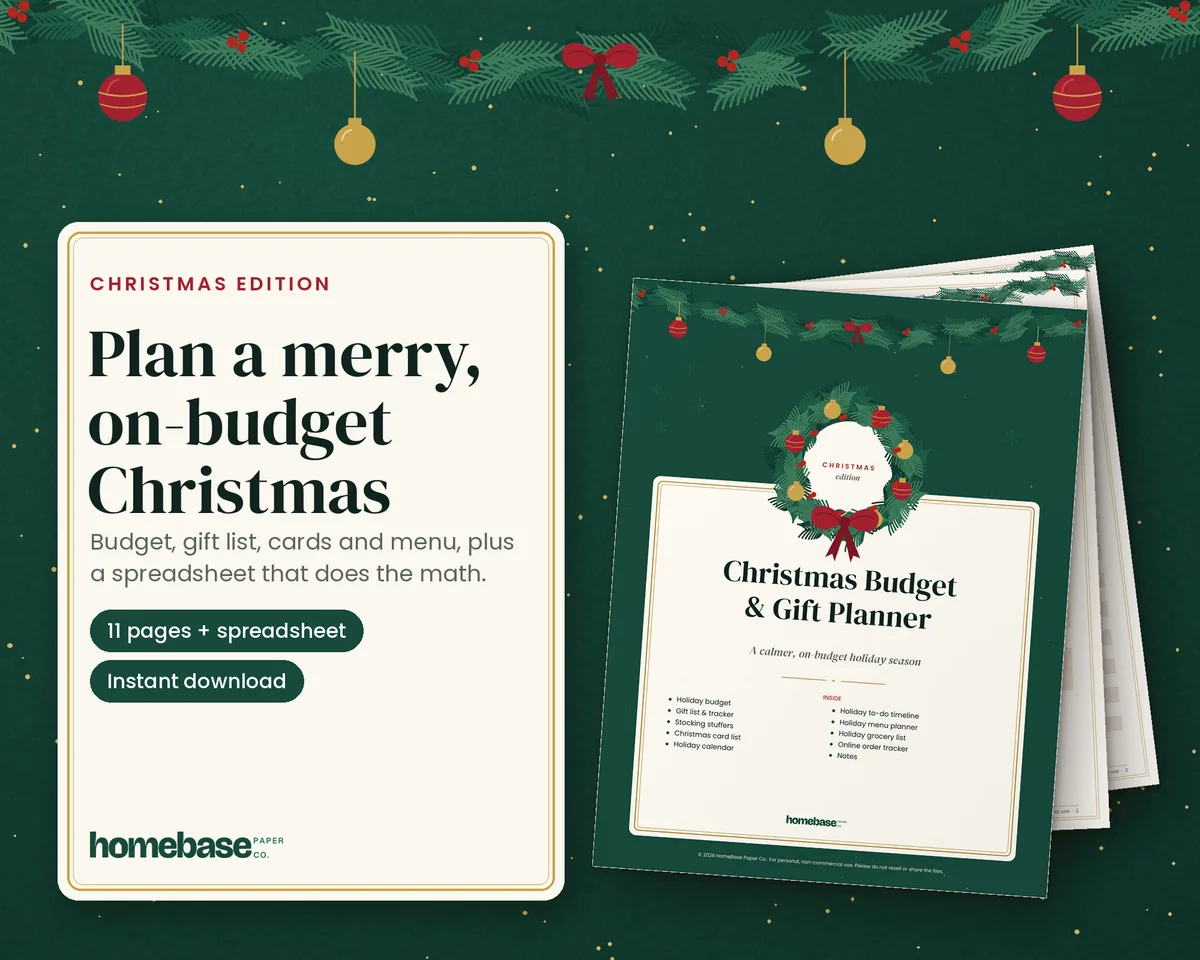
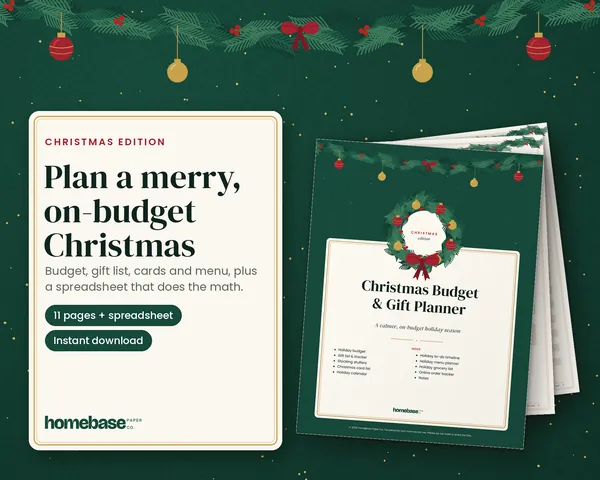
The Christmas Budget & Gift Planner adds up every list for you: a budget for each person, a log of each purchase and the amount left to spend, plus printable gift, card, menu and to-do pages.
- Spreadsheet for Excel and Google Sheets
- 11 printable pages, US Letter + A4
- Instant download, 14-day fix-or-refund promise
Planning the whole season? See the holiday sets from $7, with early prices through Cyber Monday
Frequently asked questions
Is it better to use a credit card or a debit card? Neither is better for everyone: a credit card is usually better for protection, and a debit card is usually better for staying on budget. Credit cards have stronger federal liability limits and dispute rights, but only make sense if you pay the full balance each month; a debit card can't create debt, but an unauthorized charge takes your own cash until it's resolved.
Which is safer for online shopping, credit or debit? A credit card is generally safer for online shopping. The FTC says paying by credit card best protects you if something goes wrong, because you can dispute double charges, items that never arrive and wrong or defective items while the card company investigates.
What is my liability if my debit card is stolen? Your liability for a stolen debit card is $0 to $500, or possibly everything, depending on how fast you report it. Under federal law, your maximum loss is $0 if you report before any unauthorized use, $50 within 2 business days of learning about it, $500 after that but within 60 days of your statement, and possibly everything after 60 days. Report it right away.
What is my liability if my credit card is stolen? The most you can be responsible for is $50 if someone uses a lost or stolen credit card before you report it, and $0 for charges after you report it. If only your number was stolen and you still have the card, you aren't responsible for unauthorized charges.
Should I use a credit card for Black Friday? Only if you'll pay the full statement balance when it's due: use a credit card for Black Friday on that condition. That gets you the protection without the interest. If a balance would carry into the new year, a debit card or cash keeps holiday spending from turning into January debt.
Does using a debit card build credit? No, using a debit card doesn't build credit. Debit card purchases come straight out of your bank account and aren't reported to the credit bureaus, so they don't build a credit history. Paying a credit card on time is what builds credit.
How do I keep track of holiday spending on a credit card? Write each purchase down the day you make it, against a budget you set before shopping. The Christmas Budget & Gift Planner ($4.99) includes a holiday budget page, a gift list and an online order tracker, so you always know what's spent, what's left and what's still on its way.
Can I dispute a debit card charge? Yes, you can dispute a debit card charge. You can report unauthorized debit transactions and errors to your bank, and you should do it quickly because the federal limits depend on timing. Debit cards don't carry the same billing-dispute rights credit cards have for purchases that went wrong, so check your bank's policy.
Free printable
Never miss a payment: get the free bill calendar
A printable monthly bill calendar with room for due dates, amounts and paydays, so every payment has a plan before the month starts. You'll also get our weekly HomeBase email with simple budgeting and bill-paying tips.

Sources
- Lost or stolen credit, ATM and debit cards consumer.ftc.gov
- Online shopping advice consumer.ftc.gov