

The short answer: A printable budget binder is a three-ring binder that holds your whole money system on paper: yearly goals, a monthly budget, bill and debt trackers, savings pages and a place for receipts. Because everything is in one place and easy to see, it's popular with people who budget better with a pen than an app.
Our picks for budget binder

Printables
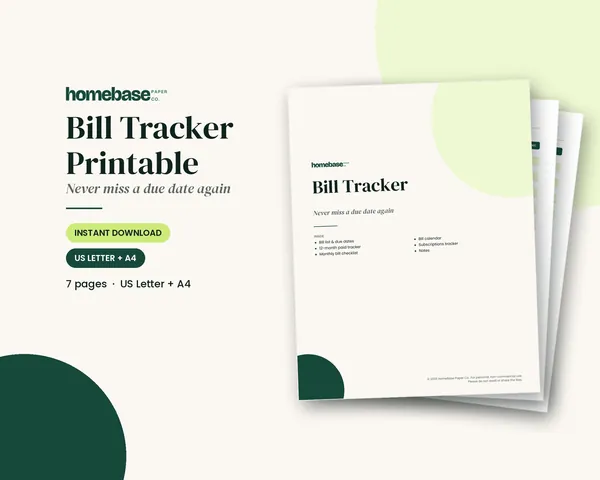
Budget Planner Printable
Twelve undated pages you can print every month: budget, bills, spending, savings and debt.
 Starter pick
 Starter pick
Printables
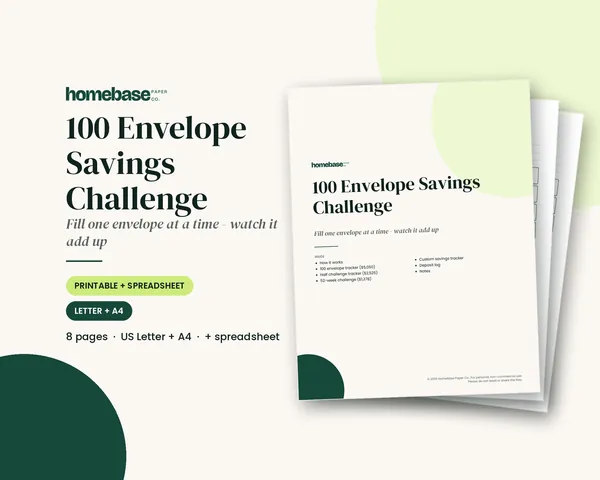
100 Envelope Savings Challenge
Classic, half and 52-week challenges to print, plus a spreadsheet that tracks every envelope and tells you how much to save each week.
 Save 57%
Bundles
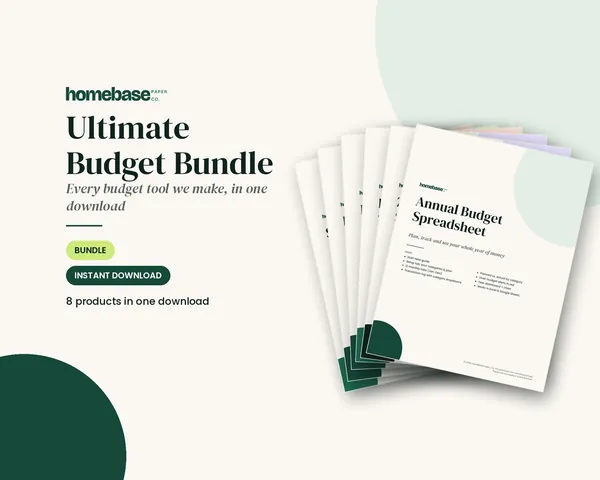
Ultimate Budget Bundle
All 6 spreadsheets + both printable planners - for less than half the price of buying them separately.
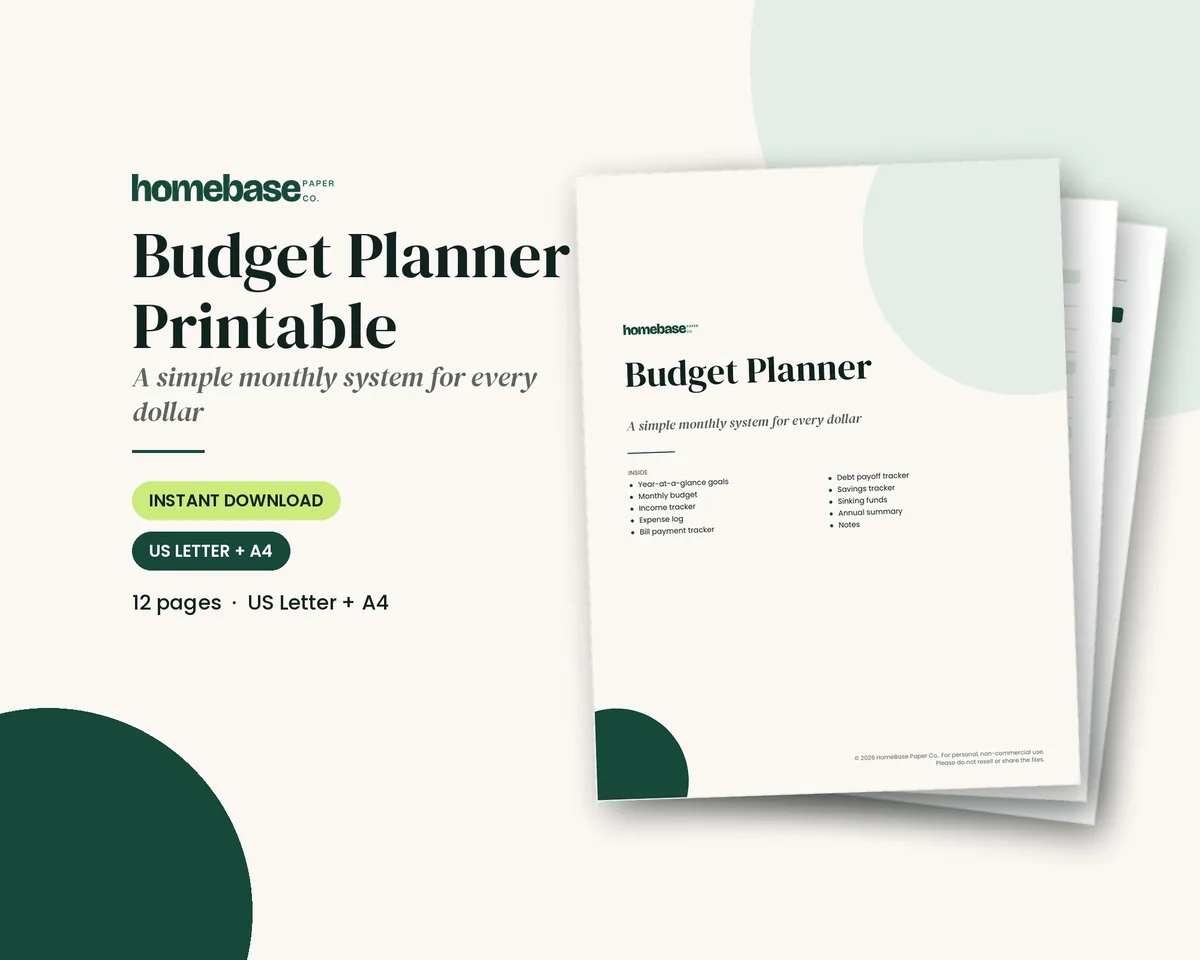
Our Budget Planner Printable fills most of the binder: twelve undated pages for your monthly budget, bills, expenses, savings, sinking funds and debt.
Here's what to put in it, how to set it up in an afternoon, and the monthly routine that keeps it working.
What goes in a budget binder
Organize the binder into tabbed sections, in roughly this order:
A full home management binder holds cleaning, maintenance and household records together.
- Goals and the year at a glance. Money goals, key dates and a yearly summary.
- Monthly budget. One worksheet per month, planned and actual.
- Income tracker. Every paycheck and side income.
- Expense log. Daily or weekly spending, by category.
- Bills. A bill list, a 12-month paid tracker and a bill calendar.
- Debt. Each balance and its payoff progress.
- Savings and sinking funds. Progress for each goal.
- Pockets. Receipts, statements and coupons.
For the tax section, the IRS explains how long to keep records. If you run a side business, a free expense spreadsheet for small businesses keeps its receipts and totals separate from your household pages.
Supplies you'll need
| Item | Why |
|---|---|
| 1 to 1.5 inch three-ring binder | Holds a year of pages without bulging |
| 8 tab dividers | One per section |
| Three-hole punch | For your printed pages |
| Zipper pouch | Pens, a calculator, sticky notes |
| Pocket folders or sheet protectors | Receipts and statements |
| Printer and plain paper | US Letter or A4 |
A binder you like looking at gets opened more often. Pick a cover you're happy to leave on the counter. If you would rather fill in your pages on a tablet, see our digital budget planner.
Set it up in one afternoon
- Print the pages. Start with goals, 12 monthly budgets (or just the next three), the bill list and the savings pages.
- Fill in the bill list from your bank statement, with due dates and amounts.
- Write your goals for the year, with numbers and dates.
- Complete next month's budget worksheet before the month starts.
- Add debts and savings goals with current balances.
- Put the binder somewhere visible, such as the kitchen counter or desk.
The monthly routine
- Last week of the month: fill in next month's budget.
- Every week: log spending and check bills paid.
- Payday: record income and savings deposits.
- Month end: fill the actual column, update debt and savings pages, file receipts.
Fifteen minutes a week is usually enough. Couples can share the binder at a weekly money check-in.
The CFPB's budgeting guide explains how to track spending by category, which is the core of the monthly routine.
Your first three months with a budget binder
| Month | What to do |
|---|---|
| Month 1 | Set up the sections and fill in income, bills and the monthly budget |
| Month 2 | Add a sinking funds page for irregular costs, see sinking funds |
| Month 3 | Review three months of spending and adjust your categories |
Keep the binder where you pay bills, and set a weekly 10-minute check-in so the pages do not go stale.
Not sure whether a binder or another planner fits? Our budget planner guide compares paper, printable, spreadsheet and app planners.
Budget binder vs. spreadsheet
A binder is visible, tactile and needs no login. It's also slower to add up and harder to share across two phones. Some people keep the binder for planning and a spreadsheet for totals. Our comparison of printable vs. spreadsheet budgets helps you choose.
A bill tracker template flags each due date so nothing slips.
Pages for your binder
Planning ahead? Our free 2027 planner has a Bills and dates box on every month of 2027.
Add our free bill calendar, with monthly and yearly pages, behind your budget pages.
The Budget Planner Printable ($5.99) covers most of a binder: money goals for the year, monthly budget, income tracker, expense log, bill payment tracker, debt payoff tracker, savings tracker, sinking funds, annual summary and notes. It's undated, in US Letter and A4.
Add the Bill Tracker Printable ($3.49) for a bill list, 12-month paid tracker, monthly bill checklist, bill calendar and subscriptions page, and the 100 Envelope Savings Challenge ($3.99) for a savings section with challenge charts. Want it bound instead? The Monthly Budget Planner (coming soon) paperback will have monthly budgets, bill trackers and expense logs in one book; until then, the Budget Planner Printable ($5.99) above does the job.
Both printables are part of the Ultimate Budget Bundle ($19.99), along with six budget spreadsheets.
A budget binder for two
If you share finances, make the binder a joint tool. Keep a "this week" sticky note on the front with the three numbers that matter most, such as groceries left, the next bill due and the savings balance. Each partner logs their own spending in the expense section, and you review it together once a week. Agree in advance on a spending amount either of you can use without checking in, so the binder supports you rather than becoming a source of arguments.
Tips for a binder you'll keep using
- Print three months at a time, so changes to your system don't waste a year of pages.
- Use one pen color for planned and another for actual.
- Keep cash envelopes in the front pocket if you use the cash envelope method.
- Archive each finished year in a slim folder and start fresh in January.
For the bigger household picture, a home management binder can sit next to the budget binder with calendars, meal plans and contacts.
The core of any budget binder is a budget planner and monthly bill organizer that keeps the plan and the due dates together.
Make the monthly budget a 20-minute job
Twelve undated pages you can print every month: budget, bills, spending, savings and debt.
$5.99 · Instant download. Print at home or fill it in on screen. Or browse the full Budget & Money collection.
Frequently asked questions
What should be in a printable budget binder? Money goals, monthly budget worksheets, an income tracker, an expense log, bill list and paid tracker, debt payoff pages, savings and sinking funds trackers, and pockets for receipts. Tabbed dividers keep each section easy to find.
How do I start a budget binder? Print the pages, fill in your bill list from a bank statement, write yearly goals, complete next month's budget, add current debt and savings balances, and keep the binder somewhere you'll see it. Then spend 15 minutes on it each week. Our Budget Planner Printable has the pages to print.
What size binder do I need for a budget binder? A 1 to 1.5 inch three-ring binder holds a year of monthly pages and trackers comfortably. Choose US Letter or A4 pages to match the binder, and add sheet protectors or pocket folders for receipts.
Is a printable budget binder better than an app? Yes, for hands-on planners: a printable budget binder is visible and needs no bank login. Apps and spreadsheets add up totals automatically and are easier to share between partners.
What should I put in a printable budget binder first? Put your monthly budget, income tracker and bill list in a printable budget binder first, then add a bill calendar, savings goals and a debt page as you need them. Start with a 1-inch binder with tabs, and add a pocket for receipts and paper bills.
Free printable
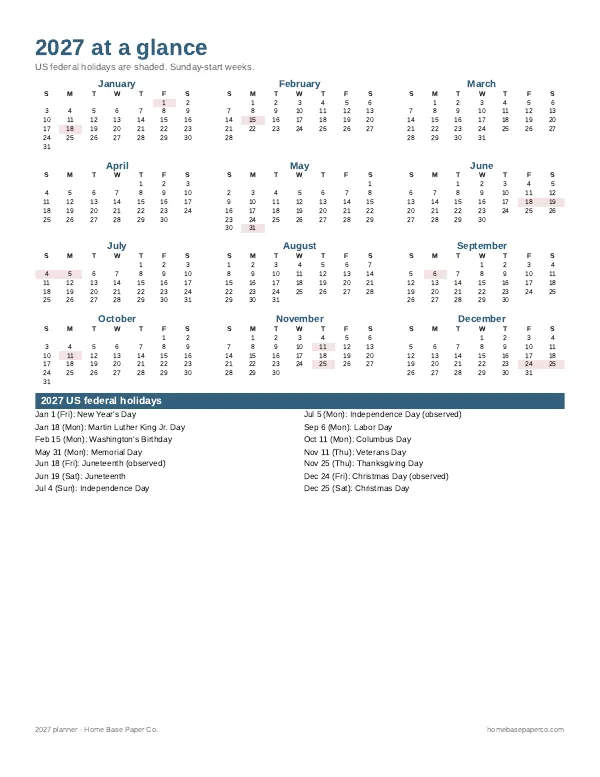
Get organized for the new year: get the free 2027 planner
A 16-page printable 2027 planner with a year-at-a-glance page and monthly calendars with US holidays marked. You'll also get our weekly HomeBase email with simple planning and home organization tips.
Sources
- How long to keep records irs.gov
- Budgeting guide consumerfinance.gov