

The short answer: to organize bills, make one complete list, one calendar of due dates and one quick weekly check. Most late fees happen because someone forgot, not because the money wasn't there.
- Choose paper or a spreadsheet tracker
- 10-minute weekly check: open the tracker, pay or schedule, check off what's paid
- Autopay: helpful, not hands-off
- Once a year, look at what you pay
- Next step: Plan it with the Bill Tracker Printable ($3.49).
Learning how to organize bills comes down to three things: one complete list, one calendar of due dates and one quick weekly check. You don't need an app or a filing cabinet. Most late fees happen because someone forgot, not because the money wasn't there. Here's a system you can set up tonight and keep running in ten minutes a week. For savings, debt and paperwork too, see how to organize your finances.
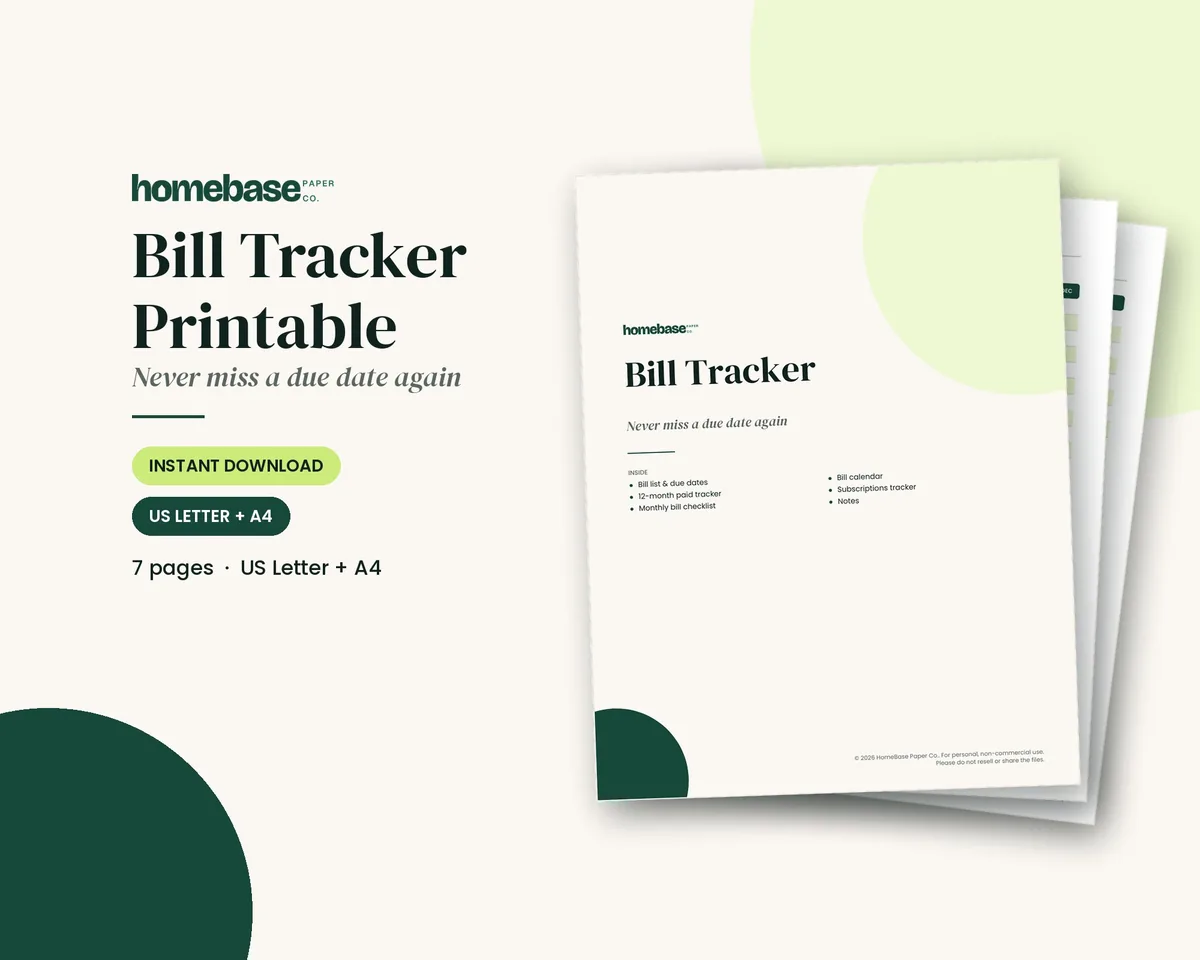
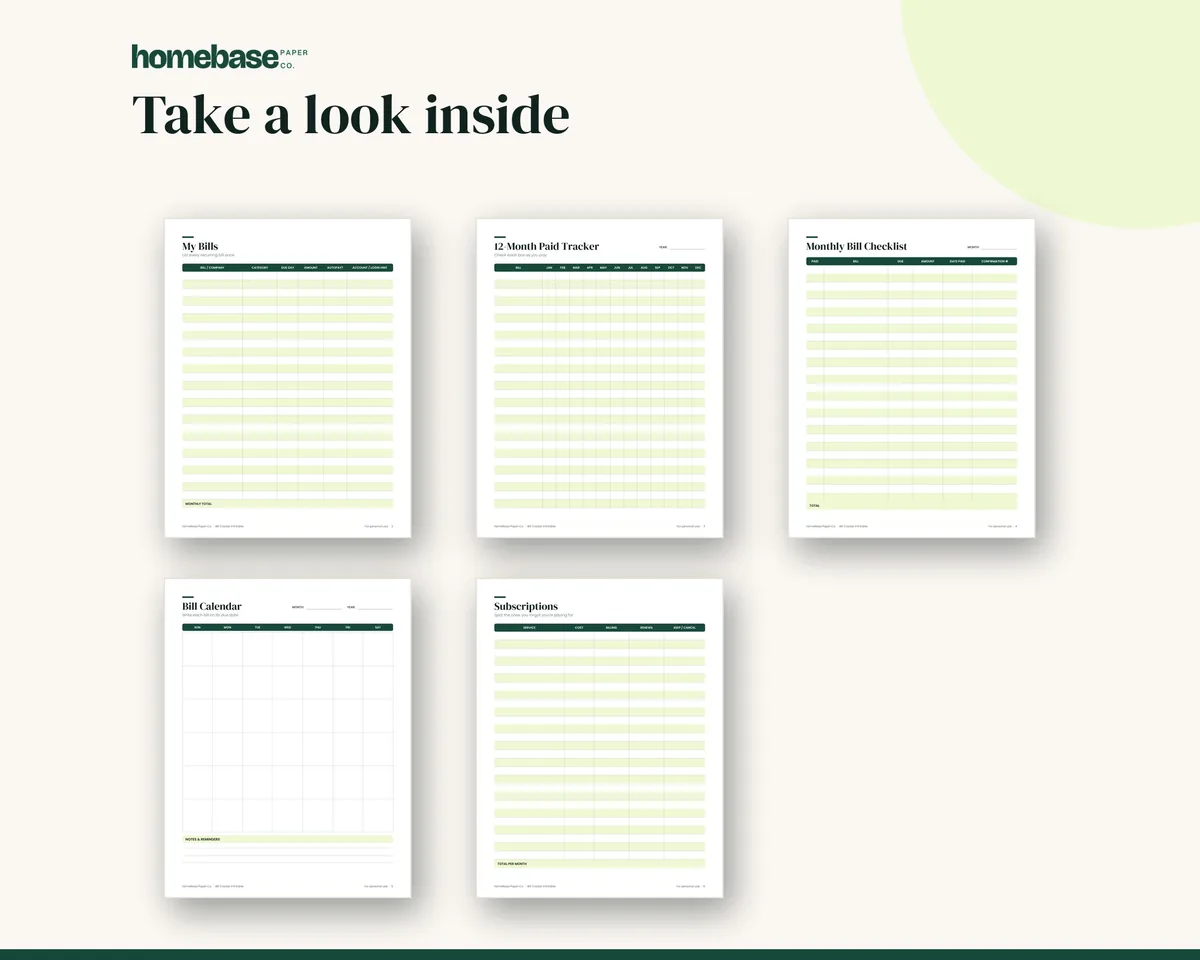
Want the list and calendar on paper? Our printable bill tracker has a My Bills page, a monthly bill checklist, a 12-month paid tracker, a bill calendar and a subscriptions page.
Step 1: Make one list of every bill
Gather a month or two of bank and card statements and write down every recurring payment. Don't forget the ones that hit quietly on a card.
Grouping the bills is easier with a ready-made list of budget categories.
| Bill | Due date | Usual amount | Autopay? | Paid from |
|---|---|---|---|---|
| Rent or mortgage | 1st | |||
| Electric | ||||
| Water and trash | ||||
| Internet and phone | ||||
| Car payment and insurance | ||||
| Credit cards (minimum or full) | ||||
| Childcare or tuition | ||||
| Streaming and subscriptions | ||||
| Annual bills (registration, memberships) |
Households carry a lot of these. The Bureau of Labor Statistics' consumer expenditure survey put average annual spending at $78,535 per household in 2024, with housing and transportation among the largest shares. Much of that is paid as recurring bills.
The Bill Tracker Printable ($3.49) starts with a My Bills page for exactly this list, then adds a 12-Month Paid Tracker, a Monthly Bill Checklist, a Bill Calendar, a Subscriptions page and Notes.
Step 2: Put due dates on a calendar
Write each bill on the day it's due. Then draw a line at each payday. Now you can see which paycheck covers which bills, and where the crunch weeks are.
To start, print our free bill calendar, with a monthly grid, a list by due date and a yearly page.
If too many bills land in the same week, call the providers. Many will move a due date if you ask, and spreading bills across two paychecks makes everything easier. Our paycheck budget guide shows how to split bills by paycheck.
Step 3: Choose paper or a spreadsheet
| Paper tracker | Spreadsheet tracker | |
|---|---|---|
| Best for | Fridge or binder people | People who live in Google Sheets or Excel |
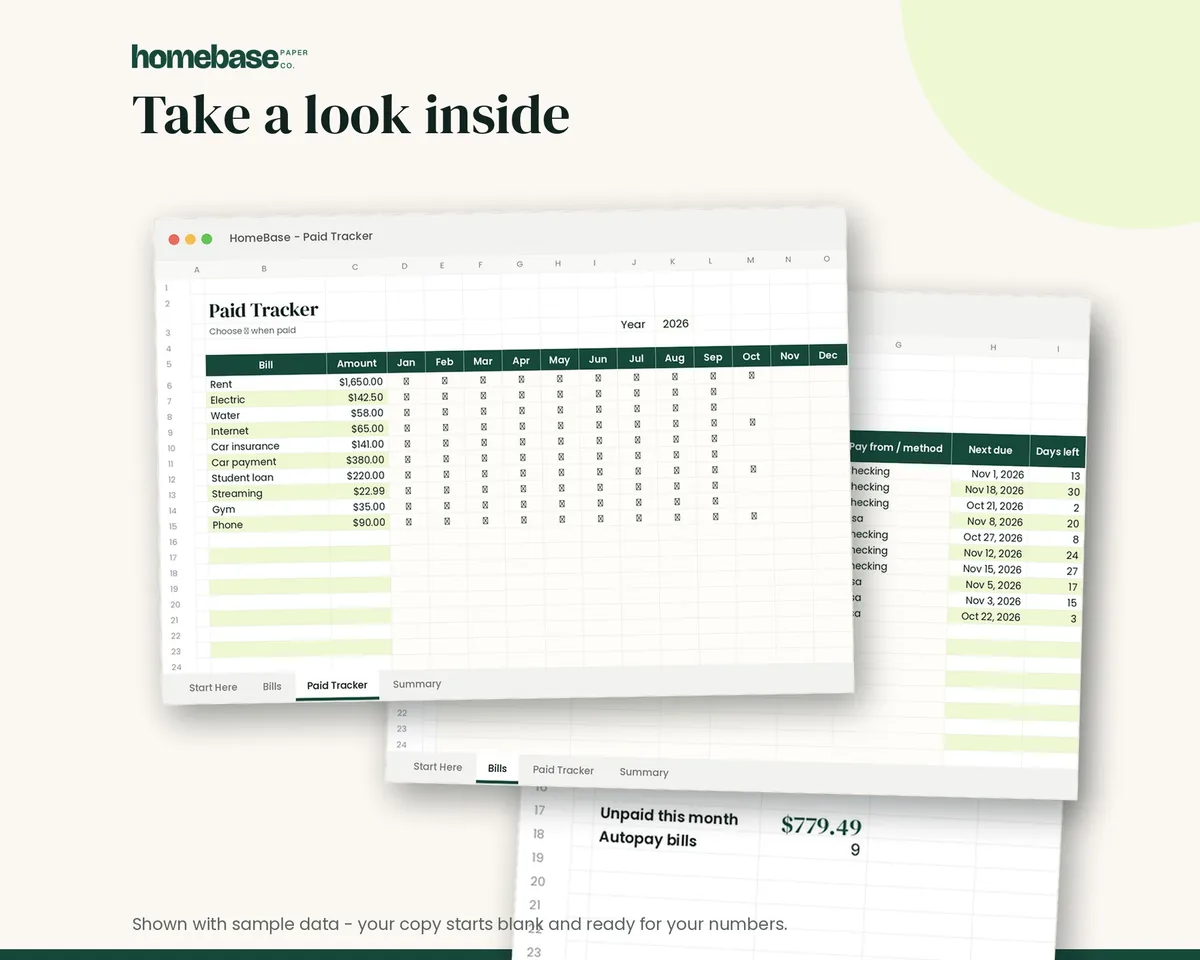
| Due dates | You write them | Next due date and days left calculate automatically |
| Reminders | The page you see every day | Bills due in three days or less turn red when you open it |
| Sharing | One copy at home | Share one file with your partner |
| Totals | Add by hand | Paid and unpaid totals per month |
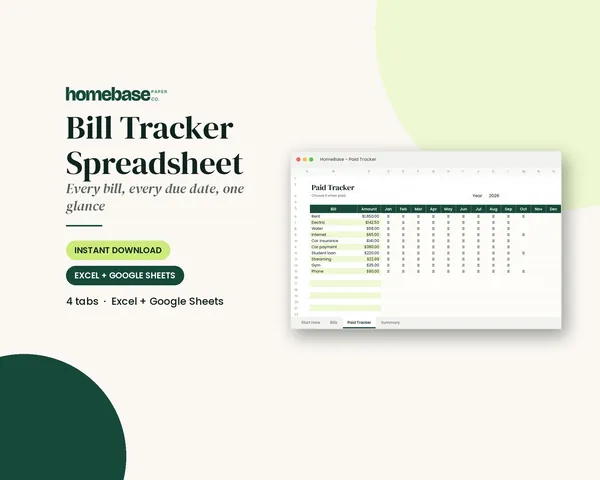
The Bill Tracker Spreadsheet ($4.99) works in Excel and Google Sheets. It has a bill list with categories and autopay, the next due date and days left calculated for you, due-soon alerts in red, a 12-month paid tracker with checkmarks, paid and unpaid totals per month, and spending by category with a chart. It doesn't send notifications, so put your weekly check on the calendar.
Step 4: Run a 10-minute weekly bill check
Pick the same day every week, like Sunday night or the morning after payday.
- Open the tracker. Look at everything due in the next 10 days.
- Pay or schedule anything due before your next check.
- Check off what's paid, including autopay bills (confirm they went through).
- Look for surprises. New charges, higher amounts or a renewal you forgot. For more on this topic, see our monthly bills hub.
- File the paper. Move paid paper bills from "to pay" to "paid."
Why being on time matters
Late payments cost more than the fee. The Consumer Financial Protection Bureau's credit card key terms explain that if you're more than 60 days late on a payment, the card company can increase your interest rate on all balances. The same page notes that on most cards you can avoid interest on purchases by paying the balance in full each month by the due date.
Buy now, pay later plans count as bills too. A CFPB study of buy now, pay later lending found that 10.5% of unique users were charged at least one late fee in 2021, up from 7.8% in 2020. If you use BNPL, put every installment on your tracker with its own date.
Autopay: helpful, not hands-off
Autopay is great for fixed bills that never change, like a car payment. It's less great for bills that vary, because you won't notice when they go up. A simple rule:
- Autopay: fixed amounts, like loans and insurance.
- Pay manually or review first: utilities, credit cards and anything that changes.
- Track all of them, autopay or not, so the weekly check catches mistakes.
Keep paperwork in one place
Paper bills (here's how to organize mail so they don't get lost), account numbers and due dates scattered across drawers and email are how things slip. A binder fixes that. The Household Binder ($6.99) includes a bill tracker alongside the family info, emergency plan, calendar and other pages you reach for most. Our printable budget binder guide shows how to set one up.
Medical bills deserve their own folder; our guide to medical debt explains why you should check each one against your insurance statement before paying.
Once a year: look at what you pay
Once your bills are organized, they're much easier to lower. Each January, go down the list and ask three questions: Do we still use this? Can we get a better rate? Can we bundle or cancel? Our guide on how to lower monthly bills walks through the calls to make. Then fold your bills into a full monthly plan with a simple monthly budget template.
If you don't have a full budget yet, here's how to make a budget around those bills, and our family budgeting guide covers the rest of the system.
Make it easier
Tools for this
 Starter pick
Spreadsheets
Bill Tracker Spreadsheet
Bills due in 3 days or less light up red, so nothing slips through.

Printables
Household Binder
Family info, emergency plan, calendars, meals, groceries, cleaning, bills and sitter notes.
Frequently asked questions
What is the best way to organize bills? The best way to organize bills is to list every bill once with its due date and amount, keep that list in one place, and check it on the same day every week. A Bill Tracker Printable or Bill Tracker Spreadsheet keeps the list, the due dates and the paid checkmarks together.
How do I keep track of bills each month? Keep track of monthly bills with a 12-month paid tracker: one row per bill and one box per month that you check off when it's paid. The Bill Tracker Printable includes a 12-Month Paid Tracker page, and the spreadsheet version adds checkmarks and paid or unpaid totals.
Should I organize bills on paper or in a spreadsheet? Organize bills on paper if you like a list on the fridge or in a binder, and in a spreadsheet if you want due dates calculated for you. The Bill Tracker Spreadsheet shows the next due date and days left automatically and turns bills due within three days red.
How do I organize bills by due date? Organize bills by due date by writing each one on a monthly bill calendar on the day it's due, then grouping them by paycheck. Seeing the dates together shows which paycheck covers which bills.
Should I put all my bills on autopay? Autopay is useful for fixed bills, but still keep every autopay bill on your tracker and check the amounts. Autopay can't tell you if a bill went up or a subscription renewed at a new price.
How do I avoid late fees? Avoid late fees by checking your bill tracker once a week, paying anything due before the next check, and asking providers to move due dates closer to your payday. The Bill Tracker Spreadsheet highlights anything due in three days or less in red.
Where should I keep paper bills? Keep paper bills in one folder or binder section marked 'to pay', and move them to a 'paid' folder once they're paid and logged. A household binder with a bill tracker page keeps everything in one place.
How do I track subscriptions with my bills? Track subscriptions on their own list with the price, renewal date and the card they're charged to, and review it every few months. The Bill Tracker Printable includes a Subscriptions page for this.
How often should I review my bills? Review your bills weekly for what's due and once a year for what you're paying. The weekly check prevents late payments; the yearly review finds bills you can lower or cancel.
How can couples organize bills together? Couples can organize bills together with one shared list both people can see, a clear owner for each bill and a short weekly check-in. A shared Google Sheets bill tracker works well for households that split payments.
Can a bill tracker help me lower my bills? A bill tracker helps you lower bills by putting every recurring cost on one page, so it's easy to spot the ones that crept up. From there, see our guide to lowering monthly bills.
Can I organize bills without an app? Yes, you can organize bills without an app. A single written list, a calendar of due dates and a 10-minute weekly check are enough; a printable bill tracker or a simple spreadsheet works just as well as an app.
More from HomeBase
You may also like
Printables
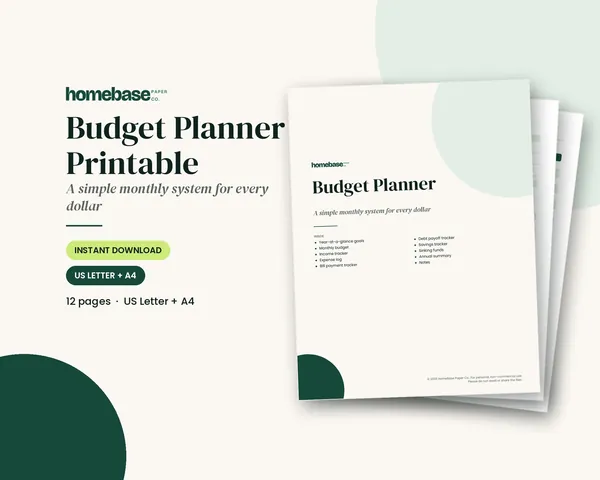
Budget Planner Printable
Twelve undated pages you can print every month: budget, bills, spending, savings and debt.
Spreadsheets
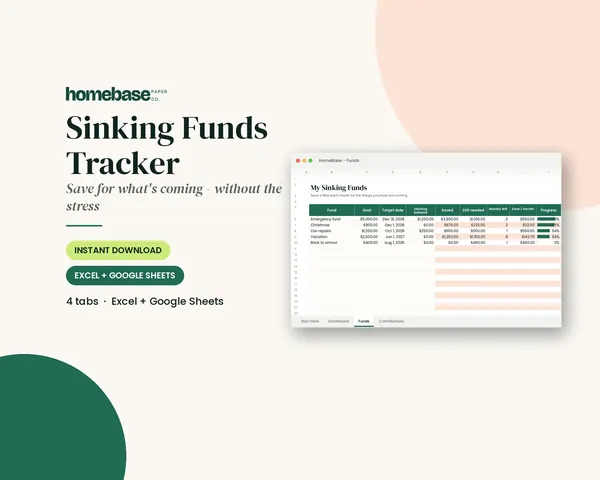
Sinking Funds Tracker
It does the math: how much to set aside each month to hit every goal on time.
Spreadsheets
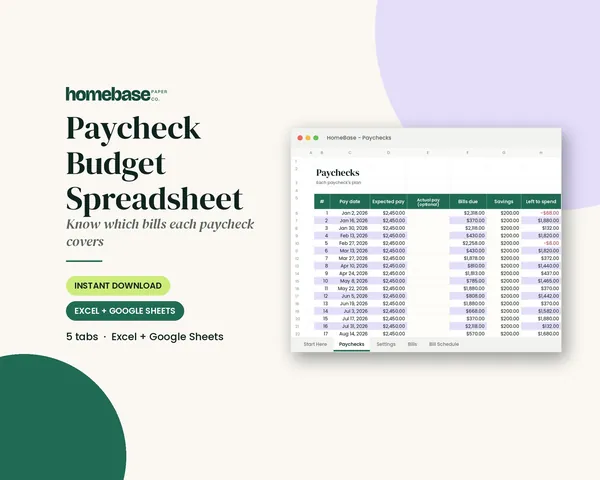
Paycheck Budget Spreadsheet
Enter your bills once. The sheet tells you which paycheck pays each one, all year.
Spreadsheets
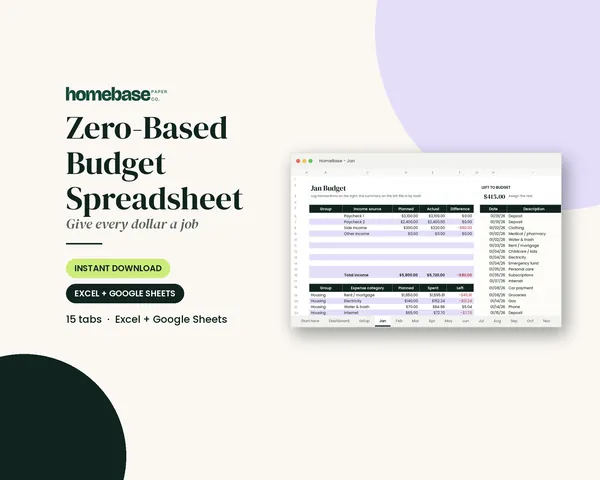
Zero-Based Budget Spreadsheet
The 'Left to budget' counter turns green when every dollar has a job.
 Club
Monthly club
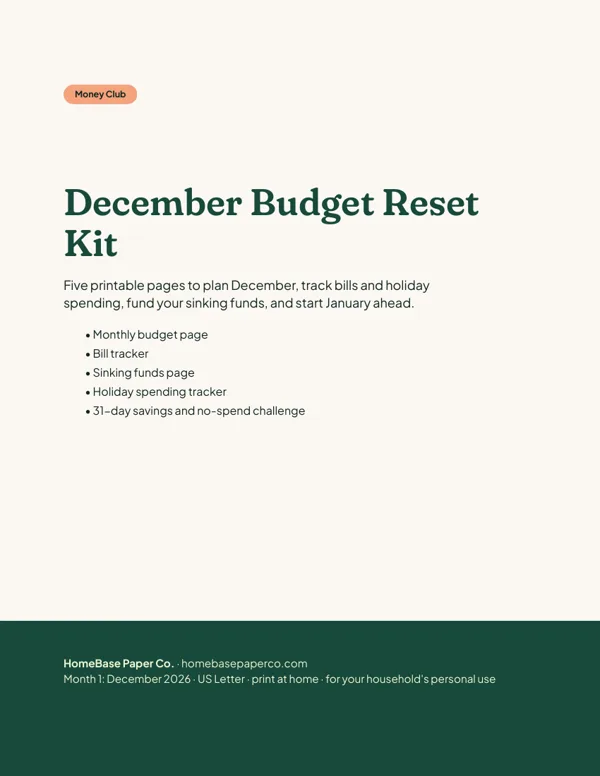
Money Club
Anyone who wants a clear plan for the month's bills, holiday spending and savings.
Free printable
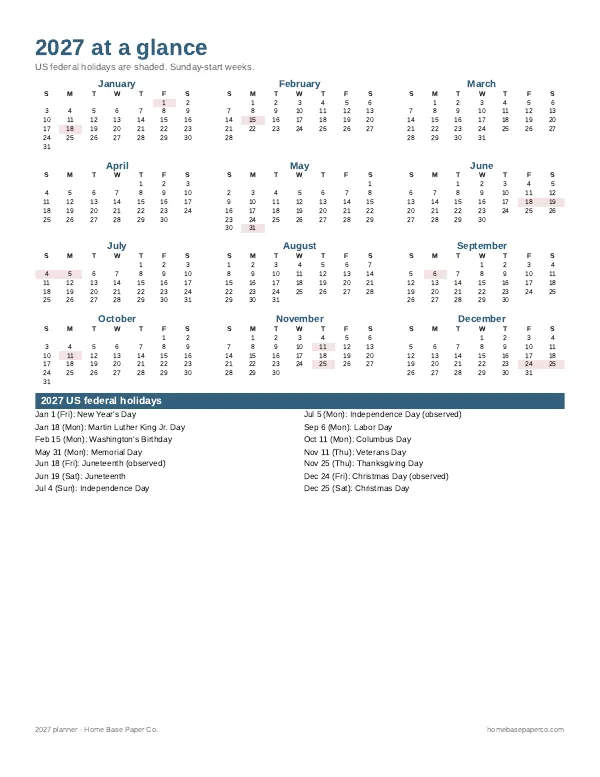
Get organized for the new year: get the free 2027 planner
A 16-page printable 2027 planner with a year-at-a-glance page and monthly calendars with US holidays marked. You'll also get our weekly HomeBase email with simple planning and home organization tips.
Sources
- Consumer expenditure survey bls.gov
- Credit card key terms consumerfinance.gov
- CFPB study of buy now, pay later lending consumerfinance.gov