

The short answer: savings motivation rarely comes from willpower alone. It comes from a clear reason, goals you can reach soon, visible progress and systems that save for you.
- Write down your why and start with a quick win
- Automate it and track progress visibly
- Break far goals into monthly mini goals
- 12 ways to get motivated and how to restart after a setback
- Next step: Plan it with the 100 Envelope Savings Challenge ($3.99).
Savings motivation is what keeps you putting money aside after the first burst of excitement fades. It rarely comes from willpower alone. It comes from a clear reason, goals you can reach soon, visible progress and systems that save for you on low-energy days. The same is true for budget motivation: you stick with a budget that feels doable and shows results. If you feel behind, you have company. The Federal Reserve's 2025 survey of household savings found that 55% of adults had a rainy-day fund covering three months of expenses, which means many people are still building theirs. Here are practical ways to get motivated to save, stay motivated, and restart when life gets in the way.
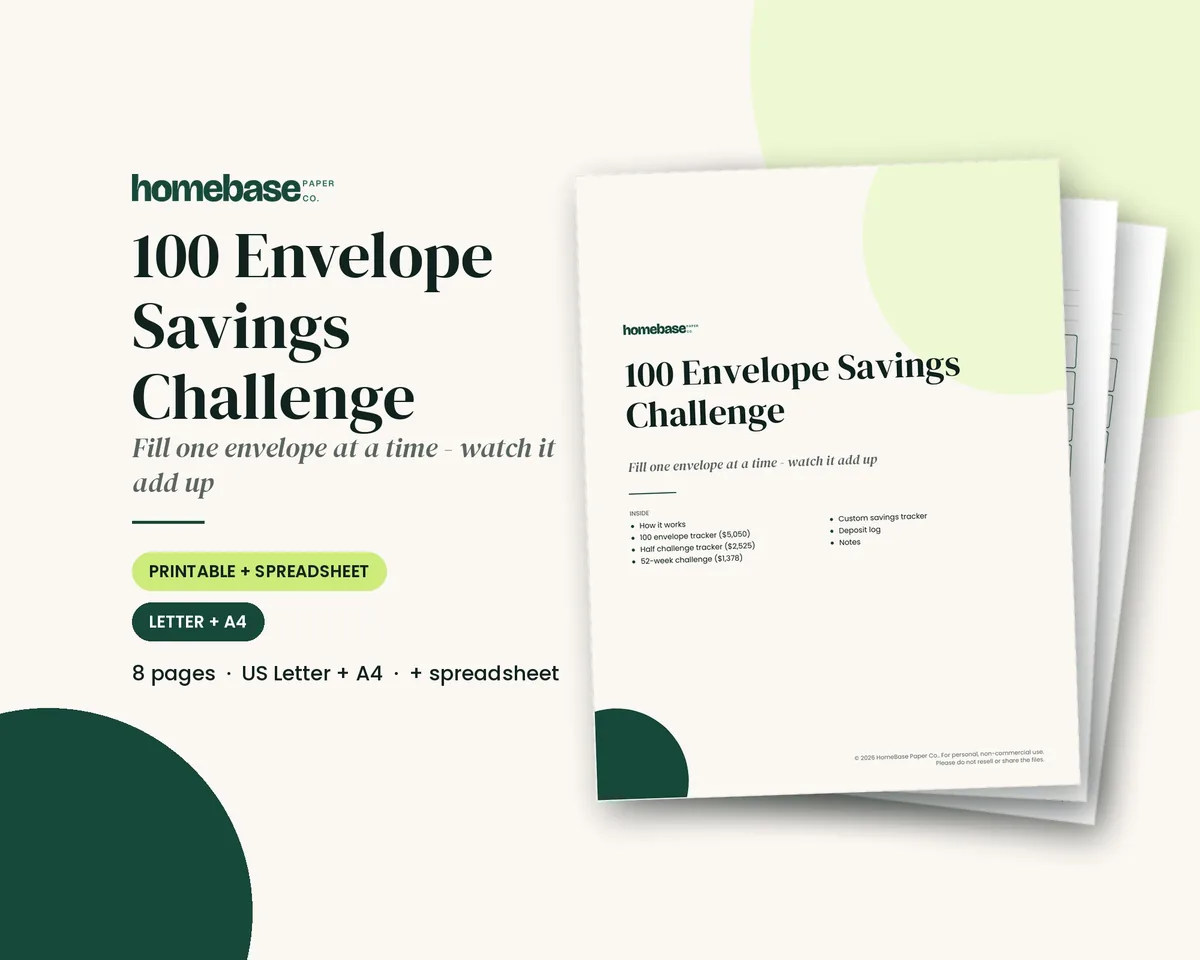
Turning saving into a game is one of the easiest ways to stay motivated. Our 100 Envelope Savings Challenge ($3.99) includes a 100 envelope tracker, a half envelope version, a 52-week tracker, a custom tracker, a deposit log and a spreadsheet version. Crossing off a number is a small win you can see every week.
Why savings motivation fades
Most people start saving with energy and then stall. The usual reasons:
| Reason | What it feels like | What helps |
|---|---|---|
| Goal is too far away | "I'll never get there" | Break it into monthly mini goals |
| Budget is too strict | Every purchase feels like failure | Add fun money to the plan |
| No visible progress | Money disappears into one account | Use a tracker or separate accounts |
| An emergency drained savings | Starting over | Treat it as the fund doing its job |
| Comparing to others | Everyone else seems ahead | Compare only to your last month |
12 ways to get motivated to save money
- Write down your why. Less stress, a debt-free date, a home, time off with kids. Keep it where you will see it.
- Start with a quick win. A $500 or $1,000 starter emergency fund is reachable and makes the next goal feel possible.
- Make goals specific and dated. "Save $1,200 for holiday gifts by December 1" beats "save more."
- Do the per-paycheck math. $1,200 over 24 paychecks is $50 each, which feels manageable.
- Automate it. The CFPB's guide to building an emergency fund recommends automatic transfers and saving through work with split direct deposit, so you never have to decide again.
- Save one-time money. The CFPB also suggests saving windfalls like tax refunds. Saving even half is a big jump.
- Track progress visibly. A coloring chart, a progress bar, or a number crossed off each week.
- Try a savings challenge with a finish line, like the 100 envelope or 52-week challenge.
- Name your accounts. "Disney 2027" is harder to raid than "Savings 2."
- Celebrate milestones. The CFPB lists celebrating successes as part of a savings habit. Keep rewards small.
- Find a partner. A spouse, friend or online group to share progress with.
- Review weekly. Ten minutes a week keeps goals in front of you. It's a small habit that supports your overall financial wellness.
How to stay motivated with your budget
Budget motivation depends on a budget you can live with. If yours feels like punishment, fix the budget, not your willpower:
- Include fun money. A small, guilt-free amount makes the rest easier to keep.
- Plan for irregular costs. Car registration, birthdays and holidays wreck budgets when they surprise you. Sinking funds fix that.
- Use the right method. Some people like zero-based budgeting, others prefer the 50/30/20 budget. Pick the one you will actually use. Our overview of popular budgeting methods can help you choose.
- Expect to adjust. The first three months are practice. Change the categories that never fit.
- Look at what is working. Write down one win each month: paid a bill early, stayed under on dining out, added to savings.
Budget motivation also grows when your budget answers a real question. Before each month starts, ask what you want the money to do: pay off one card, fill the holiday fund, or simply end the month without using credit. One clear target per month is easier to remember than twenty category limits. At the end of the month, compare the plan to what happened, note one thing to change, and start again. Over a few months, this short routine turns a budget from a chore into a tool you trust, and the results become the motivation.
Savings goals that keep you motivated
| Goal | Example target | Per month | Why it motivates |
|---|---|---|---|
| Starter emergency fund | $1,000 | $167 over 6 months | Quick, protective win |
| Holiday fund | $1,200 | $100 over 12 months | No December debt |
| Car repair fund | $1,500 | $125 over 12 months | Removes a common stress |
| Vacation | $2,400 | $200 over 12 months | Fun goal to look forward to |
| Three-month emergency fund | 3 x essential costs | Varies | Long-term security |
Mixing one fun goal with one safety goal keeps saving from feeling like all sacrifice. Our Sinking Funds Tracker ($4.99) tracks up to 20 goals, shows the monthly amount needed for each, and adds progress bars and a deposit and withdrawal log, with an emergency fund ready to fill in. Watching several bars fill at once is a strong motivator. For a printable approach, see our savings goal tracker ideas.
Saving money on a tight budget
When money is tight, savings motivation can feel pointless, because the amounts look too small to matter. They do matter. Saving $10 a week adds up to $520 in a year, which is more than the $400 emergency many households say would be hard to cover. The habit you build at $10 is the same habit that later saves $100.
On a tight budget, the penny challenge starts at one cent a day and saves $667.95 in a year. Our guide has a free chart.
Start by finding one small leak rather than cutting everything at once. A subscription you forgot about, a takeout night you can swap for a planned freezer meal, or a bank fee you can avoid by changing accounts. Move that exact amount to savings the same day, so the change has a visible result. Seeing the money land in savings is far more motivating than knowing you spent a little less.
If your income is irregular, save a percentage instead of a fixed amount. Five percent of every payment, big or small, keeps the habit going in slow months and grows automatically in good months. Keep a small cash buffer in checking so a slow week does not force you to pull from savings.
Visual ways to track savings progress
People stay motivated by what they can see. Pick the tracker style that suits you:
- Coloring charts. A printable thermometer, house or piggy bank that you color in at each deposit. Kids love helping with this one.
- Envelope trackers. Cross off each envelope number as you fill it, as in the 100 envelope challenge.
- Spreadsheet progress bars. Best for several goals at once, since each bar shows how close you are.
- A balance screenshot. Save a screenshot of your savings balance on the first of each month and scroll back through them when you feel stuck.
Put the tracker somewhere you look every day, such as the fridge, your desk or your phone's home screen. Out of sight really does mean out of mind.
Saving motivation for families
Saving goes better when the whole household understands the goal. Tell kids what the family is saving for in simple words, such as a beach trip or a new couch, and let them add coins to a jar or color the chart. Agree with your partner on one shared goal and one personal goal each, so nobody feels the plan is only about sacrifice. A monthly family money check-in of fifteen minutes is enough to keep everyone pointed the same way.
Saving for a new couch? These cheap couches start at $169, with used-furniture options too.
Where most households stand
The Federal Reserve's survey on household well-being in 2025 offers perspective:
If you are under 30, our guide answers how much money should I have saved by 30 with Federal Reserve numbers and a simple plan.
- 63% of adults said they would cover a $400 emergency expense using cash or its equivalent.
- 55% had a rainy-day fund that would cover three months of expenses.
- 30% said they could not cover three months of expenses by any means.
If you cannot cover a $400 surprise yet, your first goal is simple: build that $400, then $1,000. Every household in the 63% got there one deposit at a time.
How to restart after a setback
Spent your savings on a car repair? Overspent for a month? That is normal, not failure.
- Name what happened without blame.
- Restart the automatic transfer right away, even at a lower amount.
- Shrink the goal for one month so you get a quick win.
- Look at your why and your progress so far.
- Rebuild the emergency fund first, as the CFPB suggests, then return to other goals.
Savings mantras for your phone or fridge
- Pay yourself first.
- Small steps still count.
- Every dollar has a job.
- Future me says thank you.
- Progress, not perfection.
- I am not saying no; I am saying not yet.
For more ideas, see our guides to the savings challenge options and how to save money on any income.
Make it easier
Tools for this
 Starter pick
Printables
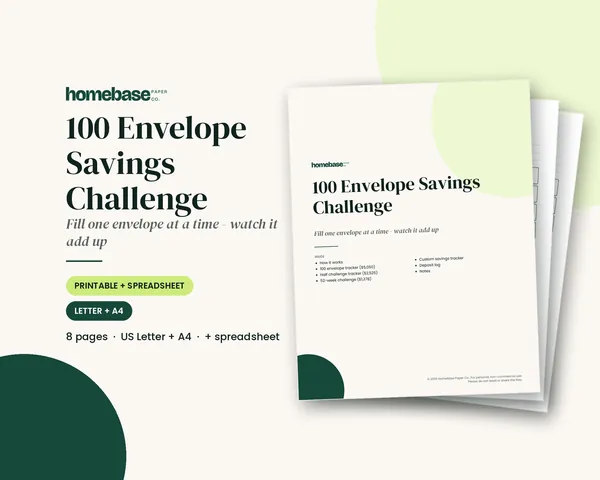
100 Envelope Savings Challenge
Classic, half and 52-week challenges to print, plus a spreadsheet that tracks every envelope and tells you how much to save each week.
Spreadsheets
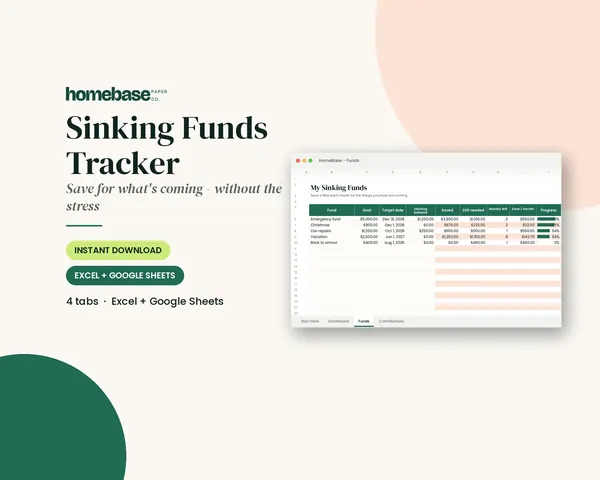
Sinking Funds Tracker
It does the math: how much to set aside each month to hit every goal on time.
Frequently asked questions
How do I find savings motivation when I feel stuck? Start with a goal you can picture and reach soon, such as $500 for car repairs, and track progress somewhere you see often. Small, quick wins build savings motivation faster than a big distant goal. Automate a small transfer so progress keeps happening even on low-motivation days.
What is budget motivation? Budget motivation is the reason you keep sticking to a spending plan after the first excited week. It usually comes from a clear why, such as less stress or a debt-free date, plus visible progress and a budget loose enough to live with. Without those, most budgets fade within a month.
Why do I lose motivation to save money? Common reasons are goals that feel too far away, a budget that is too strict, no visible progress, and comparing yourself to others. Life events also drain savings and feel like starting over. Shorter goals, a little fun money and a tracker you update weekly help most people keep going.
How can I stay motivated to stick to a budget? Give every dollar a job, include fun money, and review your budget weekly for ten minutes. Celebrate small wins, like a month under your grocery target. If you overspend, adjust the next week instead of quitting. A budget is a plan you update, not a test you pass or fail.
What are good savings goals to stay motivated? Good motivating goals are specific, dated and meaningful: a $1,000 starter emergency fund by June, $1,200 for holiday gifts by December, or three months of expenses by next year. Break each one into a monthly or per-paycheck amount so you always know if you are on track.
Do savings challenges really help motivation? Yes, for many people savings challenges really help motivation. A savings challenge like the 100 envelope challenge or the 52-week challenge turns saving into a game with a clear finish line. Each envelope or week checked off is a visible win. Choose a challenge whose total fits your budget so you finish it.
How much of the U.S. has emergency savings? The Federal Reserve's survey of household well-being in 2025 found that 55% of adults had a rainy-day fund that would cover three months of expenses. It also found that 63% would cover a $400 emergency expense using cash or its equivalent. You are not alone if you are still building yours.
Should I reward myself for saving money? Yes, you should reward yourself for saving money in small, planned ways. A low-cost reward at each milestone, such as a favorite dinner at home or a movie night, makes the habit feel good. The CFPB lists celebrating successes as part of building a savings habit. Keep rewards small so they do not undo the progress.
How do I save money when I have no motivation? When you have no motivation to save money, remove the need for motivation. Set up an automatic transfer on payday, or split your direct deposit so part goes to savings first. Even $10 or $25 a paycheck builds the habit. Once saving happens without effort, motivation usually follows the growing balance.
What should I do after I use my emergency fund? After you use your emergency fund, rebuild it without guilt. Using the fund for a real emergency is a sign it worked. The CFPB suggests using it when needed and then making a plan to refill it. Restart your automatic transfer and consider adding windfalls, such as tax refunds, to catch up faster.
How can couples stay motivated to save together? Pick shared goals you both care about, agree on a monthly amount, and each keep some personal spending money with no questions asked. Have a short money date once a month to check progress. A shared tracker that both of you can see keeps the goal real for both people.
What are some savings motivation quotes or mantras? Simple mantras work well on a sticky note or phone lock screen: pay yourself first; small steps still count; every dollar has a job; future me says thank you; progress, not perfection. Choose one that reminds you why you are saving, and look at it before you spend.
More from HomeBase
You may also like
Printables
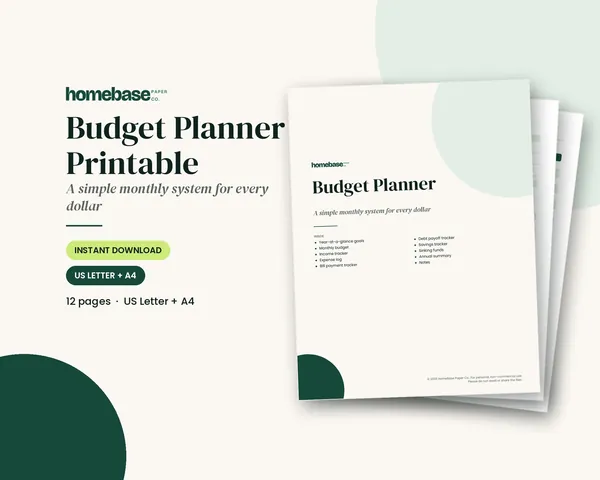
Budget Planner Printable
Twelve undated pages you can print every month: budget, bills, spending, savings and debt.
Spreadsheets
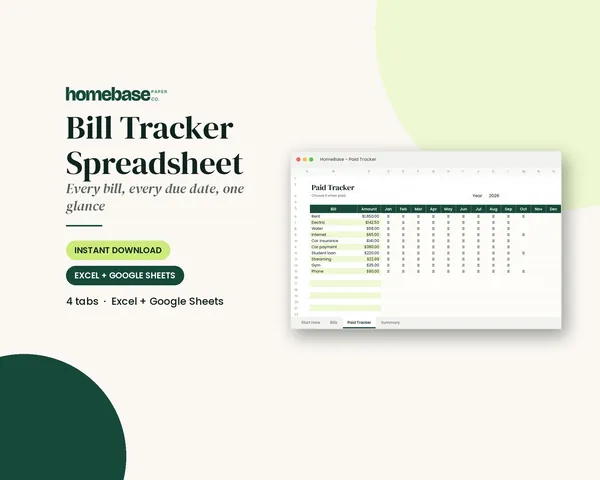
Bill Tracker Spreadsheet
Bills due in 3 days or less light up red, so nothing slips through.
Spreadsheets
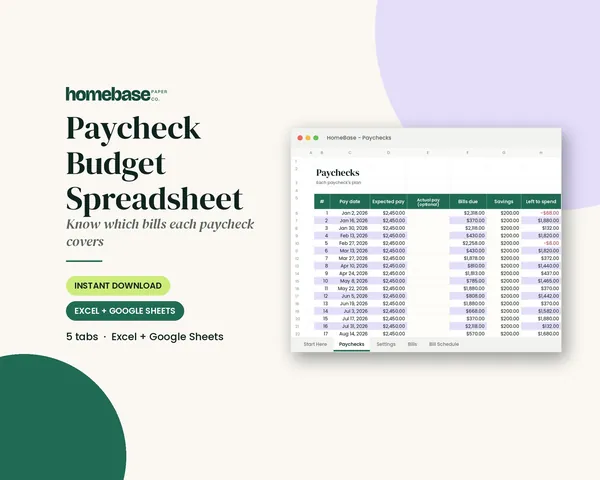
Paycheck Budget Spreadsheet
Enter your bills once. The sheet tells you which paycheck pays each one, all year.
Spreadsheets
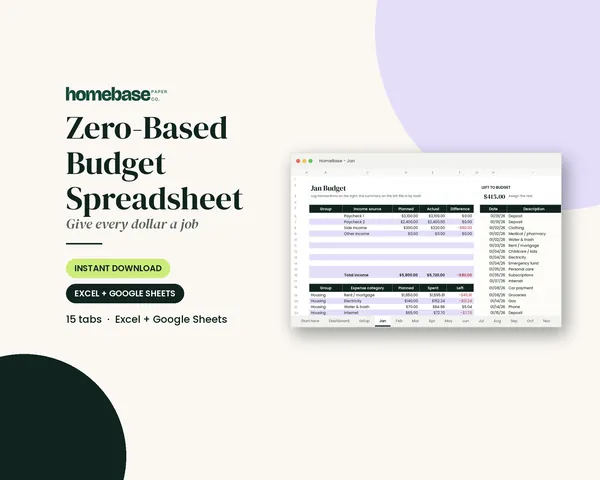
Zero-Based Budget Spreadsheet
The 'Left to budget' counter turns green when every dollar has a job.
 Club
Monthly club
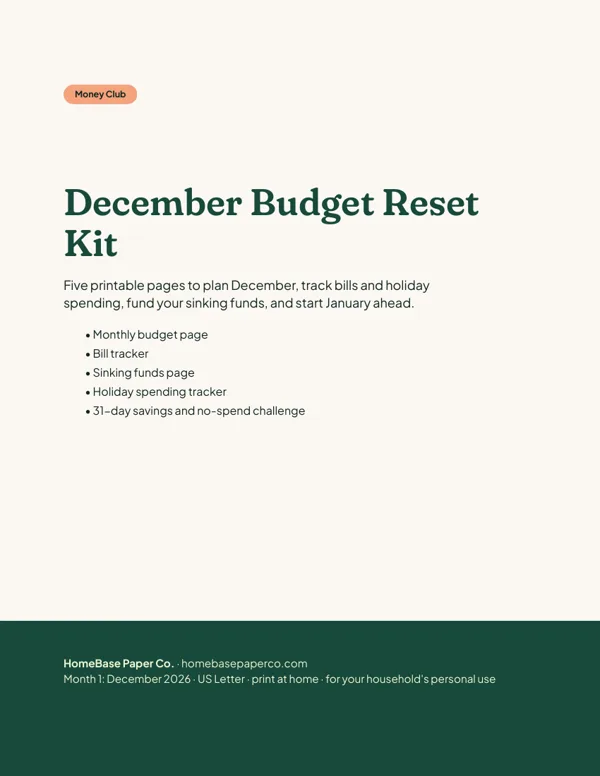
Money Club
Anyone who wants a clear plan for the month's bills, holiday spending and savings.
Free printable
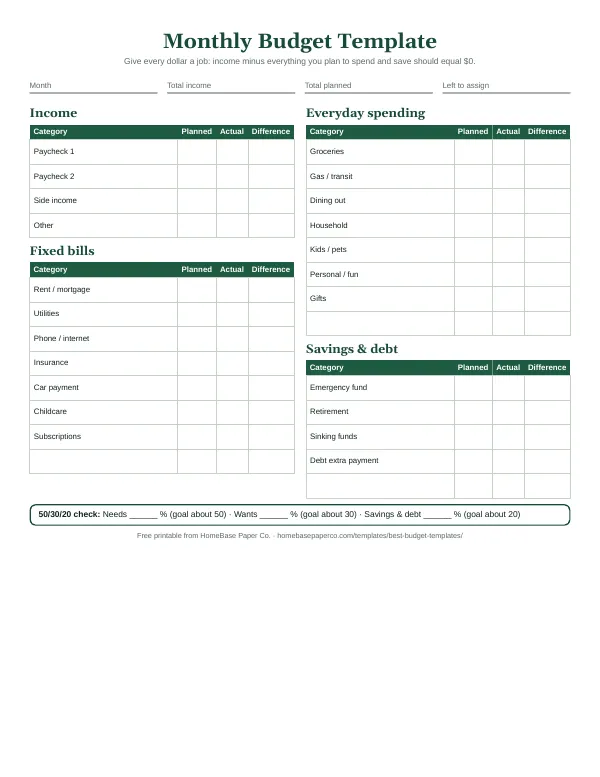
Give every dollar a job: get the free monthly budget template
A printable zero-based monthly budget: income, bills, everyday spending and savings on one page, with a planned vs. actual column. You'll also get our weekly HomeBase email with simple budgeting and bill-paying tips.
Sources
- Economic Well-Being of U.S. Households in 2025: Savings and Investments (Federal Reserve) federalreserve.gov
- An essential guide to building an emergency fund (CFPB) consumerfinance.gov