The short answer: investing for kids starts with picking the right account: a custodial UTMA or UGMA account, a custodial Roth IRA if your child has a job, a Trump Account for children under 18, a 529 plan for school or a savings account for short-term goals.
- Custodial Roth IRA: up to the child's earned income, max $7,500 for 2026
- Trump Account: $5,000 a year from family and others
- Then: set up a small automatic deposit into a simple low-cost index fund
- Taxes: the kiddie tax is explained below
- Next step: Plan it with the Sinking Funds Tracker ($4.99).
Investing for kids starts with picking the right account. The main choices are a custodial brokerage account (UTMA or UGMA), a custodial Roth IRA if your child has a job, the new Trump Account for children under 18, a 529 plan if the money is for school, or a plain savings account for short-term goals. Once the account is open, most families set up a small automatic deposit, choose a simple low-cost index fund and leave it alone for years. Below you'll find each account side by side, the steps to start, a how-much-to-invest table and the tax rules that catch parents off guard.
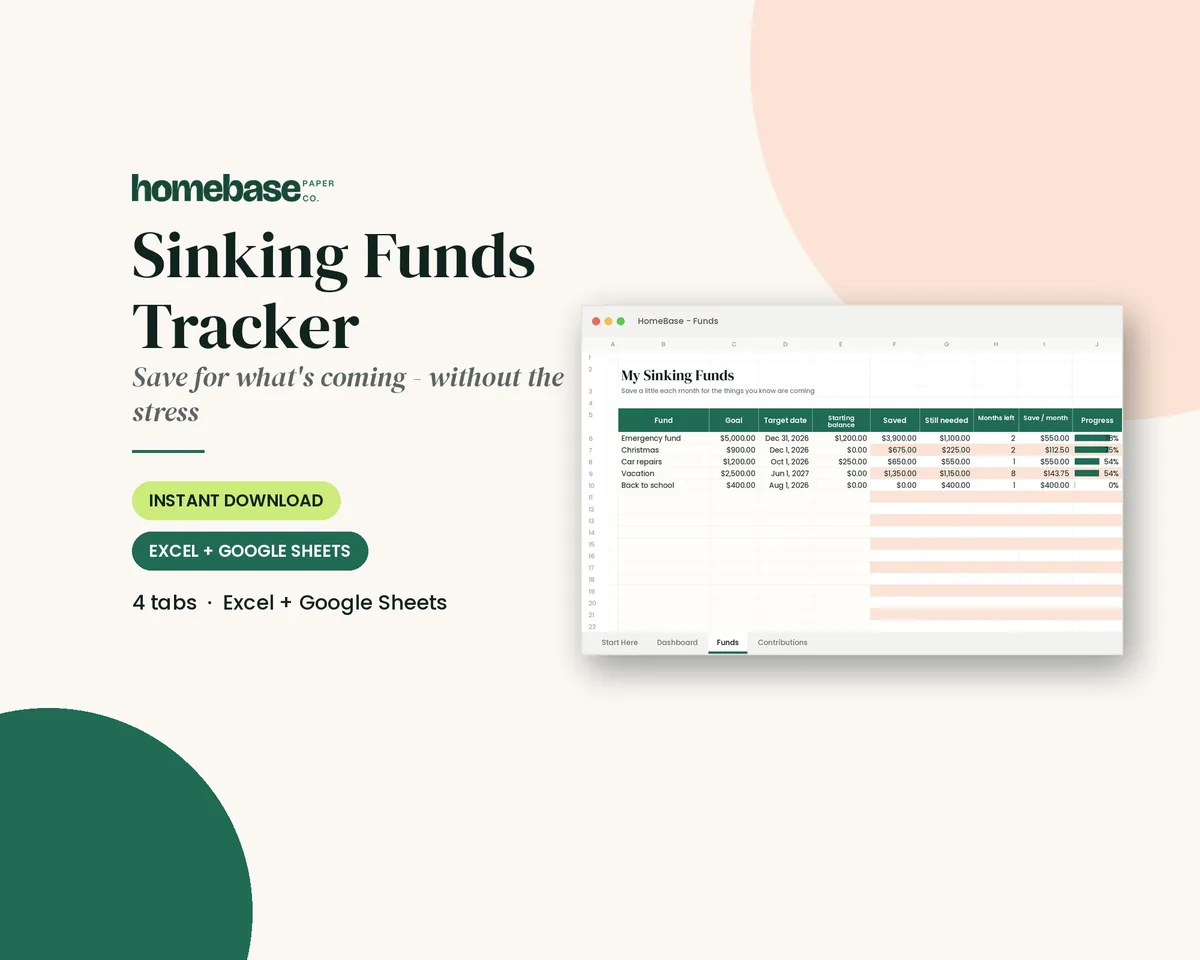
The Sinking Funds Tracker ($4.99) shows how much to set aside each month for every goal, so a "kids' investing" line can sit right next to the emergency fund and holiday savings.
Why investing for kids is worth starting early
Time is the biggest advantage a child has. Money put in at age 2 has sixteen years to grow before age 18, and growth on growth adds up the longer it sits. Our guide to compound interest explains how that works, and the compound interest calculator lets you try your own numbers.
Starting early also takes pressure off the amount. Twenty-five dollars a month for many years can do more than a big deposit made late. And when kids are old enough, the account becomes a real-life lesson in patience. Our guide to teaching kids about money has age-by-age ideas for talking about it. If you're choosing a fund for the account, our guide to what the S&P 500 is explains the index many beginner funds follow.
Before you invest for a child, make sure your own base is steady. A starter emergency fund and a plan for high-interest debt come first. If you're not there yet, start with our emergency fund guide and come back. Kids' investing works best with money you won't need to pull out next month.
The best accounts for investing for kids, grouped by goal
Here's the full list, grouped by what the money is for. Most families use one or two, not all of them.
1. Money the child can use for anything as a young adult
- Custodial brokerage account (UTMA or UGMA). An adult opens it and manages it for the child. The money belongs to the child from the day it goes in, and the gift can't be taken back. The child takes control at the age set by your state, usually 18 or 21. Investopedia's UTMA overview notes that some states, like Florida, allow the custodian to keep it until 25.
- Trump Account. A new type of IRA for children created by the Working Families Tax Cuts. More on this one below.
2. Money for retirement (the longest runway there is)
- Custodial Roth IRA. Only works if your child has earned income, like pay from a part-time job or babysitting with records. Growth can come out tax-free in retirement if the rules are met.
- Trump Account. Also built as a long-term IRA, so it fits here too.
3. Money for school
- 529 plan. Tax-advantaged savings for qualified education costs. Our full 529 plan guide covers how it works, so this page doesn't repeat it.
4. Money for goals in the next few years
- Kids' savings account or high-yield savings account. Not investing, but the right home for a first car fund or summer camp. Read more in what is a savings account and what is a high-yield savings account.
5. Money you want to keep control of
- A parent's own brokerage account, set aside "for the kids." You keep ownership and flexibility. The child has no legal claim, so you decide later how and when to use it. Our guide on how to start investing walks through opening one.
Accounts compared side by side
| Account | Who owns it | Contribution limit | Child needs a job? | Best for |
|---|---|---|---|---|
| Custodial (UTMA/UGMA) | The child | No account limit; gift tax rules apply above the annual exclusion | No | Flexible money for young adulthood |
| Custodial Roth IRA | The child | Up to the child's earned income, max $7,500 for 2026 | Yes | Retirement, with tax-free growth |
| Trump Account | The child | $5,000 a year from family and others | No | Long-term savings from birth |
| 529 plan | Usually the parent | Set by each state plan | No | School costs |
| Savings account | The child or joint | None | No | Short-term goals |
| Parent's brokerage | The parent | None | No | Keeping full control |
Custodial accounts (UTMA and UGMA) in plain words
A custodial account is the most common way to invest for a child in a regular brokerage. You're the custodian, and you choose the investments. The child is the owner.
Three details matter most:
- It's a permanent gift. Once money goes in, it belongs to the child. You can spend it for the child's benefit, but you can't take it back for yourself or move it to a sibling.
- The child gets it at the age of majority. Depending on the state, that's usually 18 or 21. At that point, they can use it for college, a car or anything else.
- It counts as the child's asset for financial aid. Investopedia notes that money owned by the minor can hurt eligibility for need-based aid and scholarships. A parent-owned 529 usually counts less heavily.
UGMA accounts hold cash and securities. UTMA accounts can hold more types of property. For most families investing in funds, they work about the same. Gifts up to the annual exclusion, $19,000 per person for 2026, don't need a gift tax return.
Custodial Roth IRA: only with earned income
A Roth IRA can be the strongest option for a teen who works. The money goes in after tax, grows, and qualified withdrawals in retirement are tax-free.
The catch is the earned-income rule. The IRS IRA contribution limits say total contributions for 2026 can't be more than $7,500 or, if less, the person's taxable compensation for the year. So a teen who earns $2,000 from a summer job can have up to $2,000 put in. The IRS also gives an example of a grandmother making the contribution on a student's behalf, so the money doesn't have to come from the teen's own paycheck.
Keep simple records of the work: pay stubs, a W-2 or a log of babysitting or lawn jobs with dates and amounts. Allowance doesn't count as earned income. For more on the account itself, read what is a Roth IRA.
Trump Accounts: the new option for kids under 18
The IRS Trump Accounts page describes them as a new type of IRA for eligible children. Here's what parents need to know as of November 2026:
- Who qualifies: a child with a valid Social Security number who won't turn 18 before the end of the year the account is set up.
- Automatic enrollment: starting October 1, 2026, Treasury automatically enrolled eligible children. Even then, a parent must claim the account in the Trump Accounts app before managing it.
- The $1,000 contribution: children who are U.S. citizens, born from January 1, 2025, through December 31, 2028, can get a one-time $1,000 from the federal government. You have to elect it on Form 4547, even if the account was opened for you.
- Family contributions: parents, relatives and others can add up to $5,000 a year in total, and contributions started July 4, 2026. An employer can add up to $2,500 of that.
If your child was born in 2025 or later, claiming the account and electing the $1,000 is worth doing even if you plan to invest mostly somewhere else.
How to start investing for your child in 7 steps
- Name the goal. Is this for college, a first car, a down payment someday, or retirement? The goal picks the account.
- Check your own base. Make sure your emergency fund and high-interest debt are handled first.
- Pick the account. Use the grouped list above. Many families pair a Trump Account or custodial account with a 529.
- Open it online. You'll need your ID and the child's Social Security number and birth date. Most large brokerages let you open a custodial account in one sitting.
- Choose a simple investment. For long goals, a low-cost broad index fund or target-date fund keeps things simple. Shorter goals belong in savings.
- Automate a monthly amount. Pick a number your budget can carry every month, even $10 or $25. Give it its own line in your budget.
- Review once a year. Check the balance, raise the deposit when your pay goes up, and show older kids how the account has changed.
How much to invest for kids each month
This table shows contributions only, with no growth added, so you can see what steady deposits alone build. Investment returns aren't guaranteed, and any growth would come on top of these totals.
| Monthly amount | 1 year | 5 years | 10 years | 18 years |
|---|---|---|---|---|
| $10 | $120 | $600 | $1,200 | $2,160 |
| $25 | $300 | $1,500 | $3,000 | $5,400 |
| $50 | $600 | $3,000 | $6,000 | $10,800 |
| $100 | $1,200 | $6,000 | $12,000 | $21,600 |
| $200 | $2,400 | $12,000 | $24,000 | $43,200 |
To find room for that line, look at your budget as a whole. The Annual Budget Spreadsheet ($6.99) tracks planned vs. actual spending for all 12 months, so you can see where $25 or $50 a month can come from.

Taxes on kids' investments (the kiddie tax)
Investment income in a child's name isn't always taxed at the child's low rate. The IRS calls this the tax on a child's unearned income, often shortened to the kiddie tax.
According to IRS Topic 553, if a child's interest, dividends and other unearned income total more than $2,700, part of it may be taxed using Form 8615. Investopedia's overview explains how that works for 2026: the first $1,350 is tax-free, the next $1,350 is taxed at the child's rate, and anything above $2,700 is taxed at the parent's rate.
Two more points from the IRS:
- If the child's only income is interest and dividends under $13,500, parents may be able to report it on their own return with Form 8814.
- These rules can reach age 18, and full-time students up to age 23, when their earned income doesn't cover more than half of their support.
Most small custodial accounts stay under these amounts for years. Once a balance grows, it's worth a quick check with a tax professional.
Common mistakes to avoid
- Investing before your own safety net is in place. Kids benefit most from parents who aren't one surprise bill away from trouble.
- Using a custodial account for money you may want back. It's the child's money for good.
- Opening a Roth IRA without earned income. Contributions above the child's compensation can trigger a 6% excess contribution tax each year.
- Picking investments that are too risky or too busy. One broad fund is usually plenty.
- Forgetting the age of majority. Plan ahead for the day your child takes control, and talk about the money before then.
- Skipping the free $1,000. If your child qualifies for the Trump Account pilot contribution, make the election.
Tools to keep kids' investing on track
Kids' investing works best as one steady line in your budget, not a one-time burst. These tools help:
- Sinking Funds Tracker ($4.99): track up to 20 savings goals, with the monthly amount needed to hit each date. Give each child or account its own goal.
- Annual Budget Spreadsheet ($6.99): plan the monthly deposit and see planned vs. actual all year.
- 100 Envelope Savings Challenge ($3.99): classic, half and 52-week challenges. A fun way for a family to build the first deposit together.
- Ultimate Budget Bundle ($19.99, reg. $46.42): all six of our budget spreadsheets plus both printable planners.
You can browse every template on our Spreadsheets page.
Slow progress is still progress. A small deposit you keep making is worth more than a big plan you never start.
This guide is general education, not investment, tax or legal advice. Account rules can change, so check the current details with the provider or a professional before you open an account.
Make it easier
Tools for this
Spreadsheets
Sinking Funds Tracker
It does the math: how much to set aside each month to hit every goal on time.

Spreadsheets
Annual Budget Spreadsheet
See exactly where your money goes every month - without complicated software.
 Starter pick
Printables
100 Envelope Savings Challenge
Classic, half and 52-week challenges to print, plus a spreadsheet that tracks every envelope and tells you how much to save each week.
Frequently asked questions
What is the best way to start investing for kids? The best way to start investing for kids is to pick one account that fits the goal, then automate a small monthly deposit into a low-cost index fund. A custodial account or Trump Account works for general long-term money, a 529 plan for school and a custodial Roth IRA for teens with jobs. The Sinking Funds Tracker ($4.99) shows the monthly amount needed for each goal.
What is a custodial account for kids? A custodial account is a brokerage or savings account an adult manages for a child under UTMA or UGMA rules. The child owns the money from day one, the gift can't be taken back, and the child takes control at the age set by your state, usually 18 or 21.
Can a child have a Roth IRA? Yes, a child can have a custodial Roth IRA if they have earned income, such as pay from a part-time job. For 2026, contributions can't be more than $7,500 or the child's taxable compensation for the year, whichever is less. A parent or grandparent can make the contribution for them.
What is a Trump Account for kids? A Trump Account is a new type of IRA for children under 18 with a valid Social Security number. Treasury began automatically enrolling eligible children on October 1, 2026, and children who are U.S. citizens born from 2025 through 2028 can get a one-time $1,000 if a parent elects it on Form 4547.
How much should I invest for my child each month? Invest an amount your budget can carry every single month, even if it's only $10 or $25. Twenty-five dollars a month adds up to $5,400 in contributions over 18 years before any growth. The Annual Budget Spreadsheet ($6.99) helps you find room for a steady monthly deposit.
Is a 529 plan or a custodial account better for kids? A 529 plan is usually better when the money is meant for school, and a custodial account is better for flexible money the child can use for anything. Custodial accounts count as the child's asset for financial aid, which can reduce need-based aid. Our 529 plan guide covers the school side in detail.
What should kids invest in? For long-term goals, a single low-cost broad stock index fund or a target-date fund is a simple choice for most families. Money needed within a few years belongs in a savings account instead. Keep it simple so you can stick with it through market ups and downs.
Do kids pay taxes on investments? Kids can owe tax on investment income, and the kiddie tax can apply once unearned income passes $2,700. For 2026, the first $1,350 is tax-free, the next $1,350 is taxed at the child's rate, and the amount above $2,700 is taxed at the parent's rate. Small accounts often stay under these amounts for years.
At what age does a child get control of a custodial account? A child usually gets control of a UTMA or UGMA account at 18 or 21, depending on the state. Some states let the custodian keep it longer, and Florida allows up to 25. After that, the young adult can use the money for anything.
Can grandparents invest for kids? Yes, grandparents can invest for kids by contributing to a custodial account, a 529 plan, a Trump Account or a grandchild's Roth IRA if the child has earned income. Gifts up to $19,000 per person for 2026 fall under the annual gift tax exclusion. Ask them to coordinate with you so everyone knows which account gets what.
How do I open an investment account for my child? You can open an investment account for your child online at most large brokerages in one sitting. You'll need your own ID plus the child's legal name, Social Security number and date of birth. Choose the custodial account type, pick an investment and set up an automatic monthly transfer.
Should I invest for my kids before building my own savings? Build your own emergency fund and pay down high-interest debt before investing for kids. A steady household base protects the kids' money from being pulled out for a surprise bill. Even a small kids' deposit can start once your base is in place.
How do I track savings and investing goals for more than one child? Give each child and each account its own goal line so nothing gets mixed up. The Sinking Funds Tracker ($4.99) handles up to 20 goals with progress bars and a deposit log. The Ultimate Budget Bundle ($19.99, reg. $46.42) includes it with all six of our budget spreadsheets and both printable planners.
More from HomeBase
You may also like

Printables
Budget Planner Printable
Twelve undated pages you can print every month: budget, bills, spending, savings and debt.

Spreadsheets
Bill Tracker Spreadsheet
Bills due in 3 days or less light up red, so nothing slips through.

Spreadsheets
Paycheck Budget Spreadsheet
Enter your bills once. The sheet tells you which paycheck pays each one, all year.

Spreadsheets
Zero-Based Budget Spreadsheet
The 'Left to budget' counter turns green when every dollar has a job.
 Club
Monthly club
Money Club
Anyone who wants a clear plan for the month's bills, holiday spending and savings.
Free printable
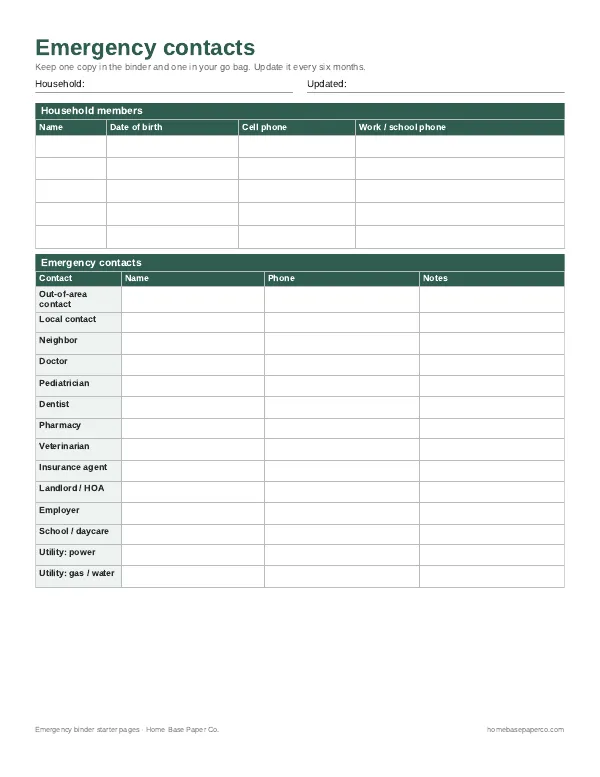
Have the important stuff in one place: get the free emergency binder pages
Printable starter pages for household members, emergency contacts, medical notes and where key documents live. You'll also get our weekly HomeBase email with simple ways to keep family records and important papers in order.