
 The Holiday Collection


The short answer: should I open a store credit card? Only if you shop there often, you'll pay the balance in full every month and you aren't applying for a mortgage, car loan or apartment soon. Otherwise the checkout discount usually isn't worth it.
- Deferred interest: a small balance left at the deadline can mean interest on the full purchase
- Example: about $48 left on a $900 TV means interest on the full $900, going back 12 months
- Limits tend to be low, and applying can affect your credit
- Already said yes? Find the terms; steps below
- Next step: Plan it with the Christmas Budget & Gift Planner ($4.99).
Should I open a store credit card? Only if all three are true: you shop at that store often, you'll pay the balance in full every month, and you aren't applying for a mortgage, car loan or apartment in the next several months. If any of those isn't true, the sign-up discount at checkout usually isn't worth it.
Store cards show up most during the holidays, when a cashier offers "15% off today" while the line waits. Here's what the offer really means, how it affects your credit, and seven questions to answer before you say yes.
What the checkout offer doesn't mention
The CFPB's six tips for retail store credit cards point out a few things worth knowing:
- They're easier to get, and that has a price. Store cards are often easier to qualify for than general credit cards, and they may come with higher interest rates.
- The limits tend to be low. A low limit means even a modest holiday purchase can use a big share of your available credit.
- Applying can affect your credit. Each application usually means a hard inquiry, and several new accounts in a short time can lower your score.
- "No interest" can mean deferred interest. That's the one that catches people.
How deferred interest works
Many store card promotions say "no interest if paid in full in 12 months." The CFPB's explainer on deferred interest explains the catch: if you haven't paid the full promotional balance by the deadline, interest can be charged back to the original purchase date.
Choosing how to pay? Compare credit card vs. debit card for everyday spending.
Here's a simple example:
| Paid in full on time | A small balance left at the deadline | |
|---|---|---|
| Purchase | $900 TV in November | $900 TV in November |
| Payments | $75 a month for 12 months | $71 a month (about $48 left) |
| Interest charged | $0 | Interest on the full $900, going back 12 months |
One small balance at the end can cost you a full year of interest. To avoid it, divide the purchase by the number of months in the promotion and pay at least that much every month, not just the minimum payment.
For context, the average rate on credit card accounts that were charged interest was 22.36% in August 2026, according to the Federal Reserve's G.19 report. The CFPB notes that store card rates may be higher still.
7 questions to ask before you open a store card
- Do I shop here at least monthly? If not, the ongoing rewards won't add up to much.
- Will I pay the full balance every month? If not, the interest will likely cost more than the discount saves.
- Am I applying for a big loan or apartment soon? A new inquiry and a new account can affect your approval or your rate.
- What's the APR, and is there deferred interest? Ask for the terms in writing. Don't decide at the register.
- What's the credit limit? A $500 limit with a $400 purchase means 80% utilization on that card. Here's how credit utilization affects your score.
- Can I get the same discount another way? Some stores offer similar savings through a free email list or a rewards program that isn't a credit card.
- Is this purchase on my list? If the card discount is what's tempting you to buy, walk away.
Already said yes at the register? Do this now
Opened a card in the checkout line? You can still keep it from costing you:
- Find the terms. Look for the APR, the promotion type and the promotion end date in your account documents or online account.
- Set autopay for the full statement balance, or for the monthly amount that clears a deferred-interest balance before the deadline.
- Put the promotion end date on your calendar, with a reminder a month early. Plan to pay the balance off before then.
- Don't use the card again until this purchase is paid off, so a single holiday order doesn't turn into an ongoing balance.
- Think before you close it. Closing a card lowers your total available credit, which can raise your utilization. If there's no annual fee, some people keep the card open and simply put it away. Read the terms and decide what fits you.
When a store card can make sense
- You shop at the store often and the card's rewards or perks are worth something to you.
- You'll set up autopay for the full statement balance.
- You aren't planning a big credit application soon.
- You're comfortable keeping track of one more due date.
When to skip it
- Your current cards already carry balances.
- You're opening it only for a one-time discount on a holiday order.
- You'd use the deferred-interest promotion to buy something you couldn't otherwise afford.
- You already have several store cards and struggle to keep the due dates straight.
Smarter ways to handle holiday checkout
Decide your total and each person's gift budget before you shop, and choose a payment method you'll pay in full. The Christmas Budget & Gift Planner ($4.99) gives every person a budget line and shows what's left, so the checkout offer is easier to turn down. See our holiday budget guide and our list of what not to buy on Black Friday for more.
If you already have store cards, keep every due date in one place. The Bill Tracker Spreadsheet ($4.99) shows days left until each bill is due and turns red when one is 3 days away.
If balances are already piling up, the Debt Payoff Planner ($6.99) lets you list up to 10 debts, pick snowball or avalanche, and see your debt-free date. Our guide on how to pay off holiday debt walks through the steps. Browse all of our money tools.
If you are not planning to apply for new credit soon, consider a credit freeze at all three bureaus to keep others from opening accounts in your name.

The Holiday Collection
Give every person a limit and watch what's left
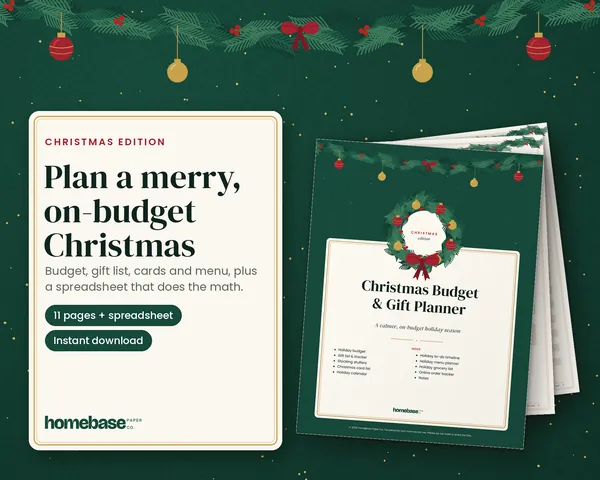
The Christmas Budget & Gift Planner adds up every list for you: a budget for each person, a log of each purchase and the amount left to spend, plus printable gift, card, menu and to-do pages.
- Spreadsheet for Excel and Google Sheets
- 11 printable pages, US Letter + A4
- Instant download, 14-day fix-or-refund promise
Planning the whole season? See the holiday sets from $7, with early prices through Cyber Monday
Make it easier
Tools for this

Spreadsheets
Debt Payoff Planner
Pick snowball or avalanche, add any extra payment, and get your debt-free month instantly.

Spreadsheets
Bill Tracker Spreadsheet
Bills due in 3 days or less light up red, so nothing slips through.
Printables
Christmas Budget & Gift Planner
Set a budget for every person, log each purchase, and watch what's left - plus printable gift, card, menu and to-do pages.
Frequently asked questions
Is it a good idea to open a store credit card? It can be, but only if you shop there often, you'll pay the balance in full every month, and you aren't applying for a major loan soon. If you'd carry a balance, the higher rates and deferred-interest terms common on store cards usually cost more than the sign-up discount saves.
Does opening a store credit card hurt your credit? It can, at least for a while. Applying usually triggers a hard inquiry, and a new account lowers your average account age. Store cards also tend to have low limits, so even a modest balance can push your credit utilization up. The CFPB notes that experts suggest keeping utilization under 30%.
What is deferred interest on a store card? Deferred interest means no interest is charged if you pay the full promotional balance by the deadline. If any balance is left after that, interest can be charged on the original purchase amount all the way back to the purchase date. The CFPB explains this on its page about no-interest-if-paid-in-full offers.
Should I open a store card for a Black Friday discount? Usually, you shouldn't open a store card just for a one-time Black Friday discount. Ten or 15 percent off a single order disappears quickly if you carry the balance for even a couple of months. If you're shopping Black Friday, stick to your planned list and a payment method you'll pay in full.
How do I keep from missing store card payments? List every card with its due date in one place. The Bill Tracker Spreadsheet ($4.99) calculates the next due date and days left for each bill and turns red when a payment is due in 3 days or less.
I already have store card balances. What should I do? Make a payoff plan and stop adding to them. The Debt Payoff Planner ($6.99) lets you enter up to 10 debts, pick snowball or avalanche, and see the month each one will be paid off. Pay any deferred-interest balance before its promotion ends.
More from HomeBase
You may also like
 Thanksgiving Edition
Printables
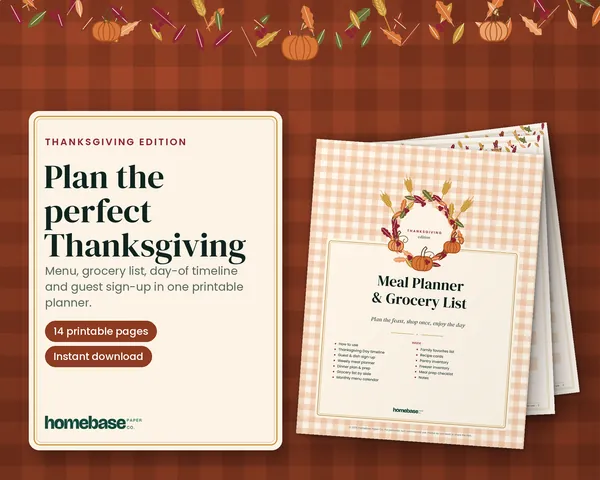
Meal Planner & Grocery List: Thanksgiving Edition
Plan the perfect Thanksgiving: our meal planner in a warm harvest design, with a Thanksgiving Day timeline, a guest & dish sign-up, an aisle-sorted grocery list and pantry and freezer trackers.

Spreadsheets
Sinking Funds Tracker
It does the math: how much to set aside each month to hit every goal on time.
 Starter pick
Printables
100 Envelope Savings Challenge
Classic, half and 52-week challenges to print, plus a spreadsheet that tracks every envelope and tells you how much to save each week.
 Save 38%
Bundles
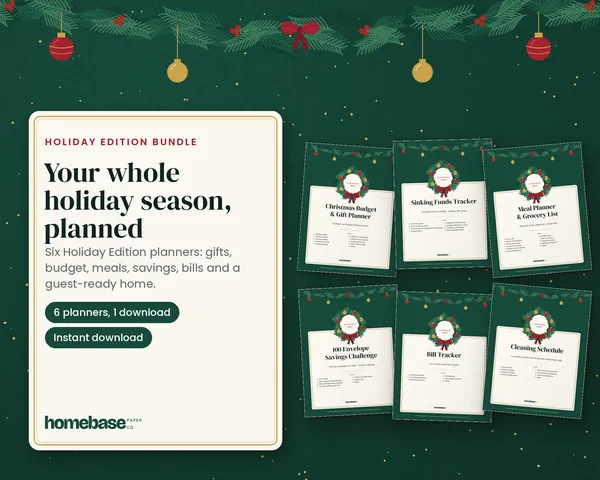
Holiday Season Bundle
Plan Christmas, save for it all year, and host without the January money hangover.
 Club
Monthly club
Money Club
Anyone who wants a clear plan for the month's bills, holiday spending and savings.
Free printable
Never miss a payment: get the free bill calendar
A printable monthly bill calendar with room for due dates, amounts and paydays, so every payment has a plan before the month starts. You'll also get our weekly HomeBase email with simple budgeting and bill-paying tips.

Sources
- Six tips for retail store credit cards consumerfinance.gov
- Explainer on deferred interest consumerfinance.gov
- Federal Reserve's G.19 report federalreserve.gov