


The short answer: Credit utilization is the share of your available credit card credit that you're using. Add up your card balances, divide by your total credit limits, and multiply by 100. Owing $2,000 on $10,000 of limits is 20% utilization.
Our picks for credit utilization

Spreadsheets
Debt Payoff Planner
Pick snowball or avalanche, add any extra payment, and get your debt-free month instantly.

Spreadsheets
Bill Tracker Spreadsheet
Bills due in 3 days or less light up red, so nothing slips through.
 Save 57%
Bundles
Ultimate Budget Bundle
All 6 spreadsheets + both printable planners - for less than half the price of buying them separately.
Credit scores look at this number, and the common guideline is to keep it at 30% or less, both overall and on each card. Lower is generally better.
Utilization is one of the parts of your credit score you can change fastest, because it's based on the balances your card issuers last reported. Here's how to figure yours, why the timing of payments matters, and seven ways to bring it down.
How to calculate your credit utilization
Credit utilization = total card balances ÷ total credit limits × 100
| Card | Limit | Balance | Per-card utilization |
|---|---|---|---|
| Card A | $5,000 | $500 | 10% |
| Card B | $3,000 | $1,800 | 60% |
| Card C | $2,000 | $0 | 0% |
| Total | $10,000 | $2,300 | 23% overall |
The overall ratio here is 23%, under the 30% guideline. But Card B is at 60% on its own. Scoring models can consider both numbers, so the easiest win is paying Card B down first.
What is a good credit utilization ratio?
| Overall utilization | What it usually means |
|---|---|
| 0% to 9% | Excellent, lowest risk |
| 10% to 29% | Good, within the common guideline |
| 30% to 49% | May start to weigh on your scores |
| 50% to 74% | Likely pulling scores down |
| 75% and up | Close to maxed out; significant drag |
These bands are general, not exact cutoffs. The CFPB says scoring models look at how close you are to being maxed out and that experts advise using no more than 30 percent of your total credit limit. It also notes you don't need to carry a balance to get a good score.
Why timing matters
Most issuers report your balance to the credit bureaus once a month, often around the statement closing date, not the due date. So you can pay in full every month and still show high utilization if you spent a lot right before the statement closed.
The CFPB explains that scores are calculated at different times, so a score figured on a high-balance day can be affected even if you pay it off the next day.
The fix: Make a payment a few days before the statement closing date, then pay the rest by the due date.
7 ways to lower your credit utilization
- Pay before the statement closes. It's the fastest way to lower the reported balance.
- Pay twice a month. Split your payment in two so the balance never builds up.
- Pay the highest per-card ratio first. Bring any card over 50% down before the others.
- Keep old cards open. The CFPB notes that closing a card can raise your utilization ratio and lower your score, because its limit disappears from your total.
- Ask for a higher limit. It only helps if your spending stays the same.
- Spread out big purchases. Putting a large charge on a card with a high limit keeps per-card utilization lower.
- Pay down the debt. The lasting fix. A clear payoff plan beats any timing trick. Our guide on how to pay off credit card debt walks through one.
Credit utilization and the holidays
Holiday shopping can push utilization up right when many families want to apply for something new. If you're planning a big Christmas spend on cards, set a dollar cap per card and a payoff date. Our how to pay off holiday debt guide has a January plan, and what is a balance transfer explains when moving a balance helps.
New to credit? Start with how to build credit, then come back to utilization once you have a card or two.
Track your cards in one place
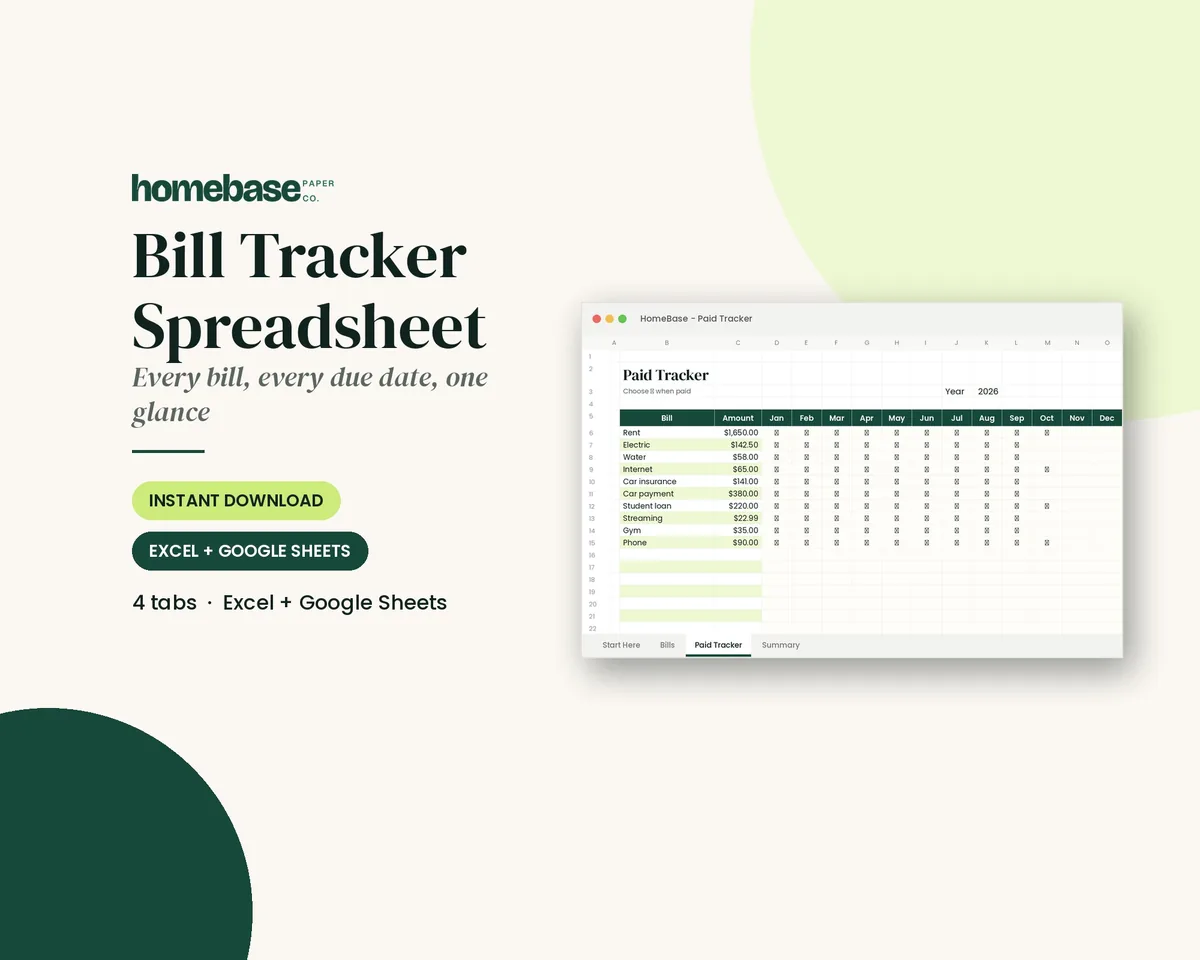
Utilization is easier to manage when every card's limit, balance and closing date sits on one sheet.
- Bill Tracker Spreadsheet, $4.99. List each card with its limit, statement date and due date, and check off payments.
- Debt Payoff Planner, $6.99. Plan which card to pay first and see the payoff date for each balance.
- Ultimate Budget Bundle, $19.99 (was $46.42). Eight budgeting tools in one download, from the zero-based budget to sinking funds.
Browse all money printables and spreadsheets. This page is for general education, not personal financial advice.
Related money guides
- How to build credit
- Credit card vs debit card
- Should I open a store credit card?
- How long to pay off a credit card
- How to calculate debt-to-income ratio
See how utilization fits into the bigger picture in our guide to what a good credit score is. Not planning to apply for new credit soon? A credit freeze is free at all three bureaus and easy to lift when you need it.
Debt Payoff Planner
Pick snowball or avalanche, add any extra payment, and get your debt-free month instantly.
$6.99 · Instant download. Print at home or fill it in on screen. Or browse the full Budget & Money collection.
Frequently asked questions
What is credit utilization? Credit utilization is how much of your available credit card credit you're using, shown as a percentage. If your cards have $10,000 in total limits and you owe $2,000, your credit utilization is 20%.
How do you calculate credit utilization? Divide your credit card balances by your credit limits and multiply by 100. Do it two ways: overall, using all your cards together, and per card, because scoring models can look at both.
What is a good credit utilization ratio? A common guideline is to keep it at or under 30% of your total limits. The CFPB says experts advise using no more than 30 percent, and lower is generally better for your scores.
Is 0% credit utilization good? Paying your cards in full is great for avoiding interest. For scoring, a very low but non-zero reported balance on at least one card is often viewed slightly better than 0% on every card, but the difference is usually small. Don't carry a balance or pay interest just to show usage.
Does credit utilization include loans? Credit utilization usually refers to revolving accounts like credit cards and lines of credit. Installment loans, such as car loans, student loans and mortgages, are scored differently, by how much of the original amount you still owe.
When is credit utilization reported? Most card issuers report your balance to the credit bureaus about once a month, often around the statement closing date. The CFPB notes that if your score is calculated on a day you have a high balance, it can affect your score even if you pay in full the next day.
How fast does credit utilization affect my score? Credit utilization affects your score quickly. Utilization is based on the latest reported balances, so once a lower balance is reported, usually within a month or two, your score can reflect it.
Does closing a credit card hurt my utilization? Closing a credit card can hurt your utilization. Closing a card removes its limit from your total, so the same balance becomes a bigger percentage. The CFPB says closing an existing card can raise your utilization ratio and lower your score.
Should I ask for a higher credit limit? A higher limit lowers your ratio if your spending stays the same. Ask your issuer whether the request needs a hard credit check, and only do it if you won't spend more because the limit went up.
Does a balance transfer lower credit utilization? A balance transfer to a new card can lower your overall ratio, because the new card adds to your total limit. But the new card itself may be close to maxed out, so its per-card ratio can be high until you pay it down.
What is per-card utilization? Per-card utilization is the balance on one card divided by that card's limit. A $900 balance on a $1,000 card is 90%, even if your overall ratio is low, and a nearly maxed-out card can weigh on your score.
How can I lower my credit utilization fast? Pay down the balance before the statement closing date, make two smaller payments a month, spread charges across cards, or ask for a higher limit. Paying down debt is the lasting fix.
Do authorized user cards count toward my utilization? Authorized user cards often count toward your utilization. If the card shows on your credit report, its balance and limit can count in your ratio, which can help or hurt depending on how the primary cardholder uses it.
How do I keep track of my utilization each month? List every card with its limit, balance and statement closing date, then update the balances when statements post. The Bill Tracker Spreadsheet from HomeBase Paper Co. keeps due dates and balances in one place.
Free printable
Never miss a payment: get the free bill calendar
A printable monthly bill calendar with room for due dates, amounts and paydays, so every payment has a plan before the month starts. You'll also get our weekly HomeBase email with simple budgeting and bill-paying tips.

Sources
- CFPB: How do I get and keep a good credit score? consumerfinance.gov
- CFPB: Will paying off my credit card balance every month improve my credit score? consumerfinance.gov
- CFPB: Does it hurt my credit to close a credit card? consumerfinance.gov