

The short answer: the right small business loan depends on what you need the money for, how long you've been in business and what you can afford to repay.
- SBA 7(a): working capital, equipment, real estate, for established businesses with good credit
- SBA microloan: startups and very small businesses
- Line of credit: ongoing cash flow gaps and seasonal revenue
- Lenders look at credit, capacity, capital, collateral and conditions
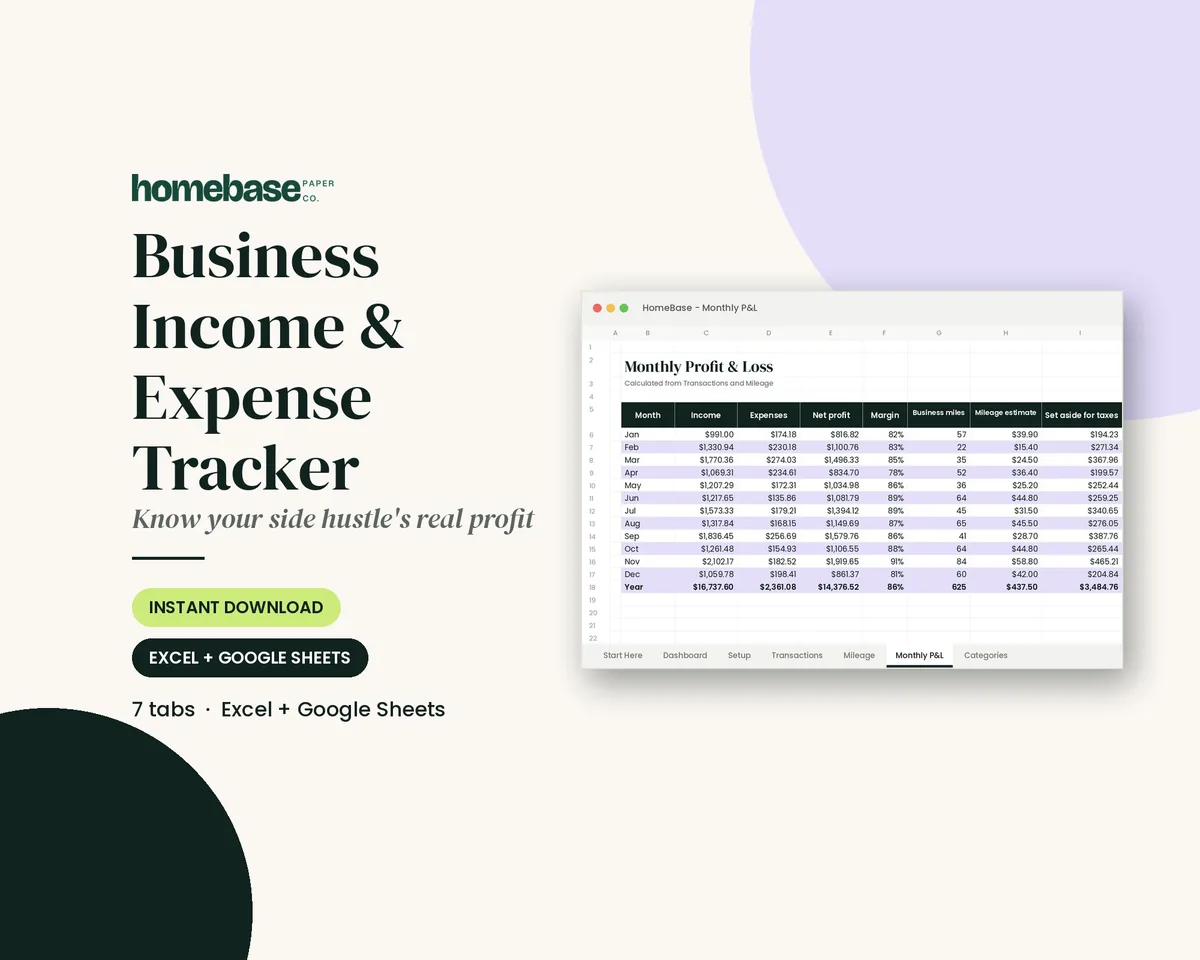
- Next step: Plan it with the Business Income & Expense Tracker ($7.99).
Small business loans can help you buy equipment, hire, stock inventory, open a location or smooth out cash flow between busy seasons. But the right loan depends on what you need the money for, how long you have been in business and what you can afford to repay. This guide explains the main types of small business loans, including SBA-backed options, what lenders look for, what loans really cost, and a step-by-step plan to apply with confidence.
This page is general education, not financial, legal or tax advice. Lenders want to see clean numbers. The Small Business Income and Expense Tracker keeps revenue and costs organized for your application, and the Annual Budget Spreadsheet helps you plan loan payments into the year.
Types of small business loans
| Loan type | Typical use | Good fit for |
|---|---|---|
| SBA 7(a) loan | Working capital, equipment, real estate, refinancing | Established businesses with good credit |
| SBA microloan | Inventory, supplies, equipment, working capital | Startups and very small businesses |
| Bank term loan | A one-time purchase or expansion | Businesses with strong credit and history |
| Business line of credit | Ongoing cash flow gaps | Seasonal or uneven revenue |
| Equipment financing | Vehicles, machines, technology | Businesses buying specific equipment |
| Invoice financing | Cash tied up in unpaid invoices | Businesses that bill clients on terms |
Each type trades off speed, cost and requirements. Bank and SBA loans tend to be the cheapest but take longer and ask for more paperwork. Online lenders can fund quickly, sometimes in days, but often charge much higher rates and fees.
How SBA loans work
The U.S. Small Business Administration does not usually lend money directly. Instead, as the SBA explains, it works with approved lenders and guarantees part of the loan, which reduces the lender's risk and can make it easier for small businesses to qualify on reasonable terms. The SBA also offers Lender Match, a free tool that connects you with lenders interested in your type of business.
The most common program is the SBA 7(a) loan, which can be used for a wide range of purposes, from working capital to buying real estate, with a maximum loan amount of $5 million. For smaller needs, SBA microloans provide up to $50,000 through nonprofit intermediary lenders, and many of those lenders also offer training and support, which makes microloans a good option for newer businesses.
What lenders look for
Most lenders look at the same core factors, sometimes called the five Cs of credit:
Credit. Your personal credit score and history matter, especially for newer businesses. Our guide on what is a good credit score explains the ranges.
Capacity. Lenders want to see that your cash flow can cover the payments. They often look at your debt service coverage, which compares income to loan payments.
Capital. How much of your own money you have invested in the business.
Collateral. Assets the lender could claim if you do not repay, such as equipment or real estate. Many loans also require a personal guarantee.
Conditions. How you will use the money, your industry and the broader economy.
What small business loans cost
The interest rate is only part of the cost. Ask every lender for the annual percentage rate, which folds in fees, and the total amount you will repay over the life of the loan. Watch for origination fees, packaging fees, prepayment penalties and late fees. Some short-term products quote a "factor rate" instead of an interest rate, such as 1.3 times the amount borrowed, which can translate into a very high annual cost when repaid over a few months.
As a rough illustration, a $50,000 loan at 10% APR over five years has a monthly payment of about $1,060 and total interest of about $13,700. The same amount at 30% APR costs about $1,620 a month and roughly $47,000 in interest. Comparing offers side by side can save you tens of thousands of dollars.
How to apply for a small business loan, step by step
- Decide exactly how much you need and write down how you will use it.
- Check your personal credit reports and fix any errors before you apply.
- Gather documents: two to three years of tax returns, bank statements, a profit and loss statement, a balance sheet and a business plan.
- Calculate the monthly payment you can comfortably afford from cash flow. For more on this topic, see our small-business guides.
- Compare at least three lenders, including a bank or credit union, an SBA lender and a community lender.
- Apply, answer follow-up questions quickly and read every term before you sign.
- Track loan payments in your budget from the first month.
Alternatives to a small business loan
A loan is not always the best answer. Depending on your needs, you might use savings, ask customers for deposits, negotiate longer payment terms with suppliers, apply for local grants, or look at a business credit card for small, short-term purchases you can repay quickly. If you are starting out, building separate business credit early and keeping personal and business spending apart will make future borrowing easier. Our guide on how to calculate debt-to-income ratio can help you judge how much new debt your household can handle if you are personally guaranteeing a loan. Our guide to small business grants explains where to find them and how to apply.
Keep your business finances loan-ready
The best time to prepare for a loan is long before you need one. Keep monthly income and expense records, reconcile your bank account, file taxes on time and keep a simple balance sheet. Those habits make lenders more comfortable and give you a clear view of whether borrowing makes sense. Our debt consolidation guide may also help if existing personal debt is holding back your business plans.
The bottom line
Small business loans come in many forms, and the cheapest option is usually the one you prepare for. Know your numbers, check your credit, compare SBA, bank and community lenders on total cost, and borrow only what your cash flow can comfortably repay.
Make it easier
Tools for this
Spreadsheets
Business Income & Expense Tracker
Log sales, expenses and business miles - see your monthly profit, category totals for tax time and how much to set aside.

Spreadsheets
Annual Budget Spreadsheet
See exactly where your money goes every month - without complicated software.
Frequently asked questions
How do I get a small business loan? To get a small business loan, first decide how much you need and what it is for, then check your personal and business credit, gather documents such as tax returns, bank statements and a business plan, and compare lenders including banks, credit unions, online lenders and SBA-backed programs. Apply with two or three lenders and compare the full cost, not just the rate.
What credit score do you need for a small business loan? Traditional bank and SBA lenders often look for a personal credit score in roughly the high 600s or above, along with time in business and steady revenue, though requirements vary by lender. Online lenders may accept lower scores but usually charge much higher rates. Microloans and community lenders can be an option for newer businesses with thinner credit.
What is an SBA loan? An SBA loan is a small business loan made by a bank or other approved lender and partly guaranteed by the U.S. Small Business Administration. The guarantee lowers the lender's risk, which can mean longer repayment terms and lower down payments. The most common type is the 7(a) loan, which can be used for working capital, equipment, real estate and more.
Can I get a small business loan for a new business? Yes, but it is harder than for an established business, because lenders want to see a track record of revenue. Options for startups include SBA microloans, loans from community development financial institutions, equipment financing, and in some cases a personal loan or a 0% intro credit card used carefully. A clear business plan helps a lot.
More from HomeBase
You may also like

Printables
Budget Planner Printable
Twelve undated pages you can print every month: budget, bills, spending, savings and debt.

Spreadsheets
Bill Tracker Spreadsheet
Bills due in 3 days or less light up red, so nothing slips through.

Spreadsheets
Sinking Funds Tracker
It does the math: how much to set aside each month to hit every goal on time.

Spreadsheets
Paycheck Budget Spreadsheet
Enter your bills once. The sheet tells you which paycheck pays each one, all year.
 Club
Monthly club
Money Club
Anyone who wants a clear plan for the month's bills, holiday spending and savings.
Free printable
Never miss a payment: get the free bill calendar
A printable monthly bill calendar with room for due dates, amounts and paydays, so every payment has a plan before the month starts. You'll also get our weekly HomeBase email with simple budgeting and bill-paying tips.

Sources
- SBA: Loans sba.gov
- SBA: 7(a) loans sba.gov
- SBA: Microloans sba.gov