

The short answer: the main first time home buyer programs are FHA loans (3.5% down with a 580 credit score), Fannie Mae HomeReady and Freddie Mac Home Possible (3% down), VA loans ($0 down for eligible veterans and service members), USDA loans ($0 down in eligible rural areas), and state or local down payment assistance. HUD counts you as a first-time buyer if you haven't owned a primary residence in the last 3 years.
- Lowest cash to close: VA and USDA need $0 down; FHA 3.5%; HomeReady and Home Possible 3%
- On a $300,000 home: 3.5% down is $10,500; 3% down is $9,000; 0% is $0, before closing costs
- Start here: talk to a HUD-approved housing counselor and compare at least three lender quotes
- Free checklist: get the free home inspection checklist (we email it to you). Planning the move? The Moving Planner is $5.99
Rates, limits and rules checked November 9, 2026 against HUD, USDA, VA, Fannie Mae and Freddie Mac. Programs and local assistance change often, so confirm with a lender. Below: each program compared, a worked cost example, who qualifies, and how to prepare your budget.
First time home buyer programs compared
| Program | Down payment | Credit and income | Best for | Main catch |
|---|---|---|---|---|
| FHA loan | 3.5% with a 580+ score; 10% with 500-579 | No income cap | Buyers with limited savings or lower credit | Mortgage insurance premiums |
| Fannie Mae HomeReady | As low as 3% | Income up to 80% of area median income (AMI) | Low and moderate income buyers | Homebuyer education if all buyers are first-time |
| Freddie Mac Home Possible | As low as 3% | Income up to 80% of AMI | Same as HomeReady | Homebuyer education if all buyers are first-time |
| VA loan | $0 down | Eligible veterans, service members and some spouses | Military buyers | One-time funding fee (2.15% first use, under 5% down) |
| USDA loan | $0 down | Income up to 115% of the county median; eligible rural area | Rural and some suburban buyers | 1% upfront and 0.35% annual guarantee fees |
| State and local down payment assistance | Varies | Varies, often income and price limits | Buyers who need help with down payment or closing costs | Rules, funds and deadlines differ |
| Housing Choice Voucher homeownership | Varies | Low-income buyers on the program | Voucher holders | Not available in every area |
Who counts as a first-time home buyer?
HUD defines a first-time homebuyer as someone who has not owned a primary residence for at least three years before buying. The definition includes single parents or displaced homemakers who only owned with a spouse or former spouse, and a married couple counts if either spouse qualifies. That means you can have owned a home years ago and still qualify. Individual programs may use their own definitions, so check each program's rules.
FHA loans for first-time buyers
FHA loans are insured by the Federal Housing Administration and are popular with first-time buyers because of their low down payment and flexible credit rules.
- Down payment: 3.5% with a credit score of 580 or higher; 10% with a score from 500 to 579.
- Loan limits for 2026: the one-unit floor is $541,287 and the high-cost ceiling is $1,249,125, per HUD Mortgagee Letter 2025-23 (see HUD's FHA loan page for the program). Your county's limit may be higher than the floor.
- Mortgage insurance: an upfront premium of 1.75% of the loan amount, usually rolled into the loan, plus an annual premium, generally 0.55% for a 30-year loan with under 5% down. With less than 10% down it generally lasts for the life of the loan.
- Occupancy: the home must be your primary residence.
HomeReady and Home Possible (3% down conventional loans)
- Fannie Mae HomeReady and Freddie Mac Home Possible allow down payments as low as 3%, with income limited to 80% of the area median income for the home's location. See Fannie Mae's HomeReady page and Freddie Mac's Home Possible page.
- Down payment funds can come from gifts, grants and other sources.
- Homebuyer education is required for HomeReady purchases when all occupying borrowers are first-time buyers. Freddie Mac offers a free online course for Home Possible.
- Mortgage insurance on conventional loans can be canceled once you reach 20% equity.
VA loans
- $0 down and no monthly mortgage insurance for eligible veterans, service members and some surviving spouses.
- Funding fee: for first use with less than 5% down it is 2.15%; with 5% or more down it is 1.5%; with 10% or more it is 1.25%, per the VA funding fee schedule. Some disabled veterans are exempt.
USDA loans
- $0 down for eligible primary residences in eligible rural areas, with a 90% loan guarantee for the lender. Household income generally can't exceed 115% of the area median.
- Fees: a 1% upfront guarantee fee and a 0.35% annual fee.
- Not limited to first-time buyers. Use USDA's program page to check eligibility by address.
Down payment assistance and state programs
State and local housing finance agencies often offer down payment help as grants, forgivable loans or low-interest second mortgages. Many require homebuyer education and set income and home price limits. Start with your state's housing finance agency website and the HUD state resources for your state. Also ask whether you qualify for a Mortgage Credit Certificate (MCC), a federal tax credit some states offer through your lender.
Money-saving tip: ask every lender, "Which assistance programs can I combine with this loan?" Some assistance can be stacked with FHA, HomeReady or Home Possible, and the combination can cut your cash to close.
Worked example: a $300,000 home
| FHA (3.5% down) | HomeReady / Home Possible (3% down) | VA ($0 down) | USDA ($0 down) | |
|---|---|---|---|---|
| Down payment | $10,500 | $9,000 | $0 | $0 |
| Base loan | $289,500 | $291,000 | $300,000 | $300,000 |
| Program fee | $5,066.25 upfront MIP (1.75%), usually financed | None, but private mortgage insurance applies | $6,450 funding fee (2.15%), can be financed | $3,000 upfront fee (1%), can be financed |
| Annual or monthly insurance | About $1,592 a year (0.55%), or $132.69 a month | Private mortgage insurance varies | None | 0.35% a year; about $88 a month on a $303,000 balance |
The math: $289,500 x 1.75% = $5,066.25; $289,500 x 0.55% = $1,592.25 a year, which is $132.69 a month; $300,000 x 2.15% = $6,450; $303,000 x 0.35% = $1,060.50 a year, about $88.38 a month. This table shows program costs only. Your interest rate, property taxes, homeowners insurance, HOA fees and closing costs are in addition, so ask lenders for a Loan Estimate.
How to prepare your budget before you apply
| Step | What to do |
|---|---|
| Check your credit | Get your free reports and fix errors. See how to check your credit report and what is a good credit score. |
| Build your down payment fund | Automate a monthly transfer. Our how to save for a house guide has examples. |
| Track your cash to close | Down payment, closing costs, moving costs and a repair cushion. A Sinking Funds Tracker ($4.99) tracks each fund separately. |
| Keep your debt low | Lenders look at your debt-to-income ratio. See how to calculate your debt-to-income ratio. |
| Talk to a counselor | Use HUD's housing counselor search for free or low-cost advice. |
| Compare lenders | Get at least three Loan Estimates on the same day. |
After you buy: keep your home organized
New owners face a long list of maintenance and paperwork. The Home Maintenance Log ($5.99) tracks repairs and service dates, the Home Inventory ($5.49) lists your belongings for insurance, and the Moving Planner ($5.99) covers the move. They are also in the Home Management Bundle at $16.99 ($32.94 when bought separately). Browse our Printables line for more.
First time home buyer checklist
- Confirm you meet HUD's first-time buyer definition and any program's own rules
- Pull your credit reports and check your score
- Calculate your debt-to-income ratio
- Save the down payment and closing costs
- Complete a homebuyer education course if required
- Get pre-approved by at least three lenders
- Ask about down payment assistance in your state and county
- Schedule an inspection before you close
Before comparing homes, use the mortgage payment calculator to separate principal and interest from the taxes, insurance and other housing costs you need to budget.
Make it easier
Tools for this
Printables
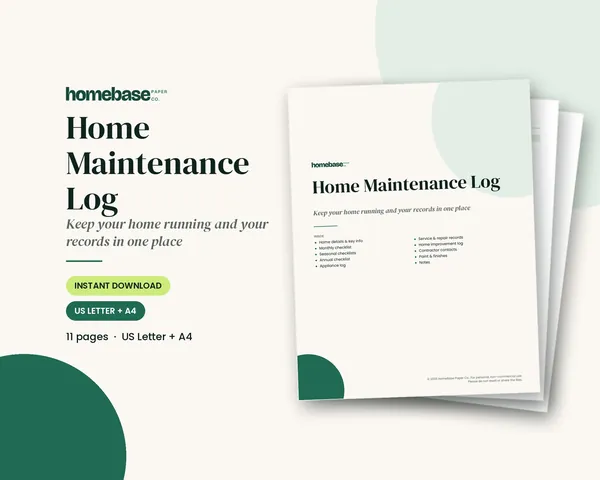
Home Maintenance Log
Monthly, seasonal and annual checklists plus a record of every appliance and repair.
Printables
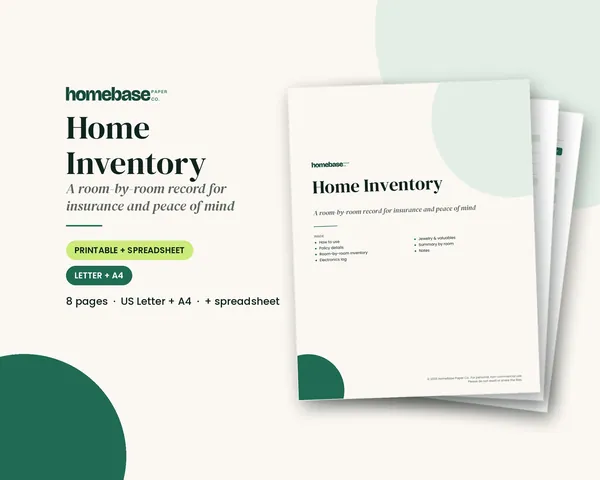
Home Inventory
Printable pages and a spreadsheet that totals the value of every room.
Frequently asked questions
What are the best first time home buyer programs? The best program depends on your credit, income, location and military status. FHA loans allow 3.5% down with a 580 score, HomeReady and Home Possible allow 3% down for income up to 80% of area median income, VA and USDA loans allow $0 down for eligible buyers, and state down payment assistance can reduce your cash to close.
How much do I need to put down as a first time home buyer? You can buy with as little as 3% to 3.5% down using FHA, HomeReady or Home Possible, or $0 down with a VA or USDA loan if you qualify. On a $300,000 home, 3.5% is $10,500 and 3% is $9,000, before closing costs. Putting down 20% avoids private mortgage insurance on a conventional loan but is not required.
Who qualifies as a first time home buyer? HUD defines a first-time homebuyer as someone who has not owned a primary residence for at least three years before the purchase. Single parents and displaced homemakers who only owned with a spouse or former spouse also qualify, and a married couple qualifies if either spouse meets the test.
What credit score do I need for an FHA loan? You need at least a 580 for the 3.5% down FHA payment, and a score from 500 to 579 requires 10% down. Lenders can set stricter minimums, so your actual requirement may be higher. Below 500 is not eligible for FHA-insured financing.
What is the FHA loan limit in 2026? The 2026 FHA one-unit loan limit floor is $541,287 and the high-cost ceiling is $1,249,125, according to HUD. Your county's limit depends on local home prices, so check HUD's lookup for your county.
What is the difference between HomeReady and Home Possible? HomeReady is Fannie Mae's low down payment program and Home Possible is Freddie Mac's. Both allow down payments as low as 3% and limit qualifying income to 80% of area median income. They have slightly different rules, so ask your lender which one gives you the better price.
Do I have to be a first time home buyer to use these programs? No, FHA, VA and USDA loans are available to repeat buyers who meet the requirements. Some down payment assistance programs and homebuyer education requirements are limited to first-time buyers, so check each program's rules.
Are there grants for first time home buyers? Some state and local housing finance agencies offer down payment assistance as grants, forgivable loans or low-interest second mortgages, but there is no single national first-time buyer grant. Rules, income limits and funding differ by area, so start with your state housing finance agency and a HUD-approved housing counselor.
Can I use my IRA for a down payment? Federal rules allow a penalty-free withdrawal of up to $10,000 from an IRA for a qualifying first-time home purchase, but income tax may still apply and the rules are detailed. Ask a tax professional before you withdraw, and check the IRS rules for first-time homebuyer distributions.
What costs are there besides the down payment? Besides the down payment, expect closing costs, mortgage insurance or program fees, property taxes, homeowners insurance, inspection and appraisal fees, and moving costs. Ask lenders for a Loan Estimate to see closing costs, and keep a repair cushion for the first year in the home.
More from HomeBase
You may also like

Printables
Budget Planner Printable
Twelve undated pages you can print every month: budget, bills, spending, savings and debt.

Spreadsheets
Bill Tracker Spreadsheet
Bills due in 3 days or less light up red, so nothing slips through.

Spreadsheets
Paycheck Budget Spreadsheet
Enter your bills once. The sheet tells you which paycheck pays each one, all year.

Spreadsheets
Zero-Based Budget Spreadsheet
The 'Left to budget' counter turns green when every dollar has a job.
 Club
Monthly club
Money Club
Anyone who wants a clear plan for the month's bills, holiday spending and savings.
Free printable
Give every dollar a job: get the free monthly budget template
A printable zero-based monthly budget: income, bills, everyday spending and savings on one page, with a planned vs. actual column. You'll also get our weekly HomeBase email with simple budgeting and bill-paying tips.

Sources
- HUD: FHA loans hud.gov
- HUD Housing Counselors: first-time homebuyer definition hudhousingcounselors.hud.gov
- Fannie Mae: HomeReady mortgage singlefamily.fanniemae.com
- Freddie Mac: Home Possible 3% down myhome.freddiemac.com
- VA: Funding fee and closing costs va.gov
- USDA: Single Family Housing Guaranteed Loan Program rd.usda.gov
- HUD state resources hud.gov