
 The Holiday Collection

The short answer: a Christmas club account takes a fixed amount from checking every week, two weeks or month, then pays it out in the fall for holiday shopping. It's worth it if regular savings tends to disappear, but not if you need flexibility.
- Pros: automatic deposits, early-withdrawal limits and a fixed payout date
- Cons: interest is often low or none, and early withdrawals can cost a fee or close the account
- Insured like other deposits at FDIC-insured banks and federally insured credit unions
- Quick test: do you dip into savings for non-emergencies, and do you have an emergency fund?
- Next step: Plan it with the Sinking Funds Tracker ($4.99).
A Christmas club account is a special savings account at a bank or credit union that takes a fixed amount from your checking account every week, two weeks or month, then pays the whole balance back to you in the fall, usually in time for holiday shopping. It's worth it if money in a regular savings account tends to disappear, because the payout date and the early-withdrawal limits do the saying "no" for you. It's not worth it if you need flexibility or want your savings to earn more, because many clubs pay little or no interest. In that case, a separate high-yield savings account with an automatic transfer on payday does the same job and keeps your money within reach.
Prefer to save on your own? Our Sinking Funds Tracker works out how much to set aside each month for each goal by its date, with up to 20 goals and a deposit and withdrawal log.
This guide explains how a Christmas club account works, what to ask before you open one, what it really earns and the alternatives that fit better for many families.
How a Christmas club account works
Christmas clubs have been around a long time. The first known one started in 1909 at a bank in Carlisle, Pennsylvania, and the idea spread to banks and credit unions across the country. Today the setup is simpler than the old passbook-and-coupon version, but the basic idea hasn't changed:
- You open the account at a bank or credit union, often with a small opening deposit.
- You choose a deposit amount and schedule, such as $20 every Friday or $40 every other payday.
- The bank moves the money for you, usually by automatic transfer from your checking account.
- The money stays put. Many clubs don't allow withdrawals before the payout date, or charge a fee, forfeit interest or close the account if you take money out early.
- The club pays out on a set date, commonly in October or November. The balance goes to your checking account or arrives as a check.
- The club often restarts for the next year, sometimes automatically.
Credit unions sometimes call it a holiday club account or a Christmas club share account. The rules are the same idea under a different name.
Why people still use them
The appeal is mostly behavioral. Money that's in a regular savings account is easy to move with two taps, so it gets spent on whatever comes up. A Christmas club puts a little friction between you and the money. You decided in January what December would cost, and the account holds you to it.
Think of it as a Christmas savings account with rules: fixed deposits on a schedule and one payout date.
Christmas club account pros and cons
| Pros | Cons |
|---|---|
| Automatic deposits build the habit without willpower | Interest is often low, and some clubs pay none |
| Early-withdrawal limits protect gift money from everyday spending | Early withdrawals may cost a fee, forfeit interest or close the account |
| A fixed payout date lines up with holiday shopping | The payout date is set by the bank, not by you |
| Insured like other deposits at FDIC-insured banks and federally insured credit unions | Offered mainly by community banks and credit unions, so you may need a new account |
| Separate from checking, so the balance is easy to see | Missed deposits shrink the payout, and some clubs have extra rules |
What a Christmas club account actually earns
Here's the honest math. Say you deposit $20 a week for 52 weeks, for a $1,040 payout. Because you're adding money gradually, your average balance over the year is only about half the goal, roughly $520.
| Where the money sits | Example APY | Approximate interest in a year |
|---|---|---|
| Club paying no interest | 0.00% | $0 |
| National average savings rate | 0.38% | About $2 |
| High-yield savings example | 3.50% | About $18 |
The 0.38% figure is the FDIC's national average savings rate for October 2026. The 3.50% row is an example only; online savings rates vary by bank and change often, so check current rates before you choose. Your own club may pay more or less than either.
The takeaway: on a typical holiday balance, the difference between the best and worst option is usually less than $20 a year. That means you should choose based on which account you'll actually leave alone, not on interest alone. Interest is taxable income, so include whatever it earns when you file.
How to open a Christmas club account in 6 steps
Step 1: Set your Christmas total first
Don't pick a deposit amount at random. Add up who you buy for, what you spend on food, travel, decorations, wrapping and cards, and settle on one number. Our holiday budget guide walks through every category, and the Christmas budget calculator does the math if you want a quick starting point.
Step 2: Divide by the deposits you'll make
Count the paydays between now and the club's payout date, not Christmas Day. If the club pays out in early November, your last deposit is in October.
| Christmas goal | Weekly (52 deposits) | Biweekly (26 deposits) | Monthly (12 deposits) |
|---|---|---|---|
| $500 | $9.62 | $19.23 | $41.67 |
| $780 | $15 | $30 | $65 |
| $1,040 | $20 | $40 | $86.67 |
| $1,500 | $28.85 | $57.69 | $125 |
| $2,000 | $38.46 | $76.92 | $166.67 |
Round up to a whole dollar. A slightly bigger payout is a nice problem to have.
Step 3: Ask the right questions before you sign up
For a bank account, the federal Truth in Savings rules (Regulation DD) cover disclosures such as annual percentage yield, fees and minimum balance requirements. Ask your bank or credit union for its applicable account disclosures and read them. These are the questions that matter:
| Ask | Why it matters |
|---|---|
| What is the APY, and is it fixed or variable? | Tells you whether the club earns anything at all |
| What is the exact payout date? | Your shopping plan depends on it |
| How is the payout delivered? | Deposit to checking is faster than a mailed check |
| What happens if I withdraw early? | Fees, lost interest or account closure |
| Is there a minimum deposit or balance? | Avoids surprise charges |
| What happens if I miss a deposit? | Some clubs have their own rules |
| Does the club renew automatically? | Saves you from reopening it every year |
| Is the bank FDIC-insured or the credit union federally insured? | Protects your balance if the institution fails |
Step 4: Confirm the insurance
At an FDIC-insured bank, savings and other deposit accounts are covered up to $250,000 per depositor, per bank, for each ownership category, according to the FDIC's deposit insurance guide. At a federally insured credit union, the National Credit Union Share Insurance Fund covers member accounts up to the same $250,000 level (NCUA). A holiday balance is far below those limits, but it's still worth checking that the institution is covered, especially at a credit union, since a few state-chartered credit unions use private insurance instead.
Step 5: Automate the deposit for the day after payday
Set the transfer for the day after your paycheck lands, not the day before. That keeps the deposit from bouncing against an empty checking account, and it means the money is gone before you have a chance to spend it.
Step 6: Track it alongside everything else
A club account is one savings pot among several. If you're also saving for car repairs, insurance, back-to-school or an emergency fund, keep all of them in one place so you can see the full picture. The Sinking Funds Tracker ($4.99) handles up to 20 goals with due dates, tells you the monthly amount each goal needs and shows progress bars on a dashboard, in Excel or Google Sheets.
Is a Christmas club account worth it? A quick test
Answer these honestly:
- Do you usually dip into savings for non-emergencies? If yes, the club's limits are worth more than the interest you'd give up.
- Do you have an emergency fund? If no, build a small one first, or at least alongside the club, so a surprise bill doesn't force an early withdrawal.
- Does your bank or credit union already offer one? If you'd have to open a whole new banking relationship, a second savings account where you already bank may be simpler.
- Is your income steady? Fixed automatic deposits work best with predictable paychecks. With irregular income, a flexible account where you deposit what you can is easier.
If you answered yes to the first and the club is easy to open where you already bank, it's a good tool. If not, the alternatives below do the same job.
Christmas club account alternatives
| Option | Access to money | Earning potential | Best for |
|---|---|---|---|
| Christmas club account | Limited until payout | Low to none, varies | People who need the money locked away |
| Separate regular savings account | Anytime | Usually low | People who want simple and flexible |
| High-yield online savings account | Anytime, transfers take a day or two | Usually higher, varies | People who can leave savings alone |
| Holiday sinking fund (savings account plus tracker) | Anytime | Depends on the account | People saving for several goals at once |
| Cash envelopes or a savings challenge | Cash on hand | None | People who like a visual, game-style plan |
The sinking fund version of a Christmas club
You can build your own Christmas club in about ten minutes. Open a separate savings account, nickname it "Christmas," set an automatic transfer for the day after payday and turn off any linked debit card if your bank allows it. That gives you most of the club's discipline, plus flexibility and whatever rate the account pays. Our sinking funds guide shows how to set up several pots at once.
The savings challenge version
If a weekly transfer feels dull, a challenge makes it a game. The 100 Envelope Savings Challenge ($3.99) includes the classic 100-envelope chart, a half version for a smaller goal and a 52-week challenge, plus a spreadsheet that tracks every envelope. Our comparison of the 100 envelope vs 52-week challenge helps you pick one.
Our pick: the Holiday Season Bundle
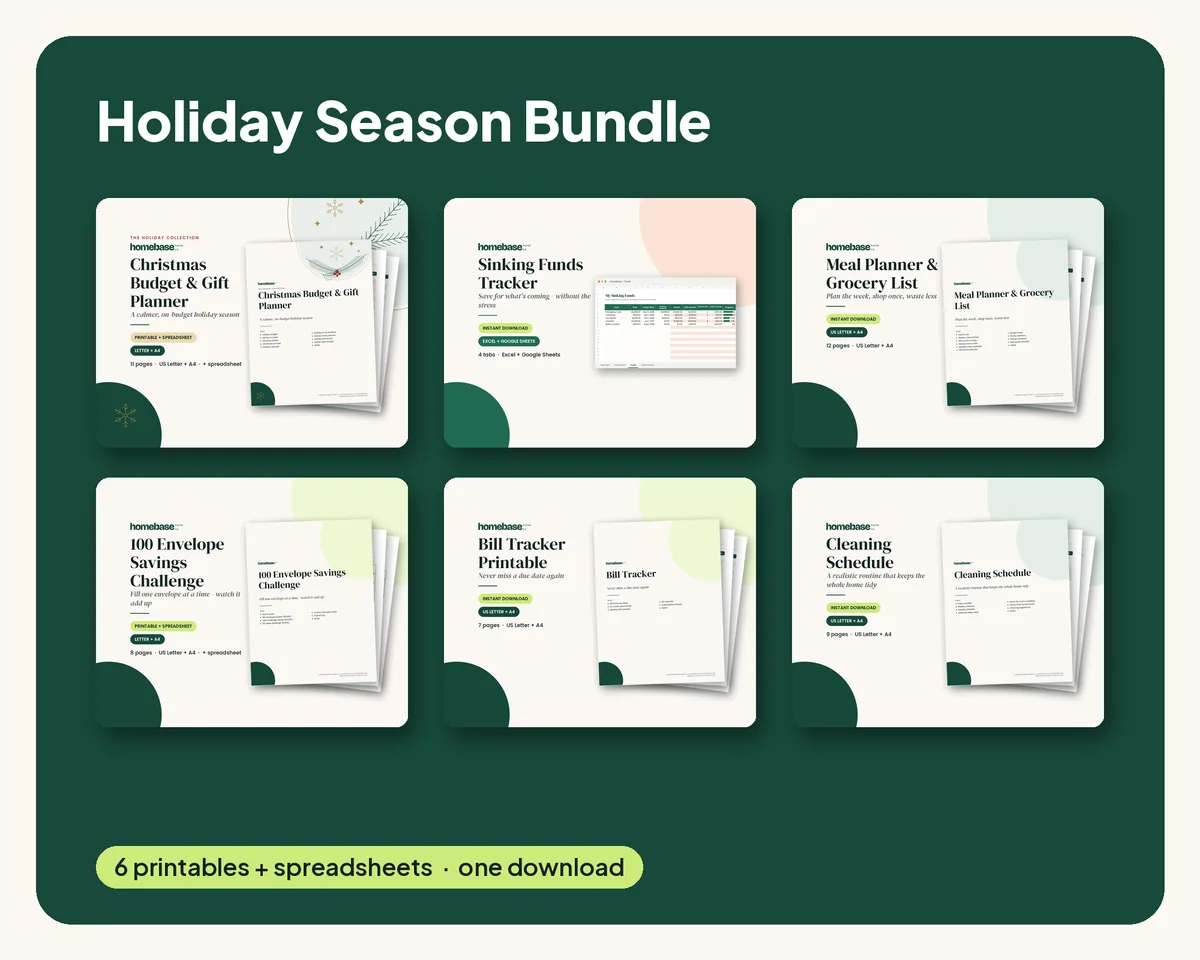
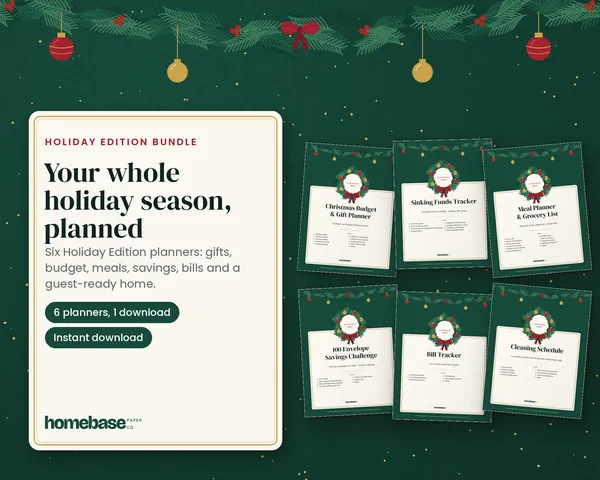
If you want the Christmas club habit without the bank's rules, the Holiday Season Bundle ($15.99, $25.94 if bought separately) covers both halves of the job. It includes the Sinking Funds Tracker and the 100 Envelope Savings Challenge to save for next year, the Christmas Budget & Gift Planner to spend this year's money on purpose, plus the Meal Planner & Grocery List, Bill Tracker Printable and Cleaning Schedule. It's one ZIP download: PDFs in US Letter and A4, and spreadsheets for Excel and Google Sheets.
Prefer to start smaller? The Christmas Budget & Gift Planner ($4.99) on its own sets a limit for every person so you know your target before you choose a deposit amount. You can browse all of our Bundles or our Spreadsheets, and the Holiday shop has everything for the season in one place.
Match the club's payout date to your first shopping date
A Christmas club is only useful if you can access the money when you need it. Before opening one, write down the first planned gift purchase, the bank's transfer date and when the money becomes available in the receiving account. Christmas Day is not the deadline for a gift that needs to be ordered in October.
| Question for the institution | What to put in your plan |
|---|---|
| When does this savings cycle start and end? | The actual first and last scheduled deposit |
| Is the payout automatic or do I request it? | The action you must take, if any |
| Where does the payout go? | The receiving account and any access delay |
| Can I withdraw early, and what happens if I do? | Fee, interest forfeiture or closure terms from the disclosure |
| Does the account renew automatically? | Whether next year's deposits continue without a new instruction |
| Can the deposit amount change? | How to lower it if essential bills increase |
Do not count twelve monthly deposits or 26 biweekly deposits unless those deposits really fall inside the club's cycle. For a sample $600 goal, 12 deposits would be $50 each, ten would be $60, and eight would be $75. Those are principal-only calculations; they do not promise any interest or a particular institution's deposit schedule.
Starting in November 2026
If a club's 2026 payout has already happened, ask whether a new account would fund the next holiday season. Keep this year's gift money separate from a new 2027 savings cycle so the same balance is not committed to two Christmases. For this year's purchases, use only savings you can access and money left after upcoming bills.
Confirm that the institution and account are insured rather than assuming the words "club" or "savings" prove coverage. The FDIC's deposit insurance information explains coverage at FDIC-insured banks; a credit union uses a different insurance system, so check its own insurance information.
Use the Christmas shopping timeline to set your first spending date. The Christmas budget by income helps determine a savings target that fits the money available after essentials.
Too late for a club this year? Do this instead
Most Christmas clubs pay out in the fall, so by late October it's usually too late to open one for this December. That's fine. Two moves cover both years:
- For this Christmas: open a separate savings account today, divide your remaining gap by the paychecks left before mid-December and move that amount every payday. Our guide on how to save money for Christmas has a week-by-week plan, even if time is short. If gifts are still on your list by then, Green Monday on December 14 is one of the last big sale days.
- For next Christmas: open a Christmas club (or your own sinking fund) right after the holidays, so the first deposit goes in by January. Spread over a full year, the same goal costs a much smaller amount each week.
If this year's shopping already went onto a credit card, our holiday debt payoff plan shows how to clear it, and starting a club in January is the best way to keep it from happening again.
Common Christmas club mistakes
- Setting the deposit before the budget. Decide the Christmas total first, then work back to the deposit.
- Counting to Christmas instead of the payout date. The last deposit is weeks before December.
- Using the club as your only savings. Without an emergency fund, the first car repair becomes an early-withdrawal fee.
- Forgetting the auto-renewal. If the club restarts on its own, decide whether next year's deposit should change.
- Spending the payout as a bonus. When the money arrives, put it straight to the gift list and holiday categories you planned.
A note from Malaysia
I grew up in Detroit, the oldest of three, and I was the one my family leaned on to keep things coordinated. That's why I like any savings plan that runs itself. My faith teaches me to take good care of what we've been given, and to me that includes giving my future self a December without money stress. Whether you choose a Christmas club, a sinking fund or envelopes, the best plan is the one you set up once and then leave alone.
If you'd like a simple place to start, our free Holiday Budget Starter Kit is three US Letter pages emailed to you after you join our list.

The Holiday Collection
Give every person a limit and watch what's left
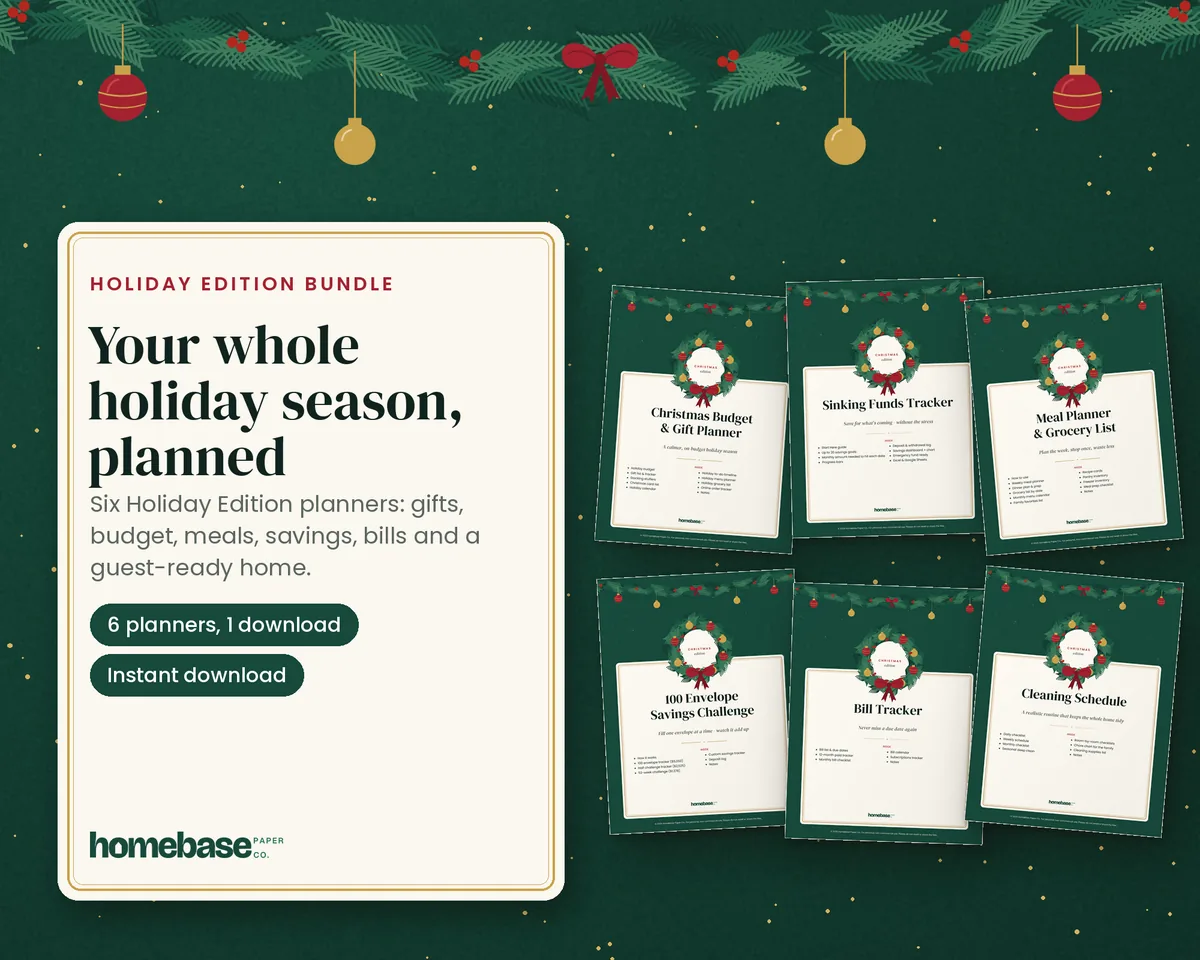
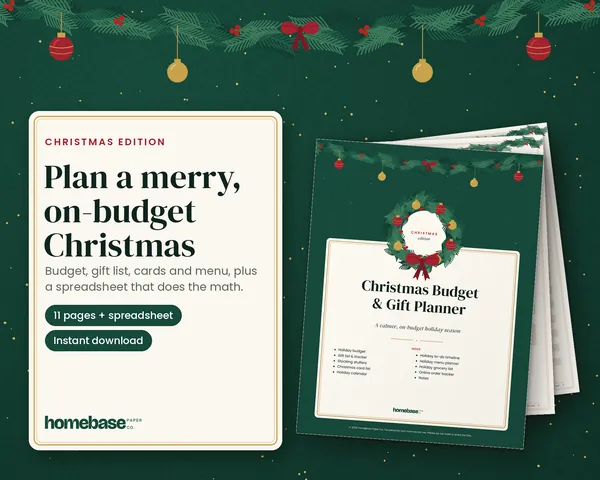
The Christmas Budget & Gift Planner adds up every list for you: a budget for each person, a log of each purchase and the amount left to spend, plus printable gift, card, menu and to-do pages.
- Spreadsheet for Excel and Google Sheets
- 11 printable pages, US Letter + A4
- Instant download, 14-day fix-or-refund promise
Planning the whole season? See the holiday sets from $7, with early prices through Cyber Monday
Make it easier
Tools for this
 Save 38%
Bundles
Holiday Season Bundle
Plan Christmas, save for it all year, and host without the January money hangover.

Spreadsheets
Sinking Funds Tracker
It does the math: how much to set aside each month to hit every goal on time.
 Starter pick
Printables
100 Envelope Savings Challenge
Classic, half and 52-week challenges to print, plus a spreadsheet that tracks every envelope and tells you how much to save each week.
Frequently asked questions
What is a Christmas club account? A Christmas club account is a special savings account at a bank or credit union that collects small, regular deposits during the year and pays the balance out before the holidays. Most are set up with an automatic transfer from checking, and many limit or charge for withdrawals before the payout date.
How does a Christmas club account work? A Christmas club account works on autopilot: you choose a weekly, biweekly or monthly deposit, the bank moves it from your checking account, and on a set date in the fall the full balance is released to you. The payout usually lands in your checking account or arrives as a check, and the club often restarts for next year.
Is a Christmas club account worth it? Yes, a Christmas club account is worth it if you know you'd spend money that sits in a regular savings account. The interest is usually small, so its real value is the locked-in habit. If you can leave a separate savings account alone, a high-yield savings account tracked with the Sinking Funds Tracker ($4.99) usually earns more and stays flexible.
Do Christmas club accounts earn interest? Yes, some Christmas club accounts earn interest, but some pay none, so check the annual percentage yield (APY) before you open one. Banks must disclose the APY, fees and minimum balance requirements under the Truth in Savings rules. Even at a competitive rate, a small holiday balance earns only a few dollars a year.
Can I withdraw money from a Christmas club account early? You usually can't withdraw money from a Christmas club account early without a cost. Depending on the bank, an early withdrawal may carry a fee, forfeit interest or close the account. Read the account disclosures before you open it, and keep a separate emergency fund so a car repair doesn't break your Christmas savings.
When do Christmas club accounts pay out? Christmas club accounts usually pay out in the fall, often in October or November, so the money is ready before holiday shopping starts. The exact date is set by each bank or credit union, so ask for it in writing when you open the account and plan your gift list around it.
Which banks offer Christmas club accounts? Christmas club accounts are most common at community banks and credit unions, and some call them holiday club accounts. Ask your own bank or credit union first, then call one or two local ones. Before you open anything, confirm the bank is FDIC-insured or the credit union is federally insured by the NCUA.
Is a Christmas club account FDIC insured? Yes, if the bank is FDIC insured. A Christmas club account at an FDIC-insured bank is a deposit account, so it is covered by FDIC insurance up to the standard $250,000 limit per depositor, per bank, for each ownership category. At a federally insured credit union, the NCUA's Share Insurance Fund provides the same $250,000 level of coverage.
How much should I put in a Christmas club account? Put in your total Christmas budget divided by the number of deposits before the payout date. For example, a $1,040 goal saved over 52 weekly deposits is $20 a week. The Christmas Budget & Gift Planner ($4.99) helps you set that total from real per-person limits instead of guessing.
Do I pay taxes on Christmas club interest? Yes, interest from a Christmas club account is taxable income, just like interest from any other savings account. The money you deposited isn't taxed again; only the interest it earned counts. On a typical holiday balance the amount is small, but include it when you file.
What happens if I miss a Christmas club deposit? Missing a Christmas club deposit usually just means a smaller payout, though some accounts have their own rules for missed deposits. If you deposit by automatic transfer, a missed payment typically means your checking account was short that day. Ask the bank how it handles missed or partial deposits before you sign up.
What is the difference between a Christmas club and a regular savings account? The difference between a Christmas club and a regular savings account is access to your money. A regular savings account lets you withdraw anytime, while a Christmas club account is built to hold your money until a set payout date, sometimes with fees for early withdrawals. Both are deposit accounts, and both can earn interest, though rates vary widely.
What is a good alternative to a Christmas club account? The best alternative to a Christmas club account is a holiday sinking fund: a separate savings account with an automatic transfer on payday and a tracker that shows your progress. The Holiday Season Bundle ($15.99) includes the Sinking Funds Tracker and the 100 Envelope Savings Challenge, so you get the same habit without the withdrawal rules.
Is it too late to open a Christmas club account for this Christmas? It's usually too late to open a Christmas club account for this year once fall arrives, because most clubs have already paid out or are about to. Open one now for next Christmas, and for this year's shopping use a separate savings account and a short weekly savings plan instead.
Can I have a Christmas club account and a high-yield savings account? Yes, many people use both: a Christmas club account for the locked-in gift money and a high-yield savings account for emergencies and other goals. The Sinking Funds Tracker ($4.99) lets you track up to 20 goals in one place, so you can see every pot, including the club, on one dashboard.
Can kids have a Christmas club account? Yes, some banks and credit unions let a parent open a Christmas club or holiday savings account for a child, usually as a joint account with the adult. Rules and minimum ages vary, so ask the bank. It can be a simple way to teach saving for a goal.
Can I open a Christmas club account in November for this year’s shopping? A Christmas club opened in November may fund the next savings cycle rather than this year’s shopping, depending on the institution’s terms. Confirm the payout date, first deposit and access rules before opening it. Keep money for current gifts separate if the club will not release funds before you need them.
More from HomeBase
You may also like
 Thanksgiving Edition
Printables
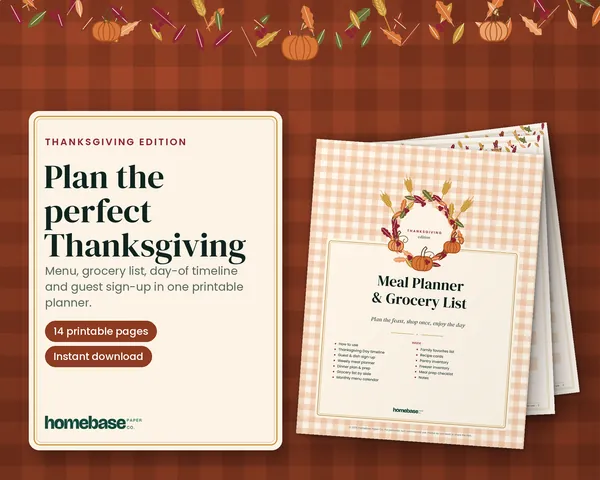
Meal Planner & Grocery List: Thanksgiving Edition
Plan the perfect Thanksgiving: our meal planner in a warm harvest design, with a Thanksgiving Day timeline, a guest & dish sign-up, an aisle-sorted grocery list and pantry and freezer trackers.

Printables
Budget Planner Printable
Twelve undated pages you can print every month: budget, bills, spending, savings and debt.
Printables
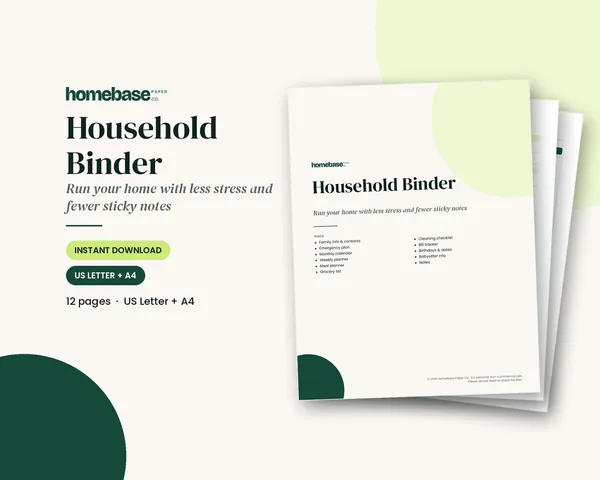
Household Binder
Family info, emergency plan, calendars, meals, groceries, cleaning, bills and sitter notes.
 Starter pick
Printables
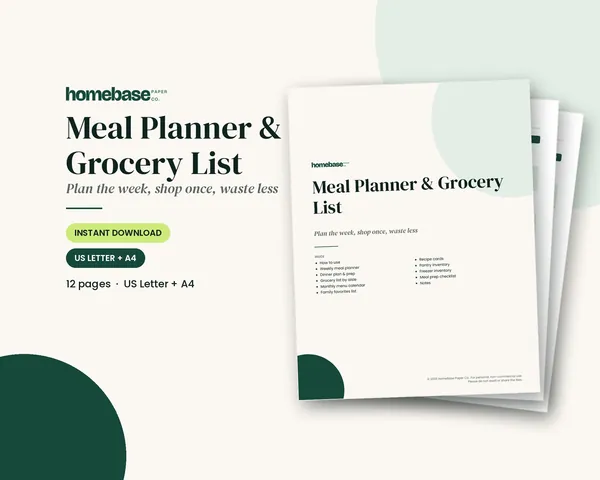
Meal Planner & Grocery List
Weekly meals, a grocery list sorted by aisle, and pantry and freezer inventories so you shop once and waste less.
 Club
Monthly club
Money Club
Anyone who wants a clear plan for the month's bills, holiday spending and savings.
Free printable
Get the free Holiday Budget Starter Kit
A one-page holiday budget, a gift list with a spending limit for every person, and a 6-week countdown so December stays calm and paid for. You'll also get our weekly HomeBase email with simple holiday planning, budgeting and hosting tips.

Sources
- Deposit Insurance (Federal Deposit Insurance Corporation) fdic.gov
- National average savings rate fdic.gov
- Truth in Savings rules (Regulation DD) consumerfinance.gov
- FDIC's deposit insurance guide fdic.gov
- NCUA ncua.gov