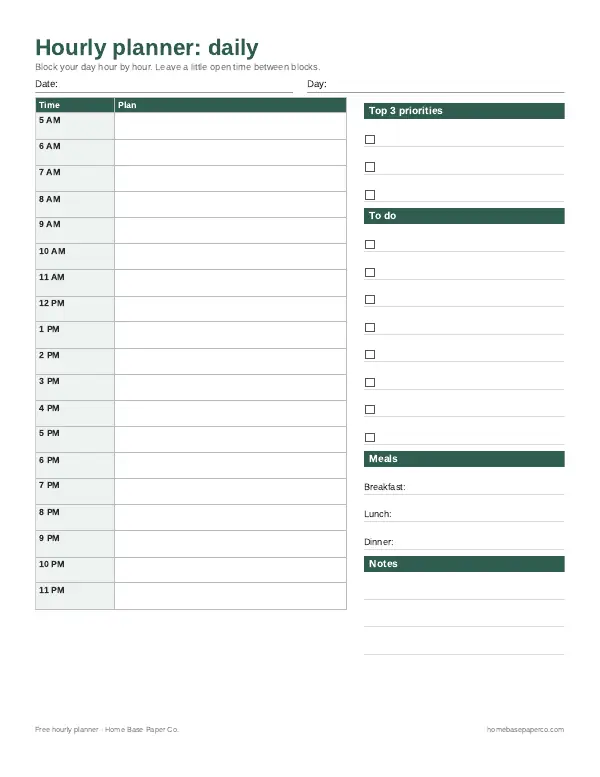
The short answer: A time blocking template splits your day into blocks of time and gives each block one job. Start with fixed appointments, put your 1 to 3 biggest priorities in your best focus hours, batch small tasks into short blocks and leave a buffer block or two for whatever runs over. Copy the daily and weekly templates below into a notebook, a printout or your calendar app.
Our picks for time blocking template
Printables
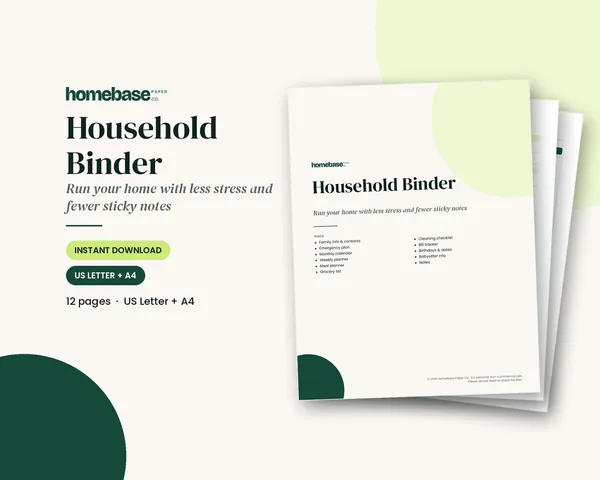
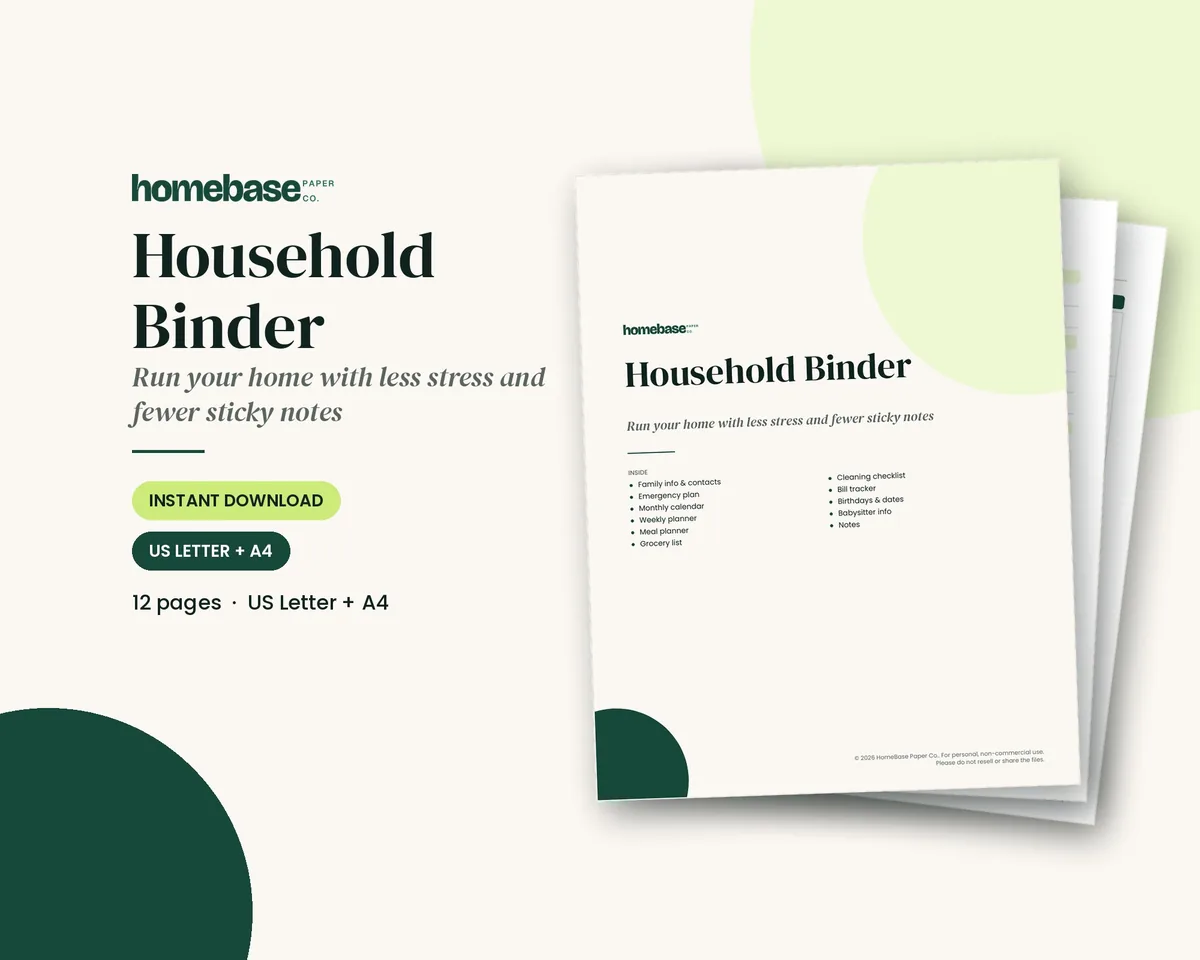
Household Binder
Family info, emergency plan, calendars, meals, groceries, cleaning, bills and sitter notes.
Printables
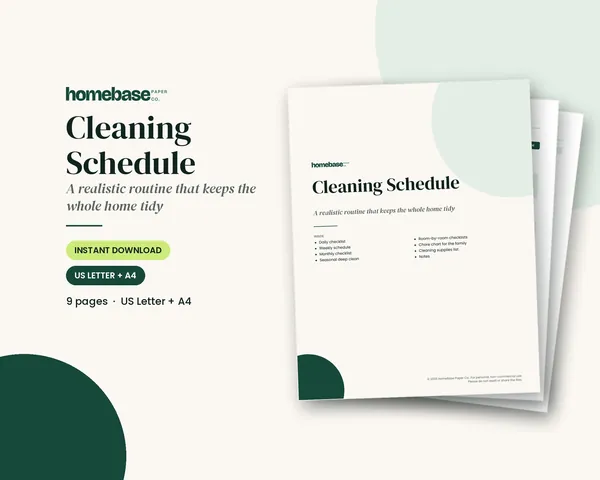
Cleaning Schedule
Daily, weekly, monthly and seasonal lists - plus a family chore chart.
 Starter pick
Printables
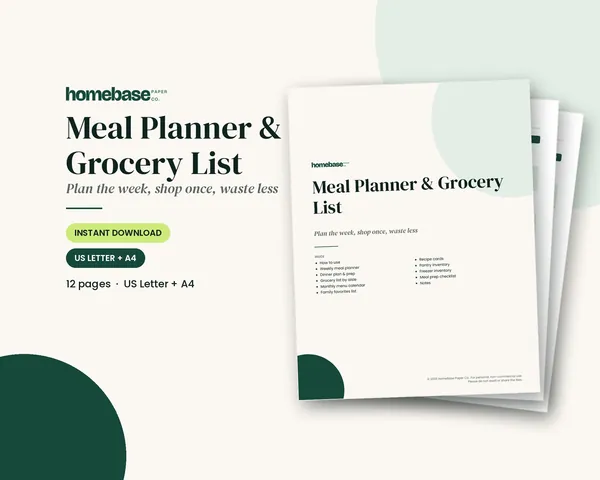
Meal Planner & Grocery List
Weekly meals, a grocery list sorted by aisle, and pantry and freezer inventories so you shop once and waste less.
When I worked as an executive assistant, the calendar was the job, and a day with no blocks was a day that got eaten by everyone else's requests.
Daily time blocking template
Copy this and replace the tasks with your own.
| Time | Block | What goes here |
|---|---|---|
| 6:30–7:00 AM | Morning routine | Get ready, coffee, look at today's plan |
| 7:00–8:00 AM | Family or commute | Breakfast, drop-offs, travel |
| 8:00–9:30 AM | Deep work 1 | Your most important task of the day |
| 9:30–10:00 AM | Admin batch | Email, messages, quick replies |
| 10:00–11:30 AM | Deep work 2 | Second priority |
| 11:30 AM–12:00 PM | Buffer | Anything that ran over |
| 12:00–1:00 PM | Lunch and a walk | Away from the screen |
| 1:00–2:30 PM | Meetings or calls | Group them here |
| 2:30–3:00 PM | Admin batch | Email, scheduling, paperwork |
| 3:00–4:00 PM | Shallow work | Lower-focus tasks |
| 4:00–4:30 PM | Buffer and shutdown | Wrap up, plan tomorrow |
| 5:30–6:30 PM | Dinner | Cook, eat, clean up |
| 7:00–7:30 PM | Home block | Chores, laundry, tidying |
| 9:30 PM | Wind down | Screens off, set up for bed |
Protect sleep when you plan the end of the day: the CDC says adults need 7 or more hours of sleep a night, so block bedtime backward from your wake-up time.
Weekly time blocking template
| Day | Morning | Afternoon | Evening |
|---|---|---|---|
| Monday | Deep work, weekly priorities | Meetings | Home block: laundry |
| Tuesday | Deep work | Calls and admin | Errands |
| Wednesday | Deep work | Meetings | Home block: kitchen and bathrooms |
| Thursday | Deep work | Admin and catch-up | Free |
| Friday | Finish the week's priorities | Review and plan next week | Free |
| Saturday | Grocery run, errands | Family or personal time | Free |
| Sunday | Rest | Meal plan, grocery list, budget check | Plan the week's blocks |
How to time block, step by step
- List everything. Write every task, appointment and recurring chore for the day or week.
- Place fixed blocks first. Meetings, school runs, work shifts and meals go on the schedule before anything else.
- Pick 1 to 3 priorities. Give each a 60 to 90 minute block when your energy is highest.
- Batch the small stuff. Group email, calls and errands into short blocks instead of answering all day.
- Add buffers. Leave at least one 30-minute open block in the morning and one in the afternoon.
- Color code. Use one color per type of block so you can see the balance at a glance.
- Review nightly. Spend 10 minutes moving unfinished tasks into tomorrow's blocks.
Batching matters because switching back and forth costs time. The American Psychological Association's summary of multitasking research explains that each switch costs a little time, those costs add up, and switching hurts most with complex or unfamiliar tasks.
Time block color codes
| Color | Block type |
|---|---|
| Blue | Deep work |
| Green | Meetings and calls |
| Yellow | Admin and email |
| Orange | Home and family |
| Purple | Health, exercise and rest |
| Gray | Buffer |
Time blocking variations
- Work-from-home: add a fixed start and shutdown block so work doesn't spread into the evening.
- Shift work: block around your shifts, and keep a sleep block fixed on workdays.
- Busy parent: block the family anchors first, then use short 30-minute blocks for your own tasks.
- Theme days: give each weekday one theme, like errands on Tuesday and paperwork on Thursday.
- Holiday season: add weekly blocks for gift shopping, baking and wrapping from November through December.
For more ways to organize a day, see this daily schedule guide, these to-do list templates, a brain dump to empty your head first, and how to be more productive. For the method behind the printable, start with what is time blocking.
Fill your home blocks
HomeBase Paper Co. doesn't sell a time blocking planner, but these printables fill the home and family blocks on your schedule:
- Cleaning Schedule, $4.49. Daily, weekly, monthly and seasonal cleaning lists, so each home block already has its tasks.
- Meal Planner & Grocery List, $3.99. Use it in your Sunday planning block to set the week's dinners and shopping list.
- Household Binder, $6.99. Monthly and weekly calendars, a weekly planner, meal and cleaning pages and family info in one binder, so your Sunday planning block has a home.
Browse every printable in Printables, or save with the Home Management Bundle on the Bundles page.
Household Binder
Family info, emergency plan, calendars, meals, groceries, cleaning, bills and sitter notes.
$6.99 · Instant download. Print at home or fill it in on screen. Or browse the full Home & Organizing collection.
Frequently asked questions
What is a time blocking template? A time blocking template is a schedule split into blocks of time, usually 30 or 60 minutes, where you assign one task or type of work to each block. Instead of a to-do list with no times, every task gets a place on the calendar.
How do you time block your day? To time block your day, list your fixed appointments first, then your top 1 to 3 priorities, and give each priority a block during your best focus hours. Batch small tasks like email into one or two short blocks and leave a buffer block for anything that runs over.
How long should a time block be? Most time blocks work best at 30 to 90 minutes. Use 60 to 90 minutes for deep work that needs focus and 15 to 30 minutes for batches of small tasks like calls, email or errands.
Does time blocking actually work? Time blocking works for many people because it cuts down on switching between tasks. The American Psychological Association notes that task switching costs time, and those small costs add up across a day.
What is the difference between time blocking and a to-do list? A to-do list says what to do, and time blocking says when you'll do it. Many people use both: the list holds every task, and the time-blocked schedule picks which ones get done today.
What is time boxing vs. time blocking? Time blocking reserves a slot on the calendar for a task, while time boxing sets a fixed limit on how long you'll spend on it. A block can also be a box when you stop at the end of the time no matter what.
How do you time block with a family schedule? Block the fixed family times first, like school drop-off, dinner and bedtime, then fit your own work and errands around them. Add one weekly block for meal planning and grocery shopping so dinners don't take over weeknights.
What should I put in a buffer block? Put anything that ran over, unexpected calls and quick catch-up tasks in a buffer block. A 30-minute buffer in the late morning and another in the afternoon keeps one delay from wrecking the whole day.
Should I time block on paper or in an app? Use paper if you like seeing the whole day at once and crossing blocks off, and an app if your schedule changes often or is shared. Many people sketch the week on paper on Sunday and keep appointments in a digital calendar.
How can I time block household tasks? Give household tasks their own short daily block and one longer weekly block, and assign specific chores to each. The Cleaning Schedule printable from HomeBase Paper Co. lays out daily, weekly, monthly and seasonal cleaning lists so your home block already has a list.
Free printable
Block your day hour by hour
A daily planner from 5 AM to 11 PM and a weekly hourly schedule. You'll also get our weekly HomeBase email with simple planning and home organization tips.