

The short answer: Perennial flowers live for more than two growing seasons, but the right choice depends on your location, sunlight, soil and drainage. Start with those conditions, check the plant's mature size and winter hardiness, then choose several flowering seasons instead of buying everything in bloom at once.
Our picks for perennial flowers
Printables
Budget Planner Printable
Twelve undated pages you can print every month: budget, bills, spending, savings and debt.
A returning garden is not a no-maintenance garden. Plants still need an appropriate site, establishment care and occasional attention. A small bed of well-chosen plants is easier to learn from than a large collection bought before the site is understood.
Choose perennial flowers for the actual site
Write down where the bed is, how much direct light it receives and whether the soil stays wet after rain. Observe more than one time of day. A spot that looks sunny during a brief visit may be shaded for most of the growing season.
Use the USDA Plant Hardiness Zone Map as a starting point for winter suitability. It describes average annual extreme minimum winter temperatures; it does not tell you everything about summer heat, drainage, wind or a particular garden's small-scale conditions.
Check the exact plant and cultivar tag rather than relying on a common name alone. Two plants sold under a broad familiar name can have different sizes and care requirements. Note the botanical name if you plan to ask a local extension office for help.
Plant directions to explore, not a universal shopping list
The following are common perennial-flower groups worth researching for an appropriate site. Suitability varies by species, cultivar and region. Verify local recommendations, invasive status and household safety considerations before purchasing.
| Plant group | A useful planning question |
|---|---|
| Coneflower | Which species or cultivar suits the site's light and mature spacing? |
| Black-eyed Susan | Is the plant being sold a reliably perennial species for your conditions? |
| Coreopsis | How does this cultivar perform in local soil and winters? |
| Salvia | Is this an ornamental perennial suitable for your climate? |
| Garden phlox | How much space and air circulation will the chosen variety need? |
| Peony | Where can the mature plant remain without frequent disturbance? |
| Iris | What type is it, and what planting conditions does that type require? |
| Daylily | Does the exact variety fit the bed, and is it appropriate around household pets? |
| Aster | Which local species offers the height and flowering season you need? |
| Hellebore | Is the location appropriate for the species and its household safety requirements? |
| Astilbe | Can the site provide the moisture and light the chosen variety needs? |
| Bleeding heart | Will other plants fill the visual gap if its foliage declines seasonally? |
| Columbine | Which species fits local growing conditions? |
| Hardy geranium | Is the plant a hardy perennial rather than a different plant sold as geranium? |
| Penstemon | Which species is adapted to your region and drainage? |
This table is a set of research prompts. It intentionally avoids assigning one hardiness range or bloom month to an entire genus. A locally recommended variety is more useful than a general claim that every member of a plant group is easy.
For a shaded site, University of Minnesota Extension's shade-gardening guide explains how light and competing tree roots affect plant selection. Match any northern-region recommendation to your own climate before using it elsewhere.
Plan for more than the day you shop
Divide your intended season into early, middle and late periods using local flowering information. Choose plants across those periods if you want changing interest. A nursery visit during one week can otherwise produce a bed where everything flowers at the same time.
Add foliage, plant shape and mature height to the plan. A bed can look intentional between flowering periods when the leaf shapes and spacing work together. Place a short plant where it can still be seen after taller neighbors reach full size.
Draw a simple overhead sketch with circles representing mature spread. Leave room for access to a path, hose or maintenance point. Do not squeeze extra plants into every gap solely because the new plants look small in their pots.
Build a manageable first planting
Choose one limited area and repeat a small number of compatible plants. Repetition makes it easier to compare growth and identify whether one plant is struggling. Keep tags or a written list so you can look up the exact plants later.
Before digging, confirm any relevant utility-location requirements and permissions for the site. Follow local extension and nursery guidance for planting depth, timing and establishment watering. There is no single watering schedule that fits every soil, weather pattern and plant.
Record planting dates, weather and what you observe. If something fails, investigate the conditions before buying the same replacement. A plant that is repeatedly wet in poorly drained soil may need a different site rather than more fertilizer.
Budget for the bed, not just the plants
List plants, any needed soil testing, edging, mulch, delivery and tools you do not already own. Price the full plan before committing to a large area. Starting smaller can leave room to learn which plants do well without turning the project into repeated replacement spending.
The Budget Planner Printable ($5.99) can hold a garden allocation; browse Printables for planning formats. Use the family budget guide to fit a seasonal home project around other commitments.
At the end of the season, note what returned, what flowered and where maintenance was harder than expected. Update the sketch before adding plants. A useful perennial garden plan improves from observations of your own site rather than a promise that every plant will return forever.
Budget Planner Printable
Twelve undated pages you can print every month: budget, bills, spending, savings and debt.
$5.99 · Instant download. Print at home or fill it in on screen. Or browse the full Budget & Money collection.
Frequently asked questions
Do perennial flowers come back every year? Perennial flowers can return for multiple growing seasons when the plant is suited to the site and survives local conditions. Perennial does not mean permanent or maintenance-free. Species, cultivar, winter temperatures, drainage and care all affect performance.
What should I check before buying perennial flowers? Before buying perennial flowers, check winter hardiness, sunlight, soil moisture, drainage and mature size for the exact plant. Compare its needs with the site you intend to use. A plant that looks attractive in the nursery may not suit the garden at home.
Can I grow perennial flowers in shade? Some perennial flowers can grow in suitable shade conditions, but shade varies in intensity, moisture and root competition. Choose species recommended for those conditions in your region. Do not assume a plant labeled shade tolerant will thrive in every dark or dry location.
Free printable
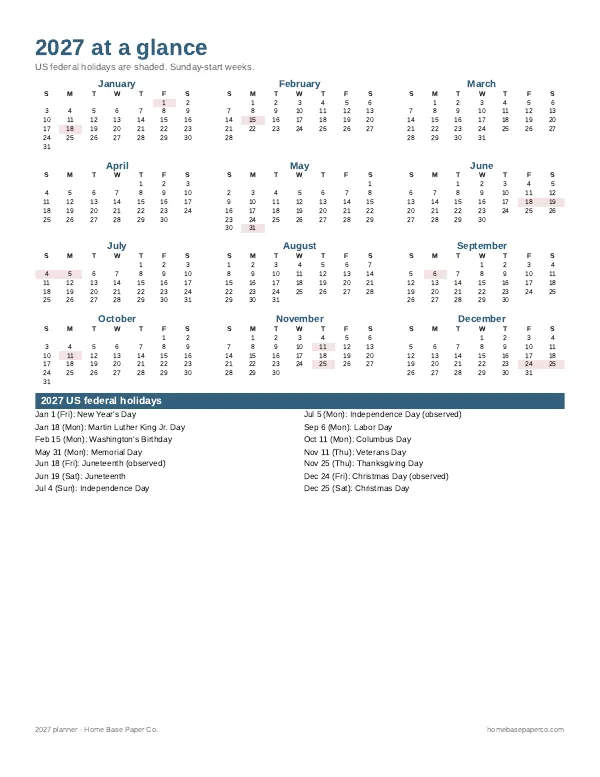
Get organized for the new year: get the free 2027 planner
A 16-page printable 2027 planner with a year-at-a-glance page and monthly calendars with US holidays marked. You'll also get our weekly HomeBase email with simple planning and home organization tips.
Sources
- USDA: Plant Hardiness Zone Map planthardiness.ars.usda.gov
- University of Minnesota Extension: Gardening in shade extension.umn.edu