

The short answer: the best soups for winter are one-pot recipes built on beans, root vegetables or chicken that simmer on their own and freeze well. Start with chicken noodle, minestrone, split pea, potato or chili. Below are 30 soups in 5 groups, plus freezer rules and a simple plan for cooking one big pot a week.
Our picks for best soups for winter
 Starter pick
Printables
Meal Planner & Grocery List
Weekly meals, a grocery list sorted by aisle, and pantry and freezer inventories so you shop once and waste less.
Printables
Family Recipe Binder
Section dividers, four recipe page layouts with room for the family story, 4x6 and 3x5 cards and a conversion chart - print it or type into the fillable version.
Winter soup is the cheapest way to feed a family on a cold night: one pot, pantry staples and leftovers for lunch. Use the groups below to pick by mood, and cook one pot on Sunday.
6 brothy winter soups
- Chicken noodle soup
- Minestrone
- Vegetable barley soup
- Italian wedding soup
- Egg drop soup
- Tortellini soup
6 creamy winter soups
- Potato soup
- Broccoli cheddar soup
- Butternut squash soup
- Tomato soup
- Cream of mushroom soup
- Corn chowder
6 bean and lentil winter soups
- Split pea soup
- Lentil soup
- Ham and bean soup
- Black bean soup
- White bean and kale soup
- Chickpea and spinach soup
6 chili and stew winter meals
6 soups from around the world
- Taco soup
- Chicken tortilla soup
- French onion soup
- Matzo ball soup
- Italian penicillin soup
- Miso soup with tofu and greens
For even more options, browse our full soup recipes collection, and for step-by-step stock and noodles see how to make chicken soup from scratch.
The 4-step base for almost any winter soup
- Soften a chopped onion, carrot and celery stalk in oil for 5 to 8 minutes.
- Add garlic, herbs and your main ingredient (beans, potatoes, squash or chicken).
- Pour in stock to cover, bring to a boil, then simmer until everything is tender.
- Season at the end with salt, pepper and a splash of lemon juice or vinegar to brighten it.
Freezing and reheating rules
- Cool soup quickly, then freeze it in single-serving containers so you can take one to work.
- Freeze cream-based and pasta soups without the cream or pasta, and add those fresh when reheating.
- Label every container with the soup name and date.
- Reheat until steaming hot throughout, and eat refrigerated leftovers within 3 to 4 days per the FoodSafety.gov chart.
One pot a week plan
Cook one big pot on Sunday, eat it for dinner, pack it for two lunches and freeze the rest. After a month you have a freezer shelf of different soups and no need to cook on a busy night. Our freezer meals guide shows how to stock it.
Plan the shopping with the Meal Planner & Grocery List ($3.99), and save the pot you love most in a Family Recipe Binder ($6.99).
How to make winter soup taste better
Most soups improve when you build flavor in layers. Brown the onion well, add a spoonful of tomato paste or a parmesan rind for depth, and use real stock instead of plain water when you can. Finish with acid, such as lemon juice or a splash of vinegar, and fresh herbs, which wake up a pot that tastes flat. Always taste at the end and season again, because salt added early cooks off.
Soup shopping list for the month
Keep these on hand and you can make most soups above without a special trip:
- Onions, carrots, celery and garlic
- Canned tomatoes and a few cans of beans
- Dried lentils and split peas
- Boxed chicken and vegetable stock
- Potatoes and a bag of frozen vegetables
- Pasta or rice for noodle and rice soups
- Dried herbs, bay leaves and chili powder
Serving ideas
Serve soup with crusty bread, a grilled cheese, a simple green salad or a spoonful of yogurt on top. For a heartier meal, add leftover cooked chicken, sausage slices or a handful of greens in the last few minutes. Pack soup in a thermos for lunch so it stays hot until noon.
Plan the week's meals and shop once
Weekly meals, a grocery list sorted by aisle, and pantry and freezer inventories so you shop once and waste less.
$3.99 · Instant download. Print at home or fill it in on screen. Or browse the full Home & Organizing collection.
Frequently asked questions
What is the best soup to make in winter? The best soup to make in winter is a hearty, one-pot recipe built on beans, vegetables or meat that simmers while you do something else, such as chicken noodle, minestrone, split pea, potato or a pot of chili. Pick the one that matches what is already in your pantry, since most winter soups use the same onion, carrot, celery and stock base.
Which winter soups freeze well? Winter soups that freeze well include brothy vegetable, bean, lentil, split pea, chili and stew recipes. Soups finished with cream, cheese or pasta freeze less well, so freeze them before adding those ingredients and stir them in when you reheat. Cool the soup first, portion it into containers and leave a little room at the top for expansion.
How long does homemade soup keep in the fridge? Homemade soup keeps in the refrigerator for about 3 to 4 days when it is cooled promptly and stored in a covered container. For longer storage, freeze single portions. Check the FoodSafety.gov cold food storage chart for the recommended storage times and reheat soup until it is steaming hot all the way through.
Free printable
Save the family favorites: get the free recipe book pages
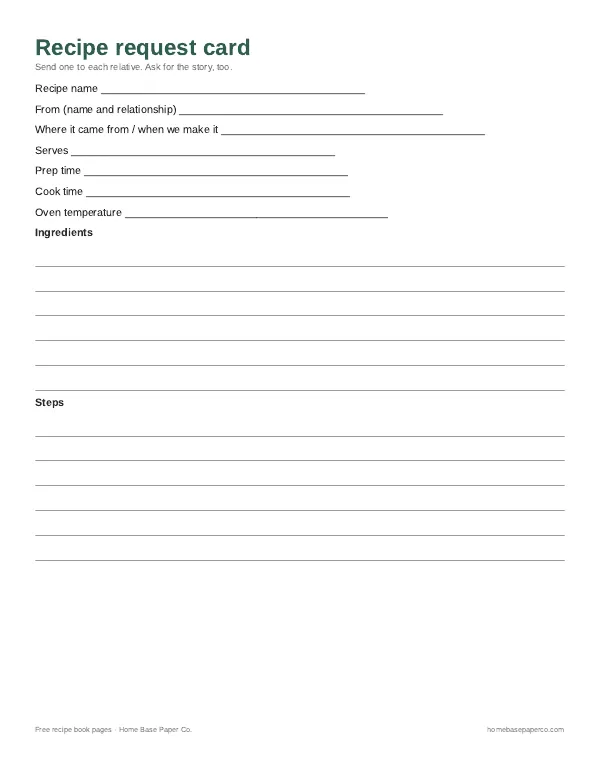
Printable recipe pages and a recipe request card to send to relatives, so the dishes everyone loves end up in one book. You'll also get our weekly HomeBase email with easy meal planning ideas and family recipe tips.
Sources
- FoodSafety.gov: Cold food storage chart foodsafety.gov