The short answer: A medication log template gives you one place to list every medicine someone takes, with the dose, schedule, purpose and prescriber. It sounds simple, but it's the page doctors, pharmacists and backup caregivers ask for most. If you're managing medicines for yourself, an aging parent or a child with a long-term condition, here's what to track, a sample row, how to keep it current and a printable version to start with today.
Our picks for medication log
Printables
Caregiver Organizer
One place for contacts, appointments, the medication list from the doctor, and daily notes.
 Save 37%
Bundles
Family Peace of Mind Bundle
The If Something Happens to Me binder, Caregiver Organizer, Pet Health Records and Password Log together.
This page is about record-keeping. Questions about doses, interactions or changes always belong to a doctor or pharmacist.
Why a medication log matters
Memory is not a reliable place to keep a list of eight medicines with different doses. A written log means you can answer "what are they taking?" quickly and accurately at an appointment, in an emergency or when someone else is helping for the weekend. We're also preparing a bound caregiver log book for meds, appointments and daily notes.
The National Institute on Aging advises keeping an up-to-date list of all medicines, including over-the-counter drugs and supplements, sharing it with your pharmacist and other providers, and bringing it when you travel.
What to include in a medication log
| Column | What to write |
|---|---|
| Medicine name and strength | Exactly as printed on the label |
| Dose | How much each time, for example one tablet |
| When | Times of day, and with or without food |
| What it's for | The condition, in plain words |
| Prescriber | Doctor's name and phone |
| Pharmacy | Where it's filled |
| Start date | When it began |
| Stop date | When it ended, if it did |
| Notes | Side effects or special instructions |
The FDA's medication safety tips suggest writing down each medicine, vitamin and herb you use, noting any side effects, keeping the list with you and showing it to your health care provider. Supplements count, so add them.
A sample filled-in row
Here's what one line might look like, using made-up details:
| Medicine | Dose | When | For | Prescriber | Notes |
|---|---|---|---|---|---|
| Example 10 mg tablet | 1 tablet | 8 a.m. with breakfast | Blood pressure | Dr. Lee, 555-0100 | Started March; mild dizziness first week |
Copy names and strengths straight from the label rather than from memory. Spelling matters, because many medicine names look alike.
How to set up your medication log
- Gather every bottle and box, including vitamins, eye drops, inhalers, creams and anything taken "as needed."
- Write one line per medicine using the label.
- Add contacts for each prescriber and the pharmacy.
- Note allergies at the top of the page.
- Make copies: one in the binder, one in a wallet or bag, one photo on your phone.
- Bring it to every appointment and ask the provider to check it.
Keeping it current
A medication log only helps if it's right. Update it the same day something changes, and cross out stopped medicines instead of erasing them, with the stop date, so you keep a history. Review the full list:
If someone else covers care while you rest, hand them this log. Our guide to respite care shows how to prepare a short-term caregiver.
- Before every doctor visit
- After a hospital stay or ER visit
- When a new specialist is added
- Every few months, even if nothing changed
Medication log vs. daily care log
A medication log lists what someone takes. A daily care log records what happened today: doses given with the time and initials, meals, mood and anything unusual. If several people share care, you'll likely want both. Our caregiver daily log template covers the daily side. For more on this topic, see our caregiving resources.
If you help with medical decisions, a medical power of attorney is the document that gives you that authority. Our guide covers how to set one up.
A printable medication log in a full caregiver system
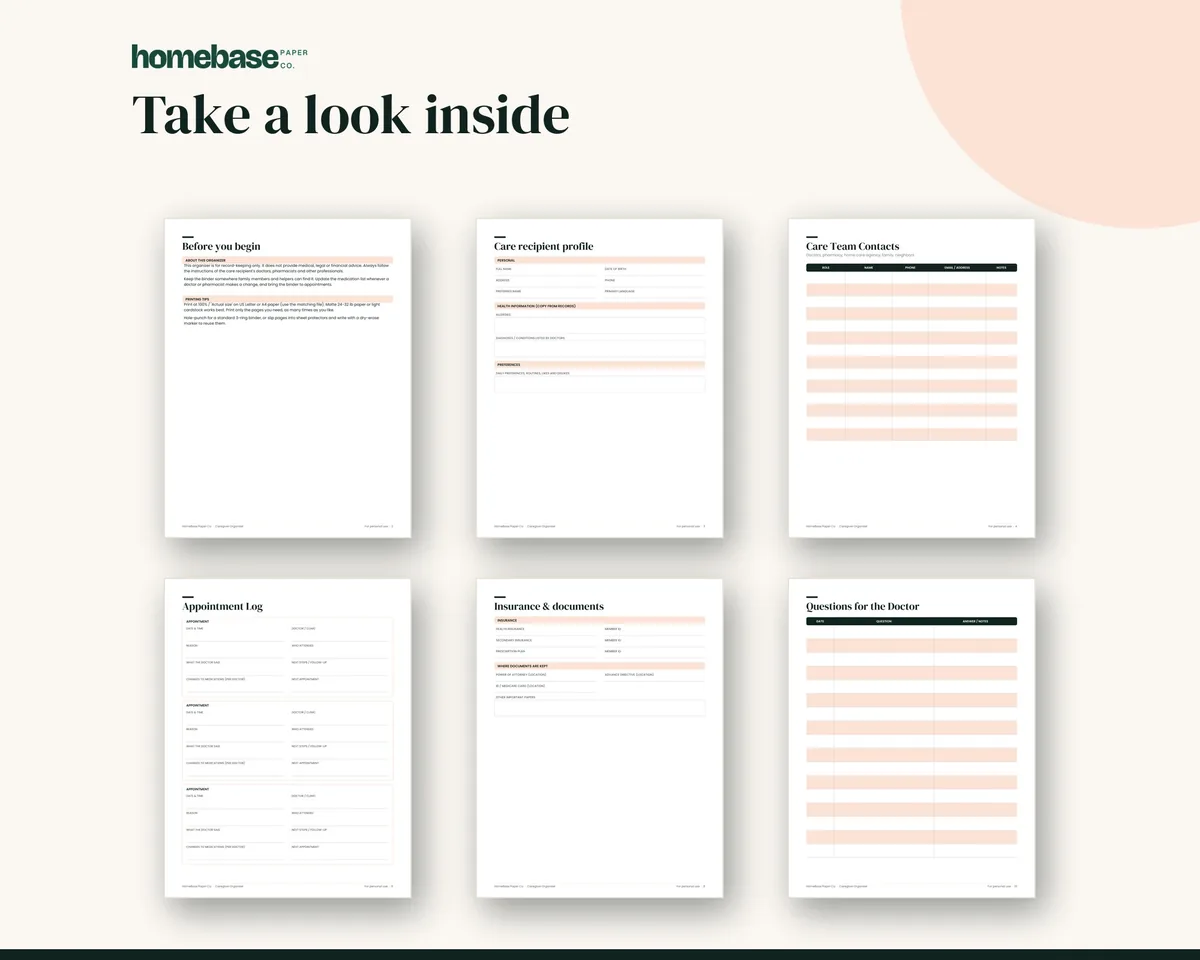
The Caregiver Organizer ($6.99) is a 12-page printable PDF with a Medication List page plus a care recipient profile, care team contacts, an appointment log, a daily care log, insurance and documents, a family care schedule, questions for the doctor and a care expense log. It's in US Letter and A4, so you can print fresh medication pages whenever the list changes.
If you're also organizing important family information, the Family Peace of Mind Bundle ($17.99, $28.46 if bought separately) includes the Caregiver Organizer, the If Something Happens to Me Binder, Pet Health Records and the Password & Account Log.
Not sure what else to keep together? Our guide to how to organize important documents shows where medical records fit in a family filing system, and gifts for caregivers has ideas for supporting someone who's doing this every day.
Tips from families who keep one
- Keep the log in the same spot every time, near where medicines are stored.
- Use a pencil for "as needed" medicines, which change more often.
- Put the pharmacy's phone number at the top for quick refill calls.
- Ask the pharmacist for a printed medication history now and then, and compare it with your log.
- If more than one person helps, agree on who updates the list.
A medication log takes about 30 minutes to set up. After that, it quietly saves time and confusion at every appointment. If you're also gathering emergency information, keep the log with your If Something Happens to Me binder.
Keep every appointment and medication in one place
One place for contacts, appointments, the medication list from the doctor, and daily notes.
$6.99 · Instant download. Print at home or fill it in on screen. Or browse the full Family & Life Admin collection.
Frequently asked questions
What is a medication log template? A medication log template is a ready-made page for listing every medicine someone takes, with the name, dose, schedule, prescriber and purpose. It keeps one current record you can bring to appointments, hand to a pharmacist or give to another caregiver.
What should a medication log include? A medication log should include each medicine's name and strength, the dose, when it's taken, what it's for, who prescribed it, the start date and any notes such as side effects. Include over-the-counter medicines, vitamins and supplements, too.
Should vitamins and supplements go on a medication log? Yes, vitamins, herbal products and supplements belong on a medication log alongside prescriptions. The FDA suggests writing down every medicine, vitamin and herb you use, because doctors and pharmacists need the full picture.
How often should I update a medication log? Update a medication log the same day anything changes: a new prescription, a dose change, a stopped medicine or a new supplement. Then review the whole list before every doctor visit and after any hospital stay.
Is a medication log the same as a medication administration record? No, a medication log for home use is simpler than a medication administration record used in care facilities. The home version lists what someone takes and why; a daily care log or checklist can record each dose given, with the time and initials.
Can a medication log help at the doctor's office? Yes, a medication log helps at the doctor's office because it gives the exact names and doses instead of relying on memory. The National Institute on Aging recommends keeping an up-to-date list of medicines and sharing it with your health care providers and pharmacist.
Where should I keep a medication log? Keep the main medication log in a caregiving binder at home, a copy in your wallet or bag, and a photo on your phone. The FDA suggests keeping the list with you so it's available in an emergency or at an unplanned visit. Our Caregiver Organizer keeps the medication list together with contacts, appointments and daily notes in one printable binder.
Is the Caregiver Organizer medical advice? No, the Caregiver Organizer is a record-keeping tool, not medical advice. Its medication list helps you write down what's prescribed so you can share it with doctors and pharmacists; questions about doses, interactions or changes should always go to a health care professional.
Can I print the medication list more than once? Yes, the Caregiver Organizer is a printable PDF in US Letter and A4, so you can print a fresh medication list whenever the old one fills up with changes. Many caregivers print one for the binder and one for a wallet copy.
Do I need a medication log for one person or the whole family? Most families keep one medication log per person, which avoids mix-ups when two people take similar medicines. If you're caring for a parent and children at once, use a separate page for each and label them clearly. Our Caregiver Organizer is a printable PDF, so you can print a separate medication list for each person you care for.
Free printable
Have the important stuff in one place: get the free emergency binder pages
Printable starter pages for household members, emergency contacts, medical notes and where key documents live. You'll also get our weekly HomeBase email with simple ways to keep family records and important papers in order.