The short answer: a household chores list is one written list of every recurring job that keeps a home running: cleaning, meals, laundry, bills, yard work, pets and errands. Sort each chore by how often it happens and put one name next to it.
- Three kinds: upkeep, cleaning and management chores
- Often forgotten: money and paperwork, invisible until a late fee shows up
- Split it: pick by preference first, own the whole chore and trade the leftovers
- Check in after two weeks
- Next step: Plan it with the Kids Chore Chart ($3.49).
A household chores list is one written list of every recurring job that keeps a home running: cleaning, but also meals, laundry, dishes, trash, bills, paperwork, yard work, pets, the car and the errands nobody remembers until they're overdue. The most useful version sorts each chore by how often it happens (daily, weekly, monthly, seasonal) and puts one name next to it.
Below is the full list of chores I'd hand anyone setting up a home, with real frequencies, a simple way to split the work between adults, and a one-page system to keep it going. As the oldest of three, I was the one who kept track of whose turn it was. A list on paper settles that question faster than any family debate.
What are chores?
Chores are the regular, unpaid jobs that keep a home and a household running: cleaning, cooking, dishes, laundry, trash, yard work, pet care, errands and the paperwork behind them. What separates a chore from a one-time project is that it comes back. Dishes return every day, bathrooms every week, gutters every season.
Most chores fall into three kinds:
- Upkeep chores keep things from getting worse: dishes, trash, laundry, a quick tidy.
- Cleaning chores reset a room: bathrooms, floors, dusting, the fridge.
- Management chores keep the household on track: meal plans, bills, appointments, the calendar and restocking supplies.
A useful chores list includes all three, because the management chores are the ones that get forgotten.
Why a household chores list beats a cleaning schedule alone
Most chore lists online stop at cleaning. That's only part of the work. The U.S. Bureau of Labor Statistics' American Time Use Survey counts housework, food prep and cleanup, lawn care and household management as household activities. In 2025, 81 percent of people did some of that work on an average day, spending about 2 hours on it.
The same survey shows the load isn't even. Of women, 87 percent did household activities on an average day, compared with 75 percent of men. On the days they did them, women averaged 2.8 hours and men 2.1 hours. A shared, written list doesn't fix that by itself. It does make the work visible, which is where a fair split starts.
Here is what a complete list covers that a cleaning-only list misses:
| Category | Examples | Why it gets forgotten |
|---|---|---|
| Cleaning | Wipe counters, vacuum, scrub bathrooms | Rarely forgotten, often the only list |
| Kitchen and meals | Meal plan, grocery list, cooking, dishes | Daily and repetitive, so it feels automatic |
| Laundry | Wash, dry, fold, put away, change sheets | Splits into many small steps |
| Money and paperwork | Pay bills, check the budget, file mail | Invisible until a late fee shows up |
| Outdoor and yard | Mow, rake, water plants, clear walkways | Seasonal, so nobody owns it |
| Home upkeep | Change filters, test smoke alarms | Happens monthly or yearly |
| Pets and car | Feed, vet visits, oil changes, registration | Lives on separate calendars |
| Errands and planning | Returns, appointments, gifts, school forms | Pure mental load |
The complete list of household chores by frequency
This is the core list of household chores. Copy the rows that fit your home and skip the rest. A one-bedroom apartment and a house with a yard will look different, and both are fine.
Daily household chores
These are the small resets that keep a home from sliding. Most take 5 to 15 minutes each.
- Make the beds.
- Wash dishes or load and run the dishwasher.
- Wipe kitchen counters and the stovetop.
- Cook or reheat meals, and pack lunches if needed.
- Sweep the kitchen floor or spot-clean spills.
- Do a 10-minute pick-up of shared rooms.
- Sort the mail: toss junk, set bills aside.
- Feed pets and refresh their water.
- Take out trash or recycling when it's full.
- Check tomorrow's calendar.
If you only do these ten, the house stays livable. For a full routine around them, see our morning routine and night routine guides.
Weekly household chores
Weekly chores are where most homes fall behind, because they need a set day. More people do housework on weekends than on weekdays, according to the BLS (40 percent compared with 35 percent). So many families put the bigger jobs on Saturday or Sunday.
| Chore | Suggested day | Notes |
|---|---|---|
| Clean bathrooms (toilet, sink, shower) | Monday | Quick wipe midweek if shared |
| Vacuum and mop floors | Tuesday | High-traffic rooms first |
| Dust surfaces and electronics | Wednesday | Top to bottom |
| Laundry and towels | Thursday | Our laundry schedule splits loads by day; see how to separate laundry for sorting |
| Change bed sheets | Friday | Weekly or every other week |
| Grocery shopping and meal plan | Saturday | Plan before you shop |
| Clean out the fridge | Sunday | Before the new groceries go in |
| Water plants, take bins to the curb | Trash day | Set a phone reminder |
| Review bills and the budget | Sunday | 10 minutes is enough |
For the fridge, use a real rule rather than a sniff test. The USDA's Food Safety and Inspection Service says leftovers can be kept in the refrigerator for 3 to 4 days or frozen for 3 to 4 months. A weekly clean-out on grocery day catches anything past that window.
If Sunday is your planning day, our Sunday reset combines the house, kitchen and money check into one 90-minute routine.
Monthly household chores
Monthly chores are easy to forget because nobody does them often enough to build a habit. Put them on the first weekend of the month.
- Test every smoke alarm. The NFPA says to test smoke alarms at least once a month by pressing the test button.
- Clean the microwave, oven door and range hood filter.
- Wipe baseboards, light switches and door handles.
- Vacuum under furniture and couch cushions.
- Wash the trash cans and recycling bins.
- Check the HVAC filter and replace it if it's dirty.
- Clean out the car and check tire pressure.
- Reconcile bank and credit card statements.
- Cancel subscriptions you don't use.
- Restock household supplies and toiletries.
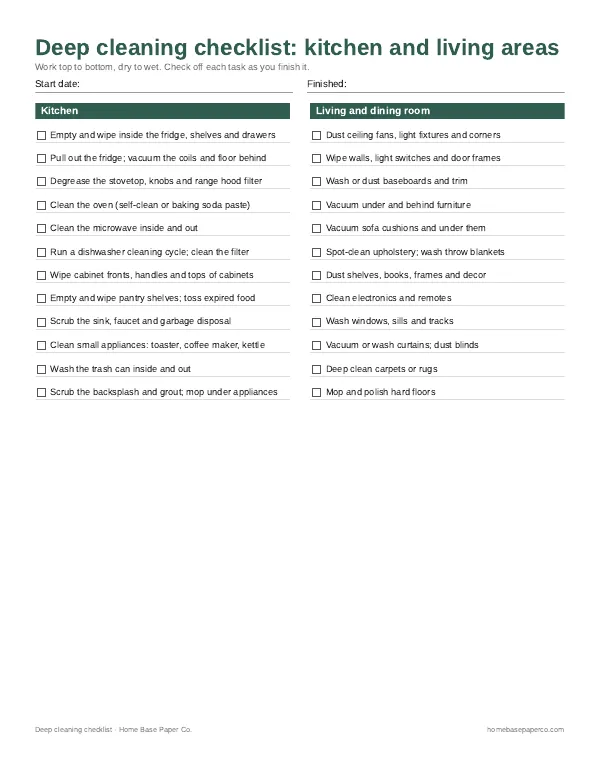
Our deep cleaning checklist has the room-by-room detail for the cleaning items.
Seasonal and yearly household chores
These are the jobs that cost money when they're skipped. Pick one month per season and spread them out.
| Season | Chores |
|---|---|
| Spring | Wash windows, clean gutters, service the AC, swap closets |
| Summer | Mow and water the lawn, clean the grill, check the deck |
| Fall | Rake leaves, service the furnace, check weatherstripping |
| Winter | Clear walkways, check pipes, sort and donate unused items |
| Once a year | Flush the water heater, renew car registration, review insurance, replace smoke alarms that are 10 years old |
For the full maintenance side, our home maintenance checklist by season goes deeper. Car jobs live in our car maintenance schedule.
Household chores list for adults: the jobs nobody writes down
A household chores list for adults has to include the planning work, not just the physical work. These chores take little time, but someone has to remember them. If they're not on the list, they quietly land on whoever usually notices.
- Making the weekly meal plan and grocery list
- Scheduling doctor, dentist and vet appointments
- Paying bills and tracking due dates
- Keeping the family calendar current
- Buying birthday cards and gifts (our birthday wishes help with the card)
- Booking home repairs and waiting for the technician
- Renewing licenses, passports and registrations
- Restocking toilet paper, soap and medicine
Our guide to organizing a family calendar and the home management binder are good homes for these. When the planning work is written down, it can be shared.
How to divide household chores between adults
Dividing chores goes better as a planning session than an argument. Here's the process I'd use with a partner or roommates.
- List everything for one week. Each person writes down what they did, including planning tasks.
- Merge the lists into one master household chores list, sorted by frequency.
- Mark each chore's weight. A daily job like dishes counts for more than a monthly one.
- Pick by preference first. Some people don't mind laundry. Others would rather cook.
- Own the whole chore. "Laundry" means wash, dry, fold and put away, not just pressing start.
- Trade the leftovers. Rotate the chores nobody wants every week or month.
- Write the names on one chart where everyone can see it.
- Check in after two weeks. Adjust anything that feels lopsided.
The phrase "own the whole chore" is the one that helps most. Ownership includes noticing when the chore needs doing. That's the part that usually goes uncounted.
A sample weekly split for two adults
Here's one way two working adults might split a typical week. It balances daily jobs against weekly ones, and it gives each person both physical and planning work. Swap names and chores to fit your home.
| Chore | Person A | Person B |
|---|---|---|
| Cooking on weeknights | Mon, Wed, Fri | Tue, Thu |
| Dishes and counters | Tue, Thu | Mon, Wed, Fri |
| Laundry, start to finish | ✓ | |
| Bathrooms | ✓ | |
| Vacuum and mop | ✓ | |
| Meal plan and grocery list | ✓ | |
| Bills and budget check | ✓ | |
| Appointments and calendar | ✓ | |
| Trash, recycling and bins | ✓ | |
| Pets: feeding and vet visits | ✓ | |
| Weekend reset | Together | Together |
Whoever cooks doesn't do the dishes that night. That one rule keeps weeknights fair without a lot of tracking.
The minimum list for a hard week
Some weeks are just too full. Illness, travel or a deadline can wipe out the plan. On those weeks, keep only these chores and let the rest wait:
- Dishes and counters, once a day.
- Trash out before it overflows.
- One load of laundry for the essentials.
- A simple meal plan, even if it's sandwiches and leftovers.
- Bills due this week.
- Pets fed.
Everything else can wait until next week. A plan you can pause and pick back up is worth more than a perfect one you quit.
Splitting chores as a couple
Couples often split by type: one cooks, the other does dishes. That works if the total time is close. Pair the chore conversation with your money check-in. Our family budget meeting guide has a simple agenda, and our guide to budgeting as a couple covers the money side.
Splitting chores with roommates
Roommates usually do better with rotation than ownership. Shared spaces (kitchen, bathroom, living room, trash) rotate weekly. Personal spaces stay personal. Write the rotation on paper so nobody has to keep score in their head.
Adding kids to the household chores list
Kids can take real jobs from the daily and weekly lists. Our chore chart by age matches chores to each stage, from toddlers to teens. The Kids Chore Chart ($3.49) adds routines, a sticker chart and an allowance tracker. If you pay for extra jobs, our chore chart and allowance tracker guide shows how to run a simple weekly payday.
Add these holiday jobs to your household chores list
From Thanksgiving through New Year's the usual list gets longer, so write the extra jobs down instead of carrying them in your head. Give each one an owner and a date, the same way you would any weekly chore.
| Job | When | Good owner |
|---|---|---|
| Guest bed, towels and bathroom reset | Before visitors arrive | Whoever hosts |
| Fridge and pantry clear-out | The week before the big meal | Whoever shops |
| Dishes and leftovers plan | Meal day and the day after | Rotate between guests |
| Gift wrap station, then trash and recycling run | Each weekend in December | Kids with an adult |
| Tree, lights and decorations (up and down) | Early December and early January | The whole household |
Our guide to cleaning your house before holiday guests breaks the pre-party reset into a short sequence, and the Thanksgiving checklist maps the prep to dates. After the holidays, declutter before Christmas makes room for the new things.
Chores by room
If you'd rather work room by room than by frequency, use this as your list of chores for each space. The daily column is the reset; the weekly column is the real clean.
| Room | Daily chores | Weekly chores | Monthly or seasonal chores |
|---|---|---|---|
| Kitchen | Dishes, wipe counters and stovetop, sweep | Clean the fridge, mop, wipe the microwave and appliance fronts | Clean the oven and range hood filter, wipe cabinet fronts |
| Bathroom | Hang towels, quick wipe of the sink | Clean the toilet, sink, shower and mirror; wash towels; mop | Wash the bath mat and shower curtain, clear out expired products |
| Bedrooms | Make the bed, clothes in the hamper | Change sheets, dust, vacuum | Flip or rotate the mattress if the maker recommends it, sort closets |
| Living room | Pick up, fold blankets, cups to the kitchen | Dust, vacuum, wipe the remote and light switches | Vacuum under cushions and furniture, wash throw pillows |
| Laundry | Start a load if the hamper is full | Wash, dry, fold and put away | Clean the washer and the dryer vent |
| Entry and outdoors | Shoes and bags in the drop zone | Sweep the entry, take bins to the curb | Wash the doormat, clean gutters, yard work by season |
How to make chores easier to keep up with
Most people don't need more motivation. They need chores that are smaller, scheduled and easy to start.
- Set a timer. Ten or 15 minutes with a timer feels finite, and you'll usually finish more than you expected.
- Attach chores to something you already do. Wipe the bathroom sink after brushing your teeth; start the dishwasher right after dinner.
- Keep supplies where you use them. A spray bottle and cloth under each bathroom sink saves a trip.
- Do the worst one first. Get the chore you dread out of the way while you have the most energy.
- Put on a podcast or playlist and save it for chore time.
- Keep a done list. Crossing chores off a printed page shows progress you can see. Slow progress is still progress.
Turn the list into a system you'll keep
A list only works if it lives somewhere visible and gets updated. My work as an ABA technician taught me that big changes come from small, repeatable steps, and from making the next step obvious. A chore system works the same way.
- Put it on one page. The fridge, a binder or a clipboard by the door all work.
- Give each chore a day and a name. "Someone" never does it.
- Keep daily chores short. If a daily task takes 30 minutes, move half of it to weekly.
- Use check boxes. Visible progress makes it easier to keep going.
- Reprint or reset weekly. A fresh page each week stops the guilt of old blanks.
- Review each season. Swap yard chores in and out as the weather changes.
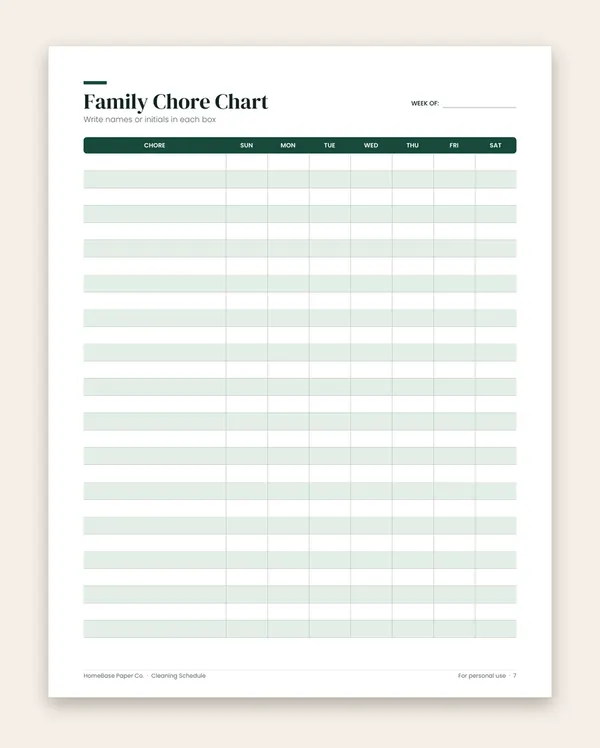
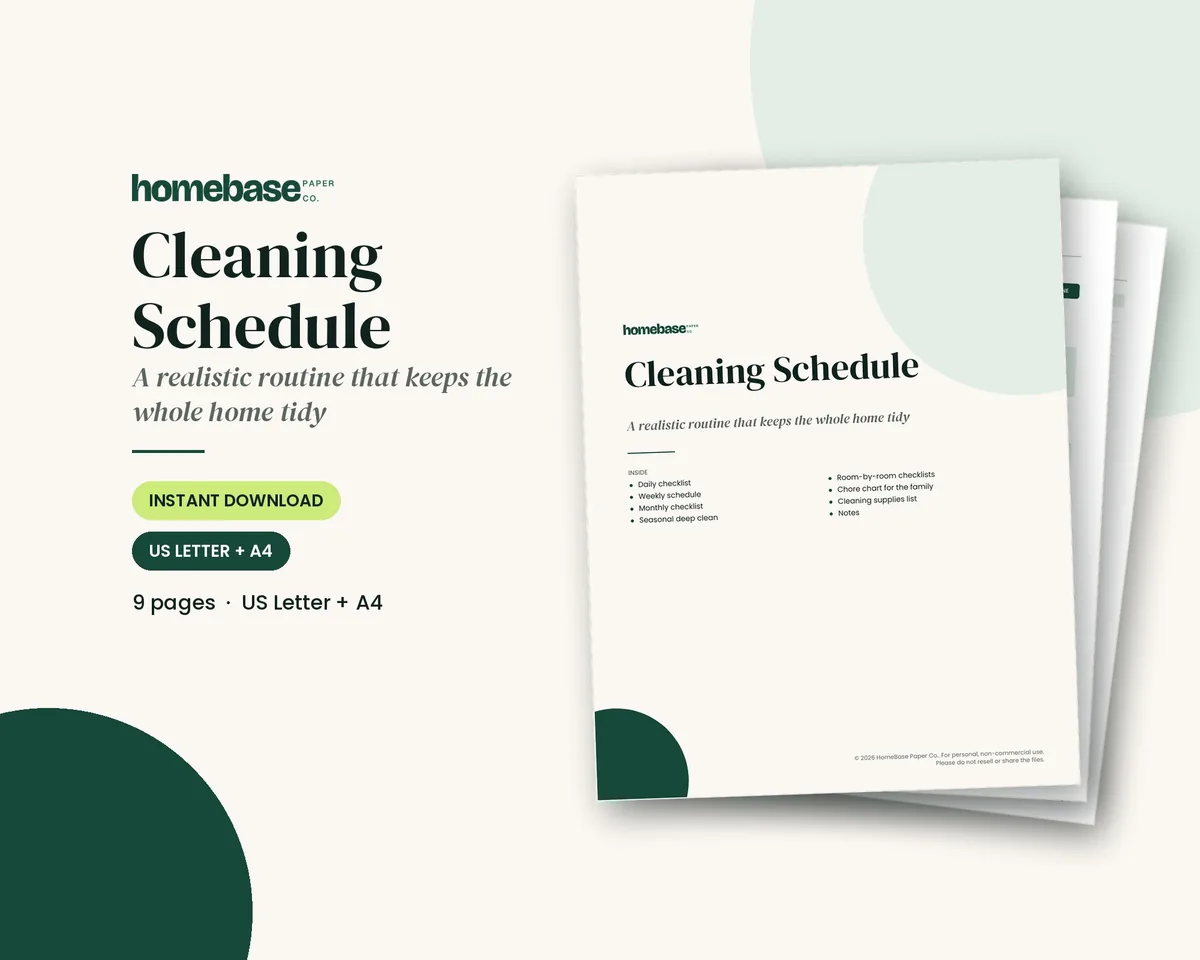
That's exactly what the Cleaning Schedule ($4.49) is built for. It has daily, weekly, monthly and seasonal lists, room-by-room checklists and the Family Chore Chart page above, where you write a name or initials in each day's box. It comes as a PDF in US Letter and A4, so you can print a new week whenever you need one.
If you're organizing more than chores, the Home Management Bundle ($16.99, $32.94 if bought separately) puts the Cleaning Schedule together with the Household Binder, Home Maintenance Log, Home Inventory, Moving Planner and Password & Accounts Log. For meals, the Meal Planner & Grocery List ($3.99) covers the weekly plan. You can browse all our home organization printables, all Printables or the Bundles.
Common mistakes with a household chores list
- Listing only cleaning. Meals, bills and errands are chores too.
- Making everything daily. Most homes don't need floors mopped every day.
- No owner. A chore with no name next to it falls to whoever cares most.
- Splitting tasks instead of chores. Splitting one chore in half means two people have to coordinate it.
- Never revisiting it. New jobs, new seasons and new schedules change the list.
For the cleaning rhythm itself, our weekly cleaning schedule and room-by-room cleaning checklist pick up where this list leaves off. If clutter makes every chore take longer, start with how to declutter your home.
Want a step-by-step plan for bedrooms? See how to clean your room, with a messy-room rescue plan and a daily to seasonal checklist.
Chores are only part of the job. Our guide to the mental load covers the remembering and planning behind them, plus a 6-step plan to share it.
Make it easier
Tools for this
Printables
Cleaning Schedule
Daily, weekly, monthly and seasonal lists - plus a family chore chart.
 Save 48%
Bundles
Home Management Bundle
Household binder, maintenance log, moving planner, cleaning schedule, home inventory and password log.

Printables
Household Binder
Family info, emergency plan, calendars, meals, groceries, cleaning, bills and sitter notes.
Frequently asked questions
What are chores? The Cleaning Schedule ($4.49) organizes chores into daily, weekly, monthly and seasonal lists you can print. Chores are the regular, unpaid jobs that keep a home running: cleaning, cooking, dishes, laundry, trash, yard work, pet care, errands and the household paperwork. What makes something a chore is that it comes back on a schedule.
What is a household chores list? The Cleaning Schedule ($4.49) turns a household chores list into one printable page, with daily, weekly, monthly and seasonal lists and a Family Chore Chart for names. A household chores list is a written record of every recurring job in a home, sorted by how often it happens and who owns it. It covers cleaning plus meals, laundry, bills, yard work, pets and errands.
What are the most common household chores? The Cleaning Schedule ($4.49) lists the common household chores by frequency, so nothing gets missed. The most common household chores are dishes, cooking, laundry, vacuuming, cleaning bathrooms, taking out the trash, grocery shopping, making beds and paying bills. Yard work, pet care and car upkeep come next in most homes.
What household chores should be done every day? The Cleaning Schedule ($4.49) includes a daily checklist for the small resets that keep a home livable. Daily chores usually include dishes, wiping counters, cooking, a quick pick-up of shared rooms, sorting mail, feeding pets and taking out full trash. Most take 5 to 15 minutes each.
What are weekly household chores? The Cleaning Schedule ($4.49) has a weekly page that gives each bigger job a set day. Weekly household chores include cleaning bathrooms, vacuuming and mopping, dusting, laundry, changing sheets, grocery shopping, cleaning out the fridge and reviewing bills. Giving each one a day keeps it from piling up.
What belongs on a household chores list for adults? The Home Management Bundle ($16.99) pairs the Cleaning Schedule with the Household Binder, so adults can track the planning chores as well as the physical ones. A household chores list for adults should include meal planning, bills, appointments, the family calendar, gifts, home repairs, renewals and restocking supplies. These take little time but need someone to remember them.
How do couples divide household chores fairly? The Family Chore Chart page in the Cleaning Schedule ($4.49) lets couples write a name beside each chore for the week. Start by listing everything both of you do for one week, including planning work. Then pick chores by preference, own each chore from start to finish, rotate the ones nobody wants and check in after two weeks.
How do you split chores with roommates? The Cleaning Schedule ($4.49) works well for roommates because the chore chart can be reprinted each week with a new rotation. Rotate shared spaces like the kitchen, bathroom, living room and trash every week. Keep personal rooms personal. Post the chart where everyone can see it.
How often should household chores be done? The Cleaning Schedule ($4.49) sorts chores into daily, weekly, monthly and seasonal lists so the timing is already decided. Dishes and counters are daily, and bathrooms and floors are usually weekly. Smoke alarm tests and filter checks are monthly. Gutters, furnace service and window washing are seasonal.
What monthly household chores do people forget? The Home Maintenance Log ($5.99) keeps monthly and yearly upkeep chores in one place, so they don't slip. People often forget to test smoke alarms, which the NFPA says to do at least once a month. Other easy-to-miss chores are checking the HVAC filter, cleaning the range hood filter, washing trash bins and reviewing subscriptions.
What household chores can kids help with? The Kids Chore Chart ($3.49) has chore ideas by age, morning and evening routines, a sticker chart and an allowance tracker. Young kids can put toys away, feed pets and set the table. Older kids can do dishes, laundry, vacuuming and simple cooking. Our chore chart by age guide lists jobs for each stage.
How much time do household chores take each day? The Cleaning Schedule ($4.49) helps spread chores across the week so no single day carries too much. In 2025 the Bureau of Labor Statistics found that 81 percent of people did household activities on an average day, spending about 2 hours on them. That includes housework, food prep and cleanup, lawn care and household management.
What is the invisible work in a household? The Household Binder ($6.99) gives the invisible work a home, with pages for calendars, meals, bills, emergency plans and sitter notes. Invisible work is the planning and remembering behind chores: noticing supplies are low, booking appointments, tracking due dates and buying gifts. Writing it on the household chores list makes it shareable.
How do I make a chore list that people actually follow? The Cleaning Schedule ($4.49) is designed to be printed fresh each week, with check boxes and a name in each day's box. Put the list on one visible page, give every chore a day and an owner, and keep daily chores short. Then review the list each season.
Is a printable chore list better than an app? The Cleaning Schedule ($4.49) is a printable PDF in US Letter and A4, so everyone in the house can see it without opening a phone. A paper chart on the fridge works for people who don't use the same app. An app can send reminders, though. Many families use paper for the weekly chart and phone alerts for trash day.
Is there a printable household chores list? Yes. The HomeBase Cleaning Schedule ($4.49) is a printable PDF with daily, weekly, monthly and seasonal chore lists, room-by-room checklists and a Family Chore Chart page. Print a fresh page each week, write a name or initials in each day's box and tick off jobs as they are done.
More from HomeBase
You may also like

Printables
Home Inventory
Printable pages and a spreadsheet that totals the value of every room.
Printables
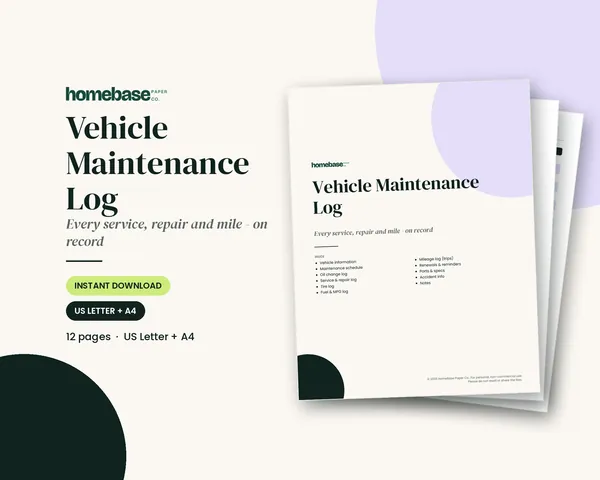
Vehicle Maintenance Log
Oil changes, repairs, tires, fuel and MPG, trip mileage and renewal dates - so resale and warranty records are easy.


Printables
Budget Planner Printable
Twelve undated pages you can print every month: budget, bills, spending, savings and debt.
 Club
Monthly club
Planner & Calendar Club
Anyone who wants a monthly calendar, bill calendar and meal plan ready to print.
Free printable
Clean the whole house in order: get the free deep cleaning checklist
A printable room-by-room deep cleaning checklist that tells you what to do first, so nothing gets cleaned twice. You'll also get our weekly HomeBase email with simple cleaning routines and chore ideas the whole family can help with.