

The short answer: to do laundry, check the care labels, sort by color and fabric, pretreat stains, load the washer loosely, add the right amount of detergent, pick the cycle and temperature the labels allow, then dry and fold right away.
- Prep: empty every pocket, close zippers and turn dark tees inside out
- Washtub symbol: dots show temperature (1 dot = cold, 2 = warm, 3+ = hot)
- Tumble dry symbol: a filled circle means no heat
- Common mistakes and how to fix them are below
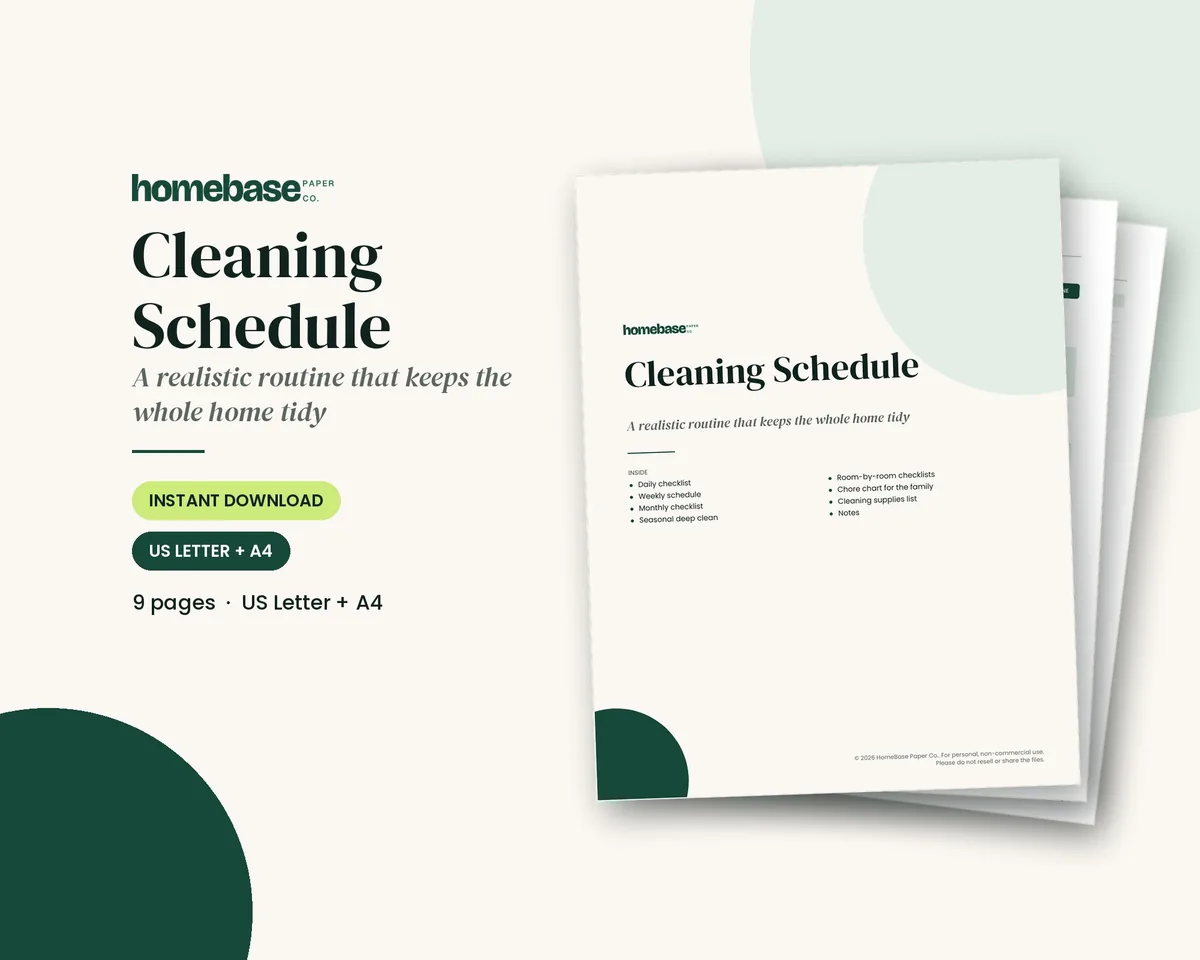
- Next step: Plan it with the Cleaning Schedule ($4.49).
To do laundry, check the care labels, sort clothes by color and fabric, pretreat stains, load the washer loosely, add the right amount of detergent, pick the cycle and water temperature the labels allow, then dry and fold right away. That's the whole job in seven steps, and every load you'll ever run is a version of it.
Below is the step-by-step version I'd give anyone doing laundry for the first time, whether that's a college freshman, a newly independent adult or a kid who just turned old enough to run their own load. You'll find a care-label cheat sheet, sorting and cycle tables, how much detergent to use, how to hand-wash, and the mistakes that shrink, fade or stink up clothes. As the oldest of three, I was the one who showed my younger sister and brother how things worked at home. Laundry is one of those skills that feels confusing until someone walks you through it once.
How to do laundry in 7 steps
- Read the care label. It tells you the safe wash method, water temperature and drying setting.
- Sort the pile. Separate darks, lights and whites, then pull out delicates, towels and anything very dirty.
- Prep each item. Empty pockets, zip zippers, unbutton shirts, turn dark or printed clothes inside out and pretreat stains.
- Load the washer loosely. Clothes need room to move, so fill a front-loader about three-quarters full and spread items evenly around a top-loader.
- Add detergent. Measure by load size and soil level using the cap or scoop, and use HE detergent in an HE machine.
- Choose the cycle and temperature. Match the gentlest setting any item in the load needs. Cold works for most everyday loads.
- Dry and put away. Move clothes to the dryer or a rack within about an hour, clean the lint filter, and fold or hang everything as soon as it's dry.
The rest of this guide explains each step, so you know why it matters and what to do when a load doesn't fit the usual rules.
Step 1: Read the care label first
Every piece of clothing sold in the US has to come with care instructions. The FTC's Care Labeling Rule requires manufacturers to attach a label that gives at least one safe way to clean the garment and warns you about methods that could damage it. Many labels use symbols instead of words. Once you learn five shapes, you can read almost any of them.
| Symbol shape | What it means | What the details tell you |
|---|---|---|
| Washtub | Washing | Dots show temperature (1 dot = cold, 2 = warm, 3+ = hot). A hand in the tub means hand-wash. Lines under it mean permanent press (1) or gentle (2). |
| Triangle | Bleach | Empty triangle = any bleach. Triangle with diagonal lines = non-chlorine bleach only. |
| Square with a circle | Tumble dry | Dots show heat (1 = low, 2 = medium, 3 = high). A filled circle means no heat. |
| Square with lines | Air dry | A curved line = line dry. Three vertical lines = drip dry. One horizontal line = dry flat. |
| Iron | Ironing | Dots show heat, from 1 (low) to 3 (high). |
| Circle | Dry clean | Letters inside are instructions for the dry cleaner. |
An X through any symbol means "don't." A washtub with an X means don't wash it, and a triangle with an X means no bleach.
If a label says "dry clean only," take it seriously for structured pieces like suits and lined coats. "Dry clean" without the word "only" usually means the maker recommends it, but gentle hand-washing may also work. When you aren't sure, test a hidden seam first.
Step 2: Sort laundry by color, fabric and dirt
Sorting is how you keep a new red shirt from turning a load of white socks pink. Start with color, then split again by fabric weight and how dirty things are.
| Pile | What goes in it | Typical setting |
|---|---|---|
| Darks | Black, navy, brown, dark gray, dark denim | Cold, normal or casual cycle, inside out |
| Lights and brights | Pastels, light gray, red, orange, bright colors | Cold or warm, normal cycle |
| Whites | White tees, undershirts, socks, white sheets | Warm or hot if the label allows, normal cycle |
| Delicates | Bras, lingerie, silky blouses, lace, thin knits | Cold, delicate cycle, mesh bag |
| Towels and bedding | Bath towels, washcloths, sheets, pillowcases | Warm or hot, heavy-duty or bulky cycle |
| Heavily soiled | Muddy sports gear, work clothes, cleaning rags | Warm, heavy-duty cycle, washed alone |
Keep towels away from your other clothes. They shed lint that sticks to dark fabrics and athletic wear. Wash brand-new dark or bright items alone, or with similar colors, for the first few washes, since that's when dye is most likely to run.
If you only have enough for one load, you can usually combine darks and brights in cold water. Leave out whites and anything new.
Step 3: Prep clothes and pretreat stains
A minute of prep saves you from ruined clothes and surprise repairs.
- Empty every pocket. One tissue can coat a whole load in lint. One pen can stain it.
- Close zippers and hooks. Open teeth snag other clothes. Bra hooks catch on everything.
- Unbutton shirts. Buttons strain their holes when shirts twist in the washer.
- Turn jeans, dark tees and printed shirts inside out. It cuts down on fading and protects graphics.
- Bag the small stuff. Socks, baby clothes and delicates go in a mesh laundry bag.
- Untangle drawstrings and straps so they don't knot around other items.
Then deal with stains while they're fresh. Rub a little liquid detergent or stain remover into the spot and let it sit for 5 to 10 minutes before washing. Blot; don't scrub. Hot water can set protein stains like blood, egg and dairy, so rinse those in cold first.
For specific stains, we have guides to getting out ink, grease and oil and red wine. Check a stain before anything goes in the dryer, because dryer heat can make it permanent.
Step 4: Load the washer the right way
Overloading is the most common reason clothes come out still dirty, wrinkled or soapy. Clothes need room to tumble through the water.
- Front-loader: Fill the drum loosely, up to about three-quarters full. Don't pack it down.
- Top-loader with an agitator: Spread items evenly around the agitator, not wrapped around it.
- Top-loader without an agitator (impeller): Add items in loose layers around the sides, not piled in the center.
- Bulky single items like a comforter or rug can throw the drum off balance. Add two or three towels to even out the weight.
As a rough guide, a load of jeans fills a drum faster than a load of tees. Go by space, not by item count.
Step 5: Use the right detergent, in the right amount
More detergent doesn't mean cleaner clothes. Extra soap leaves residue, traps odor in fabric and can build up in the machine.
| Detergent type | How to use it | Good to know |
|---|---|---|
| Liquid | Pour into the dispenser or drum. Fill the cap to the line for your load size. | Doubles as a stain pretreater. |
| Powder | Add to the dispenser or drum before clothes. | Fine for heavily soiled loads; may not dissolve fully in very cold water. |
| Pods or packets | Put one in the empty drum, then add clothes on top. | Never put pods in the dispenser. Two for very large or very dirty loads only. |
| HE (high-efficiency) | Required for HE washers, which use less water. | Look for the HE logo on the bottle. |
If you have kids in the house, store pods carefully. The Consumer Product Safety Commission warns that single-load liquid laundry packets are toxic and can seriously injure young children. Keep them sealed in the original container, out of sight and reach, and handle them with dry hands. If a child swallows one or gets it in their eyes, call Poison Help at 1-800-222-1222 right away.
What about bleach, softener and boosters?
- Chlorine bleach is for whites and colorfast cottons only, and only when the label allows it. Never mix bleach with ammonia or vinegar.
- Oxygen bleach is gentler and safe for most colors. It helps with dingy whites and set-in stains.
- Fabric softener goes in the softener dispenser. Skip it on towels and athletic wear, since it reduces absorbency and traps odors.
- Vinegar isn't a must, and it shouldn't be mixed with bleach.
Step 6: Pick the cycle and water temperature
Choose the gentlest setting that any item in the load needs. If one blouse in the pile says "gentle, cold," the whole load goes on gentle and cold, or the blouse gets washed separately.
| Cycle | Best for | Spin |
|---|---|---|
| Normal or cottons | Tees, jeans, everyday clothes, sheets | High |
| Permanent press or casual | Button-downs, synthetics, blends that wrinkle | Medium, with a cool-down |
| Delicate or gentle | Lingerie, silky fabrics, thin knits, items in mesh bags | Low |
| Heavy-duty | Towels, muddy clothes, work wear | High |
| Bulky or bedding | Comforters, blankets, pillows | Medium |
| Quick wash | Small, lightly worn loads | Varies |
Water temperature:
- Cold works for most everyday clothes, darks and brights, and anything that might shrink or bleed. According to ENERGY STAR, heating water accounts for about 90% of the energy a washer uses, so cold water saves money on every load.
- Warm is good for moderately dirty clothes, kids' clothes and many whites.
- Hot is for towels, sheets, cloth diapers and heavily soiled whites, if the label allows it. Hot water can shrink cotton and fade colors.
Once the cycle starts, set a timer on your phone. Wet clothes left sitting in the washer for hours start to smell musty.
Step 7: Dry, fold and put it away
Move clothes out of the washer as soon as the cycle ends. Before you load the dryer, check for stains you missed. Pull out anything labeled "lay flat" or "line dry," along with bras, swimsuits and stretchy athletic wear.
Dryer heat settings:
- High: towels, jeans, heavy cottons, bedding.
- Medium: everyday clothes, sheets, permanent press.
- Low or air fluff: delicates, synthetics, workout clothes, anything you're worried about shrinking.
Clean the lint filter before or after every load. The U.S. Fire Administration notes that failure to clean is the leading cause of home clothes dryer fires, so this habit matters. If clothes start taking longer to dry, the vent may be clogged. Our dryer vent cleaning guide walks through it.
Fold or hang clothes while they're still warm, and you'll barely need an iron. Shake each item out, smooth it flat, and hang shirts and dresses right away. For anything that air-dries, a rack or hanger in a spot with good airflow works. Lay sweaters flat on a towel so they keep their shape.
How to hand-wash clothes
Some delicates and wool pieces do best by hand. It only takes about 15 minutes.
- Fill a clean sink or basin with cool or lukewarm water.
- Add a small squirt of gentle detergent and swish it in.
- Submerge the item and gently squeeze suds through it. Don't twist or wring.
- Soak for 10 to 30 minutes.
- Drain, refill with clean water and squeeze until no suds remain.
- Press out water. Then roll the item in a dry towel and press again.
- Lay flat or hang to dry, away from direct heat and sun.
Common laundry mistakes (and how to fix them)
| Mistake | What happens | Fix |
|---|---|---|
| Overloading the washer | Clothes come out dirty, wrinkled or soapy | Fill loosely; run two smaller loads |
| Too much detergent | Residue, stiff fabric, lingering odor | Measure to the line; use less for small loads |
| Washing everything hot | Shrinking and fading | Default to cold; use hot only for towels and sheets |
| Leaving wet clothes in the washer | Musty smell, mildew | Set a timer; rewash with an oxygen booster if needed |
| Drying a stained item | Stain sets permanently | Check stains before drying; retreat and rewash |
| Skipping the lint filter | Longer dry times, fire risk | Clean it every load |
| Never cleaning the washer | Odors come back on clean clothes | Run a cleaning cycle monthly |
That last one surprises people. If your clean clothes smell off, the machine may need attention. Our guide to cleaning a washing machine covers front-loaders and top-loaders.
Laundry tips that make it easier every week
Knowing how to do laundry is half of it. The other half is not letting it pile up.
- Do one load start to finish. Wash, dry, fold and put away before starting the next one. A half-finished load turns into a mountain on the couch.
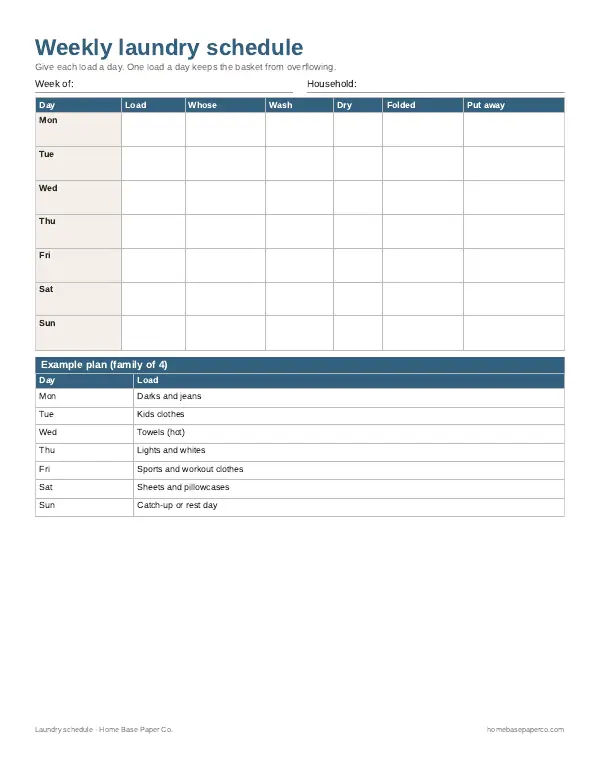
- Give each type of load a day. Towels on one day, sheets on another and kids' clothes on a third keep the basket from overflowing. Our free laundry schedule printable has a weekly plan and a how-often-to-wash guide.
- Keep two or three hampers. Sorting as you undress means you skip Step 2 on laundry day.
- Teach everyone their part. Kids can match socks, carry baskets and put away their own clothes. Older kids can run their own loads using the steps above. Our household chores list shows how to split the work.
- Keep supplies stocked. Running out of detergent mid-week throws off the whole plan.
- Wash bedding and pillows on a schedule. Pillows need washing too. See how to wash pillows.
Something I learned working as an ABA technician applies to chores too: big changes come from small, repeatable steps, and from making the next step obvious. A laundry routine works the same way. When the plan is written down where everyone can see it, nobody has to remember whose turn it is.
For help choosing a formula, compare our best laundry detergent by need, with the source behind each pick.
Put laundry on the same page as the rest of the house
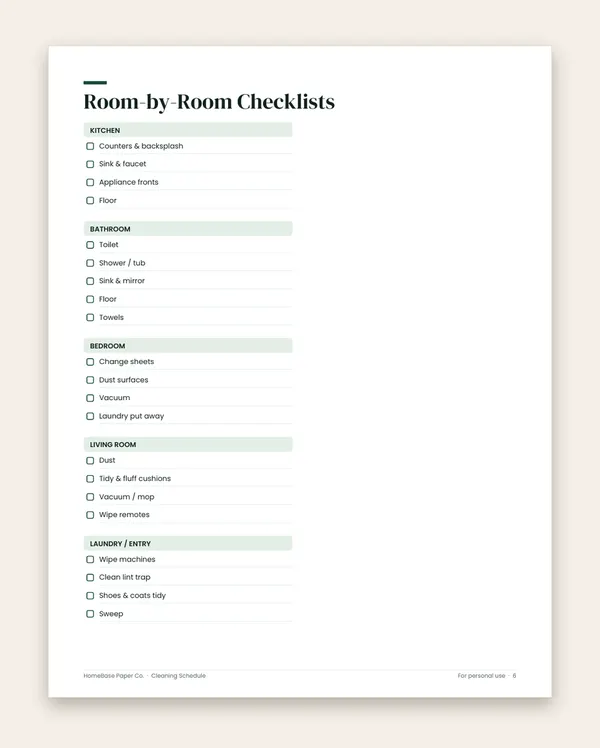
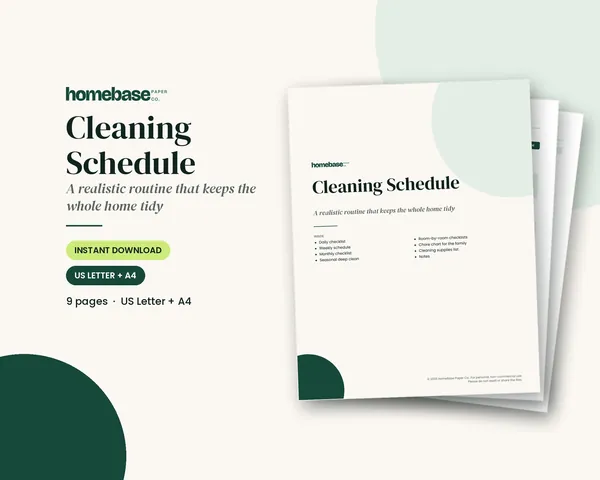
Laundry is easier to keep up with when it lives on the same plan as every other chore. The Cleaning Schedule ($4.49) has a Weekly Cleaning Schedule page where you can write in your laundry days. It also has daily, monthly and seasonal checklists, plus the Room-by-Room Checklists above, whose laundry and entry section covers wiping the machines and cleaning the lint trap. A Family Chore Chart page lets you put a name next to each job. It's a 9-page PDF in US Letter and A4, so you can print a fresh week whenever you need it.
If you're organizing the whole household, the Home Management Bundle ($16.99, $32.94 if bought separately) includes the Cleaning Schedule plus the Household Binder, Home Maintenance Log, Home Inventory, Moving Planner and Password & Accounts Log. The maintenance log is handy for tracking washer and dryer service dates. You can browse all Printables or the Bundles.
Ready to make the space itself work better? Our laundry room organization guide has a 6-step plan and 30 ideas for small rooms and closets.
Make it easier
Tools for this
Printables
Cleaning Schedule
Daily, weekly, monthly and seasonal lists - plus a family chore chart.
 Save 48%
Bundles
Home Management Bundle
Household binder, maintenance log, moving planner, cleaning schedule, home inventory and password log.

Printables
Household Binder
Family info, emergency plan, calendars, meals, groceries, cleaning, bills and sitter notes.
Frequently asked questions
How do you do laundry step by step? The Cleaning Schedule ($4.49) gives laundry a set day on its Weekly Cleaning Schedule page, so the steps become a routine. To do laundry, read the care labels, sort by color and fabric, pretreat stains, load the washer loosely, add measured detergent, choose the cycle and temperature, then dry and fold right away.
How do you do laundry for beginners? The Cleaning Schedule ($4.49) is a simple printable for beginners who want laundry on the same plan as other chores. Start with one load of everyday clothes in cold water on the normal cycle, with detergent measured to the line on the cap. Dry on medium, clean the lint filter, and fold everything as soon as it comes out.
How do you separate laundry? The Cleaning Schedule ($4.49) keeps laundry days organized once you know your piles. Separate laundry into darks, lights and brights, and whites first. Then pull out delicates, towels and bedding, and anything heavily soiled, since those need different cycles. Wash new dark or bright items alone for the first few washes.
What temperature should I wash clothes on? Most everyday clothes, darks and brights wash well in cold water, which helps prevent shrinking and fading. Use warm for moderately dirty clothes and many whites, and hot for towels, sheets and heavily soiled whites when the care label allows it. ENERGY STAR notes that heating water uses most of a washer's energy.
How much detergent should I use? Use the amount marked on the detergent cap or scoop for your load size, and less for small or lightly worn loads. Too much detergent leaves residue that traps odor and stiffens fabric. For pods, use one per normal load and place it in the empty drum before adding clothes, never in the dispenser.
What do the symbols on clothing labels mean? Care label symbols use five basic shapes: a washtub for washing, a triangle for bleach, a square for drying, an iron for ironing and a circle for dry cleaning. Dots show heat level, from one dot for cold or low to three or more for hot. An X through any symbol means do not.
Can you wash darks and colors together? Yes, you can usually wash darks and bright colors together in cold water if you only have one load's worth. Keep whites and brand-new dark or bright items out of that load, because new dyes are most likely to bleed. Turning dark clothes inside out also helps reduce fading.
How full should the washing machine be? Fill a front-loading washer loosely to about three-quarters full, and leave room for clothes to tumble. In a top-loader, spread items evenly around the agitator or the sides of the drum. Overloading is the most common reason clothes come out still dirty, wrinkled or soapy.
How long can wet clothes sit in the washer? Move wet clothes to the dryer or a drying rack within about an hour of the cycle ending. Clothes left sitting for many hours can start to smell musty. If a load already smells, rewash it with detergent and an oxygen booster, then dry it right away.
Do you need fabric softener? No, fabric softener is optional. It can make cotton feel softer and cut static, but skip it on towels and athletic wear because it reduces absorbency and can trap odors. Wool dryer balls or a lower dryer heat setting are other ways to reduce static.
How often should I clean the dryer lint filter? The Cleaning Schedule ($4.49) includes a laundry and entry checklist with cleaning the lint trap on it, so the habit sticks. Clean the dryer lint filter before or after every load. The U.S. Fire Administration lists failure to clean as the leading factor in home clothes dryer fires.
How do you hand-wash clothes? Fill a clean sink with cool or lukewarm water and a small squirt of gentle detergent, then submerge the item and gently squeeze suds through it. Soak 10 to 30 minutes, rinse until no suds remain, press out water in a towel and lay flat or hang to dry.
How do I get my family to help with laundry? The Cleaning Schedule ($4.49) has a Family Chore Chart page where you write a name next to each laundry job, so nobody has to ask whose turn it is. Give younger kids jobs like matching socks or carrying baskets, and teach older kids to run a full load using the seven steps.
What laundry supplies do I need? You need a detergent that matches your washer (HE if it is high-efficiency), a stain remover, a mesh bag for delicates and a hamper or two for sorting. Oxygen bleach, a drying rack and wool dryer balls are helpful extras. Keep supplies stocked so laundry day is not delayed.
More from HomeBase
You may also like

Printables
Home Inventory
Printable pages and a spreadsheet that totals the value of every room.

Printables
Vehicle Maintenance Log
Oil changes, repairs, tires, fuel and MPG, trip mileage and renewal dates - so resale and warranty records are easy.


Printables
Budget Planner Printable
Twelve undated pages you can print every month: budget, bills, spending, savings and debt.
 Club
Monthly club
Planner & Calendar Club
Anyone who wants a monthly calendar, bill calendar and meal plan ready to print.
Free printable
One load a day keeps the basket from overflowing
A weekly laundry schedule plus a how-often-to-wash guide. You'll also get our weekly HomeBase email with simple cleaning routines and chore ideas the whole family can help with.
Sources
- Clothes Captioning: Complying with the Care Labeling Rule (Federal Trade Commission) ftc.gov
- Single-Load Liquid Laundry Packets: Toxic, Harmful to Children (U.S. Consumer Product Safety Commission) cpsc.gov
- Clothes Washers (ENERGY STAR) energystar.gov
- Appliance and Electrical Fire Safety (U.S. Fire Administration) usfa.fema.gov