

The short answer: for how to remove oil stains from clothes, blot the spot, cover it with cornstarch or baking soda for 15 to 30 minutes, then pretreat with full-strength heavy-duty liquid detergent and wash in the hottest water the care label allows.
- Keep it away from dryer heat until the stain is gone
- Air-dry and check the spot in good light
- Repeat if you can still see it
- Fixes for butter, grease and set-in stains
- Next step: Plan it with the Cleaning Schedule ($4.49).
Oil stains come out of most washable clothes if you pull out the loose oil first and keep the garment away from dryer heat until the stain is gone. To remove oil stains from clothes, blot the spot, cover it with cornstarch or baking soda for 15 to 30 minutes, brush it off, then work full-strength heavy-duty liquid detergent into the stain and wash in the hottest water the care label allows. Air-dry, check the spot in good light, and repeat if you can still see it.
That method handles cooking oil, butter, bacon grease and salad dressing. Below you'll find the full steps, how to rescue stains that already went through the dryer, tables by stain and fabric, and fixes for tablecloths, carpet and upholstery. Holiday cooking is prime time for grease spots, so there's a prevention plan at the end, too.
Compare the stain remover types and stain chart before treating a spill that includes both grease and food coloring.
How to remove fresh oil stains from clothes, step by step
The University of Kentucky's stain removal guide for washable fabrics groups cooking fats and oils, butter, bacon fat, lard, mayonnaise and salad dressing as oil-based stains. It recommends heavy-duty detergent with hot water, then rinsing and inspecting before drying.
- Blot the oil. Press a paper towel on the spot to lift what's sitting on top. Don't rub, which spreads oil wider.
- Absorb. Cover the spot with cornstarch, baking soda or talcum powder. Let it sit 15 to 30 minutes. A paper towel underneath keeps oil from moving to the back layer.
- Brush off. Shake or brush the powder away. You'll often see it has turned slightly yellow or clumpy, which means it picked up oil.
- Pretreat. Work full-strength heavy-duty liquid laundry detergent into the stain with your fingers or a soft brush. A prewash stain remover spray works too. Let it sit 10 to 15 minutes.
- Wash hot, if safe. Wash in the hottest water the care label allows with the normal amount of detergent.
- Inspect before drying. Check the spot while the garment is damp and again after it air-dries. Wet fabric can hide a faint oil ring.
- Repeat if needed. Oil often takes two rounds. Repeat steps 4 to 6 before using the dryer.
For grease specifically, the University of Georgia Extension's grease stain steps use the same pattern: talcum powder to absorb, a prewash stain remover, the hottest safe water with heavy-duty liquid detergent, and a second treatment if the stain remains.
How to get oil stains out of clothes after drying
A dryer-set oil stain looks darker or slightly see-through, like a wet spot that never dries. It's harder, but often not hopeless.
- Don't add more heat. Skip ironing. The UKY guide warns that heat sets stains.
- Pretreat heavily. Work in full-strength heavy-duty liquid detergent, or use a solvent-based pretreatment spray following its label. Let it sit 15 to 30 minutes.
- Use a waterless hand cleaner for grease. UKY notes that waterless hand cleaners, the creamy kind sold for greasy hands, work especially well on greasy stains and are safe for most fabrics. Test first.
- Let any solvent evaporate. UKY advises letting dry-cleaning solvents evaporate from fabric before washing or drying.
- Wash hot, if safe. Use the hottest water the label allows.
- Soak colorfast items. If a shadow remains, soak in oxygen bleach mixed by the package directions, then wash again.
- Air-dry and repeat. Set-in oil often needs two or three rounds.
The UKY guide is honest that some stains are impossible to remove. If three careful rounds haven't helped, stop before the fabric wears thin and decide whether the garment becomes a cooking shirt.
Oil stain types and what changes
| Stain | Before you start | Pretreatment | Wash and extra steps |
|---|---|---|---|
| Cooking or vegetable oil | Blot, powder 15 to 30 min | Heavy-duty liquid detergent | Hottest safe water |
| Olive oil | Blot, powder | Heavy-duty liquid detergent | Often needs a second round |
| Butter or margarine | Scrape off solids | Prewash remover or detergent on the damp spot | Hot water; bleach only if fabric-safe |
| Bacon grease or drippings | Blot, powder | Detergent, then let sit | Hot wash, inspect closely |
| Gravy | Scrape, rinse cool from the back | Detergent | Hot wash if safe; repeat |
| Salad dressing | Blot | Heavy-duty liquid detergent | Hot wash; check for herb or color marks |
| Mayonnaise | Scrape | Prewash stain remover | Wash, inspect |
| Lotion or lip balm | Scrape | Detergent or hand cleaner | Hot wash if safe |
| Car or bike grease | Powder, brush | Prewash remover or hand cleaner | Hottest safe water; may need repeats |
The University of Georgia Extension's oil-based food stain guide covers butter, margarine, mayonnaise and other kitchen stains in more detail. It also gives one warning worth remembering for holiday baking: never use hot water on egg, because it sets the stain.
How to remove oil stains by fabric
Always read the care label before anything else. It tells you the safe water temperature and whether bleach is allowed.
| Fabric | Approach | Bleach | Watch out for |
|---|---|---|---|
| Cotton and linen | Full method, hot wash if label allows | Chlorine on whites if label allows; oxygen on colors | Dryer before the stain is gone |
| Polyester and blends | Full method, warm wash, repeat | Oxygen | Polyester holds oil; expect repeats |
| Denim | Full method, warm or hot wash | Oxygen | Dye loss with harsh scrubbing |
| Activewear and spandex | Detergent pretreat, warm wash | Oxygen if label allows | High heat damages stretch |
| Silk | Blot, powder, then a dry cleaner | None | Water rings and rubbing |
| Wool | Blot, powder, wool-safe detergent | None | Hot water and agitation |
| Dry clean only | Blot, powder, then a dry cleaner | None | Home solvents and water |
Absorbents and pretreatments compared
| Product | Rough cost | Time | Best for |
|---|---|---|---|
| Cornstarch | Pennies | 15 to 30 minutes | Fresh oil on clothes and linens |
| Baking soda | Pennies | 15 to 30 minutes | Fresh oil; also carpet |
| Talcum powder | Pennies | 15 to 30 minutes | Grease, per UGA |
| Liquid dish soap | Pennies | 5 to 10 minutes | Small, fresh kitchen spots |
| Heavy-duty liquid laundry detergent | Pennies per treatment | 10 to 30 minutes | Every oil stain, fresh or set |
| Prewash stain remover spray | Under $1 per use | 5 to 15 minutes | Grease and butter |
| Waterless hand cleaner | Under $1 per use | 10 to 15 minutes | Stubborn grease, tested first |
| Oxygen bleach soak | About $0.25 to $0.50 a soak | 1 hour to overnight | Shadows on colorfast fabric |
Costs are rough estimates using products many homes already have.
Oil on tablecloths, aprons and kitchen towels
Holiday meals put a lot of butter and drippings on the table. A few habits keep linens from piling up stained.
- During dinner: blot spills and sprinkle a little cornstarch on big spots. It can sit until the table is cleared.
- After dinner: shake out crumbs, brush off the powder and pretreat each spot with heavy-duty liquid detergent.
- Wash in the warmest water the label allows. Wash table linens separately from greasy kitchen towels.
- Line-dry and check. Re-treat anything you can still see before it goes in the dryer or back in the closet.
If you're cleaning up after a big cooking day, our guides to how to clean an oven and how to clean a cast iron skillet cover the rest of the grease.
How to remove oil from carpet and upholstery
Carpet: blot, sprinkle cornstarch or baking soda, let it sit, and vacuum. For what's left, UGA's grease guide says to dampen a white cloth with a dry-cleaning solvent and press it on the spot, not to pour solvent on the carpet, because it can dissolve the backing. Ventilate and test a hidden area first. Our guide to how to clean carpet covers routine care.
Upholstery: blot and powder, then check the furniture's care tag before using any liquid. Test a small amount of diluted dish soap on a hidden spot, sponge lightly and blot. Call a professional for velvet, silk or dry-clean-only pieces.
How long you have to treat an oil stain
Oil doesn't dry the way a water-based spill does, so you usually have some time. The clock that matters most is the dryer, not the minutes after the spill.
| When you find it | What to expect | What to do |
|---|---|---|
| Within minutes | Easiest to remove | Blot, powder, pretreat, wash |
| Same day, never washed | Usually comes out | Powder, then a longer detergent pretreat |
| Washed but air-dried | Often comes out with repeats | Pretreat again and wash hot if safe |
| Washed and machine-dried | Harder, still worth trying | Heavy pretreat, hand cleaner, oxygen soak |
| Several dryer cycles | May be permanent | Two or three careful rounds, then decide |
If you can't wash it right away, blot and powder the spot, then set the garment aside flat. Keep it out of the hamper, where oil can rub onto other clothes.
Common mistakes that set oil stains
- Rubbing. It pushes oil deeper and spreads it wider.
- Water first. Water alone beads on oil and doesn't lift it. Absorb and use detergent first.
- The dryer. Heat bakes oil into the fibers, which is why a stain that looked faint can look darker after drying.
- Ironing. Same problem as the dryer.
- Mixing products. Use one method at a time and rinse between them.
Safety rules for removing oil stains
- Never mix bleach with ammonia or vinegar. Some old-school grease methods use ammonia. The Washington State Department of Health explains that mixing bleach with ammonia or acids like vinegar releases toxic gases. Rinse thoroughly between products.
- Test a hidden spot first. Solvents, hand cleaners and bleach can change dyes.
- Follow the care label. Don't use hot water or bleach the label rules out.
- Keep heat away until the stain is gone. No dryer, no iron.
- Handle solvents carefully. Use them in a ventilated room, keep them away from flames and the stove, and let them evaporate before washing or drying.
Prevent holiday cooking stains with a plan
I love cooking, and I've learned that most kitchen stains happen when everything is going at once. A timeline that spreads out frying, roasting and gravy keeps you calmer and cleaner.
The Meal Planner & Grocery List: Thanksgiving Edition ($4.99) includes a Thanksgiving Day timeline that works backward from dinnertime, plus a dinner plan and prep page. Put "apron on" at the top, and change into nice clothes after the greasy steps are done. Our guide to planning Thanksgiving dinner walks through the whole day.
For the laundry side, the Cleaning Schedule ($4.49) has daily, weekly, monthly and seasonal lists, so a quick stain check before each wash becomes routine instead of an afterthought.

If you're setting up the whole house, the Home Management Bundle ($16.99, $32.94 if bought separately) includes the Cleaning Schedule, the Household Binder and four more home tools. Browse everything in the Home shop or our printables. For other stains, see how to get ink out of clothes and how to remove wine stains, and keep laundry moving with a laundry schedule.
The short version
Blot, absorb, pretreat with heavy-duty liquid detergent, wash hot if the label allows, and air-dry until you're sure. If the dryer got to it first, don't give up. Pretreat again, wash again and give it two or three tries.
Got gunk instead of grease? Here's how to remove sticky residue from glass, plastic, wood and fabric.
Make it easier
Tools for this
Printables
Cleaning Schedule
Daily, weekly, monthly and seasonal lists - plus a family chore chart.
 Thanksgiving Edition
Printables
Meal Planner & Grocery List: Thanksgiving Edition
Plan the perfect Thanksgiving: our meal planner in a warm harvest design, with a Thanksgiving Day timeline, a guest & dish sign-up, an aisle-sorted grocery list and pantry and freezer trackers.
 Save 48%
Bundles
Home Management Bundle
Household binder, maintenance log, moving planner, cleaning schedule, home inventory and password log.
Frequently asked questions
How do you remove oil stains from clothes? To remove oil stains from clothes, blot the oil, cover it with cornstarch or baking soda for 15 to 30 minutes, brush it off, and work full-strength heavy-duty liquid detergent into the spot. Wash in the hottest water the care label allows, then air-dry and check the stain before it ever goes in the dryer.
How do you get oil stains out of clothes after drying? Oil stains that went through the dryer can still fade with repeat treatment. Work heavy-duty liquid detergent or a solvent pretreatment spray into the spot, let it sit, and wash in the hottest safe water. Air-dry, inspect and repeat two or three times, adding an oxygen bleach soak for colorfast fabric.
Does dish soap remove oil stains from clothes? Yes, liquid dish soap can help with small, fresh cooking oil stains because it's made to break up kitchen grease. Rub a few drops into the dampened spot, let it sit a few minutes, rinse, and then wash with heavy-duty liquid laundry detergent, which the University of Kentucky recommends for oil-based stains.
Does baking soda or cornstarch remove grease stains? Cornstarch and baking soda don't remove grease on their own, but they pull loose oil out of fabric before you pretreat. Cover a fresh spot generously, wait 15 to 30 minutes, brush it off, and follow with detergent. The University of Georgia Extension uses talcum powder the same way for grease.
Why does oil leave dark spots on clothes after washing? Oil leaves dark or see-through spots when the wash didn't fully remove it and the dryer heated what was left. The oil spreads into the fibers and holds dye and dirt, so it looks darker. Re-treat with heavy-duty liquid detergent and wash hot, and keep it out of the dryer until it's gone.
How do you get butter out of clothes? To get butter out of clothes, scrape off any solid butter, treat the spot with a prewash stain remover or rub in detergent while it's damp, and wash in hot water if the fabric allows. The University of Georgia Extension adds bleach only if it's safe for that fabric.
How do you remove bacon grease from clothes? Bacon grease is an oil-based stain, so blot it, absorb what you can with cornstarch, then work in heavy-duty liquid detergent and wash in the hottest safe water. Check it before drying, because cooked-on grease often needs a second round.
Can you use hot water on oil stains? Yes, hot water helps lift oil-based stains, as long as the care label allows it. The University of Kentucky recommends heavy-duty detergent with hot water for oil stains. The one heat to avoid is the dryer or an iron before the stain is completely out.
How do you remove oil stains from polyester? Polyester holds onto oil, so it often needs more than one round. Absorb, pretreat with heavy-duty liquid detergent for at least 15 minutes, wash in the warmest water the label allows, and air-dry and repeat as needed. Avoid high dryer heat on polyester until the spot is gone.
How do you remove grease from a tablecloth after a holiday dinner? Blot and powder grease spots on the tablecloth before you clear the table, then pretreat each spot with heavy-duty liquid detergent and wash in the warmest water the label allows. Line-dry and check. The Cleaning Schedule ($4.49) gives post-holiday linen care its own place on your list.
Can oil stains be removed from dry-clean-only clothes? Blot dry-clean-only clothes and take them to a dry cleaner quickly instead of using water or detergent at home. Tell the cleaner it's an oil or grease stain and roughly how long ago it happened, because solvent cleaning is usually the right method for those fabrics.
Is it safe to use solvents on oil stains? Solvent-based pretreatment sprays can work on stubborn grease, but follow the label exactly and work in a ventilated space. The University of Kentucky advises letting dry-cleaning solvents evaporate from the fabric before washing or drying, and you should never mix cleaning products together.
How do you get oil out of carpet? Blot the oil, sprinkle cornstarch or baking soda, let it sit, and vacuum. For what's left, the University of Georgia Extension recommends putting a dry-cleaning solvent on a white cloth and pressing it on the spot rather than pouring it on the carpet, which can damage the backing.
How can I prevent oil stains while cooking for the holidays? An apron and a pre-planned cooking timeline prevent most holiday grease stains. The Meal Planner & Grocery List: Thanksgiving Edition ($4.99) includes a Thanksgiving Day timeline, so frying and roasting steps don't pile up while you're dressed for dinner.
More from HomeBase
You may also like

Printables
Household Binder
Family info, emergency plan, calendars, meals, groceries, cleaning, bills and sitter notes.

Printables
Home Maintenance Log
Monthly, seasonal and annual checklists plus a record of every appliance and repair.

Printables
Home Inventory
Printable pages and a spreadsheet that totals the value of every room.

Printables
Vehicle Maintenance Log
Oil changes, repairs, tires, fuel and MPG, trip mileage and renewal dates - so resale and warranty records are easy.
 Club
Monthly club
Planner & Calendar Club
Anyone who wants a monthly calendar, bill calendar and meal plan ready to print.
Free printable
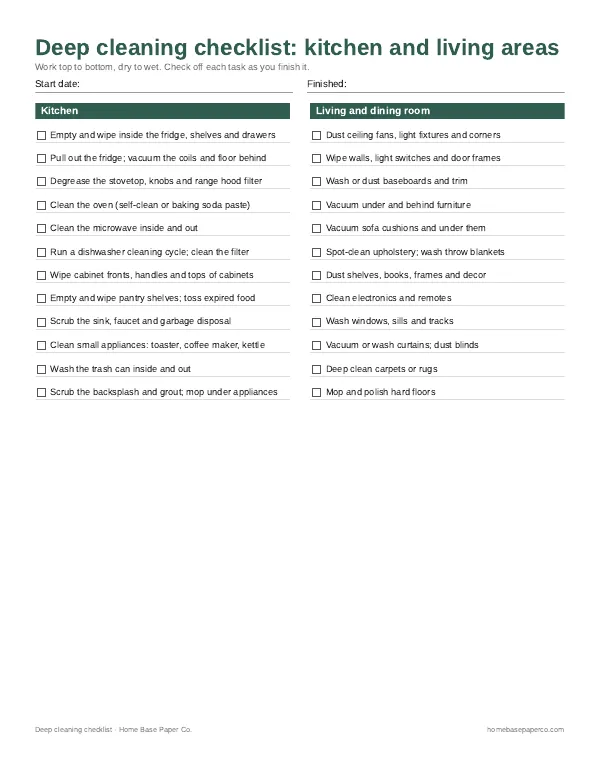
Clean the whole house in order: get the free deep cleaning checklist
A printable room-by-room deep cleaning checklist that tells you what to do first, so nothing gets cleaned twice. You'll also get our weekly HomeBase email with simple cleaning routines and chore ideas the whole family can help with.
Sources
- Remove Stains From Oil-Based Foods (University of Georgia Extension) site.extension.uga.edu
- Remove Stains From Grease (University of Georgia Extension) site.extension.uga.edu
- Stain Removal for Washable Fabrics (University of Kentucky Cooperative Extension) publications.mgcafe.uky.edu
- Dangers of Mixing Bleach with Cleaners (Washington State Department of Health) doh.wa.gov