

The short answer: how to clean an oven depends on the type and your time: a baking soda paste is the gentlest, the self-cleaning cycle is the least effort, and a commercial spray is the fastest.
- Baking soda: mix the paste, coat the inside, wait, mist with vinegar and wipe
- Self-clean: read your manual first and ventilate
- Racks and door glass cleaned separately
- How often to clean the oven
- Next step: Plan it with the Cleaning Schedule ($4.49).
How to clean an oven depends on what kind you have and how much time you have. A baking soda paste is the gentlest method and works in any oven. A self-cleaning cycle is the least effort, and a commercial spray is the fastest for very heavy grime. Cornell Cooperative Extension's guide to cleaning your oven covers all three. Below are the steps for each, plus how to clean oven racks and the oven door glass, and how often to do it.
What you need
| Item | Used for |
|---|---|
| Baking soda and water | The cleaning paste. |
| White vinegar in a spray bottle | Foaming the paste and removing residue. |
| Plastic scraper or old card | Lifting baked-on spots without scratching. |
| Synthetic scrubbing pad | Scrubbing walls and the oven floor. |
| Rubber gloves and old towels | Protecting your hands and the floor. |
| Microfiber cloths | Wiping and drying. |
How to clean an oven with baking soda
This is the method Cornell calls the safest, and it suits any oven type.
- Empty the oven. Take out the racks, thermometer and any foil. Lay old towels on the floor in front.
- Mix the paste. Combine 1/2 cup of baking soda with 2 to 3 tablespoons of water until it spreads easily.
- Coat the inside. Spread it over the walls, floor and inside of the door. Keep it off the heating element of an electric oven and the gas inlet of a gas oven.
- Wait. Close the door and leave it for 30 minutes for light grime or 10 to 12 hours, or overnight, for heavy buildup.
- Mist with vinegar. It bubbles and helps loosen the paste.
- Scrub and wipe. Use a plastic scraper or a synthetic pad dipped in vinegar, then a damp cloth.
- Finish. Spray vinegar once more and wipe dry so no white film is left.
How to use the self-cleaning oven cycle
A self-cleaning oven burns soil to ash at very high heat. Cornell notes the cycle takes about two hours and reaches 800 to 1,000 degrees F.
- Read your manual first, since cycles and lock times vary.
- Remove the racks and accessories, unless the manual says your racks can stay in.
- Wipe up spills and grease so the cycle smokes less. Wirecutter's guide to the self-cleaning setting passes on similar safety advice from the CPSC, including keeping the vents clear and leaving the door gasket alone.
- Clear the cooktop and nearby counters of anything that could melt or burn.
- Ventilate with the range hood and open windows.
- Stay home, but keep children and pets out of the kitchen. Pet birds are very sensitive to fumes, so move them well away.
- Let it cool, then wipe out the white ash with a damp cloth.
Skip the self-clean cycle right before a big holiday meal. If anything goes wrong, you do not want to find out on the day you need the oven.
Using a chemical oven cleaner
Spray oven cleaners are fast but caustic. Cornell recommends gloves and eye protection, protecting the floor, and keeping spray off heating elements and gas inlets. University of Illinois Extension's cleaning guide adds two cautions: cold-oven formulas are stronger than those for warm ovens, and oven cleaner should not be used on self-cleaning ovens because it may damage the surface.
Open a window, follow the label exactly and rinse well. Never mix oven cleaner with other cleaning products.
How to clean oven racks
Racks are easiest to clean outside the oven:
- Lay an old towel in the bathtub to protect it, and put the racks on top.
- Fill with hot water to cover them and add a generous squirt of dish soap.
- Soak for several hours or overnight.
- Scrub with a stiff brush or steel wool, rinse and dry fully before putting them back.
For heavy grime, sprinkle baking soda on the racks and spray vinegar before soaking. Racks are often left out of the self-clean cycle because the heat can discolor them, so check your manual before leaving them in.
How to clean oven glass
| Part of the glass | What to do |
|---|---|
| Inside of the door | Baking soda paste for 20 to 30 minutes, then wipe and scrape gently with plastic. |
| Outside of the door | Regular glass cleaner or vinegar and a microfiber cloth. |
| Between the panes | Check the manual, since some doors come off or open up; never force a panel. |
| Window seal and gasket | Leave it alone, since rubbing can damage the seal. |
How often to clean the oven
| Task | How often |
|---|---|
| Wipe up spills once cool | After each spill. |
| Quick wipe of door glass | Weekly. |
| Baking soda deep clean | Every 3 to 6 months. |
| Racks | With each deep clean. |
| Before holiday cooking | Once in late fall. |
A baking tray on the rack below a bubbling pie or casserole catches drips before they burn onto the oven floor. Do not lay foil on the oven floor, though, since many manuals warn it can damage the finish or block airflow.
How to clean an oven fast
If guests are coming tonight and you have no time for an overnight paste, do a quick clean:
- Turn the oven off and let it cool until warm, not hot.
- Scrape off loose crumbs and burned bits with a plastic scraper and sweep them out.
- Wipe the walls and floor with hot, soapy water and a synthetic pad.
- Clean the inside of the door glass with a little paste for 15 minutes, then wipe.
- Dry everything and leave the door open for a few minutes to air out.
It will not remove years of baked-on grease, but it stops the smoke and smell. Plan a full clean for the next quiet weekend.
Removing specific stains
| Stain | What usually works |
|---|---|
| Burned sugar or fruit filling | Scrape gently once cool, then baking soda paste. |
| Greasy film on walls | Hot soapy water, then vinegar. |
| Brown streaks on door glass | Paste for 30 minutes and a plastic scraper. |
| Melted plastic | Let it harden, then lift with a plastic scraper; check your manual. |
| White residue after cleaning | Spray vinegar and wipe dry. |
Gas vs. electric ovens
Both clean the same way inside, with a few differences:
| Oven type | Watch out for |
|---|---|
| Electric | Keep paste and spray off the exposed heating elements; let them dry before use. |
| Gas | Keep paste out of the burner slots and gas inlet at the bottom. |
| Convection | Do not soak the fan; wipe around it gently. |
| Steam clean | Use the steam cycle for light soil only, then wipe; it is not a full deep clean. |
If your oven has a removable bottom panel, lift it out and wash it in the sink. Some gas ovens have one, and many cleaning problems start with grease trapped under it.
Cleaning the outside of the oven
The outside gets fingerprints and grease from nearby cooking. Wipe the door, handle and control panel with warm, soapy water and a soft cloth, then dry. On stainless steel, wipe in the direction of the grain. Spray cleaner onto the cloth, not onto the control panel, so liquid does not seep behind the buttons. Clean the knobs on a gas range by pulling them straight off and washing them in the sink.
Next up: our guide on how to clean a microwave uses steam to loosen splatters in about 10 minutes.
Common oven cleaning mistakes
Our guide on how to clean stainless steel explains which cleaners to skip on appliance fronts.
Never put a cast iron pan through the oven's self-clean cycle to strip it; see how to clean a cast iron skillet for gentler methods.
| Mistake | Better approach |
|---|---|
| Running self-clean on a very greasy oven | Wipe loose grease first to cut smoke. |
| Using oven cleaner on a self-cleaning oven | Use the cycle or baking soda instead. |
| Scrubbing the door gasket | Leave it alone, since a damaged seal lets heat escape. |
| Using steel wool on enamel walls | Use a plastic scraper or synthetic pad. |
| Leaving paste behind | Wipe twice and finish with vinegar. |
| Cleaning right before a holiday meal | Clean a week or two ahead. |
Put it on the schedule
The oven is one of those jobs nobody remembers until it smokes. The Cleaning Schedule ($4.49, printable PDF) has a Daily Checklist, Weekly Cleaning Schedule, Monthly Checklist, Seasonal Deep Clean, Room-by-Room Checklists, a Family Chore Chart and a Cleaning Supplies list. Add "wipe oven glass" to the weekly page and "deep clean oven and racks" to the seasonal one.
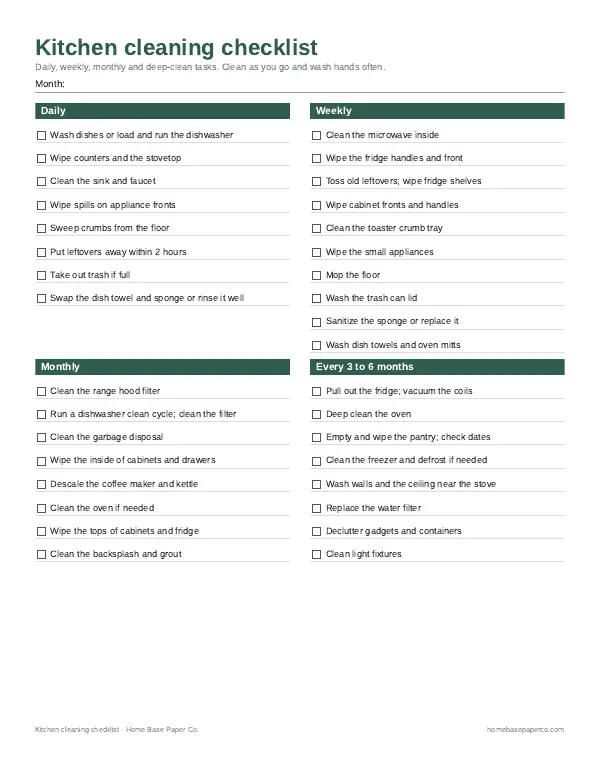
For the rest of the room, see our kitchen cleaning checklist and the deep cleaning checklist.
Make it easier
Tools for this
Printables
Cleaning Schedule
Daily, weekly, monthly and seasonal lists - plus a family chore chart.
Frequently asked questions
What is the easiest way to clean an oven? The easiest way to clean an oven for most people is a baking soda paste: mix 1/2 cup of baking soda with 2 to 3 tablespoons of water, spread it inside a cool oven away from the heating element and gas inlet, leave it for several hours or overnight, then wipe it off with vinegar and a damp cloth.
How do you clean an oven with baking soda and vinegar? To clean an oven with baking soda and vinegar, spread a paste of 1/2 cup baking soda and 2 to 3 tablespoons of water over the cool oven interior, leave it 30 minutes to overnight, then spray it with white vinegar so it foams. Scrub with a plastic scraper or synthetic pad, wipe clean and spray vinegar again to remove any white film.
How long does a self-cleaning oven take? A self-cleaning oven cycle usually takes about 2 hours, according to Cornell Cooperative Extension, and the oven reaches 800 to 1,000 degrees F during the cycle. Add cool-down time before the door opens again. Some ovens let you choose a shorter or longer cycle, so check your manual.
Is it safe to use the self-cleaning oven feature? Usually yes, if you follow your manual: remove the racks and any foil, wipe up loose food and grease first, ventilate the kitchen and stay home while it runs. Cornell advises keeping people and pets out of the kitchen because of heat and fumes. Pet birds are very sensitive to fumes, so move them well away from the kitchen.
Can you use oven cleaner on a self-cleaning oven? No, you should not use commercial oven cleaner on a self-cleaning oven. University of Illinois Extension notes it may damage the oven's special surface. Use the self-clean cycle as directed in your manual, or clean by hand with a baking soda paste, which is safe for any oven type.
How do you clean oven racks? To clean oven racks, take them out and soak them overnight in a bathtub or large tub of hot water with a few squirts of dish soap, laying an old towel underneath to protect the tub. Then scrub with a stiff brush or steel wool, rinse and dry. For heavy grime, sprinkle baking soda and spray vinegar before soaking.
How do you clean oven glass? To clean oven glass, spread baking soda paste on the inside of the cool door glass, leave it 20 to 30 minutes, then wipe with a damp microfiber cloth. Use a plastic scraper on stuck spots. Grime between the panes usually needs the door removed or opened up as your manual describes, so do not force it.
How often should you clean your oven? Most home cooks should deep clean the oven every 3 to 6 months, and wipe up spills once the oven cools each week. Clean it more often if you roast or bake a lot, or if you notice smoke or burning smells when you preheat. A quick wipe after big spills makes each deep clean much easier.
Can I leave baking soda in the oven overnight? Yes, you can leave baking soda paste in a cool, turned-off oven overnight. Cornell Cooperative Extension says the paste can sit from 30 minutes to 10 to 12 hours, or overnight, depending on how dirty the oven is. Do not turn the oven on until the paste is fully wiped away.
Why does my oven smoke after cleaning? An oven may smoke after cleaning because some cleaner, paste or loose ash is still inside, or because grease remains on the bottom or heating element. Cornell notes fumes may be noticed the first time you use the oven after a chemical cleaner. Wipe the interior again with a damp cloth, run the oven empty with the fan on, and ventilate.
How do I remember to clean the oven? Put it on a written schedule: a quick wipe in your weekly kitchen tasks and a deep clean in your monthly or seasonal list. The Cleaning Schedule ($4.49) has a Monthly Checklist and a Seasonal Deep Clean page where you can add the oven, racks and door glass so the job comes up before the holidays.
More from HomeBase
You may also like

Printables
Household Binder
Family info, emergency plan, calendars, meals, groceries, cleaning, bills and sitter notes.
Printables
Home Maintenance Log
Monthly, seasonal and annual checklists plus a record of every appliance and repair.

Printables
Home Inventory
Printable pages and a spreadsheet that totals the value of every room.
 Save 48%
Bundles
Home Management Bundle
Household binder, maintenance log, moving planner, cleaning schedule, home inventory and password log.
 Club
Monthly club
Planner & Calendar Club
Anyone who wants a monthly calendar, bill calendar and meal plan ready to print.
Free printable
Keep the kitchen clean with a little every day
Daily, weekly, monthly and deep-clean tasks plus a who-does-what table. You'll also get our weekly HomeBase email with simple cleaning routines and chore ideas the whole family can help with.
Sources
- Cleaning Your Oven for Holiday Roasting and Baking (Cornell Cooperative Extension) blogs.cornell.edu
- Cleaning and Sanitizing (University of Illinois Extension) extension.illinois.edu
- Should You Use Your Oven's Self-Cleaning Setting? (Wirecutter) nytimes.com