The short answer: swedish death cleaning is a gentle, gradual way to declutter your home and organize your affairs so the people you love are not left to sort through everything later.
- The word is döstädning
- Go gradually: a few hours a week
- Start big, end small: storage first, photos and letters last
- Don't skip the paperwork; checklist below
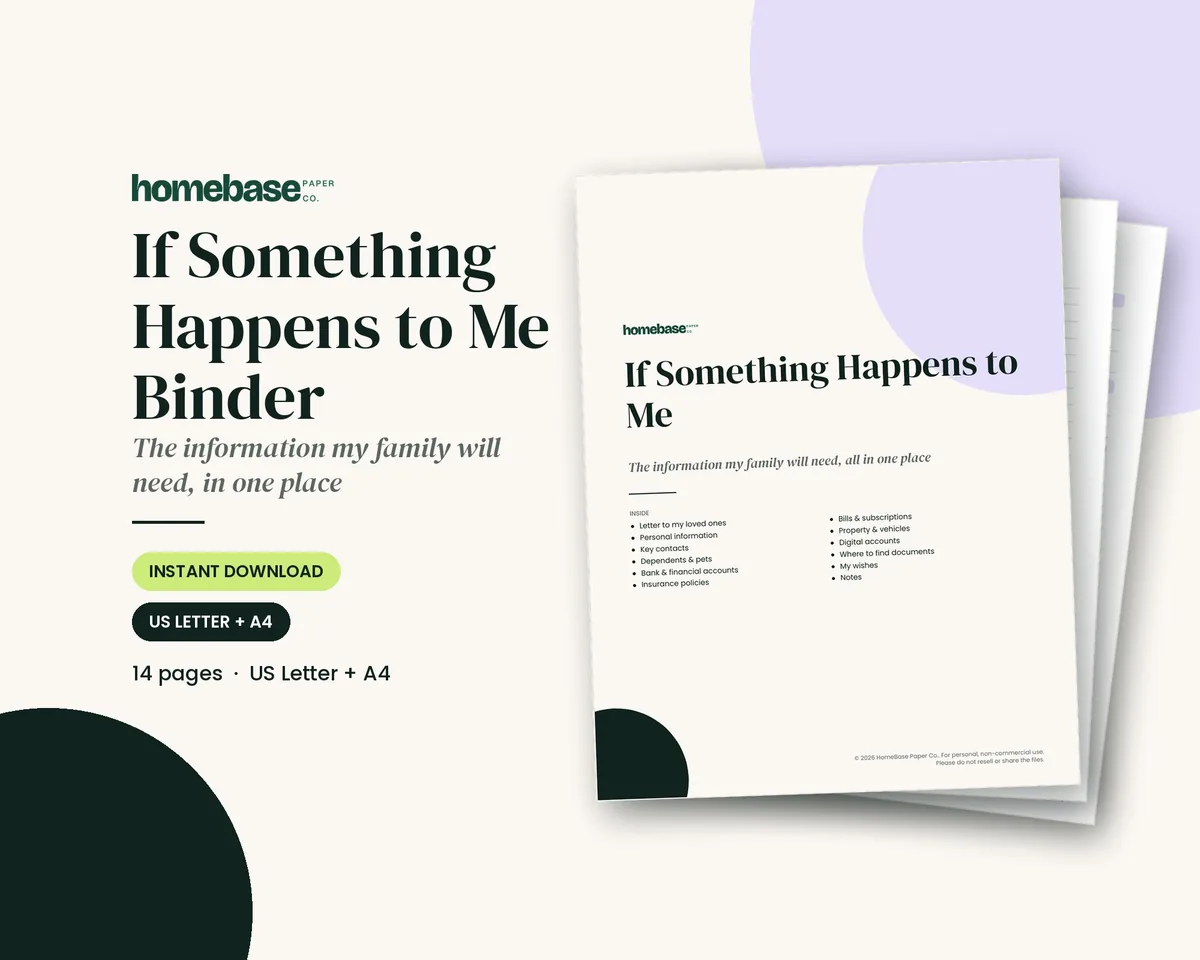
- Next step: Plan it with the If Something Happens to Me Binder ($11.99).
Swedish death cleaning is a gentle, gradual way to declutter your home and organize your affairs so the people you love are not left to sort through everything later. The Swedish word is döstädning, from dö (death) and städning (cleaning), and the idea was popularized by Margareta Magnusson's book The Gentle Art of Swedish Death Cleaning. Despite the name, it is less about dying and more about living with the things you actually value. This guide gives you a room-by-room order, a Swedish death cleaning checklist and the paperwork steps people often skip.
The principles of Swedish death cleaning
| Principle | What it means in practice |
|---|---|
| Go gradually | A few hours a week, one area at a time, over months |
| Start big, end small | Storage and furniture first, photos and letters last |
| Think of the people after you | Ask "Would anyone be glad to find this?" |
| Give things away while you can | Pass on heirlooms and tell the stories behind them |
| Keep what brings you joy | It is not about owning nothing; it is about owning what matters |
| Organize your paperwork too | Documents, accounts and wishes are part of the job |
It is not a one-weekend purge. The method works because it is slow and thoughtful, and because it ends with a home and a set of records that are easy for someone else to understand.
Swedish death cleaning vs. other decluttering methods
Swedish death cleaning is often compared with other popular decluttering approaches. The main difference is who it is for:
| Swedish death cleaning | Typical decluttering | |
|---|---|---|
| Main goal | Make life easier for the people after you, and for yourself now | A tidier, calmer home now |
| Pace | Gradual, over months or years | Often a set challenge or weekend |
| Order | Big and impersonal first, sentimental last | Varies by method |
| Paperwork | Central: documents, accounts and wishes | Usually not included |
| Giving away | Heirlooms passed on with their stories | Donate or discard |
You can combine them. Use a quick-start decluttering plan, like our guide to how to declutter your home, to clear the obvious excess, read up on minimalism if you want fewer things to come back in, then use the Swedish death cleaning mindset for the keepsakes and records that matter most to your family.
Who should do Swedish death cleaning (and when)
There is no required age. Swedish death cleaning is often associated with people in their 60s and older, but it helps anyone who:
- Is planning to downsize or move to a smaller home
- Has just helped clear a parent's or relative's home and does not want to leave the same job behind
- Feels the house has filled up over decades
- Has experienced a major life change, such as retirement, divorce or a new diagnosis
- Simply wants a calmer, more manageable home
Starting earlier makes it easier. The decisions are less rushed and you have time to give items to the people who will appreciate them.
The Swedish death cleaning order: room by room
Work from the easiest, least emotional spaces to the hardest. Sentimental items slow you down, so save them for last.
- Garage, attic, basement and storage closets. These hold the most forgotten items. Clear duplicate tools, old paint, broken equipment and boxes you have not opened in years. Our garage organization guide has a zone plan for what you keep.
- Closets and clothing. Keep what you wear and what fits. Donate the rest while it is still in good shape.
- Furniture and large items. Ask family members first, then sell or donate. Large pieces are the hardest for others to deal with later.
- Kitchen. Cut back to the dishes, pans and gadgets you actually use. Offer special serving pieces to family for holidays.
- Books, hobbies and collections. Keep favorites; pass collections on to someone who shares the interest.
- Papers and documents. Shred what you no longer need and organize the rest (see below). Our guide on how long to keep documents tells you what to keep and for how long.
- Photos, letters and keepsakes. Go slowly. Label photos with names and dates, and decide what to keep, digitize or give away.
A 6-week starter plan
If the full order feels like too much, spread it over six weeks with one focus a week. This is a suggested pace, not a rule:
| Week | Focus | Goal |
|---|---|---|
| 1 | Garage, attic, basement and storage closets | Fill one donation load and one trash or recycling load |
| 2 | Closets and clothing | Keep what you wear; bag the rest |
| 3 | Furniture and kitchen | Offer pieces to family first, then donate or sell |
| 4 | Books, hobbies and collections | Keep favorites; pass the rest on |
| 5 | Papers and documents | Shred what you do not need; gather the rest in one place |
| 6 | Photos, letters and a "things to know" binder | Label photos and write down where everything is |
For week 6, our if-something-happens-to-me binder checklist shows what to put in the binder, section by section.
Sorting categories
As you go through each space, put every item into one of these groups:
| Category | What goes here |
|---|---|
| Keep | Things you use and love |
| Give to someone | Items a specific person would value (write their name on a note) |
| Donate | Usable items for charity |
| Sell | Items with real resale value |
| Recycle | Paper, metal, electronics through proper programs |
| Discard | Broken or unusable items |
| Hazardous | Paint, chemicals, batteries for special disposal |
Swedish death cleaning checklist
Use this checklist to keep track as you work through the house:
Spaces
- Garage and outdoor storage
- Attic and basement
- Storage closets and under-bed boxes
- Bedroom closets and dressers
- Living room and shelves
- Kitchen cabinets and pantry
- Bathroom cabinets (expired medicine and products)
- Home office and desk
- Craft, hobby and collection areas
- Photos, letters and keepsakes
Paperwork and wishes
- Important documents gathered in one place
- Accounts and passwords listed
- Insurance policies and beneficiaries reviewed
- Bills and subscriptions listed (cancel the ones you do not use)
- Wishes written down and shared
- A trusted person knows where everything is
Do not skip the paperwork
For many families, the hardest part of clearing a home is not the furniture. It is figuring out the accounts, bills and documents. The National Institute on Aging's Getting Your Affairs in Order checklist recommends:
Organized records make the court process easier for family. Our guide on what is probate explains how it works and how long it takes.
If the paperwork pile shows you never wrote a will, our guide on how to make a will covers the steps and what to do after you sign.
Some families also write down life stories and key dates while they sort. Our free obituary template has a worksheet that makes this easy.
- Planning for your estate and finances, with documents such as a will, a durable power of attorney for finances and, if appropriate, a living trust.
- Planning for future health care with advance directives, such as a living will and a durable power of attorney for health care.
- Putting important papers and copies of legal documents in one place, such as a file, a drawer or a notebook that lists where papers are kept.
- Telling someone you trust, or a lawyer, where to find your important papers.
- Reviewing your plans at least once a year and after any major life event, such as a divorce, move or change in health.
NIA also notes that if you do not have a will, your estate will be distributed according to the laws in your state. A lawyer can help with legal documents; your job during Swedish death cleaning is to make sure everything is findable.
Put it all in one binder
The If Something Happens to Me Binder ($11.99) is a 14-page printable organized exactly for this step. It includes a letter to your loved ones, personal information, key contacts, dependents and pets, bank and financial accounts, insurance policies, bills and subscriptions, property and vehicles, digital accounts, where to find documents and your wishes. Our guide to the if something happens to me binder shows how to fill it in.
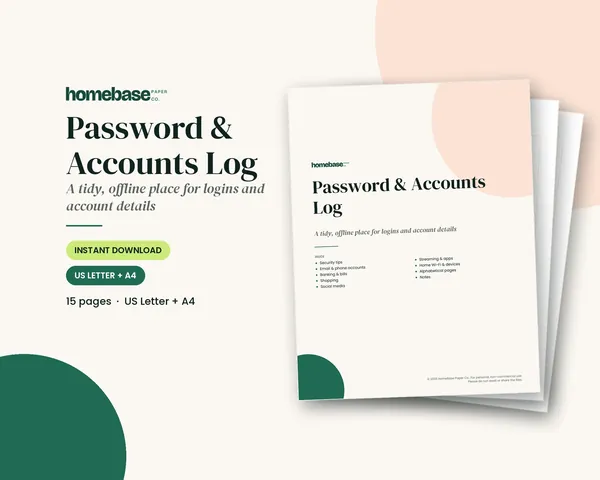
For the online side of your life, the Password & Accounts Log ($3.99) is organized by category and A to Z, with room for hints instead of full passwords. If you want both plus a caregiver organizer and pet health records, the Family Peace of Mind Bundle ($17.99, $28.46 if bought separately) includes all four.
Getting rid of things safely
Some items cannot go in the trash. The EPA's household hazardous waste page says leftover products such as paints, cleaners, oils, batteries and pesticides can contain hazardous ingredients and need special care. Its tips:
Before you hand off money tasks to family, a power of attorney form gives someone legal authority. Our guide explains which form fits.
- Keep products in their original containers and never remove labels.
- Never mix leftover products, because incompatible products might react, ignite or explode.
- Do not pour them down the drain, on the ground or into storm sewers.
- Contact your local environmental, health or solid waste agency about permanent or periodic household hazardous waste collections.
For everything else, schedule regular donation drop-offs so boxes do not pile up in the hallway.
Keep a record of what you keep
Once the house is pared down, a home inventory makes the next steps easier, both for insurance and for your family. The Home Inventory ($5.49) is an 8-page printable plus an Excel and Google Sheets spreadsheet, with policy details, room inventory, electronics, and jewelry and valuables pages and a summary by room.
Tips for a gentle Swedish death cleaning
- Set a timer. One or two hours per session keeps decisions fresh.
- Invite family, but keep the final say. Others can help carry and sort, but it is your home.
- Tell the stories. When you give an item away, share where it came from.
- Keep a "just for me" box. Private letters or mementos can go in a box marked to be discarded later.
- Celebrate progress. Each cleared shelf is a gift to your future self and your family.
- Revisit once a year. Like NIA's advice for your plans, a yearly review keeps things from piling up again.
Make it easier
Tools for this

Printables
If Something Happens to Me Binder
Accounts, insurance, bills, contacts, documents and your wishes - so your family isn't left guessing.
Printables
Password & Accounts Log
Organized by category and A-Z, with room for hints instead of full passwords.
 Save 37%
Bundles
Family Peace of Mind Bundle
The If Something Happens to Me binder, Caregiver Organizer, Pet Health Records and Password Log together.
Frequently asked questions
What is Swedish death cleaning? Swedish death cleaning, or döstädning in Swedish, is the practice of gradually decluttering your home and organizing your affairs so your loved ones are not left to sort through everything later. The idea was popularized by Margareta Magnusson's book The Gentle Art of Swedish Death Cleaning. Despite the name, it is less about death and more about living with only what you value.
How do I start Swedish death cleaning? Start with large, impersonal spaces such as the garage, attic or a storage closet, and leave photos, letters and keepsakes for last. Sort items into keep, give to someone, donate, sell, recycle and discard. Work in short sessions so it never becomes overwhelming.
At what age should you start Swedish death cleaning? You can start Swedish death cleaning at any age; it's often associated with people in their 60s and older. There is no set age, and anyone can use the method, especially before a move, after a major life change or when the home feels too full. The earlier you start, the more gradual and less stressful it is.
What is the order for Swedish death cleaning? A common order is: storage areas and the garage, then closets and clothing, then furniture and large items, then the kitchen and books, then papers and important documents, and finally photos, letters and sentimental items. Sentimental items take the most time, so they go last.
What do I do with sentimental items? Keep the items that mean the most and photograph or write down the story behind others before letting them go. Offer heirlooms to family members now so you can share their history. Many people keep a small throw-away box of private letters and keepsakes meant only for themselves.
How do I talk to my family about Swedish death cleaning? Keep it practical and positive. Explain that you want to make things easier for everyone, ask who would like specific items, and share where important papers are kept. The National Institute on Aging recommends telling someone you trust where to find your important papers.
Is Swedish death cleaning the same as decluttering? No, Swedish death cleaning isn't the same as decluttering: it overlaps with decluttering, but it has a different goal. Regular decluttering is about a tidier home now. Swedish death cleaning also considers what your family would face after you are gone, so it includes organizing documents, accounts and your wishes, not just your belongings, which is what the If Something Happens to Me Binder is for.
What documents should I organize during Swedish death cleaning? The National Institute on Aging lists documents such as a will, a durable power of attorney for finances and health care, a living will, and records of accounts and insurance. NIA suggests putting important papers and copies of legal documents in one place and reviewing your plans at least once a year.
How long does Swedish death cleaning take? It is meant to be gradual, so it can take months or even years. Many people work one area at a time, a few hours a week. Going slowly gives you time to make thoughtful decisions and to pass items on to the right people.
How do I dispose of old paint, chemicals and batteries? Do not pour them down the drain or put them in the regular trash. The EPA advises keeping hazardous products in their original containers, never mixing them, and using your community's household hazardous waste collection site or collection day. Your local solid waste agency can tell you the options.
What is a Swedish death cleaning checklist? A Swedish death cleaning checklist lists each area of the home in a sensible order, from storage spaces to sentimental items, plus the paperwork steps: documents, accounts and passwords, and your wishes. The checklist on this page covers each step in order.
What should I do with things nobody wants? Donate usable items to charities, sell items with resale value, recycle what you can and discard the rest. Check whether your local charity shop accepts furniture and offers pickup. For hazardous products, use a household hazardous waste program instead of the trash.
More from HomeBase
You may also like

Printables
Household Binder
Family info, emergency plan, calendars, meals, groceries, cleaning, bills and sitter notes.
Printables
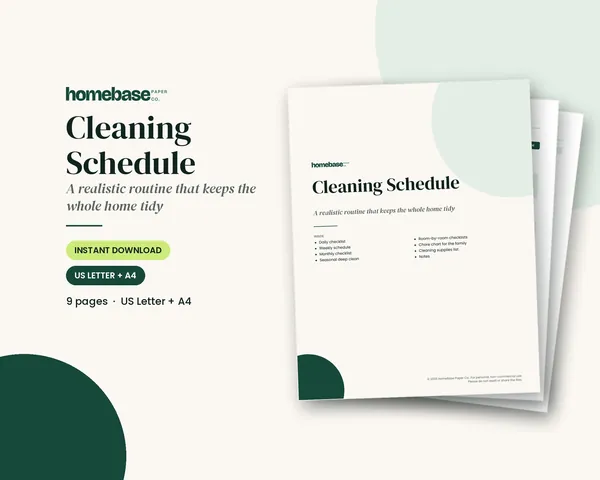
Cleaning Schedule
Daily, weekly, monthly and seasonal lists - plus a family chore chart.
Printables
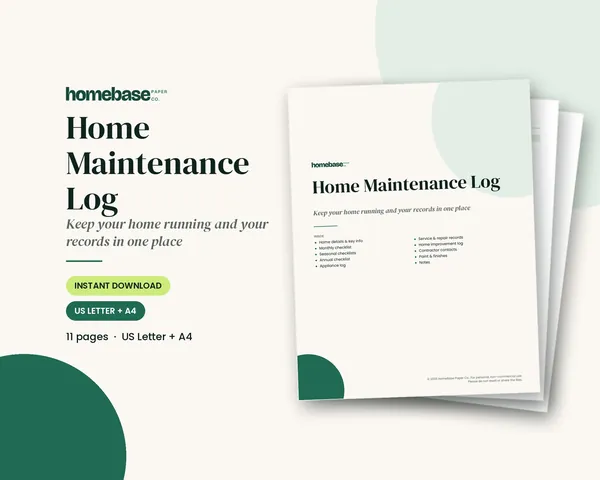
Home Maintenance Log
Monthly, seasonal and annual checklists plus a record of every appliance and repair.
 Save 48%
Bundles
Home Management Bundle
Household binder, maintenance log, moving planner, cleaning schedule, home inventory and password log.
 Club
Monthly club
Planner & Calendar Club
Anyone who wants a monthly calendar, bill calendar and meal plan ready to print.
Free printable
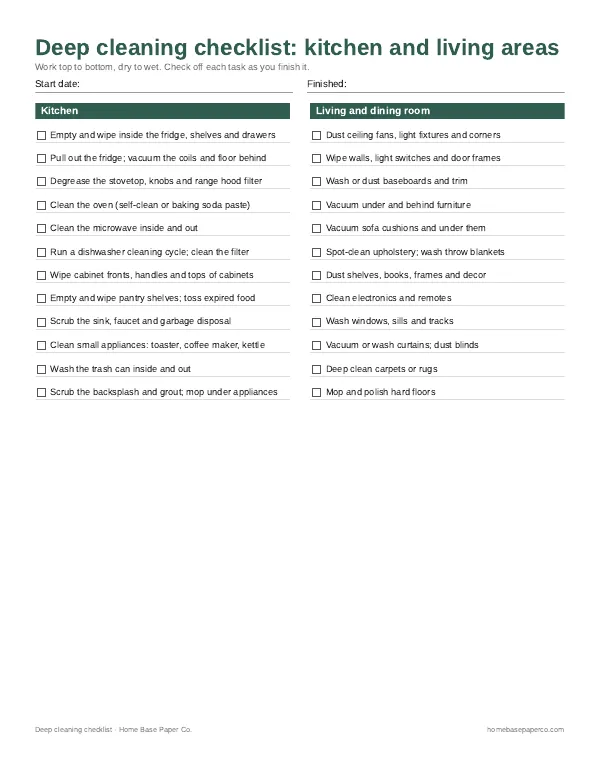
Clean the whole house in order: get the free deep cleaning checklist
A printable room-by-room deep cleaning checklist that tells you what to do first, so nothing gets cleaned twice. You'll also get our weekly HomeBase email with simple cleaning routines and chore ideas the whole family can help with.