The short answer: minimalism is living with fewer things, fewer commitments and fewer purchases so the time, money and attention you get back go to what matters to you. It isn't a rule about item counts, colors or empty rooms.
- First step: write down what you want more of
- Best habit: wait before you buy
- Types: home, money, time, digital, wardrobe and holidays
- 4-week starter plan for beginners below
- Next step: Plan it with the Sinking Funds Tracker ($4.99).
Minimalism is a way of living with fewer things, fewer commitments and fewer purchases so that the time, money and attention you get back can go to what matters to you. It isn't about owning 100 items, white walls or a perfect empty counter. It's a filter you run on your stuff, your spending and your calendar: does this earn its place in my life?
This guide covers the lifestyle side of minimalism: what it means, the different kinds of minimalism, how to become a minimalist without throwing out everything you own, and how minimalism and money work together. If you are ready to clear out a closet today, our step-by-step guide on how to declutter your home covers the room-by-room work. This page is about the mindset that keeps the clutter from coming back.
Minimalism shows up in the budget first. The Sinking Funds Tracker ($4.99) is a spreadsheet that lets you set aside money for the things you have decided are worth buying, so planned purchases replace impulse ones.
| Minimalism at a glance | |
|---|---|
| What it is | Owning, buying and scheduling less on purpose |
| What it is not | A rule about item counts, colors or empty rooms |
| Main types | Home, money, time, digital, wardrobe, holidays |
| First step | Write down what you want more of |
| Best habit | Wait before you buy |
| Money tool | A sinking fund for planned purchases |
What is minimalism?
Minimalism is the practice of keeping what adds value to your life and letting go of the rest. Simple living is an old idea, and minimalism is its modern name. The point is the same: notice how much of your money, space and attention goes to things you barely use, and redirect it.
A minimalist lifestyle has three parts:
- Fewer possessions. You keep what you use and love, and you stop holding things "just in case" when the case never comes.
- Intentional spending. You decide ahead of time what is worth your money, then you spend on that and cut back on the rest.
- A lighter schedule. You say yes to fewer commitments so the ones you keep get your full attention.
You don't have to do all three at once. Many people start with one, usually their stuff or their spending, and the others follow.
Minimalism vs. decluttering
Decluttering is a task: you go through a space and remove what you don't need. Minimalism is the lifestyle that decides what comes in afterward. You can declutter without becoming a minimalist, and plenty of people do it every January only to refill the closets by June.
That's why this site has separate guides for each job:
- To clear out a home: how to declutter your home, with a room-by-room order and the four-box method, plus a January decluttering checklist.
- To clear out with later life in mind: Swedish death cleaning, the gentle method of sorting your things so no one else has to.
- To stop buying for a set time: the no buy challenge, with sample rules and lengths.
- For the holidays: a minimalist Christmas plan for less stuff and less spending.
Minimalism ties these together. It is the reason behind the decluttering, the challenge and the simpler holiday.
Benefits of a minimalist lifestyle
People come to minimalism for different reasons. The benefits they describe most often are practical:
- More money left over. When fewer purchases happen on autopilot, more of each paycheck is free for savings, debt or the things you actually value.
- Less time spent managing stuff. Every item needs to be cleaned, stored, repaired or moved. Fewer items means less upkeep.
- Easier decisions. A smaller wardrobe, a shorter grocery list and a lighter calendar all mean fewer choices to make each day.
- More room for people and goals. Time and money that used to go to things can go to experiences, relationships and goals.
There is research behind the idea that chasing more stuff doesn't make people happier. A 2014 meta-analysis in the Journal of Personality and Social Psychology combined 259 independent samples and found that materialism was associated with lower personal well-being. That doesn't prove that owning less will make you happy, but it does suggest that putting possessions at the center of your goals is not a good bet.
Types of minimalism
Minimalism looks different depending on where you apply it. Most people mix and match.
| Type | What it looks like | Good first step |
|---|---|---|
| Home minimalism | Fewer items on surfaces, in closets and in storage | Clear one drawer or shelf |
| Financial minimalism | Fewer accounts, subscriptions and impulse buys | Cancel one subscription you forgot about |
| Time minimalism | Fewer commitments and a calmer calendar | Leave one evening a week unscheduled |
| Digital minimalism | Fewer apps, alerts and screens | Turn off nonessential notifications |
| Wardrobe minimalism | A smaller closet of clothes you actually wear | Pack away what you haven't worn in a season |
| Holiday minimalism | Fewer gifts and events, more meaning | Agree on a gift limit with family |
| Minimalist parenting | Fewer toys and activities, more free play | Rotate toys instead of buying new ones |
Financial minimalism
Financial minimalism is where the lifestyle pays for itself. It means fewer bank accounts and cards to track, fewer subscriptions, fewer small purchases that add up, and a short list of goals your money is working toward. A simple budget is the tool that makes it real. If you have never built one, start with our guide to budgeting for beginners.
Time minimalism
Your calendar can be as cluttered as a closet. Time minimalism means looking at every recurring commitment and asking whether it still fits. A short morning routine and a clear weekly plan do more than a packed schedule you can't keep.
Digital minimalism
Digital minimalism applies the same filter to screens: delete apps you don't use, unsubscribe from shopping emails, turn off alerts that pull you back to your phone, and clear old files and photos in batches. Shopping emails and saved carts are a big source of impulse buys, so this step often saves money too.
How to become a minimalist in 10 steps
You don't become a minimalist in one weekend. These steps build the habit gradually.
- Write down your why. List what you want more of: time with family, less debt, a calmer home, money for travel. Your why is what you will check purchases and commitments against. Our goal-setting guide can help you turn that list into real goals.
- Start with one small space. Pick a drawer, a shelf or your car. A quick win shows you what living with less feels like.
- Ask one question about each item. "Do I use it, or do I love it?" If the answer is no to both, it can go.
- Let go of duplicates first. Extra mugs, chargers, towels and kitchen tools are the easiest place to start.
- Look at your spending for one month. Sort purchases into needs, planned wants and impulse buys. The impulse column shows you where minimalism will save the most.
- Use a waiting rule. Put nonessential purchases on a list and wait before buying. If you still want it later, plan for it. Our guide on how to stop impulse spending has more ways to slow down.
- Adopt one in, one out. When something new comes in, something similar goes out.
- Trim the calendar. Drop or pause one commitment that no longer fits your why.
- Go digital. Unsubscribe, unfollow and delete in one sitting.
- Review every season. Minimalism is maintenance. A short check each season keeps things from piling up again.
Minimalism for beginners: a 4-week starter plan
If ten steps feel like a lot, try one theme a week for a month.
| Week | Focus | What to do |
|---|---|---|
| 1 | Your why | Write your top three priorities and keep them where you'll see them |
| 2 | Your money | Track every purchase, cancel one unused subscription and start a wait list |
| 3 | Your stuff | Clear one space a day for 15 minutes; donate as you go |
| 4 | Your time | Review the calendar and drop or pause one commitment |
At the end of the month, decide which change felt best and keep it. Then add one more. That's how a minimalist lifestyle grows: one habit at a time.
Minimalism and money: spend on purpose
Minimalism is not about never spending. It is about spending on the things you've decided matter and cutting back on the rest without guilt. Two simple tools help.
A budget that reflects your priorities. The Budget Planner Printable ($5.99) gives you monthly budget pages, bill and expense trackers and a savings tracker, so you can see where your money goes and move it toward your priorities.
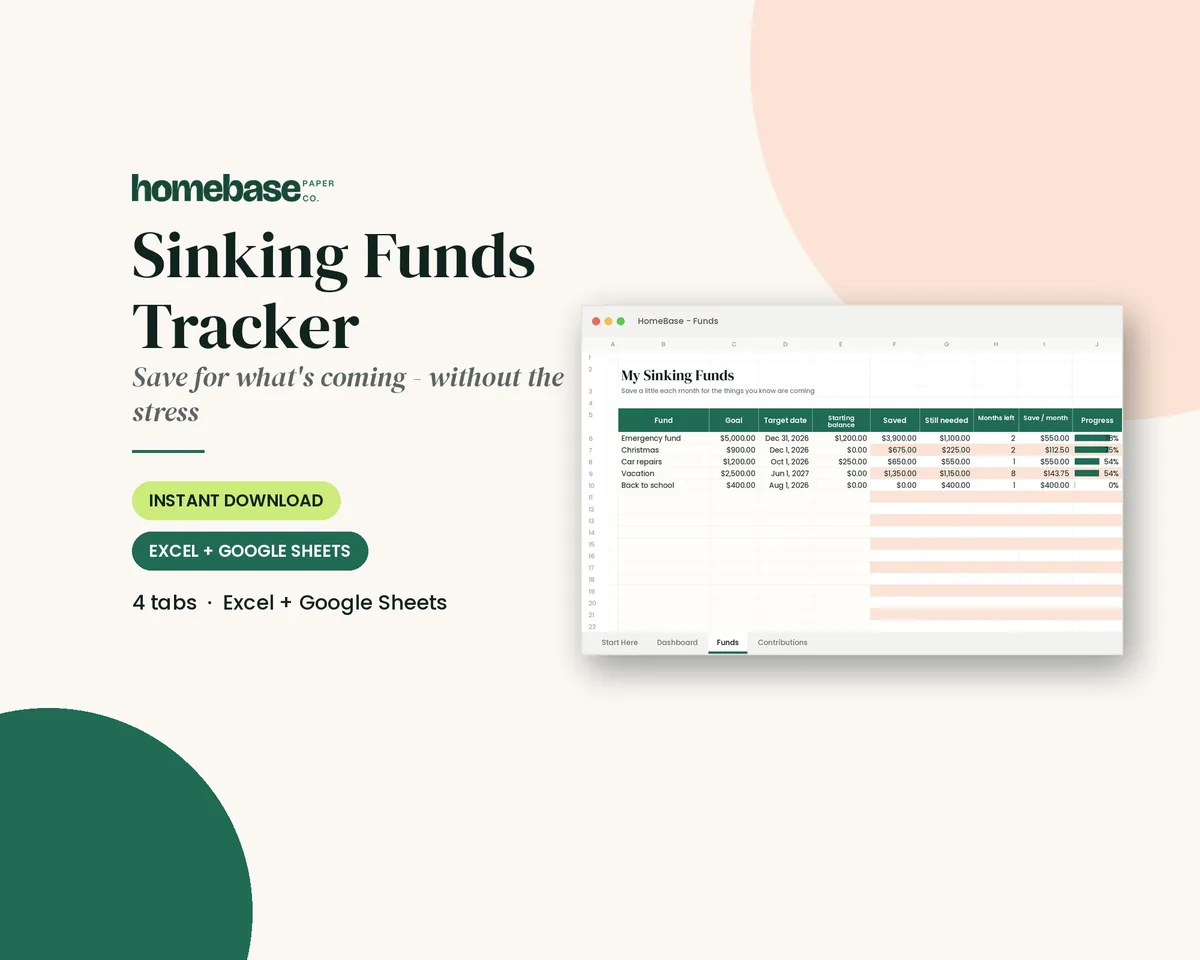
Sinking funds for planned purchases. A sinking fund is money you set aside a little at a time for a known expense: a new phone, a trip, a replacement couch. When you save first and buy later, you buy less often, choose more carefully and skip the debt. The Sinking Funds Tracker ($4.99) tracks each fund's goal, deposits and progress in one spreadsheet.
Browse more budgeting tools in our money planners shop. If you want a short reset, a no-spend January challenge is a good way to see how little you really need to buy, and the savings can go straight into your funds. For more ideas, see how to save money.
Minimalism with a family
Minimalism with a family works best when it's shared, not imposed. A few approaches that tend to stick:
- Give everyone a say. Each person keeps their own favorites, and shared spaces get decided together.
- Rotate toys and books. Keep a few out and store the rest. Swap them every few weeks so old things feel new without buying more.
- Ask for experiences. Suggest outings, classes or memberships as gifts instead of more things.
- Make chores lighter. Fewer things means less to pick up. A clear household chores list splits what's left.
- Keep one place for paperwork. The Household Binder ($6.99) holds contacts, schedules, bills and home records in one place, so the papers that do matter don't get lost in piles.
You can find more home planners in our home organization shop.
Minimalist living rules that stick
These are simple rules many minimalists use. Pick the ones that fit your life.
- One in, one out. A new item replaces an old one.
- The wait list. Wait before buying anything nonessential.
- A home for everything. If it doesn't have a place, ask whether you need it.
- Buy for the life you have. Skip purchases for hobbies or plans you don't have yet.
- Quality over quantity. One sturdy item can replace several cheap ones.
- Empty surfaces get reset daily. A clear counter is easier to keep clear.
- Borrow before you buy. Libraries, neighbors and rentals cover a lot of one-time needs.
Common minimalism mistakes
- Throwing everything out at once. Purging fast often leads to rebuying. Go one space at a time.
- Buying minimalist things. New bins, matching hangers and storage systems are still purchases. Use what you have first.
- Decluttering other people's things. Start with your own stuff. Others usually come along when they see the results.
- Treating it as a contest. Item counts and perfect photos aren't the goal. A life that feels lighter is.
- Forgetting the money side. Without a budget, the space you cleared will fill up again.
Where your things should go
Minimalism shouldn't mean sending everything to a landfill. Donate, sell or recycle what you can.
Clothing is a good place to be careful. The EPA estimates that Americans generated 17 million tons of textiles in 2018, and the recycling rate for all textiles was 14.7 percent. Donate wearable clothes, and look for textile recycling for worn-out items.
Old phones, laptops and chargers also add up. The EPA's guide to donating or recycling used electronics recommends deleting all personal information first and removing batteries, since lithium-ion batteries shouldn't go in household trash or recycling bins.
Why I like the minimalist mindset
I grew up in Detroit as the oldest of three, and I was the one my family leaned on to keep things coordinated. Later I worked as an executive assistant and in HR, and I saw how much smoother a week goes when the calendar has room in it. Minimalism is the same idea applied to everything else: less to manage means more energy for what matters.
Now Raheim and I run our family shop in Frisco, Texas, and we try to make things people will actually use, not things that end up in a drawer. Start small. Slow progress is still progress.
Start your minimalist lifestyle this week
Pick one step from this guide and do it this week: write your why, clear one drawer or cancel one subscription. Then give your money a plan with the Sinking Funds Tracker ($4.99) so your next purchase is one you chose on purpose. For the hands-on clearing, head to how to declutter your home.
Make it easier
Tools for this
Spreadsheets
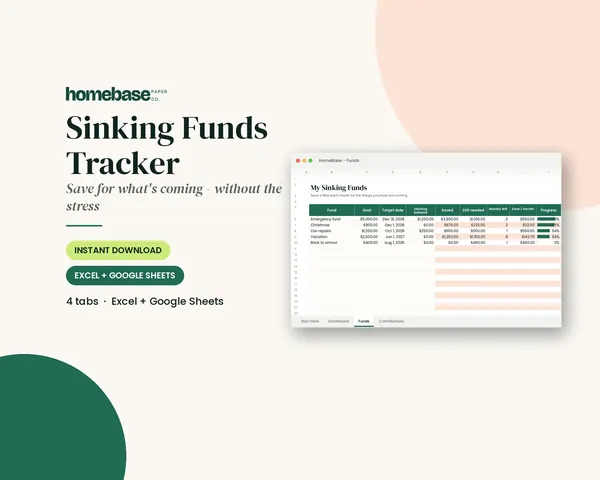
Sinking Funds Tracker
It does the math: how much to set aside each month to hit every goal on time.
Printables
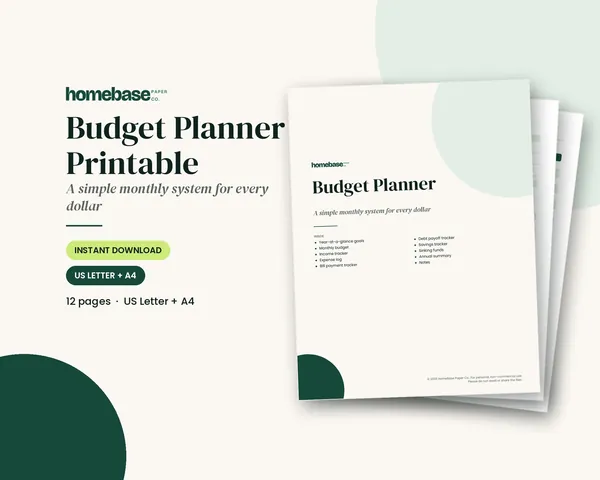
Budget Planner Printable
Twelve undated pages you can print every month: budget, bills, spending, savings and debt.
Printables
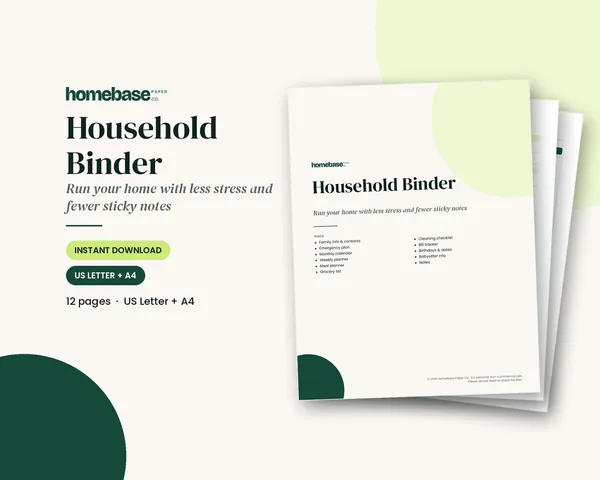
Household Binder
Family info, emergency plan, calendars, meals, groceries, cleaning, bills and sitter notes.
Frequently asked questions
What is minimalism? The Sinking Funds Tracker ($4.99) supports the money side of minimalism by letting you save for the purchases you have decided are worth it. Minimalism is a way of living with fewer possessions, fewer commitments and more intentional spending, so your time, money and attention go to what matters most to you. It is a filter, not a rule about how many things you own.
What is a minimalist lifestyle? The Budget Planner Printable ($5.99) helps you see where your money goes, which is the starting point for most minimalist lifestyles. A minimalist lifestyle means keeping what you use and love, buying on purpose instead of on impulse, and keeping a calendar with room to breathe. It looks different for everyone; a family of five and a single renter can both live minimally.
How do I start minimalism as a beginner? The Sinking Funds Tracker ($4.99) gives beginners an easy money habit to start with: save first, buy later. Start by writing down what you want more of, clear one small space, track your spending for a month and add a waiting rule before nonessential purchases. A four-week plan with one theme per week (why, money, stuff, time) keeps it manageable.
What are the benefits of minimalism? The Budget Planner Printable ($5.99) makes one benefit of minimalism visible: money left over once fewer purchases happen on autopilot. Other common benefits are less time spent cleaning and storing things, easier daily decisions and more room for people and goals. A 2014 meta-analysis of 259 samples found materialism was associated with lower personal well-being.
Is minimalism the same as decluttering? The Household Binder ($6.99) keeps the papers you decide to keep in one place, which is where decluttering and minimalism meet. They are not the same: decluttering is the task of removing things you don't need, and minimalism is the lifestyle that decides what comes in afterward. Without the lifestyle change, decluttered spaces tend to fill back up.
What are the types of minimalism? The Sinking Funds Tracker ($4.99) is built for financial minimalism, one of several common types. Others include home minimalism (fewer possessions), time minimalism (fewer commitments), digital minimalism (fewer apps and alerts), wardrobe minimalism (a smaller closet) and holiday minimalism (fewer gifts and events). Most people combine two or three.
Does minimalism save money? The Sinking Funds Tracker ($4.99) turns minimalism into savings by giving every planned purchase its own fund. Minimalism usually saves money because you buy less often, skip impulse purchases and cancel things you don't use, though it can mean paying more for fewer, better items. The savings show up fastest when you pair it with a simple budget.
What is financial minimalism? The Budget Planner Printable ($5.99) is a simple way to practice financial minimalism, with monthly budget pages and bill and savings trackers. Financial minimalism means fewer accounts, cards and subscriptions to manage, fewer small purchases that add up, and a short list of goals your money works toward. It is minimalism applied to your budget.
How do I become a minimalist with a family? The Household Binder ($6.99) gives a family one shared place for schedules, contacts and bills, which cuts paper clutter. To practice minimalism with a family, give each person a say over their own things, decide shared spaces together, rotate toys and books instead of buying more, and ask relatives for experiences instead of gifts.
What are some minimalist living rules? The Sinking Funds Tracker ($4.99) supports the most useful minimalist rule: plan big purchases instead of making them on impulse. Other common rules are one in, one out; a waiting list for nonessential buys; a home for everything; buying for the life you have now; quality over quantity; and borrowing before buying.
How many items does a minimalist own? The Household Binder ($6.99) is an example of a minimalist item: one binder replacing piles of loose papers. There is no required number. Item-count challenges exist, but minimalism is about keeping what you use and value, so the right amount depends on your household, your work and your hobbies.
What is the hardest part of minimalism? The Sinking Funds Tracker ($4.99) helps with the hardest part for many people, which is changing buying habits rather than clearing things out. Common struggles include sentimental items, pressure from others and rebuying what was donated. Going one space at a time and using a waiting rule before purchases makes the change last.
What should I do with things I no longer need? The Household Binder ($6.99) can hold a simple list of what you donated or sold, which helps at tax time if you itemize. Donate or sell items in good condition, recycle what you can and throw away only what's left. The EPA recommends deleting personal data and removing batteries before donating or recycling electronics.
How is minimalism different from a no buy challenge? The Budget Planner Printable ($5.99) works for both, since each starts with knowing where your money goes. A no buy challenge is a set period of not buying nonessentials, usually a month to a year. Minimalism is an ongoing lifestyle with no end date. Many people use a no buy challenge as a reset on their way to living with less.
More from HomeBase
You may also like
Printables
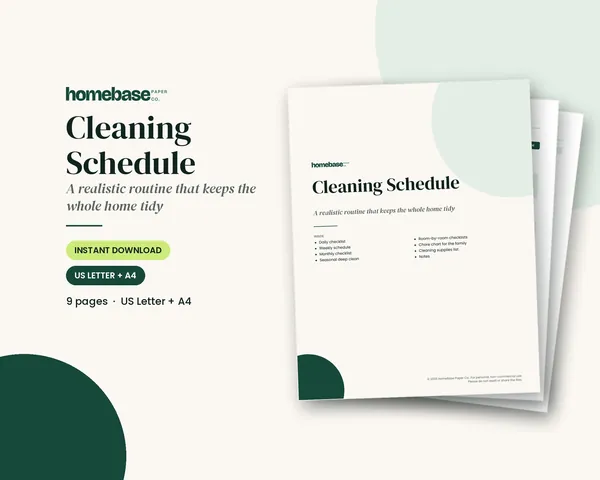
Cleaning Schedule
Daily, weekly, monthly and seasonal lists - plus a family chore chart.
Printables
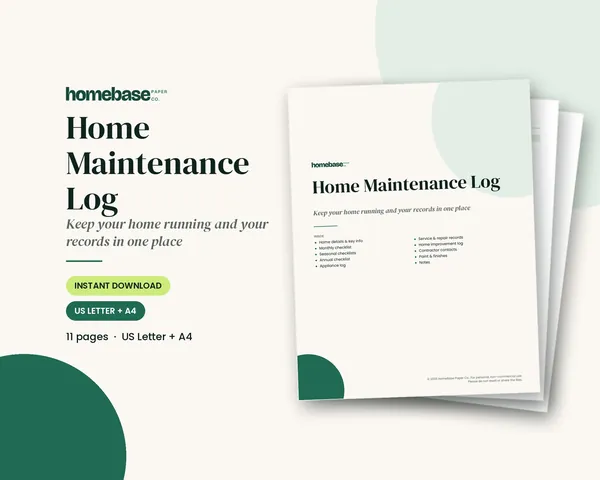
Home Maintenance Log
Monthly, seasonal and annual checklists plus a record of every appliance and repair.
Printables
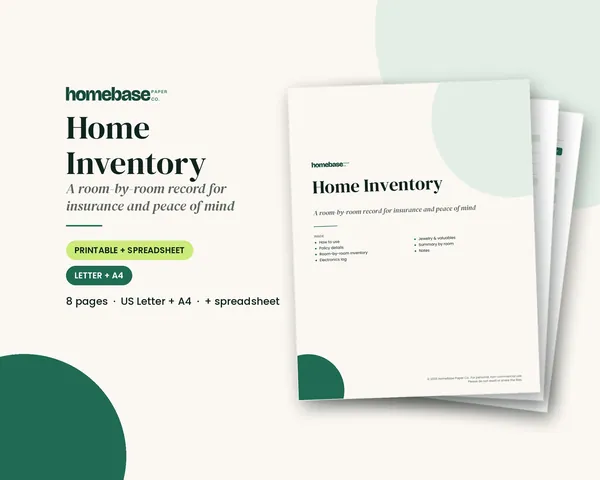
Home Inventory
Printable pages and a spreadsheet that totals the value of every room.
 Save 48%
Bundles
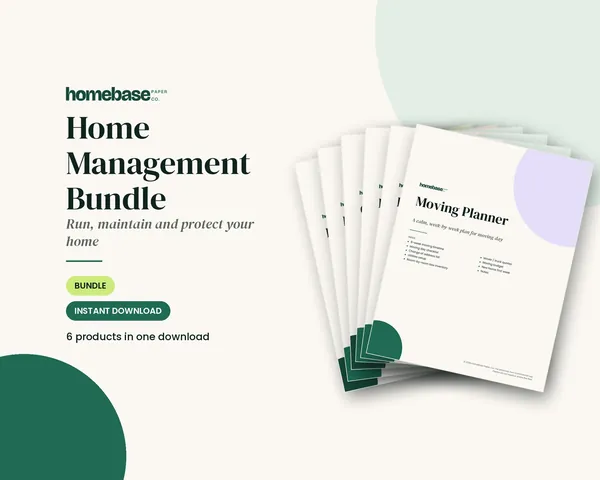
Home Management Bundle
Household binder, maintenance log, moving planner, cleaning schedule, home inventory and password log.
 Club
Monthly club
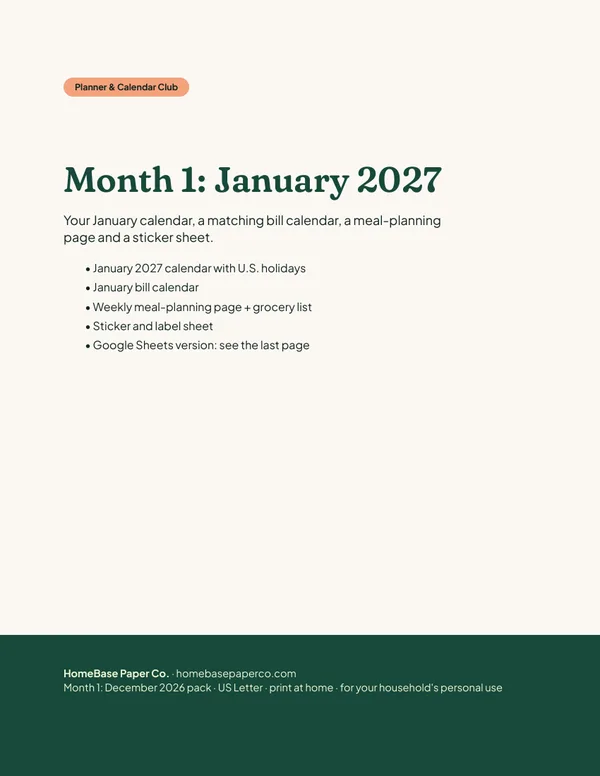
Planner & Calendar Club
Anyone who wants a monthly calendar, bill calendar and meal plan ready to print.
Free printable
Clean the whole house in order: get the free deep cleaning checklist
A printable room-by-room deep cleaning checklist that tells you what to do first, so nothing gets cleaned twice. You'll also get our weekly HomeBase email with simple cleaning routines and chore ideas the whole family can help with.