

The short answer: to declutter your home, use a simple four-box system and repeat it in small sessions, one room at a time. It's less about willpower than about the system.
- Start small: the kitchen counter, entryway, bathroom cabinet or your nightstand
- Quick wins: clear the counters completely, toss expired products, donate clothes that don't fit
- Pick a short time limit for each session
- Book the drop-off so donations leave the house
- Next step: Plan it with the Household Binder ($6.99).
Learning how to declutter your home is less about willpower and more about a simple system you repeat in small sessions. This guide gives you a four-box method, a room-by-room order, what to let go of first, where to donate and recycle, and habits that keep clutter from coming back. It also includes a room-by-room decluttering checklist, a day-by-day 30-day plan, four popular decluttering methods compared, and help with the hardest parts: sentimental items and decluttering with kids.
I'm Malaysia. I grew up in Detroit as the oldest of three, and I was the one the family leaned on to keep things coordinated. Clutter was always easier to handle with a plan than with a burst of energy. If you like to keep your decluttering plan, donation dates and room checklists in one place, the Household Binder ($6.99) gives your home system a single home.
Where to start decluttering
If you don't know where to start decluttering, pick the spot that bothers you most every day and is small enough to finish in one session. For most homes, that's one of these:
- The kitchen counter. You see it many times a day, and clearing it changes how the whole room feels.
- The entryway. Shoes, bags and mail land here first, so a clear entry slows clutter down at the door.
- The bathroom cabinet. It's full of easy decisions: expired products, empty bottles and duplicates.
- Your nightstand. A small, private space you can finish in 10 minutes.
Avoid starting with the garage, the attic or boxes of keepsakes. Those take longer and involve harder decisions, so they're better once you've built some momentum.
Before you start: set yourself up
- Pick a short time limit. Fifteen to twenty minutes is enough for one drawer or shelf.
- Grab four bins or bags: keep, donate or sell, trash or recycle, and relocate.
- Choose one spot. Finish it before moving on.
- Book the drop-off. Decide now when donations leave the house.
The four-box method
Take each item out and put it in one of the four boxes. Don't skip decisions or make a "maybe" pile that sits for months. When the timer ends:
- Put the keep items back neatly.
- Bag the donations and put them in the car.
- Take trash and recycling out.
- Walk the relocate box through the house and put each item where it belongs.
What to let go of first
Start with the easy decisions to build momentum:
- Expired food, spices and condiments
- Expired makeup, sunscreen and medicine
- Duplicates: extra spatulas, mugs, phone chargers
- Broken items you haven't fixed in months
- Clothes that don't fit or you haven't worn in a year
- Old paperwork you no longer need to keep (see our guide on how long to keep documents)
Room-by-room order
Doing the hall closet? Our linen closet organization guide shows how many sheets and towels to keep and a shelf-by-shelf layout. For bedroom and walk-in closets, see our closet organization guide.
When you reach the garage, our garage organization guide has an 8-step plan, storage ideas for every budget and safe storage rules for paint, fuel and chemicals.
| Room | Start with | Quick win |
|---|---|---|
| Kitchen | Pantry, counters, junk drawer | Clear the counters completely |
| Bathroom | Medicine cabinet, under the sink | Toss expired products |
| Entryway | Shoes, coats, mail pile | One basket per person |
| Bedroom | Closet and nightstand | Donate clothes that don't fit |
| Living room | Surfaces and media | Box up cords and remotes |
| Kids' rooms | Outgrown toys and clothes | Let kids pick favorites |
| Garage and storage | Bins and shelves | Label every bin |
| Sentimental items | Photos, letters, keepsakes | One memory box per person |
Save sentimental items for last. By then you'll be faster and more confident at deciding. If a room feels too big, split it into zones, like one closet shelf or one side of the bed, and finish one zone per session.
Room-by-room decluttering checklist
Use this decluttering checklist as you work through each room. Print it, or copy it into your planner, and check off each area as you finish it.
| Room | Declutter checklist |
|---|---|
| Kitchen | Counters, junk drawer, expired pantry food, spices, duplicate utensils, mugs and water bottles, food storage containers without lids, small appliances you don't use |
| Pantry | Expired food, stale snacks, half-used bags to combine, items to donate to a food pantry |
| Bathroom | Expired medicine, makeup and sunscreen, empty bottles, hotel samples, old towels, hair tools you don't use |
| Bedroom | Nightstands, under the bed, dresser top, clothes that don't fit, worn-out shoes |
| Closet | Clothes not worn in a year, hangers, bags, belts, out-of-season items to store |
| Linen closet | Extra sheet sets, stained or thin towels, mismatched pillowcases |
| Living room | Surfaces, magazines, old remotes and cords, games with missing pieces, decor you don't love |
| Entryway | Shoes, coats, bags, umbrellas, keys, the mail pile |
| Kids' rooms | Outgrown clothes, broken toys, toys nobody plays with, old school papers |
| Home office and paperwork | Old statements, manuals, expired warranties, dried-out pens, cables |
| Laundry room | Empty bottles, lost socks, cleaning products you don't use |
| Garage and storage | Broken tools, old paint, duplicate sports gear, holiday decor you don't use |
For deeper help in specific rooms, see our guides to closet organization, pantry organization and kitchen organization ideas.
Decluttering methods compared
There's no single right way to declutter. These four popular methods suit different personalities and schedules:
| Method | How it works | Best for | Watch out for |
|---|---|---|---|
| Four-box method | Sort every item into keep, donate or sell, trash or recycle, and relocate | Beginners and one-room projects | Emptying the relocate box every session |
| One in, one out | Each new item that comes in means one similar item goes out | Keeping a decluttered home clear | It maintains, but doesn't reduce, what you own |
| 12-12-12 challenge | Find 12 things to toss, 12 to donate and 12 to put back where they belong | Quick sessions and families | Picking easy items every time |
| Minimalist game | Get rid of one item on day 1, two on day 2, and so on for 30 days | People who like a challenge | It adds up to 465 items, so it's a lot for a small home |
You can mix methods. Many people use the four-box method for a first pass through each room, then one in, one out to keep things from creeping back. The 12-12-12 challenge works well as a weekly reset once the big work is done.
How to declutter each room
Each room has its own kind of clutter. These quick guides cover what to focus on and where clutter usually hides.
Kitchen
Start with the counters: take everything off, wipe them down and only put back what you use every day. Then work through one cabinet or drawer at a time. Most kitchens hold duplicates, like extra spatulas, mugs, water bottles and food storage containers without lids. Keep the ones you reach for and donate the rest. Check the pantry and spices for expired items while you're there.
Bathroom
Bathrooms are full of quick decisions. Toss expired medicine (following the FDA guidance above), old makeup, sunscreen past its date, and nearly empty bottles. Keep one of each product you use in the cabinet and store backups together in one bin, so you can see what you already have before you buy more.
Bedroom and closet
Clear the nightstand and dresser top first, since they're small and visible. Then move to the closet. Pull out anything that doesn't fit, needs repair you won't do, or hasn't been worn in a year. A simple trick is to turn all your hangers backward, then turn each one around after you wear it. After a season, the backward hangers show what you don't wear.
Living room
Living rooms collect things from every other room. Start with surfaces: the coffee table, side tables and shelves. Put back anything that belongs elsewhere, then go through media, games, cords and decor. Keep a basket for each person's items, and empty the baskets back to their rooms every evening.
Garage and storage areas
The garage is often the biggest job, so save it for when you have momentum and a full afternoon. Sort into zones like tools, sports, seasonal and car supplies. Take old paint, chemicals and batteries to proper drop-off sites rather than the trash. Our garage organization guide has a step-by-step plan.
How to declutter clothes
Clothes are one of the biggest sources of clutter in most homes, and one of the easiest to tackle in small sessions:
- Work by category, such as tops, then pants, then shoes, rather than by drawer.
- Try on anything you're unsure about. If it doesn't fit or feel good today, let it go.
- Check for damage. Stains, holes and stretched-out items go to textile recycling where available, not donation.
- Keep what you'd wear this month or next season. Store off-season clothes in a labeled bin.
- Set a hanger limit. When your closet is full, one in means one out.
After decluttering: organize what you keep
Organizing comes after decluttering, not before. Once a room is clear, give every remaining item a home close to where you use it. Store everyday items at eye level and rarely used items up high or in labeled bins. Clear bins and simple labels help everyone in the house put things back. Then add a short daily reset to your routine so the room stays the way you left it. Our cleaning schedule template shows how to fit that reset into a week. Our home organization hacks guide has 40 cheap ideas grouped by room.
Questions that make decisions easier
- Have I used this in the past year?
- Would I buy it again today?
- Do I own something else that does the same job?
- Is it worth the space it takes?
- Am I keeping it out of guilt?
If an item fails most of these, it can probably go.
Donate, sell, recycle or toss
Donate clean, working clothes, housewares, books and toys to local charities, shelters, schools or buy nothing groups. Sell bigger items like furniture or electronics if the money is worth the time.
Recycle paper, cardboard, glass and metal through your local program. Electronics, batteries, paint and light bulbs often need special drop-off sites. The EPA's recycling page explains how to find local options.
Medicines need extra care. Pharmacy and police take-back programs are the best choice. The FDA's guide to disposing of unused medicines explains what to do if there's no take-back site nearby.
Electronics need a few extra steps. The EPA's guide to electronics donation and recycling says to delete all personal information first and remove batteries, which may need to be recycled separately. Lithium-ion batteries and devices that contain them shouldn't go in household trash or recycling bins.
Tips for each option
| Option | Good for | Tip |
|---|---|---|
| Donate | Clean, working clothes, housewares, books, toys | Call ahead; many charities don't take car seats, mattresses or recalled items |
| Sell | Furniture, electronics, baby gear, tools | Set a deadline; donate anything that hasn't sold by then |
| Give away | Bulky items, moving boxes, leftover supplies | Local buy nothing groups and neighbors often pick up fast |
| Recycle | Paper, cardboard, glass, metal, some plastics | Check your city's rules, because accepted items vary |
| Special drop-off | Electronics, batteries, paint, light bulbs, medicine | Collect them in one bin and make one trip |
| Trash | Broken, stained or unsafe items | Bag it and take it out the same day |
The most important rule: get items out of the house quickly. A donation bag that sits in the trunk for a month is still clutter.
A simple 30-day decluttering plan
If you like a clear schedule, try one small task a day for a month:
- Week 1, kitchen and bathroom: pantry, fridge, spices, counters, medicine cabinet, under the sink and towels.
- Week 2, bedrooms and closets: clothes, shoes, nightstands, linens and kids' rooms.
- Week 3, living areas: shelves, media, entryway, coats, bags and the mail pile.
- Week 4, storage: garage, basement, holiday bins, paperwork and sentimental boxes.
Most days take 15 to 30 minutes. Skip a day if you need to, and pick it back up the next. By the end of the month, every room has had a first pass, and the second pass will be faster.
Day-by-day 30-day decluttering plan
| Day | Task | Day | Task |
|---|---|---|---|
| 1 | Kitchen counters | 16 | Bookshelves |
| 2 | Junk drawer | 17 | Media, games and cords |
| 3 | Pantry and spices | 18 | Coffee table and side tables |
| 4 | Fridge and freezer | 19 | Entryway shoes and coats |
| 5 | Food storage containers | 20 | Bags, purses and backpacks |
| 6 | Medicine cabinet | 21 | The mail pile |
| 7 | Under the bathroom sink | 22 | Garage shelves |
| 8 | Towels and linens | 23 | Tools and sports gear |
| 9 | Your closet: tops | 24 | Holiday decor bins |
| 10 | Your closet: bottoms and shoes | 25 | Basement or storage closet |
| 11 | Dresser drawers | 26 | Paperwork and files |
| 12 | Nightstands and under the bed | 27 | Digital clutter: photos and apps |
| 13 | Kids' clothes | 28 | Sentimental items: one box |
| 14 | Kids' toys | 29 | Car |
| 15 | Rest or catch-up day | 30 | Donation run and a walk-through |
Write the day number on your calendar or in your planner and cross it off. If one day's task runs long, split it over two days and use day 15 to catch up.
How to declutter when you feel overwhelmed
When the whole house feels like too much, the problem is usually the size of the task, not your ability to make decisions. Make it smaller:
- Set a 10-minute timer and stop when it ends.
- Pick one surface or one drawer, not a whole room.
- Start with trash only. Throwing out obvious garbage is easy and makes a visible difference.
- Take a before photo. Seeing the change later helps you keep going.
- Ask for help with heavy lifting or donation runs.
Rest days are part of the plan, not a failure. A drawer a day for a month clears more than one exhausting weekend you never repeat.
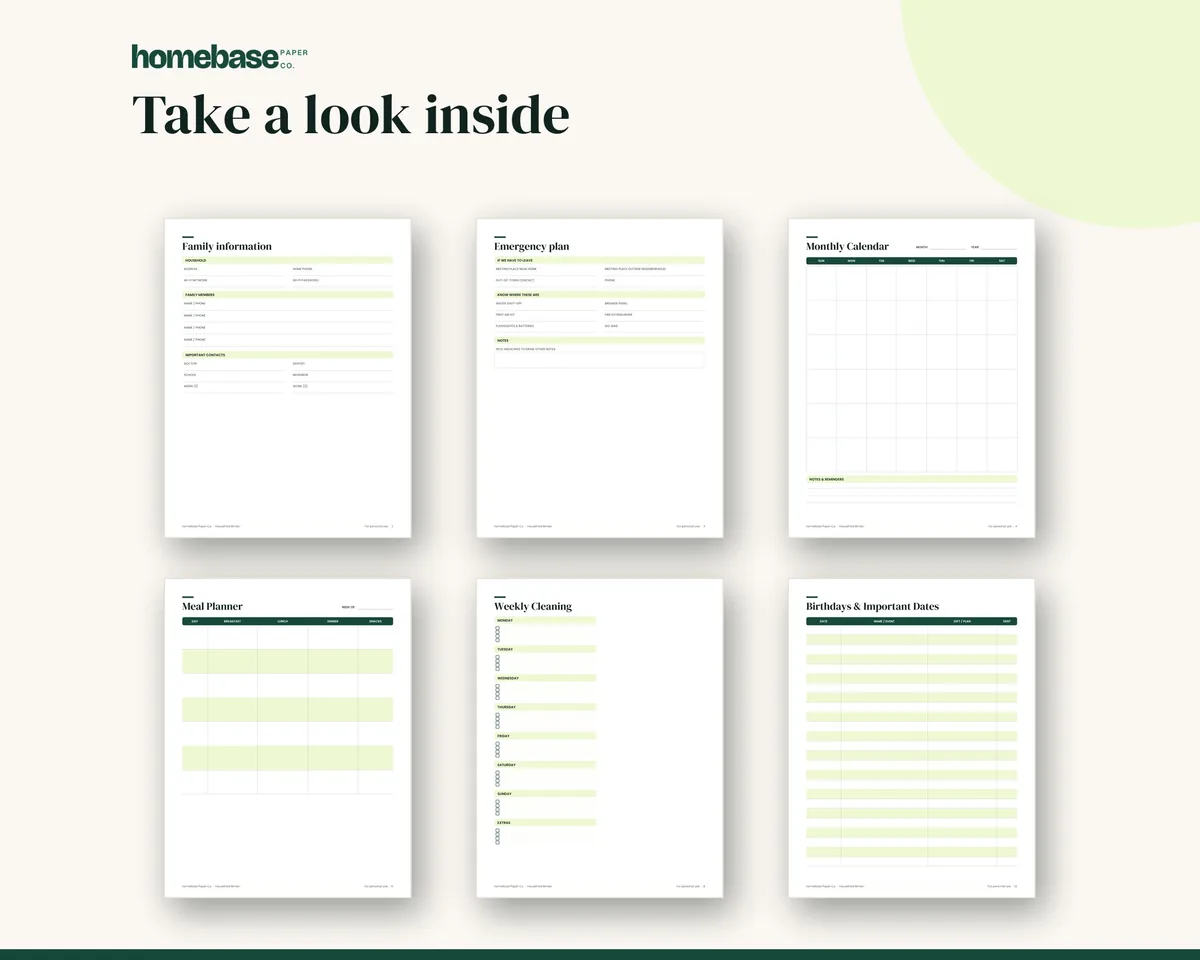
The Household Binder ($6.99) keeps your decluttering checklist, donation log and household notes together, so each short session picks up where the last one stopped.
How to declutter sentimental items
Sentimental items are the hardest to declutter because they hold memories, not just function. Save them for last, and use these steps:
- Set a container limit. One memory box per person makes decisions easier, because the box decides how much you keep.
- Keep the best, not all. Choose a favorite few drawings, cards or baby clothes rather than every one.
- Photograph what you don't need to store. A photo keeps the memory without the space.
- Use it or display it. Frame a favorite piece of art, or use the good dishes, instead of keeping them in a box.
- Give items to someone who will love them. A relative may treasure something you've been storing out of guilt.
- Go slowly. It's fine to decide later. Put a date on the box and look again in six months.
If you're helping a parent sort a lifetime of belongings, our guide to Swedish death cleaning (linked below) has a gentle room-by-room approach.
Decluttering with kids
Kids can help declutter, and doing it with them teaches habits that last. Keep it simple and positive:
- Set limits, not rules. "Your stuffed animals fit in this bin" is easier to follow than "get rid of five."
- Let them choose. Kids are more willing to part with things when they decide what goes.
- Explain where items go. Many kids like knowing their toys will go to another child.
- Do it before birthdays and holidays, when new things are about to arrive.
- Rotate toys. Store half the toys and swap every few weeks; old toys feel new again.
- Keep school papers in one folder per year, and pick a few favorites at the end of the year.
Short sessions work best. Twenty minutes with a timer and a reward at the end is plenty for young children.
Decluttering a small home or apartment
In a small space, every item takes up more room, so decluttering has a bigger payoff:
- Use vertical space for things you keep, but declutter first so you don't store what you don't need.
- Choose items that do more than one job, like a bench with storage.
- Keep surfaces mostly clear. In small rooms, one cluttered table makes the whole space feel crowded.
- Set strict limits on categories that grow, like mugs, towels and shoes.
Decluttering before a move
Moving is one of the best times to declutter, because every item you keep has to be packed, carried and unpacked. Start four to six weeks before moving day:
- Go room by room with the four boxes, starting with storage areas you use least.
- Use up food, cleaning products and toiletries instead of packing them.
- Sell large items early, since furniture and appliances can take a few weeks to sell. For more on this topic, see our decluttering tips hub.
- Schedule a donation pickup for the week before you move.
- Measure your new space and only pack the furniture that fits. A room planner lets you test the layout on paper first.
Label every box with the room it goes to, and you'll unpack into a home that's already decluttered.
Paperwork and digital clutter
Paper piles grow fast. Shred old statements you no longer need, file the ones you do and set up paperless billing where it makes sense. Delete old apps and photos you don't need, and unsubscribe from store emails that tempt you to buy more things you then have to store.
Decluttering with family
If you are helping older parents or planning ahead for your own family, read our guide to Swedish death cleaning, with a room-by-room order and a checklist.
- Let kids choose which toys to keep, within a set number or one bin.
- Rotate toys: store half and swap every few weeks.
- Ask each person to clear their own space before shared ones.
- Don't throw away other people's things without asking.
Common decluttering mistakes
A few habits slow decluttering down or undo the work. Watch for these:
- Buying storage first. New bins make it easy to store things you don't need. Declutter, then buy only the storage you're missing.
- Pulling everything out at once. Emptying a whole room leaves a bigger mess than you started with if you run out of time. Work in zones.
- Making a maybe pile. Undecided items usually end up back on the shelf. If you truly can't decide, box them, date the box and revisit it in a few months.
- Decluttering other people's things. It erodes trust. Clear your own space first and invite others to do theirs.
- Leaving donations in the car. Drop them off within a day or two, or they drift back inside.
- Expecting one big weekend to fix it. Clutter builds up slowly, and it leaves the same way: in steady, short sessions.
How often should you declutter?
Once your home has had a full first pass, maintenance is much lighter. A simple rhythm works for most families:
- Daily: a 10-minute reset to put things back where they belong.
- Weekly: clear one hot spot, like the counter, the entryway or the mail pile.
- Monthly: one drawer, shelf or closet.
- Seasonally: swap clothes, review kids' toys and clothes, and check the garage and storage bins.
- Once a year: a full room-by-room pass, using the checklist above.
If one spot keeps getting cluttered again soon after you clear it, it usually needs a better home for the things that pile up there, not another big clear-out. Add a hook, a basket or a tray right where the clutter lands.
Habits that keep clutter away
- Give everything a home. If it has no spot, it ends up on a counter.
- Do a 10-minute reset every evening.
- Use one in, one out for clothes, shoes, toys and gadgets.
- Keep a donation bag in a closet and fill it as you go.
- Handle mail once. Recycle, file or act on it the day it arrives. See how to organize mail.
- Schedule a seasonal sweep each spring and fall.
Want less to come back in? Our guide to minimalism covers the mindset behind owning less.
Before changing bathroom storage or fixtures, use our bathroom remodel planning checklist to measure what remains and price the work.
Make it part of your cleaning routine
Decluttering sticks when it's built into the week, not saved for one big weekend.
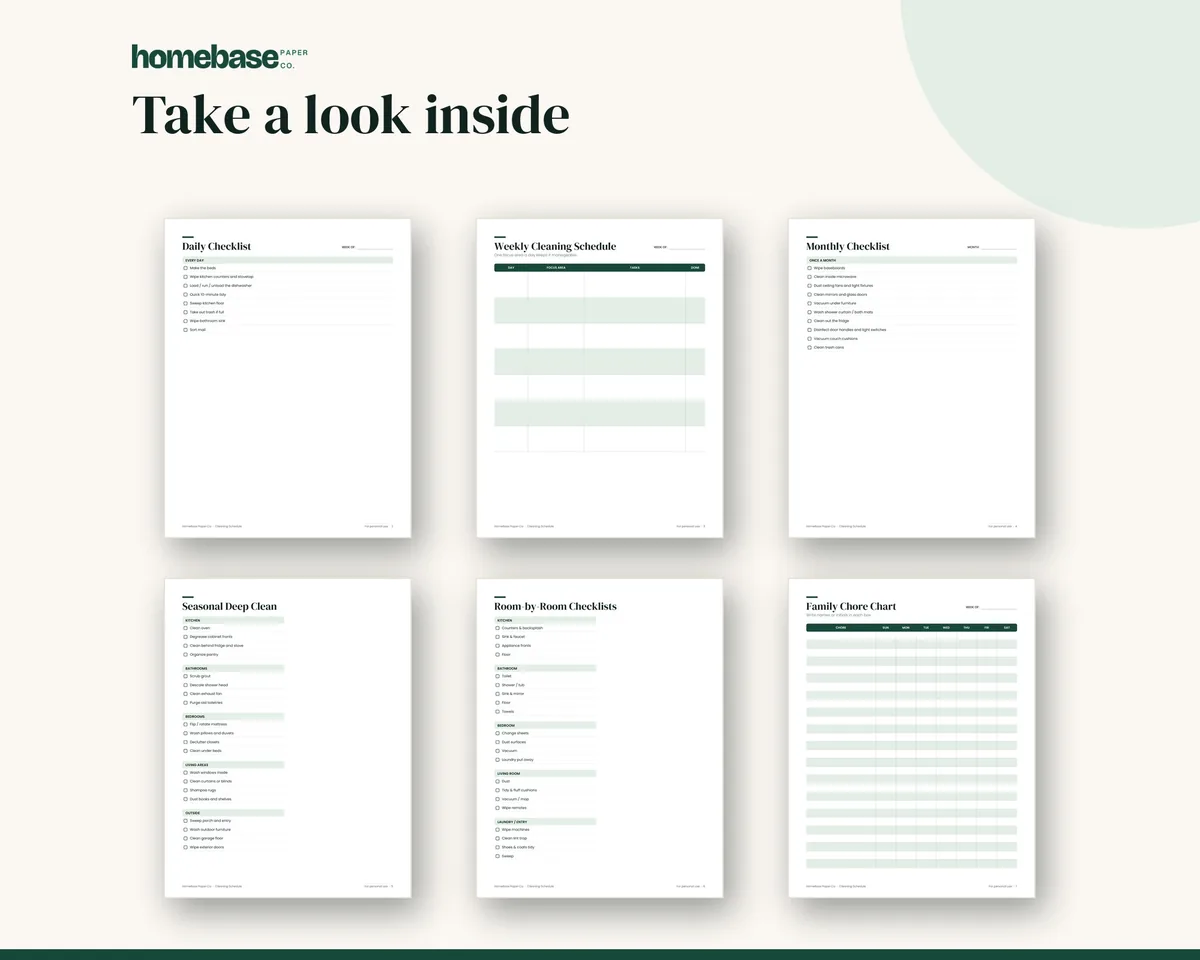
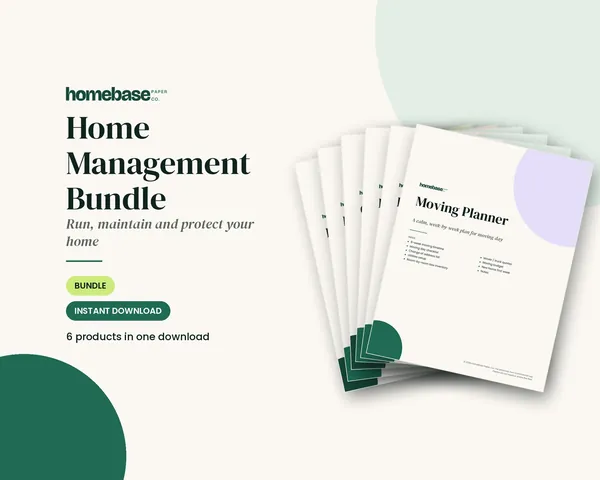
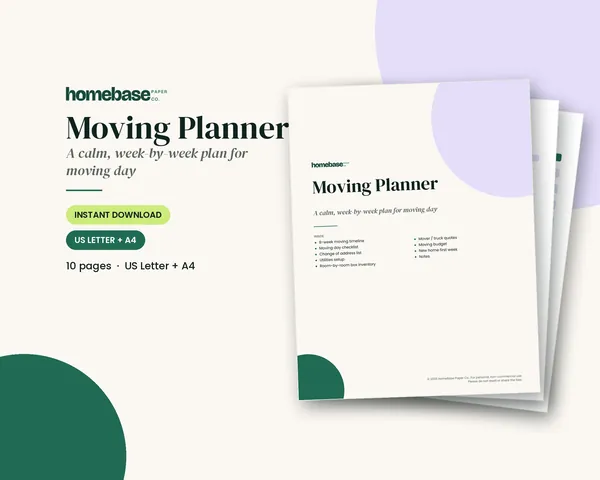
The Cleaning Schedule ($4.49) is a printable with daily, weekly and monthly checklists, a seasonal deep clean, room-by-room checklists, a family chore chart and a cleaning supplies list. The Home Management Bundle ($16.99) adds a moving planner, home maintenance log, home inventory, password and accounts log and the Household Binder.
For seasonal plans, see our January decluttering checklist, declutter before Christmas and the spring cleaning checklist. If you're building a new routine after decluttering, our guide on how to start a cleaning routine shows how to keep the rooms you cleared clean.
At HomeBase, we're a small family-run shop in Frisco, Texas, and we believe slow progress is still progress. One drawer today is a real start. Ready to plan it? Pick up the Household Binder ($6.99) to track your decluttering plan, or the Cleaning Schedule ($4.49) to keep every room clear once it's done. Our HomeBase calm-home announcement explains why we bring household plans and practical guides together in one place.
Starting with just one space? Our guide on how to clean your room walks through 10 steps in the right order, plus a 15-minute reset.
Make it easier
Tools for this
Printables
Cleaning Schedule
Daily, weekly, monthly and seasonal lists - plus a family chore chart.
 Save 48%
Bundles
Home Management Bundle
Household binder, maintenance log, moving planner, cleaning schedule, home inventory and password log.

Printables
Household Binder
Family info, emergency plan, calendars, meals, groceries, cleaning, bills and sitter notes.
Frequently asked questions
How do I start to declutter my home? Our Household Binder ($6.99) helps you start to declutter your home with one checklist and one plan. Start small and visible: one drawer, one shelf or the kitchen counter. Set a timer for 15 to 20 minutes and use four bins labeled keep, donate, recycle or trash, and relocate. Finishing one small spot builds momentum. Once you see the difference, it's easier to keep going room by room.
What is the fastest way to declutter a house? Our Household Binder ($6.99) keeps a room-by-room list, so the fastest way to declutter a house is already mapped out. Go for the easy wins first: trash, recycling, expired food and medicine, and obvious duplicates. Then do one room at a time with a timer, rather than pulling everything out at once. Take donations to the car the same day so they don't drift back into the house.
Which room should I declutter first? Our Household Binder ($6.99) has room for a declutter order, so you know which room to declutter first. Start with the kitchen or bathroom, because they have lots of expired or duplicate items that are easy to let go of. That's where many people begin. Others start with the entryway, since it's the first thing you see when you come home. Leave sentimental items and photos for last, when your decision-making muscles are stronger.
What is the four-box method for decluttering? Our Household Binder ($6.99) keeps your four-box decluttering notes and donation log in one place. You sort every item into one of four boxes: keep, donate or sell, trash or recycle, and relocate (things that belong in another room). It forces a decision on each item instead of shuffling things into a new pile. Empty the relocate box at the end of each session.
How do I decide what to keep? Our Household Binder ($6.99) gives you a place to note what to keep and where each item lives. Ask a few quick questions: Have I used this in the past year? Would I buy it again today? Do I have another one that does the same job? Is it worth the space it takes? If the answers are no, it can probably go. Keep items that are useful or truly loved.
How do I declutter when I feel overwhelmed? Our Household Binder ($6.99) breaks decluttering into small checklists, so it feels less overwhelming. When decluttering feels overwhelming, shrink the task. Pick one small area and a short time limit, like 10 minutes on one drawer. Stop when the timer ends, even if you want to keep going. Short, regular sessions beat one exhausting weekend that leaves the house in pieces.
How do I get rid of old medicines safely? Our Household Binder ($6.99) keeps a medicine list, so you can see what to get rid of safely. Check the label for disposal instructions first. Drug take-back sites at many pharmacies and police stations are the best option. The FDA explains what to do if no take-back option is available, including which medicines can go in household trash when mixed with something unappealing and sealed.
Where can I donate or recycle decluttered items? Our Household Binder ($6.99) keeps local donation and recycling drop-off details in one place. Donate clothing, housewares, books and toys in good shape to local charities, shelters or buy nothing groups. Check your city's recycling rules for paper, plastics and metal. Electronics, batteries and paint often need special drop-off sites. The EPA's recycling page links to local options.
How do I declutter sentimental items? Our Household Binder ($6.99) gives you a calm place to plan how to declutter sentimental items, one box at a time. Leave them for last, and go slowly. Keep the best few, not every one. Photograph items you want to remember but don't need to store. A single memory box per person gives you a limit that makes decisions easier.
How do I keep my home from getting cluttered again? Our Cleaning Schedule printable ($4.49) keeps your home from getting cluttered again with a short daily reset. Give everything a home, and put things back at the end of each day. Use a one in, one out rule for clothes, toys and kitchen gadgets. Keep a donation bag in a closet so you can drop items in as you find them. A short weekly reset helps more than a big clean twice a year.
How long does it take to declutter a whole house? Our Cleaning Schedule printable ($4.49) helps a whole-house declutter stick by building it into weekly cleaning. Decluttering a whole house usually takes a few weeks or months of short daily or weekend sessions. How long depends on the size of the home and how much is there. Learning how to declutter your home in small steps is more sustainable than trying to finish in one weekend, and the Cleaning Schedule helps keep the cleared rooms clear.
What is the 12-12-12 decluttering method? Our Cleaning Schedule printable ($4.49) makes a weekly 12-12-12 decluttering reset easy to remember. In the 12-12-12 method, you find 12 items to throw away, 12 to donate and 12 to put back where they belong. It's quick, works well as a family game, and keeps clutter from building up between bigger decluttering sessions.
What is the minimalist game for decluttering? Our Household Binder ($6.99) lets you track the minimalist game for decluttering day by day. You get rid of one item on day one, two on day two, and so on for 30 days, which adds up to 465 items. It works best for larger homes or people who enjoy a challenge; in a small home, try it for 15 days instead.
How do I declutter with kids? Our Cleaning Schedule printable ($4.49) includes a family chore chart that helps when you declutter with kids. Give each child a set limit, such as one bin for stuffed animals, and let them choose what stays. Short sessions of about 20 minutes, done before birthdays and holidays, work best, and rotating toys keeps fewer of them out at once.
More from HomeBase
You may also like
Printables
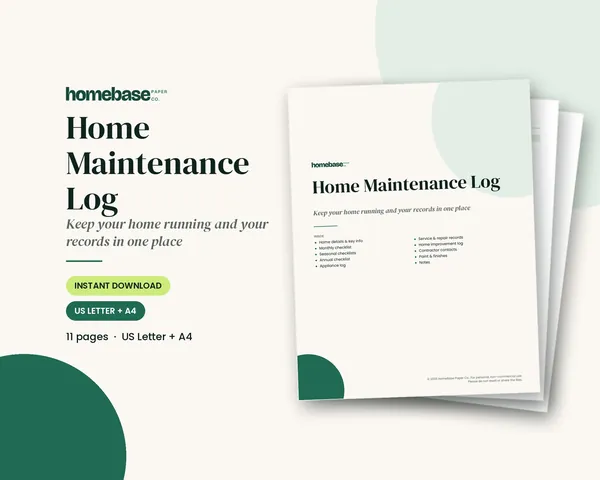
Home Maintenance Log
Monthly, seasonal and annual checklists plus a record of every appliance and repair.
Printables
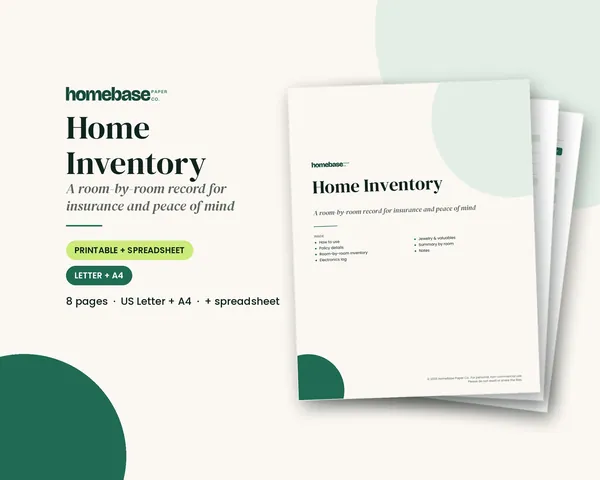
Home Inventory
Printable pages and a spreadsheet that totals the value of every room.
Printables
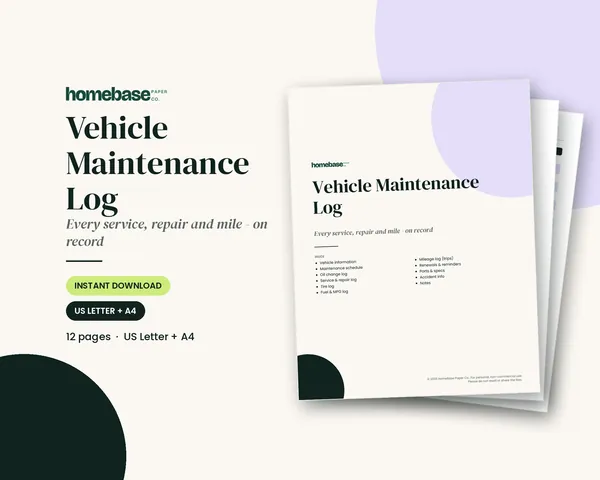
Vehicle Maintenance Log
Oil changes, repairs, tires, fuel and MPG, trip mileage and renewal dates - so resale and warranty records are easy.
 Club
Monthly club
Planner & Calendar Club
Anyone who wants a monthly calendar, bill calendar and meal plan ready to print.
Free printable
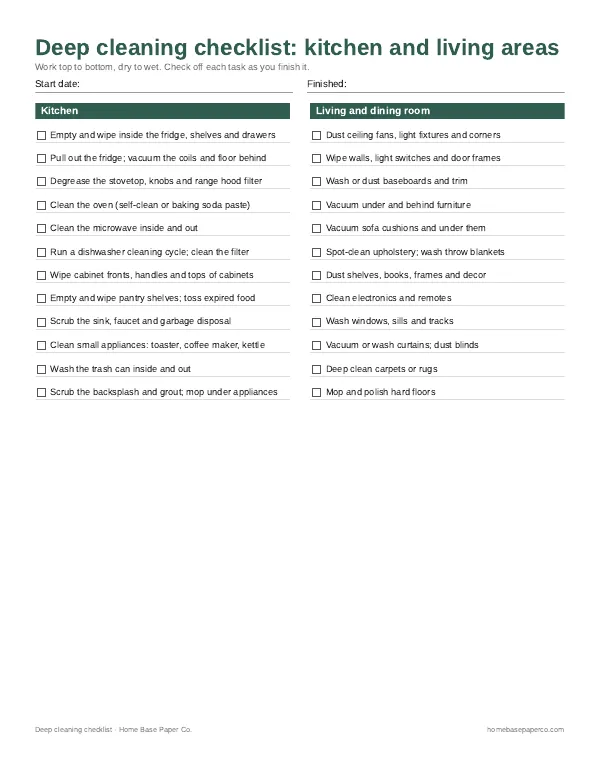
Clean the whole house in order: get the free deep cleaning checklist
A printable room-by-room deep cleaning checklist that tells you what to do first, so nothing gets cleaned twice. You'll also get our weekly HomeBase email with simple cleaning routines and chore ideas the whole family can help with.
Sources
- EPA: Recycling basics epa.gov
- FDA: Disposal of unused medicines fda.gov
- Electronics donation and recycling epa.gov