

The short answer: how to clean grout: most grout comes clean with a few household supplies, a toothbrush and a little patience.
- Start gentle with a mild all-purpose cleaner
- Grime: a baking soda and water paste
- Mildew: diluted chlorine bleach
- Seal the grout to keep it clean longer
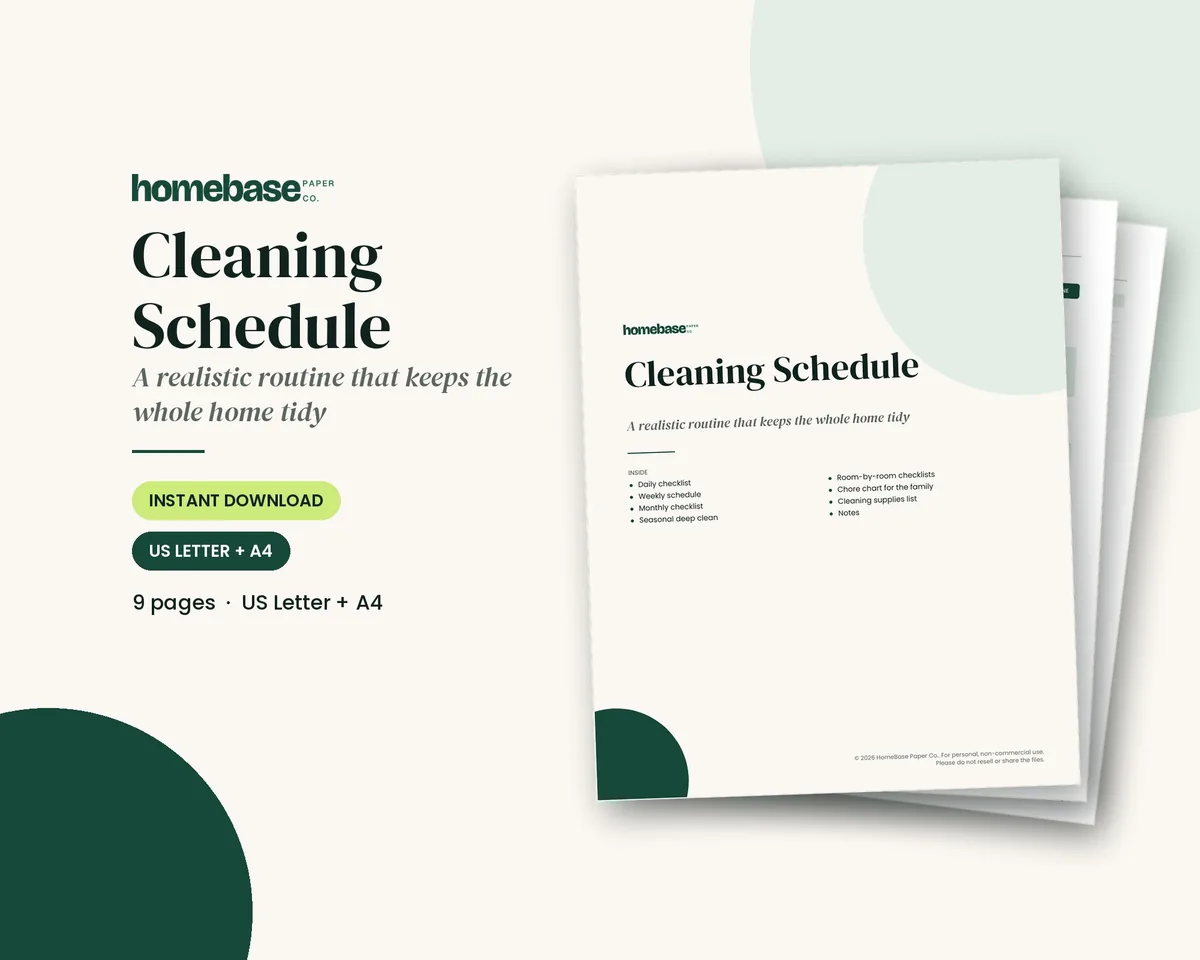
- Next step: Plan it with the Cleaning Schedule ($4.49).
Knowing how to clean grout makes a bigger difference to a room than almost any other cleaning job. Tile can look spotless while the lines between it turn gray, brown or black. The good news is that most grout comes clean with a few household supplies, a toothbrush and a little patience. This guide covers what to use for everyday dirt, stains and mildew, four homemade grout cleaner recipes, what to look for in a store-bought grout cleaner, how to scrub without damaging anything, and how sealing keeps grout clean for longer.

How to clean grout: the quick version
- Clear and rinse the area so loose dirt is gone.
- Start gentle with a mild all-purpose cleaner or a baking soda paste.
- Scrub with a stiff toothbrush or grout brush along each line.
- Treat stains and mildew with hydrogen peroxide or diluted bleach.
- Rinse and dry the tile and grout completely.
- Seal the grout at least once a year.
Why grout gets dirty
Grout is porous. It sits a little lower than the tile around it, so dirt, soap scum, cooking oil and spills settle into it and soak in. Consumer Reports' countertop care guide notes that while tile itself resists stains well, the grout can stain and mildew if you are not diligent about sealing it. In bathrooms, damp grout is also an easy place for mildew to grow.
What you need
| Item | What it is for |
|---|---|
| Mild all-purpose cleaner | Everyday dirt and weekly wipes |
| Baking soda and water | A gentle paste for grime and oil-based stains |
| Hydrogen peroxide | Coffee, tea and juice stains on ceramic tile |
| Chlorine bleach | Mildew, inks and dyes, always diluted |
| Stiff toothbrush or grout brush | Getting into narrow lines |
| Rubber gloves, a bucket and clean cloths | Protection, rinsing and drying |
| Grout sealer | Protecting clean grout from new stains |
Homemade grout cleaner: 4 simple recipes
You don't need a special product for most grout. These homemade grout cleaner recipes use things many people already have. Start at the top and move down only if the grout still looks dirty. Mix one recipe at a time, rinse it off completely, and let the area dry before you try the next one.
| Homemade grout cleaner | How to mix it | Best for | Skip it on |
|---|---|---|---|
| Dish soap and warm water | A few drops of mild dish soap in a bucket of warm water | Weekly cleaning and light dirt | Nothing; it's the gentlest option |
| Baking soda paste | Baking soda plus a little water until thick | Grime, kitchen grease and oil-based stains | Very soft or crumbling grout |
| Baking soda and hydrogen peroxide paste | Baking soda plus enough 3% hydrogen peroxide to make a paste, mixed right before use | Gray, dingy grout and drink stains | Colored grout until you test a hidden spot |
| Diluted bleach | 1 tablespoon of bleach in 2 cups of water for counters, or a half-cup in a gallon of water for showers | Mildew, ink and dye stains | Colored grout, and never near other cleaners |
Recipe 1: Dish soap and warm water
This is the everyday option. Dip a grout brush in the soapy water, scrub along the lines and wipe with a damp cloth. It won't lift deep stains, but it keeps new dirt from settling in. Use it for the weekly wipe on floors, counters and backsplashes.
Recipe 2: Baking soda paste
Stir water into baking soda a little at a time until it holds its shape. Press it into the grout lines with your finger or an old toothbrush. Let it sit five to ten minutes, then scrub and rinse. Consumer Reports suggests baking soda and water for oil-based stains on ceramic tile, so this is the one to use near the stove.
Recipe 3: Baking soda and hydrogen peroxide paste
For gray or dingy grout, swap the water for regular 3% hydrogen peroxide from the drugstore. Mix it in a small bowl right before you use it, spread it on, wait about ten minutes and scrub. Consumer Reports names hydrogen peroxide for coffee, tea and juice stains on ceramic tile. Peroxide can lighten some colors, so test a hidden spot on colored grout first, and don't store the mixed paste.
Recipe 4: Diluted bleach for mildew
When you see black or pink spots in a shower, use the bleach mix from the table, with the window open and gloves on. Apply it with a toothbrush, let it sit a few minutes, scrub and rinse well. Never add bleach to any other homemade cleaner. Bleach mixed with vinegar or ammonia gives off harmful fumes.
What about vinegar? Vinegar shows up in many homemade grout cleaner recipes online. It is acidic, though, and Consumer Reports says acids like vinegar can damage some stone surfaces. If your tile is marble, travertine, granite or another natural stone, keep vinegar off it. On ceramic tile, the recipes above do the job without that risk.
What to look for in a store-bought grout cleaner
If homemade options aren't enough, a store-bought grout cleaner can help. We don't rank brands here; use this checklist to compare labels. Here is what to check so you can choose the best grout cleaner for your own tile and stain:
- Safe for your tile. The label should name your surface. Natural stone needs a cleaner made for stone, usually one described as pH-neutral. Ceramic and porcelain can handle more.
- Matched to your stain. Mildew cleaners are often bleach-based or oxygen-based. Soap scum and hard-water film need a different formula. Everyday grime only needs a gentle cleaner.
- The right form. Sprays cover large floors quickly. Gels and foams cling to shower walls, so they stay on the grout long enough to work.
- Clear safety directions. Look for ventilation advice, glove advice and a warning about mixing with other products. Follow the dwell time on the label.
- A safer-ingredient label. EPA's Safer Choice label marks products whose ingredients EPA has reviewed for human health and the environment. It's not required, but it's a useful shortcut if you want a gentler product.
- Colored grout instructions. If your grout is tinted, look for a product that says it is safe for colored grout, or test a hidden spot.
Homemade vs. store-bought grout cleaner
| Homemade grout cleaner | Store-bought grout cleaner | |
|---|---|---|
| Cost | Pennies per use | Varies by product |
| Strength | Gentle to moderate | Moderate to strong |
| Best for | Weekly cleaning, grime, most stains | Heavy mildew, soap scum, large floors |
| Watch out for | Vinegar on stone; mixing recipes | Harsh formulas on stone or colored grout |
| Clings to walls | Pastes do; liquids drip | Gels and foams do |
Whatever you choose, the steps below still apply. A grout cleaner loosens dirt. The brush, the rinse and the sealer do the rest.
Step 1: Start with a gentle cleaner
For regular cleaning, Consumer Reports suggests a gentle all-purpose spray cleaner on tile, and warns that harsh cleaning products can damage grout and glazed tiles. Spray the grout lines, let the cleaner sit for a few minutes so it can loosen the dirt, then scrub. For many kitchens and floors, this step alone is enough.
Step 2: Scrub with the right brush
A stiff toothbrush is the classic grout tool. Consumer Reports' 20-minute bathroom cleaning guide suggests that when a manual toothbrush's bristles are frayed or it has been in use for several months, you can retire it to cleaning duty as a handy scrubber for grout and crevices. A narrow grout brush with a handle helps on floors, so you don't have to kneel as long.
Work in small sections. Scrub along the line, not across it, and wipe away the loosened dirt with a damp cloth before moving on.
Step 3: Use a baking soda paste for grime
Mix baking soda with a little water until it forms a thick paste. Spread it along the grout lines, wait a few minutes and scrub. Baking soda is mildly abrasive, so it lifts grime without the scratching you get from scouring powders or steel wool. Consumer Reports suggests baking soda and water for oil-based stains on ceramic tile, which makes it a good choice for kitchen backsplashes and floors near the stove.
Step 4: Treat stains by type
Different stains need different treatments. Consumer Reports gives this guide for ceramic tile:
| Stain | What to use |
|---|---|
| Oil-based stains | Baking soda and water |
| Coffee, tea and juice | Hydrogen peroxide |
| Ink and dye | Diluted bleach, 1 tablespoon of bleach to 2 cups of water |
| Mildew | Diluted bleach or a special grout cleaner |
Apply the treatment with a cloth or toothbrush, let it work for a few minutes, scrub gently and rinse with plain water. Repeat if needed. Test any product on a small hidden spot first, especially on colored grout.
Step 5: How to clean shower grout and mildew
Shower grout is the hardest to keep clean because it is wet so often. Consumer Reports' list of surprisingly dirty places suggests scrubbing shower grout with a toothbrush dipped in a half-cup of bleach mixed into a gallon of water. For tile counters, CR suggests a stronger mix of 1 tablespoon of bleach to 2 cups of water for grout stains and mildew, or a special grout cleaner.
A few safety rules for bleach:
- Open a window or run the fan while you work.
- Wear rubber gloves and old clothes.
- Never mix bleach with other cleaners. Consumer Reports warns against mixing chemicals such as bleach, ammonia and acetone together.
- Rinse well with clean water when you're done.
If the mildew keeps coming back, look at moisture. The EPA's mold cleanup guide says that for mold in the shower or elsewhere in a bathroom that seems to reappear, more ventilation (running a fan or opening a window) and more frequent cleaning will usually keep it to a minimum. EPA also says to fix leaks quickly, scrub mold off hard surfaces with detergent and water, and dry them completely. If the moldy area is larger than about 10 square feet, EPA points you to its guidance for larger cleanups, and you may want a professional. For black spots on caulk and the rest of the stall, see how to clean shower mold.
Step 6: Rinse and dry
Cleaner left in grout can attract new dirt, so rinse each section with clean water and a cloth or sponge. Then dry the tile and grout with a towel or let the room air out with the fan on. Grout that dries quickly is less likely to grow mildew.
Step 7: Seal the grout
Sealing is what keeps clean grout clean. Consumer Reports recommends sealing grout at least once a year with an interior grout sealer that is compatible with your type of tile. Clean the grout first and let it dry completely before you apply the sealer. Follow the product's directions for how long it needs to cure before the shower or floor gets wet again.
How to clean grout in different places
| Where | Everyday care | Deep clean |
|---|---|---|
| Shower and tub | Squeegee or wipe after showers, run the fan | Diluted bleach scrub for mildew |
| Bathroom floor | Weekly mop with a mild cleaner | Baking soda paste and a grout brush |
| Kitchen backsplash | Wipe splatters the same day | Baking soda paste for oil-based stains |
| Tile counters | Gentle all-purpose spray | Peroxide for drink stains, diluted bleach for ink |
| Entryway floor | Sweep often so grit doesn't grind in | Mild cleaner and a long-handled brush |
Mistakes to avoid
- Using harsh products. CR warns they can damage grout and glazed tile.
- Using steel wool or scouring pads. They can scratch tile and wear grout down.
- Using acids on stone. Consumer Reports says acidic cleaners such as vinegar can etch or dull natural stone like marble and granite, so keep them off stone tile.
- Mixing cleaners. Use one product, rinse, then try another.
- Skipping the sealer. Unsealed grout soaks up stains again quickly.
When cleaning isn't enough
Sometimes grout won't come clean no matter what you use. That usually means the stain has soaked deep into unsealed grout, the grout is cracked or crumbling, or mold is growing behind the tile. EPA notes that mold may cause staining and cosmetic damage, and that it may not be possible to clean an item so it looks the way it did originally.
At that point, you have a few options:
- Regrout a small area. Consumer Reports describes chiseling out a broken tile, setting a new one, then regrouting and resealing around it. The same idea works for a short run of damaged grout.
- Use a grout colorant or pen to even out lines that are clean but stained, following the product's directions.
- Call a professional for large areas, loose tiles or signs of a hidden leak.
Whatever you choose, fix the moisture source first. New grout in a leaky shower will stain and mildew just as fast as the old grout did.
A 15-minute weekly grout routine
You don't need a big scrub every week. A short routine keeps grout from getting bad in the first place:
- Spray the shower walls and floor grout with a mild all-purpose cleaner.
- Wait two or three minutes while you clean the sink or mirror.
- Brush the darkest lines, usually corners and the bottom rows of the shower.
- Rinse with the shower head or a damp cloth.
- Dry with a towel or squeegee and leave the fan on.
Do the same for the kitchen backsplash once a week, and the monthly deep clean becomes quick.
How often to clean grout
| Task | How often |
|---|---|
| Wipe shower walls and grout | After showers, or a few times a week |
| Clean bathroom and kitchen grout lightly | Weekly |
| Deep scrub grout | Every month or two |
| Seal grout | At least once a year |
Keep grout cleaner for longer
- Ventilate the bathroom during and after showers.
- Squeegee the shower walls so water doesn't sit in the grout lines.
- Wipe kitchen spills right away, before they soak in.
- Put a mat at the door to cut down on grit on tile floors.
- Reseal on schedule, so grout keeps repelling spills.
Put grout on the cleaning schedule
Grout darkens slowly, so it's easy to forget until it looks bad. A written schedule fixes that. Our Cleaning Schedule ($4.49) is a 9-page printable with daily, weekly and monthly checklists, a seasonal deep clean list, room-by-room checklists, a family chore chart and a cleaning supplies list. Add "wipe shower grout" to the weekly page, "scrub grout" to the monthly page and "seal grout" to the seasonal list.
If you'd like to get the whole home organized at once, the Home Management Bundle ($16.99) includes the Cleaning Schedule along with the Household Binder, Home Maintenance Log, Home Inventory, Moving Planner and Password & Accounts Log. Bought separately, those six come to $32.94.
You can browse every home organization printable in our shop, too.
For more cleaning help, see our deep cleaning checklist, our bathroom cleaning checklist and our guide to how to clean shower glass.
Your next step
Pick one area, like the shower or the kitchen backsplash, and give it a full clean this week: gentle cleaner first, then a baking soda paste, then a stain treatment where you need it. If the homemade grout cleaner recipes don't get it clean, choose a store-bought grout cleaner using the label checklist above. Once it's dry, write the date you'll seal it on your calendar, and add a weekly wipe to your cleaning schedule so the lines stay clean.
Once the grout is done, finish the rest of the room with our guide on how to clean a bathroom.
Make it easier
Tools for this
Printables
Cleaning Schedule
Daily, weekly, monthly and seasonal lists - plus a family chore chart.
 Save 48%
Bundles
Home Management Bundle
Household binder, maintenance log, moving planner, cleaning schedule, home inventory and password log.
Frequently asked questions
What is the best way to clean grout? The Cleaning Schedule ($4.49) keeps the best way to clean grout on track: a weekly wipe and a monthly scrub. The best way to clean grout is to start gentle and step up only as needed. Wipe it with a mild all-purpose cleaner for everyday dirt, scrub with a baking soda paste and a toothbrush for grime, and use diluted bleach or a grout cleaner for mildew and dark stains. Rinse, dry, and seal the grout once it is clean.
What is the best homemade grout cleaner? The Cleaning Schedule ($4.49) has a cleaning supplies list where your homemade grout cleaner ingredients can live. The best homemade grout cleaner for most dirty grout is a thick paste of baking soda and water, scrubbed in with a stiff toothbrush. For coffee, tea or juice stains, Consumer Reports suggests hydrogen peroxide, and for mildew it suggests diluted bleach. Mix only one recipe at a time and rinse before trying another.
What should I look for in the best grout cleaner? The Cleaning Schedule ($4.49) won't pick a grout cleaner for you, but its supplies page keeps track of the one that works on your tile. The best grout cleaner is one whose label says it is safe for your tile type, matches your stain (grime, soap scum or mildew) and comes with clear ventilation and safety directions. On marble, granite or other natural stone, skip acidic cleaners. EPA's Safer Choice label is one way to spot cleaners with safer ingredients.
Is store-bought grout cleaner better than homemade? The Cleaning Schedule ($4.49) works with either choice, because a store-bought or homemade grout cleaner only helps if you use it regularly. Homemade options like baking soda paste are cheap and gentle, and they handle everyday grime well. A store-bought grout cleaner can save effort on heavy mildew or soap scum, especially a gel that clings to vertical shower grout. Read the label, test a hidden spot and never mix products.
How do you clean grout with baking soda? The Cleaning Schedule ($4.49) has a monthly checklist where a baking soda grout scrub fits. To clean grout with baking soda, mix baking soda with a little water into a paste, spread it along the grout lines and let it sit a few minutes. Scrub with a stiff toothbrush or grout brush, then rinse with clean water and wipe dry. Consumer Reports suggests baking soda and water for oil-based stains on ceramic tile.
How do you clean grout with bleach? The Cleaning Schedule ($4.49) is a good place to note when you last cleaned grout with bleach, so you don't overdo it. Mix 1 tablespoon of bleach into 2 cups of water, dip a toothbrush in it and scrub the stained or mildewed grout, as Consumer Reports suggests for tile counters. For shower grout, CR suggests a half-cup of bleach in a gallon of water. Open a window, wear gloves, rinse well and never mix bleach with other cleaners.
Can you use hydrogen peroxide on grout? The Cleaning Schedule ($4.49) has a cleaning supplies list where hydrogen peroxide for grout stains can go. Yes, you can use hydrogen peroxide on grout. Consumer Reports suggests hydrogen peroxide for coffee, tea and juice stains on ceramic tile, and it works on grout lines around those stains too. Apply it with a cloth or toothbrush, let it sit a few minutes, scrub gently and rinse with water. Test it on a small hidden spot first if your grout is colored.
Can I use vinegar to clean grout? The Cleaning Schedule ($4.49) has room-by-room checklists where you can note which tile can't take vinegar on its grout. You can use vinegar to clean grout, but use it with care. Vinegar is acidic, and Consumer Reports says acids like vinegar can damage some stone surfaces, so skip it on marble, granite or natural stone tile. On ceramic tile, a mild all-purpose cleaner, baking soda paste or diluted bleach are the methods CR describes for grout, so start with those.
How do you get black mold out of shower grout? The Cleaning Schedule ($4.49) puts a shower grout wipe on the weekly list so black mold has less chance to return. Scrub shower grout mildew with a toothbrush dipped in a half-cup of bleach mixed into a gallon of water, then rinse and dry the area. EPA says mold that keeps coming back in a bathroom is usually kept down by more ventilation, such as a fan or open window, and more frequent cleaning. Large or spreading mold may need a professional.
What should you scrub grout with? The Cleaning Schedule ($4.49) supplies list is a handy spot to note what you scrub grout with, such as a grout brush and an old toothbrush. Scrub grout with a stiff toothbrush or a narrow grout brush. Consumer Reports suggests using an old manual toothbrush with frayed bristles as a handy scrubber for grout and crevices. Avoid steel wool and harsh abrasives, which can scratch glazed tile and wear down the grout itself.
How often should you clean grout? The Cleaning Schedule ($4.49) answers how often to clean grout with daily, weekly, monthly and seasonal pages. Wipe grout as part of your weekly bathroom and kitchen cleaning, and give it a deep scrub every month or two, or whenever it starts to darken. Shower grout usually needs the most attention because it stays damp. Seal grout at least once a year, which Consumer Reports recommends for tile counters.
How often should grout be sealed? The Cleaning Schedule ($4.49) has a seasonal deep clean list where a reminder for how often grout should be sealed belongs. You should seal grout at least once a year. Consumer Reports recommends an interior grout sealer that is compatible with your type of tile. Sealing makes grout less likely to absorb spills and grow mildew. Clean it thoroughly and let it dry completely before you apply the sealer.
Why does grout get dirty so fast? The Cleaning Schedule ($4.49) helps because grout gets dirty fast when weekly wipes get skipped. Grout gets dirty quickly because it is porous and sits slightly below the tile surface, so dirt, soap scum and spills collect in it. Consumer Reports notes that grout can stain and mildew if you are not diligent about sealing it. Damp areas like showers also give mildew a place to grow.
Can you clean grout without scrubbing? The Cleaning Schedule ($4.49) makes it easier to clean grout with less scrubbing, because frequent light cleaning keeps dirt shallow. You can't completely clean grout without scrubbing. Sprays and pastes can loosen dirt and lighten stains, but grime in grout lines usually needs a brush to come out. Let your cleaner sit for a few minutes before scrubbing to cut down on effort, and clean more often so dirt never gets deep. A weekly wipe makes the monthly scrub much faster.
How do I remember to clean and seal grout? Put grout on a written cleaning schedule: a quick wipe on the weekly bathroom list, a scrub on the monthly list and sealing on the yearly or seasonal list. The Cleaning Schedule ($4.49) has daily, weekly, monthly and seasonal deep clean pages, so each grout job has a spot and nothing gets skipped.
More from HomeBase
You may also like

Printables
Household Binder
Family info, emergency plan, calendars, meals, groceries, cleaning, bills and sitter notes.

Printables
Home Maintenance Log
Monthly, seasonal and annual checklists plus a record of every appliance and repair.

Printables
Home Inventory
Printable pages and a spreadsheet that totals the value of every room.

Printables
Vehicle Maintenance Log
Oil changes, repairs, tires, fuel and MPG, trip mileage and renewal dates - so resale and warranty records are easy.
 Club
Monthly club
Planner & Calendar Club
Anyone who wants a monthly calendar, bill calendar and meal plan ready to print.
Free printable
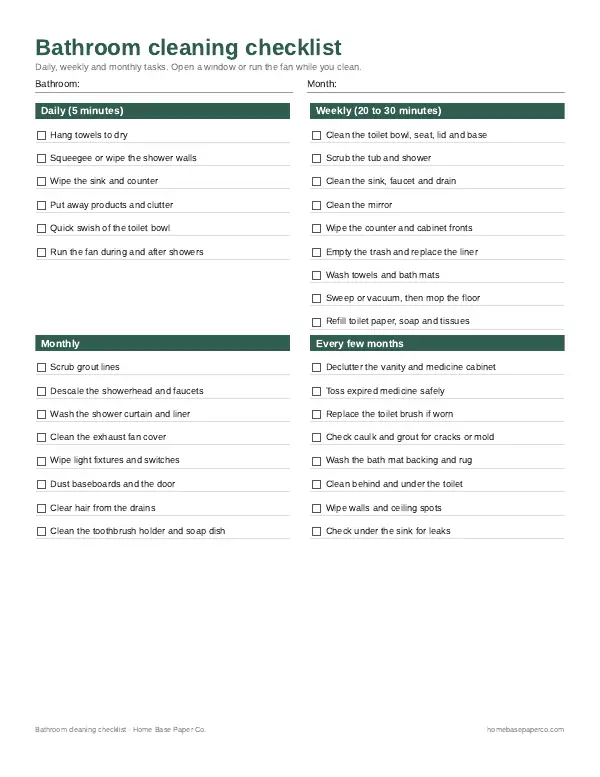
A clean bathroom in 5 minutes a day and 30 minutes a week
Daily, weekly, monthly and every-few-months tasks, plus a weekly tracker. You'll also get our weekly HomeBase email with simple cleaning routines and chore ideas the whole family can help with.
Sources
- Consumer Reports: How to Clean and Maintain Countertops consumerreports.org
- Consumer Reports: Surprisingly Dirty Places in Your Home consumerreports.org
- Consumer Reports: Spring-Clean Your Bathroom in 20 Minutes consumerreports.org
- EPA: Mold Cleanup in Your Home epa.gov