The short answer: to clean shower mold, ventilate, put on gloves and scrub the tile, grout and caulk with detergent and warm water, then treat leftover stains.
- Stains: undiluted white vinegar or 3% hydrogen peroxide
- Never combine cleaners, one spray bottle each
- Black inside caulk after treatment means the caulk needs replacing
- Rinse well and dry the shower completely
- Next step: Plan it with the Cleaning Schedule ($4.49).
To clean shower mold, open a window or run the fan, put on gloves, scrub the moldy tile, grout and caulk with detergent and warm water, then spray any stains left behind with undiluted white vinegar, 3% hydrogen peroxide or a bleach cleaner diluted as its label directs. Let it sit, scrub with a stiff brush, rinse well and dry the shower completely. Mold that stays black inside caulk after treatment has grown underneath it, and the caulk needs replacing. Below are the supplies, step-by-step methods for each surface, the safety rules and a simple routine that keeps mold from coming back.
Shower mold or mildew?
Mildew is a surface mold that looks gray, white or pinkish and wipes away fairly easily. Darker black or green spots that stain grout and caulk have often grown deeper. You clean both the same way; the difference is how much scrubbing they need and whether the caulk has to go.
What you need
| Supply | Use |
|---|---|
| Rubber gloves and goggles | Protect skin and eyes from spray and splashes |
| Dish soap or all-purpose detergent | First scrub on every surface |
| Spray bottles | One per cleaner; never combine them |
| Undiluted white vinegar | Light mold and mildew on tile and grout |
| 3% hydrogen peroxide | Stains in grout and caulk |
| Bleach cleaner (optional) | Stubborn stains on nonporous surfaces, used as labeled |
| Baking soda | Gentle scrubbing paste |
| Stiff brush and old toothbrush | Grout lines and corners |
| Squeegee and microfiber cloths | Drying after cleaning and after showers |
Safety first
The EPA's mold cleanup guide says to scrub mold off hard surfaces with detergent and water and dry them completely. EPA's brief guide to mold and moisture warns never to mix chlorine bleach with cleaners that contain ammonia, because the fumes can be toxic. It also says to avoid breathing in mold and to wear gloves and goggles while you work. The CDC's home cleaning guidance adds to follow the product label and keep the room ventilated.
- Run the exhaust fan or open a window the whole time.
- Use one cleaner at a time and rinse well before switching.
- Never mix bleach with vinegar, ammonia or other cleaners, and never put vinegar and peroxide in the same bottle.
- If you have asthma, allergies or other health concerns, ask a doctor before tackling mold yourself.
How to clean shower mold, step by step
- Ventilate and gear up. Turn on the fan, open a window and put on gloves and goggles.
- Clear the shower. Remove bottles, razors and the curtain or bath mat.
- Scrub with detergent. Wet the walls, then scrub tile, grout and caulk with warm water and dish soap. This alone lifts light mildew.
- Treat the stains. Spray leftover spots with vinegar or hydrogen peroxide and wait about an hour. For stubborn stains on tile and grout, use a bleach cleaner exactly as the label directs instead.
- Scrub again. Work grout lines with a stiff brush and caulk with an old toothbrush. A baking soda paste adds gentle grit.
- Rinse. Rinse everything with clean water, top to bottom.
- Dry. Squeegee the walls, wipe the caulk and leave the fan running until the shower is fully dry.
How to clean mold by surface
| Surface | Best method | Notes |
|---|---|---|
| Tile walls | Detergent scrub, then vinegar spray | Squeegee after every shower |
| Grout | Peroxide or diluted bleach cleaner, stiff brush | See our full guide on how to clean grout |
| Caulk | Peroxide under a damp paper towel for an hour | Replace it if black remains |
| Ceiling | Sponge mop with detergent or a mold cleaner | Wear goggles; work above your head carefully |
| Glass doors and tracks | Vinegar spray and a toothbrush for the tracks | See how to clean shower glass |
| Shower curtain and liner | Washing machine, warm water, detergent and two towels | Hang to dry right away |
| Shower head | Vinegar soak for hard water and buildup | See how to clean a shower head |
When the caulk has to go
Caulk is soft and slightly porous, so mold can grow underneath where no cleaner reaches. The EPA notes that absorbent materials that become moldy may need to be removed rather than cleaned. If black spots stay after a peroxide treatment, cut out the old caulk with a utility knife or caulk remover. Clean and dry the joint, then apply a mildew-resistant silicone caulk and let it cure for the time on the tube before showering.
How to keep mold from coming back
Mold needs moisture. The EPA's guide to mold and moisture recommends venting bathrooms, fixing leaks and keeping indoor humidity below 60%, ideally between 30% and 50%.
- After every shower: squeegee the walls and door and leave the fan running.
- Weekly: spray and scrub the tile, grout and floor, then rinse and dry.
- Monthly: check the caulk, wash the curtain and liner and wipe the ceiling.
- Every season: look for loose tiles, cracked grout or a slow drip and fix them early.
If your shower tile still looks dull after the mold is gone, a full bathroom cleaning checklist covers the rest of the room, and our deep cleaning checklist works through the whole house.
When to call a professional
Call in help if the moldy area is larger than about 10 square feet, if you smell mustiness behind the wall, if tiles are loose or soft or if mold returns within days of cleaning. Those signs point to a hidden leak or trapped moisture that cleaning can't fix.
Put it on your cleaning schedule
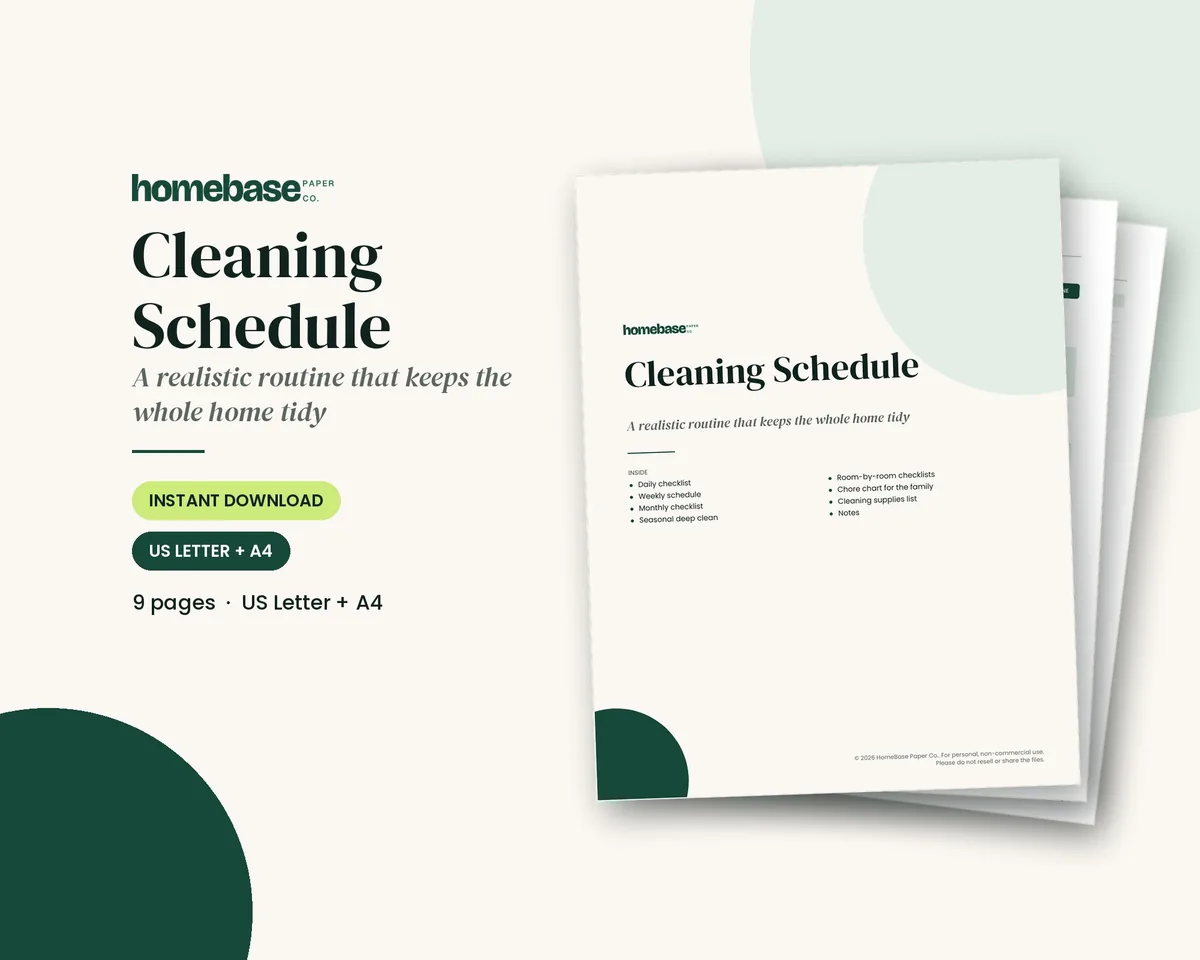
Shower mold comes back when the weekly scrub slips. A written routine keeps it small enough that a spray and a brush always do the job.
Our Cleaning Schedule ($4.49) is a 9-page printable with daily, weekly and monthly checklists, a seasonal deep clean list, room-by-room checklists, a family chore chart and a cleaning supplies list. Put "squeegee the shower" on the daily page, "scrub tile and grout" on the weekly page and "check caulk and wash the curtain" on the monthly page.
If you want to organize the whole house at once, the Home Management Bundle ($16.99) includes the Cleaning Schedule along with the Household Binder, Home Maintenance Log, Home Inventory, Moving Planner and Password & Accounts Log. Bought separately, those six come to $32.94. The maintenance log is a handy place to record when the caulk was replaced.
Browse the Home shop or all our Printables.
Mold and soap scum often start at the drain, so finish the job with our guide on how to clean a shower drain, including a routine to keep it fresh between deep cleans.
Make it easier
Tools for this
Printables
Cleaning Schedule
Daily, weekly, monthly and seasonal lists - plus a family chore chart.
 Save 48%
Bundles
Home Management Bundle
Household binder, maintenance log, moving planner, cleaning schedule, home inventory and password log.
Frequently asked questions
What is the best way to clean mold in a shower? The Cleaning Schedule ($4.49) puts the weekly shower scrub on paper so mold never gets a head start. The best way is to scrub hard surfaces with detergent and warm water, treat any stains left behind with undiluted white vinegar or 3% hydrogen peroxide, then rinse and dry the shower completely.
How do you get black mold out of shower caulk? The Cleaning Schedule ($4.49) has a monthly page where you can note a caulk check so stains are caught early. Spray the caulk with hydrogen peroxide or a label-directed bleach cleaner, cover it with a damp paper towel for an hour, then scrub and rinse; if the black stays, the mold is under the caulk and it needs replacing.
Does vinegar kill mold in the shower? The Cleaning Schedule ($4.49) helps you turn a vinegar spray into a weekly habit rather than a rescue job. Undiluted white vinegar works well on light mold and mildew on tile and grout: spray it on, wait about an hour, scrub and rinse.
Is bleach or vinegar better for shower mold? The Cleaning Schedule ($4.49) keeps your chosen method on the weekly list so cleaning stays consistent. Diluted bleach is better for whitening stains on nonporous tile and grout, while vinegar is gentler and fine for light growth; never use them together or one right after the other.
Can I mix bleach and vinegar to clean mold? The Cleaning Schedule ($4.49) has a cleaning supplies list where you can note which products never go together. No, never mix bleach with vinegar, ammonia or other cleaners, because the combination can release toxic gases.
How do you clean mold off a shower ceiling? The Cleaning Schedule ($4.49) lets you add the ceiling to the monthly page so spots stay small. Wear goggles, wipe the ceiling with a sponge mop dampened with detergent solution or a label-directed mold cleaner, let it sit, wipe again and run the fan until it's dry.
Why does mold keep coming back in my shower? The Home Management Bundle ($16.99) pairs the Cleaning Schedule with a Home Maintenance Log, so a recurring mold problem and the fix are tracked together. Mold returns when the shower stays damp, so improve ventilation, dry the surfaces after showers and fix any leaks or failed caulk.
Is shower mold dangerous? The Home Management Bundle ($16.99) includes a Home Maintenance Log for recording when you call in help for bigger moisture problems. Small amounts of shower mildew are common, but mold can cause allergy-like symptoms in sensitive people, so anyone with asthma or health concerns should talk to a doctor before cleaning it.
How do you clean a moldy shower curtain? The Cleaning Schedule ($4.49) gives the shower curtain a spot on the monthly checklist so it gets washed before mold sets in. Most fabric and plastic liners can go in the washing machine on warm with detergent and a couple of towels to scrub them, then hang them back up to dry.
How often should you clean the shower to prevent mold? The Cleaning Schedule ($4.49) has daily, weekly and monthly checklists that make prevention automatic. Squeegee or wipe the walls after each shower, scrub the shower weekly and check the caulk, curtain and ceiling once a month.
When should I call a professional for shower mold? The Home Management Bundle ($16.99) includes a Home Maintenance Log where you can record the problem, the contractor and the repair. Call a professional if the moldy area is larger than about 10 square feet, if there is a water leak behind the wall, or if the mold keeps coming back after cleaning.
More from HomeBase
You may also like

Printables
Household Binder
Family info, emergency plan, calendars, meals, groceries, cleaning, bills and sitter notes.

Printables
Home Maintenance Log
Monthly, seasonal and annual checklists plus a record of every appliance and repair.

Printables
Home Inventory
Printable pages and a spreadsheet that totals the value of every room.

Printables
Vehicle Maintenance Log
Oil changes, repairs, tires, fuel and MPG, trip mileage and renewal dates - so resale and warranty records are easy.
 Club
Monthly club
Planner & Calendar Club
Anyone who wants a monthly calendar, bill calendar and meal plan ready to print.
Free printable
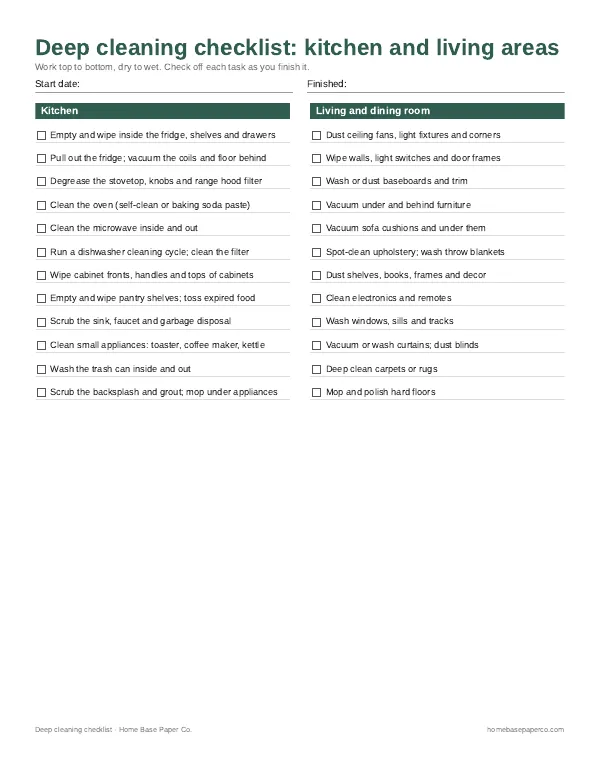
Clean the whole house in order: get the free deep cleaning checklist
A printable room-by-room deep cleaning checklist that tells you what to do first, so nothing gets cleaned twice. You'll also get our weekly HomeBase email with simple cleaning routines and chore ideas the whole family can help with.