

The short answer: for how to clean a shower head, the cause of a sputtering spray is almost always mineral buildup, and the cure is usually a soak in plain white vinegar.
- Bag method: fill a plastic bag with vinegar and secure it around the head
- Soak 1 to 3 hours, then rinse
- Deep clean: remove it and soak it overnight
- Regular cleaning reduces waterborne bacteria
- Next step: Plan it with the Cleaning Schedule ($4.49).
Knowing how to clean a shower head fixes one of the most annoying bathroom problems: a spray that sputters, shoots sideways or barely trickles. The cause is almost always mineral buildup in the nozzles, and the cure is usually a soak in plain white vinegar. Cleaning also matters for health. The New Jersey Department of Health says regular cleaning reduces harmful waterborne bacteria, including Legionella, on the shower head. This guide covers the easy bag method, a full removal and overnight soak, and how to put it back on without leaks.

How to clean a shower head: the quick version
The bag method (no tools):
- Fill a plastic bag with distilled white vinegar.
- Wrap it around the shower head so the nozzles are under the vinegar.
- Secure it with a rubber band or tape.
- Soak 1 to 3 hours.
- Remove the bag, rinse and run the water for a few minutes.
The deep clean: remove the shower head, clean the filter screen, soak the head overnight in vinegar, clear clogged holes with a needle and reinstall it with fresh thread tape.
Signs your shower head needs cleaning
You don't have to wait for a full clog. Clean the shower head when you notice any of these:
- Water squirts in odd directions instead of a steady spray. CR lists this as a sign of mineral buildup.
- Some nozzles are blocked completely.
- Pressure feels weaker than it used to, even though the rest of the house is fine.
- White or greenish crust forms on the face or around the nozzles.
- It's been months since the last cleaning.
Why cleaning your shower head matters
The New Jersey Department of Health's shower head guidance gives two reasons:
- Water flow. Over time, naturally occurring minerals build up and block the nozzles. Regular cleaning keeps the shower head working properly and the flow consistent.
- Bacteria. More importantly, the department says, cleaning reduces harmful waterborne bacteria (including Legionella) that you can be exposed to while showering. These bacteria cause diseases such as Legionnaires' disease and Pontiac fever.
Method 1: The vinegar bag soak
This is the easiest way to clean a shower head without removing it, and it's the method in Consumer Reports' guide to cleaning with vinegar. Mineral deposits build up around the nozzles, making water squirt in all directions or clog completely.
- Fill a plastic bag with distilled white vinegar. A gallon-size food storage bag works for most heads.
- Pull the bag up around the shower head so the face and nozzles are fully submerged.
- Secure the bag with a rubber band, twist tie or tape around the shower arm.
- Let it soak for 1 to 3 hours.
- Remove the bag, rinse the shower head and turn on the water for a few minutes to clear the nozzles.
After the soak, rub the nozzles with an old toothbrush or your thumb. On many heads with soft rubber nozzles, this pops out loosened mineral flakes.
Method 2: Remove and deep clean the shower head
For heavy buildup or a head that still sprays unevenly, the New Jersey Department of Health describes a full cleaning.
Supplies
| Supply | What it's for |
|---|---|
| Adjustable wrench | Loosening a stuck shower head |
| Needle-nose pliers | Holding the arm and removing the filter screen |
| Distilled white vinegar | Dissolving mineral deposits |
| A bowl | Soaking the shower head |
| Thread sealant tape | Resealing the threads |
| A cloth | Protecting the arm's finish and cleaning |
| A toothbrush | Scrubbing threads and the filter |
Step 1: Remove the shower head
Try by hand first. Grip the shower head or its connecting nut, depending on the design, and turn counterclockwise. If it won't move, wrap the shower arm in a rag or cloth, hold it in place with pliers and use an adjustable wrench to loosen the head. Then unscrew it the rest of the way by hand. The rag keeps the tools from scratching the finish.
Step 2: Clean the shower arm threads
Remove any old thread sealant tape from the end of the shower arm. Clean off visible rust or mineral deposits with a cloth or toothbrush. The department suggests using this chance to flush the plumbing by running water without the shower head restricting it. Then turn off the water and dry the threads completely.
Wrap new thread seal tape clockwise two or three times around the threads (or as many times as the manufacturer recommends) and press it into the threads.
Step 3: Clean the filter screen
Take the shower head apart. If you no longer have the owner's manual, take photos as you go so you remember how the pieces fit. Many shower heads have a filter screen inside that you can pull out with needle-nose pliers. Rinse it with water, or scrub it with a toothbrush and all-purpose cleaner or dish soap for stubborn, sticky debris.
Step 4: Soak overnight
Fully submerge the shower head in a bowl of distilled white vinegar and let it soak overnight.
Step 5: Clear clogged holes
Use a needle or a straightened paper clip to clear any holes still blocked by mineral deposits. Rinse the head well, then reinstall the clean filter screen.
Step 6: Reinstall and check for leaks
Screw the shower head back on clockwise. If the shower arm isn't sturdy, wrap it in a cloth and steady it with pliers while you tighten. Turn on the water and check for leaks. If the connection leaks, re-wrap the threads with sealant tape and tighten carefully with the adjustable wrench.
Method 3: Simmer a metal shower head
Consumer Reports' list of surprisingly dirty places offers another option once the head is off:
| Shower head | What to do |
|---|---|
| Metal | Put it in a pot with one part vinegar to eight parts water, bring it to a boil and simmer for about 15 minutes |
| Plastic | Soak it in equal parts vinegar and hot water (don't boil) |
Let a metal head cool fully before handling it, and rinse it well before reinstalling.
Which method should you use?
| Situation | Best method |
|---|---|
| Light buildup, routine cleaning | Vinegar bag soak, 1 to 3 hours |
| Fixed head you can't or don't want to remove | Vinegar bag soak |
| Heavy buildup or uneven spray | Remove, clean the filter and soak overnight |
| Metal head with stubborn deposits | Simmer in diluted vinegar |
| Cracked head or nozzles still blocked | Replace it |
The department also lists replacing the shower head and recycling the old one as an alternative to cleaning.
Handheld shower heads and hoses
A handheld shower head is often easier: unscrew the head from the hose by hand, then soak it in a bowl of vinegar the same way. Wipe the hose with a cloth and dish soap while the head soaks. Check the hose washer when you reconnect it, and run the water to look for drips at the connection.
How often to clean a shower head
The New Jersey Department of Health calls for routine cleaning, and CR notes that without regular cleaning, deposits build up and clog the head. A practical schedule:
| Task | How often |
|---|---|
| Wipe the face of the shower head | Weekly, with the rest of the shower |
| Vinegar bag soak | Every few months, or when spray turns uneven |
| Remove, clean filter and soak overnight | Once or twice a year |
| Check for leaks at the arm | Whenever you reinstall it |
Homes with hard water usually need to clean more often. For more on this topic, see our deep-cleaning hub.
Clean the rest of the shower while it soaks
A vinegar soak takes 1 to 3 hours, which is a good window for the rest of the shower. While the bag is on:
- Spray and wipe the walls with a mild all-purpose cleaner.
- Scrub the grout, focusing on corners and the bottom rows.
- Clean the glass door or wash the shower curtain.
- Wipe the faucet handles and the tub spout.
- Clear the drain of hair.
When you take the bag off and run the water to flush the nozzles, that water rinses the walls too. Just remember not to use bleach-based cleaners anywhere the vinegar is dripping, since cleaners should never be mixed.
Tips for an easier job
- Use distilled white vinegar, which both CR and the department specify.
- Protect the finish with a cloth under any pliers or wrench.
- Photograph each step when you take the head apart.
- Run the water a few minutes after any soak to flush out loosened minerals.
- Never mix vinegar with bleach or other cleaners when you clean the rest of the shower.
Put the shower head on your cleaning schedule
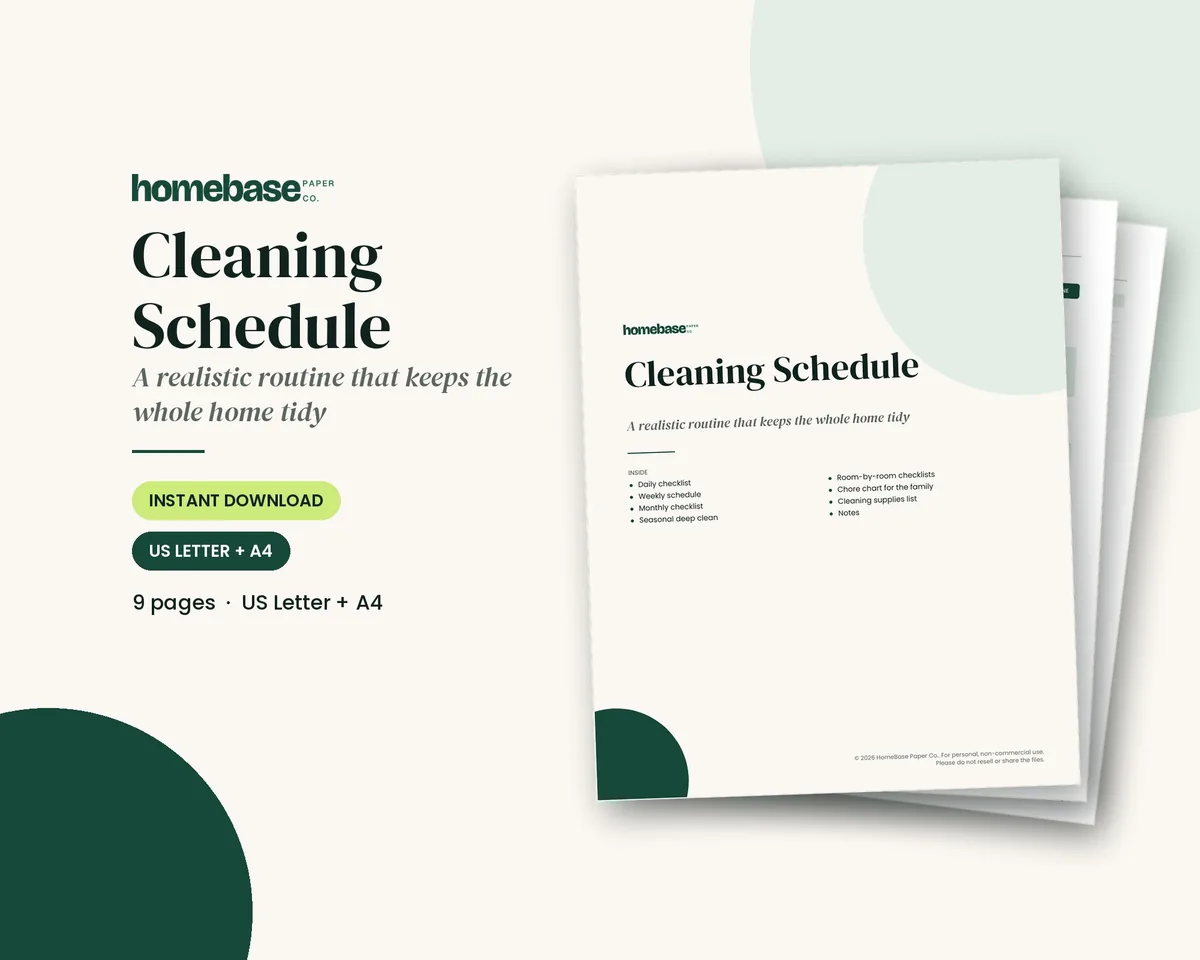
A shower head clogs slowly, so it's easy to forget until the spray goes sideways. Our Cleaning Schedule ($4.49) is a 9-page printable with daily, weekly and monthly checklists, a seasonal deep clean list, room-by-room checklists, a family chore chart and a cleaning supplies list. Put "vinegar soak shower head" on the monthly or seasonal list and keep vinegar and thread tape on the supplies page.
If you'd like to get the whole home organized at once, the Home Management Bundle ($16.99) includes the Cleaning Schedule along with the Household Binder, Home Maintenance Log, Home Inventory, Moving Planner and Password & Accounts Log. Bought separately, those six come to $32.94.
For the rest of the shower, see our guides to how to clean grout and how to clean shower glass.
Your next step
This evening, tie a bag of white vinegar around your shower head and let it soak for 1 to 3 hours. Then rinse it and run the water for a few minutes. If the spray still isn't even, plan a full removal and overnight soak this weekend.
While the shower head soaks, clean the other end of the shower too: our guide on how to clean a shower drain walks through removing hair, scrubbing the cover and clearing drain odors in 7 steps.
Make it easier
Tools for this
Printables
Cleaning Schedule
Daily, weekly, monthly and seasonal lists - plus a family chore chart.
 Save 48%
Bundles
Home Management Bundle
Household binder, maintenance log, moving planner, cleaning schedule, home inventory and password log.
Frequently asked questions
What is the best way to clean a shower head? The best way to clean a shower head is to soak it in distilled white vinegar to dissolve mineral deposits. For a quick clean, tie a bag of vinegar around it for 1 to 3 hours. For a deep clean, the New Jersey Department of Health suggests removing it, cleaning the filter screen, soaking it overnight in vinegar and clearing clogged holes with a needle.
How do you clean a shower head without removing it? To clean a shower head without removing it, fill a plastic bag with distilled white vinegar, wrap it around the head so the nozzles are submerged and secure it with a rubber band or tape. Consumer Reports says to soak it 1 to 3 hours, then remove the bag, rinse and run the water for a few minutes to clear the nozzles.
How long should you soak a shower head in vinegar? You should soak a shower head in vinegar for 1 to 3 hours with the bag method, which Consumer Reports describes. For heavy buildup, the New Jersey Department of Health suggests removing the shower head and fully submerging it in a bowl of distilled white vinegar overnight.
Why should you clean your shower head? You should clean your shower head because minerals build up and block the nozzles, and because cleaning reduces harmful waterborne bacteria on it. The New Jersey Department of Health says this includes Legionella, which causes Legionnaires' disease and Pontiac fever, and that you can be exposed while showering.
How do you remove a shower head? Remove a shower head by turning it or its connecting nut counterclockwise by hand. If it won't budge, the New Jersey Department of Health suggests wrapping the shower arm in a rag, holding it with pliers and loosening the head with an adjustable wrench, then unscrewing it the rest of the way by hand.
How do you unclog shower head holes? Unclog shower head holes by soaking the head in distilled white vinegar to loosen mineral deposits, then pushing a needle or a straightened paper clip into any holes that are still blocked. The New Jersey Department of Health recommends this after an overnight soak. Rinse well and run the water to flush out loosened bits.
Can you boil a shower head in vinegar? Yes, you can boil a shower head in vinegar, but only a metal one. Consumer Reports suggests putting a metal shower head in a pot with one part vinegar to eight parts water, bringing it to a boil and simmering about 15 minutes. For a plastic shower head, soak it in equal parts vinegar and hot water instead of boiling.
How do you clean a shower head filter screen? You can clean a shower head filter screen by removing it from inside the shower head with needle-nose pliers, then rinsing it with water. The New Jersey Department of Health says to use a toothbrush with all-purpose cleaner or dish soap for stubborn, sticky debris, and to reinstall the screen once it is clean.
What supplies do you need to clean a shower head? To remove and clean a shower head, the New Jersey Department of Health lists an adjustable wrench, needle-nose pliers, distilled white vinegar, a bowl, thread sealant tape, a cloth and a toothbrush. For the no-removal method, you only need vinegar, a plastic bag and a rubber band or tape.
How often should you clean a shower head? Clean a shower head regularly, about every few months, or sooner if you see buildup or the spray turns uneven. The New Jersey Department of Health calls for routine cleaning to keep it working at full capacity, and Consumer Reports notes that without regular cleaning, deposits can build up and clog it.
Do you need plumber's tape when putting a shower head back on? Yes, if your shower head was sealed with tape or leaks. The New Jersey Department of Health says to remove old thread sealant tape, clean and dry the threads, then wrap new tape clockwise two or three times, or as the manufacturer recommends, before screwing the head back on clockwise and checking for leaks.
Should you replace a shower head instead of cleaning it? Yes, you can replace a shower head instead of cleaning it. The New Jersey Department of Health lists buying a new shower head and recycling the old one as an alternative to cleaning. Replacement makes sense if the head is cracked, the nozzles stay clogged after soaking or the finish is worn. Install it clockwise with fresh thread tape and check for leaks.
More from HomeBase
You may also like

Printables
Household Binder
Family info, emergency plan, calendars, meals, groceries, cleaning, bills and sitter notes.

Printables
Home Maintenance Log
Monthly, seasonal and annual checklists plus a record of every appliance and repair.

Printables
Home Inventory
Printable pages and a spreadsheet that totals the value of every room.

Printables
Vehicle Maintenance Log
Oil changes, repairs, tires, fuel and MPG, trip mileage and renewal dates - so resale and warranty records are easy.
 Club
Monthly club
Planner & Calendar Club
Anyone who wants a monthly calendar, bill calendar and meal plan ready to print.
Free printable
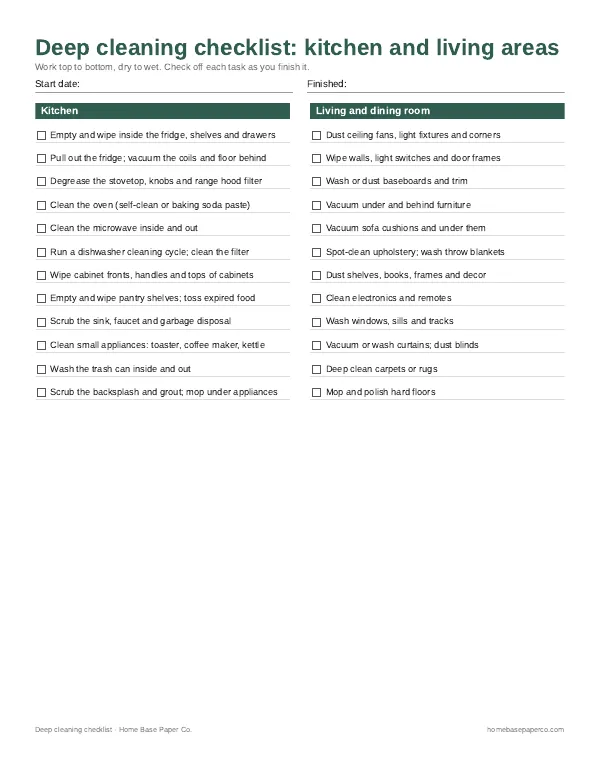
Clean the whole house in order: get the free deep cleaning checklist
A printable room-by-room deep cleaning checklist that tells you what to do first, so nothing gets cleaned twice. You'll also get our weekly HomeBase email with simple cleaning routines and chore ideas the whole family can help with.
Sources
- New Jersey Department of Health: Guidance for Removing and Cleaning a Shower Head nj.gov
- Consumer Reports: Things You Can Clean With Vinegar consumerreports.org
- Consumer Reports: Surprisingly Dirty Places in Your Home consumerreports.org