

The short answer: a monthly planner gives you the whole month at a glance: birthdays, bills, paydays, appointments, school breaks and goals.
- Write first: fixed dates and money dates
- Then: appointments, events and home tasks
- Add two or three goals
- A month-end review below
- Next step: Plan it with the Household Binder ($6.99).
Our picks for monthly planner

Printables
Household Binder
Family info, emergency plan, calendars, meals, groceries, cleaning, bills and sitter notes.
Printables
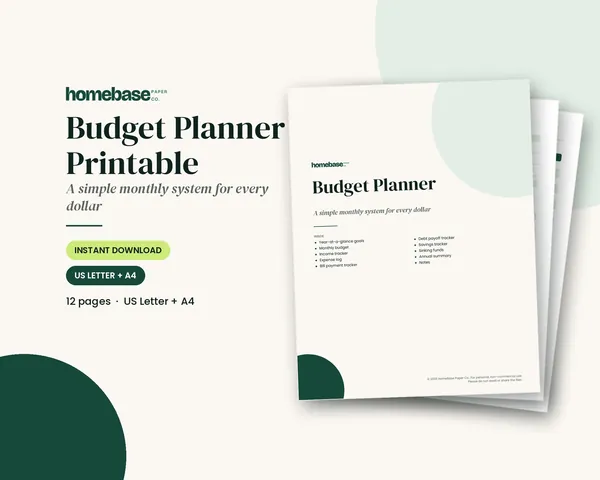
Budget Planner Printable
Twelve undated pages you can print every month: budget, bills, spending, savings and debt.
 Starter pick
 Save 48%
Bundles
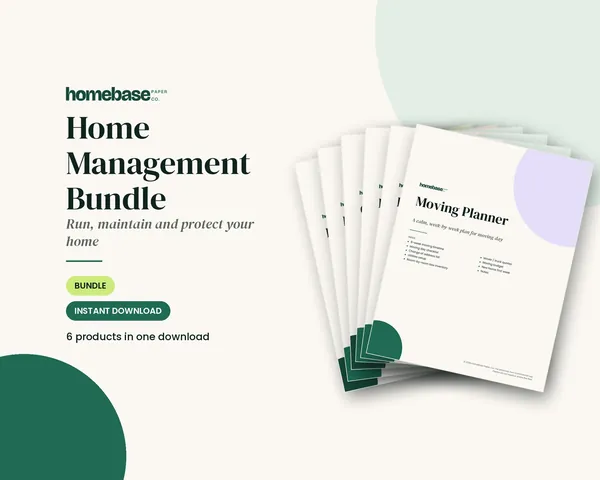
Home Management Bundle
Household binder, maintenance log, moving planner, cleaning schedule, home inventory and password log.
A monthly planner gives you the whole month at a glance: birthdays, bills, paydays, appointments, school breaks and goals. It's the page you look at to see what's coming, so nothing big arrives as a surprise.
Our Household Binder printable keeps a monthly calendar next to a weekly planner, a bill tracker and a birthdays page, so the whole month lives in one binder.
Here's what to write in a monthly planner and in what order, a simple month-end review, how to plan bills and budget in the same view, and printable and bound monthly planner options.
What to write first in a monthly planner
Fill in the month in this order, so the fixed dates are in place before anything else gets planned around them:
If you just need the grid, our free monthly calendar printable has blank month pages you can fill in for any year.
Start with the dates: our guide on how to organize a family calendar shows how to gather every family date in one sitting.
Need blank month pages to start? Our free 2026 calendar printable has a page for every month with US holidays marked.
- Fixed dates: birthdays, anniversaries, holidays and school closures.
- Money dates: paydays and every bill due date.
- Appointments: doctor, dentist, car service, parent-teacher meetings.
- Events and travel: parties, games, trips and visitors.
- Home tasks: filter changes, the smoke alarm test (the U.S. Fire Administration says to test smoke alarms every month), the monthly deep-clean day.
- Two or three goals for the month, such as "save $200" or "clear the garage."
A sample monthly planner setup
To try this setup this month, print our free November 2026 calendar with a goals and bills page.
| Week | Fixed and money dates | Events | Home and goals |
|---|---|---|---|
| Week 1 | Rent due 1st, payday 5th | Book club Thursday | Test smoke alarms |
| Week 2 | Phone bill 12th | Mom's birthday 10th | Save $100 |
| Week 3 | Payday 19th, car insurance 20th | School picture day | Deep-clean fridge |
| Week 4 | Credit card due 26th | Weekend away | Month-end review |
Seeing paydays next to bill dates is what makes a monthly planner so useful: you can tell straight away if a big bill lands before the money does. The CFPB's bill calendar tool works the same way and notes that seeing when payments are due can help you avoid late fees.
Plan bills and budget in the same view
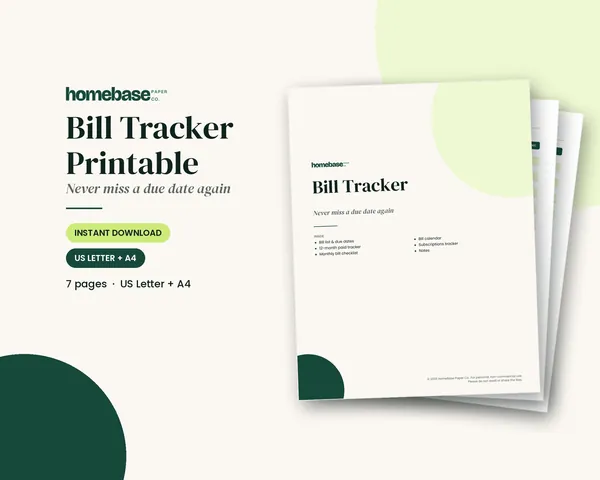
Write each bill on its due date, then add a bill tracker with a paid column so you can tick them off. Pair it with a one-page monthly budget: income, planned spending by category and actual spending. Our Bill Tracker Printable ($3.49) has a bill calendar, monthly checklist and 12-month paid tracker, and the Budget Planner Printable ($5.99) adds a monthly budget, income tracker, expense log and savings pages.
A bill tracker template flags each due date so nothing slips.
For dinners, keep a separate monthly meal planner so the month view stays readable.
If you'd rather build the budget first, see our monthly budget template.
The month-end review
Set aside 15 minutes in the last week of the month:
- What got done? Tick off goals and note what moved.
- What didn't? Move it to next month or drop it.
- Money check. Compare what you planned to spend with what you spent.
- Next month's dates. Copy birthdays, bills and events into the new page.
- One change. Pick one thing to do differently next month.
A simple monthly planner template
Any monthly planner template works best when every month uses the same layout. Here's a simple one you can draw in a notebook or set up in a blank calendar page:
- The month grid: a box for each day with paydays, bill due dates, appointments, birthdays and school breaks.
- Top three priorities: the few things that would make this month a success.
- Bills and dates: each bill, its amount and its due date, checked off when paid.
- Goals and habits: one or two goals with the first step for each.
- Notes for next month: anything to plan ahead, like a birthday or a renewal coming up.
Set up next month's page in the last week of this one, so the month starts with everything already in place.
Printable monthly planners from HomeBase
For a free month you can type into, try our editable calendar, a fillable 2027 PDF.
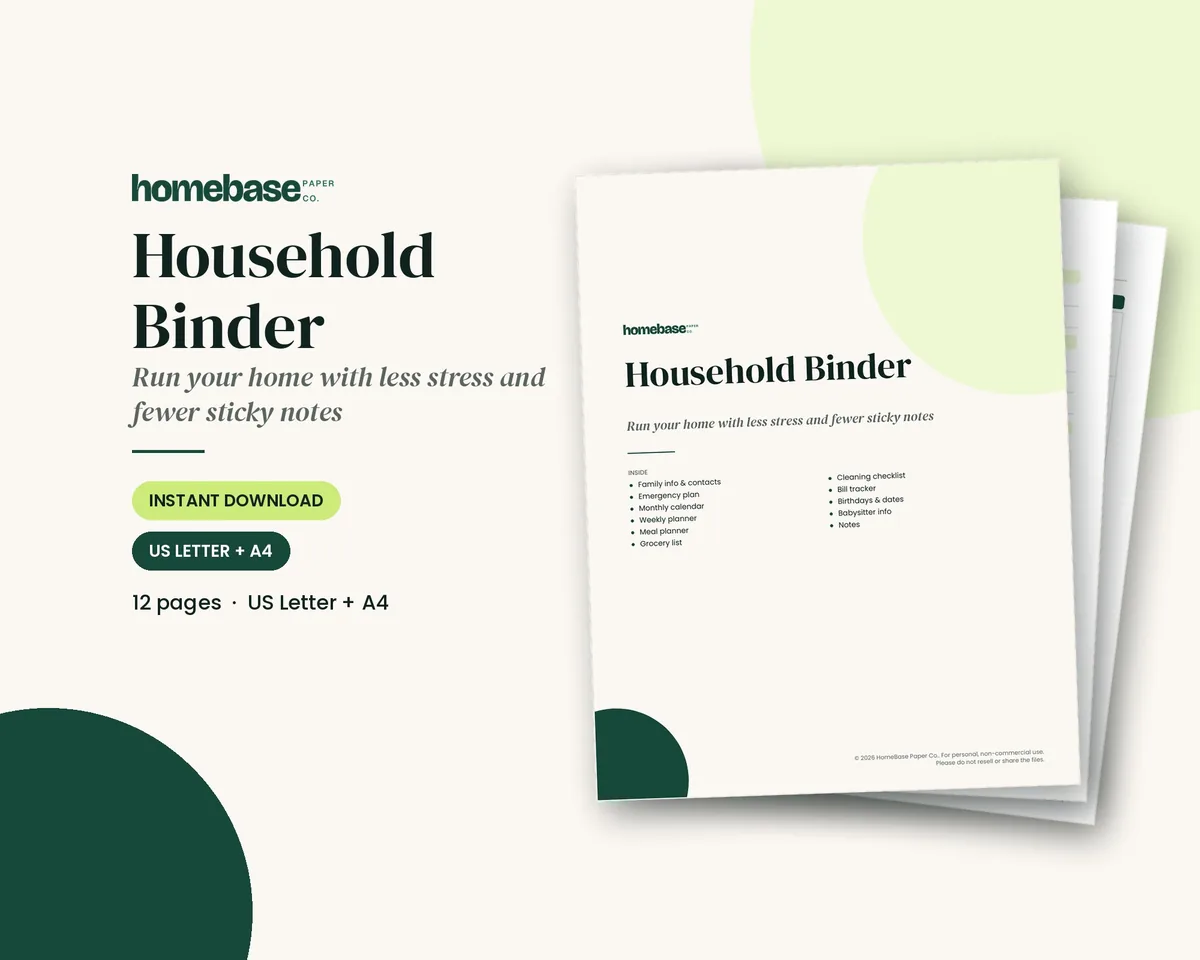
The Household Binder ($6.99) includes a monthly calendar page alongside a weekly planner, meal planner, grocery list, bill tracker, birthdays and important dates, family information and an emergency plan. Print a fresh monthly page and keep the whole year in one binder.
We're also preparing an undated budget book, the Monthly Budget Planner paperback ($10.99): 8.5 x 11 inches, with a calendar, monthly budget, bill tracker, expense logs and a review for every month. It isn't on Amazon yet, so it can't be ordered right now; the product page lets you sign up for a single email when it can.
Bound monthly planners
For a planner you can carry, look for an undated monthly planner with a big grid and a notes column.
Monthly and weekly planners work best together
The monthly page shows what's coming; the weekly planner turns it into a plan. Each Sunday, copy this week's dates from the monthly page into the weekly one and add tasks and meals. For the whole family's schedule on one screen, see how to choose a digital calendar, and for paper vs. apps more broadly, read paper planner vs. digital planner.
Prefer a hand-drawn monthly spread? Our bullet journal ideas include monthly log layouts you can copy.
Teachers can pair a monthly view with the lesson pages in our free teacher planner, and families who school at home can map terms and subjects in the free homeschool planner.
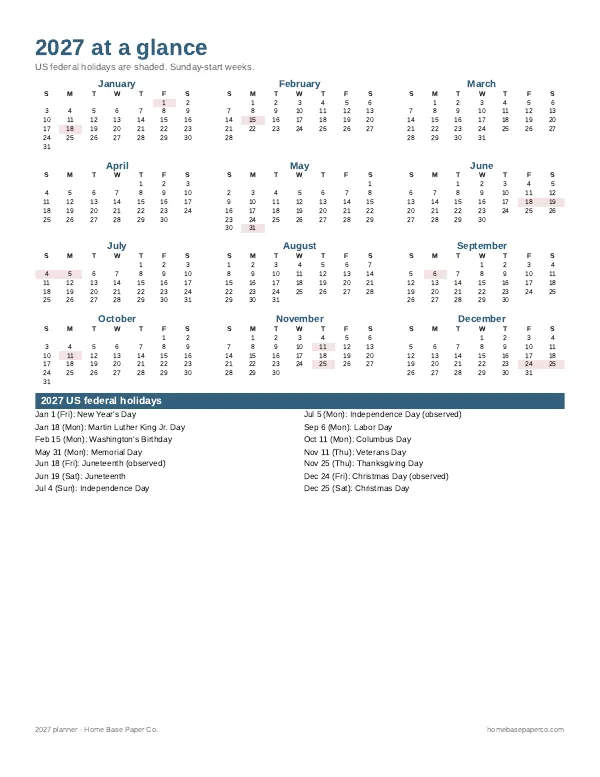
For the year view, print the 2027 calendar, and in December add one of our advent calendar ideas.
Put the whole household on one plan
Family info, emergency plan, calendars, meals, groceries, cleaning, bills and sitter notes.
$6.99 · Instant download. Print at home or fill it in on screen. Or browse the full Home & Organizing collection.
Frequently asked questions
What is a monthly planner? A monthly planner shows a whole month on one page or a two-page spread, usually as a calendar grid. It's for the big picture: birthdays, bills, travel, school breaks, appointments and deadlines. Many monthly planners also include a notes column, goals and a month-end review.
How do I use a monthly planner? At the end of each month, spend 30 minutes setting up the next one. Write in fixed dates first (birthdays, bills, paydays, school closures), then appointments and events, then two or three goals for the month. Check it every Sunday when you plan the week.
What should I write in a monthly planner? Birthdays and anniversaries, bill due dates, paydays, appointments, school events and days off, travel, social plans, home tasks like changing filters, and your goals for the month. Leave a box for notes and things to remember next month.
Is a monthly planner enough on its own? It's enough if your days are fairly predictable and you mainly need to see dates. If you have lots of tasks or appointments each week, pair it with a weekly planner. The monthly page keeps the big picture and the weekly page holds the detail.
Should I get a dated or undated monthly planner? Get an undated monthly planner if you've started and stopped planners before, and a dated one if you want to skip writing in the numbers. Undated monthly planners let you start any month and don't waste pages if you skip one. Dated planners save writing in the numbers each month. If you've started and stopped planners before, undated is usually the better choice.
What size is best for a monthly planner? Letter size or A4 gives each day a box big enough to write in and works well on a fridge, desk or in a binder. Smaller A5 planners fit in a bag but the daily boxes are tiny, so they suit people with few events per day.
How do I plan monthly bills in a planner? Plan monthly bills in a planner by writing each bill on its due date, marking paydays, and checking that each payday covers the bills due before the next one. A separate bill tracker page with a paid column makes it easy to tick bills off as you go; the Bill Tracker Printable has a bill calendar and a 12-month paid tracker.
Can a monthly planner help with budgeting? Yes, a monthly planner can help with budgeting. A monthly planner shows when money comes in and goes out. Add a monthly budget page with income, planned spending and actual spending, and do a short review at the end of the month to adjust next month's numbers.
What is a month-end review? A month-end review is a 15-minute look back: what got done, what didn't, what you spent compared with your plan, and what you'll change next month. It's the habit that makes a monthly planner more than a calendar.
Is a printable monthly planner a good idea? Yes, a printable monthly planner is a good idea: it's cheap, you only print the months you use, and you can keep each month in a binder with related pages like the bill tracker and meal plan. It's ideal for a family command center on the fridge, like the monthly calendar in the Household Binder.
What's the difference between a monthly planner and a wall calendar? A wall calendar is for showing dates to the whole household. A monthly planner usually adds goals, notes, a budget or a review, and is meant for planning as well as showing. Many families use a wall or digital calendar for events and a monthly planner for goals and money.
When should I set up next month? Set up next month in the last week of the current month, ideally on the same day each month, such as the last Sunday. That gives you time to spot clashes, order birthday gifts and move money for big bills before the month starts.
What should a monthly planner template include? A monthly planner template should include a month grid for dates and appointments, a short list of top priorities, a bills and due dates list, one or two goals and a space for notes about next month. Using the same layout every month makes it quick to fill in.
Free printable
Get organized for the new year: get the free 2027 planner
A 16-page printable 2027 planner with a year-at-a-glance page and monthly calendars with US holidays marked. You'll also get our weekly HomeBase email with simple planning and home organization tips.
Sources
- U.S. Fire Administration: Smoke alarms usfa.fema.gov
- CFPB Your Money, Your Goals: Bill calendar tool files.consumerfinance.gov