

The short answer: Semi-formal wedding attire usually means a polished dress, dressy separates, a pantsuit or a suit. Read the invitation for specific instructions, consider the venue and time, and choose comfortable shoes that work on the actual ground. Ask the hosts if the wording is unclear.
Our picks for semi formal wedding attire
Printables
Budget Planner Printable
Twelve undated pages you can print every month: budget, bills, spending, savings and debt.
The goal is to arrive appropriately dressed and able to enjoy the celebration. You do not need a new outfit simply because the invitation uses a dress-code label. Start with a well-fitting option you own, then decide whether a change in shoes, a jacket or another small detail is enough.
What semi-formal wedding attire means
Semi-formal generally sits above casual clothing and below the most formal evening dress. It does not automatically require a tuxedo or a floor-length gown. Cultural clothing can also be appropriate; the couple's own instructions and the ceremony setting matter.
Emily Post's wedding guest attire guide lists daytime and evening semi-formal options, including dressy dresses, pantsuits and suits. Use the invitation as your first reference rather than applying a single outfit formula to every wedding.
The Emily Post dress-code guide also distinguishes semi-formal from casual dress. Its examples include dressy separates and a dark suit with a shirt and tie. These are reference points, not a reason to choose clothing that conflicts with an explicitly stated ceremony requirement.
Four outfit formulas to start with
| Outfit direction | Starting point | Practical check |
|---|---|---|
| Dress | A polished knee-length or midi dress | Can you sit, walk and dance comfortably? |
| Dressy separates | A coordinated skirt or trousers and a refined top | Do the pieces look intentional together? |
| Pantsuit | A matching or coordinated tailored set | Does the fabric suit the weather and venue? |
| Suit | A well-fitting suit, dress shirt and appropriate shoes | Check the invitation before deciding on accessories |
These formulas work as shopping filters. They are not a list of items every guest needs. Choose one direction, try the whole outfit and identify any actual gap before browsing for alternatives.
A garment's fabric, fit and finish matter alongside its length. A long casual jersey dress does not become formal solely because it reaches the floor, and a carefully styled shorter dress can be appropriate when the invitation allows it.
Daytime, evening and outdoor weddings
For a daytime celebration, consider lighter fabrics and a less evening-focused finish while keeping the outfit polished. For an evening wedding, a darker suit or more evening-oriented dress can be a useful starting point. The invitation still takes priority if it gives a specific palette, cultural requirement or level of formality.
For a garden or lawn setting, test shoes on similar ground. A narrow heel that sinks into grass may make the day uncomfortable. Dressy flats, stable heels and suitable dress shoes can be considered according to the rest of the outfit and your access needs.
For a beach venue, ask whether the ceremony is on sand or on a paved terrace. Those are different practical conditions. Do not translate a beach location into casual clothing if the couple has requested semi-formal dress.
For a ceremony in a religious or cultural setting, check any requirements for covered shoulders, head coverings or footwear. Bring an appropriate layer rather than assuming the reception outfit alone covers every part of the day.
How to choose without overbuying
Take the complete outfit out together: clothing, shoes, underlayers, bag and any outer layer. Check whether it fits now and whether anything needs cleaning or repair. A missing button or uncomfortable shoe is easier to fix before travel.
Write down a maximum total that includes alterations, cleaning, shipping and any return costs. A rental may be worth comparing, but confirm the delivery dates, backup sizing, return deadline and damage terms before paying. Borrowing can also work when both people agree on care and return arrangements.
The Budget Planner Printable ($5.99) can hold guest expenses alongside transport and accommodation. Browse Printables for paper planning formats. The family budget guide helps decide what is affordable before an event turns into several separate purchases.
If you are planning the wedding rather than attending, the Wedding Planner Checklist ($5.99) can help organize tasks. Keep guest dress-code wording clear and consistent across the invitation and wedding website.
When to ask for clarification
Ask early if the invitation combines terms that seem contradictory, if there is a cultural requirement you do not understand or if an access need affects the suggested outfit. A short specific question is easier to answer than sending several unrelated photographs and asking the couple to select one.
For example: “The invitation says semi-formal. Would a dark suit and tie work for the evening ceremony?” Or: “Is the ceremony on grass, and are dressy flats suitable?” You can ask the designated wedding contact if the couple has provided one.
Avoid turning another guest's interpretation into the rule. One person may have received additional instructions or be participating in the ceremony. Match the information sent to you and ask when necessary.
A final check before leaving
Try the outfit sitting down and walking, not just standing in front of a mirror. Check the weather, ceremony surface and travel plan. Pack any layer or footwear change you need in a way that will be easy to carry.
Keep the invitation or website details accessible. Verify the address and arrival time separately from the dress code. A comfortable, appropriate outfit supports the day; it does not need to be the most elaborate thing in the room.
Plan the day and keep the budget in one place
Twelve undated pages you can print every month: budget, bills, spending, savings and debt.
$5.99 · Instant download. Print at home or fill it in on screen. Or browse the full Budget & Money collection.
Frequently asked questions
Does semi-formal wedding attire require a tuxedo? Semi-formal wedding attire generally does not require a tuxedo. A polished suit is a common option, while tuxedos are associated with more formal dress codes. Follow any specific instruction from the couple rather than replacing it with a general rule.
Can I wear pants to a semi-formal wedding? Dressy trousers, coordinated separates and a pantsuit can work for semi-formal wedding attire when they match the invitation and setting. Consider the fabric, fit and complete outfit rather than treating all pants as casual.
Can I wear comfortable shoes with semi-formal attire? Comfortable shoes can be part of semi-formal wedding attire. Choose a polished style that works with the outfit and the venue surface. Dressy flats or stable footwear may be more practical than narrow heels on grass, stairs or uneven ground.
Free printable
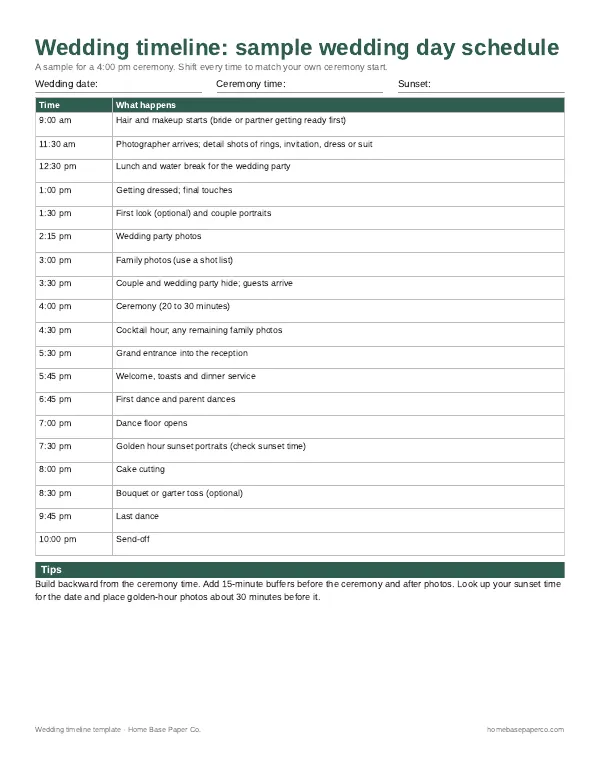
Plan the big day step by step: get the free wedding timeline
A printable wedding planning timeline, from 12+ months out to the week of, plus a day-of schedule page. You'll also get our weekly HomeBase email with wedding and shower planning tips.
Sources
- Emily Post: Wedding guest attire emilypost.com
- Emily Post: Dress codes emilypost.com