

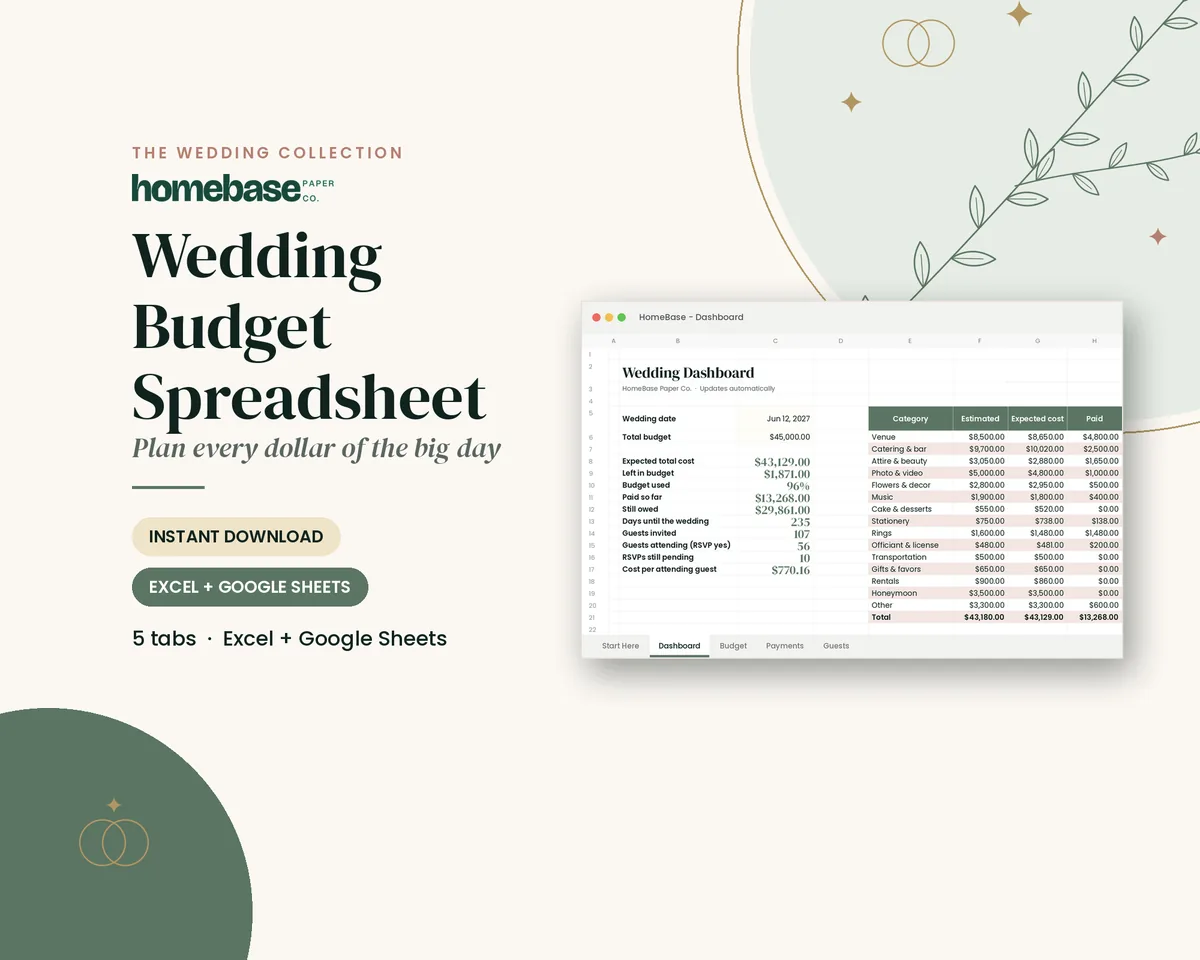
The short answer: to budget for a wedding, set a total you can pay without debt, choose a guest count, split the money by category, track every deposit and keep a buffer for surprises.
- Sample $25,000 split: venue and catering 45% ($11,250), photography and video 12% ($3,000)
- Buffer: 8%, or $2,000 on a $25,000 budget
- Guest count matters: $25,000 is $250 a guest at 100 guests and $167 at 150
- Plan for the costs couples forget and review monthly
- Next step: Plan it with the Ultimate Budget Bundle ($19.99).
Knowing how to budget for a wedding comes down to doing things in the right order: set a total you can pay without debt, choose a guest count, split the money by category, track every deposit and keep a buffer for surprises. Below are the 8 steps, a sample $25,000 budget split by category, the costs couples most often forget and the spreadsheet we make to track it.
Step 1: Set your total
Add up three things:
If you want a benchmark first, read how much does a wedding cost for 2026 averages by category and per guest.
- What you've saved for the wedding.
- What you can save each month between now and the date.
- What family has offered, as a specific amount.
That total is your budget. Agree on it with your partner before you tour a single venue. If you're merging money for the first time, the FDIC has good tips for couples sharing finances.
Step 2: Pick your guest count
Guest count drives catering, drinks, rentals, invitations and venue size. Divide your total by your guest count to get a cost per guest:
| Total budget | 75 guests | 100 guests | 150 guests |
|---|---|---|---|
| $15,000 | $200 | $150 | $100 |
| $25,000 | $333 | $250 | $167 |
| $40,000 | $533 | $400 | $267 |
If the cost per guest looks too low for the wedding you want, change the guest list before anything else. Our wedding guest list template helps you sort must-invites from maybes.
Step 3: Choose your top three priorities
Pick the three things you care about most, like food, photos and music, and plan to spend more there and less elsewhere. It makes every later decision easier.
Step 4: Split the budget by category
Here's a sample split for an example $25,000 wedding. It's an example to start from, not an average. Move money toward your priorities.
For every tool in one download, see the budget planner bundle.
A personal budget planner printable walks you through each month.
| Category | Share | Example ($25,000) |
|---|---|---|
| Venue and catering | 45% | $11,250 |
| Photography and video | 12% | $3,000 |
| Attire, hair and makeup | 8% | $2,000 |
| Music and entertainment | 8% | $2,000 |
| Flowers and decor | 8% | $2,000 |
| Rings | 5% | $1,250 |
| Stationery and postage | 2% | $500 |
| Favors, gifts and extras | 4% | $1,000 |
| Buffer | 8% | $2,000 |
Stationery is a small slice of the budget, but postage adds up: see our wedding invitations guide for the cost of mailing 100 invitations.
Step 5: Get real quotes and update the numbers
Replace each estimate with real quotes as you go. Ask every vendor what's included and what costs extra: service charges, taxes, delivery, setup, overtime and travel.
Step 6: Track deposits and due dates
Most vendors take a deposit to book and the balance closer to the wedding. For each vendor, record the total, the deposit, every due date and what's been paid. Missing a final payment the week of the wedding is stressful and avoidable.
Print the payment schedule and file each receipt behind it in a wedding binder.
Step 7: Plan for the costs couples forget
Guests pay for the bachelorette by custom, but it still affects your friends' budgets; our bachelorette party ideas guide shows how to split it fairly.
Favors are easy to forget. Our wedding favors guide has ideas at every price, plus how to skip them gracefully.
- Service charges and sales tax on catering and rentals
- Tips for vendors
- Alterations
- Delivery, setup and breakdown fees
- Postage for invitations
- Marriage license
- Hair and makeup trials
- Vendor meals
- Overtime if the reception runs long
- The welcome dinner or morning-after brunch
Step 8: Keep a buffer and review monthly
Set aside 5 to 10 percent for surprises. Review the budget once a month with your partner: what's booked, what's paid, what's left. If you go over in one category, take it from another, not from the buffer.
The spreadsheet that does the math
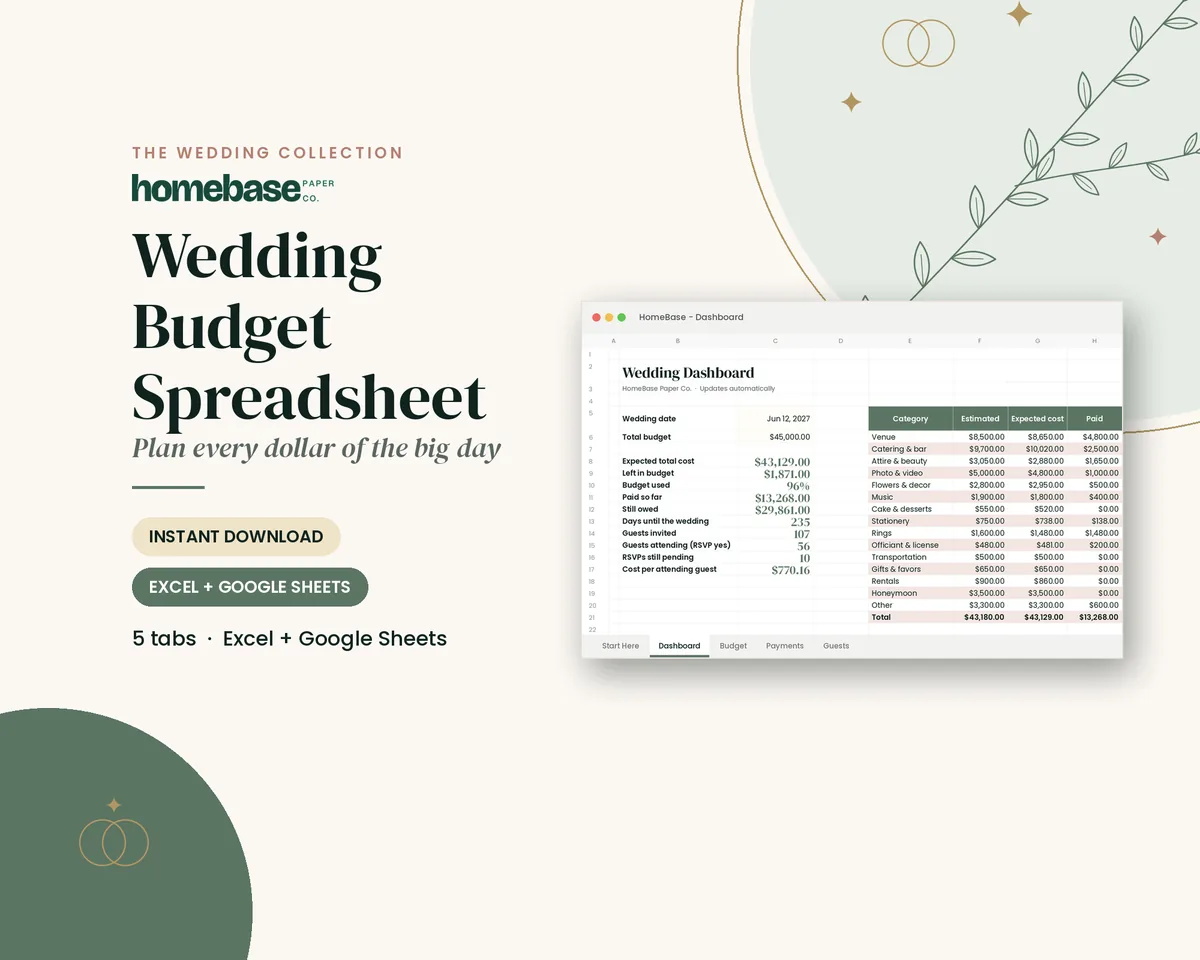
Our Wedding Budget Spreadsheet ($6.99) for Excel and Google Sheets lists 29 typical wedding costs, with estimated vs. actual cost for each item, a payment log with an item dropdown, paid and balance due that update on their own, a guest list with RSVP and meal tracking, cost per attending guest and spending by category with a chart.
Want the timeline too? The Wedding Planning Bundle ($8.99, $12.98 if bought separately) pairs the spreadsheet with the Wedding Planner Checklist, a 12-month printable planning checklist.
Ways to make the budget go further
- Trim the guest list. The biggest lever by far.
- Consider a Friday, Sunday or off-season date.
- Pick a venue that includes tables, chairs and linens.
- Choose in-season flowers and reuse ceremony flowers at the reception.
- Send digital save-the-dates.
- Limit the bar to beer, wine and one signature drink. A margarita recipe made by the pitcher keeps the cost per drink low.
Keep planning
Once the guest count is final, our free wedding seating chart template helps you plan tables and check your rental count.
- How to plan a wedding: the 11 steps in the right order.
- Wedding planning checklist and budget tracker: month-by-month tasks with costs.
- How much does a wedding planner cost: fees explained, if you're thinking of hiring help.
Make it easier
Tools for this
Spreadsheets
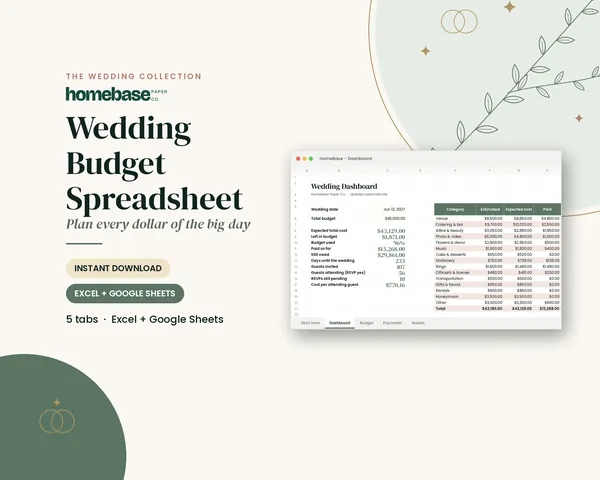
Wedding Budget Spreadsheet
Enter each payment once - the sheet shows what you've paid, what you still owe, and what's left of your budget.
 Save 31%
Bundles
Wedding Planning Bundle
The Wedding Budget Spreadsheet and the 13-page Wedding Planner Checklist together - for less than buying them separately.
Printables
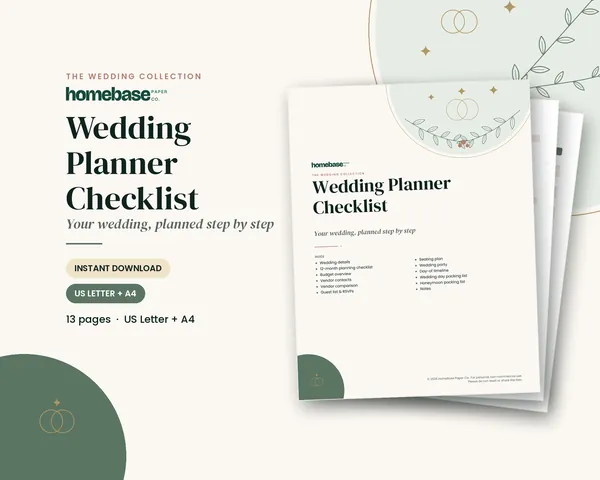
Wedding Planner Checklist
A 12-month checklist plus budget, vendors, guest list, seating, day-of timeline and packing lists.
Frequently asked questions
How do I start budgeting for a wedding? Start with the total you can spend without debt: what you've saved, what you can save before the date and any money family has offered. Agree on that number with your partner before you look at venues or vendors, then set your guest count and split the total by category.
How much should we spend on a wedding? Your wedding budget should be a total you can cover without high-interest debt, so there's no single right number. Pick a total you can pay for with savings and planned contributions, without high-interest debt. Many couples work backward from what they can save each month until the wedding date.
How much does the average wedding cost? The average US wedding was $34,000 in 2025, according to The Knot 2026 Real Weddings Study, with a median of $24,000. The average was $292 per guest with 117 guests. Use these as context, not a target: your budget should start from what you can pay.
What is the biggest wedding expense? The venue, usually with catering. The Knot found couples who hired a venue spent an average of $12,900 on it in 2025, and catering averaged $80 per head. Because both scale with your guest list, guest count is the biggest lever on your total.
What percentage of a wedding budget goes to the venue? Venue and catering are usually the biggest share, often around 40 to 50 percent of the total together. In our sample $25,000 budget, venue and catering get 45 percent. Your split may look different depending on what matters most to you.
How does guest count affect the wedding budget? Guest count drives most costs: catering, drinks, rentals, invitations, favors and even venue size. Divide your total by your guest count to see your cost per guest. Cutting 20 guests can often free up more money than cutting any single vendor.
Who pays for what in a wedding? Today it varies by family. Many couples pay for most of the wedding themselves, with contributions from parents. Ask early, ask for a specific amount if possible and find out whether the money comes with any expectations, such as guest invitations.
How do we handle wedding deposits and payments? List every vendor with the total, deposit, due dates and what's been paid. Most vendors take a deposit to book and the balance closer to the date. A payment log keeps you from missing a final payment the week of the wedding.
How much should we save each month for a wedding? Subtract what you've already saved from your total budget, then divide by the months until your final vendor payments. For example, $12,000 still needed with 15 months to go is $800 a month. If that's not realistic, change the total or the date, not the credit card limit.
How do I figure out cost per guest? Add up the costs that scale with each guest, like catering, bar, rentals, cake and favors, and divide by your expected guest count. The Wedding Budget Spreadsheet ($6.99) also tracks RSVPs and meals and shows your cost per attending guest, so you can see what each added name really costs.
Should we use credit cards or loans to pay for a wedding? It's safest not to. Starting your marriage with high-interest debt can cost far more than the item you financed. Set the budget from cash you have and can save, use a card only if you'll pay it off in full and cut a lower-priority category before you borrow.
What wedding costs do couples forget? Commonly forgotten costs include service charges and taxes on catering, tips for vendors, alterations, delivery and setup fees, postage, marriage license fees, hair and makeup trials, overtime fees and the morning-after brunch.
How much of a buffer should a wedding budget have? Many couples set aside 5 to 10 percent of the total for surprises. If nothing comes up, the buffer can go toward the honeymoon or savings.
How do we track a wedding budget? Use a wedding budget spreadsheet with every cost listed, an estimated and actual amount for each, and a payment log. Update it after every vendor booking and every payment.
How can we cut wedding costs? The biggest levers are guest count, the date and the venue. Friday, Sunday and off-season dates often cost less. Fewer guests, a simpler menu, in-season flowers and digital save-the-dates also help.
Should we combine finances to pay for a wedding? Many couples set up a shared wedding savings account so contributions and spending are easy to track. It's also a good time to talk about money in general. The FDIC has tips for couples sharing finances.
When should we start a wedding budget? Right after you get engaged and before you book anything. The budget decides your guest count, venue and date, so it comes first.
More from HomeBase
You may also like
Printables
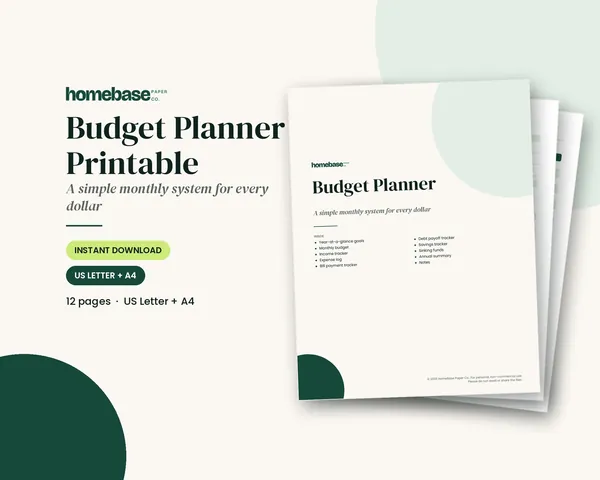
Budget Planner Printable
Twelve undated pages you can print every month: budget, bills, spending, savings and debt.
 Save 33%
Bundles
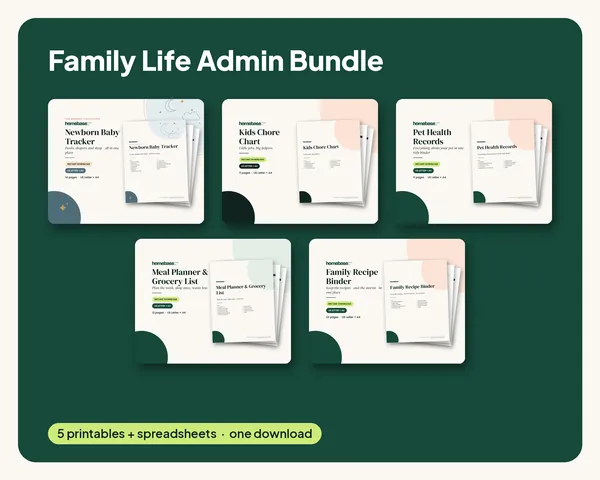
Family Life Admin Bundle
Baby logs, chore charts, pet records, meal plans and family recipes in one tidy set.
Spreadsheets
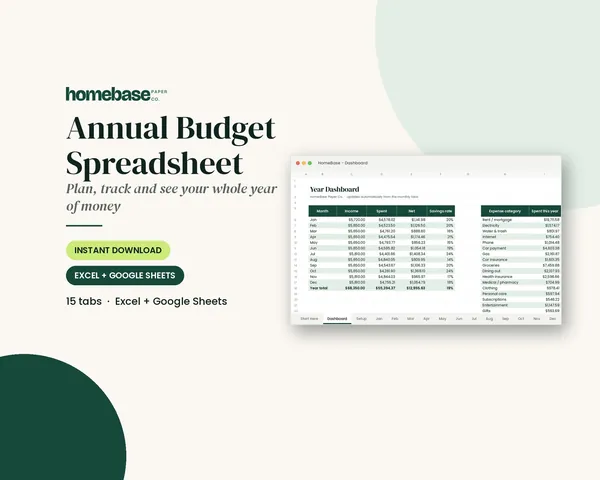
Annual Budget Spreadsheet
See exactly where your money goes every month - without complicated software.
 Club
Monthly club
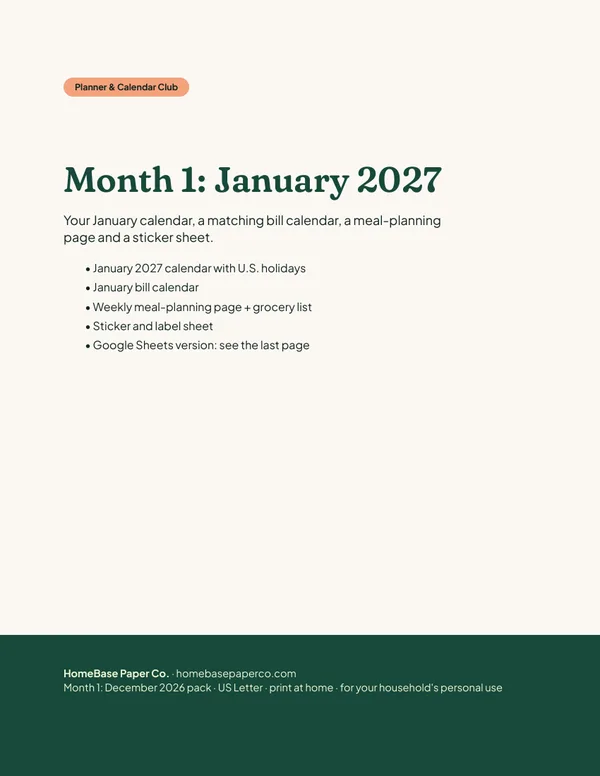
Planner & Calendar Club
Anyone who wants a monthly calendar, bill calendar and meal plan ready to print.
Free printable
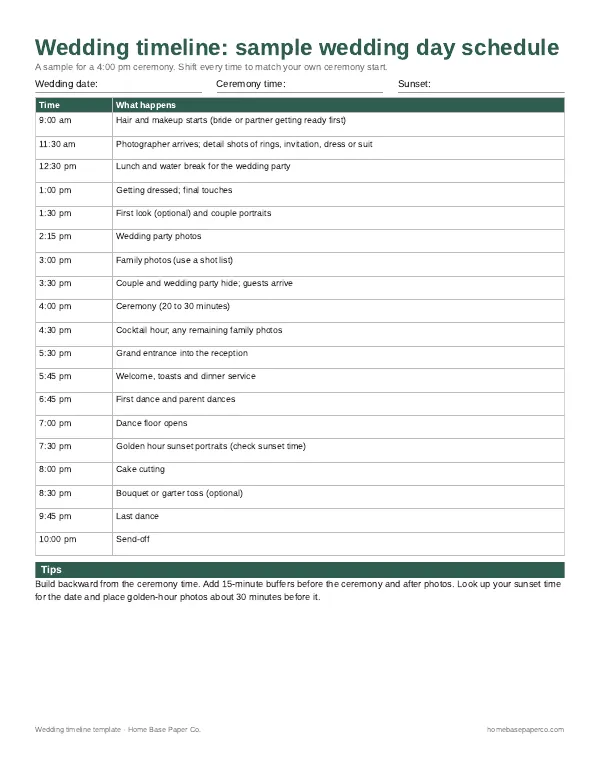
Plan the big day step by step: get the free wedding timeline
A printable wedding planning timeline, from 12+ months out to the week of, plus a day-of schedule page. You'll also get our weekly HomeBase email with wedding and shower planning tips.
Sources
- FDIC: Saying 'I do' to sharing finances fdic.gov
- The Knot Worldwide: 2026 Real Weddings Study theknotww.com
- The Knot Real Weddings Study 2026 data read-out (PDF) images.theknot.com