

The short answer: how much does a wedding planner cost? It depends on the level of help (full-service, partial or day-of), how the planner charges (flat fee, percentage or hourly) and local rates.
- Full-service costs the most; day-of coordination costs the least
- Get written quotes from at least three local planners for the same service
- Ask about assistants, overtime and travel
- Protect your deposit with a clear contract
- Next step: Plan it with the Wedding Planning Bundle ($8.99).
How much a wedding planner costs depends on three things: the level of help you hire (full-service planning, partial planning or day-of coordination), how the planner charges (a flat fee, a percentage of your wedding budget or an hourly rate), and what planners charge where you live. Full-service planning costs the most because it takes the most hours, and day-of coordination costs the least. The only way to know your real number is to get written quotes from at least three local planners for the same level of service and compare what each one includes, not just the total.
Below you'll find each type of planner, each pricing model, the costs hiding inside quotes, the questions to ask and how to plan it yourself. You won't find made-up "average prices" here: published averages mix service levels and cities, so they can make a fair quote look like a bargain or overpriced. Any dollar amounts below are round examples that show the math, not typical prices.
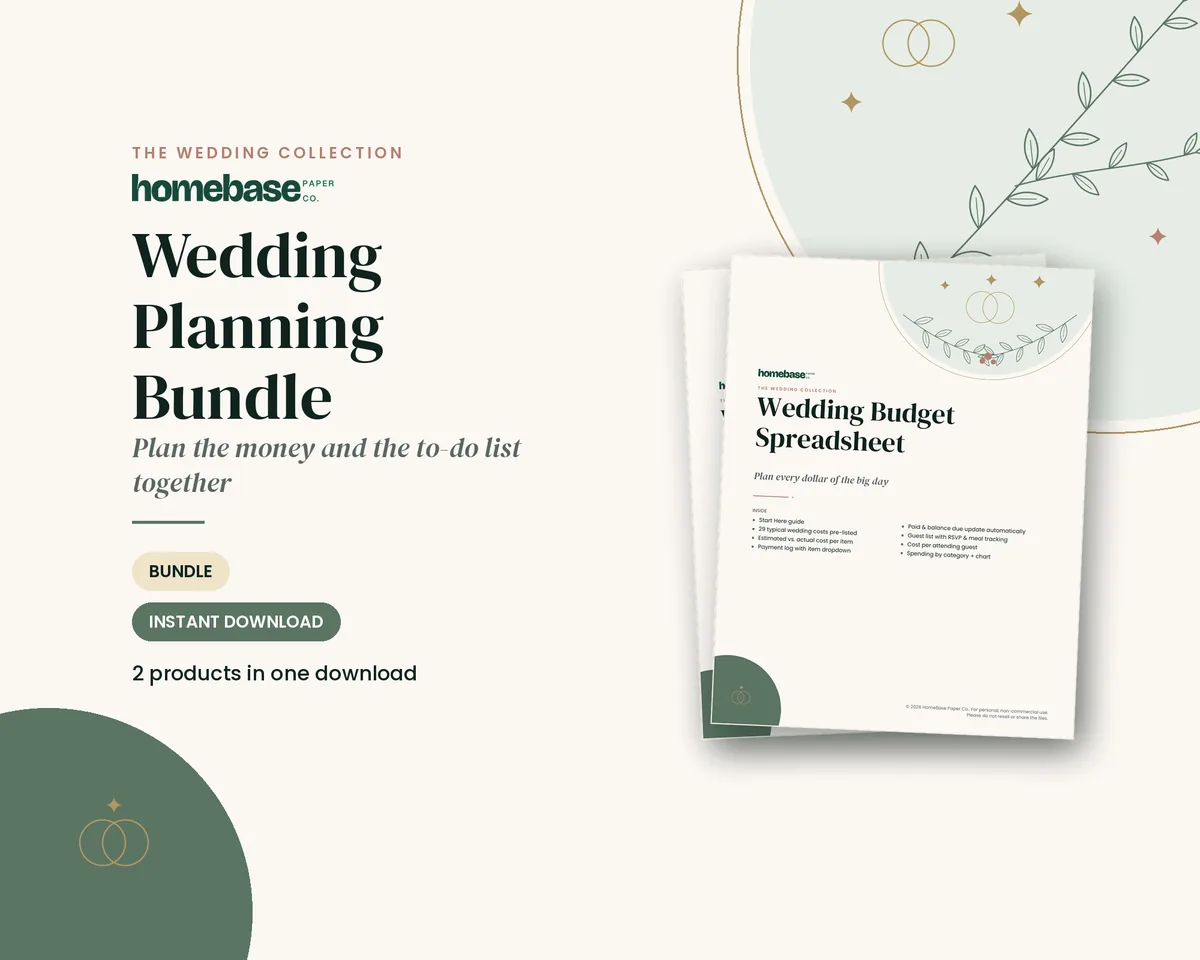
Planning it yourself, or just want your numbers organized before you call planners? The Wedding Planning Bundle ($8.99, or $12.98 if you buy both items separately) includes the Wedding Budget Spreadsheet and the 13-page Wedding Planner Checklist. See all of our Bundles or the full Wedding collection.
Wedding planner cost at a glance
For the rest of the budget, see how much does a wedding cost, with average costs for the venue, food, photographer and more.
| Level of service | When they start | What you get | How it's usually priced |
|---|---|---|---|
| Full-service planner | Soon after booking, often a year or more out | Budget, venues, vendors, design, contracts, logistics and the full wedding day | Flat package fee or a percentage of your budget |
| Partial planner | Partway through, often several months out | Help with some vendors and decisions, then full coordination at the end | Flat package fee, sometimes hourly add-ons |
| Month-of coordinator | Roughly the final four to eight weeks | Takes over your plan, confirms vendors, runs the day | Flat fee |
| Day-of coordinator | A few weeks before, despite the name | Timeline, vendor confirmations and running the day | Flat fee |
| Hourly consultant | Any time | Advice, vendor referrals or a budget review | Hourly rate or a block of hours |
The fee mostly tracks hours. The U.S. Bureau of Labor Statistics, which groups wedding planners with meeting, convention and event planners, notes that many of these workers put in more than 40 hours a week, with extra hours as an event nears and weekend work during events. The quote reflects that time.
What does a full-service wedding planner include?
A full-service planner is involved from early planning through the last dance. A typical full-service package covers:
- Setting and tracking the budget with you
- Venue research, tours and contract review
- Booking and managing every vendor
- Design direction, from colors to rentals
- Guest logistics such as hotel blocks and transportation
- Running the rehearsal and the full wedding day with assistants
Who it fits: couples with big guest lists, several events, a destination wedding or very little free time.
What does a partial wedding planner include?
Partial planning is the middle option. You do some early work, often the venue and a few vendors, and the planner fills gaps, recommends the rest, checks contracts and handles the final stretch. The split differs by planner, so ask for a written list of what they'll book versus what you'll book.
Who it fits: couples who like deciding but want an expert to spot problems and take the last months off their plate.
What does a day-of wedding coordinator do?
A day-of coordinator makes sure the plan you built actually happens. Despite the name, most start several weeks before the wedding so they have time to learn your plan. The usual tasks:
Want inspiration before you hire anyone? Browse our list of wedding ideas for every budget and style.
- Confirming every vendor's arrival time
- Building or polishing the wedding-day timeline
- Walking the venue with you
- Running the rehearsal (if included)
- Being the vendors' contact on the day, so nobody calls you
Month-of coordination is the same idea with an earlier start. Some venues include an on-site coordinator, but that person works for the venue and may not manage outside vendors, so ask exactly what they do.
How do wedding planners charge? Flat fee vs. percentage vs. hourly
Planners use four main pricing models. The model matters as much as the number, because it decides what happens to your fee when plans change.
| Pricing model | How it works | Good for you when | Watch out for |
|---|---|---|---|
| Flat fee (package) | One set price for a defined list of services | You want a firm number to budget around | Anything not listed costs extra, so read the list |
| Percentage of budget | The fee is a set percentage of your total wedding spending | Your budget is firm and unlikely to grow | The fee rises every time your budget does |
| Hourly | You pay for the hours used | You only need advice or a few tasks | Hours can add up; ask for an estimate and a cap |
| Hybrid or a la carte | A base fee plus hourly add-ons, or single services priced separately | You need help with one piece, like design or vendor search | Add-ons can push the total past a full package |
Example: comparing quotes that use different models
Here's how to put different models side by side. These are round numbers to show the math, not typical prices.
Say your wedding budget is $30,000 and you get three partial-planning quotes:
| Quote | Model | Fee on a $30,000 budget | Fee if the budget grows to $35,000 |
|---|---|---|---|
| Planner A | Flat fee of $4,000 | $4,000 | $4,000 |
| Planner B | 12% of total budget | $3,600 | $4,200 |
| Planner C | $2,500 base + 20 estimated hours at $75 | $4,000 | $4,000 if hours stay the same |
Planner B looks cheapest, but a percentage fee grows whenever your budget does. Planner C depends on the hours estimate, so ask what happens if you go over. Run your own quotes through both columns. To see where a planner fits in your total, read how to budget for a wedding.
What affects the cost of a wedding planner?
- Level of service: more months involved means more hours.
- Guest count: more guests, more logistics and staff.
- Number of events: a welcome party or brunch adds work.
- Location and travel: high-cost areas and destination weddings cost more.
- Date: popular Saturdays are limited and book first.
- Design work: custom design and decor sourcing take time.
- Experience: a planner with a deep vendor network often charges more.
Hidden costs to ask about in any wedding planner quote
Two quotes can look far apart and end up close once you add what each one leaves out. Ask every planner whether these are included:
- Assistants on the wedding day
- Overtime past the contracted end time
- The rehearsal
- Setup and teardown of decor
- Travel and lodging
- Extra events beyond the ceremony and reception
- A vendor meal on the day
- Card payment fees
- Gratuity, and whether the contract mentions it
The real cost is the fee plus the extras you'll actually use.
How to get accurate wedding planner quotes
- Know your three big numbers first. Have a total budget, an estimated guest count and a season or date range. Planners can't quote well without them. Our guide to what to do after getting engaged covers that first budget talk.
- Pick the level of help you want. Decide whether you want full-service, partial or day-of help before you start calling, so the quotes match.
- Shortlist at least three planners. Ask your venue and recently married friends for names.
- Send everyone the same short brief: date range, guest count, venue, events, budget and the help you want.
- Ask for an itemized written quote showing what's included, the payment schedule and the staff on the day.
- Compare real totals in one place. Add the hidden extras, and run percentage quotes at a higher budget too.
- Meet your top two. Notice how well they listen, not just the price.
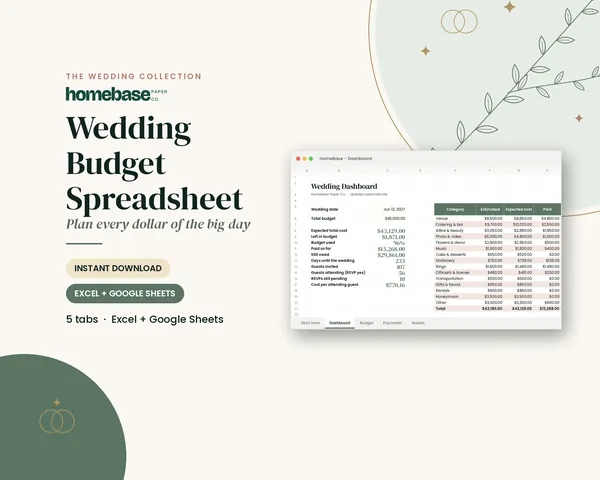
The Wedding Budget Spreadsheet ($6.99) works in Excel and Google Sheets, with 29 typical wedding costs pre-listed, estimated vs. actual cost for each item and a payment log, so a planner's deposit and balance due sit right next to every other vendor. It's in our Spreadsheets collection.
Questions to ask a wedding planner before you hire
| Question | Why it matters |
|---|---|
| Are you available on our date, and how many weddings do you take that weekend? | You want their full attention on your day. |
| Exactly what's included in this package? | It shows you what's extra before you sign. |
| How do you charge, and what would make the fee change? | Percentage and hourly fees can grow. |
| Who will be at our wedding: you or someone on your team? | The person you meet may not be the one who shows up. |
| Do you get commissions or referral fees from vendors? | You should know if a recommendation comes with a payment. |
| How do you help us stay on budget? | A good answer involves tracking every cost, not just staying "close." |
| What happens if you're sick or have an emergency on our date? | Ask for the backup plan in writing. |
| What are the deposit, payment schedule and cancellation terms? | This decides what you lose if plans change. |
| Do you carry liability insurance? | Some venues require it from every vendor. |
| Can we talk to couples you've worked with? | Real references beat polished photos. |
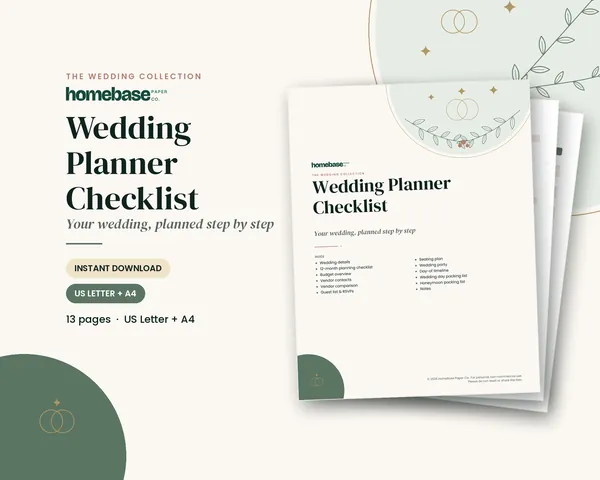
The Wedding Planner Checklist ($5.99) includes vendor contact and vendor comparison pages, so you can write each planner's answers side by side as you interview. It's a 13-page printable in US Letter and A4, in our Printables collection.
Protect your deposit with a clear contract
Before you pay anything, get a written contract listing the services, hours, staff on the day, full fee, payment dates, cancellation and refund terms and the backup plan if your planner can't be there. If it isn't written down, assume it isn't included.
Paying the deposit with a credit card can add a layer of protection. The Federal Trade Commission explains that if you have a problem with the quality of something you paid for by credit card, you may be able to withhold payment and ask the card issuer to investigate, as long as the purchase cost more than $5, you bought it in your home state or within 100 miles of your billing address, and you tried to resolve it with the seller first. For billing errors, the Consumer Financial Protection Bureau says to send your card company a written dispute within 60 days of the statement the charge first appeared on. If a business won't make things right, USA.gov lists where to file a consumer complaint.
Log every payment and due date the day you sign.
Is a wedding planner worth the cost?
A planner is worth it when the hours and stress they save are worth more to you than the fee. Use this table to find your fit:
| If this sounds like you | Consider |
|---|---|
| Big guest list, several events, a destination wedding or no free time | Full-service planner |
| You enjoy planning but want expert vendor picks and someone to catch mistakes | Partial planner |
| You'll plan it yourself but don't want to run the day or field vendor calls | Day-of or month-of coordinator |
| Small wedding, an all-inclusive venue with its own coordinator, or a tight budget | Plan it yourself with one trusted point person |
If money decides it, add the planner fee as a budget line and see what it pushes out. If it means cutting the photographer you love, a day-of coordinator may be the better trade. Couples planning together can use our guide to budgeting as a couple to make that call as a team, and a sinking fund is a simple way to save for the fee month by month.
How to plan your wedding without a planner
You can do the planning yourself and still get much of what a planner offers. What you're really paying a planner for is organization, vendor knowledge and someone in charge on the day. Here's how to cover each piece:
Our step-by-step guide on how to plan a wedding covers the full timeline you'd otherwise hand to a planner.
| What a planner does | How to do it yourself |
|---|---|
| Tracks the budget and every payment | One budget file with estimated vs. actual costs and a payment log |
| Keeps the tasks in order | A month-by-month planning checklist, like the one on our wedding planning checklist and budget tracker page |
| Compares and manages vendors | A vendor comparison page and one contact sheet with every phone number |
| Manages the guest list | A guest list with RSVPs and meal choices; our wedding guest list template page shows how |
| Writes the day-of timeline | A written timeline with vendor arrival times, shared with everyone |
| Runs the day | One trusted friend, relative or hired day-of coordinator with the timeline and contacts |
A popular middle path: plan it yourself and hire only a day-of coordinator. Hand them your vendor contacts and timeline so they can step in quickly.
Why I plan this way
I'm Malaysia. I grew up in Detroit as the oldest of three, the one my family leaned on to keep everything coordinated, and later worked as an executive assistant. Both taught me that big days go smoothly when every number, contact and time lives in one place. That's true whether a planner holds the binder or you do.
Keep the whole plan in one place
Whatever help you hire, you'll still need your own numbers:
A wedding binder with tabs for vendors, budget and timeline keeps every contract and quote together.
- Wedding Planning Bundle ($8.99, or $12.98 if you buy both items separately): the Wedding Budget Spreadsheet plus the 13-page Wedding Planner Checklist, our best value. Find it with our other Bundles.
- Wedding Budget Spreadsheet ($6.99): paid and balance due update automatically, plus a guest list with RSVPs and your cost per attending guest. Excel and Google Sheets.
- Wedding Planner Checklist ($5.99): a 13-page printable with a 12-month checklist, vendor comparison, seating plan, day-of timeline and packing lists.
Browse everything for the big day in our Wedding collection. Get quotes, compare the real totals, and choose the help that fits your wedding and your budget.
Make it easier
Tools for this
 Save 31%
Bundles
Wedding Planning Bundle
The Wedding Budget Spreadsheet and the 13-page Wedding Planner Checklist together - for less than buying them separately.
Spreadsheets
Wedding Budget Spreadsheet
Enter each payment once - the sheet shows what you've paid, what you still owe, and what's left of your budget.
Printables
Wedding Planner Checklist
A 12-month checklist plus budget, vendors, guest list, seating, day-of timeline and packing lists.
Frequently asked questions
How much does a wedding planner cost? A wedding planner costs the least for day-of coordination, more for partial planning and the most for full service, and the only reliable figure is a written quote from 3 or more local planners. The price depends on the level of service, the pricing model and your local market. Full-service planning costs the most, partial planning sits in the middle and day-of coordination costs the least. Get itemized quotes from at least three local planners for the same level of service and compare what each includes; the vendor comparison page in the Wedding Planner Checklist keeps the quotes side by side.
How do wedding planners charge? Wedding planners usually charge a flat package fee, a percentage of your total wedding budget, an hourly rate, or a mix of a base fee plus add-ons. A flat fee is easiest to budget around. A percentage fee rises whenever your budget grows, and hourly fees depend on how many hours you use, so ask for an estimate and a cap.
What is the difference between a wedding planner and a day-of coordinator? A wedding planner helps you make decisions and book vendors over months, while a day-of coordinator carries out the plan you already made. Most day-of coordinators start a few weeks before the wedding to confirm vendors, finish the timeline and run the day. A full-service planner handles the budget, venue, vendors, design and the wedding day.
Is a wedding planner worth the money? Yes, a wedding planner is worth the money when the time and stress they save matter more to you than the fee. Full-service help makes the most sense for large weddings, several events, destination weddings or couples with very little free time. If the fee would push out something you care about more, a day-of coordinator plus your own planning is a common middle path.
Is a percentage or flat fee better for a wedding planner? A flat fee is usually better, because it's easier to budget for and doesn't change when your wedding budget grows. A percentage fee can look lower at first but rises with every added cost. Compare quotes at today's budget and at a slightly higher one; the Wedding Budget Spreadsheet ($6.99) keeps those totals and every planner payment in one place.
What does a full-service wedding planner do? A full-service wedding planner manages the wedding from early planning through the end of the reception. That usually includes budgeting, venue research, booking and managing vendors, design direction, guest logistics, the timeline, the rehearsal and running the wedding day with assistants. Ask for the exact list in writing, because packages differ.
When should you hire a wedding planner? Hire a full-service planner early, ideally before you book the venue, so they can help with the biggest decisions. Partial planners usually join partway through, and day-of coordinators typically start several weeks before the wedding. Popular dates book first, so start reaching out as soon as you know your season and guest count.
What questions should I ask a wedding planner before hiring? Ask what exactly is included, how the fee could change, who will be at your wedding, whether they accept vendor commissions, what happens if they're sick on your date and what the deposit and cancellation terms are. The Wedding Planner Checklist ($5.99) has vendor comparison pages, so you can record each planner's answers side by side.
What hidden costs come with a wedding planner? The most common extras are assistants on the day, overtime, the rehearsal, setup and teardown, travel and lodging, extra events, a vendor meal, card payment fees and gratuity. Ask whether each is included before you compare quotes, and add the ones you'll use to each planner's total.
Do you tip a wedding planner? You don't have to tip a wedding planner; it's your choice, so check the contract first. Some contracts mention gratuity or already include a service charge, and others don't. If you tip, put it in your budget as its own line so it doesn't come as a surprise in the final week.
What is a cheaper alternative to a wedding planner? The cheapest alternative to a wedding planner is planning it yourself with one budget file, one checklist and one trusted point person for the day, then adding a day-of coordinator if you can. The Wedding Planning Bundle ($8.99, or $12.98 if you buy both items separately) includes the Wedding Budget Spreadsheet and the 13-page Wedding Planner Checklist, covering the budget, vendors, guest list, seating and day-of timeline.
How do I protect my deposit when hiring a wedding planner? Protect your deposit with a written contract and, when you can, a credit card payment. The contract should list the services, hours, staff, full fee, payment dates, cancellation and refund terms and a backup plan. The FTC explains that credit card buyers may be able to dispute charges for services that weren't delivered as agreed.
Does a venue coordinator replace a wedding planner? No, a venue coordinator usually doesn't replace a wedding planner, because they work for the venue. They typically handle the venue's spaces, staff and rules, but may not manage outside vendors or your full timeline. Ask exactly what the venue coordinator does on the day before deciding you don't need your own coordinator.
More from HomeBase
You may also like

Printables
Budget Planner Printable
Twelve undated pages you can print every month: budget, bills, spending, savings and debt.
 Save 33%
Bundles
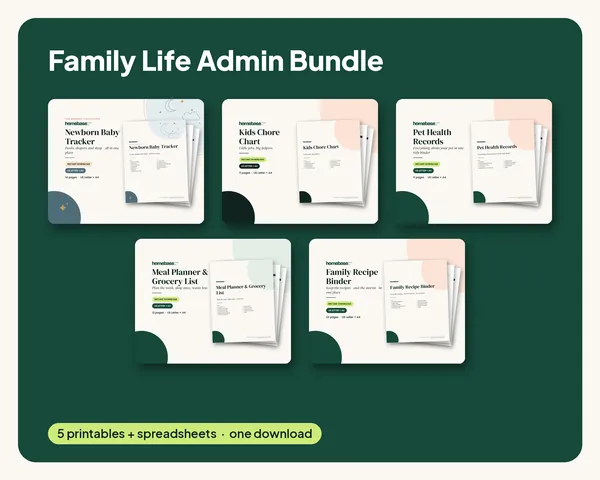
Family Life Admin Bundle
Baby logs, chore charts, pet records, meal plans and family recipes in one tidy set.
Spreadsheets
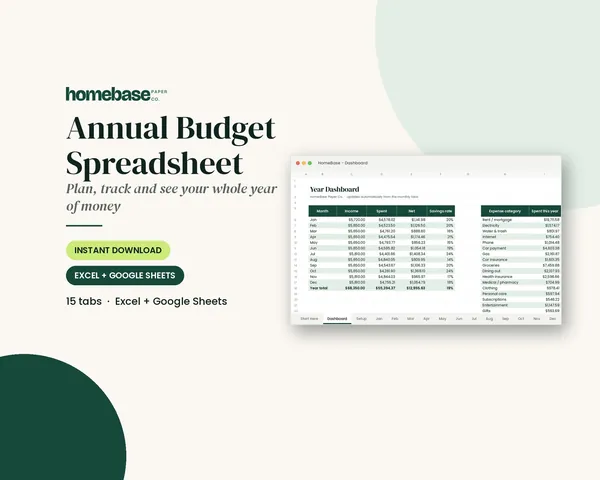
Annual Budget Spreadsheet
See exactly where your money goes every month - without complicated software.
 Club
Monthly club
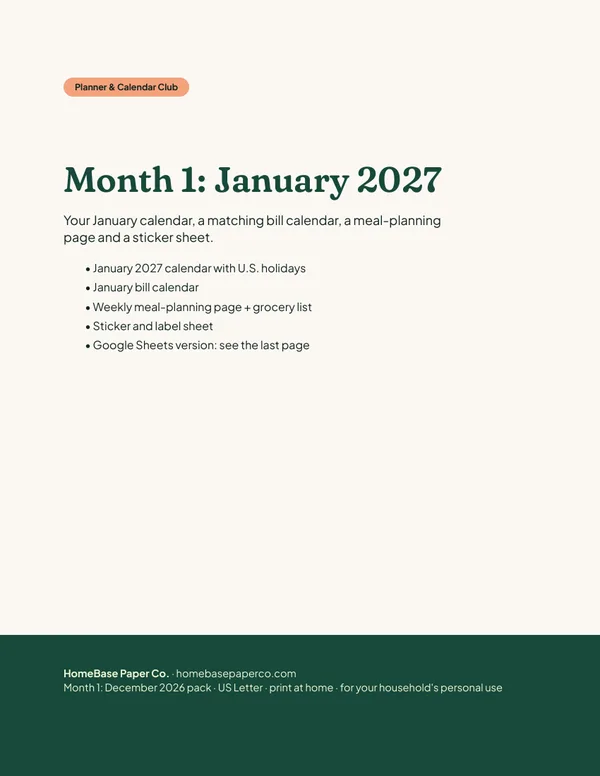
Planner & Calendar Club
Anyone who wants a monthly calendar, bill calendar and meal plan ready to print.
Free printable
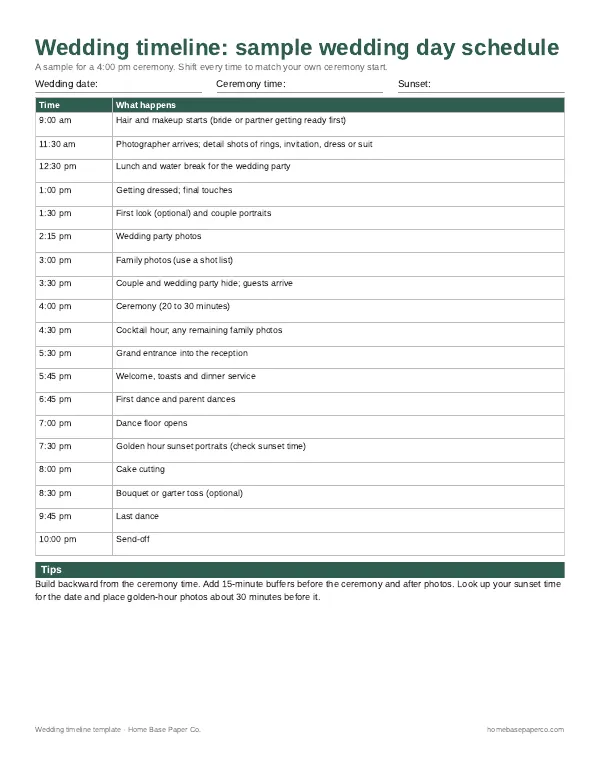
Plan the big day step by step: get the free wedding timeline
A printable wedding planning timeline, from 12+ months out to the week of, plus a day-of schedule page. You'll also get our weekly HomeBase email with wedding and shower planning tips.
Sources
- Meeting, convention and event planners bls.gov
- Quality of something you paid for by credit card consumer.ftc.gov
- Send your card company a written dispute within 60 days consumerfinance.gov
- Where to file a consumer complaint usa.gov