

The short answer: how to plan a wedding: start with your budget, guest count and season. Then book the venue and the vendors that fill up fastest, read every contract before paying a deposit and save the final month for the license, headcount, seating and final payments.
- Step 1: agree on your top three priorities
- Budget: a total you can pay without new debt
- Guest count decides venue size and catering cost
- Handle the marriage license early
- Next step: Plan it with the Wedding Planning Bundle ($8.99).
How to plan a wedding, in short: start with the three decisions that control everything else: your budget, your guest count and your season. Then book the venue, book the vendors that fill up fastest, read every contract before you pay a deposit, and save the final month for the license, headcount, seating, final payments and a day-of plan. The 11 steps below walk you through it in that order, with the questions to ask and the math to do at each stage.
This is a guide to how to plan, meaning which decisions come first and why. If you want the task-by-task list sorted by month, our wedding planning checklist and budget tracker covers that. If you just got engaged this week, start with what to do after getting engaged and come back here when you're ready to book. Our step-by-step guide on how to budget for a wedding includes a sample split by category.
Growing up in Detroit as the oldest of three, I was the one my family leaned on to keep things coordinated. A wedding is the same kind of project: lots of people, lots of deadlines and real money. Staying calm has less to do with the size of your budget than with deciding things in the right order and keeping everything in one place.
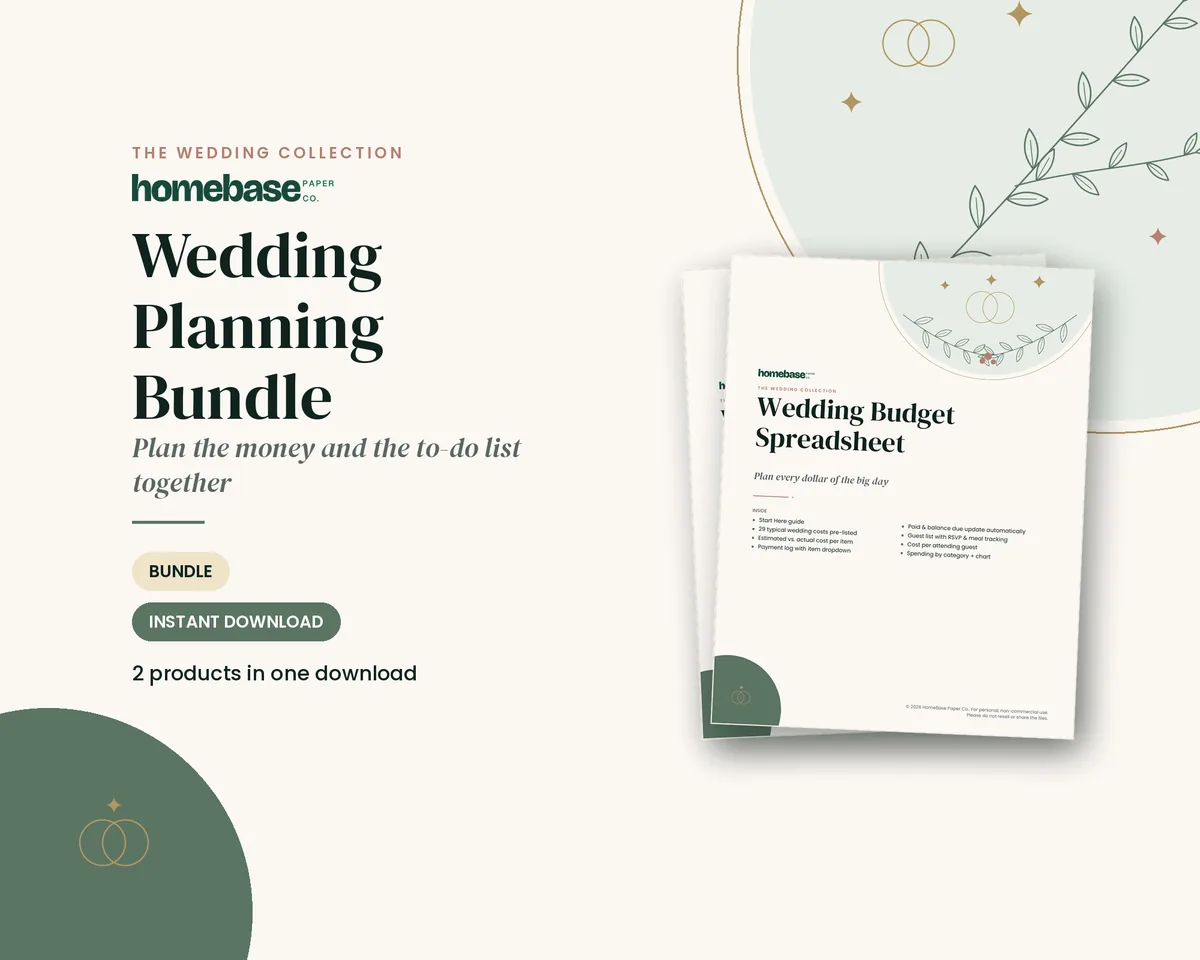
If you'd rather not build your own system, the Wedding Planning Bundle ($8.99, regularly $12.98 when the two items are bought separately) gives you the printable checklist and the budget spreadsheet together. It's in our Bundles and the full Wedding collection.
When writing guest instructions, the semi-formal wedding attire guide explains the outfit examples and venue details that make a dress code easier to follow.
If you are planning ahead before becoming engaged, these simple proposal ideas help keep the moment personal while checking privacy, permissions and the full budget.
How to plan a wedding at a glance
| Step | What you decide | Why it comes here |
|---|---|---|
| 1. Priorities | Your top three must-haves | Tells you where to spend and where to save |
| 2. Budget | A total you can pay without new debt | Sets the ceiling for every booking |
| 3. Guest count | A target number and a draft list | Decides venue size and catering cost |
| 4. Season and style | A date range and a feel | Narrows venues and affects price |
| 5. Venue | Ceremony and reception location | Locks the date; most other vendors depend on it |
| 6. Key vendors | Photographer, caterer, officiant, music | These book up first for popular dates |
| 7. Contracts and payments | Deposits, due dates, cancellation terms | Protects your money before it leaves |
| 8. Details | Attire, invitations, ceremony, decor | Easier once the big pieces are set |
| 9. Paperwork | Marriage license | Has rules and an expiration date |
| 10. Final month | Headcount, seating, timeline, final payments | Turns the plan into a schedule |
| 11. After the wedding | Thank-yous, name change, taxes | The part most guides skip |
Step 1: Agree on your top three priorities
Before you look at a single venue, each of you should write down the three things you care about most. Maybe it's the food, the photos and having every cousin there. Maybe it's a beach, a small guest list and a great band. Compare lists and agree on three shared priorities.
This takes 20 minutes and saves weeks. When a vendor quote is higher than expected, you'll know whether it's a priority worth stretching for or a place to cut. It also gives you a polite, honest answer for relatives with strong opinions: "We decided to put our money into the food."
Step 2: Set a budget you can actually pay
Your budget is not what a wedding "should" cost. It's what you can pay without starting your marriage in debt. Use this simple formula:
Savings you can put toward the wedding now + (monthly amount you can save × months until the wedding) + confirmed family contributions = your total budget.
Here's an example with made-up numbers to show the math:
| Piece | Example amount |
|---|---|
| Savings set aside today | $6,000 |
| $800 a month for 12 months | $9,600 |
| Confirmed family gift | $3,000 |
| Total budget | $18,600 |
| Buffer held back (8%) | $1,488 |
| Amount to plan vendors with | $17,112 |
Only count family money that's been clearly promised, and ask early whether it comes with expectations, such as a say in the guest list. Hold back a buffer of five to ten percent for tips, service charges, taxes and last-minute additions. If you're saving month by month, a sinking fund keeps the wedding money separate from your everyday budget, and our guide to budgeting as a couple helps if you're merging money for the first time.
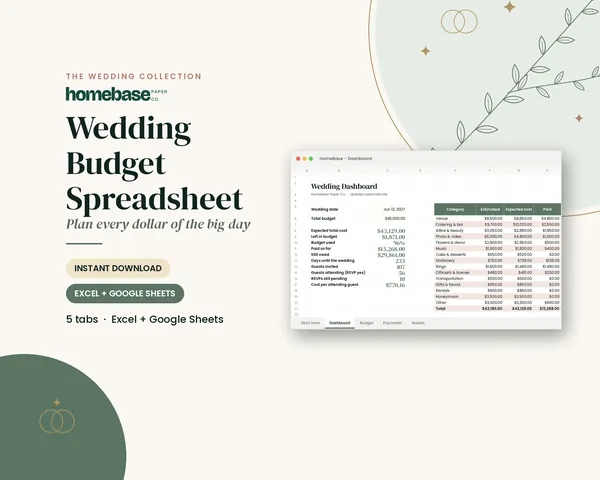
The Wedding Budget Spreadsheet ($6.99) lists 29 typical wedding costs with estimated and actual columns. Enter each payment once in the payment log and it updates what you've paid and what you still owe. It works in Excel and Google Sheets, and you'll find it with our other Spreadsheets.
Step 3: Build the guest list and know your cost per guest
Guest count moves your budget more than almost any other decision, because many costs are priced per person: food, drinks, rentals, favors and invitations. Agree on a target number first, then build the list.
A quick way to see the impact: take the per-person quote for catering and rentals and multiply. If a caterer quotes $85 per person (an example, not a typical price), 100 guests costs $8,500 and 80 guests costs $6,800. Those 20 names are worth $1,700.
Sort names into tiers: must-invite, would-like and if-there's-room. Cut from the bottom tier first. Our wedding guest list template has the columns to copy, plus fair ways to split the list between families.
Step 4: Choose a season, a date range and a style
Pick a season and two or three possible dates rather than one fixed date. Flexibility gives you more venue choices and more room to negotiate. Ask venues whether Friday, Sunday or off-season dates are priced differently. Some are, and the difference can be large.
For inspiration, see our list of wedding ideas, from ceremony touches to food and send-offs.
Agree on a style in plain words, like "relaxed backyard dinner," "church ceremony and hall reception" or "small destination weekend." That one sentence filters out venues and vendors that don't fit, so you stop spending evenings on options you'd never choose.
Step 5: Book the venue
The venue usually comes first because it sets your date, your maximum guest count and often your caterer. Visit two or three places that fit your budget and guest count, and ask every venue the same questions so you can compare them fairly.
| Ask the venue | Why it matters |
|---|---|
| What is the total cost, including service charge and tax? | The quoted price is often not the final price |
| Is there a food and beverage minimum? | You may owe it even if your headcount drops |
| What's included (tables, chairs, linens, setup, cleanup)? | Each missing item becomes a rental cost |
| Do we have to use your caterer or approved vendors? | Limits your choices and your prices |
| What are the deposit and payment due dates? | Goes straight into your payment schedule |
| What is the cancellation and postponement policy? | Protects you if plans change |
| Is event liability insurance required? | An extra cost to plan for |
| How many hours do we have, and what does extra time cost? | Overtime adds up fast |
Get the answers in writing. Don't sign during the tour, no matter how excited you are. Give every big decision one night's sleep.
Step 6: Book key vendors in the right order
Once the venue and date are set, book the vendors who can only work one wedding per day and who book up first for popular dates. Book in this order of urgency:
Thinking about hiring help? See how much does a wedding planner cost by service level.
Keep every quote and signed contract in a wedding binder so you can find a deposit date in seconds.
- Photographer and videographer. Each can only cover one event per day.
- Caterer, if the venue doesn't provide one.
- Officiant. Confirm they're allowed to perform marriages in your state.
- Music, whether that's a DJ, a band or a playlist and a speaker.
- Florist and decor.
- Hair and makeup, plus a trial. If you have curls, find your type on a curl type chart so you and your stylist start from the same words.
- Cake or dessert, rentals and transportation.
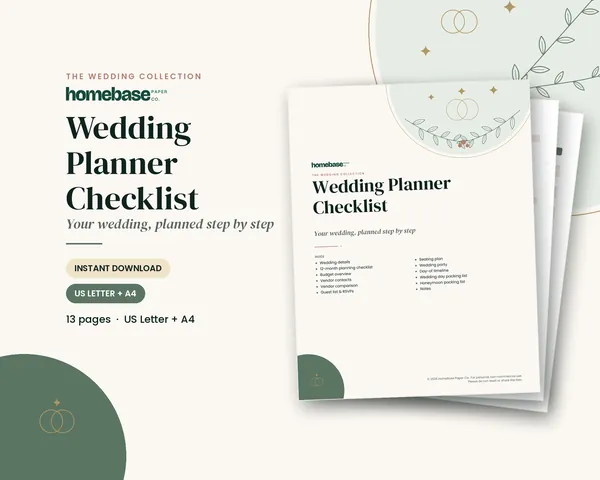
Get at least three quotes for each big vendor. Compare what's included, not just the price. A cheaper photographer who delivers fewer hours and no edited gallery isn't really cheaper. The Wedding Planner Checklist ($5.99) has vendor contact and vendor comparison pages for exactly this. It's a 13-page printable in US Letter and A4, and it lives with our other Printables.
Step 7: Read every contract and protect your payments
Before you pay any deposit, read the contract for the total price, what's included, payment due dates, overtime fees, cancellation terms and what happens if the vendor can't show up. Write each vendor's total, deposit and due dates in one place the day you sign.
Pay deposits by credit card when you can. The FTC's online shopping advice explains that paying by credit card best protects you if something goes wrong, and warns against sellers who insist on wire transfers, gift cards or payment apps. If you need to dispute a charge, the CFPB explains that you should call your card company right away and send a written billing error notice within 60 days of the charge appearing on your statement. Keep every contract, receipt and email together in one folder.
Step 8: Plan the details
With the big bookings done, the fun details get easier because you know your budget, colors and headcount:
Decide early whether you'll write your own wedding vows. Our guide has traditional wording, examples and a timeline.
If friends are throwing a shower, share our bridal shower ideas guide with the hosts, and our free bridal shower games printable for the party.
For the reception layout, print our free wedding seating chart template once your RSVPs are in.
Set up your registry about six months out so shower guests can use it. Our wedding registry ideas guide has a full list. Guests who ask what else to give can see our wedding gift ideas.
The maid of honor usually plans the bachelorette; if that's you or you're helping, our bachelorette party ideas include budgets and a cost-split plan.
- Attire: order early enough for alterations.
- Invitations: save-the-dates first, then formal invitations with a clear RSVP date.
- Ceremony: readings, vows, music and any religious or cultural traditions that matter to you.
- Reception: menu, seating style, toasts and first dance.
- Travel: hotel blocks for out-of-town guests, if you need them.
Add each purchase to the budget as you go. Small things like favors, signs and postage are where budgets quietly leak.
Step 9: Handle the marriage license early
A marriage license is what legally allows you to marry, and the rules depend on the state where the wedding takes place. According to USA.gov, most marriage licenses expire within 30 days to a year, depending on the issuing state, so check with that state's vital records office or the county clerk where you'll marry. Ask about waiting periods, required ID, fees and whether both of you must apply in person. Put the earliest and latest dates you can apply into your plan.
Step 10: Run the final month like a project
The last month is about confirming, not deciding. Make a short list and give every item one owner:
Book the rehearsal dinner venue in the final months. Our guide covers who hosts, the guest list and the toasts. For more on this topic, see our wedding planning hub.
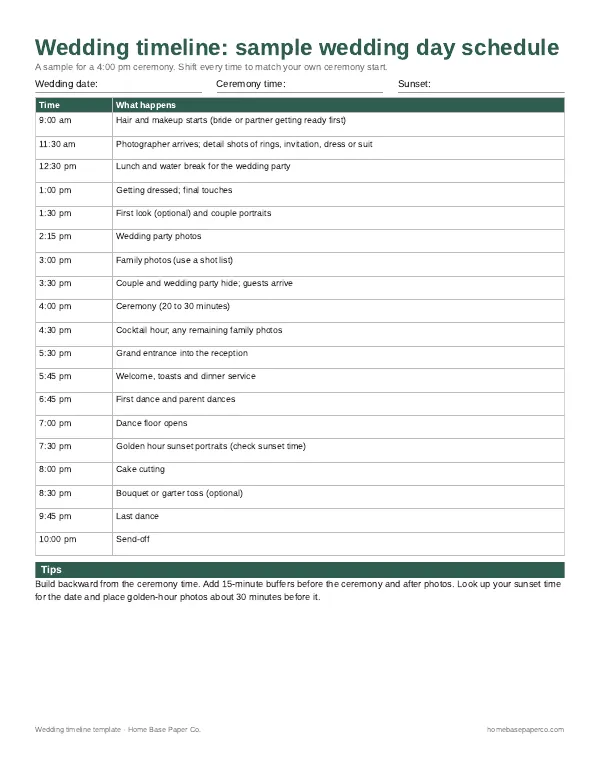
For the day itself, our wedding timeline guide has a sample hour-by-hour schedule for a 4pm ceremony and a free blank template.
- Final headcount to the caterer and venue by their deadline.
- Seating plan once RSVPs are in.
- Day-of timeline with arrival times for every vendor and the wedding party.
- Final payments and tips, listed with due dates and who pays.
- One point person (a coordinator, friend or relative) who has the timeline and vendor phone numbers, so nobody calls you on the day.
- Packing list for the day and the honeymoon.
Step 11: Wrap up after the wedding
Send thank-you notes while the details are fresh, and settle any remaining balances. If either of you is changing your name, the IRS tax tips for newlyweds explain that the names on your tax return must match Social Security records, so report the name change to the Social Security Administration first. The same page notes that if you're married as of December 31, you're considered married for the whole tax year. Your first anniversary is paper, and our anniversary gifts by year chart covers every milestone after it.
How long does it take to plan a wedding?
There's no required timeline. The order of decisions matters more than the number of months. Here's how the same 11 steps compress for a shorter engagement:
| Engagement length | How to adjust |
|---|---|
| 12 months or more | Follow the steps in order with plenty of room for quotes and comparisons |
| About 6 months | Choose the venue within the first few weeks, book vendors right after, and keep the guest list and style simple |
| 3 months or less | Be flexible on date, day of the week and venue; consider an all-inclusive venue so fewer vendors need booking |
For the month-by-month task list, use our wedding planning checklist.
Can you plan a wedding without a wedding planner?
Yes. You can plan your own wedding with help from family and friends. What a planner really provides is organization, vendor contacts and someone in charge on the day. You can cover most of that yourself with one shared checklist, one budget file and a trusted point person for the day. If you'd like help without the full cost, ask about day-of or month-of coordination, which some planners and venues offer.
Common wedding planning mistakes to avoid
- Booking before setting a budget. One big expense then squeezes everything else.
- Inviting before agreeing on a number. It's much harder to un-invite.
- Skipping the fine print. Minimums, service charges and overtime are where surprises hide.
- Keeping two separate lists. One shared checklist and budget prevents double-booking and missed payments.
- Forgetting post-wedding costs like dress cleaning, thank-you cards and name-change fees.
Keep the whole plan in one place
Whichever tools you use, keep the checklist, the budget, the guest list and the vendor contacts together so either of you can answer a question at any time.
- Wedding Planning Bundle ($8.99, regularly $12.98): the checklist and the spreadsheet together, for less than buying them separately.
- Wedding Budget Spreadsheet ($6.99): 29 typical costs, a payment log, a guest list with RSVPs and meals, and your cost per attending guest.
- Wedding Planner Checklist ($5.99): a 13-page printable with a 12-month checklist, budget overview, vendor pages, guest list, seating plan, day-of timeline and packing lists.
Browse everything for the big day in our Wedding collection.
When you plan the ceremony, use our guide to who walks down the aisle first for the full processional and recessional order.
Before save-the-dates go out, set up your wedding website: what to put on it, when to launch and wording you can copy.
For timing, wording and postage, see our guide to save the dates.
Early in planning, book engagement photos if you want images for save the dates and the wedding website.
Make it easier
Tools for this
 Save 31%
Bundles
Wedding Planning Bundle
The Wedding Budget Spreadsheet and the 13-page Wedding Planner Checklist together - for less than buying them separately.
Spreadsheets
Wedding Budget Spreadsheet
Enter each payment once - the sheet shows what you've paid, what you still owe, and what's left of your budget.
Printables
Wedding Planner Checklist
A 12-month checklist plus budget, vendors, guest list, seating, day-of timeline and packing lists.
Frequently asked questions
How do you plan a wedding step by step? Plan a wedding by deciding your priorities, budget and guest count first, then booking the venue, then key vendors, then the details. After that, handle the marriage license, run the final month as a checklist of confirmations, and wrap up with thank-you notes and any name change. The Wedding Planning Bundle ($8.99) puts the checklist and budget spreadsheet for every step in one download.
What is the first thing to do when planning a wedding? The first thing to do is agree on your budget, guest count and season, because those three decisions shape every other choice. Before that, take 20 minutes for each of you to list your top three priorities so you know where to spend and where to save. Don't tour or book venues until you have a number for both budget and guests.
How do I figure out my wedding budget? Figure out your wedding budget by adding the savings you can use now, what you can save each month times the months until the wedding, and any family money that's been clearly promised. Hold back five to ten percent as a buffer for tips, fees and surprises. The Wedding Budget Spreadsheet ($6.99) tracks estimated vs. actual costs and every payment, so you can see what's left at any time.
In what order should you book wedding vendors? Book the venue first, then the vendors who can only work one wedding per day and book up early: photographer and videographer, caterer if the venue doesn't provide one, officiant and music. Florist, hair and makeup, cake, rentals and transportation usually come next. Get at least three quotes for each big vendor and compare what's included, not just the price.
How long does it take to plan a wedding? Planning a wedding usually takes a year or more, about six months, or a few months with flexible choices; there's no required length. The order of decisions matters more than the number of months. With a short engagement, book the venue in the first few weeks, keep the guest list and style simple, and consider an all-inclusive venue so fewer vendors need booking. The Wedding Planner Checklist lays out that order month by month.
Can you plan a wedding without a wedding planner? Yes, you can plan a wedding without a planner by keeping one shared checklist, one budget file and one trusted point person for the day. The Wedding Planner Checklist ($5.99) gives you a 12-month checklist, vendor contact and comparison pages, a seating plan and a day-of timeline in a 13-page printable. If you want some help, ask about day-of or month-of coordination.
What questions should we ask a wedding venue? Ask every venue for the total cost including service charge and tax, any food and beverage minimum, what's included, whether you must use their vendors, the deposit and payment due dates, the cancellation policy, whether liability insurance is required and what overtime costs. Get every answer in writing and compare venues side by side before you sign.
How should we pay wedding vendors? Pay wedding deposits by credit card when possible, because it gives you the strongest protection if something goes wrong. The FTC advises paying by credit card and warns against sellers who insist on wire transfers, gift cards or payment apps. If you need to dispute a charge, the CFPB says to call your card company right away and send a written billing error notice within 60 days of the charge appearing on your statement.
When should we get our marriage license? Get your marriage license within 30 days to a year of the wedding, depending on your state's window, because licenses expire. USA.gov notes that most marriage licenses expire within 30 days to a year depending on the issuing state. Check with the vital records office or county clerk where you'll marry about waiting periods, ID, fees and whether you both need to apply in person.
How do we track wedding payments and deposits? Track wedding payments by writing down each vendor's total, deposit and due dates the day you sign, then logging every payment as you make it. The Wedding Budget Spreadsheet ($6.99) has a payment log with an item dropdown, so paid and balance due update automatically. It works in Excel and Google Sheets, so you can both keep it current.
How many guests should we invite? Invite only as many guests as your budget and venue can both handle, and price it per head: if catering and rentals come to $100 a person, every 10 names add about $1,000. Multiply your per-person catering and rental quote by your guest count to see the real cost of each name, then sort your list into must-invite, would-like and if-there's-room tiers and cut from the bottom. The Wedding Budget Spreadsheet works out your cost per attending guest as RSVPs come in.
What should we do in the last month before the wedding? In the last month, confirm instead of deciding: give the final headcount to the caterer and venue, make the seating plan, write a day-of timeline with vendor arrival times, list final payments and tips with due dates, and choose one point person for the day. Pack for the day and the honeymoon so the last week stays calm.
What do we need to do after the wedding? After the wedding, send thank-you notes, pay any remaining balances and handle a name change if either of you is changing your name. The IRS explains that the names on your tax return must match Social Security records, so report a name change to the Social Security Administration first. If you're married on December 31, you're considered married for that whole tax year.
Is there a printable wedding planning checklist? Yes, the Wedding Planner Checklist ($5.99) is a 13-page printable PDF in US Letter and A4 with a 12-month planning checklist, budget overview, vendor contacts, vendor comparison, guest list and RSVPs, seating plan, wedding party, day-of timeline and packing lists. Get it with the Wedding Budget Spreadsheet in the Wedding Planning Bundle for $8.99.
More from HomeBase
You may also like
Printables
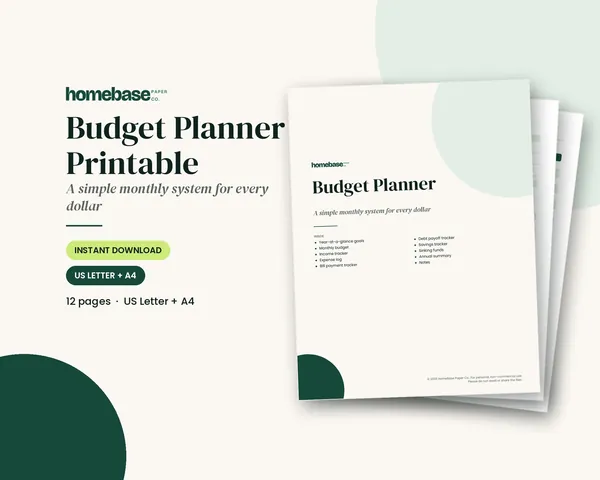
Budget Planner Printable
Twelve undated pages you can print every month: budget, bills, spending, savings and debt.
 Save 33%
Bundles
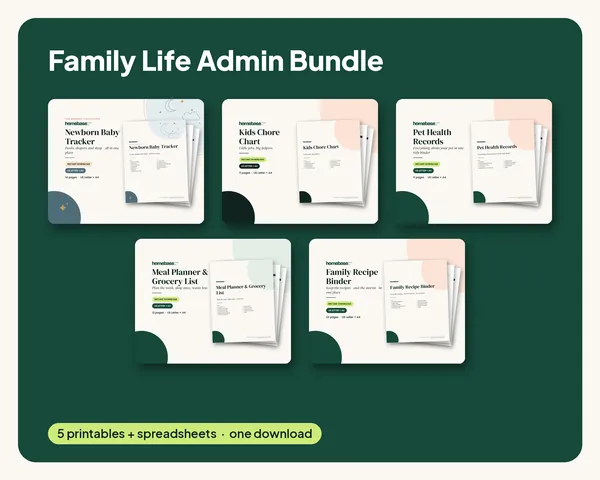
Family Life Admin Bundle
Baby logs, chore charts, pet records, meal plans and family recipes in one tidy set.
Spreadsheets
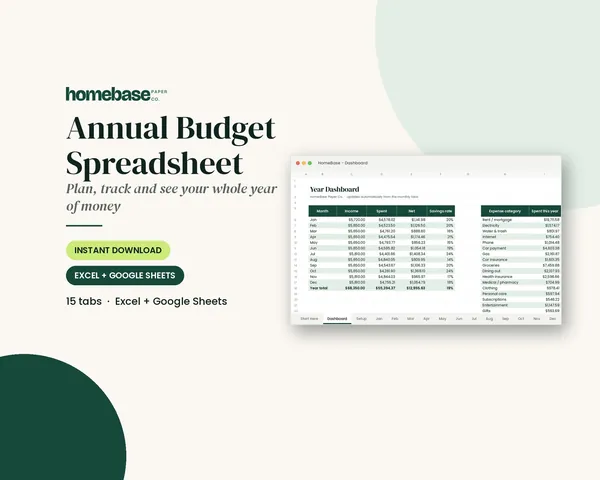
Annual Budget Spreadsheet
See exactly where your money goes every month - without complicated software.
 Club
Monthly club
Planner & Calendar Club
Anyone who wants a monthly calendar, bill calendar and meal plan ready to print.
Free printable
Plan the big day step by step: get the free wedding timeline
A printable wedding planning timeline, from 12+ months out to the week of, plus a day-of schedule page. You'll also get our weekly HomeBase email with wedding and shower planning tips.
Sources
- Online shopping advice consumer.ftc.gov
- Written billing error notice within 60 days consumerfinance.gov
- USA.gov usa.gov
- Tax tips for newlyweds irs.gov