

The short answer: wedding vows are the promises the whole day is built around, whether you say the traditional words or write your own.
- Traditional vows: about 30 seconds
- Standard personal vows: 1 to 2 minutes, 150 to 300 words
- Write them in 7 steps
- Delivery tips like slowing down and printing them on a card
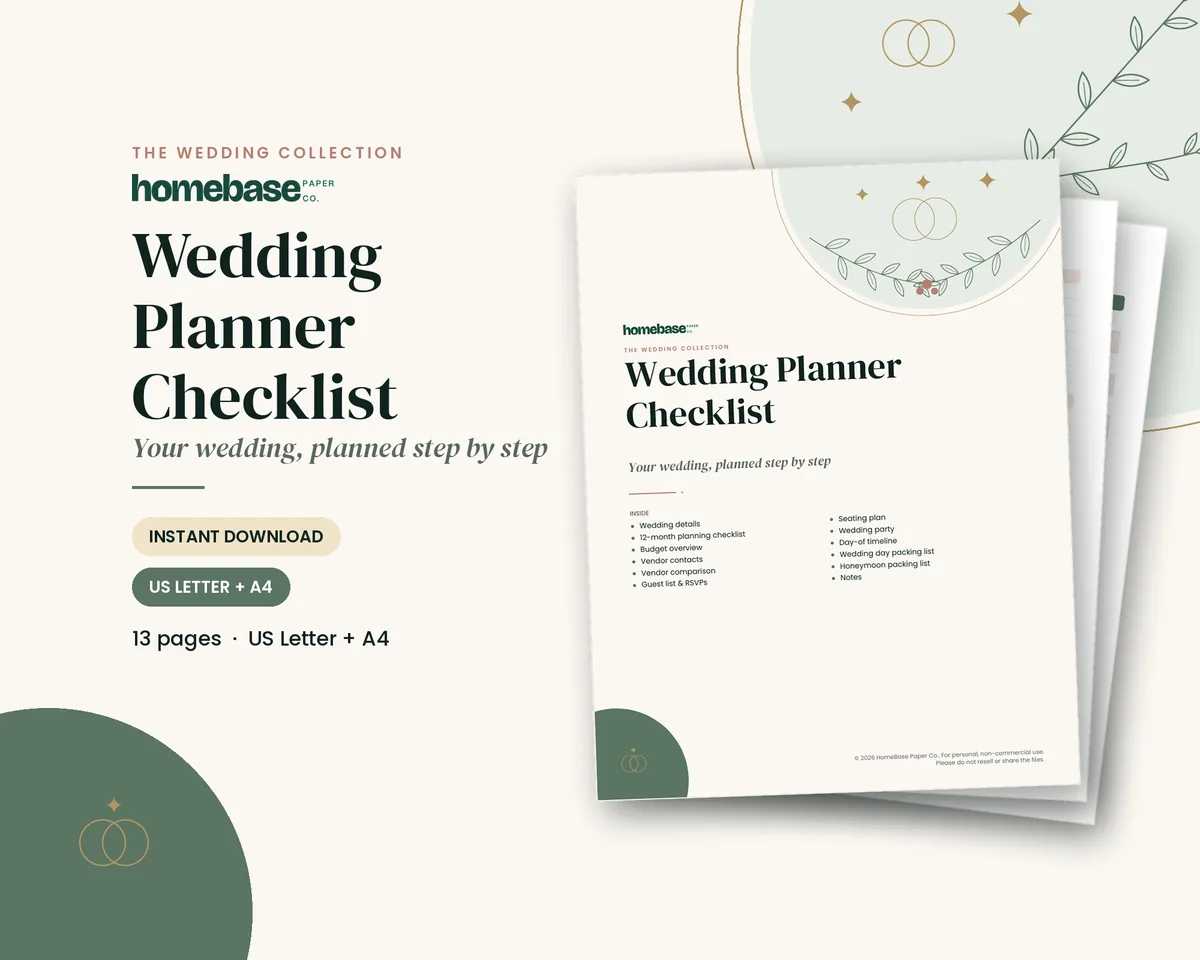
- Next step: Plan it with the Wedding Planner Checklist ($5.99).
Wedding vows are the heart of the ceremony. Whether you say the traditional words or write your own, these are the promises the whole day is built around. This guide covers traditional wedding vows, modern and short examples, how to write wedding vows step by step, how long they should be and how to deliver them without your voice shaking.
For an earlier relationship milestone, the proposal ideas guide shows how a personal letter or meaningful place can support the question without turning it into a performance.
What are wedding vows?
Britannica defines a vow as a sacred, voluntary promise to dedicate yourself to a special obligation. It notes that in Protestant traditions, vows are part of rites such as confirmation, ordination and marriage. Wedding vows are just that: the promises two people make to each other, out loud, in front of the people they love.
Some couples use the vows of their faith exactly as written. Others write their own, and many do a bit of both.
Traditional wedding vows
The most familiar English wedding vows come from the Book of Common Prayer. Britannica notes that it was first authorized in the Church of England in 1549, was prepared mainly by Thomas Cranmer and was revised in 1662. That version is still the standard in many Anglican churches, and its words have shaped wedding ceremonies across English-speaking Protestant churches.
The 1662 vow reads:
I take thee to my wedded wife (or husband), to have and to hold from this day forward, for better for worse, for richer for poorer, in sickness and in health, to love and to cherish, till death us do part.
A common modern version:
I, ___, take you, ___, to be my wife (or husband), to have and to hold from this day forward, for better, for worse, for richer, for poorer, in sickness and in health, to love and to cherish, for as long as we both shall live.
Many Catholic, Jewish, Hindu, Muslim and other ceremonies have their own vow or promise wording. If you're marrying in a house of worship, ask your officiant which words are required and whether personal vows can be added.
Wedding vow examples
Short wedding vows
- "I choose you today and every day. I promise to love you, laugh with you and stand by you, for all of our lives."
- "You are my best friend and my home. I promise to be yours, in every season."
- "Today I give you my hand and my heart. I'll keep both safe."
Modern wedding vows
"When we met, I didn't know how much my life was about to change. You make every ordinary day better. I promise to listen even when I'm tired, to make you coffee on hard mornings, to cheer for your dreams as loudly as my own and to choose you, again and again, for the rest of my life."
Funny but sweet wedding vows
"I promise to love you more than I love pizza, and you know that's saying a lot. I promise to share the blanket, mostly. And when we're old and gray, I promise to still think you're the funniest, smartest, most wonderful person I know."
Vows for a second marriage or blended family
"I promise to love you and to love our family as it is. To your children, I promise to be someone you can count on, to listen and to earn your trust. Together, we'll make a home with room for everyone."
How to write wedding vows in 7 steps
- Agree on the basics. Talk with your partner about length, tone (serious, sweet or funny) and whether you'll share them before the day.
- Brainstorm. Jot down how you met, when you knew, what you admire, how they make you better and what you look forward to.
- Pick one story. Choose a single short memory that captures your relationship. One is enough.
- Write your promises. Make 3 to 5 promises. Mix big ones ("to stand by you in hard times") with small, specific ones ("to always save you the last bite").
- Close strong. End with a line that ties it all together, such as "I choose you, today and every day."
- Cut it down. Aim for 1 to 2 minutes. Remove anything that needs an explanation.
- Practice out loud. Read your vows aloud at least five times, including once to a mirror and once to a trusted friend.
A simple wedding vow template
Fill in the blanks to get a first draft:
"[Partner's name], from the moment [short memory], I knew [what you knew]. You are [two or three qualities]. Today I promise to [promise 1], to [promise 2] and to [promise 3]. I can't wait to [something you look forward to]. I love you, and I choose you, today and always."
How long should wedding vows be?
| Vow style | Length | Words (approx.) |
|---|---|---|
| Traditional, repeated after officiant | About 30 seconds | 50 to 70 |
| Short personal vows | 30 to 60 seconds | 75 to 150 |
| Standard personal vows | 1 to 2 minutes | 150 to 300 |
| Long personal vows | 2 to 3 minutes | 300 to 450 |
Most people speak at about 130 to 150 words per minute, and slower when nervous. If your vows run past 3 minutes, guests start to shift. Save extra words for a letter you give your partner the morning of the wedding.
Mistakes to avoid
- Mentioning exes, past fights or anything private.
- Inside jokes nobody else gets.
- Making your vows much longer than your partner's.
- Leaving them to the night before.
- Reading them off a phone covered in notifications.
- Promises you can't keep. Keep them honest.
Tips for saying your vows
- Print them on a card. Use large print and a sturdy card that won't shake in your hand. Give a backup copy to your officiant.
- Practice at the rehearsal. Read them at least once in the space where you'll say them.
- Slow down. Pause after each promise. Take a breath before you start.
- Look up. Look at your partner, not the guests.
- Have tissues ready. Ask a member of the wedding party to hold some.
- It's fine to cry. Pause, smile and keep going.
When to write your vows
Put vow writing on your planning timeline so it doesn't slide to the last week.
- 3 months before: Decide whether you'll use traditional or personal vows. Ask your officiant about any required words.
- 6 to 8 weeks before: Write a first draft.
- 4 weeks before: Revise and time it.
- 2 weeks before: Write the final copy on a vow card.
- Rehearsal: Practice in the venue.
- Wedding morning: Read them once quietly, then put them away.
Ring exchange wording
The ring exchange comes right after the vows and usually uses a shorter line. Common choices:
- "With this ring, I thee wed." (traditional)
- "I give you this ring as a sign of my love and faithfulness."
- "Wear this ring as a reminder of the promises we made today."
Ask your officiant whether they will feed you the lines in short phrases to repeat. That's very common and takes the pressure off memorizing.
Private vows and vow renewals
Some couples feel shy about sharing personal words in front of 150 guests. A few options:
- Private vow reading. Read your personal vows to each other alone, often during a first look before the ceremony. Then say traditional vows at the ceremony.
- Letters. Write your vows as a letter and swap them the morning of the wedding.
- Vow renewal. Many couples renew their vows on a milestone anniversary, such as 10 or 25 years. Renewal vows often look back on what you've built together as well as forward.
Whatever you choose, keep a copy. Your vows make a lovely keepsake to frame or read again on your anniversary.
Where vows fit in the ceremony
A typical ceremony order:
- Processional
- Welcome
- Readings
- Officiant's remarks
- Vows
- Ring exchange
- Pronouncement and kiss
- Recessional
Some ceremonies add a unity candle, sand ceremony or blessing after the rings.
Keep the rest of the wedding on track
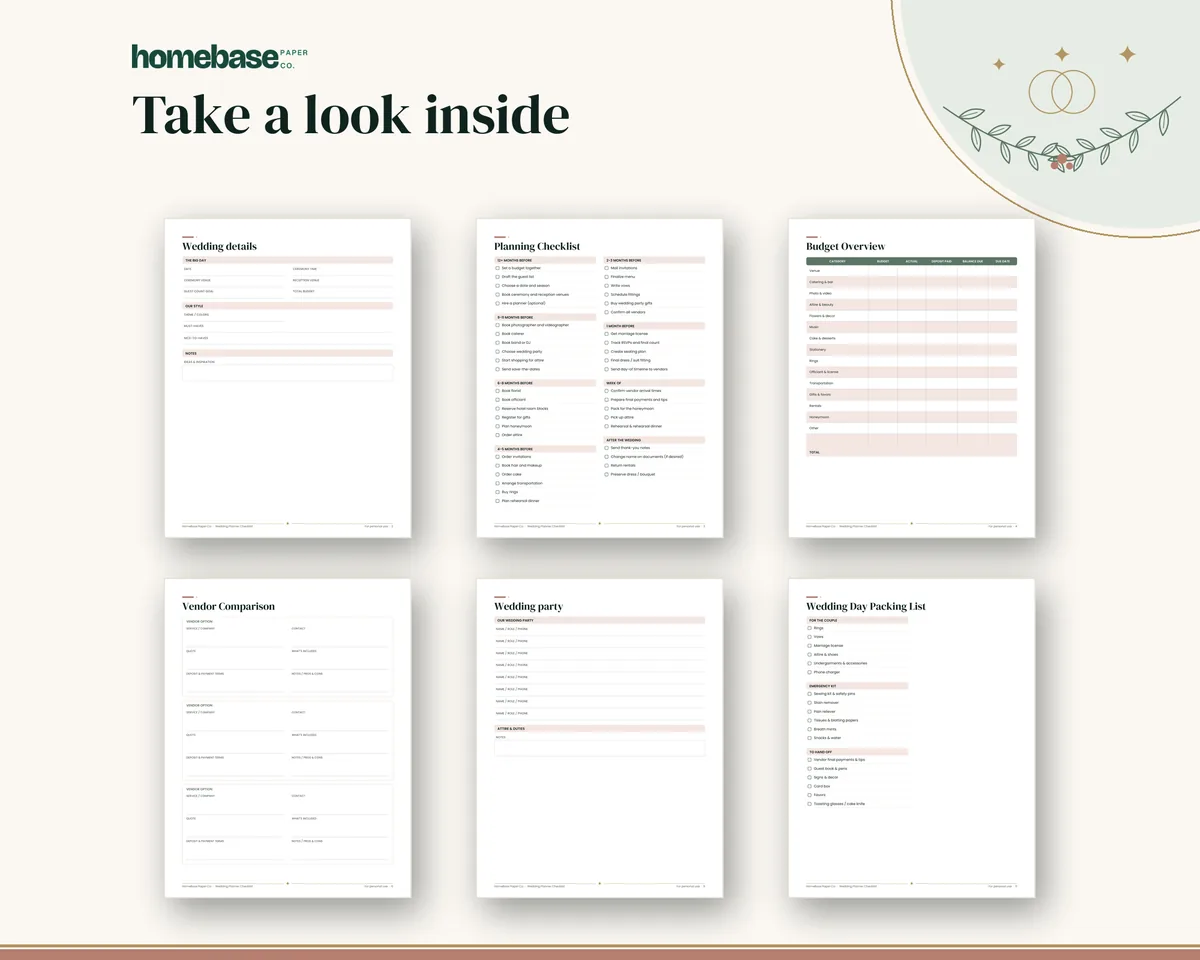
Vows are just one part of a long list. Our Wedding Planner Checklist ($5.99) has a 12-month checklist plus budget, vendors, guest list, seating, day-of timeline and packing lists. Our Wedding Planning Bundle ($8.99) pairs it with the Wedding Budget Spreadsheet ($6.99) for less than buying them separately. For the full day, see our wedding timeline and wedding binder guides.
Celebrating a milestone instead? See our chart of anniversary gifts by year, from paper at one to gold at fifty.
Before the vows comes the walk: see our wedding processional order with charts for traditional, Jewish and small ceremonies.
Make it easier
Tools for this
Printables
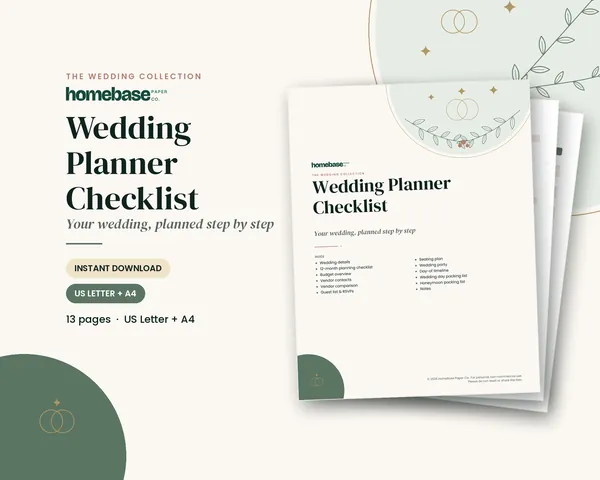
Wedding Planner Checklist
A 12-month checklist plus budget, vendors, guest list, seating, day-of timeline and packing lists.
 Save 31%
Bundles
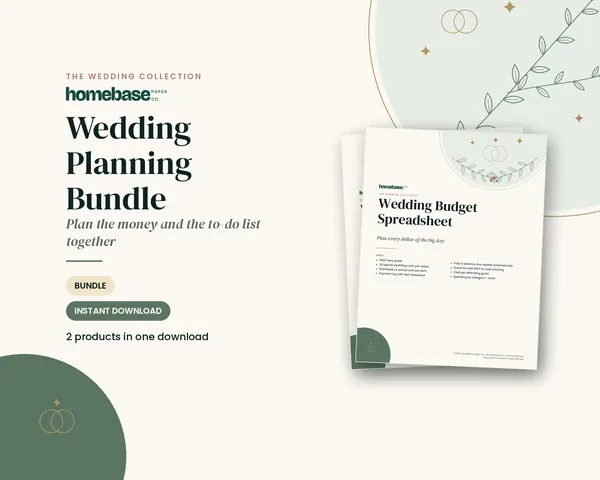
Wedding Planning Bundle
The Wedding Budget Spreadsheet and the 13-page Wedding Planner Checklist together - for less than buying them separately.
Spreadsheets
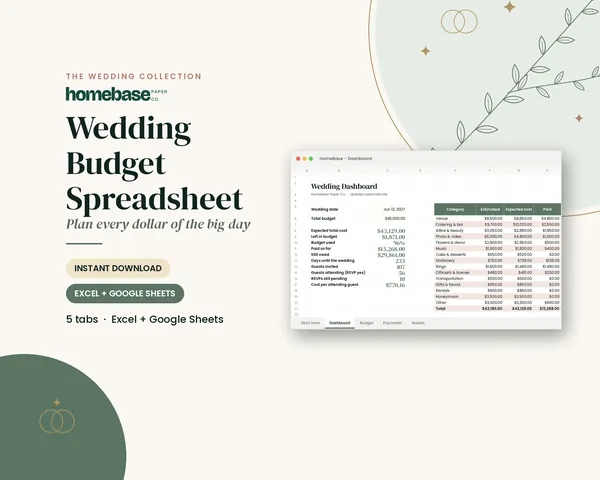
Wedding Budget Spreadsheet
Enter each payment once - the sheet shows what you've paid, what you still owe, and what's left of your budget.
Frequently asked questions
What are traditional wedding vows? Traditional wedding vows are the classic promises from the Book of Common Prayer: "I take you to be my wedded husband (or wife), to have and to hold from this day forward, for better, for worse, for richer, for poorer, in sickness and in health, to love and to cherish, till death do us part." Many faiths and officiants use a version of them.
How do you write wedding vows? To write wedding vows, start with a short memory or what you love about your partner, then make 3 to 5 specific promises, and end with a line that ties it together. Write it out, cut it to 1 to 2 minutes and read it aloud several times before the day.
How long should wedding vows be? Wedding vows should be about 1 to 2 minutes long when read aloud, which is roughly 150 to 300 words. Shorter is better than longer. Agree on a rough length with your partner so your vows feel balanced.
Do both people have to write their own vows? No, both people don't have to write their own vows. Both partners should use the same kind of vows, but they don't both have to write their own. You can both say traditional vows, both write your own, or say traditional vows and add a short personal line each.
Should we share our wedding vows before the wedding? You don't have to. Many couples keep their vows a surprise but agree on the length and tone. Others share them with the officiant or a trusted friend to check for balance. Either way, avoid inside jokes that leave guests out.
What should you not say in wedding vows? Don't mention exes, private arguments, money worries or very personal details. Skip inside jokes nobody else understands and anything that might embarrass your partner. Keep the focus on love, promises and the future you're building.
Can you read wedding vows from a card? Yes, you can read wedding vows from a card. Reading your vows from a card is completely fine, and it is much better than freezing up. Write them on a small, sturdy card in large print, or give a copy to your officiant as a backup. A phone works too, but a card looks nicer in photos.
What do you say in short wedding vows? Short wedding vows can be one or two sentences, such as: "I choose you today and every day. I promise to love you, laugh with you and stand by you, for all of our lives." Short vows work well for elopements and courthouse weddings.
Who says their vows first? The officiant usually decides who says their vows first. In many traditional ceremonies the groom goes first, but there's no rule. Many couples now choose whoever is more nervous to go first, or flip a coin.
Are wedding vows legally required? Wedding vows are usually not legally required. Most U.S. states don't require specific vow wording. What makes a marriage legal is a valid license, an authorized officiant and the couple's consent, usually with witnesses. Check your state and county rules, since they vary.
Where do wedding vows go in the ceremony? Vows usually come after the welcome, readings and officiant's remarks, and just before the ring exchange. The pronouncement and first kiss follow. Your officiant will share the exact order at the rehearsal.
What is the best way to keep wedding planning on track while writing vows? Put vow-writing on your planning timeline about 6 to 8 weeks before the wedding, with a practice date at the rehearsal. Our Wedding Planner Checklist ($5.99) includes a 12-month checklist, budget, vendors, guest list, seating, day-of timeline and packing lists, so the vows have a place on the plan.
More from HomeBase
You may also like
Printables
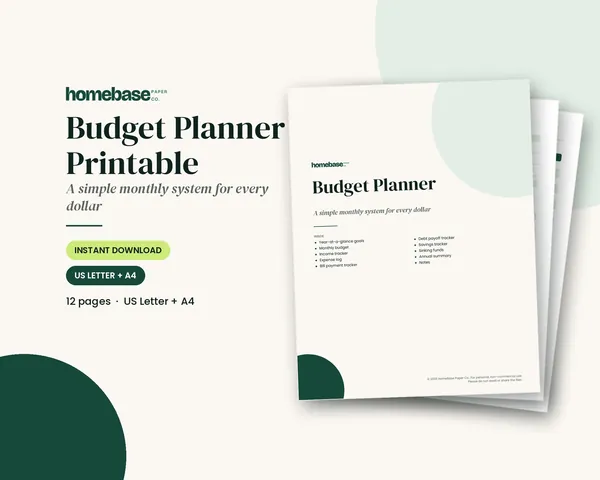
Budget Planner Printable
Twelve undated pages you can print every month: budget, bills, spending, savings and debt.
 Save 33%
Bundles
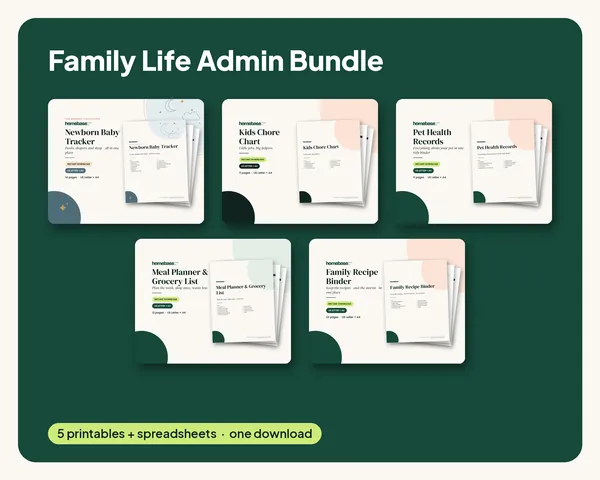
Family Life Admin Bundle
Baby logs, chore charts, pet records, meal plans and family recipes in one tidy set.

Spreadsheets
Annual Budget Spreadsheet
See exactly where your money goes every month - without complicated software.
 Club
Monthly club
Planner & Calendar Club
Anyone who wants a monthly calendar, bill calendar and meal plan ready to print.
Free printable
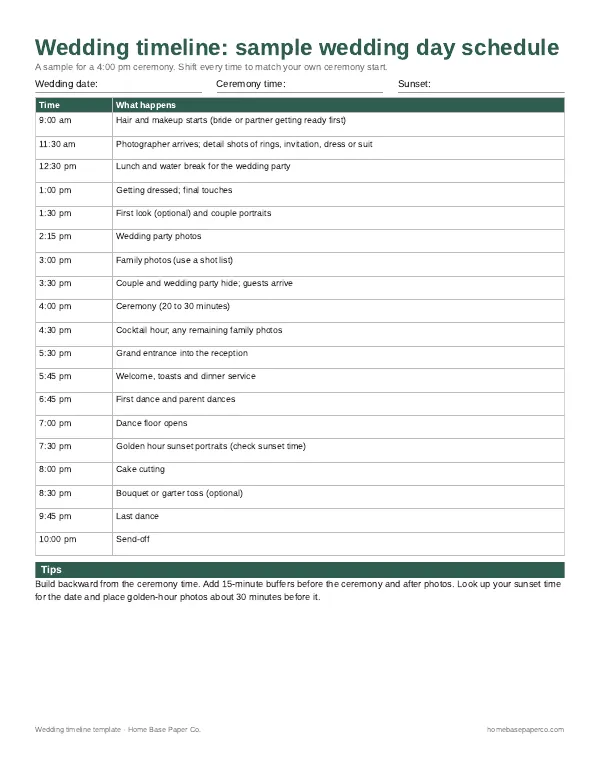
Plan the big day step by step: get the free wedding timeline
A printable wedding planning timeline, from 12+ months out to the week of, plus a day-of schedule page. You'll also get our weekly HomeBase email with wedding and shower planning tips.
Sources
- Britannica: Vow britannica.com
- Britannica: Book of Common Prayer britannica.com